
Mayor-Elect Mamdani's Inauguration Plans
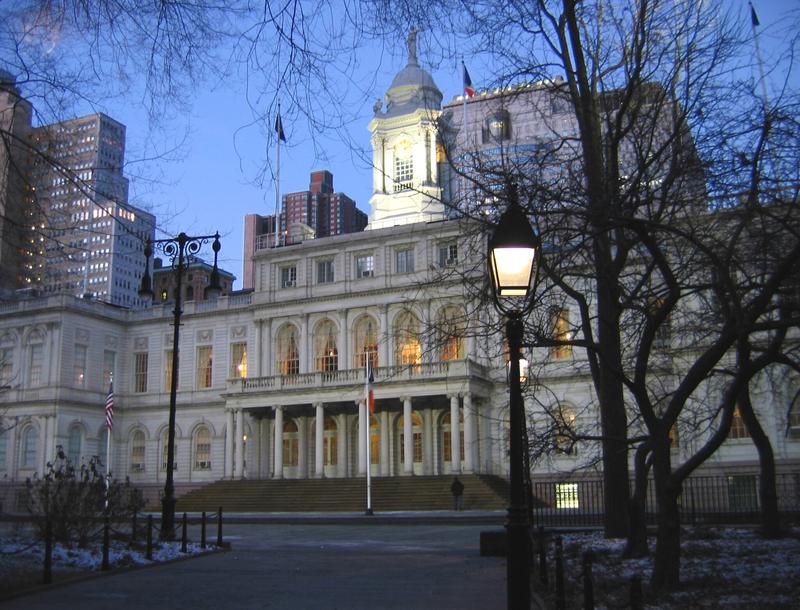
( Aude / Wikimedia Commons )
Brian Lehrer: It's The Brian Lehrer Show on WNYC. Good morning, everyone. On today's show, a journalist from Consumer Reports with their article that says, "Instacart charges shoppers different prices for the same items in the same store at the same moment based on information from AI," we'll hear how they do it according to Consumer Reports, whether that's legal, and if you can tell that you're being targeted to pay more and do something about it.
Also today, speaking of shopping, it's our final edition of Shop Listener for the holidays in 2025, where we try to support WNYC listeners selling holiday gifts from your small businesses. This time, call in if you're selling experiences as holiday gifts. That'll be at the end of the show, around a quarter to 12:00, something like that. The Republican Party used to have an abundance theory of energy policy, develop all kinds to keep your energy bills low.
An article on Heatmap says, "Not anymore." We'll see how the new energy restrictionists, including President Trump, who made headlines on this yesterday, maybe you saw it, are affecting New York and New Jersey. We'll check in on the Paris climate treaty at 10 years old with Heatmap. Looks great on paper. We'll see how much it changed the climate. We'll start today with New York transition politics, the Mamdani transition, as he creates a new position called deputy mayor for economic justice and picks a former US labor secretary for the job. The post-Elise Stefanik transition. What does her sudden departure from politics portend for the 2026 governor's race and the Republican Party generally?
Plus, we'll have some fun with New York political predictions for 2026 as gathered by the new site, City & State. Speaking of transitions, with us now is the new editor-in-chief of City & State New York, Jeff Coltin, who you may know from the daily newsletter. He had been writing the Politico New York Playbook. Maybe some of you were subscribers to that. Before that, he was City & State's New York City bureau chief. Now, he's back with them as the top dog. Jeff, welcome back to WNYC, and congratulations on your new exalted role. See, being a New York politics geek can be good for something, right?
Jeff Coltin: [chuckles] The top dog. I will take it, Brian. Thank you very much. I'm always happy to come on this show, come on WNYC. Yes, it's a time of transition for so many people in New York politics and government. I'm just timing this to join all the people that are leaving the Adams administration, joining Mamdani administration. There's movement in the political campaigns and elections as well. Yes, sure, a lot to talk about at the end of the year.
Brian Lehrer: That's right. Well, I hope your family is proud of you becoming an editor-in-chief. I know when I got my first New York radio job, my mother said, "That's good, but it's still not too late to go to med school."
Jeff Coltin: [laughs]
Brian Lehrer: I'll let you do a little plug before we dive into the content and say how you see City & State's role in New York journalism, because not everybody knows it. As the business model for news continues to be challenged, we need all the local journalism we can get. Plug away for a minute.
Jeff Coltin: I really appreciate that. Yes, I love City & State. We are a weekly magazine and, of course, a constantly updating online presence. I see City & State New York as the political community. It is the magazine for New York's political community. I see the political community in a very large sense. If you are a voter, even if you're a sometimes voter, but particularly if you are an elected official, a government staffer, somebody who works to influence government, whether that's with an interest group or a firm, we are in the nitty-gritty, and we work for the political community. Again, that's expansive.
Even if you're listening to this show, that's enough for me. You are part of the New York political community, and we write for you. Check it out, cityandstateny.com. Again, we are proud to have a weekly magazine, even in this time of print shrinkage. We just have an incredible art team with-- The last week, we had a Zohran Mamdani mixed with a Labubu to talk about what was hot in 2025, the Zabubu. Nobody else does that in New York politics, and I'm really proud of it. It's just a great place to work, and we're going to do some great stuff in 2026 and beyond.
Brian Lehrer: All right, maybe we'll do a Zabubu, invent your own mash-up at the end of the year. Call in for some of our listeners later. All right, let's talk about some of these other transitions. Can we start with Elise Stefanik? Because that's really the bombshell that people in both parties and beyond are still digesting, I think. The announcement came late Friday. What's your best take as of today as to why this rising star in the Republican Party, congresswoman from upstate, clear leader for the Republican nomination for governor, not only dropped out of that race, but also said she won't run for reelection to her seat in Congress?
Jeff Coltin: That's right. Look, she publicly said that this was to spend more time with family. I will give a little bit of benefit of the doubt and say, sure, sometimes people do genuinely, their heart just isn't in the job, and they want to spend more time with family. Of course, we all know that often, when somebody says they want to spend more time with family, [chuckles] that's just an excuse. They're hiding some other reason for getting out of this race.
We don't quite know yet if there is another reason, but there's a lot of speculation and suggestion that it's because President Donald Trump simply was not giving her his full support. Even though Stefanik was running with the support of the New York Republican Party establishment, she was on her way to getting the formal nomination of the New York Republican Party. That means she would have been able to get automatically on the primary ballot, wouldn't have had to go out there and collect signatures and petition. Despite that, Donald Trump was withholding his endorsement. He said, "Well, I like Stefanik, and I like Bruce Blakeman," the other leading gubernatorial candidate, the Nassau County executive.
There's speculation that if Stefanik gave up so much for Trump, she completely devoted her career to him. Of course, she famously was nominated to be the UN ambassador, the United Nations ambassador, but then Trump pulled that from under her in order to keep her in Congress because the Republican minority or Republican majority was so tight. Big picture, Stefanik gave a lot up for Trump, but Trump did not fully commit, did not give her the 100% support in the gubernatorial race. That might have been a factor, if not the factor, in her dropping out and letting Bruce Blakeman, it seems, waltz into the Republican nomination.
Brian Lehrer: She did say she didn't want to be on a suicide mission. She used that term, "suicide mission." I could see that if she thought that instead of her waltzing to the nomination, it was going to be a knockdown, drag-out battle between two Republicans in a primary before the ultimate winner had to go and face Hochul, who's way ahead in blue New York, and the polls at this early date. It would have made it less likely that either of them would have won, so I get that. Spend more time with her family. I just recently stumbled on an old New Yorker cartoon with the caption that was something like, "I want this job because I'm so sick of spending so much time with my family."
Jeff Coltin: [laughs]
Brian Lehrer: Why give up this seat that she has in Congress if Stefanik is still interested in influencing the direction of the country? For people who don't remember this association, she was so in the headlines when she caused two college presidents, including out of Harvard, to resign with that famous hearing about anti-Semitism during the campus protests, but why give up her seat in Congress if she's still interested in influencing the direction of the country? That's still a power spot.
Jeff Coltin: Yes, that's right, and that is a big question. There's speculation of whether she has another job lined up, potentially, but we haven't heard of anything yet. Look, she could have stayed. She could have been reelected easily. She has a ton of money in her account. That's a pretty safe red seat up in the North Country, the areas north of Albany in the Adirondacks. Some Congress members hold onto their seats for decades. That could have been her. Apparently, she's looking for something else. Look, clearly, she was eager to get out of Congress, looking for that United Nations ambassador job, then running for governor.
Brian Lehrer: Good point.
Jeff Coltin: Maybe some people just don't like Congress, and maybe she was one of those people, honestly. Especially as we're looking towards a less certain future for the Republican Party, there's, I think, a good chance in this midterm year that the Democrats could take back the House. Maybe she is, again, just looking to get out, but that's all speculation. This was a big political surprise. Everybody was expecting Stefanik to be a major player in New York politics in 2026. Instead, she's making herself a lame duck and not running for higher office.
Brian Lehrer: We have a call coming in from a Stefanik constituent up in the Adirondacks. Bill in Lake Placid, who I will say in advance, seeing what he told our screener, is not at all a fan of Stefanik. A Democrat, I would say, but let's hear his take because he's also looking forward for the district. Bill in Lake Placid, you're on WNYC. Hello there.
Bill: Hi. People have to understand that the 21st, where I live, is the largest congressional district east of the Rockies and one of the poorest in New York State. Stefanik is always--
Brian Lehrer: Let me just say what that means. When you say "the largest," that's the geographically largest, because the whole Adirondack Park region is so sparsely populated. By law, every congressional district in the country has to have roughly the same number of people. When you say "largest," it's largest geographically. I'm just clarifying that for the listeners, but go ahead.
Bill: Exactly. You're 100% right. You're 100% right. It also happens to be one of the poorest in New York State. We always have, nearly, the highest unemployment, especially in the wintertime. Stefanik is not from the 21st. She's from Albany. She carpet-bagged in the 21st because her family had a small summer camp in Willsboro, and she eventually bought a house in Schuylerville.
The thing is, she has no affinity for the 21st. She's never been willing to meet with people from the 21st, or even appear in the 21st. The 21st needs a working congressperson because it's got a lot of problems. Stefanik never had any interest in the 21st. It's not just that she doesn't want to stay in Congress. She doesn't want to stay in the 21st. It's just too cold.
[laughter]
Brian Lehrer: It is cold.
Bill: [chuckles] The bottom line is she had no reason to be in the 21st other than Karl-- She worked for Karl Rove, and Karl Rove financed her. Absolutely decimating all of the traditional North Country conservatives. She took over. She never did a thing for the 21st because she was always interested in pushing right-wing politics that hurt the poor people in the 21st.
Brian Lehrer: It's been a conservative district for a long time. From your perspective, and I think people can hear where you're probably coming from politically, but from your perspective as somebody, it sounds like, who's politically engaged up there, how are these cuts to the Affordable Care Act going over in a low-income area like that, or the cuts to Medicare that are in the so-called One Big Beautiful Bill? You have a take?
Bill: Well, don't forget. We had a Democratic congressman for two terms. Bill Owens was a Democratic congressman in the 21st. He just got tired of being in Congress and wanted to make more money, so he left because he's a very successful lawyer, but you have to realize--
Brian Lehrer: I think the politics were also changing, but go ahead.
Bill: Yes, but the fact of the matter is that she has a line which appeals to people. You ride around the 21st, and you'll see the most rundown trailers in the woods with great big Trump signs. While the 21st is getting decimated by Trump policies, they managed to convince everybody that the Democrats are going to steal what little bit they have. It's the reality of the situation. It's why it's such a conservative district.
If we actually had a really serious candidate like Bill Owens was, there's no reason why the Democrats couldn't actually win in the North Country. It's just that we've put up a whole bunch of really weak candidates, people that just have no anything, but nobody wants to take the risk. It's a difficult situation. She doesn't want to be there. It's just as simple as that. She wants to go on to someplace bigger and better and warmer.
Brian Lehrer: Well, it certainly is called up that. I go up that way just about every year of my whole adult life. I keep one of the towns near you as one of the safe places on my weather app just to see how cold it is on days like this when it feels cold enough in Manhattan and Queens, where I tend to spend my time. How cold is it today, Bill?
Bill: I actually haven't looked at the thermometer, but the thing is it actually used to be a lot, lot colder than it is now because of global climate change. We used to get -30 on a really routine basis. You can tell when you're walking around in -30 because the snow actually squeaks when you step on it. You can hear it squeaking, but we used to get 150 inches of snow. We just don't get it anymore because it's just not the same thing.
Brian Lehrer: It's interesting. When I went to college at Albany, and I was on my tour during senior year high school and met with a student from my school who was a year ahead of me, she said, "Albany is famous for the 30-30 days, -30 degrees, plus 30-mile-an-hour winds." [chuckles] It doesn't really happen anymore. Oh, and 30 inches of snow. It was 30-30-30.
You're right. It doesn't really happen that much anymore, certainly to that degree. Bill, thank you very much for your call. We go back to our actual guest, Jeff Coltin, editor-in-chief of City & State New York. Interesting call, Jeff. I wonder if you see the Elise Stefanik seat, conservative as that district tends to be up north, as potentially competitive in what might be a blue wave year in 2026.
Jeff Coltin: Just as the climate is changing in the district, it's possible the political climate is changing. Look, that was considered a safe seat with Stefanik in it because she was a powerful and wealthy incumbent with a lot of money that she had raised. It's a little more competitive if it's an open seat, and we're certainly going towards an open seat this year. I haven't crunched the numbers yet, but I know that there are Democrats and Republicans that are putting their name in the mix.
In fact, just yesterday, there was a report of a rumor that former Congressmember Marc Molinaro might be considering looking at that one. Again, that's more of a rumor than unconfirmed news, but there's a lot of eyes on running in that 21st district, the geographically largest east of the Rockies, which is just a fascinating detail there. That said, I am more happy than ever that I am warm and in my apartment right now and not with a 30-30-30 day. My goodness.
Brian Lehrer: We just looked it up because we had both thoughts in there with the caller, Bill, one, that it's so cold up there that maybe Elise Stefanik doesn't really want to live there and, two, that it's warmer than it used to be. Well, maybe not that much warmer because we just looked it up on the Weather Channel. Guess what? The Christmas morning low is supposed to be in Lake Placid. It says -10.
Jeff Coltin: Woo-hoo.
Brian Lehrer: Back to the governor's race. I see that on CNN, Congressman Mike Lawler from north of the city, Westchester, Rockland, Putnam, Dutchess, who had decided against running for governor, now says he'll reconsider that decision. Would you say Bruce Blakeman doesn't just cakewalk to the Republican nomination after Stefanik dropped out?
Jeff Coltin: Wow. No, you're breaking news to me on the radio.
Brian Lehrer: Well, I think it was Friday. I think it was Friday. I just read the reference, yes.
Jeff Coltin: Interesting. Well, the Republican Party immediately threw support behind Blakeman, the New York Republican Party, and as did President Donald Trump, he endorsed Blakeman. There would be a lot of pressure on Lawler not to run, not to do a primary. Look, it would be interesting, Blakeman being the real Trump ally, always going to stand behind the President. Lawler, being proud of the fact that he's more of a centrist, that he's willing to break and criticize Trump on occasion. That would be an interesting primary.
Look, the Republican Party really does its best to avoid primaries in New York. In so many cases, they like to decide things behind closed doors, avoid the primaries because they know that it's always an uphill battle in the general election in such a blue state. Lawler may be making noise about running. I would be pretty shocked if he actually decided to launch a campaign again and do a primary. I expect it to be Blakeman and then, well, there will be a Democratic primary as well. It's likely going to be Hochul. Of course, we have her lieutenant governor, Antonio Delgado, who is currently running a primary against her or planning to do so.
Brian Lehrer: That's right. Let's not underestimate the Democrats' ability to launch a circular firing squad, which the Republicans can also do and are increasingly doing. We talked yesterday about all that division at the AmericaFest. Even after Charlie Kirk, who founded that group, Turning Point USA, that had that convention over the weekend, you would think it would be so much unity after the death, the assassination of their founder. Instead, it was one conservative calling another a grifter, and that person pushing back, and five different things like that.
Theory via text message, a few interesting texts coming in, says, "Stefanik sees that the House will likely flip. She'd rather be on the sideline and get ready for a more substantive future role like running for Schumer's seat in 2028." Another listener writes, "The M in MAGA stands for misogyny." We note that he didn't endorse the Republican candidate for governor of Virginia, who is a woman who just lost this year. We have a call along these lines. Christy in SoHo, you're on WNYC. Hi, Christy.
Christy: Hi, Brian. I'm a huge fan of yours. Regarding Stefanik, I feel that Stefanik, she's definitely a MAGA mean girl along with Marjorie Taylor Greene, and I think they're both abandoning-- They don't like the direction that MAGA is going, so they're trying to abandon a sinking ship because they don't want to be tied to it. I think she's taking a break and reinventing herself the same way that Marjorie Taylor Greene is reinventing herself. I don't think she's going away. I just see her doing a reinvention and not wanting to be tied to MAGA and Trump because she does not like the direction it's going in.
Brian Lehrer: Christy, thank you very much. Listeners, these calls have come in without me even putting out the phone number yet today. Any comments or questions? We're probably done with the Stefanik transition, as we're going to transition to the Mamdani transition. Also, your political predictions for 2026, which we will hear some of from a City & State article as we continue with their editor-in-chief, Jeff Coltin. 212-433-WNYC, 212-433-9692. As always, you can call, or you can text.
All right, Jeff, let's talk about the Mamdani transition. I want to focus mostly on two big appointments that came in the last few days, who were both worker and consumer protection leaders in the Biden administration. The first is Julie Su, who's actually US Secretary of Labor under Biden. Here she is on why she thinks Team Zohran is a good fit for her.
Julie Su: We saw the mayor-elect run a campaign that was laser-focused on affordability, on making sure that people who've been left behind are actually included on building a New York in which every New Yorker gets to share in what is a wealthy city in the wealthiest country. There's just so much alignment between what he said and what I feel like I've been working for my whole career. The chance to come here and help him deliver on that was too good to pass up.
Brian Lehrer: Julie Su, former US labor secretary, who will now become deputy mayor for economic justice. Jeff, that's a new job title that Mamdani just created as deputy mayor for economic justice. What's the vision for how that job advances his equality and affordability agenda?
Jeff Coltin: It's an interesting one because the portfolio really seems like a mishmash of things. Consumer and worker protection, but then also human rights, but then the Taxi and Limousine Commission. It's a mishmash, and yet there is, of course, a vision there. Mamdani has talked a ton of about bringing prices down and the cost of living and affordability. There's just a bunch of different angles into affordability. I think that that is going to be a main focus here.
They didn't want to call it deputy mayor for affordability, but that's the vision I see. I'll note that this appointment, of course, has Lina Khan's fingerprints on it. Lina Khan is one of the co-chairs of Mamdani's transition. Of course, she's also the former chair of the Federal Trade Commission, where a lot of liberals in the left especially really loved the work she was doing in the Biden administration, focusing on breaking up corporate power, or at least limiting corporate power.
Brian Lehrer: I'll note that Lina Khan even has some fans on the populist MAGA right.
Jeff Coltin: That's right. I shouldn't limit it. That's an interesting thing here. We've seen that, of course, with Mamdani, and even finding common ground with Trump on some issues. This is an interesting angle that even though Mamdani has divisive views as a democratic socialist, this is something that he has been able to really reach out across the city, across the political spectrum, and talk about affordability. I think that Julie Su is somebody that's going to be, again, focused on that under this new title. It is interesting, yes, that she's a Biden administration refugee, if you will. I think there are several others, including an appointment yesterday. I wouldn't be surprised if we saw more former Washington folks coming to New York City.
Brian Lehrer: We're going to play a clip of him in a minute. The one who was announced yesterday, Sam Levine. Lina Khan, also in that group from Biden. She's the biggest star of the three. At the moment, she's the co-chair of the transition committee. Do you think Lina Khan is going to wind up with a governing role, or is she beyond working in municipal government?
Jeff Coltin: [laughs] Yes, she's publicly said she does not intend to join government. Look, we'll see. People have often said that, and then they end up in government. I would expect Khan to just be in this role on the transition committee, and then seems like she would more likely continue this role as a public intellectual that she's currently playing rather than joining the day-to-day work of government.
Brian Lehrer: We've invited her to come on the show before that workers' transition co-chair ends. I hope that comes through. That'll be an interesting conversation for our listeners. A little more on Julie Su. Here's some from an AP story from last year, when Biden stuck with her for labor secretary in his last year in office. It described Su as a, "Civil rights attorney and former head of California's Labor Department who was also central to negotiations between labor and freight rail companies in 2022, working to avert an economically debilitating strike. She also has worked to broaden employee training programs and crack down on wage theft," that from the AP.
As I guess just a footnote, Julie Su never won Senate confirmation as labor secretary. She had to remain in an acting role, though it was for two years. Republicans pointed to her being in charge in California when there was a big COVID-era unemployment benefits fraud scandal that came to light. From what I've read, mostly, the Republicans thought she was too progressive and too interested in regulating business for worker protection for their tastes, like she supported California's policy of requiring some drivers and other gig workers to be paid as employees, not independent contractors. Just some background on that. Here's one more clip of Julie Su from the introduction event the other day, getting specific about some things she hopes to accomplish working for Mayor Mamdani.
Julie Su: Part of it is about just creating-- job creation is really important, right? It's important to the small businesses who are engines of our economy, and it's important to working people. We don't just care about the number of jobs. We care about the quality of jobs. We care that when the city acts, whether it's through procurement, contracting, even just using the bully pulpit, we care about that working people get just a day's pay for a hard day's work, so creation of jobs where we measure the quality. Just as an aside, what we measure really matters. I think the mayor-elect has made really clear, we can't just talk about the cost of things. We also have to think about the cost of not doing those things, right?
Qasim Rashid: Yes.
Julie Su: When I was in the Biden administration, people always said, "When you talk about childcare, how much is that going to cost?" Our response was, "Well, if we, as the United States, invested in childcare and family-supporting policies like paid leave that exist in other industrialized comparable countries, it would generate some $775 billion of economic activity in the country." The question then is not what is it going to cost, or how are we going to afford it? The question should be, how can we afford not to do it?
Qasim Rashid: Exactly.
Julie Su: What we measure really matters.
Brian Lehrer: Incoming mayor for economic justice, Julie Su. I just want to look up whose podcast that was on because I want to give them credit. It was on the Qasim Rashid Podcast on December 19th. Just one thing on that before we move on to some other aspects of the Mamdani transition, Jeff. I've heard this theory before from progressives that you generate more economic activity by having something like universal childcare because of all the advantages that it has for people being able to work and things like that.
They're really going to have to make that case, I think, to the state legislature if they want either a tax hike or an investment of tax money for a big universal childcare program. They're going to have to present some economic projections that it really is going to pay for itself in terms of state tax revenue and things like that, you think?
Jeff Coltin: Oh, definitely. That's going to be one of Mamdani's first and biggest challenges as mayor. He wants to raise revenue. He wants to raise taxes. Hochul, as we mentioned before, is going into an election year. She doesn't want to raise taxes, so they've been doing some light negotiating in public. I think as soon as the New Year starts, they're going to start doing some heavy negotiating behind closed doors, their teams.
Brian Lehrer: When we continue in a minute, we'll hear the mayor-elect himself from yesterday, and another key appointment just announced. Someone who, in fact, will report to the deputy mayor for economic justice. We'll also talk about the appointee who had to drop out and have a little fun with City & State's New York political predictions article for 2026 and invite yours. Stay with us.
[MUSIC - Marden Hill: Hijack]
Mayor-Elect Zohran Mamdani: It was built around a core belief. A government that prioritized working people instead of simply the wealthy and the well-connected could transform New Yorkers' day-to-day lives. That remains my defining goal in City Hall, to deliver our affordability agenda for those who have too long been forgotten by our politics, to make a dignified life a reality for each and every person who calls the city their home.
That mission, it's part of a larger purpose, which is to restore New Yorkers' faith in a democracy that many have long felt abandoned by. New Yorkers often associate government with an irrelevance to their day-to-day struggles, associated with the possibility only of meager results, small ideas, and even smaller follow-through, agendas that are quicker to say no rather than eager to get to yes. I want to write a different story from our City Hall.
Brian Lehrer: Mayor-elect Mamdani yesterday reinforcing his vision for his administration as he announced his pick for commissioner of the Department of Consumer and Worker Protection, Sam Levine, who held the top consumer protection role in the Biden administration. Here's Sam Levine on his background after Mamdani introduced him.
Sam Levine: I believe that the law is a tool for justice. It's not a static text, but a living and breathing instrument that has the power to transform the lives of working people. This belief has driven my work across these last two decades, from spearheading efforts to challenge illegal foreclosures when I was in law school to taking on predatory for-profit schools as an assistant attorney general, returning millions of dollars to defrauded students. I believe the law is how we hold bad actors accountable.
This is the work I was so proud to lead as director of the Bureau of Consumer Protection at the Federal Trade Commission. In that role, I took on Grubhub for exploiting delivery drivers and restaurants, Care.com for misleading home healthcare workers, Amazon and its top executives for trapping people in subscriptions they didn't want, Meta and TikTok for stealing our data and putting our children at risk. I fought to close loopholes that let scammers and predatory lenders prey on small businesses with impunity.
Brian Lehrer: Sam Levine there as he heads toward being Mayor Mamdani's Department of Consumer and Worker Protection commissioner after being Joe Biden's consumer protection chief, as we continue now with Jeff Coltin, newly minted editor-in-chief of City & State New York. Jeff, what more can you tell us about Sam Levine, if anything, or how Mayor Mamdani hopes to use that office?
Jeff Coltin: It's such an interesting one. DCWP, Consumer and Worker Protection, it's a low-profile office. It's considered, frankly, a pretty boring side of government. With Mayor Mamdani, he's clearly positioning it to use it as an anti-corporate accountability office. There could be a lot of interest in there. As Levine was just saying, he's talking about taking on some of the biggest and most powerful companies in the world, frankly.
That will be a framing, that will be an angle that Mamdani is going to use and is going to continue on, I'm sure, throughout his mayoralty, or at least in the beginning. Somebody like Mayor Adams currently is much more focused on working with these companies and trying to have them, I guess, help the city's economy. Mamdani is taking a more combative approach already, as we've seen in the rhetoric. Very interested in this position.
Brian Lehrer: Indeed. I didn't watch the whole event yesterday. Do you know if Levine or Mamdani were asked, if your characterization is right, that he's going to take on some of the biggest companies in the world that happen to be located here?
Jeff Coltin: I didn't catch it as well, actually, yes.
Brian Lehrer: Why won't those companies with a lot of power to decide where they do, what they do, move from maybe the financial district to the Gold Coast of Jersey City or to Charlotte, North Carolina, which competes for businesses like that, or anything else? Maybe we just haven't heard them respond yet.
Jeff Coltin: That's right. I definitely haven't seen any response yet. Of course, it is funny that, yes, Mamdani has been spending the past six months effectively meeting with a lot of these big business folks and billionaires and sending a message of like, "You can trust me. Don't worry." Then, of course, we have an early appointment, still using the same rhetoric going against them.
Yes, that balance will be one of the most interesting things to watch out of a Mamdani mayoralty, both working with big business in New York and then, as he would put it, standing up for the little guy at the same time. Yes, this Levine appointment. Look, on one hand, this guy, yes, is using some language that Mamdani would stand behind this anti-corporate language. On the other hand, he comes out of the federal government.
This is a guy with experience. This is a guy that wears a suit and a tie. This is a guy that I'm sure can get in a meeting with these big business folks, too. That's really all that they want is they want somebody they know that they've met before. I wouldn't actually be surprised if there was a bit of a sigh of relief coming out of the Amazons of the world because it's like they've dealt with this guy before.
Brian Lehrer: Couple of texts coming in. One is directed at you in your new role as editor-in-chief of City & State. Listener writes, "A plea to Jeff Coltin. Join the lively New York conversation on Bluesky. We need Jeff and City & State New York engaged with this engaged New York community. They have been quiet in their accounts on Bluesky." That's one. One other pushing back on this idea that another listener floated that the M in MAGA is for misogyny, after Trump is seen to have abandoned Elise Stefanik, Marjorie Taylor Greene, the woman who's running for governor of Virginia.
Listener writes, "That's so silly. We already dispelled that accusation by Mark Cuban with a long litany of intelligent string of capable women Trump has hired, appointed, and surrounded himself from the very beginning of his career, both in real estate and politics, from his female architect to his longtime right-hand woman, Carol, to campaign director Kellyanne Conway, and on and on." The text goes on, but you get the point of that pushback on that notion.
There was one Mamdani appointee who has had to drop out, Catherine Almonte Da Costa, who was going to head up the appointments process, but she resigned after the Anti-Defamation League surfaced some anti-Semitic social media posts from 2011 and 2012. One said, "Money-hungry Jews, shaking my head." Another was, "Far Rockaway train is the Jew train."
Well, now, she has since married a Jewish man and said they have two Jewish children. She expressed deep remorse for those long-ago posts. She was 19. Didn't fend them at all. The question it's raising for some people is how thorough the vetting process by the Mamdani team is to have been caught by surprise by this. Are they changing their vetting process in any way?
Jeff Coltin: Yes, the Mamdani team says that they've hired an outside firm to basically bolster the vetting process for new hires. They have not named the outside firm. They haven't explained what else they'll be doing. Maybe it honestly is about searching potential appointees' social media histories. I'm not sure. Yes, the Mamdani campaign was eager to say that they're bolstering it. They're going even deeper on these folks. Yes, look, it was a hiccup last week. It was an embarrassing moment for the Mamdani transition, which had otherwise been considered to be going pretty smoothly, frankly.
Brian Lehrer: I think everybody's social media gets parsed now when they're applying for anything, right? High school seniors applying for college are known to have scrubbed their social media, so the admissions offices don't look. Maybe it's worth mentioning that Da Costa also worked for the de Blasio administration, in fact, for the 2020 census effort, which was under Julie Menin, the incoming city council speaker, who is a very proud Jewish woman, descendant of Holocaust survivors. She was just talking about that on the show last week. A leader of the city council's Jewish caucus. Would this have been a failure to vet by Julie Menin as well in 2020, or are people just looking more closely at everybody now because of Mamdani's positions on Israel?
Jeff Coltin: Yes, it's certainly that. The Anti-Defamation League was looking through her tweets, apparently. This is a high level of scrutiny. Look, on one hand, this would be Da Costa's most prominent front-facing position, so it would make sense that she would get extra scrutiny. On the other hand, there's an argument that some off-color tweets, even if they are anti-Jewish tweets from 2011 when she was 19 years old, don't really reflect on her ability to do the job. This was a tough situation for Mamdani. It's a question of, "Okay, do you forgive and weather the storm and make that argument that she has had a whole career since then, or do you just--"
Brian Lehrer: Career, and she married a Jewish guy, and they have two kids who she characterized as Jewish kids, and expressed what seems to be genuine remorse for those long-ago posts that apparently did not recur, or they would have surfaced, too.
Jeff Coltin: Yes. As Mamdani explained it, he said that she offered to resign out to not be a distraction, and he accepted it. We said, "Well, would you have fired her if she hadn't?" He just reiterated, "Well, she offered to resign." Look, Mamdani is clearly in a very tense situation when it comes to, frankly, making peace with Jewish leaders and Jewish influencers and Jewish groups.
If the Anti-Defamation League is going to publicly make an issue of this, then it seemed like he simply decided that it was not worth the fight to defend this potential appointee. It was better to simply, quickly admit fault and apologize, and have her resign and move on. I found it to be a very interesting situation because it could reflect on how other groups intend to influence the mayor during his administration. This is now a playbook in a way.
Brian Lehrer: All right. Before you go, you have political predictions in City & State for 2026. They come from a variety of people. I'm just going to read out the questions that you ask these folks to answer. Who will succeed Congressmembers Jerry Nadler and Nydia Velázquez next year? What's the next big-budget fight in Albany? What will Mayor-elect Mamdani's relationship look like with the Trump administration? Will the peace last, and what impacts will there be in the city? Oh, maybe that was it. Give us your take real quick, we don't have much time left, on that last one. Will the peace last between Mamdani and Trump, and what impact will there be on the city?
Jeff Coltin: Yes, so I'll say the piece in the magazine, we asked several experts. We asked political consultants and interest groups and government leaders for their political predictions on this. Yes, this was a pretty interesting one. Basically, all of the experts said that this piece will not last. It's just too tense. There's too many points of potential tension, and they are obviously very far apart. I think we all had a shocking time watching their Oval Office meeting. It would be maybe even more shocking if this "bromance" were to continue for a long time. That's going to be a really, really big storyline in 2026. The relationship between Gracie Mansion and the White House.
Brian Lehrer: The funniest one you have in that section is from-- Is it Joe Borelli, Republican from City Council?
Jeff Coltin: That's right.
Brian Lehrer: Who said, "The Trump-Mamdani bromance will end by March, but not over ICE or anything predictable. It will be over something like a bike lane in front of Trump Tower."
Jeff Coltin: [laughs]
Brian Lehrer: A little bit of snark there from Joe Borelli. Here's a prediction for 2026 from a caller, Yaqub in Brooklyn. Yakub, you're on WNYC. Hello.
Yaqub: Hi, Brian. Thank you for taking my call. I feel like after we elected Mamdani, he's going to inspire a lot of people to run for office. Young people, millennials, and Gen Zers. I'm actually one of them. I've been thinking about getting to politics for a long time. I live in New York's 10th congressional district. I recently found out that Brad Lander is going to run for Congress in that same district.
Brian Lehrer: Against the incumbent, Dan Goldman. He's primarying Dan Goldman from the left. Go ahead.
Yaqub: Yes, so I eventually plan on running for Congress. For the time being, I'm just going to stick with my local school board.
Brian Lehrer: You're inspired to be more serious about this direction for yourself, it sounds like, because of the Mamdani campaign?
Yaqub: Oh, absolutely. Absolutely. I live by this motto: "Give people a chance. Give people an opportunity to lead. Once they screw up, then you take the lead."
Brian Lehrer: Thank you very much. Well, keep in touch. Tell us what your plans are, how you're stepping out when that time comes. Just one footnote on the Mamdani-Trump relationship, and relating back to our first topic this morning, Jeff. Some people have cited that bromance news conference with Trump and Mamdani as another reason that Elise Stefanik dropped out of the governor's race. That undermined her in some ways. Does it look like that to you?
Jeff Coltin: That had to have been a factor. Absolutely. She was running an entire campaign on the fact that nobody wanted to live in Mamdani's New York. Then in front of all the cameras in the entire world, Donald Trump is asked in the Oval Office, "Would you live in Mamdani's New York?" He goes, "Oh, sure. Sure, that seems fine."
Brian Lehrer: [laughs]
Jeff Coltin: It was just a total undermining of Elise Stefanik's core argument for running for governor. Yes, as I mentioned, he declined to endorse her. There was also that moment, and really several others. Well, people called it a humiliation. It's possible that the humiliations just lined up too much, and she decided to get out of there.
Brian Lehrer: Jeff Coltin, now editor-in-chief of City & State New York. Jeff, thank you very much. Happy holidays, and we'll talk a lot in your new role.
Jeff Coltin: Thank you so much for having me on, Brian. Really appreciate the callers as well, and I hope they stay warm in Lake Placid today. My goodness.
Brian Lehrer: [laughs] Hello, Bill, up there if you're still listening after your call. Brian Lehrer on WNYC. More in a minute.
Copyright © 2025 New York Public Radio. All rights reserved. Visit our website terms of use at www.wnyc.org for further information.
New York Public Radio transcripts are created on a rush deadline, often by contractors. This text may not be in its final form and may be updated or revised in the future. Accuracy and availability may vary. The authoritative record of New York Public Radio’s programming is the audio record.
