
Mayor Mamdani's Push to Build at Sunnyside Yard
Brian Lehrer: Brian Lehrer on WNYC. When Mayor Mamdani visited the White House recently, the big news was that President Trump offered his support for a big new housing development in Sunnyside, Queens, but how do people in the neighborhood feel about it? Our Housing Reporter David Brand joins us now to explain the pros, the cons, and the politics of the Sunnyside Yards project.
We'll also touch on a court ruling Friday that will allow landlords to discriminate. Yes, I said allow landlords to discriminate against people using government housing vouchers to pay their rent. Hi, David. Always good to have you on the show.
David Brand: Hey, Brian, thanks for having me.
Brian Lehrer: For the uninitiated, what is Sunnyside Yards?
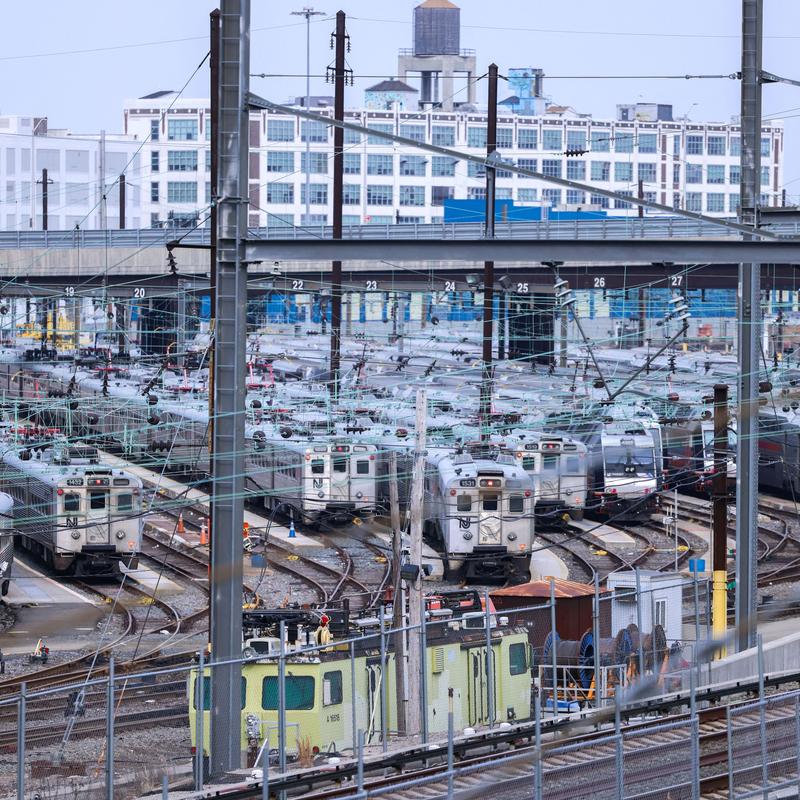
David Brand: Well, I think a lot of people have probably passed Sunnyside Yards, and never really thought twice about it, except maybe questioning how there's this massive train yard, this massive open space surrounded by these giant skyscrapers of Long Island City, and you've seen all of the development take place in Western Queens, right around the rail yard in LIC, and in parts of Sunnyside, and then there's just this huge open train yard, one of the biggest and busiest in the country. This plan that Mamdani went to D.C. to talk to Trump about would be to build a giant platform over this rail yard, and add thousands of new apartments, and other elements of a city neighborhood.
Brian Lehrer: Can you walk us through the proposal? This goes back to the de Blasio administration, doesn't it?
David Brand: Yes, so about six or seven years ago, I was running a daily paper in Queens called the Queens Daily Eagle, and I was covering the master planning process that de Blasio's Economic Development Corporation was having with neighborhood residents, neighborhood groups in and around Sunnyside. Then, finally in March 2020, they released this plan for this proposed project with 12,000 affordable homes, so homes, apartments with rents cap for low and mostly middle income renters.
About two weeks later, though, we know something else happened. In March 2020, the COVID pandemic hit. Queens became the epicenter, and this project just died, and now the Mamdani administration is reviving it, bringing it back from the dead after about six years or so.
Brian Lehrer: 12,000. That's a lot of homes, and I know one of the things that people in the neighborhood are raising, and I'll read a quote or two from things I've seen, is that this places too much infrastructure pressure on one neighborhood that already doesn't have a lot of, let's say, transportation in the city. You try to get on the subway. Multiple people who live there have told me, "You try to get on the subway at like, 46th and Bliss on the 7 train to go to work in the morning. You already often have to wait for two, three trains to come by before you can even squeeze yourself onto one of the cars." There aren't a lot of other ways to get into Manhattan, so you're going to add 12,000 more homes there, and then there's the area being considered a flood zone, because of how it's set, so 12,000 new homes. Is that the big issue?
David Brand: Well, I think we shouldn't look at this as like, this is a done deal, and this is what's going to happen. There was a planning process. They had a pretty elaborate planning documents from six years ago. A lot has changed. Most of all, the biggest change has been the price tag. Back then, in 2020, they said it would-- They estimated it would cost $14 billion. Now, Mamdani administration estimates this pretty amorphous project, we don't have concrete details here, would cost $21 billion, and I imagine that price tag would rise.
They would factor in transportation, all of the infrastructure required just to build this platform over this massive open train yard. They say it's about 160 square acres. Before I came on, I was like, "We always talk about these projects in acres," but maybe people comprehend that if they're talking about like farming corn or something, like, how many city blocks would that be? I think the average city block is about five acres, so this would be adding like 30 or 40 new blocks.
I think the potential beauty of the project is it would be over a train yard, and simultaneously, as there's been conversations about decking over to build housing. They used to think about building a football stadium, or office buildings, and all along they've talked about adding new transit infrastructure, so it'd be hard to imagine adding a new residential neighborhood without improving, or adding transportation as well.
Again, I think we should step back, and this is so far away from becoming a reality, that there's going to be a lot of opportunities to, I think, negotiate, or debate what else should go there besides housing. I think this isn't like a done deal, and not going to happen in the first term of the Mamdani administration, that's for sure.
Brian Lehrer: Oh, really?
David Brand: Though maybe they would get closer to some type of plan, or some type of financing or funding.
Brian Lehrer: The news coverage was that photo op, for the most part, of Mamdani and Trump at the White House together, and Trump holding up that mock daily news cover along with the real ancient daily news cover from 1973, the famous one that said, "Ford to city: Drop dead." Then, they made this fake one Mamdani and Trump together, I guess, with Trump holding the two of them side-by-side. The new one, the mock one saying, "Trump to city: Let's build." Instead of, "Ford to city: Drop dead" Which made it look, I think, to the general public like this was only between Trump and Mamdani, or only needed to be between the President and the mayor.
Councilmember Julie Won, city council member from the area, said the community deserves a seat at the table, and seems to indicate that she doesn't think they have one yet. How much of this process do you think is going to officially involve the local community? Really, David, a larger question. We're in this moment where, supposedly, there are so many forces who might have been opposed in a local NIMBY way, even if for decent local NIMBY be reasons, who now are acceding to the necessity of building many more housing units in New York City overall, that some of the old objections are either starting to fade, or being pressured out, so I wonder how you see Julie Won, as a local council member who might otherwise have in the old days, meaning last year, have had veto power over this. Where does she stand now?
David Brand: Well, Julie Won, I think her main argument-- Not against the project, because she said she supports building affordable housing, and wants to see something get built, but her initial stance here is that the community has to be involved, and there was a lot of community workshops and involvement leading up to that 2020 master plan, but even then, a lot of organizations and a lot of residents and civic groups said they still felt left out.
I think any plan just to become more politically palatable, and gain the support of people in the area would definitely need to have some type of community engagement portion. I mean, it is a huge plan. You ask what would that look like, though? What would the process for getting this approved, and getting this built actually be? That's something we don't know. The city's typical land use process does require a lot of pre-planning, and then a formal review process for anything that requires a rezoning.
Ballot measures that voters approved in November changed that, so that even if the local council member who used to, as you say, have veto power over a project like that, that can now go before an appeals panel with the mayor, the local borough president, who in this case, Donovan Richards, says he supports it, and the City Council speaker who could then override that veto, or a no vote.
We don't even know if this would go through the city's typical land use review process. What happens and what we've seen in a lot of major projects, including at Hudson Yards, another project to deck over a train yard and build housing, and then a less successful project, Atlantic Yards, where 20-some years ago, they said they were going to deck over a much smaller rail yard, and build housing on top. They haven't even completed the platform there two decades later, those both went through a state process called a General Project Plan, where that bypasses a typical community input and city land use review process, so we could see that here.
We could see some combination. They might break this into parcels based on what entity owns it, Amtrak versus MTA, or maybe they identify a place where it would be much easier to build instead of going over the entire platform, or I'm sorry, the entire train yard in one fell swoop. We're going to see as more details emerge here, but we don't know that much yet.
Brian Lehrer: Anybody from Sunnyside listening or Long Island City, or any other place that might be directly affected by this, what's starting out as a Trump-Mamdani agreement to try to build around 12,000 housing units, many of them below market rate, over the Sunnyside Yards there. 212-433-WNYC, or anyone else. 212-433-9692. Call or text for our Housing Reporter David Brand.
Yes, we will still touch on the court ruling on Friday that will allow landlords to discriminate against people using government housing vouchers to pay their rent. Anybody listening in that position, 212-433-WNYC renter or landlord. 212-433-9692, call or text here on WNYC. Pia in Long Island City. You're on WNYC. Hello, Pia.
Pia Rahman: Hi, my name is Pia Rahman. I'm running for Assembly District 37, which includes the Sunnyside Yard. I believe our community voice must be heard. When OneLIC was being planned, there were multiple town halls and real community feedback, and that process matters. I moved to Queens after living in front of Atlantic Yards in Brooklyn, where the years of construction and traffic, it had such a huge impact on me and other residents. We do need more affordable housing, but it has to come with a clear plan, a strong vision, and real input from the community, so with the rapid growth of Sunnyside Yard, and we need thoughtful development that works for the people who already live here.
Brian Lehrer: For you running for the State Assembly to represent people in that district, what would that look like? I think you're trying to be open to new affordable housing, because the city needs new affordable housing. You're saying it has to be sustainable for the people who live there. What would that look like to you, to meet that standard?
Pia Rahman: we need to have a community town hall, or we need to hear what the community wants to be open to. I think this project was pulled where a lot of-- When I was talking to a lot of people who live in Sunnyside that they were not aware that this was going to happen. They are worried about being priced out. They are worried that they can't live here long term, so I believe that we should be having input from our community.
Brian Lehrer: When de Blasio floated this, Pia, back in his administration, when this first was introduced, some Queens elected officials, including AOC, the way I understand it, and then City Councilmember Jimmy Van Bremer pushed back hard over gentrification concerns. Is that a concern of yours?
Pia Rahman: Yes, absolutely, but I do think we need more housing, but we have to make sure that the people who live here are not going to be priced out. I went-- I lived in front of Atlantic Yards on Pacific Street, and now Sunnyside Yard will be behind me [chuckles] in Long Island City in the residence that I live at. With these rapid growth of developments, it pushes out people, and we need to think of a thoughtful process where-- A clear plan and a strong vision that gets real community input.
When I lived in front of Atlantic Yard, there was so much traffic, and so much construction in the middle of the morning, that I couldn't live there anymore. It became unbearable, and that's why I moved to Queens, and I think with this, we just need real thoughtful development and a timeline, and making sure that the people who lived here their whole lives are not priced out.
Brian Lehrer: Pia, thank you very much for your call. David, there's the eternal, or one of the eternal contradictions in affordable housing development plans, right? That whatever percentage of something, if it's not 100% being below market rate housing, there's going to be some market rate housing that comes with it, and it's going to be new, and it's going to be attractive, and so even though it's sold to communities as adding more affordable housing there, the net effect might be to push out property values there, and that gentrifies the area. Are you hearing that a lot with respect to this?
David Brand: Definitely hearing that in the opposition. That comes up with a lot of major projects. I think there has been somewhat of a change since 2019, which I think can help explain why a lot of people on the left have begun to embrace this development, and that's because the protections for tenants are so much stronger now than they were even in early 2019. We have rent stabilization protections at the state level that were enacted, that really get rid of the incentives for landlords to evict tenants, or try to get tenants out of their buildings, so that they could raise rents significantly.
I think that plays in here, so if you're a tenant in a rent stabilized apartment in the area, there's not such a risk that the landlord's going to see dollar signs and say, "All right, if I can get this tenant out, I can raise the rent, and then I could get that rent to a certain threshold and deregulate the apartment, and then make as much money as the market will bear." I think that's one thing.
Then, more recently there's another law called the Good Cause Eviction Law, which offers protections to tenants who don't live in rent stabilized apartments, where they can challenge what in the law is called, "Egregious rent increases," basically, above like 9%, so there are definitely more protections. I think, at the same time, there's also more of an understanding that the city really does need housing.
All that being said, if you make an area more desirable, it definitely will raise property values in the surrounding area, and definitely make it harder for to buy a home, or to pay rising property taxes, or if you're not in an apartment that's covered by those protections, your rent could increase.
Brian Lehrer: Listener writes, "Sunnyside resident here in favor of the plan to redevelop the Sunnyside train yard. Would love to see additional parkland included in the project. Love a development project that uses space above ground similar to Riverside Park developed above the Amtrak tunnels." Here's Mark in Sunnyside Gardens on, I think a similar point, though I don't know if he's going to support the project. Mark, you're on WNYC. Hello.
Mark: Hello, Brian. I am neighbors in Sunnyside Gardens for 50 years with your sister-in-law, Judith Sloan, multicultural artist. My feeling is that--
Brian Lehrer: My brother, which is how she happens to be my sister-in-law, but go ahead.
Mark: Your brother-- Well, I know him less, so there's a dearth of parkland and open space in western Queens. We have very few recreational areas or parks. We're limited to playground kind of environments. Sunnyside Yards is perfect for soccer fields and tennis courts, and big walking areas and running areas, so whatever there is, you see the sky. We don't want just more tall buildings. We should also have low-rise home ownership, moderate and low income.
Seems similar to the Nehemiah Plans in Brooklyn that were so effective. It shouldn't just be big apartment buildings, and then in terms of transportation, these are rail yards, for God's sake. There's the ability to build some kind of a station that's associated with the MTA and the Long Island Railroad that would affect improving that as well, so there's a lot to do that goes well beyond low income housing, and can really utilize this open space and sky that that is so needed in western Queens.
Brian Lehrer: I also heard that sewage infrastructure might be an issue in that neighborhood. Is that something that you're aware of?
Mark: I'm aware of it only in the sense that in the parts of Long Island City closer to the water, there have been horrible problems. I'm not an engineer. I don't know how that affects what this project would be.
Brian Lehrer: Mark, thank you for your call. David, is there a plan to add, I guess, it would be a Long Island Railroad station above the yards and that would-- Or along the rail tracks there? It does pass through there, the LIRR. I think every branch of the LIRR, as it's coming from Woodside into the city, so that would ease the pressure on the 7 train for people living on that side of Queens Boulevard and everything. Is that part of the plan?
David Brand: That is part of the plan, and I think it's something that Long Island Railroad has been talking about, and thinking about for a long time. Another part of the plan would be to add more park space on top of this platform, so it wouldn't just be like high-rise housing. There would be parks, new parks as well. Also, want to get back to something that Pia said. Caller who's running for State Assembly, she had said how the neighborhood just did a lot of community planning for this rezoning proposal that was approved by the Council last year called OneLIC, and that was a plan to rezone 54 blocks in Long Island City.
We think of Long Island City like around the perimeter, around the waterfront, there's all these new high rises, but there actually is a lot of-- There was a lot of lower level zoning in the interior of the neighborhood, so after many years of planning, they did a big rezoning for 54 blocks to add what the city expects to be about 14,000 new apartments there, so this Sunnyside Yards project would be coming on the heels of that. I think was praised for the community planning and community input, so that could be a template.
Brian Lehrer: We should say about the Long Island Railroad, even though that stop would be that close to Manhattan, unless they change something for that stop, it's still more expensive than getting on the subway. We really should do a whole separate segment on the other story that I wanted to touch on with you, the new development since we booked you to talk about Sunnyside Yards, because it's really worth it, and it affects a lot of people.
I'm going to take one other call on this other story, which is the court ruling on Friday that will allow landlords to discriminate against people using government housing vouchers to pay their rent in New York City, and Sean in Manhattan, I think is one of those people. Sean, you're on WNYC. Hello.
Sean: Hello, thank you for taking my call. Staten Island native, and descendant of the Sandy Ground farmers of Rossville on Staten Island. It's astonishing and shocking, the discrimination for folks holding vouchers. I'm new to the voucher community, and grateful that it is available, but I'm finding that brokers will set up an appointment, even give a tour, and then I'm ghosted, so I've gone forward to be forthcoming in the email contact, or text message contact that I do have a voucher. This is the amount it covers.
I'll get a tour, but for the most part, I'm ignored, and this is either through StreetEasy, Corcoran and other representatives of certain housing buildings, and I'm a single person, but I feel for the folks who might have families going through these struggles, and this new court ruling doesn't seem to shed any light on it. Thank you so much.
Brian Lehrer: Sean, thank you very much. I think Sean's anecdote, David, is just the thing we hear, right? They will show people the apartments. Then, when they find out that their payment method would be all or part through these vouchers, or if they're upfront like Sean said he would, then they just don't even get responded to. In the other scenario, they get ghosted in round two.
Why would landlords be hesitant to take voucher paying rentals? That seems like a guaranteed source of income via the government. Whereas somebody who has a job, who might lose their job would be, in theory, less reliable, so what's the issue?
David Brand: Unfortunately, Sean's experience is very common in New York City, and I think across the area and country, and it's what prompted, first, the city, and then the state to specifically pass laws that prohibit that type of discrimination. It's called source of income discrimination. You can't ghost someone, or deny them an apartment just because they use a government assistance voucher to pay a portion of their rent.
To your question about why a landlord would, or a broker, or property manager refused to work with a tenant with a voucher, I think it's probably two reasons. The first is, could just be straight up discrimination. There's a lot of stereotypes that go along with having Section 8, or a tenant with a government assistance voucher who, by definition, is low income. It could be discrimination by proxy.
Maybe Sean mentioned he's a single person, and worried about families or people with children. A lot of property owners don't want to rent to people with children, and so that's-- You can't say that, because that's against the law, but if you don't take the voucher, that has the effect of denying someone with kids an apartment. Then, there's a third reason, and I hear this from a lot of landlords who say, "We're not discriminatory. We just don't want to deal with all of these government regulations that come with accepting a housing voucher."
I think you make a great point. It's guaranteed steady income, especially at a time when a lot of tenants have fallen behind on rent and owe rent, and landlords have a really hard time getting through housing court, and getting that money, here's a steady form of income, but it also does come with requirements that they don't want to deal with.
Brian Lehrer: Why did the court say it's illegal? I mean, it's not illegal to discriminate in this way.
David Brand: Essentially, is what they said. Just a step back, back in 2022, tenants in Ithaca who are looking for an apartment from a pretty prominent property owner, who ran a number of buildings, they were told that the company he owns, doesn't accept Section 8 vouchers. They brought that complaint to the state attorney general. Attorney General Letitia James sued in 2022. She actually lost in the lower court, which in New York we call the Supreme Court.
She appealed to an appellate court in upstate New York. It's the Third Judicial Department. Three years later, they issued their ruling just last week saying, "Actually, the landlord doesn't have to accept the voucher, and doesn't have to participate in Section 8," because those requirements that go along with the Section 8 program, such as inspections, and having to share your financial records, those constitute illegal search and seizure, or warrantless searches, and so they violate the landlord's Fourth Amendment rights.
Now, Attorney General James could still appeal to the state's highest court, the Court of Appeals, to try to overturn that ruling. She hasn't yet made that determination, but that's still an option.
Brian Lehrer: David Brand, Housing Reporter for WNYC and Gothamist. Thanks, David.
David Brand: Thank you, Brian.
Copyright © 2026 New York Public Radio. All rights reserved. Visit our website terms of use at www.wnyc.org for further information.
New York Public Radio transcripts are created on a rush deadline, often by contractors. This text may not be in its final form and may be updated or revised in the future. Accuracy and availability may vary. The authoritative record of New York Public Radio’s programming is the audio record.