
Mayor Adams' Legacy
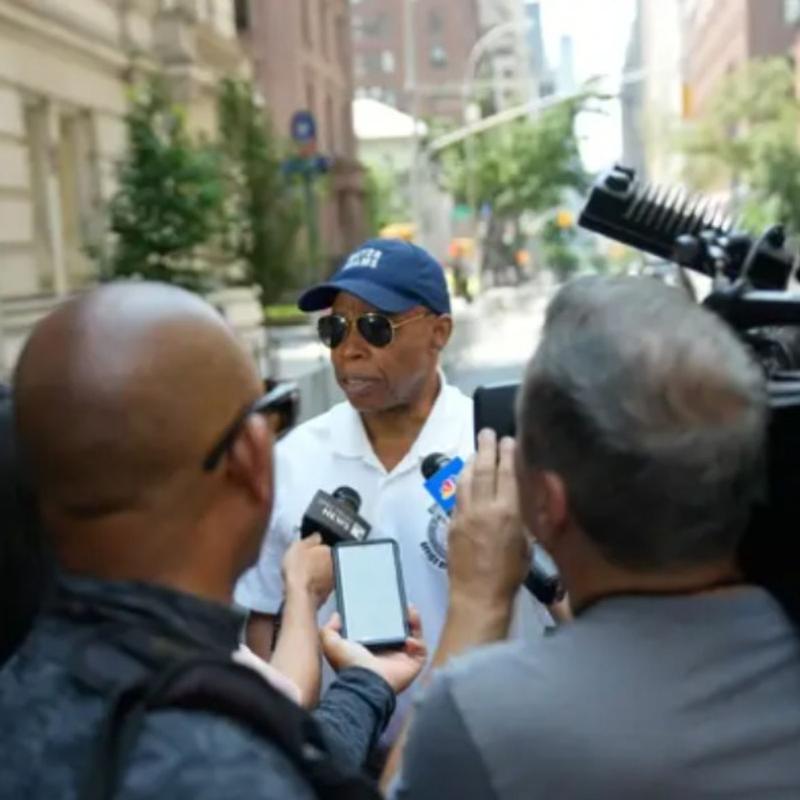
[MUSIC]
Mayor Eric Adams: Good afternoon, my fellow New Yorkers. This morning, I took the oath of office to become your mayor just after midnight in Times Square with thousands of people gathered to ring in the New Year.
Brian Lehrer: It's The Brian Lehrer Show on WNYC. Good morning, everyone. Before New York City heads into a New Year and the new era, the Mayor Zohran Mamdani era, let's take a few minutes to digest where we've been the last four years in the Mayor Eric Adams era. That clip was from the speech he gave on the day of his inauguration, New Year's Day, four years ago, January 1st, 2022. What a different time that was, right? With the city still in the throes of the COVID-19 pandemic, the Omicron variant was raging with 40,000 new cases a day, and there were the other problems that came with the pandemic. Here's a minute of how Mayor Adams tried to set a new direction at the start of that New Year.
Mayor Eric Adams: Yet unemployment remains high, crime is high, COVID cases are high again, so how do we get our city back? My fellow New Yorkers, the answer is simple. We will get our city back by making a commitment to each other right here, right now, beginning today. This will be our New Year's resolution. We will not be controlled by crisis. Instead, we make this city better every day through actions big and small. Getting vaccinated is not letting the crisis control you. Enjoying a Broadway show, sending your kids to school, going back to the office, these are declarations of confidence that our city is our own. Of course, government must do its job to allow New Yorkers to make these choices safely.
Brian Lehrer: Mayor Adams on his first day in office, January 1st, 2022. We'll sample some more from that Day 1 speech and a few things since as we discuss and digest the Eric Adams years now, before we fully move on to the Mamdani years. We'll do this with an all-star roundtable of New York City journalists and with you. We have three guests who have all covered the Adams years throughout.
WNYC and Gothamist political reporter Elizabeth Kim, New York Times metro political reporter Jeffery Mays, and Ben Max, host of the Max Politics podcast and program director at New York Law School's Center for New York City Law. Hi, Liz. Hi, Jeff. Hi, Ben. Liz, remind us, why was Mayor Adams elected, if we can turn back the clock four years and a little, mostly in the first-ever ranked-choice voting Democratic primary, right? Despite having a field of high-profile competitors, Maya Wiley, Andrew Yang, and the one The New York Times had endorsed, Kathryn Garcia.
Elizabeth Kim: Well, as you reminded listeners, Brian, we were in the throes of a pandemic. We were also coming off the height of the Black Lives movement and the George Floyd protests in 2020. What I remember about that race in 2021 is that early on, there were these dueling concerns. For one thing, people were worried, how does New York City recover and come out of the pandemic? How does someone help the city reopen? Then there was this social justice question that was brought on by the Black Lives Movement. As there often is in these kinds of races, there was a turning point.
That turning point was a shooting in Times Square. There were four people injured. One of them was a child. From that point forward, what happened was public safety became the overriding concern. That was really, I thought, what catapulted Eric Adams into being one of the major contenders. Now, again, it was still close because he beat Kathryn Garcia, his main competitor in that race, who was the former sanitation commissioner, by less than 10,000 points. These two concerns of wanting this uber manager technocrat was there among New Yorkers, but also this idea of this unease with crime rising in the city.
Brian Lehrer: Yes, so Jeff Mays from the Times, I'm looking at the Times article from that day, January 1st, 2022, by your colleague Emma Fitzsimmons, that reflected some of what the mayor was referencing in the clips, including the 40,000-per-day Omicron variant, COVID spike of that moment and a 9.4% unemployment rate, more than double the national average. I'm curious if you heard that Day 1 speech that we sampled from as a pep talk for the city more than a policy address.
Jeffery Mays: Absolutely. I think Mayor Adams, one of his supporters believe one of his biggest accomplishments that they feel is often overlooked is the fact that he did inherit the city. As the pandemic was still going on, there were still lots of issues. Places were closed. There were lots of people still contracting COVID. There were concerns about safety, as Liz mentioned, on the subway in terms of people feeling safe enough to use the subway. I think through his tenure, that idea of him being at the helm of the city during this very difficult time, having to lead the city out of the pandemic. I talked to one of his former staffers today, and they said they thought that was one of his biggest accomplishments, but he doesn't get enough credit for leading the city during that difficult time.
Brian Lehrer: Here's another clip from that Day 1 speech. Yes, COVID was still the defining feature of public life in many ways. Adams also made sure to address some of the perennial issues that tend to face the city and his intention to address those.
Mayor Eric Adams: Our government has been dysfunctional for far too long, and it created its own crisis long before COVID. Whether it was crime-ridden communities, poor schools, economic inequality, or racial injustice, our problems have been normalized for generations, while New York's government struggled to match the energy and innovation of New Yorkers. That changes today. I promise you one thing, New York. I will make our city better every day by making our city government better every day.
Brian Lehrer: Listeners, you're invited in this conversation, too. What's most memorable to you about the Eric Adams years? 212-433-WNYC. What did he do well or not? Let's not make this all about the corruption and political stuff. Did he have policy successes that are too little noted because of all the political and corruption stuff, or do you think he didn't do so well on that either? 212-433-9692, on the things he mentioned in that clip on education, on racial justice, on economic inequality, on crime, as well as digging us out from COVID.
Of course, we're going to talk about the migrant surge as one of the defining features of the Adams years, too, which he wasn't talking about on Day 1 there, but 212-433-WNYC, what stands out as most memorable to you about the Eric Adams years? 212-433-9692. You can call or you can text. Ben Max, looking back, did Adams have an agenda for any of those things that was strikingly new or aggressive or any of those perennial challenges he mentioned in that clip on Day 1, crime, poor schools, economic inequality, or racial justice?
Ben Max: I don't know if he had anything particularly revolutionary that he introduced, but I would say on several of those fronts, he advanced some significant policy. Obviously, he was elected to, in large part, be a public safety mayor. Through the police department, they enacted a number of crime-fighting strategies. In the schools, he focused on literacy overhaul. That's going to be one of his probably biggest legacy items, at least on the positive side, was taking a real focus on trying to improve literacy and reading rates in the early school years.
Then on things like economic inequality, racial justice, I think one of his biggest focus areas was this combination of housing policy and economic development. He's got a lot of achievements on both of those to point to. One of the under-the-radar aspects of the Adams years, he gets a lot of credit broadly for housing policy, but he's done housing policy in something of a fair housing policy lens.
That includes the recent ballot measures that were passed by one of his charter revision commissions, and the way that he passed the City of Yes for housing opportunity rezoning that increases housing supply across the city, which is something he ran on this idea, especially wealthier and whiter neighborhoods in the city could not be exclusionary to new housing.
I would say on the crime front, to come back to the beginning of the point here, one of the things that happened in the Adams years, and we could, of course, get into a lot more detail on this, is that while he focused on some of these priority areas, he repeatedly undermined himself through his mismanagement of government, through some of the bad appointments that he made. The lack of a clear chain of command particularly hurt him with the NYPD. It took years for the house to really get in order there after a lot of scandal and dysfunction that clearly held back some of the potentially good or clearly good policy that he was putting into place.
Brian Lehrer: Some texts that are coming in. Listener writes, his-- Sorry about that. I had them all set to go, and then additional texts came in, and they are off my screen, but here we go. "Adam's greatest legacy will be coining the term 'rat czar.'"
[laughter]
Brian Lehrer: Another one says, "Adams lost me when he tried to balance the city on the backs of the libraries multiple times." Another one says, "Adams added a lot of bike lanes. Appreciate that as a green pointer." Another one says, "I'd be interested to hear your guests' opinions on how Adams used and acknowledged race in his governance, specifically how he used his identity as a Black man."
Liz, on that, on economic inequality and where it intersects with racial injustice, two of the terms he cited in that clip, Adams was, of course, only the city's second Black mayor. He always emphasized being from the working class as well. You reminded me yesterday off the air of his campaign promise to enact an earned income tax credit. Can you take us back to that promise and its context, or respond in any way to that listener?
Elizabeth Kim: Sure, Brian. This is a policy that I've written about a lot, and I wrote about it starting during the campaign. It was something that I knew that Adams' campaign was interested in because I knew that they had talked to James Parrott. He's a veteran economist. He's long lobbied the city to expand the earned income tax credit, because he believes that this is the fastest way to put real cash in the pockets of low-income-working New Yorkers.
To the mayor's credit, he did that. He not only did it, but he did it really in his first year. In order to do this, he needed to go to Albany. He needed to get permission from Albany to get the city to really more than double its contribution to this tax credit program. It went from $100 million to $250 million, and then the state also agreed to chip in its own money as well.
The last I looked, I saw there was a press release that the mayor put out maybe a year ago, where he said that, in total, that program has delivered $345 million to these low-income New Yorkers that have to apply. It doesn't just go to you. You do have to apply. To the city's credit, they did run an advertising campaign to help New Yorkers fill out their taxes. Part of it was to get people who qualified for a program like this to get the money.
Brian Lehrer: Jeff, any thoughts from you in any direction on how Adams tried to lean into the distinction of being the second Black mayor and use that distinction or his life experience to aim for more racial justice and less economic inequality, which tend to run along racial lines in New York?
Jeffery Mays: Yes, I think Mayor Adams, from almost the start of his term, sought to place himself in the lineage of David Dinkins, had been over 30 years since the city had a Black mayor and David Dinkins. A lot of people believe, time has changed how people viewed Mayor Dinkins. A lot of people believed there were accomplishments, successes that were downplayed, that maybe he was treated harshly in some instances where he shouldn't have been treated.
Looking at a lot of his accomplishments that came out, such as addressing crime and Times Square, the tennis center, those were things that people came to appreciate about David Dinkins later, as well as the fact that he took over the city at a time of serious racial animus and made it his goal to bring New Yorkers together. In a very powerful way, Eric Adams really tried to place himself in that lineage, especially when he got into trouble.
There was one point where he was going around calling himself Dinkins II, which was pretty striking. He made the point that David Dinkins was treated unfairly and that the accomplishments that he was making were not being viewed fairly. He talked about things like increasing the minority women business program. He talked about the diversity of his administration, which is true. He had a lot of women, a lot of women of color in positions for the first time where they had never been in city government before.
The problem with the comparison, many people thought, was that it did a disservice to David Dinkins, who was never accused of any serious corruption. There was one investigation into some stock transfer with his son that amounted to not much. Eric Adams faced serious charges of corruption, was the first modern mayor in New York City history to face indictment. On top of that, many people in his administration also faced federal investigation.
The mayor was a master at talking about this issue in terms of a racial lens, and especially trying to use that to his advantage. I think it worked in a lot of ways. Up until the very end, Black voters were his strongest supporters. It wasn't until he began aligning himself with President Trump on issues that you saw Black support start to finally peel away. I think what it says about New York City is interesting that we've only had two Black mayors. It was 30 years between those two Black mayors in a city that considers itself very progressive and forward-looking.
Brian Lehrer: Interesting that you brought up his corruption issues in the middle of that question or answer, which was largely otherwise about policy. Interestingly, we have two texts that are almost identical to each other, but from two different phone numbers, but referencing the same dark joke from the past. This one says, "Setting aside the corruption, how is the Adams administration done? Is a little like asking, 'Other than that, Mrs. Lincoln, how did you like the play?'" We'll get more into the corruption scandal history as we go.
Liz, Jeff referenced Adams comparing himself to Dinkins less maybe in terms of what he tried to do at a policy level, or somewhat with that, but maybe even more so on how he was perceived or how he was covered. One way that Adams explicitly brought up race, as Jeff was indicating, was in criticizing his press coverage. Here's a clip from February 2022, just one month into his term, after he failed to win bail reform rollbacks during meetings in Albany.
Mayor Eric Adams: I'm a Black man that's the mayor, but my story has been interpreted by people that don't look like me. We got to be honest about that. How many Blacks are in the editorial boards? How many Blacks are determined how these stories are being written?
Brian Lehrer: Liz, I'm going to turn right back to you on this because you were in the room for his weekly news conferences for basically all of those four years. He's undoubtedly right about the stats, I imagine, but do you think that kind of critique, which he would come back to periodically, influenced how he was covered, either with more racial sensitivity or someone who was using the issue unfairly as a cover?
Elizabeth Kim: I'm so glad you played that clip, Brian, because, like you said, it's a month into his term, and it's a reminder of how early he brought up this issue. It did intensify, especially post-indictment. Very early on, he brought up this issue of race and raised questions about whether a mostly white press corps could cover him fairly. Now, like you said, I don't doubt the statistics that he says, that he cites. This was something that I wrestled with, too, in the room watching him, because I don't doubt that the coverage, the perception of him is shaped by race.
I think that it's very hard to say that that is not a lens with which we all view the world, right? Just like Jeff said, he was very masterful in the way he used race to put the press corps on the defensive. I think he was largely successful in really shielding himself from maybe even tougher questions that he should have gotten because, like I said, it was largely a white press corps on the defensive because, again and again, he would bring up this question of race.
I thought another way he used it really well, and I think this is also partly who the mayor is, too, and his backstory, but his insistence on decorum and how reporters should talk to him. That was something that he instilled in that once he started doing those regular city hall press conferences in the blue room would come up again and again. What it does is that it really puts the press corps on their heels because he's saying, "You can't talk to me this way." It makes it a lot tougher to really grill the mayor.
Brian Lehrer: We'll continue in a minute with the Eric Adams years on WNYC before we segue into the Zohran Mamdani years and with our reporters and with you. 212-433-WNYC, 212-433-9692, call or text.
[MUSIC]
Brian Lehrer: Brian Lehrer on WNYC, as we discuss the Eric Adams years in New York City before segueing into the Zohran Mamdani years. Our guests are WNYC and Gothamist political reporter Elizabeth Kim, New York Times metro political reporter Jeff Mays, and Ben Max, host of the Max Politics podcast and program director at New York Law School’s Center for New York City Law. We're inviting your calls and texts. What was most memorable for you about the Adams years on the level of success, on the level of failure, how the corruption scandals intersected with any of that, or anything else? 212-433-WNYC. You can call or text 212-433-9692.
Ben, if COVID was the crisis that defined the beginning of Adams' term, the mass migration of asylum seekers to the city largely defined the middle of his term, I think we can say, and then became entwined with his defense and his corruption scandal and the eventual dropping of the charges, or at least suspension of the charges, by the Trump administration. Now, to set this up, here's one more clip from his Inauguration Day speech in which he recalls the fiscal crisis of the 1970s to proclaim that nothing can destroy this city.
Mayor Eric Adams: When this city was facing a financial crisis that set it on the verge of ruin, Mayor Koch said, "These have been hard times. We have been tested by fire. We have been drawn across the knife-edge of poverty. We have been inundated by problems. We have been shaken by troubles that have destroyed any other city would have destroyed," but we are not any other city. We are New York.
Brian Lehrer: "We are not any other city. We are New York." Other things or other cities would have been destroyed, use that word, by issues that he cited there. The next year, he was singing a different tune. Here's one of the most memorable sound bites from the Adams years from September 2023.
Mayor Eric Adams: Never in my life have I had a problem that I did not see an ending to. I don't see an ending to this. I don't see an ending to this. This issue will destroy New York City. Destroy New York City.
Brian Lehrer: Ben Max, how do you begin to assess how Mayor Adams handled the surge of asylum seekers, and why he used that phrase "destroy New York City"?
Ben Max: Yes, so this is really the defining crisis, at least the not self-inflicted one of Eric Adams' term. Every mayor gets at least one big crisis out of their control, it seems. I would say a few things on this that are worth thinking about. One, to connect it to the prior topic, there's a through line of Eric Adams doing a lot of excuse-making, lashing out, blaming other people for issues that he was confronting, sometimes with validity, sometimes without.
When we talk about things like how he approached the press or how he discussed his record in Albany, which was part of the prior clip you played about, lashing out at the press or the migrant crisis or many other things, there is a lot of excuse-making, divisive commentary that this issue would destroy the city, and so forth. On this issue in particular, there's a couple of ways of looking at this.
One is this is an immense challenge, very difficult to have well over 200,000 migrant asylum seekers come to the city over the course of a few years and need services and shelter, and largely unable to work, as Adams regularly pointed out. It was a mixed bag in terms of the logistical and the humanitarian response here, but there is a lot of room to give credit to the administration for many steps they took to provide services to people.
There were a lot of trial and tribulation along the way, including some issues with how some people were treated, challenges with picking sites, and sometimes wasted energy or resources on setting up encampments that had to be taken down, and things of that nature. They clearly did a very big lift on the logistics and the humanitarian aid. You can also raise questions about whether they stayed in crisis mode too long, or didn't provide enough legal services, and things of that nature.
On the broader issue of how a mayor leads the city through a crisis, Eric Adams really failed on this. The clip you played is really essential to that. He did a lot of talking about us versus them. He did a lot of blame-casting. While the federal government under President Biden clearly should have been a lot more helpful to the city, and then towards the end of the Biden years, they did close down the border essentially far too late in terms of getting their arms around this.
Eric Adams did not handle this well and did not portray a strong sense of leadership, and that he had his hands on the wheel, so to speak, to the city. I think this is part of the root of why his approval numbers were tanking well before he was indicted, was that he did not show strong leadership during this moment of crisis and was seen, I think, by many New Yorkers as casting blame on migrants, and speaking particularly divisively a lot of the times. Meanwhile, he was doing what one of the listeners texted, cutting library funding and going through all sorts of battles that other New Yorkers viewed as either unnecessary or particularly unhelpful.
Brian Lehrer: Of course, there were some other texts coming in about positive things that he did. One, "The Adams initiative to get loose garbage bags off the streets into bins will be a major improvement in city life if it works." Another listener writes, "No fan of Adams, but bias and racial/racist double standard in New York City news media coverage is real and obvious, not only as it relates to politics, but to everything else, including crime."
We're going to get to crime as a separate topic here. Listener asks, "Does the panel have any thoughts or reflections on how Adams' mayoralty might have led to the reelection of Trump?" We'll talk about that. Liz, same question that I just asked Ben. How do you begin to assess how Mayor Adams handled the surge of asylum seekers and why he used that phrase, "destroy New York City"?
Elizabeth Kim: One of the feelings I've always had with Adams, and it came pretty quickly, was that my sense of him was that the way he wanted to do the job was he wanted to be-- I remember talking to this one government veteran who told me that there were two kinds of mayors. You can be an outside mayor, where you're out there cheering the city on, or you can be an inside mayor, where you're very, very steeped in all the policy and all the political decisions that are coming out of city hall.
My sense was that Eric Adams, with the one exception of policing and public safety, wanted to be an outside mayor. He wanted to be out there for the ribbon cuttings. He wanted to be out there giving press conferences, interacting with the public, because those were the things he was actually really good at. He had a lot of natural charisma, but what you saw early on as a result of this is there was this strange dichotomy.
There was Eric Adams and what he would say on the podium about migrants and the migrant crisis, and then there was actually what his administration was doing on the ground. For me, it's difficult to assess something like how he handled the migrant crisis, because I think you can make the argument that if you look on the ground and how they stood up all of those hotels and even this concept of coming up with a welcome center where they centralized a place for all the migrants to check in at the Roosevelt Hotel, the city did that on a very short time period.
They processed a lot of people. They helped a lot of people with their applications, but then you had the mayor who's at the podium and who's saying things like the clip you played, which is completely undermining the actual policymaking that's coming out of his administration. Now, you can make the argument that, at the end of the day, the mayor is responsible for all of it. He's responsible for the rhetoric, and he's responsible for the policy. How do you reckon with both of these dueling opposite directions of his administration?
Brian Lehrer: Here's a text before I ask you the same question, Jeff, "Why didn't Adams do a better job of blaming southern GOP governors sending migrants with one-way tickets to New York City and blue states? Same question generally on your take about how he handled the surge of asylum seekers, and why he used that phrase "destroy New York City."
Jeffery Mays: Yes, I think the mayor was strongly focused on this crisis. He recognized how difficult this would be for the city. As migrants were bused into the city and sent to the city and began flooding the city, you saw space for individuals in shelters who need help, longer-time city residents being blocked up. I think the mayor was focused on this. They did do a good job of opening shelters very quickly, which is very complicated, which is a very complicated task.
As the mayor often likes to point out, there were not encampments on the streets of migrants who had no housing. I think he gets credit for that. I just think he made a series of errors that raised concerns about his management abilities, for example. Attacking President Biden at that moment did not necessarily appear to be something that you might want to do when you were asking for more assistance from them.
Secondly, a lot of people believe he wasn't innovative enough in this crisis. I think it was Barack Obama who said that you use a crisis as a time for innovation, a time to make change. I know for a fact that advocates were saying, "Hey, let's change our voucher laws. Let's change the system. Let's get more people into permanent housing," and that would clear up space in the shelter system. People like Christine Quinn, who runs WIN, a shelter for women, was saying this many times, "Let's make changes. Let's use this crisis to make changes in how we treat people in the city."
Again, the city was slow to set up centers to help migrants apply for asylum. One of Mayor Adams' biggest complaints was that you had migrants here who, legally, could not work, but many of those people had asylum claims that would have potentially allowed them to work while they were here. The city was very slow to set up those centers to begin processing people's claims of asylum.
I think he just made a series of other mistakes. I think as a mayor, you don't want to show the fearfulness that he showed in that clip that you played about that this is going to destroy the city. Certainly, New York City is a city of immigrants. We have historically absorbed large numbers of newcomers to the city. To say that this crisis was going to destroy the city, a lot of people felt like the mayor just lacked imagination and creativeness in how he spoke about that.
He also made a number of mistakes, where I think he linked migrants to crime. All statistics show that's not true. Most people who are immigrants to this country actually have lower rates of committing crimes than other people. I think while they have some accomplishments of-- and this was a huge crisis, right? Buses were flooding in. Hundreds of people were showing up every day. It was a difficult crisis, but I feel like it tested the mayor's ability to manage the city, which a lot of people had raised questions before he was elected, because he had only been a borough president before becoming mayor of the largest and most complex city in the country.
Brian Lehrer: Jeff, to that point you just made about him associating, and maybe wrongfully, migrants with crime, it goes to that question we got in the text message from the listener who wanted to know if you thought that the way he dealt with the migrant crisis helped lead to the reelection of President Trump. I don't know if it could have influenced that many people who were voting in swing states like Pennsylvania or Wisconsin, but any thought on that?
Jeffery Mays: I think it certainly served a lot of Republicans to have the Black Democratic mayor of New York City talking about migrants in the same way that you found a lot of Republicans talking about migrants as a danger, as a nuisance, instead of how New York City has traditionally looked at immigrants as an asset, as people who start their own businesses, people who do jobs that other New Yorkers don't necessarily want to do, who work long hours, who are law-abiding.
That really was a real mistake on his part, and I think it hurt him with his base. Mayor Adams had a very interesting base coming into office. A lot of immigrants, Haitian immigrants, people from Africa. If he's equating migrants with crime and just talking about them in this way as a nuisance to the city, as something that's going to destroy the city, that really turned off a lot of his supporters who actually helped him win office in the first place.
Ben Max: Brian--
Brian Lehrer: Peter-- Go ahead, Ben.
Ben Max: Just briefly. Sorry. It wasn't the exact question that the listener asked, but it absolutely, in my view, contributed to Republican gains in New York in the House races at that time that helped ensure a flip of the House. Adams then was talking about how Democrats weren't delivering, and that was part of the reason for Democratic losses in that election. He previously had contributed to the atmosphere that voters, I think, held Democrats responsible for previously.
Brian Lehrer: I think Peter in Newark has some thoughts about the Adams years before we segue into the Mamdani years. Peter, you're on WNYC. Hello.
Peter: Thank you. I think Adams, overall, was a good mayor. He got less credit than he deserved. He took us from COVID. He cleaned up New York City. Everybody's now happy to go on the subway. Everybody forgot that. The first thing a leader needs to do is to secure the city, and he did it. Everybody could walk around. You guys forgot that. The crisis he had with immigrants, what other mayor had it in and was successful?
He complained about Biden opening the border, not helping him. You guys forgot about that. Which other mayor confronted that huge crisis? Nobody. I think because he was Black, people gave him less credit than he deserved. He did a whole lot of things that was good. Everybody's complaining. Every mayor have their own problem. Corruption. He was never convicted. The whole corruption is alleged.
Was he going to court? Everybody is innocent until they're convicted. What's his conviction? What did he do as a mayor? De Blasio had a problem, too, with the campaign reform. The US [unintelligible 00:37:49] exonerated him. Cuomo had issue with the appointment of the corruption committee. When he came to him, he dissolved them. I have him on every issue was good. Mamdani promised all this promise. Where is he going to get the money? We're going to see what's going to happen.
Brian Lehrer: Let's hold the Mamdani thoughts till later, but thank you very much for all that on Adams. Arnaldo in Brooklyn may have some different opinions. Arnaldo, you're on WNYC. Hello.
Arnaldo: Hi, Brian. I just want to say that I always hated the fact that the mayor always compared himself to David Dinkins. Look, I wasn't a supporter of David Dinkins, but I think David Dinkins was an honest man, a really classy guy. That is the wrong comparison. I knew this even before he became mayor. He was really just exactly like Jimmy Walker, the mayor of New York in the 20s, the Irish mayor.
That mayor was the same as he is. He loved the nightlife. He loved dressing very well. Both of them had been state senators. In the end, Jimmy Walker is found to be involved in a big scandal and has to leave office and go off to Europe. Basically, it's not a question of whether you've been convicted. It's a question of all the obvious corruption and cronyism that there was in this administration, and that's all I have to say.
Brian Lehrer: Arnaldo, thank you very much. Fair or not, interesting historical comparison to Jimmy Walker. Marty in Yonkers, you're on WNYC. Hi, Marty.
Marty: Hi. I'm a registered dietitian, and I moved back to the New York area in 2021. I was looking for a couple of jobs. I have to say that I was very impressed with the plant forward-thinking that was going on through the Adams administration as far as working with the medical systems in New York. There really wasn't anything that I had seen in the last couple of places that I had lived where there was this thought of, "If we want long-term care and if we want to help people get out of this and now return to our hospital, we need to think about their long-term diet."
I just thought that that was very impressive. I got to work and looking at projects now to work with people who are either leaving the mayor's office. I just think that that was a really wonderful thing to come into. I've been doing nutrition research for over 20 years. We just know that if you bring more plants in, you're going to decrease the risk of these chronic diseases that we have, including dementia. I just thought it was really forward-thinking.
Brian Lehrer: Thank you very much. Noah in Brooklyn, you're on WNYC. Hi, Noah.
Noah: Hi there, Brian. Thanks for taking the call. I was actually part of an immigration rights organization. No longer work there, but we were there in the ground at Port Authority first receiving asylum seekers. I will say firsthand, and I'm not representing this organization anymore, but I will say my experience, the Adams administration lacked just basic, not even administrative or logistical function, but event-planning capacity. They didn't have the ability to throw a birthday party, let alone an immigration influx response and intake.
They were relying largely on nonprofits and volunteers. Clearly, we're not ready. I know some people may say, "Oh, who had to deal with this before?" If you're signing up to be mayor of New York City, you're signing up for potentially anything, and you make contingencies. For someone who allegedly protected the streets of New York for 20 years as a New York City Police Department officer, Adams really just was not thinking about all the possibilities for the welfare and safety of these New Yorkers who are receiving.
I also just want to note that I'm a little concerned by how many things have been mentioned here about crime in this conversation y'all have been having, and just taking the unchallenged and unexamined premise that policing actually has anything to do with public safety, because that's not a data-supported conclusion, and certainly not in the case of the NYPD, which, even during its slowdowns, has seen crime decreases regardless of what they do. Yes, I'm very happy to see Adams go and excited to see what Zohran does. Thanks for taking my call.
Brian Lehrer: Noah, thank you very much. I don't think in this hour, we're going to get into the real nuts and bolts of how much policing does to knock down crime versus other things. Noah, thank you for your call. Thanks to everybody in that set of callers. Then, as we continue on the timeline, when Adams was charged with corruption by the Biden Justice Department, he claimed it was political payback for his criticisms of the president on the migrant surge.
Then the Trump Justice Department, as you all know, suspended those charges, saying even in a court filing that it was so he could help them with their deportation agenda. If you never heard the exact quote, I'm going to read it here. I have the actual brief open, and from the Trump administration. It says, "The pending prosecution has unduly restricted Mayor Adams' ability to devote full attention and resources to the illegal immigration and violent crime that escalated under the policies of the prior administration."
Again, inability to devote full attention and resources to the illegal immigration and violent crime, hanging that on the pending prosecution. Was it a political quid pro quo? Jeff Mays from The New York Times, was there this memorable sound bite-- Well, I'm going to play a memorable sound bite from earlier this year, when the mayor appeared on Fox & Friends with border czar Tom Homan. They had this little exchange, which begins with the host, Steve Doocy.
Steve Doocy: You are sitting today talking about the new alliance between ICE and Adams, so thank you very much for coming.
Mayor Eric Adams: Thank you. Alliance was never severe.
[crosstalk]
Tom Homan: If he doesn't come through, I'll be back in New York City, and we won't be sitting on the couch. I'll be in his office, up his butt saying, "Where the hell is the agreement we came to?"
Brian Lehrer: "The agreement we came to." Ultimately, the court closed the case permanently and ruled that, "Everything here smacks of a bargain." Jeff, how much do you think that whole intersection between Adams' responses to Trump and Biden immigration policy and how his corruption case went is the reason we're not sitting here today previewing Eric Adams' second term rather than anticipating Mamdani's?
Jeffery Mays: Yes, that interview was particularly disastrous for him. Talking to other political leaders in the city did a story about how Black political leaders felt embarrassed for him, having to sit there and endure those comments from Tom Homan. It was one of the reasons that I think he lost even more support. It led to questions of whether he was compromised. Governor Hochul had to come intervene and help with personnel decisions because there was concerns about him being compromised.
We had several top officials in his administration who resigned because they were concerned that the charges against the mayor were being dropped, and that he would be beholden to President Trump for dismissing those charges. As I was talking to people preparing for this interview today, they often cite that moment as just one of the moments where people felt like his mayoralty was done. To be the mayor of the largest, most important city in the country and to appear to have the federal government saying that they control you was just damage that I don't think he could come back from.
Brian Lehrer: Liz Kim, same question.
Elizabeth Kim: No, I agree with Jeff. I think that, ultimately, you can make the argument that the perception of a quid pro quo, the allegation from a top federal prosecutor that there was a quid pro quo, was more damaging than the indictment itself, for him, politically at least, and his ability to run for reelection.
Brian Lehrer: Ben, anything to add?
Ben Max: Well, I would just say, I think it's important in the historical record here to say there's zero evidence that the Biden Department of Justice or the US attorney for the Southern District, Damian Williams, brought a case against Eric Adams as retribution for his criticism over the migrant crisis, as Adams alleged. There's zero evidence of that. It appears that the investigation had opened well before that incident, that crisis unfolded, and Adams started to criticize Biden.
Then lastly, I would say whether there was a clear quid pro quo or, as Tom Homan said, "the agreement we came to," there was obviously an understanding at play here. That helped torpedo any last support Eric Adams had, and this idea, as Jeff got at, that he then saw this wave of departures from some of his best appointees of the administration, people with real policy expertise and accomplishments and integrity like Maria Torres-Springer and Meera Joshi and others, again, reinforce so much of what voters already saw in Eric Adams.
With so much controversy and the turnover in his administration, so many police commissioners and others leaving the administration, there were these close friends of Eric Adams who he appointed to positions that are, again, a through line of these Adams years, whether it was Tim Pearson or Phil Banks and others that undermined so much of what he otherwise was trying to do, that were embroiled in their own set of controversies and investigations.
Jeffery Mays: Brian, can I just add? Those concerns continued even through the mayor's tenure. There was one point where he started speaking out about the use of bathrooms, gender identity, and who should be allowed to use bathrooms in our schools. They were talking points that seemed directly from Republican politicians in this country. There was just a lot of concern about how the dismissal of the indictment may have affected the remainder of his tenure and his positions, and that some people believed he was compromised across the mayor, who says that's not the case. He has strongly denied that. You can't help that that perception was out there. People acted on it, leaving very good jobs because they were concerned about not being tarnished with this administration.
Brian Lehrer: Catherine on the Upper West Side, you're on WNYC. Hi, Catherine.
Catherine: Good morning, and thank you, Brian and all. I think one of his greatest failures was not to follow through on De Blasio's arguably greatest, unprecedented in the country achievement, pre-3, pre-K. Adams would have had to have the organizational ability, the will to promote it in the poorest neighborhoods. He left so many neighborhoods and schools uncovered and unexposed the ability to access this. I think that was an enormous failure for the first allegedly working-class mayor.
Brian Lehrer: Catherine, thank you very much. Liz, to Catherine's point and also to Adams on education, generally, I think some people see him as being successful for having restored phonics-based reading instruction. We know he came in at least talking about his own history of dyslexia as a child, and how he was going to try to address those kinds of disabilities better. I don't know if the racial disparity in educational outcomes got reduced under his watch, but education, of course, is such a gigantic topic. The caller points to one aspect, universal or not, pre-K and 3K.
Elizabeth Kim: No, I think that's right, Brian. In many ways, what the caller said was, yes, expanding that program of universal pre-K would have been a policy slam dunk for Adams, particularly given his base. Now, what the mayor said at the time was he said that this program had been so mismanaged that there were certain neighborhoods in which you had empty slots, empty seats, and the city was paying for that.
Then we knew, based on reporting, that there were other neighborhoods where there was a lot of demand and not enough seats. What the mayor did, which is what the mayor did repeatedly, was he was fixated on blaming the prior administration for this rather than attending to the problem at hand. He had an opportunity to really fix this. Ultimately, there was a lot of negotiation with the city council. They did come to agreement that they were going to try to do more, just like the caller said, to promote these programs.
A lot of experts said that, "No, the reason why we're not attracting enough children to these seats is because we're not advertising them in the right areas. We need to be going to salons. We need to be going to churches." By the time the mayor finally got around to that, it was already too late. In the court of public opinion, he had failed on what many people thought was one of the city's biggest achievements in education, which was establishing universal pre-K.
Brian Lehrer: It's the Eric Adams years on WNYC before we segue into the Zohran Mamdani years. When we continue in a minute, we'll turn to one more very defining issue for Adams that also makes a very specific segue to Mamdani. Stay with us.
[MUSIC]
Brian Lehrer: Brian Lehrer on WNYC as we are debriefing the Eric Adams years now before we segue into the Zohran Mamdani years, and last issue from the Adams years, crime. One major piece of continuity from the Adams to the Mamdani era will, of course, be the retention of Jessica Tisch as police commissioner. Here is Commissioner Tisch in September boasting to Dan Mannarino of PIX 11, how successful the Adams administration has been on that, despite some ongoing challenges, especially in the Bronx this summer.
Commissioner Jessica Tisch: A lot of it, Dan, is gang violence. The mayor has been very clear with us. He wants us to go after gangs and guns. We have done that in a big and, frankly, historic way this summer and this year. We have more gang takedowns this year than we have ever had in NYPD history. More guns off the street over the past three and a half years under the mayor than ever in history. Those two ingredients going after gangs, going after guns, in addition to having lots of cops out in footposts, precision policing in the right places, that has led to the historic crime declines that we are discussing today.
Brian Lehrer: Commissioner Tisch in September. One more time, our guests are WNYC and Gothamist political reporter Elizabeth Kim, New York Times metro political reporter Jeffery Mays, and Ben Max, host of the Max Politics podcast and program director at New York Law School’s Center for New York City Law. Ben, since you're sitting there at a law school and the topic at the moment is crime, how much can we say that, despite anything else, Mayor Adams has largely been successful on his signature issue, public safety?
Ben Max: Well, I think it's much more of a mixed bag than voters expected when they elected Eric Adams as mayor is the big picture takeaway here. There have been some very encouraging recent trends, but it took quite a bit longer than I think Eric Adams himself expected or many voters expected for some of the crime numbers to trend down. Much of it is still above pre-pandemic levels, but they've made some progress over the last couple of years.
Eric Adams expected to make much more quick progress. Things like car thefts and assaults continue to rise rapidly under his watch for quite a while, but there's been some recent progress. Again, raising the question about, as a caller got at, how much of this is about what the NYPD doing is how much of it is about broader trends. That relates to the debates over New York State criminal justice policy and its impact on crime. We saw throughout the COVID era, crime increases across the country in places they didn't make those changes.
There's a lot to unpack here, but I think there are some significant trends in the right direction recently on crime numbers. Of course, that's part of the reason Mamdani has sought to retain Commissioner Tisch. Also, the functioning of the police department relates to the questions about appointments, chain of command, and cronyism and corruption that plagued the Adams years. That's part of why Tisch has also been credited by Mamdani and others for cleaning up the department.
Brian Lehrer: Liz Kim, same question.
Elizabeth Kim: This is another instance in which the mayor's rhetoric really undermined him. In this case, it was really quite mystifying why he would do this. Early on in his term, he talked about crime as being out of control. We knew from just looking at the statistics, and this was coming from a police officer who worked in an era where there was much higher crime in the city, but he was talking as if this was the highest crime rate the city has ever seen, despite the data saying something quite different.
Then there was this idea where he put a lot of stock in perception. Not to say that it's entirely wrong, but it took him a really long time because he was so invested in how people were perceiving safety that it took him a long time to really try to get the public to believe in the data, because he kept saying, "It's not enough to be safe. You have to feel safe." Now, that's not to discount the importance of perception, but there are so many factors that go into how someone feels safe. I think that that was a problem. I think that, yes, like Ben said, the caller made an excellent point.
You can argue that all major US cities saw a drop in crime following the pandemic. New York has not been different in that respect. How much credit do you give the surge in policing? Yes, at the same time, shootings and murders are down, but we've also seen very disturbing rises in other types of crime, like felony assaults. My colleague, Charles Lane, has reported that felony assaults are actually up 80% since 2008. It's a mixed picture, I would say. I would say the other thing that the mayor tried to introduce a conversation about how policing can respond to mental health, but I feel like that is still an unfinished policy conversation in New York City.
Brian Lehrer: Jeff, how much do you think the Mamdani administration will be trying to undo Adams' policies with respect to crime prevention, versus just doing things of their own?
Jeffery Mays: Yes, it's going to be very interesting to see how Mamdani meshes with Jessica Tisch, who is to the right of him on certain issues, like the effect of the "raise the age" law, bail reform, the extensive use of surveillance in the city that advocates have raised concerns about. Mamdani has said he expects his commissioner to follow his direction. We're going to see how that actually works out. I think with Eric Adams, one of the reasons he got elected, as Liz mentioned, is that his background as a police officer gave a lot of people comfort at a time where there were concerns about riding the subway, about the number of mentally ill people, unfortunately, on the subway. That helped Mayor Adams get into office.
He made the promise that he could police the city, but at the same time, not violate people's civil rights. What we've seen under him instead is an increase in the use of stop and frisk, much of which, according to the federal monitor, has been illegal stop and frisks. We're hearkening back to 2014, those type, and on of the highest number since 2014 when Mayor Bloomberg, Mayor de Blasio began winding down the use of stop and frisk. I think that's one issue that will dog his record on crime. At the same time as murders are dropping, we're seeing an increase in rapes in the city. I'm not sure the city has solved the issue with the NYPD and the bureau that investigates rapes.
Finally, I think, as Mayor Adams promised to certain communities in the city, there are just certain communities in the city, seven, eight communities, where most of the gun violence takes place. We're seeing a disturbing trend in killings of very young people, teenagers, people who are 12, 14 years old. Senior citizens being shot in broad daylight. I think that is also going to be part of the mayor's legacy.
Brian Lehrer: Liz, one final thought before we segue fully to the Mamdani years. You had a story about how everyone's been calling him the city's 111th mayor, but you ask, what if that number is wrong? Why would it be wrong?
Elizabeth Kim: Right. I got an email about-- it was maybe like a week after Election Day, where someone told me that they had done some research, and Mamdani was not going to be the 111th mayor. He was actually going to be the 112th mayor. He laid out some facts for me, and he also linked to another historian who had a similar story in the late '80s that was actually published in a journal. I was completely hooked and fascinated, and I did reach out and talk to him. I reached out to the New-York Historical Society, and they verified some of the facts that this particular historian, who lives in DC, his name is Paul Hortenstine, had found.
What Hortenstine and this other historian, who is now deceased, found was that in the 17th century, there was a mayor named Matthias Nichols. He's listed as the sixth mayor, but he was actually reappointed for another one-year term. At this time, mayors typically just serve these short one-year terms, but it's never recorded in the city's official record of mayors. The question is why? Another then question is, will it be corrected? I spoke to the first deputy mayor, Randy Mastro, about this. He said he hadn't heard about this before, but he's going to leave it up to the Mamdani administration.
Brian Lehrer: I guess just as Grover Cleveland counted as two different presidential numbers in that sequence, having served two different terms, the same thing may apply here. Maybe Mayor Mamdani will be mayor number 112.
Elizabeth Kim: That's important, Brian. We do count mayors if they're serving non-consecutive terms. One example was DeWitt Clinton. You do count them twice, similar to the way they do with US presidents.
Brian Lehrer: So ends the Adams years on WNYC. Before we segue into the Mamdani years, we thank WNYC and Gothamist political reporter Elizabeth Kim, New York Times metro political reporter Jeffrey Mays, and Ben Max, host of the Max Politics podcast and program director at New York Law School's Center for New York City Law. Thank you all so much for your reporting and your time today.
Elizabeth Kim: Thank you, Brian.
Jeffery Mays: Thanks.
Ben Max: Thanks, Brian.
Copyright © 2025 New York Public Radio. All rights reserved. Visit our website terms of use at www.wnyc.org for further information.
New York Public Radio transcripts are created on a rush deadline, often by contractors. This text may not be in its final form and may be updated or revised in the future. Accuracy and availability may vary. The authoritative record of New York Public Radio’s programming is the audio record.
