
Mamdani's Plan to End Homeless Encampment Sweeps
[MUSIC]
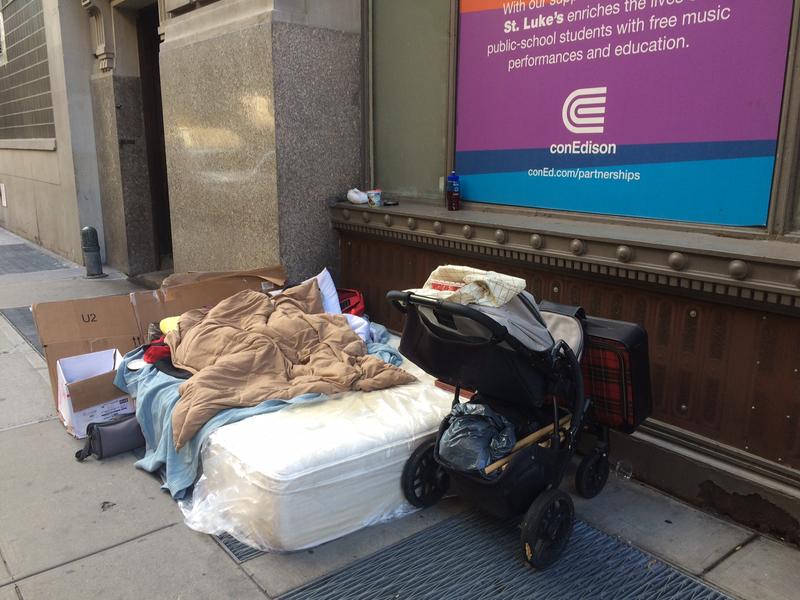
Brian Lehrer: Brian Lehrer on WNYC. Now, we're going to talk about Mayor-elect Zohran Mamdani sparking debate with his announcement on the future of homeless encampments. Last Thursday, Mamdani announced that under his administration, he will end the practice of sweeping tents pitched by homeless New Yorkers, a policy started by Mayor Adams. Here's 30 seconds of what he said to reporters at that news conference.
Mayor-elect Zohran Mamdani: If you are not connecting homeless New Yorkers to the housing that they so desperately need, then you cannot deem anything you're doing to be a success. We are going to take an approach that understands its mission is connecting those New Yorkers to housing, whether it's supportive housing, whether it's rental housing, whatever kind of housing it is, because what we have seen is the treatment of homelessness as if it is an natural part of living in this city when, in fact, it's more often a reflection of a political choice being made time and time again.
Brian Lehrer: Mamdani last week. The Adams policy has been in effect since 2022. According to reporting from the news organization, The City, Katie Honan there, New York City has spent $6.4 million just since last year on sweeping encampments. Out of the 4,148 sweeps that were conducted, according to The City, "Not a single person was offered permanent shelter through housing voucher applications, direct placements, or transfers to supportive housing," from that article.
Gothamist's Karen Yi reported that in May, The City's data showed that although 3,500 people were moved out of homeless encampments, just 114 were placed in shelters. Mamdani's announcement has drawn praise from advocates for homeless New Yorkers, but sharp criticism from Mayor Adams himself, also Governor Hochul and others involved in implementing the current policy. With me now to share his reporting on the announcement from Hamdani and the discourse that's followed is Dan Rivoli, politics reporter at Spectrum News NY1. Hey, Dan, welcome to WNYC today. Thanks for taking some time out from TV to come on the radio.
Dan Rivoli: [chuckles] Brian, thank you for having me.
Brian Lehrer: Listeners, if you have ever lived in a homeless tent camp in New York City or if you know anybody who has, or if you are an advocate in this or work with this or have an opinion on any side of this question, you are welcome to call in. 212-433-WNYC, 212-433-9692, call or text. Dan, take us back to Mamdani's announcement. We played the clip. What do we know so far about his reasoning for wanting to end this practice, and why did he decide to announce it now, before he even becomes mayor?
Dan Rivoli: Brian, it was really interesting. He has this news conference in a park near StuyTown in Manhattan, and it's hot cocoa, frozen rents, right? He's going to hand out hot chocolate on a chilly, frigid day, and then talk about his plans to freeze the rent and his broader plans for building housing and that housing agenda. Then he takes questions from reporters, and they're wide-ranging, "Mr. Mayor-elect, what do you think of Mayor Eric Adams signing these executive orders on anti-Semitism in the final days of his administration?" and asking him about the news of the day, "How about that congressional race out in Brooklyn and Queens that's opening up?"
One of the questions is, "Do you plan to end what reporters and advocates call the homeless sweeps? Do you plan to end the homeless sweeps that were a hallmark of Adams's policy?" He very flatly, very directly says, "No," he'll discontinue them. Then he gets asked, "What is your plan?" Then he talks about how you have to connect people to housing. I'll speak for myself as a reporter. It was a very "dog bites man" story. I said, "Well, of course, progressives hate this policy." They find it dehumanizing to homeless men and women. It's cruel. It alienates them further from city officials, city workers who are trying to offer them help. It's not a good policy.
I just wrote up the story, and I think a lot of other reporters wrote up the story as Mamdani talking about Mayor Adams, and then I see the discourse on social media. I'm on the X platform, and it's just going up, up, and up. You're getting people in support of it, people who are opposed to it, and saying, "This is the wrong decision." He basically just announces this, and he doesn't really have details of this plan. It's really goals, so that's how this all came about.
Brian Lehrer: Yes, I was looking at your X feed, actually, and looking at one of your posts that seems to indicate that the two mayors define success differently. Mamdani and progressives see homeless sweeps as a failure if few accept shelter. Adams sees success if there are no tent cities and parks and sidewalks. Talk about the Adams definition of success in this case, and how he can say it's successful if so few people are accepting any kind of shelter, not to mention nobody being placed in permanent housing.
Dan Rivoli: Right. Mayor Adams, the next day, after Mayor-elect Mamdani makes this announcement, he cuts a video saying that this is an important policy, that it is dehumanizing to allow people to live on the street in tents and encampments. It's dangerous for them. It's a quality-of-life nightmare, as Mayor Adams put it. He took the rare step of actually cutting a video and putting it on his social media platforms.
Brian Lehrer: Oh, we have that.
Dan Rivoli: Sure.
Brian Lehrer: Let me jump in, because we have 30 seconds of that Adams video. Here we go.
Eric Adams: I won't criticize him on every issue, but when a policy harms New Yorkers, I have to speak up. Showing compassion for those sleeping on the streets is not as sweep. It is humane. Ending this action will create a quality-of-life nightmare. Just look at cities that allow encampments, and you'll see the damage. Worse, leaving people to suffer in the cold isn't just neglectful. It's a disgrace.
Brian Lehrer: There's a lot we could unpack there. He believes, or at least argues, that his current policy of sweeping encampments is compassionate, which is, I think, the opposite of the way Mamdani perceives it. What does Adams say the resolution has been for these thousands of people if nobody's winding up in permanent housing and very few are winding up even in shelters?
Dan Rivoli: Well, the idea is they're not intense. I think that is the goal of the Adams administration is to not make street life more satisfactory to the homeless men and women than going into a shelter. As difficult as a shelter is, it could be violent, overcrowded, filthy. It also has a lot of rules. They have curfews. There are regulations about substance abuse. You can't bring in alcohol, things like that, and so I've interviewed--
Brian Lehrer: That makes it sound like it's not about more happy circumstances for the homeless people themselves, but it's more about the ick factor or the potential danger factor if there is one for everybody else passing by.
Dan Rivoli: Yes, that too. I think that's an important part of why Adams does this. You hear in that clip, he mentions other cities dealt with this. It is a problem for other residents if you can't take your family to a park because there's a tent city there. That could be a problem, but it's also a problem for homeless men and women. There can be violence in these encampments, substance abuse, overdosing. If that life is much more better to a shelter, then they're definitely not going to get help in a shelter.
The flip side of that, as you hear from progressives, is if you go and tell them they can't camp here and then take their possessions, there's videos of sanitation workers taking these tents and putting them in the back of garbage trucks. I had a cameraman of mine interview City Comptroller Brad Lander. He was having a press availability. I gave my cameraman a question, "Ask Brad Lander about this." He's been a critic of these sweeps.
He says, "If you do them, you will break the trust between the city and homeless men and women, that you need to get them into shelter or housing because they are so resistant to it in the first place." It's basically the same goals on two sides, just different approaches to Mayor Adams. He argues that if you let them sleep in tents and in these encampments, they are less likely to go accept help. Where you have the progressive saying, "If you take away their possessions and you make the city workers the enemy, they are also unlikely to go into shelter."
Brian Lehrer: Listeners, anybody with experience with this firsthand, secondhand, any other way, or an opinion or a question for Dan Rivoli, political reporter for NY1, as we talk about Mayor-elect Mamdani's announced intention to end the Adams practice of sweeping tent encampments of homeless people, 212-433-WNYC, 212-433-9692. Call or text. Mark in Manhattan, you're on WNYC. Hi, Mark.
Mark: Good morning, Brian, and thanks for covering this. As I told your screener, Norm Siegel and Bob Hayes and two others and myself in August of 2022, reached out to the mayor because Norman had a relationship and said, "What are you doing with these sweeps? This is violating people's civil rights." The mayor said, "What do you suggest?" We created a project that we call the Street Homeless Advocacy Project.
We've been operating now for over three years at initially four sites, now seven sites, and we encounter folks on the street. We ask them if we can refer them to a small shelter called stabilization or safe havens. About one quarter of the single beds are the smaller one to four people in a room. We've referred over a thousand individuals over the last three years. Many of them, we continue to work with. Many of them, we stay in touch with, and some we help to get into housing. It's been an incredibly successful project.
My site, West Midtown on West 32nd Street, every Thursday night from 7:00 to 9:00, we sometimes refer up to 10 or as many as 15 or 16 people in one night to shelter. We'd stay in touch with them, and many of them come back and help us serve others. What we do at our site is we also have partners who provide food. We're providing about 115, 120 meals every Thursday, which brings people in. Then, if they need a bed, we take out one of my camping chairs, say, "Sit down. Don't leave." We'll call the city, and we get them referred.
It's been tremendously successful. It really is connecting with individuals personally, understanding that they've been through a horrible time, but many of them are very competent people. They just haven't slept in weeks. They've been beat up. They've been ripped off, and they're traumatized. When you get them a good night's sleep, they become, in many cases, very good partners. Clearly, some are very mentally challenged, but that's part of the deal. That's normal people. Some of us have challenges, but we've been incredibly successful. It's been a blessing for us and for everyone that we're working with.
Brian Lehrer: Are you arguing with your story that you had more success placing people in shelters from the tent cities than the Adams administration has had in sweeping them from the tent cities?
Mark: Absolutely. We know in the tent cities, the police and the sanitation will come. They just throw everything away. People lose their identification. Whatever precious items they have, they're totally robbed of. It's a total lack of respect of the humanity of that individual, who's just trying to hang on to some level of dignity, some level of safety. We know that reports that we have are that when you go to large shelters, 10, 12 people in a room, it can be very frightening. Many people can't handle it.
If you're in a room with one, two, three, four people, you can get a sense of control of your life. Then, if they're at a good place, they'll get a voucher, and then we can move them into housing. It's really treating each individual with respect and listening to them. I get four or five calls a day from folks who tell me their story. I listen, and they say, "Thank you so much. You're such a blessing." It's really giving people the dignity to hear them out and say, "I understand you're struggling. Let's see what we can do."
Brian Lehrer: Mark, thank you very much for sharing all of that. We really appreciate your call. Dan, that caller brings me back to something I think you were starting to describe before, and that is what is the Mamdani alternative if he's not going to take down the tent encampments? Maybe he's going to team up with Mark from Manhattan and his partners who are legendary in the field, Bob Hayes and Norman Siegel. What system has he announced for more successfully placing people from the street into shelters, if that's even the goal?
Dan Rivoli: Right. Brian, your caller raised an incredibly important issue in homeless advocacy, which is these safe haven beds. They're called "low-barrier." Low-barrier is they don't have curfews like some other shelters, or there's no requirements for sobriety. They're much smaller. They could be single-room or just a few, rather than these large congregate shelters where it could be an incredibly violent atmosphere in place.
That has been a model Mayor Adams has endorsed. He's endorsed these safe haven beds, and he's put money to expand them. If I heard Mark correctly, he's right that these are only a quarter of the beds compared to the overall universe of beds for a homeless man or woman to take. These are a lot fewer places for them to go. Homeless men and women like going to them because they are known as low-barrier. They don't lose their spot if they miss a night. That has been a plan from Mayor Adams to expand that.
Now, it's not easy. We have limited space, vacancy housing. You have protests. There's political opposition to shelters, especially if they're too close to a school. That is a reality Mayor-elect Mamdani is going to face. He has goals in mind of connecting homeless men and women to housing, whether it's temporary rental assistance and things like that. These are issues mayors have done in the past.
They have not completely solved the issue or, in some cases, haven't made an appreciable dent on them. That doesn't mean you don't do them. I think the mayor-elect is going to find out that the goals, as laudable as they are, he might have a lot of trouble meeting them when he steps into city hall, and he sees the landscape out there of the number of beds, the number of homeless men and women that he has to shelter.
Brian Lehrer: Eugenia in Manhattan, you're on WNYC. Hi, Eugenia.
Eugenia: Yes, hi. I called before. I was homeless in 2015, and I wasn't living in an encampment, but I was offered shelters. They're horrible. I used to go and take showers there, and they looked like something from a horror movie from 1930s. The security guards and the police, for the most part, 9 out of 10, they want you to go away. They don't want you to exist. I feel for the people now. I'm not homeless anymore, but I feel for the people that stretch out on the sidewalks and have all these people walk by, ignoring them. It's more than dehumanizing. It's humiliating. Someone wants to talk about supporting housing here.
Brian Lehrer: You had bad experience with the shelters. Eugenia, what do you think of Mamdani's plan to end the sweeps of the encampments? Even though you didn't yourself live in an encampment, do you have an opinion about whether that will make things better?
Eugenia: No.
Unidentified Caller: No. I can tell you how this is--
Brian Lehrer: Wait, we have two callers on this call? Eugenia, who's with--
Unidentified Caller: Yes, you do. You have somebody who has firsthand experience.
Brian Lehrer: Yes, sir.
Unidentified Caller: Well, seriously, the way they treat-- [sound cut]
Brian Lehrer: Well, sounds like somebody cut them off. It wasn't me. Let's see if we can get them back. Eugenia and sir, are you still there? Well, I don't know where they were, and I don't know where they went. Dan, that's a very interesting call from the perspective of-
Dan Rivoli: That's right, yes.
Brian Lehrer: -one-and-a-half people who seem to have gone through this.
Dan Rivoli: That's right. I think this is an issue Mayor Mamdani didn't talk about in that news conference, but that's really the big issue he's going to face. How do you make these homeless shelters, that provide the bulk of the beds, a place where homeless men and women want to go? You heard Eugenia describe the conditions she had to go through being in a shelter. You can understand why someone would be so resistant to going there and prefer street life.
That's going to be Mayor-elect Mamdani's big task. Yes, connecting people to housing. That's the easy part. The hard part is making it housing worth living in. I think that is where he's going to face a rude awakening, I think, because it is a difficult task. You get hard on bad shelter operators. What, do you close them down? Then you lose the beds. Do you allow them to operate just because it is a warm place, even if there is violence? Do you bring NYPD back to shelters and things like that?
Obviously, Mayor Mamdani has pitched a pullback of policing from public life in different areas, so these are going to be the issues he's going to have to make decisions about. It's key to stopping the sweeps, if you do want to stop the sweeps, or even avoid having to do them at all, because there are no tent cities. Fixing the shelter system, which is a huge issue, is going to be first and foremost for him.
Brian Lehrer: Michelle in the Bronx, you're on WNYC. Hi, Michelle.
Michelle: Hi, good morning. Happy to be here. I mentioned to the person I was speaking to earlier, my daughter applied for high school to one of the consortium schools. One of the questions they were asked was if you were given-- I can't remember if it was $10 million or $10 billion, what would you do with it? One of the things that really hit her was all the homeless people in the Bronx. She really wanted to do something about it, so she did a lot of research.
It seems there's been quite a few studies that say that if you give somebody safety and security, i.e., a place of their own that they're not sharing with other people, even if it's small, that it keeps them out of hospitals. It gives them a platform to get jobs. It just gives them a safe where they will be there all the time. They can usually eventually go back and rejoin society, provided that they're not dealing with a mental illness of some kind. Apparently, it costs the taxpayers about a third of what it does to run these wide shelters. I'm just wondering why that hasn't been considered.
Brian Lehrer: Maybe your high school student daughter wants to apply for assistant budget director in the Mamdani administration, as much detail with which he crunched those numbers. Dan Rivoli?
Dan Rivoli: This is a debate in policy on finding homes for homeless men and women here. It's called Housing First. Brad Lander, the New York City comptroller, made it the key of his policy when he was running for mayor on how to address this. It is just like your caller said. You just offer them housing with services, but there's a debate about its effectiveness. San Francisco also has a Housing First policy.
Its problem with people sheltering on the street, living on the street, has just gotten worse. It's become a national issue. There is a real debate about the effectiveness of it that, yes, you can give someone a home. If they are not of sound mind, if they have substance abuse issues, if there are too many rules attached, they could just go right back to life on the street.
It is a mixed bag. It could work, but it's not a given. I think there's a real debate about how to make it work and whether it should be implemented. Like I said, this has been a hallmark of progressive policy towards people living on the street. It's been tried in other cities that did not appreciably deal with their issue. In fact, like I said, in San Francisco, the homeless population got bigger.
Brian Lehrer: That goes to the point in the Eric Adams clip, where he said this had been tried in other cities and didn't work. Did Mamdani get asked that question at his news conference?
Dan Rivoli: No, and that's the issue of announcing policy at a news conference like that. It was a wide-ranging news conference. He got asked if he would end the sweeps or-- Excuse me. He was asked if he would continue the sweeps. He said no. The follow-up was, "Well, what are you going to do about the homeless population?" He gave that answer about connecting them to housing, and that any policy in which they're not connected to housing cannot be deemed a success, and then that was it. It was on to the next topic.
I think that's been an issue in the transition that he doesn't have these fully fleshed-out details. He's got goals. He's got sensibilities and sentiments about what he wants to achieve, but no detailed plan on how to do it. Of course, that all ends on January 1st, where you get into office, and then you just do it. You have to see if just having a goal is good enough. You have to have a plan to meet that goal.
Brian Lehrer: Yes. Well, he does plenty of press so far, so I'm sure you all in the reporting crew will get a chance to ask him that follow-up question, including maybe this one from a listener, and we'll end on this. Listener says in a text, "This is a misstep by Mamdani. He needs to pay attention to the needs of working New Yorkers. We feel for those suffering homelessness, but our government needs to prioritize quality of life for working New Yorkers. Hard to believe he wants to start his administration with viable homeless encampments cropping up."
Whether somebody disagrees or agrees with the sentiments of that listener, is there a history of Mamdani already addressing the rest of the public's interest here? You mentioned parks, for example, that, in some cases, may not be available to parents with their children because there's a homeless encampment there, as he addressed. Well, what about everybody else?
Dan Rivoli: I think that's just an issue we'll have to wait and see until he actually takes office. He's talked about, for example, more funding into parks. He sees parks, and this is just as a for instance on how he views the job, as just that part of New York City life that makes it worth living here for all the indignities we suffer. If we can have a nice park, a working-class family can have something enjoyable, that's low-cost, free for parks. You go in there, and you enjoy a nice day.
With a homeless policy that could allow encampments to crop up, I think that just goes right to the heart of his whole governing philosophy. He's going to have to make sure that if he finds the sweeps so dehumanizing and such a failure, he's going to have to come up with a much better plan to prevent these from happening. In my reporting career, I've interviewed homeless men and women.
There was one man recently I interviewed. This was during the campaign. Brad Lander was pitching his Housing First policy. I go upstairs from Union Square, and there's a man hired to sweep up and keep the sidewalks clean. He was one of those men who had been homeless and got his life together and moved into a place. You have a room, some shared amenities like a kitchen and bathroom. There are rules there about substances, curfews, and things like that. He was telling me, he made the choice to do what it takes to get into housing. That was a success story, and it is possible.
Brian Lehrer: Dan Rivoli, political reporter for NY1. Thanks for joining us, Dan.
Copyright © 2025 New York Public Radio. All rights reserved. Visit our website terms of use at www.wnyc.org for further information.
New York Public Radio transcripts are created on a rush deadline, often by contractors. This text may not be in its final form and may be updated or revised in the future. Accuracy and availability may vary. The authoritative record of New York Public Radio’s programming is the audio record.