
Mamdani's Plan for Responses to Mental Illness Crises
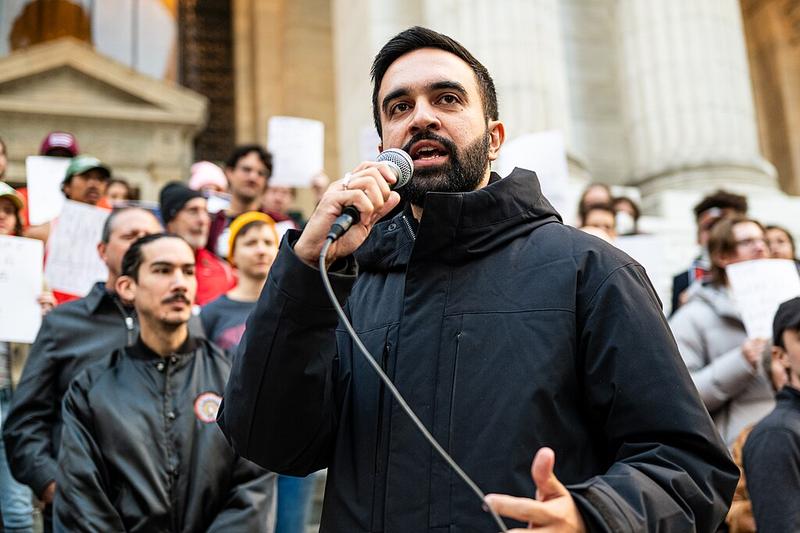
Brian Lehrer: Brian Lehrer on WNYC. You might remember that one of Mayor Mamdani's central campaign promises was that he would create a so-called Department of Community Safety, or DCS. A big part of that pitch was that the city would start sending social workers to the scene of mental health crises in some cases, instead of cops. The shooting of Jabez Chakraborty just last month by the NYPD offered a near perfect example of what Mamdani's critics fear about this proposal.
The initial 911 call did not mention a weapon, but Chakraborty, who suffered from schizophrenia, pulled one out after officers arrived on the scene, so the looming question is, essentially, under Mamdani's vision, how would the city respond to cases like this, and would those responses be protective enough? Following the shooting, Mamdani said that he's going to speed up the development of the Department of Community Safety.
The mayor has historically taken a pretty critical stance toward the NYPD. As you know not that long ago, he advocated for defunding, and all of that, but he has since walked back those positions in a big way. Remember, in November, he even decided to keep the Police Commissioner, Jessica Tisch, who was an Eric Adams' appointee, so he's definitely responding to the fact that New Yorkers do see public safety as a major concern, and he has expressed a strong desire to build a positive relationship with Tisch and the department.
Now that he's ramping up efforts to build the Department of Community Safety, in addition, that relationship is going to be put to the test in some specific way. So far, the specific vision, however, for what the DCS is, remains fairly murky, so joining us now to unpack Mamdani's evolving approach to public safety is Annie McDonough, City Hall Reporter at City & State. Hi, Annie, thanks for coming on for this.
Annie McDonough: Hi, Brian, thanks for having me.
Brian Lehrer: Let me play a clip from a news conference last week. The mayor was asked by a reporter how he proposed that the Department of Community Safety would respond to a call like the one we described, where someone having a mental health crisis may also have a weapon. Here's his response.
Mayor Mamdani: There's a few things to say here. One is, a lot of this is exactly the focus of the conversations that we're having internally in developing out this Department of Community Safety. Additionally, I want to make clear that a person experiencing a mental health episode does not always have to be served first, or exclusively by a police officer. It is important for us to have all of the options available, and that's exactly what we're looking at.
Brian Lehrer: Maybe not quite as specific an answer as the reporter was looking for, but what do you make of that response?
Annie McDonough: I mean, that is a really central question of what this Department of Community Safety is going to look like, and zooming out a bit, this entire department is not just emergency mental health crisis response. That's the part of it that's been discussed the most, and that's the part that's been discussed the most by the mayor himself on the campaign trail, but very broadly, it's described as a way to reorganize the city's services and responses to major issues like mental illness, gun violence and homelessness in a way that de-emphasizes, and in some cases removes police and law enforcement.
That central question that he was asked, I think, by Marcia Kramer last week is something that he's going to have to answer very soon. I think if he wants to take the action that he's talking about towards getting this department up and running. What we know so far is that they've hired some people to work under Dean Fuleihan on this department. We know that they've endorsed legislation--
Brian Lehrer: The first Deputy Mayor Dean Fuleihan. Go ahead.
Annie McDonough: Yes. They've endorsed a bill by Lincoln Restler to create the runway for this department. There's been some reporting that they're looking at executive orders to take first steps on this as well. They're laying everything out as an option to move towards creating this, but that doesn't provide a lot of answers about how it will actually work, or what it will look like, so we're just pulling together pieces of what we have so far.
Brian Lehrer: Yes, so to the Chakraborty case as an example of what might be done differently in the future, I want to ask about what they call co-response, right? Which is an existing practice in the NYPD, where they will send joint response teams with mental health experts and police officers to respond to certain calls. On the campaign trail, Mamdani suggested ending these co-response teams. That got a lot of pushback. Where does he stand on that now?
Annie McDonough: He said he wants to end co-response in this campaign white paper describing what the Department of Community Safety would look like. The way he was talking about it last week is, sounds more like police will have some role. We've asked a few times last week if he still wants to end co-response, and didn't get an answer from City Hall on that.
I think the other question about how mental health response will look different under Mamdani than previous administrations is unanswered more broadly, because, in this instance, it's unclear that he would have been served by what they call a B-HEARD team which is separate from co-response, but is an entirely non police response to mental health calls that are deemed to be nonviolent.
Brian Lehrer: Which also already exists.
Annie McDonough: Which already exists, so there's a scenario of the Department of Community Safety where maybe it is mainly expanding this existing program which currently only operates in a couple boroughs, and has less than 100 staffers as part of it. 9:00 AM to 1:00 AM, it's not 24/7. He wants to expand it city-wide, 24/7, a 150% its current funding, but that wouldn't majorly change, unless he changes the protocols, what kinds of incidents they respond to, so that is the question.
Is he going to change the protocol in some way to have additional kinds of incidents responded to by non-police, or even maybe leading with mental health workers, but having police backup? Then, that opens up the same co-response question you asked earlier. If he said before he wants to end those kinds of teams.
Brian Lehrer: We can take a few phone calls, or texts with a question, or a comment. 212-433-WNYC, 212-433-9692. Do you have anything on Department of Community Safety and the cold, and these now 18 deaths that the city has deemed to be cold related? There's a lot of pushback in the right wing press about the mayor's policy decision not to do homeless encampment sweeps on the grounds that, in the name of compassion, he's really endangering the lives of those people, especially in these very cold days.
The mayor says, none of the deaths have been associated with people in an encampment. In any case, the standard for involuntary removal from the street of a person who is deemed incapable of caring for themselves, has not changed from Adams. Is there anything, whether or not it was in your article, anything you have as an impression with respect to the cold in the tent encampments, and where the Department of Community Safety under Mamdani would fit in?
Annie McDonough: I mean this is again an unsatisfying answer, but the detail for how it might change under Department of Community Safety just isn't really there yet, but if you look at what's in this campaign white paper, which I'll note was the brainchild of Mamdani's close advisor, and now chief of staff Elle Bisgaard-Church, a underdiscussed part of it, is that it does talk about homeless outreach, and having teams even in the subway doing that outreach, which maybe clashes with some of the state's work.
I think a concern that's been raised by Brian Stettin is the former senior advisor for severe mental illness to Eric Adams, but he's noted that, if this department is looking to make a more streamlined outreach effort for these disparate social services, it could become, in fact, inadvertently more complicated by having a new department doing homeless outreach instead of just DHS.
I would imagine that this is a department that wouldn't want to emphasize involuntary removals. If we are reading what the mayor has said in the past about not wanting to move in that direction, but as we've seen during these last couple weeks, he's of course, made, I think, at least 20 involuntary transports to hospitals in this code blue situation, so we don't really know what it might look like under here, but I think he is going to face a lot of pressure to make sure that it does not further complicate homeless outreach efforts, and we'll see what that looks like in its final version.
Brian Lehrer: Alicia in Queens, you're on WNYC. Hi, Alicia, thank you for calling in.
Alicia: Oh, thank you for taking my call. I didn't tell the screeners, but I'm a retired lieutenant from the NYPD, and I totally agree with the mayor's vision of what needs to happen here, but I think it has to go. It has to be more than just sending a social worker. I think that the 911 operators have to be retrained, and if they want to make, send the call to a specific 911 operators who know what to say to the family, but one of the things I saw in the video, if I'm seeing it right, is that he did not have a knife in his hand, until they said the police were at the door, and then he grabbed the knife off the counter.
Families have to be instructed when they call, not just, does he have a weapon, but is there anything within their reach? If there is a knife, a gun or whatever, put it someplace where they can't get to it, and then, you can maybe stay on the phone with them until the social worker arrives, and just let them know what to do if the person gets agitated or whatever by somebody coming. There's ways that you can calm people down.
Brian Lehrer: Really interesting, Alicia, thank you very much, and important. Has the mayor, to your knowledge, Annie, or anyone else involved in creating the Department of Community Safety talked about further training for the 911 operators?
Annie McDonough: He has talked about integrating 988 and 311, which is non-emergency response, in terms of non-emergency mental health services.
Brian Lehrer: Right 988.
Annie McDonough: As far as 911, I would imagine that retraining is, and I'm filling in the blanks here, so I don't want to say that he's committed to this, but that could be one way to reset, or fine tune the protocol for what calls get that B-HEARD non-police team response, which, and that's the B-HEARD team is two EMTs and a social worker from health and hospitals, but I would imagine that will be part of it. I don't know what that would look like in detail exactly, though.
Brian Lehrer: I think this leads us, especially, one thing from Alicia's call that he was-- Chakraborty was not known to be having a weapon until the police arrived, and then he took a knife, I guess, from the kitchen. This leads us to the question that I think Mike in Flatbush has. Mike, you're on WNYC. Hello.
Mike: Hello, Brian. Thank you for taking my call. Yes. Instead of putting it on the family member, I mean, it would be great if you could make the scene as safe as possible, but in terms of policy. I don't know that the Marcia Kramers of the world understand how triggering it is and escalating it is to have the mere presence of police on the scene, and I think that's the whole point of sending social workers who are trained, and have options, and have some sort of training in terms of if things start to-- If they get violent.
Brian Lehrer: Yes.
Mike: It's not an all or nothing situation, but I think that, people have to rethink what their neighbors feel, what comes up when they see police. It's not always that they're helpers, sometimes they do escalate just their mere presence before they even open their mouths. Thanks for taking--
Brian Lehrer: Right. Thanks for making it. Yes, I mean, that's part of the balance that it sounds like the mayor wants to try to rebalance, or find where that line is in a new way. When is the deployment of police to a mental health crisis protective, and when does it actually make this situation more dangerous?
Annie McDonough: Right, and that zooming out, gets to the central pitch, which there is a good amount of agreement, it seems, even if there's a question of how. It's just that police are not necessarily the best people to respond, and deescalate every situation. They can do trainings, but it doesn't make them an expert in mental illness, or even the next step beyond crisis response, which is figuring out how to connect that person to the best next services or medical care.
Some of the data from the B-HEARD program, which is very limited, but there was a independent budget office report out last week that showed that B-HEARD teams spend something like 15 minutes longer on the scene than the traditional 911 and ambulance response to a mental health call. Obviously, we don't know what's happening there, but you could infer, potentially, that there's more discussion and back and forth, and one would hope, connection to the right services.
Brian Lehrer: Annie McDonough, City Hill reporter at City & State, reporting now on the creation process for Mayor Mamdani's Department of Community Safety. Thanks for joining us, Annie.
Annie McDonough: Thanks, Brian.
Copyright © 2026 New York Public Radio. All rights reserved. Visit our website terms of use at www.wnyc.org for further information.
New York Public Radio transcripts are created on a rush deadline, often by contractors. This text may not be in its final form and may be updated or revised in the future. Accuracy and availability may vary. The authoritative record of New York Public Radio’s programming is the audio record.
