
Local News Day: New Jersey's Media Landscape
Brian Lehrer: It's The Brian Lehrer Show on WNYC. Good morning again, everyone. Later in the hour, we're going to open up the phones on the straight ahead question: do you believe in God? Are you an atheist or are you an agnostic? For any of those three categories, tell us why. Why are you so convinced there is a God? Why are you so convinced there is not a God? If you're an agnostic, why are you so convinced that you can't know?
That's going to be a follow-up on all the segments that we've done recently around Ramadan and Easter and Passover and our look last Friday at the trend. It's not a huge trend, but enough of a trend to be talked about of people in Gen Z going back to religious institutions because they are seeking community. It skirted the question of God. Some people were trying to bring it up. I wouldn't let it happen in that segment because we were talking about community. People wanted to talk about it, so we're just going to let it rip coming up a little later this hour. Do you believe in God? Do you not believe in God? Are you an agnostic? Tell us why and the ramifications for your life or the world, all right? That's coming up.
First, a group of local journalists and news organizations have designated today as Local News Day. Sounds good to us. We love local news, and hopefully you think WNYC and Gothamist, New York and New Jersey Public Radio are a great source for it. As many of you know, local news has been in decline for decades now as the advertising streams that used to support it have gone so much to tech sites as have the readers.
To highlight the plight and various efforts to retain and restore local news, today is Local News Day in the US, and our contribution right now will be to look at some of the particular challenges facing New Jersey. WNYC has reporters focused on the state. Michael Sol Warren, one of our Jersey reporters, was just on the show on Tuesday. We are New York and New Jersey Public Radio, as you hear me say, with our various New Jersey frequencies in addition to WNYC itself, but the state is situated between the major media markets of New York City and Philadelphia.
What has always happened is the major media outlets tend to focus more on those cities than on the 9 million people who live between them in the approximately 600 local municipalities of New Jersey. With all those little cities and towns and townships, there is a lot of local news to cover. How's it working? How can it work better in the future, even in this climate?
To talk about this, we're joined by Stefanie Murray, director of the Center for Cooperative Media at Montclair State, where they track and support local news initiatives. She's joined by two local news providers: Penda Howell, co-founder, CEO, and publisher of New Jersey Urban News in Newark, and Aaron Morrill, founder, publisher, and editor-in-chief of the Jersey Times. Welcome to all of you to WNYC. Hi.
Aaron Morrill: Thank you.
Penda Howell: Morning, Brian. Great to be with you.
Stefanie Murray: Hi, Brian. Great to be here.
Brian Lehrer: Stefanie Murray, begin. What's the idea behind Local News Day? Whose idea and what's involved?
Stefanie Murray: Whose idea and what's involved? It's great to be here. The idea actually started with the Montana Free Press, which is a nonprofit news outlet in Montana, and its founder, John Adams. It's a new national event to try to raise the visibility of local news outlets because we talk about this a lot in the media, but I find that a lot of everyday, regular Americans don't know that local news is under pressure and really needs your support.
Here in New Jersey, 43% of our municipalities have no dedicated local news coverage. Of the 460 or so local non-statewide newsrooms that produce New Jersey-specific content for our region, a majority of them are small businesses, and they're run by local people, and they have revenue of $500,000 or less annually. Those are all statistics from our new research report, which we will put out next month, examining the local news landscape.
Brian Lehrer: Listeners, you're invited in on this, especially New Jersey listeners, where, besides WNYC, since if you're listening, we assume you would put us on your list, do you get your local news? Have you had to find new sources for local news in recent years? We know some of the losses in New Jersey. The Jersey Journal folded. The Star-Ledger has had so many cuts, ended its print edition, and other things.
Where are you getting local news in New Jersey, and are any of those sources relatively new? 212-433-WNYC, 212-433-9692. Before we bring in our other guests who run a couple of local news organizations in New Jersey, Stefanie, what is the big picture on the state of the local news media that serves the state? I mentioned some of the closings and cutbacks. Give us the big picture as you see it.
Stefanie Murray: Yes, absolutely. We have suffered from a lot of closings and cutbacks over the last decade, especially in our state, because being situated between Philadelphia and New York, we haven't had strong commercial broadcast outlets in our state. We've been a newspaper state for a long time, and newspaper states, newspapers have contracted. However, the big picture, when you step back and look, is in the growth of nonprofits, in the growth of startups, and in independent for-profit news organizations.
We have quite a few nonprofit news organizations that have started in our state and are very mission-driven and community-rooted and community-focused. That's like Montclair Local, the New Jersey Hills Media Group, NJ Spotlight, Two River Times, The Jersey Bee, and we can keep going. Additionally, we have quite a few independent for-profit news organizations filling gaps all over the state. You include the TAPinto chain, Village Green and Morristown Green, HudPost.
We have some really innovative new kinds of entrance to the scene, too, like On New Jersey, which is a 24-hour live-streaming television station. We have also non-journalists getting into this kind of work. Hopeloft in South Jersey is a great example of that. It's a community development corporation that's funded by the New Jersey Civic Information Consortium, as well as the Robert Wood Johnson Foundation, to help expand local news coverage in communities in South Jersey. Very non-traditional way of trying to fill gaps and better serve people in our state.
Brian Lehrer: You have a stat that there are 730 news providers in the state.
Stefanie Murray: That's right.
Brian Lehrer: 730 sounds pretty robust. How many of those are new within the last, I don't know, 5 or 10 years?
Stefanie Murray: It does sound robust on paper. We count news and information providers with a pretty wide lens. That includes print, it includes podcasts, it includes digital, it includes magazines, and it also includes all of the public access television stations. When you exclude some of those that are not producing content regularly on a local basis, we get down to about 460. Among our 564 municipalities, many of those 460 are clustered in urban areas and in parts of North Jersey specifically. That's where you end up getting 43% of our municipalities without a dedicated local news outlet to cover what's happening in their towns.
Brian Lehrer: Now let's bring in Aaron Morrill and Penda Howell. Tell us about your publications and how you would characterize their scope and audiences. Penda, you want to start with the New Jersey Urban News, headquartered in Newark, but I see that you identify your organization as your Black news source in the Garden State. To start out, your range is statewide?
Penda Howell: Good to be with you, Brian. That's right. I describe New Jersey Urban News as a weekly newspaper in digital format. New Jersey Urban News, I feel, is community-centered. We're a community-centered media platform focused on telling stories that often get overlooked in the urban communities. Cities like Camden, Newark, and Trenton, our audience is diverse, civically engaged, and looking for coverage that reflects their lived experience, and looking for coverage from folks that they can relate to.
Brian Lehrer: How big is your staff, and what's the range of stories that you cover?
Penda Howell: Brian, our staff has a full-time editor. We have a full-time platform manager, full-time newsletter curator, full-time social media manager. We have myself. We have a person that manages our finances, our HR, and our operations. Then, of course, we liberally use a host of vendors and freelancers.
Brian Lehrer: The host of freelancers are the people who are out doing the actual reporting?
Penda Howell: We do use a host of freelancers to do a lot of our reporting, but also two of our staff members do the bulk of our reporting, honestly. We have a journalist on staff, as well as a contributing editor who also does a lot of reporting for us.
Brian Lehrer: You want to give us one example of an article you have on the site right now?
Penda Howell: Sure. I can point to, very quickly, our Camden coverage, the rats, feces piece that you see. We have a column called Camden Front and Center. That column covers community-based initiatives and issues that are affecting residents of Camden. We've got our ICE series that we've been chronicling for the past six months that is published weekly, almost. There's just two examples.
Brian Lehrer: Good examples. Now, Aaron Morrill, you're up next to tell us about the Jersey City Times, but you know what? We have a caller who says she's a reader of your publication. I'm going to let her introduce this little stretch. Deborah in Jersey City, you're on WNYC. Thank you for calling in.
Deborah: Thank you for taking my call. Yes, I have been reading the paper for a couple of years online. I'm also a monthly subscriber because a few of our independent papers that we had folded, and this is one of the few ways you can get news about Jersey City, because Jersey City doesn't get covered unless something really bad happens. If you want local news, you need local paper. I've been a subscriber for probably about two, three years, a monthly subscriber.
Brian Lehrer: Deborah, thank you very much. Aaron, I'm sure you're happy to hear from her.
Aaron Morrill: Deborah, so great to hear from you. Thank you so much for supporting us. It really means a lot. Brian, in answer to your question, and thanks for having me and talking about this, I founded Jersey City Times in 2019. I had been an activist previously and just decided that there was a void, there was an absence of hard-hitting journalism that was asking the right questions. I founded in 2019, and now I find myself this year with a staff of four full-time people, a few part-timers, people selling ads. I've got a newsroom, and it's going great. We're feeling good about it and feel like we're making a difference.
Brian Lehrer: Give me an example of one or two stories from your publication.
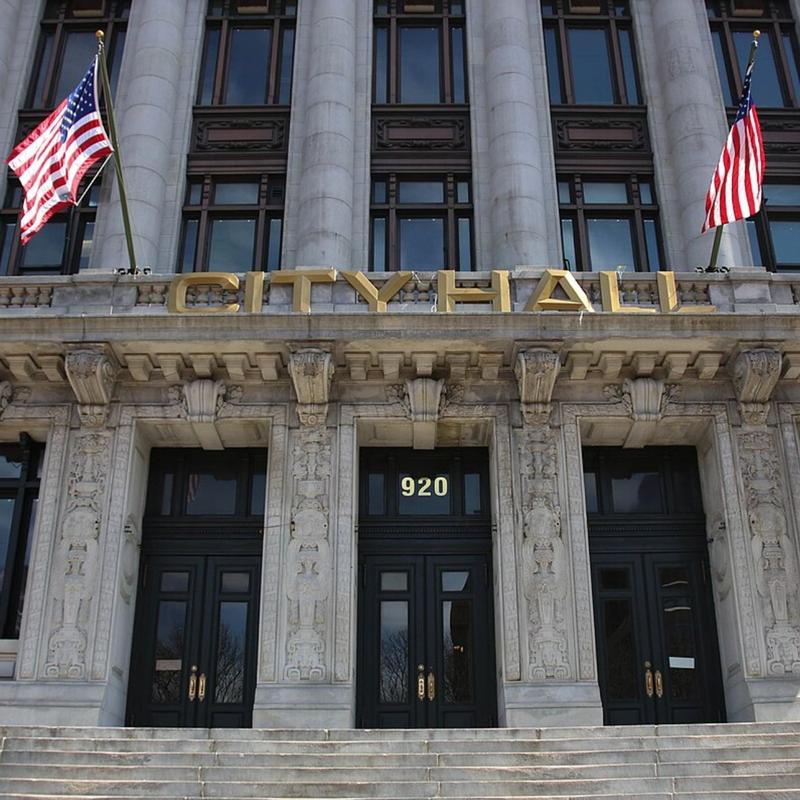
Aaron Morrill: I'm going to go to a story that came out last year just because I wanted to highlight the importance of local journalism and the kind of effect it can have. One of our journalists, I'm going to give a shout-out to Andy Malone, he covers government, city hall. He found out that our local redevelopment agency was about to give $40 million to a not-for-profit to develop an art museum called Pompidou x that really, at this point, nobody wanted in Jersey City. We had decided we just couldn't afford it.
What happened is he found out about it. We published an article about this $40 million transfer that was going to take place to effectuate this museum nobody wanted, and it really was on the rocks. The next day, it was taken off the agenda of the redevelopment agency meeting, and we stopped it in its tracks. I think his diligence, doggedness in finding that, saved Jersey City taxpayers $40 million, I'd have to say, and I mean that seriously.
Brian Lehrer: Good story. How do you raise revenue to support your work?
Aaron Morrill: I've been incredibly, incredibly lucky. I hit the lottery last year. The Online Journalism Project, which is based in New Haven, reached out to me and said that they had been looking at what we were doing. That's a not-for-profit that funds local journalism. They reached out to me and said they were interested in funding the Jersey City Times. I met with them, and at about the same time that happened, that I was meeting with them, the Jersey Journal, which was a 157-year-old beloved newspaper in Jersey City, announced that it would be closing down.
The timing was right, the planets aligned, and I ended up getting funded by the Online Journalism Project in New Haven. I want to give a shout-out to Paul Bass, who runs that, and the New Haven Independent. They gave us enough money to hire full-time staff and to open up a small newsroom. They felt that was essential for us to have a place where people met and talked. I'm sort of pinching myself because I got incredibly lucky.
Brian Lehrer: Penda, same question for New Jersey Urban News. Primarily advertising, subscriptions, state aid to keep you afloat and funding journalism?
Penda Howell: You're right, Brian. Primarily for New Jersey Urban News, I'm certainly not as lucky to have gotten funding to launch and start a newsroom. New Jersey Urban News was funded out of my pocket initially, and we're sustained primarily by paid advertising. That's our business model. Paid advertising, strategic partnerships, et cetera. That's how we sustain our business, and that's how we intend to grow our business.
We do get some funding. The work that we currently do would not be possible without the support of the New Jersey Civic Information Consortium, Lisa, Chris, Ayinde, and the team over there, as well as strategic partnerships around editorial output, investigative reporting, and storytelling, with the assistance provided by Stefanie Murray and the Center for Cooperative Media.
Brian Lehrer: I know the New Jersey Civic Information Consortium does grant-making to support local news outlets, and so let me take that point to return to Stefanie for a closing question. If you're one of the organizers of Local News Day today, how do you see the business models, or for nonprofits, just revenue models, allowing New Jersey journalism to survive and to grow in the future years? Is it a lot of grant-making? Is it a lot of nonprofits, like purely nonprofits, or things that are mixed, things like Penda was just describing, where grants from groups like the New Jersey Civic Information Consortium might be key? How do you see it going forward?
Stefanie Murray: That's a great question. If I had the exact answer to that question, it'd be worth a lot, but I can tell you a little bit about some of the trends that we see. Currently, in New Jersey, advertising is still the most common source of revenue. However, more and more entities have diversified funding, and that's really where we're seeing things are going, is to news organizations, whether they're for-profit or nonprofit, because as I remind people a lot, that's a tax status, not a business model.
Both need to look at diversified funding. That includes taking in money from donations and philanthropy, as well as things like sponsor content, events, all sorts of different ways to make money. I think we're not going to see one model. I think there are several different models of revenue generation and support that we see being developed across the country, and also here across New Jersey, and also non-traditional players coming into the news business and learning how to do journalism in their communities.
I also believe that journalism and access to news and information is a public good and should be funded as such. That's why the New Jersey Civic Information Consortium, as you mentioned, is so important in our state. We are one of the only states in the country, here in New Jersey, that provides support to news information outlets in our state through state tax dollars, not including public media. I'm setting that aside.
The consortium and just a few other states actually take in state tax money and then grant that out to support local news and information ecosystems, including a lot of the small and independent organizations that are serving underserved communities, communities that speak languages other than English, and marginalized communities. That's really, really important. Hopefully, the consortium can get its funding reinstated by Governor Sherrill in the upcoming budget, which is something they're working really hard on right now.
Brian Lehrer: Some listeners have been texting to shout out various local news sources in New Jersey. "The Jersey Vindicator," says one text, "has stepped up to fill the emptiness on state and local coverage." Someone else, "Hudson County View and Hoboken Patch, decent for Hudson County." Another one, "The Record," of course, that's been a relatively major news organization, but it says, "Based in Bergen County, was bought by Gannett and lost a lot of talent to cost-cutting, but it's still a great newspaper with a strong online presence."
Listener writes, "In the Blairstown area, we have the online Ridge View Echo." Another one, shouting out the Two River Times, a non-profit. Another one, the triCityNews. All these little news organizations trying to fill the gap. I guess, Stefanie, as a very last thought, it's heartwarming, right? Because it means that there's an impetus on a lot of people to start these new little news organizations, many of them are new, even if not all of them, on shoestrings, because they feel that journalism is important for their local communities.
Stefanie Murray: That's absolutely true. It is heartwarming, and they need our support. They need our support, and that's what Local News Day is about: to try to find them and give them support. One of my favorite new ones is The Woodbury Warbler in Gloucester County. Jen, who runs that outlet, has been doing a fantastic job. She cares. She cares about her town. She cares what's happening at the planning board and the local government meetings, and she stepped up and started something because she saw that no one else was doing that.
We have that entrepreneurial spirit across our entire state here, and it is heartwarming to see, but they need our support. They need our support. I encourage folks to try to find your local news outlet if you don't know what it is and see if there's a way you can support it. Sign up for a newsletter, make a donation if they're a nonprofit, and try to get engaged because they will be there in your time of need.
Brian Lehrer: Stefanie Murray, director of the Center for Cooperative Media at Montclair State University, Penda Howell, co-founder, CEO, and publisher of New Jersey Urban News, which you can find at njurbanews.com, and Aaron Morrill, founder, publisher, and editor-in-chief of the Jersey City Times. Their URL is jcitytimes.com. Thanks, all of you, for coming on, and happy Local News Day.
Stefanie Murray: Thanks, Brian.
Penda Howell: Brian, thank you.
Aaron Morrill: Thank you.
Copyright © 2026 New York Public Radio. All rights reserved. Visit our website terms of use at www.wnyc.org for further information.
New York Public Radio transcripts are created on a rush deadline, often by contractors. This text may not be in its final form and may be updated or revised in the future. Accuracy and availability may vary. The authoritative record of New York Public Radio’s programming is the audio record.
