
Listeners Sound Off on the Senate Agreement to End the Shutdown
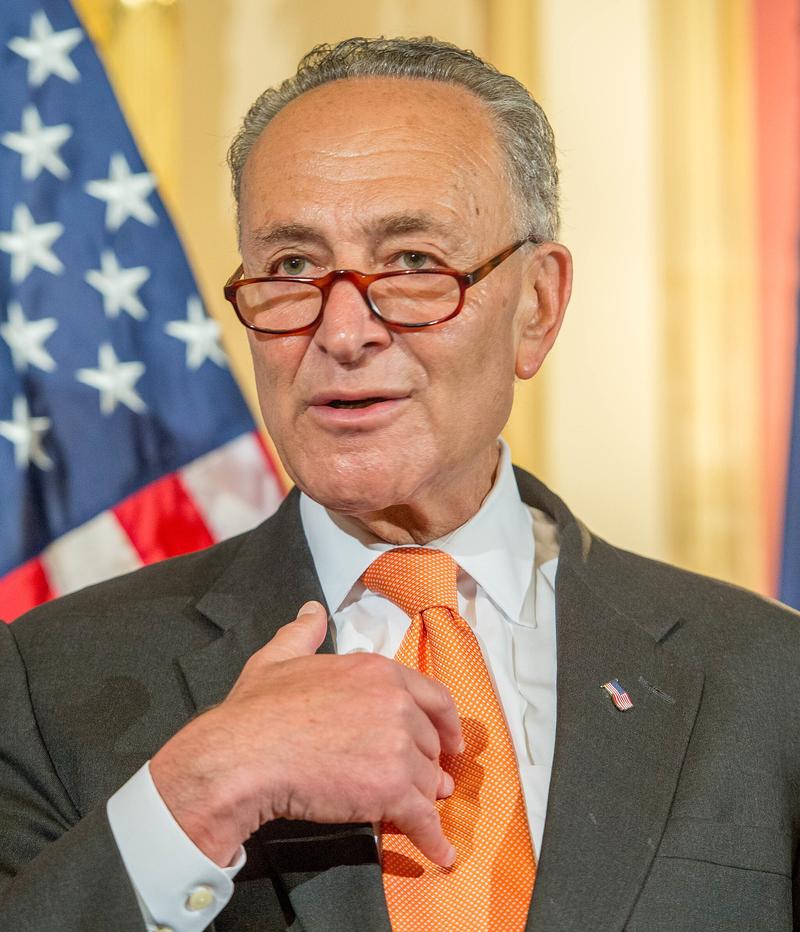
( United States Senate, CC BY 2.0 <https://creativecommons.org/licenses/by/2.0>, via / Wikimedia Commons )
Title: Listeners Sound Off on the Senate Agreement to End the Shutdown
[MUSIC]
Brian Lehrer: Brian Lehrer on WNYC. About that government shutdown, now we'll have a call-in for Democrats on the party's move this week to end it. Are they being smart or are they being weak? 212-433-WNYC, 212-433-9692. Are you for it or are you against it? Do you think it's a path to success or failure on the central issue of Obamacare health insurance premium subsidies, and a path to success or failure in next year's midterm elections? 212-433-9692.
Again, a call-in for Democrats on the party's move this week to end the government shutdown. Are they being smart or are they being weak? Do you think it's a path to success or failure on Obamacare health insurance premium subsidies and a path to success or failure in next year's midterms? 212-433-9692. You can call or you can text. Now, many news outlets are reporting on a furious backlash from progressive Democrats. As The Guardian reports the divide, just to take one example, seven Democrats and an independent face fury over support to advance funding bill amid 40-day shutdown.
If you didn't know who those Democrats were, they were Senators Jeanne Shaheen and Maggie Hassan of New Hampshire, Tim Kaine of Virginia, Dick Durbin of Illinois, Catherine Cortez Masto and Jacky Rosen, both of Nevada, John Fetterman of Pennsylvania, and the independent was Angus King of Maine. As NPR reports the details, the funding package includes a trio of appropriations bills, including one that will fully fund the SNAP program through September, all the way through September of next year, the whole federal fiscal year, but the deal does not include an extension of subsidies for Affordable Care Act health insurance premiums that are set to expire later this year.
NPR notes, "Most Democrats have refused to vote for a funding measure that did not include a concrete path to preserve the subsidies." What they did get was a promise to have a vote here. Here's a quote from Tim Kaine, one of the senators, Democrats, who voted yes. It says, "This deal guarantees a vote to extend Affordable Care Act premium tax credits, which Republicans weren't willing to do." That is there's going to be a vote in the Senate in December. Tim Kaine continued, "Lawmakers know their constituents expect them to vote for it, and if they don't, they could very well be replaced at the ballot box by someone who will."
That's the path to success that Tim Kaine and his colleagues are arguing. What do you think? Smart or weak? Now, as your calls are coming in, I'll sample from two contrasting views I heard on the air this morning. Arguing against reopening in this way was Democratic Congressman Seth Moulton of Massachusetts, who's also running in the Democratic primary for Senate there next year. He was on NPR's Morning Edition.
Congressman Seth Moulton: Why would you give up now? I mean, this is actually when the Republicans seem to be starting to give in. You have Marjorie Taylor Greene, one of the most extreme Republicans in history, saying that she can't afford healthcare for her own family, and so the Democrats are right, and Republicans should give in. Just after the Democratic sweep in last Tuesday's elections, you had Trump come out and say the shutdown is a real problem. You need to come bring this to an end. Why you would give up now and put Americans in a position where they're not going to be able to afford healthcare in a few months? I just don't know. We're the only folks standing between Donald Trump and the American people.
Brian Lehrer: A little more, a few seconds later from Moulton on Morning Edition.
Congressman Seth Moulton: I think the administration was feeling the pressure, especially going into the Thanksgiving holiday. They didn't want chaos over Thanksgiving. They didn't want people unable to get home for Thanksgiving. This was just the wrong time to give in. You don't capitulate at the moment where you think that the other side actually coming around.
Brian Lehrer: Seeing it a different way today was Joe Scarborough, host of Morning Joe on MSNBC, who argues the Democrats will win and the Republicans will lose on the Obamacare subsidies issue and probably at the ballot box in the midterms by taking this route. Listen.
Joe Scarborough: Will reopening the government, will making sure the airlines run smoothly over Thanksgiving so people can have their families come home, will getting food assistance started back up to the poorest and the most truly deserving Americans, will that make people turn against the Democratic Party after huge victories last week? No. No, it won't. I will tell you what. Continued infighting in the party, that will. If they got a problem with each other, they don't need to tweet it. They need to do what we used to do in the Republican Caucus Room and go down to HC-5 and yell at each other at the top of our lungs.
Then you go outside and you stand shoulder to shoulder for the most part. That's what Democrats need to do right now. They don't need to have all of this infighting. They need to focus on the future and the next fight that's coming in December. Jonathan, the next fight that's coming in December is going to favor them because by that time, we're going to have all these healthcare premiums going up.
Brian Lehrer: Joe Scarborough today on his MSNBC show, Morning Joe. Democratic listeners, what are you thinking and feeling about this specific off-ramp to the government shutdown, an extension through January of most things as they are, SNAP benefits through next September, a separate standalone vote in the Senate on the insurance premiums issue that they managed to spotlight when it wasn't in the national spotlight? I will note, though, one big elephant in the room here for whether Democrats can win or whether they'll automatically get humiliated by this, House Speaker Mike Johnson has not yet promised that the House will also hold that December vote on extending the Obamacare subsidies.
You can't pass a bill through just one house of Congress. As you know, if it turns out to be a dead end for the Democrats' priority, affordable health insurance, but the shutdown ends anyway, then they might look not just weak but also stupid, but we don't know yet what kind of a deal on subsidies in both houses may have been made behind the scenes. Now onto your calls. Are they being smart or are they being weak or any other adjective you might want to apply? Deborah, in the Hudson Valley, you're on WNYC. Thank you for calling in.
Deborah: Hi, thank you for taking my call. I just wanted to quickly say this is a typical example of why independents don't vote for Democrats because we're perceived as being cowards and weak. What was this all about? Why did people sacrifice all this time not getting paid? We ended up with nothing. This is why they vote for Trump, because he's perceived as being strong.
Brian Lehrer: Deborah, thank you very much. When you heard the argument for how they might win, they've spotlighted the issue, looks like there's going to be a vote, nobody was talking about Obamacare subsidies before, why don't you think that works?
Deborah: Because the Republicans aren't going to vote for that. They're not even going to let us bring it up. The Democrats caved without any real concession, which is what they usually do, and so here we go again.
Brian Lehrer: Deborah, thank you very much. I think Andrew in Ossining has a different opinion. Andrew, you're on WNYC. Thank you for calling in.
Andrew: Yes, good morning, Brian. Thank you for taking my call. Again, I think the Democrats were in a no-win situation. As your caller just mentioned, the Republicans were not going to negotiate. This was a no-win proposition from the jump. I think I wasn't really sure about what they were trying to accomplish. I think the ACA subsidies is a valuable issue, but it was really just muddying the waters. They wound up sharing the responsibility with Republicans for the chaos that was brought about by the shutdown. Again, I think Democrats need to sort of lay back and let the Republicans, who are in control of the government, own the responsibility and the outcome of their policies.
Brian Lehrer: Andrew, thank you very much. Deborah in Manhattan, you're on WNYC. Hi, Deborah.
Deborah: Hi, Brian. I'd like to share a concept that the Finnish have called sisu, which is this sense of real grit and the willingness to tolerate stuff in order to get to a better place. I am just questioning whether Americans, especially Democrats, have that at all. Have we gotten this off that we would not be willing to stand for some discomfort? Yes, extremely serious discomfort. I'm affected by both the SNAP stuff and the healthcare issue, but I understood the bigger picture, and that if we don't do this now, when are we going to do it? When are we going to have that leverage? When are you going to be able to get somewhere?
This was a massive strategic failure. Right now, Chuck Schumer is on my naughty list like nobody's business. I'm trying to clean my language up for radio. If he couldn't hold them together, what the hell is he doing?
Brian Lehrer: Yes. That's the Schumer question, right? Some people say Schumer was guiding this strategy even though he himself voted no, maybe as a part of the strategy, or Schumer was just too weak a leader to keep the more centrist members, and they were all more centrist members, in his caucus in line.
Deborah: Yes. Brian, the biggest question you could ask and have your newsroom ask is where was the donor class once Teterboro was affected? Once their private jets couldn't get moving, who made what phone calls? That's really-- I'm not a conspiracy theorist by many, but we don't really live in a democracy. We live where money runs things. This is another case of follow the money.
Brian Lehrer: When you say Teterboro, for people who don't know that particular wrinkle of the story, because of the shortage of air traffic controllers, there was either a complete ban, I'm not sure, or just a marked reduction in private flights being able to come and go in the Newark airspace, which includes Teterboro. Deborah, what do you think, though, about the Joe Scarborough argument, which is that Americans in swing districts next year are going to thank the Democrats for reopening the airports or ending the delays, getting the air traffic controllers back to work in time for Thanksgiving travel and getting the SNAP benefits going again and everything else, and then preserving the ACA subsidies, which affect a lot of Republicans around the country as well as a lot of Democrats, and the Republicans are going to come out of this with a black eye?
The bigger battle, which I think you've been referring-- I mean, maybe the biggest battle is democracy and no kings, but the bigger electoral battle, the midterms next year, this more sets up the Democrats to win there. Your reaction to that, as somebody who's really angry?
Deborah: I don't think we're going to preserve the ACA subsidies because of how they went about it, because the House has not signed on to dealing with it. If you don't have the House signed on, you really needed to wait till everybody really felt the pain across the country, and then have-- it wasn't really about making just the Democrats feel it. You had to make both sides of the aisles feel the pain so that both sets in swing districts knew they were in trouble. This isn't about making one party or the other feel it. It's about making both parties feel the heat.
Brian Lehrer: Deborah, thank you very much. All right, one more. Mark in Frostburg, Maryland, to complete the set of several callers for this, several callers against this among Democratic listeners. Mark, you're on WNYC. Hello.
Mark: Hey, Brian. I agree with what Andrew said earlier that this was basically a no-win situation. To those that wanted to keep the shutdown going, I would ask, what's the endgame? If the GOP, if the Republicans aren't going to negotiate, what do we do? If the hostage takers are willing to shoot the hostage, what can you accomplish?
Brian Lehrer: The argument from Congressman Moulton in the clip we played was that the Democrats were winning. They won the elections in various places on Tuesday. The polls showed the Republicans were being blamed more for the shutdown. Even President Trump, after Election Day, came out and said he thought the shutdown was a big factor. Then he was trying to end it another way by getting the Republicans in the Senate to abolish the filibuster, but they weren't going to do that. The Moulton argument is if they just held out a little longer, the Republicans were going to cave and give in on the health insurance subsidies because they were just looking worse and worse and being blamed more and more. Go ahead.
Mark: Then I would ask how much longer? I would ask how much longer? How much longer do we have SNAP beneficiaries not receiving their benefits, or for government contractors not being paid? January, February, next election?
Brian Lehrer: Right. I don't know that anybody named a date, but the Moulton argument and other Democrats, which includes most Democrats, apparently, right? It was only seven Democrats in the Senate, which is all they needed to end the filibuster and vote this way. Still, most Democrats were against this, but those who were for it are saying, "Well, we can't tell you exactly when, but the way things were going, it would have been soon, but unknown." All right, listeners, thank you for your call. We're obviously going to continue to cover this on the show as it unfolds during the week. Big vote in the House on this yesterday-- tomorrow, I should say.
I guess that's when we're going to find out if they do include the promise to hold that separate vote on Obamacare subsidy tax credits next month that the Senate Republicans are promising, or if it becomes a dead end. We'll follow this tomorrow and through the week. Brian Lehrer on WNYC. Next, we're going to go live to the COP30 summit in Brazil for a Health and Climate Tuesday section of the show. Can COP30 accomplish anything with the Trump administration boycotting? Stay with us.
Copyright © 2025 New York Public Radio. All rights reserved. Visit our website terms of use at www.wnyc.org for further information.
New York Public Radio transcripts are created on a rush deadline, often by contractors. This text may not be in its final form and may be updated or revised in the future. Accuracy and availability may vary. The authoritative record of New York Public Radio’s programming is the audio record.
