
Keeping Warm at Home
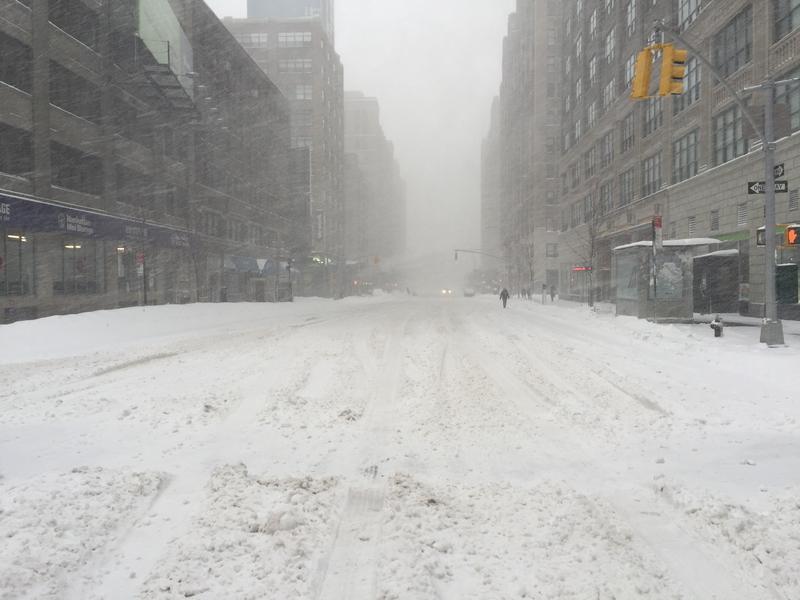
( Photo by Kate Hinds )
Title: Keeping Warm at Home
[music]
Amina Srna: [It's the Brian Lehrer Show. I'm producer Amina Srna, filling in for Brian today, who's taking care of a family member. According to the mayor, New York City is potentially facing its longest stretch of below-freezing temperatures on record. Even if it's cold outside, it should not be cold in your apartment, yet heat and hot water issues are trending in the city. In the last fiscal year, heat and hot water violations shot up 12% over the previous year and 60% since 2016.
In light of the ongoing polar vortex, let's get a refresher on landlords' obligations regarding heat and hot water, and what tenants should do if they're feeling cold at home. With me now is Patrick Spauster, housing and homelessness reporter at City Limits. Patrick, welcome back to WNYC.
Patrick Spauster: Good morning. Thank you so much for having me.
Amina Srna: Listeners, we'll invite your calls and texts right away. Are you currently dealing with inconsistent or nonexistent heat in your home? What are you doing to stay warm on those below-freezing days? If you've dealt with this issue and had it resolved, what worked? Share your advice. We can also take some of your questions. Call or text us at 212-433-WNYC. That's 212-433-9692. Patrick, we're in the dead of "heat season." Legally speaking, what counts as too cold in a New York City apartment during this time period?
Patrick Spauster: Yes, heat season runs from October 1st in the fall to May 31st in the spring. Landlords are required to keep the apartment at a certain temperature, that's 62 degrees at night and 68 degrees during the day. If they are not meeting those responsibilities, they are not meeting what they're obligated to in terms of habitability for a New York City apartment.
Amina Srna: I shared some stats that you reported on at the beginning of this segment. Heat and hot water violations shot up 12% over the previous year and 60% since 2016. How many complaints is that, and what's driving the surge?
Patrick Spauster: The cold is driving the surge right now. I actually pulled some new numbers last night. Just taking a look. There were 26,000 311 calls about lack of heat and hot water just in the past seven days. That's the most in a seven-day period on record since 2018, when we had another really significant cold spell in New York. The number of complaints went up 12% last year, like you mentioned. Looking at this year, it's on pace to break that again. In December, we had the most heat and hot water complaints of any December since the 311 call data starts in 2010, so there's some cause for concern there.
One thing to keep in mind is the city wants people to call if they are experiencing heat and hot water issues. I think the city would credit some of the increase in numbers to increased enforcement and a desire to get people to call, and that their outreach efforts to get people to call in when they have a problem are working. It's still really concerning because it's really cold out, and it's a health issue for especially older folks, especially folks with disabilities, and people who are unhoused on the street. It's a real issue. 0 folks have passed away already, tragically this week.
Amina Srna: We do have a caller who has reached out to the city, so let's get his story. Dennis in Manhattan, you're on WNYC. Hi, Dennis.
Dennis: Hi. Thank you for taking my call. I have called 311 in the past about heat issues, and somebody dutifully takes the complaint, issues a complaint number, and says an inspector will come around. Possibly, maybe two or three weeks later, an inspector might come around and ring my bell. However, often you find an inspector came around, never informed anybody when they were coming around, closed the complaint, and nothing happens.
My point is that calling 311 is very nice, but it's an exercise in futility. Nothing happens. I don't know if you track patterns of this kind of stuff. If a certain landlord has complaints again and again and again, I know you might have limited resources, but that's not my problem. My problem is calling 311. It's very nice to say it's a very bland aspiration. Nothing happens.
Amina Srna: Dennis, thank you so much for your call. I'm sorry to hear you're going through that. Patrick, how do you want to respond? Is that something you're hearing in your reporting?
Patrick Spauster: Definitely, that happens sometimes. I think it's really frustrating for tenants when they call, and they don't feel like they get an adequate response. Heat and hot water violations, in particular, are what are considered serious housing code violations, where inspectors should come within a few days. That doesn't always happen. There are other steps that you should be taking as a tenant to make sure that you are prepared in this case. I think most importantly right now, in a cold spell like this, it's important to remember that this is an emergency. Like I mentioned, people are at risk.
You can take some steps to hold your landlord accountable, but more importantly, right now is to look out for yourself, your family, and your neighbors. That means the city has some warming centers that are open in every borough and is saying that they're going to open some more. If you do find that you're calling 311 a lot and not getting a response, you can start to put together a campaign. For example, one thing you can do is if the heat is out in your building altogether, you can talk to your neighbors, and a higher volume of calls from 311 will be more likely to get the city enforcement agencies' attention.
You should also do your best to reach out to your owner, and they may not respond, but if you can document the steps that you're taking to reach out to your owner and try to reach them by certified mail, which guarantees that they are acknowledged to have received your outreach, and even start a log of the temperatures in your apartment yourself. You can buy a thermometer at a local hardware store and keep a little log, maybe taking a measurement day and night to collect more evidence about the temperature in your apartment.
If you're still not getting help, you can consider legal action. The city's housing agency, to your question about some buildings that have chronic heat issues, they have a few tools that they can do, including an emergency enforcement where they'll actually just come to the building and replace a boiler or do some heat repair that needs to be done. The city will do it themselves and then bill the landlord later because this is an emergency.
Amina Srna: Let's take another call. Cecilia in Manhattan, you're on WNYC. Hi, Cecilia.
Cecilia: Hi. How are you? I'd like to take us a few steps back. First of all, I'm from the West originally. I've lived here a long time, 40 years. Nobody keeps their homes at 68 degrees during the day and 62 degrees at night. Those are homes that are insulated, lower ceiling. It is constantly freezing in our building at 68 degrees during the day. We all have thermometers. It's never that warm. We are all running space heaters.
The only people benefiting are the landlords and Con Ed. We're getting the highest utility bills ever. Not even in the summer have I had such a high bill. It's because we're all using space heaters, which, as we know, are not safe. I'd like to, first of all, address who decided that you can compare apples and oranges? These are uninsulated buildings.
Amina Srna: Cecilia, you told our screener this is a 1915 building that you live in, right?
Cecilia: Yes. Very high ceilings. We suspect-- First of all, it all started a few years ago. First, the landlords put computers on old boilers, great 21st technology, and then we could tell they had it on a timer, so we called them on that. When the heat does come up, it's never on long enough to really heat up these rooms.
Amina Srna: Cecilia, thank you so much for your call. Patrick, how much of this is an infrastructure problem? You mentioned in your reporting that Met Council sees a lot of the heat and hot water problems in older rent-stabilized buildings. Is this genuinely an infrastructure problem concentrated in older buildings, or are rent-stabilized tenants more likely to report these issues?
Patrick Spauster: A little bit of both. In my reporting, I found that some of the neighborhoods with the most housing code violations were in Upper Manhattan, in Harlem, and the Heights, in the South Bronx, in the Northwest Bronx, and in central Brooklyn. Those are areas where there's a lot of older housing, a lot of potentially rent-stabilized housing stock. That's certainly concerning because these buildings might not be as well insulated. That's an instance where I think talking to your neighbors and making sure that you're doing everything you possibly can to--
You mentioned that it may seem warm enough, but it doesn't feel warm enough to you. That's a great opportunity to make sure that you're documenting all that evidence to say maybe the landlord says that they're putting the boiler at the right heat, but it's not actually that warm in your apartment. That's something that you can document if you grab a thermometer and try and put together that evidence. If you need to escalate that eventually, you should probably consult legal advice before doing so, but you might be able to consider bringing evidence to court in a lawsuit in something called an HP action, which would be a suit against your landlord if they continue to violate the heat rules.
Amina Srna: Here's a text from a listener. "I live in a rent-stabilized apartment. I have access to a thermostat I can turn on. My landlord says that he does not have to maintain my heat at 68 degrees because my lease says the tenant pays for heat. Is that legal or is he required to keep it at least 68 degrees, and I can supplement with a thermostat if I want it warmer? If that is legal, why? It's a rent-stabilized place. My costs shouldn't shoot up in the winter." Do you have a response?
Patrick Spauster: I'm not sure exactly about the particulars of this case, but the landlord is required to keep the temperature at a certain level. If you have control over the temperature in your own apartment, you might be able to control that and set the heat at a certain level. As to the extra bill that it might cost you, unfortunately, the landlord is not necessarily responsible for-- The landlords often pass on the financial costs of heating to tenants.
Amina Srna: Let's go to a landlord who is calling in. Tina in Harlem, you're on WNYC. Hi, Tina.
Tina: Hi. Thanks, Amina. I wanted to call in because I have a small brownstone with three tenants, and I live here in the building. It was renovated 30-some years ago with baseboard heating, and it's only a few feet along each exterior wall, which is not enough to heat the whole apartment. They didn't insulate properly, like a previous caller mentioned. I cannot get my own heat up past 62, 63 degrees during the day. It's not about the furnace. It's not about me being cheap. I'm doing the best I can.
I'm cold. I supply my other tenants with space heaters if they want them, and I contribute if they have to use them to show me the difference in your electric bill, just because I'm trying to be fair and doing the best that we can here. That's the way it is, and the city can't really fix that for me. My dad's building, same thing. He had an old brownstone. He passed away. He was living there, but the tenant in his upstairs had to call 311 because the furnace conked out, and we didn't know it.
The tenant didn't call us about it. I guess because our dad had passed away, he just called the city. We got a violation, they came, they saw, and we fixed-- we didn't know the furnace of contact, so, of course, we want it to be functioning. His building had better insulation, and you could get the temperatures up, but mine, you just can't do anything about. What is the city going to do to me? How can I fix this?
Amina Srna: Tina, thank you so much for your call. Patrick, I see you nodding your head. What would you like to say to Tina?
Patrick Spauster: It seems like you're being responsible and transparent with your tenants here. I'm sure they appreciate that. There are some climate-related types of programs that you might want to look into. There's a home energy improvement program, it's called HEAP, and they can help with some of the bills for heating or help you repair or replace equipment. Sometimes they also have emergency programs for a situation, like this week, where it's especially cold.
Then the governor of New York, Kathy Hochul, has been talking about trying to enhance a tax abatement program to help landlords replace boilers and do other repairs in some of these older buildings. Those are some things to potentially look into for landlords that might be struggling with the costs of heating and maybe wanting to upgrade to a system that's maybe either more energy-efficient or can really just get the heat a little bit higher if the current system isn't cutting it.
Amina Srna: Let's take a call. Sarah in Brooklyn. Hi. You're on WNYC. Hi, Sarah.
Sarah: Hi. I'm calling in regards to the fact that we've had-- our buildings had problems with our boiler ongoing since about 2018 that the landlord has known about. Every winter, we have a period of time where there's no heat. That, of course, was this Saturday and Sunday. I, in direct contact with him, asked for space heaters. We have a few disabled people in the building. Also, we had a gas smell that was permeating and burnt oil that was filling into some of the apartments. This is not the first time this has happened. I told the landlord on December 3rd this had happened.
Anyway, to add to some of the other callers, I am an advocate for calling for 311 and talking to HPD, but it does feel like, as a sweet-talking landlord, when he meets with these people, he skirts around the issue, or maybe he fixes something temporarily so they don't see it. These are all open violations that are continuous, and our building is having a hard time figuring out how to address it when it feels like-- again, it's like we're left to fend for ourselves. He's constantly breaking the law, and nobody's paying attention.
Amina Srna: Sarah--
Sarah: My question is-- I'm the organizer of our building, but is it possible for us to-- I'm not asking for a million dollars, just the basic needs and requirements. How do you really pressure to get those changes after years of complaints and going unheard?
Amina Srna: Sarah, thank you so much for your call. Yes, Patrick, what enforcement tools does the city have for repeat offenders on heat violations?
Patrick Spauster: First off, thanks for the call. I'm sorry that you're going through that, but it does sound like you're doing a lot of the right things. I'm sorry that the answer is not always satisfying, but talking together with your neighbors and continuing to call is a good step to build a foundation that you can build on. I think that you're doing the right thing here. I know that it's frustrating. The city, if they get an inspector out there, you can try and make sure that they take a look at the whole building. You can file a complaint for a unit in your building, but also, if you have a bunch of tenants working together, you can file a heat complaint for the building as a whole.
Some of these buildings and landlords that have chronic problems will go through something called the Alternative Enforcement Program that HPD has. Unfortunately, in order to get your landlord in a program like that, where the city's taking a closer look, it's really just going to take the public pressure that you're applying. The new mayoral administration has signaled that they want to take these types of issues pretty seriously. They restarted this mayor's office to protect tenants. It's still early days for that administration. We'll see how that plays out and if they are able to make some progress on some of these chronic issues, because certainly, you're not the only building in the city that's had these for a number of years.
Amina Srna: Let's take another call. Pauline in Queens, you are on WNYC. Hi, Pauline.
Pauline: Hi. Thank you so much for taking my call. I rent a room from my landlord. I've been there for almost 10 years. He's a wonderful landlord, but this year with the heat, it's-- I have a thermostat. It's set to 80. The pipes are warm, but the heat's not emanating. I believe that it's technically not zoned for running. I don't want him to get in trouble, but it's freezing in the house, and I don't know what my rights or what I'm able to do about it.
Amina Srna: Pauline, thank you so much for your call. Patrick?
Patrick Spauster: Yes, that's a hard situation, Pauline. I'm sorry. If you do file a complaint with 311, your landlord will be notified that you filed a complaint, so that's just something to keep in mind. I think tenants, maybe in your situation, where they have a mom and pop landlord, so to speak, or even tenants that might be fearful of retaliation from their landlords, often that's a good thing to keep in mind, is that if you do file a complaint there, the landlord will know about it.
In terms of trying to solve your problem, I think I would recommend maybe seeking advice. I often send tenants to the Met Council tenant helpline. I think that the staff that they have there are really helpful, and that might be a good place to look into to call to get some answers about this particular situation.
Amina Srna: We asked listeners for tips. We got a text that suggests that heated blankets are better than space heaters. Here is Mike in Madison, New Jersey. Hi. You're on WNYC, Mike.
Mike: Hi there. Just a quick suggestion. If the windows are cold, the trick is to insulate them. An easy way to do that is with bubble wrap, if you can get that at the hardware store. It just adds the insulation, keeps the heat inside a little bit better.
Amina Srna: Thank you so much for that tip, Mike. Patrick, I want to ask you about newer rent-stabilized buildings, because we didn't get a chance to talk about them yet. We're seeing tenants of a building located in Williamsburg report on their Instagram page that they've been without hot water for five days straight. Are market-rate tenants underreporting, or are landlords of rent-stabilized buildings more prone to neglecting their properties?
Patrick Spauster: This is a hard question to know exactly the answer. I will say that, generally speaking, folks in some of these rent-stabilized buildings, in my experience, especially in folks that might be older or vulnerable or don't speak English, might be less likely to call 311 than other folks. I think the nature of the rent-stabilized question is also a nature of the fact that a lot of those buildings are older and they just have a couple of more repair needs. I think, regardless of what type of housing you live in, you should call and seek help if you need it. Keep in mind and look out for your neighbors, and especially this week, make sure that you're taking the steps you can to be protected.
Amina Srna: I read that text where a listener suggested a heated blanket instead of a space heater. We know that so many of the fires at this time of year start because of space heaters. Some tenants also put themselves at risk by using their oven for heating. Are there safe ways to stay warm in an apartment in this frigid weather? Anything you'd recommend?
Patrick Spauster: I'd definitely be really careful with space heaters. I think the recommendation about insulating the windows is really helpful. I've also before use a Saran Wrap and a hairdryer to put an extra layer of insulation around a window. That can be really helpful. I think the other thing to keep in mind is, don't wait to act, and if you're really in an emergency and you're really freezing cold there, before it gets too serious, consider talking to a neighbor or a family member, or the city has some warming centers that are open that you can find on 311's website. There are two in each borough, and I believe they're adding some more this week.
Amina Srna: Another question about newer buildings. Shouldn't they have functioning boilers if they were built in the last few years? Is it an insulation issue then?
Patrick Spauster: It's hard to say. I think your landlord turning on the heat is dependent on your landlord. Sometimes there are good landlords, and there are bad landlords. If you're having trouble with your heat, it's hard to say if it's a structural issue or if it's an issue with the management of the building. In either case, taking the steps that I outlined is a good place to start. Whether that's talking to your owner directly, that's the first thing you should do, and then documenting calling 311 and escalating as needed.
Amina Srna: Patrick, before you go, you had talked to us in the beginning of this segment about 10 people who have passed away this weekend, who are homeless and on the city streets, and they died from the cold. Can you tell us a little bit more about that story and what the city's response has been?
Patrick Spauster: Yes. 10 people have died from the cold. It's not clear that all of them were unhoused, but the city did say that several of them had been in the shelter system before. There's something going on right now called a Code Blue, which means that the barriers to entering shelter are lowered for all New Yorkers. If you are having trouble with your heat or you see someone on the street that's out in the cold, you can call 311 to try and get those folks placed into shelter to make sure that they don't freeze.
The city says they've done about 500 placements this week and have a street outreach team that's going out and trying to meet people, but people fall through the cracks, as we've seen. If you do see someone that might need help, the city recommends that you call 311 and try and get them to a warm place.
Amina Srna: Patrick Spauster is housing and homelessness reporter at City Limits. Patrick, thank you so much for your time today.
Patrick Spauster: Thank you for having me.
Copyright © 2026 New York Public Radio. All rights reserved. Visit our website terms of use at www.wnyc.org for further information.
New York Public Radio transcripts are created on a rush deadline, often by contractors. This text may not be in its final form and may be updated or revised in the future. Accuracy and availability may vary. The authoritative record of New York Public Radio’s programming is the audio record.
