
Kash Patel's FBI One Year In
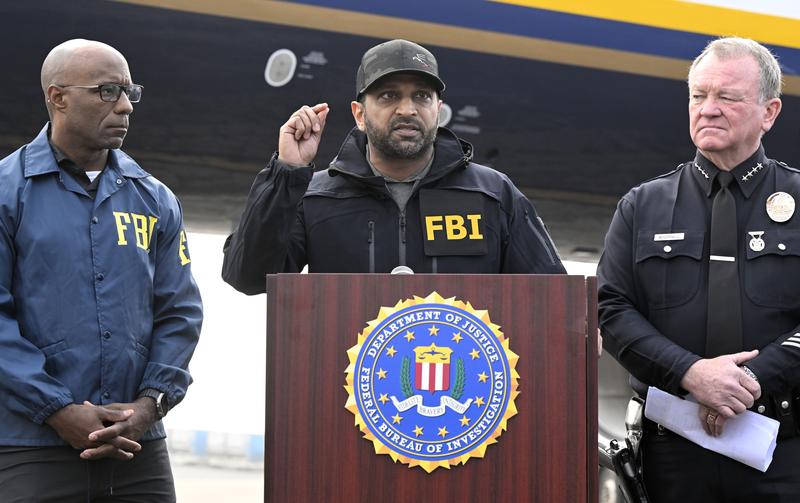
( Will Lester/MediaNews Group/Inland Valley Daily Bulletin via / Getty Images )
[MUSIC]
Amina Serna: It's The Brian Lehrer Show on WNYC. I'm Amina Serna, a producer for The Brian Lehrer Show, filling in for Brian today, who is off taking care of a family member who's dealing with a health issue.
Coming up on today's show: as the frigid temperatures continue, Patrick Spauster, City Limits housing and homelessness reporter, talks about the obligations landlords have to keep their apartments heated and what tenants should do if their heat or hot water isn't working. Plus, the United States version of TikTok has new owners, and among them are several corporations and investment firms with ties to President Trump.
Vittoria Elliott, a reporter for Wired covering platforms and power, talks about the new era of TikTok in America, including controversial new terms of service, concerns about surveillance and data privacy, and claims of censorship. We'll wrap today's show with a call-in for snow cleaners, liquor store owners, taxi drivers, restaurant and bar proprietors, or anyone else. Let us know whether this week's storm was good or bad for your business, financially speaking.
First, we begin today with the news of a growing number of calls from both Democrats and Republicans who are pressing for a thorough investigation after a US Border Patrol agent fatally shot Alex Pretti in Minneapolis on Saturday. The Department of Homeland Security, and not the FBI, is planning to lead the investigation. Since the shooting was conducted by DHS officers, that means that the DHS is in charge of investigating itself.
A preliminary review by the US Customs and Border Protection's internal watchdog office-- remember, the CBP is part of DHS-- was sent to Congress yesterday as required by law. It found that Pretti was shot by two federal officers after resisting arrest, but did not indicate that he brandished a weapon during the encounter. That's according to The New York Times. That report directly contradicts statements from over the weekend by Kristi Noem, the Homeland Security Secretary, and FBI Director Kash Patel. While the FBI is not investigating the federal officer-related shooting as it would normally do in conjunction with the Department of Justice, it is handling the physical evidence in this case.
Joining us now are Emily Bazelon, staff writer for The New York Times Magazine, co-host of Slate's Political Gabfest podcast, and Truman Capote Fellow for Creative Writing and Law at Yale Law School; and Rachel Poser, features editor at The New York Times Magazine. For their recent article in The New York Times, they spoke with 45 current and former FBI employees on the changes they say are undermining the agency and making America less safe during FBI Director Kash Patel's tenure. Rachel, welcome to WNYC. Emily, welcome back.
Rachel Poser: Great to be here.
Emily Bazelon: Thank you.
Amina Serna: Emily, as The Brian Lehrer Show resident legal eagle, I'll start with you. How unusual is it that the DHS is investigating this shooting?
Emily Bazelon: It's very unusual. What usually happens when a federal officer shoots or kills someone is that the FBI takes the lead as opposed to the state or local investigative arm, but they fully cooperate with the state and local authorities if they're asked to do so. The FBI usually conducts a civil rights investigation, asking whether the use of force was violating the rights of the victim. There's no indication here that any kind of civil rights investigation is happening through the Department of Homeland Security.
In fact, to the contrary, the reports are that that has been ruled out. Then also very unusual is that the state and local investigative agencies and prosecutor's office are being excluded from reviewing the evidence. We have a lot of unusual things here. We have DHS investigating itself, a role that it does not normally play. We have no Justice Department civil rights investigation. Then we have these very frustrated state and local authorities who are trying to conduct a full and independent investigation, but they don't have access to the evidence relating to these deaths.
Amina Serna: I want to play you a clip of FBI Director Kash Patel and his appearance on Fox with Fox News' Maria Bartiromo on Sunday morning as they were discussing the investigation into the fatal shooting of Alex Pretti. Let's take a listen.
[Audio Clip - Kash Patel]: Yes, DHS and HSI are the lead, and the FBI is processing the physical evidence. We're in possession of the firearm, which is going to go to our laboratory. As Secretary Noem said, no one who wants to be peaceful shows up at a protest with a firearm that is loaded with two full magazines. That is not a peaceful protest. You do not get to touch law enforcement. You do that anywhere, this FBI is going to be leading the charge to arrest those.
Amina Serna: Emily, what role is the FBI actually playing in this investigation?
Emily Bazelon: Well, maybe very little role, but I think what you hear in that clip are two important things. First of all, you hear the director of the FBI basically assert that Pretti played a role in his own death, and the implication is that he's responsible for his own killing. Then you also have the FBI director say something that is just contrary to Minnesota law and to a lot of conservative principles. Minnesota people have the right to carry a gun openly.
Conservatives and libertarians are often very strong defenders of that right under the Second Amendment. Here, you have Patel saying that these protesters don't have that kind of right and that it was a provocation for Pretti to be armed, even though we know that he did not in any way touch or brandish or take out the gun that he was carrying.
Amina Serna: Before we take a longer look into Patel's tenure over the past year, I want to ask you both about the fatal shooting of Renee Good in Minneapolis earlier this month. You both wrote about how the Trump administration blocked state and local officials from reviewing the evidence. Justice Department officials, including Patel, steered the FBI away from a civil rights investigation into whether the ICE agent used excessive force in that killing. Last week, an FBI agent in Minneapolis resigned over the investigation. To either of you, to what extent is the FBI investigating the Good killing? And what do we know so far?
Emily Bazelon: Rachel, how about you take that one?
Rachel Poser: Okay. What we know is that Tracee Mergen, who was a supervisor in the FBI's Minneapolis field office, quit after the bureau leadership in Washington pressured her to discontinue the civil rights inquiry into Jonathan Ross, the immigration officer who shot Renee Good. We know that also there, the FBI is not playing its traditional role in cooperating with a civil rights inquiry. Instead, several Justice Department officials have called Renee Good a domestic terrorist. Instead, we're seeing the FBI participate in potentially an inquiry into whether Good's wife and Good herself were connected to left-wing groups who the administration is interested in characterizing as domestic terrorists. Again, there, we're seeing a very unusual process play out.
Amina Serna: You report that more than 20% of the FBI's workforce has been assigned to immigration enforcement. Rachel, maybe you want to take this one. What sort of work were those agents diverted from?
Rachel Poser: Yes. Historically, and certainly under Director Wray, the previous FBI director, the FBI was focused on long-term complex investigations of public corruption, cybercrime, white-collar crime, drug trafficking, and counterterrorism. Those were some of the bureau's priorities in the past. What we've seen over the past year is more and more of those agents being reassigned to immigration enforcement shifts, so supporting ICE in its arrest and deportation efforts.
What that means is that they no longer have as much time to focus on those previous priorities. We heard some pretty dramatic stories of the things that were being sacrificed. We had one case agent who had been working on an undercover investigation of a multi-state neo-Nazi group with a long history of criminal activity that was stalled because of the man's being placed on the FBI to do immigration enforcement.
We also heard a story about agents in Minneapolis who had been surveilling a bunch of Somali-run autism centers that were engaged in a kickback scheme. This became huge news when it broke. Back last year, the agents had to stop for weeks investigating because they had been reassigned to immigration. We're seeing a really massive reallocation of resources away from traditional FBI priorities to immigration enforcement.
Amina Serna: Listeners, we'll take a look at how FBI Director Kash Patel has been diverting FBI agents from work the agency traditionally does in order to assist with the Trump administration's immigration and deportation agenda. We can take a few of your calls on that or anything in the past year of the FBI under Patel's tenure. 212-433-WNYC. That's 212-433-9692. You can also text that number.
Just three weeks after winning his reelection in 2024, President Donald Trump named Kash Patel as his nominee for FBI director. On a podcast, as you two reported, Patel had promised to shut down bureau headquarters on his first day in the post and reopen it as a "museum of the deep state." The FBI agents and employees you spoke with, how did they initially react to his appointment?
Emily Bazelon: I think a lot of people were kind of reserving judgment. I mean, this is a very rule-bound institution, and people are used to administrations changing over time. Also, people want to think their jobs are going to continue to go well, and they'll continue to be able to do them. I think in the beginning, there was concern about Patel, given the extreme things he had said about the FBI. There was also some hope, like maybe he'll settle down once he's in office. A lot of people on the seventh floor of the Hoover Building, which is kind of shorthand for the FBI's top executives, they were talking to us about how they really tried to set Patel up for success.
Amina Serna: On January 30th, Patel's Senate confirmation hearing began, and he was asked whether he would fire the FBI agents who worked on the investigations that led to Special Counsel Jack Smith's prosecution of Trump. Patel responded that, "No one will be terminated for case assignments." Later in the hearing, he also promised that there would be "no retributive actions against employees," as you reported. The people you spoke with told you they felt that the backlash was pretty swift. What happened there?
Rachel Poser: Yes, we saw that the promise that Patel made was just not true. Over the course of this year, we've seen gradually in batches the FBI firing agents who were involved in the three investigations of Trump that took place over the last decade: the investigation into his 2016 campaign's, alleged ties to Russia, the fact that he held on to a bunch of classified documents at Mar-a-Lago after leaving office, and then his attempts to overturn the 2020 election. Almost immediately after that January 30th testimony, the top executives at the FBI were pushed out. Over the course of the subsequent year, we've seen even individual line agents who have no choice in being assigned to some of these investigations being targeted and fired.
Amina Serna: Emily, Jacqueline Maguire, a former executive assistant director, told you that they were being fired "because we could not be trusted to carry out the president's agenda." Were there any allegations of misconduct?
Emily Bazelon: No, there were no allegations of misconduct against this top-level set of executives who were initially fired. I think this was really cleaning house. Patel is coming into an agency-- and this is even before he's confirmed-- this is an agency that the president has called corrupt and is blaming for the investigations that it was asked to conduct into Trump's campaign in 2016 and its alleged ties with Russia into Trump's alleged election interference in 2020. There's just a lot of incentive to see this agency as suspect and to kind of take out this top layer of leadership to send a message: "Things are going to change, and we don't trust you."
Amina Serna: Let's go to a call. Lauren in the Bronx, you're on WNYC. Hi, Lauren.
Lauren: Hi. Thank you. I'm calling about the person that you mentioned earlier in the conversation who resigned from the investigation. It's part of a pattern I see of the most ethical and most important legal staff resigning when they refuse to do something unethical: Danielle Sassoon, Scott Hartman, this woman, whose name, I'm sorry to say I forget.
Amina Serna: Tracee Mergen.
Lauren: Yes. Why is there no interim step or interim commission or authority that these people can go to and raise a complaint so that maybe instead of resigning, the result will be that the person above them has to resign or change their direction?
Amina Serna: Lauren, thank you so much for your call. Lauren was responding to how we opened the show: the news that Tracee Mergen, a supervisor in the FBI's Minneapolis field office, resigned earlier-- I think it was last week-- after facing pressure to drop a civil rights investigation into the ICE agent who fatally shot Renee Good. Lauren's question goes to a lot of what's been happening also in the FBI over the past year of various different agents being forced to resign and quit instead of being fired directly. Maybe, Rachel, do you want to talk about some examples from your reporting?
Rachel Poser: Yes, happy to. I think the caller makes a good point. I think many of these agents, before resigning, have tried to appeal to their superiors and push back, and find resignation is the final step when they don't feel that they can go anywhere. We had one source say to us during the reporting that the media feels like the last open avenue. They're not someone who would have ever spoken to the media before. The FBI has a really tight-lipped culture of not speaking to the press, speaking only through their investigations.
They feel that the channels for complaint, including whistleblower channels, they don't trust them. Resignation and the media are the way that people feel that they have left to speak out. We do interview an intelligence analyst in LA named Jill Fields in our story, who told us a story of during the immigration push in February of last year in LA, members of her team were asked to look at some video of anti-ICE protesters who had allegedly impeded an arrest. The team looked at the video, and they determined that the protesters had really done nothing wrong.
They were told to stay back. They did. There was only First Amendment-protected activity that they could see in these videos. The FBI has a rule that you can't open an investigation based on First Amendment-protected activity. She pushed back and said that she didn't see any grounds to open this investigation, and she was told to do it anyway. She ended up resigning over that. That's just one story of someone we heard who found themselves in that situation.
Amina Serna: Back to your reporting. On February 20th, the Senate voted 51 to 49 to confirm Patel. Almost immediately, as you write, he changed the FBI's priorities. Emily, do you want to kind of take us through what were the priorities under Christopher Wray, the bureau's former Trump-appointed director? The agency, as you write, had eight stated goals. What were those, and what changed under Patel?
Emily Bazelon: The goals traditionally were things like fighting terrorism, counterintelligence, white-collar prosecutions, public corruption. That was a big emphasis of the FBI, and it was the only agency in the country really focusing on it. Then, taking down large criminal organizations, mob-like or gang structures. What has changed under Patel is this idea of primarily defend the homeland, and then a real push toward immigration enforcement, which previously just was not something that the FBI really did at all.
One way to think about this is that Kash Patel often talks about the idea that he is letting cops be cops, and he's referring to the FBI agents who work for him. They told us over and over again they don't consider themselves cops. That is not meant to in any way be a slight against the police. It's just that FBI agents are trained to do different things than walk the beat on the street and make arrests.
They're trained really to sit at a computer and put a lot of connections together and then go out in the field and develop human sources and do sit on wiretaps-- things that take a lot of time and that are just more complex and things that local police don't really have the time or resources to do. From their point of view, this is a confusion about their role and a kind of waste of them as a resource.
Amina Serna: Rachel, you spoke with a source that you named in your reporting as Senior Executive 2, I believe, who told you there was a feeling among many in the FBI that the bureau needed to change. Some believed HQ had gotten too big, metrics and bureaucracy were inhibiting investigations, and so on. Can you talk about a little bit of the tension within the bureau? I mean, maybe even talk about some of the backgrounds of these agents and employees. These are people who are generally-- I think you wrote in your reporting-- from either military backgrounds or military families, have family members who are police officers. What was their feeling at the beginning of this last year, at the beginning of Kash Patel's tenure?
Rachel Poser: Yes. The FBI is not thought of as a particularly progressive organization. It has, as you say, people from military and police backgrounds. The norm is that you really don't talk about your personal politics at work. We definitely heard from the agents we spoke to that there was disagreement or dissension within the FBI, particularly over, for example, how aggressively January 6th was investigated.
We have someone speaking in the story about how agents always thought if you assaulted officers on that day, yes, absolutely, that we should investigate you and prosecute you. Many people felt that for the rest of the people who just sort of gave themselves self-guided tours through the Capitol, it was a kind of waste of resources. There was disagreement about that. I think there was disagreement about the FBI's DEI policies, and just some typical disagreement about the organization of such a big bureau.
Prior to Patel's tenure, all of the heads of the 50-plus field offices had reported into the deputy director, which was widely seen as inefficient. Some of the changes that Patel put in place were things that agents had been asking for for a while. It speaks to the alarm that people are feeling within this agency that we had so many people who had never spoken to the media before, did not particularly think of themselves as liberal or progressive, who were coming to us saying that they thought there was something really wrong here.
Amina Serna: Let's go to a caller. Jim in Northern Ocean County, New Jersey. Hi, you're on WNYC.
Jim: Yes. There was a show on NPR last night. I believe it was on On Point. I just wanted to specify that Alex was in compliance with the carry law in that there's a specific verb in the Minnesota law that you're allowed to carry, but not brandish. That is the verb that's used in the law. He indeed only had the gun in his rear, was holstered, et cetera. The spokesman for one of the Minnesota gun carry laws-- That was the verb that's specifically in there that he was in compliance of.
The other thing I wanted to say, there was a thing that he had not even been attending a protest. I would say that Kash Patel's remarks are prejudicial right off the bat, as were Kristi Noem's, but Alex Pretti was in the neighborhood and just happened upon this traffic disruption when they started stopping cars and doing their mission, if you will, that Pretti was not attending a protest. He just happened to be in the neighborhood and got out.
That's why you saw at the beginning he was doing something with traffic. The other thing was that he had perhaps been involved with them at a protest a week earlier, had an altercation, and had a rib broke and he may have been targeted.
Amina Serna: Jim, thank you so much for your call. Emily, two things in that call. I'm not sure what you want to respond first: either the Minnesota open carry-- I know you're a legal expert, but I don't expect you to be state-by-state on open carry laws or gun laws-- but parsing the language, carry versus brandish, or the second part, which was more of a news question, and we're getting a lot of questions on about the fact that Pretti was not attending a protest and he just kind of happened to be there.
Emily Bazelon: Yes. I mean, the first thing to say about a law that allows carrying versus brandishing is that it seems like a very sensible limit. You can have a gun in your holster on your person, but if you take it out and start waving it around, that poses a threat in a far different way. You can see why Minnesota would make that distinction. I think on the second point, it is interesting but also a little unsettling how information is dribbling out about Pretti and all the events surrounding his death, because you would want this to come from state and local or federal authorities in a sober, clear fashion.
We're not getting that because the state and local authorities are excluded from the investigation. The federal government, as we've been talking about, officials have really been blaming Pretti and Renee Good as a foregone conclusion. I think that extends to this idea that both Trump and Patel and other officials, they've kind of assumed this idea that Pretti brought a gun to a protest.
You can tell just from watching the videos that this is like a street-level, very changing situation where there's maybe some police enforcement action going on and people in Minneapolis are spontaneously responding to it. We may very well learn that Pretti was on his way home and didn't see himself as choosing to carry a gun to a protest. Though we should also say that in other contexts, conservatives have been very much in favor of protesters being allowed to be armed at protests.
We saw a lot of that, for example, in Michigan and Virginia during the COVID era. Then I think there is this news question about Pretti's history with ICE or these Border Patrol officials. I just don't think we really know the answer yet. It looks all very spontaneous from what happened on video, but until we know more, I think it's just hard to say.
Amina Serna: We have to take a quick break. More with our guests Emily Bazelon and Rachel Poser in a minute. Stay with us.
[MUSIC]
It's The Brian Lehrer Show on WNYC. I'm Amina Serna, filling in for Brian today. We're speaking with Emily Bazelon and Rachel Poser on their new reporting in The New York Times on the FBI and changes at the agency that many agents say may be making us less safe. Listeners, we can take a few more of your calls at 212-433-WNYC. That's 212-433-9692. Let's go to Tony in Queens. Hi, you're on WNYC.
Tony: Hi. I'm a longtime listener. One of the things that I wanted to bring up was that with all of the things that we're talking about now, and let's be honest, Trump is really pushing it forward, the changes in the FBI policies and things that seem to be over-politicizing it. I think it's a little bit naive and disingenuous to suggest that this is something that we didn't see coming. If there were guardrails, they could have been put in legally. This has always been the case. It just seems that right now the change is happening, and someone's doing things they haven't done in the past.
If not easy, it is possible to pass laws to limit these things. This situation, this potential for using the FBI in this way, has been there for decades. There were numerous opportunities to create guardrails, to create legally binding guardrails saying what the role of the FBI was and how political it could be and how it could be utilized. I think that the approach that we make now with this shock that it's being used in this way, I don't think we can be that shocked, knowing that the potential for it to be used this way has been there for decades.
Amina Serna: Tony, thank you so much for your call. Emily, that was pretty general on the FBI and the separation of powers. Do you want to comment on that?
Emily Bazelon: Yes. This is going to be a very sweeping moment of history. When you go back to Watergate, the FBI was involved. They were complicit in this break-in into Democratic national headquarters that also implicates the attorney general at the time and then Richard Nixon and he winds up resigning. Then you have this period of reform where I think everybody takes a step back and thinks, okay, we need to separate the White House from decisions about individual criminal investigations and prosecutions.
We don't want the nation's most powerful law enforcement agency to be trained on the president's enemies for the sake of his political agenda. There is some amount of actual lawmaking from Congress. Mostly, as I think the caller is pointing out, there's reliance on internal rules in the Justice Department and norms. What we're finding out now is that those things are pretty flimsy.
They work really well as long as everyone is respecting them and everybody remembers the danger of this previous period in which they didn't exist. Once you forget about that and you have a White House that doesn't care about shattering norms and really doesn't care much about rules either, then it turns out that the country is vulnerable to these kinds of abuses.
Amina Serna: I want to take through a little bit more of your extensive reporting. There's so much that made the headlines in the past year of Kash Patel's tenure as FBI director, one of which was on September 10th, when Charlie Kirk was shot and killed while speaking at a university in Utah. You reported that hours later, Patel told his 1.8 million followers on X that a suspect had been detained, only to backtrack shortly afterward. Patel then flew to Utah personally to oversee the investigation. As Emily was talking about shifting norms, Rachel, maybe you want to take us through what happened next as you reported it.
Rachel Poser: Yes. What the FBI agents we talk to will tell you is that you really don't want to get ahead of your investigation, because in the first hours, you're getting so much information coming in, thousands of tips, most of which are going to be wrong. There's a very careful orchestration that they go through to make sure that everything is being funneled to the right place, all the information is getting where it needs to go.
Patel came in and short-circuited that by being so concerned with controlling the narrative on social media and not deferring to the chain of command. He arrives in Salt Lake City, which already is very unusual. You don't want the director kind of parachuting in. He has no particular knowledge or expertise, but he arrives, and it seems that he is most concerned with the fact that he doesn't have an FBI raid jacket.
Our reporting suggests that, before he would go to the press conference, he really demanded that everybody go and find him one. He needed a particular size, and they found him a women's jacket that didn't quite have the patches that he wanted, so he had the SWAT team taking their patches off to give them to him. It really just created a huge distraction when the Salt Lake City office was really trying to focus on finding the person who had shot Charlie Kirk.
We then know that Patel got on a big call, which is a standard part of what happens after a critical incident. Usually, the director speaks very little because, again, someone with situational awareness is going to be leading that call. Patel is very emotional. Charlie Kirk was a personal friend of his, and again, he seems more focused on the appearance of the investigation on social media than what is actually happening on the ground.
Rather than asking, "What can I do? What resources do we need? Where do we need to deploy them?" he and his deputy, Dan Bongino, are sort of scripting out a social media strategy. There were more than 200 people on this call. This was really seen as impeding the investigation and not helping. That's just one example of how Patel's focus on social media and his temperament came into question.
Amina Serna: Rachel, scripting social media responses, I mean, it does come across as trite until maybe you realize that the response is probably for an audience of one, and that's Donald Trump. Can you tell us what sources told you about that moment, or maybe how it impacts their jobs altogether? Sorry, just to clarify, the focus on social media strategy.
Rachel Poser: Yes. We heard this pretty much from everyone we spoke to that social media had become a real priority. When FBI agents were sent out to support ICE in the immigration operations, they were asked in many cases to film and take photos for social media while they're doing these arrests. One agent we spoke to said the obvious, which is that not only does this seem inappropriate, but it's also dangerous to have agents be distracted by this secondary concern while they're doing something as sensitive as trying to arrest someone. I think everywhere from the ground-level operations to these really highly sensitive priority investigations where they're trying to do a manhunt, you see social media getting in the way of doing the work.
Amina Serna: Here's a text: "Kash Patel flew to Mexico to be present at the apprehension of the skateboarder-turned-drug trafficker. He also held a press conference about it." This listener is referring to the apprehension of Ryan Wedding, the Canadian former Olympic snowboarder who was accused of cocaine distribution and working with Mexican drug cartels. This listener asks, "How common is it for the head of the FBI to go and participate in such an event?" Rachel, you want to take that one?
Rachel Poser: Sure. As I was just saying, it's very unusual. The FBI needs local and state partners to do effective work, and so they are typically very deferential. In a press conference, you will hear them giving credit to their local and state partners. Kash Patel, over the course of this year, has developed a reputation for doing exactly what the texter suggests, which is wanting to be in front of the camera, and so parachuting into all of these operations and taking up a lot of space. That is seen as not only unwise but really unstrategic because it undermines the feeling of credit for local and state partners that the FBI really relies on.
Amina Serna: Here's a text that goes to your reporting. Listener asks, "Is there an ongoing investigation into Patel's use of FBI air travel for his girlfriend, a country music singer?" Emily, do you want to take that, explain that situation a little bit as you reported it, and answer that listener's question on whether it is being looked into?
Emily Bazelon: Yes. First of all, I'll say no, I don't think there's any indication it's being looked into. To explain what we're talking about, at the end of October, beginning of November, Patel was using government planes to go see his girlfriend, who's a country singer, perform, and then also to go on a jaunt to a place that has the real name of the Boondoggle Ranch in the Southwest. There were a lot of questions that were coming up as people were tracking these flight paths about this use of government resources.
One irony here is that if you go back to the early '90s in the Clinton administration, there was an FBI director, William Sessions, who resigned because people were criticizing him for using government planes. Since then, directors have tended to be much more careful about this kind of public relations pitfall and trap that you can fall into.
Another thing that's interesting is that some of the former agents who were very supportive of Patel initially-- a group of people who post a lot online who had been suspended from the FBI-- they have really turned on him, and they have bedeviled him by tracking these flights and posting a lot about them on social media. Because they're very much part of the MAGA social media universe, this has been a problem for Patel in his own wheelhouse.
Amina Serna: As we run out of time, I want to ask you about your reporting on as the Trump administration approaches past now its one-year mark, and Patel has passed his one-year mark on his tenure. He has promoted the bureau's success in fighting crime under his leadership. In that interview we played of him on Maria Bartiromo's show on Sunday, he was touting very similar claims. Here's a quote from X. He claimed 100% increase in year-to-year arrests and a 210% increase in the disruption of gangs and criminal enterprises. "This FBI is saving lives, protecting innocent kids, and taking deadly drugs off our streets at levels not seen in decades." Rachel, several sources you spoke with disagree on these claims. What are they saying?
Rachel Poser: Yes, Patel and the FBI have relied a lot on these stats that seem to suggest huge increases in the efficacy of the FBI over the past year. As one of our sources says in the story, when you make FBI agents street cops, you get street cop numbers. One of the major things that has happened is that Patel has changed what the FBI is doing. Instead of these long-term complex investigations that go after national security threats, major criminal enterprises, they're essentially out on the beat supporting local police and ICE, making thousands of arrests. You're going to see the numbers go up for that reason.
We also heard reports that the FBI is now counting arrests that other agencies are also counting. We heard some reports of ballooning the numbers, whereas the FBI used to only really count arrests where it was a federal charge, and they were the lead agency. We're also seeing some changing practices. It's interesting that the main response to our story so far from Patel and the FBI media representatives was to point out that on the same day our story came out, another story came out saying that the murder rate had fallen 20% last year.
There are a couple of problems with that as a response. First is that violent crime was already falling to a two-decade low during the last year of Biden's presidency. Also, that the vast majority of murders are state, not federal cases. It's not really credible for the FBI to take credit for that. I still don't think that Patel or anyone from the administration has engaged seriously with the arguments that these agents are making that the national security of the country is at stake here.
Amina Serna: Last question, Emily. We started by talking about how more than 20% of the FBI's workforce has been assigned to immigration enforcement, per your reporting. In your extensive reporting with Rachel, you also refer to Stephen Miller as one of Patel's key allies. We talked about how Patel wanted to disband the FBI altogether and turn it into a, "museum of the deep state." Can you tie that all together for us? I mean, is the recent actions that we're seeing in Minneapolis, the FBI not taking on the investigation into the fatal shooting of Alex Pretti, is that the FBI deferring or funneling its resources into DHS, and is that effectively getting rid of the FBI or crippling it?
Emily Bazelon: Yes, it's not getting rid of the FBI, but it is fundamentally altering how it works. What we are hearing from people in the bureau and who've left the bureau-- and this has absolutely continued to be the case as they watch what's happening in Minneapolis-- they feel that this whole idea that the FBI stands for following investigations and facts wherever they lead, pursuing their work without fear or favor or political partisanship, that all of that is gone.
That effectively, the bureau, when it suits the president and top officials like Miller, is being turned into a kind of organ and weapon of the White House. That is really a reversion to Nixon's conception of the bureau, to an idea about the bureau that the people who work for it were just trained completely in the opposite way. They think of themselves as public servants. They think of themselves as nonpartisan and kind of independent of these political interests. In the abstract and in the longer run, that is another thing that is really at stake with the future of the FBI. In a post-Trump world, how would you ever restore that kind of independence?
Amina Serna: Emily Bazelon is a staff writer for The New York Times Magazine, co-host of Slate's Political Gabfest podcast, and Truman Capote Fellow for Creative Writing and Law at the Yale Law School. Rachel Poser is features editor at The New York Times Magazine. Thanks to you both for coming on today.
Rachel Poser: Thanks, Amina.
Emily Bazelon: Thank you for having us.
Copyright © 2026 New York Public Radio. All rights reserved. Visit our website terms of use at www.wnyc.org for further information.
New York Public Radio transcripts are created on a rush deadline, often by contractors. This text may not be in its final form and may be updated or revised in the future. Accuracy and availability may vary. The authoritative record of New York Public Radio’s programming is the audio record.
