
Jersey City's Big Budget Deficit
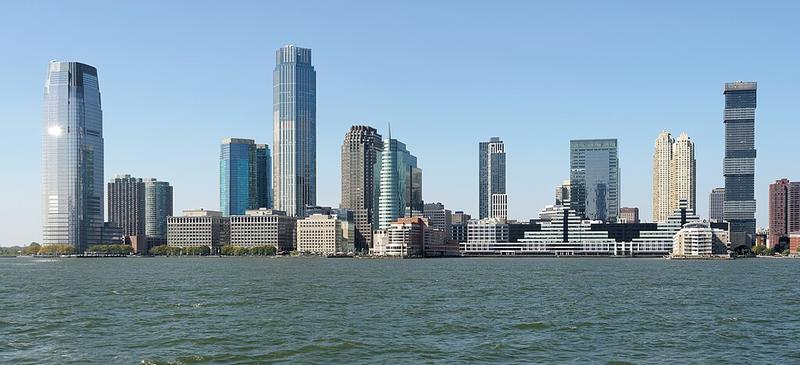
( Jakub Hałun, CC BY-SA 4.0 <https://creativecommons.org/licenses/by-sa/4.0>, via / Wikimedia Commons )
[music]
Brian Lehrer: Brian Lehrer on WNYC. Back in December, we had the incoming mayor of Jersey City, James Solomon, on the show to talk about his hopes and vision for the city after he got elected. Now, just a few weeks into his term, the new mayor has announced that Jersey City is in dire financial straits. He said last week that the city is facing a budget deficit of a little over $250 million, which amounts to nearly 30% of its annual budget. Mayor Solomon is blaming the crisis on the former mayor, Steve Fulop, who led the city for 13 years before running for governor against Mikey Sherrill last year. We had Steve Fulop on the show yesterday in his new job in New York. The new mayor of Jersey City has released a detailed report on the deficit, saying the city landed in this financial mess because of what he calls gross incompetence and negligence under Mayor Fulop.
He also argues it's particularly striking because the deficit was created during a period of economic prosperity for Jersey City. It is also worth noting, however, as Fulop is fast to point out, that Solomon himself served on city council during most of the period when this deficit was created, when Fulop was here yesterday to talk about his new role as president and CEO of the Partnership for New York City. We also briefly discuss the deficit, which he denies responsibility for.
There's a political blame game. That's one story, but there's also the deficit itself. New York City is in a similar boat with much bigger numbers because the whole everything is bigger in New York City. Today we are joined by Mayor Solomon to explain his take on the budget deficit and lay out his plan for economic recovery. We'll also touch on a few other Jersey City issues, and also that election, or at least nomination that Michael Hill just reported on of the DSA candidate for Congress winning in New Jersey 11, where Mikie Sherrill used to serve. Mayor Solomon, welcome back to WNYC and just a few weeks into your mayorship, welcome to the job.
James Solomon: I know. Thank you Brian. It's great to be back.
Brian Lehrer: Endless nurse calls and texts, welcome. We got a lot of Jersey City folks chiming in when Mayor Solomon was here in December. Do you have any questions for the new mayor about the budget deficit or anything else? 212-433-WNYC. You can chime in on former Mayor Fulop's legacy now that he's left office if you want. 212-433-9692.
I'm going to play a Fulop clip from yesterday here. As I mentioned he talk his new role with his job in New York, but on the budget deficit in Jersey City and the fact that you're placing a lot of the blame on him for it. I'll break it down into a couple of clips so you can respond specifically. Here's the first.
Steve Fulop: Every new mayor blames their predecessor anywhere in the country. I think most listeners would acknowledge that's par for the course. I'm going to point out that the City Council, by law, in New Jersey has one responsibility and only one single responsibility. It's not constituent services, it's the budget. James Solomon sat on the city council for eight years himself. Now, I will also point out to you that he voted for nearly every single contract along the way and then would grandstand at the final budget. That undermines the argument.
Brian Lehrer: Mayor Solomon, your response?
James Solomon: First, I think it's most important to focus on the impacts of the residents of Jersey City. The budget deficit is larger than the size of our entire police and fire departments. It is one that unfortunately, the people of Jersey City are going to be left holding the bag to deal with, so we thought we had to be transparent. We had to lay out exactly the causes of the deficit, what happened, and then build a coalition to a solution.
Now, my track record is clear. On the council for eight years, I voted against all eight budgets. When I voted against the budgets, I specifically called out the gimmicks. I said, "Hey, you're selling land. You're using that money to plug a budget hole. We're going to run out of land to sell at some point. You're pushing off costs onto the credit card. We're going to have to bond for those and pay debt. That's wrong."
I did call these things out over and over again. Part of the reason I ran for mayor was knowing that we needed a different chief executive to help get our budget in better financial shape. I think the core, which you'll see from the former mayor is he never talks about the specific numbers because he can't dispute those. He can't dispute that we have a $33 million hole because of land sales, that our rainy day fund has been spent to zero, leaving us a $27 million hole, that he left us $52 million in unpaid health bills from 2024 and 2025 that now go onto the 2026 budget, that he left us $10 million union contracts.
I could go on and on and on, but he never talks about the specifics because the specifics can't be disputed. We laid them out in our 24-page report and we believe in real transparency, and that's a change we're going to bring to the people of Jersey City. I'm going to go out and do community meetings so residents can actually talk to us about those numbers and work together on a solution.
Brian Lehrer: Your defense on that first clip is, yes, you might have been in council all those years, but you kept voting against the budgets. Here's another clip from [crosstalk]
James Solomon: If I would just add it, it was more than that, is we called out the specific practices that we outlined in the report. It wasn't just, oh, I voted no and that was it. We were specific in saying these practices are going to lead to financial ruin. We said it, oftentimes offered alternatives. We created a whole plan for the use of our COVID money instead of wasting it in a one year election based tax cut.
I think there's a real record, but I always say to myself, "Could I have more? Could I have raised these issues in a way that got my colleagues instead of to vote yes, to vote no," and then work with the administration on more responsible budgeting?
Brian Lehrer: One more full up from yesterday as he refers to your choice of appointees on the topic.
Steve Fulop: I'll also point out to you that he has kept on his staff my business administrator, my head of economic development, my head of HR, his city council president ran with me for eight years. I think it undermines the credibility on that from a starting point.
Brian Lehrer: Your response to that?
James Solomon: Again, not specifics with the numbers because those can't be disputed, but instead, a little bit of a throw spaghetti at the wall strategy. Two of the positions he mentioned have nothing to do with budgets. A third position he mentioned, the person has only been there for a few months prior to him leaving office. More importantly is we have changed the financial leadership of the city. We have a wonderful new finance director, incredible experience. We have a whole team of outside independent consultants working with us to review the numbers.
The promise that I made when I ran for office, this was not something I promised two weeks ago. Back in June of 2025, my campaign promise was I'm going to clean house in the finance department and bring in a whole new team because these gimmicks have to stop. That's what we've done. Again, there's a lot of throwing spaghetti at the wall, but not a lot of specific.
Brian Lehrer: By the way, I want to throw in one quick correction, even though we're not going to get to a question on this until later, because I said that Analilia Mejia, who apparently has won the primary in NJ11 to run as the Democrat to replace Mikie Sherrill, is not DSA. I said she was the DSA candidate. She was endorsed by AOC and Bernie Sanders, but she herself is not officially DSA.
Just clearing that up in the name of accuracy. One other thing on the deficit and where it came from, Mayor Solomon, do you think anyone, in addition to Fulop, bears responsibility for it? Maybe the Trump administration cutting unMAGA program funding or punishing blue states? Maybe the expiration of special COVID era funding from the state or the federal government? Any other major contributors?
James Solomon: I am no fan of Donald Trump, but he has nothing to do with this budget deficit. Look, when you get a deficit this big, 30% roughly of our city's budget, lots of things failed, lots of things should have prevented us from getting this deep in the hole. I've been mayor for three and a half weeks and there's the motto. It's the buck stops here. Ultimately, as a mayor, you should own that. You shouldn't shy away from the responsibility that comes with a job.
Our report is intentional to not-- We're not talking about the finance director and the chief of staff because those people are appointed by the mayor. Ultimately, I do believe that mayors should raise their hands and take responsibility and that's why we focus there. Now, going forward, it's how do we fix this? Our whole plan was lay out the clear problem, be as transparent as possible so no one could dispute the numbers. They're all on our website. It's jcnj.org/budget.
If you think that our $254 million deficit is a sent too high or sent too low, look at the exact numbers that we released in full transparency, and now it's building a coalition to get to a solution. We are going to work with Governor Sherrill, with our state legislature, and we are going to put in place a plan over five years to get us to fiscal stability.
The one thing that distinguishes Jersey City's financial crisis from those we have seen in the rest of the country, is most of the time in the rest of the country, you had an external economic factor driving the fiscal crisis. You had a national economic collapse or an industry Collapse. We don't have that in Jersey City. In fact, we have a strong economy that provides the foundation for us to get back to fiscal solvency, and we're going to put a plan in place to do that.
Brian Lehrer: Deborah, in Jersey City, you're on WNYC with your new mayor, James Solomon. Hello.
Deborah: Hi. Thank you, Brian. Good morning, Mr. Mayor.
James Solomon: Good morning, Deborah.
Deborah: You know what, I've been a resident of Jersey city for over 35 years, originally from Brooklyn. I don't care whose fault it is. Can you lay out one or two specific ideas or anything that you might have that you're going to apply to try to solve the problem? Because blame, I don't care. It is what it is, but I need to know what solutions specifically. They can be short, but please tell us.
James Solomon: Absolutely. We are all focused on the solutions. We're meeting on them basically daily. A couple of things. We did in our first week in office was change our third party health administrator, which is going to prevent the city from spending about $30 million. We'll spend 30 million less this year than we otherwise would have. We have a new health provider with a significantly greater network.
It actually provides better access to care for our employees and retirees, in which nearly 90% of the doctors that they see will now be in network as opposed to about 68%, 69% earlier. That's about 30 million. We are working with this CUNY team. CUNY has extraordinary budget experts. They've helped cities through this process. Our first step was we know we need to bring in experts to come help us. CUNY is coming in. CUNY is going to help us significantly.
We are now in the process of looking through ways in which we can get additional revenue, ways in which we can cut expenses, looking at every single thing in the city. My message to residents has been, everything is on the table. I know how unaffordable life has become in Jersey City. We've had property taxes increase 50% in five years on a school funding related issue. We've had rent increase a similar amount obviously everywhere in the country, groceries and health care are through the roof. We know and will be guided by a principle that we cannot put this on burden on the backs of working class families in Jersey City.
Brian Lehrer: Richard, in Jersey city, you're on WNYC. Hello.
Richard: Good morning. James, Mr. Mayor, how are you? [crosstalk]
James Solomon: Hi, Richard. I'm wonderful. How are you? We do.
Richard: I think you just touched on what I wanted to ask you about. When your predecessor took over, the first thing he did was put in a tax reval. My property taxes doubled. They went from 32,000 to nearly 60,000. How is it possible to do this in some way that we do not get slammed as property owners? I'm not a big developer.
James Solomon: Absolutely. I absolutely hear where you're coming from, Richard. We know again, 50% increase in five years is one of the largest, I think, in the state and possibly the country. We know that there's not a ton of juice to squeeze there. Ultimately we have to come up with a sustainable plan for five years. We're in this place now of evaluating every option that we have.
I wish I could sit here and promise nothing will be touched. I can't make that promise. What I can say is we're going to look to see, have developers paid their fair share? Another thing we did in our first week in office was launch an audit of every tax break that's been given to every developer to make sure they're paying us what they owe.
We're strengthening our payroll tax enforcement to make sure big corporations are paying us what they owe. We are going to look there first because we know that it's been extraordinarily difficult for homeowners to be able to afford things. Then just briefly Richard mentioned a tax reval for your residents. That's a thing we do. Obviously in New Jersey, you're supposed to do it every decade. We'd be looking at ours in the 2028, 2029 time frame.
Brian Lehrer: Mayor Fulop has gotten credit, and I wonder if you credit him for this. He's gotten credit, I think even from Mayor Mamdani in New York, who's looking to Jersey City in recent years as a model for housing development, credit for getting housing inflation more under control than other places because of all the development that took place during Mayor Fulop's tenure, while other places keep seeing housing construction hopes get bogged down in much more opposition politics. Did he do a good job according to you? Do you give him credit on that?
James Solomon: Very mixed in my mind. We have had a surge of market rate construction, probably the most of any northeast city per capita in the country. The benefits the residents of Jersey City have been extremely minimal to negative. The theory behind development is that it's supposed to broaden your tax base, or your property taxes remain stable.
It's supposed to create housing supply so your rent remains stable or even declines. Neither of those things happen in Jersey City. The causes are complex. What I think for advocates of additional housing supply, I agree. We have a regional housing supply crisis. Everyone needs to be building more housing, and Jersey City must do its fair share.
I think the advocates of that policy need to look deeply about the actual impacts on real people in Jersey City and say, "Property taxes should have been stable, but the state used our development as an excuse to slash our state aid by $300 million." Residents didn't benefit on rental supply. Because New York City is such a big area, we didn't do enough to actually lower rent costs here.
My biggest critique is all this development should have done more to bring benefits to everyday people in Jersey City. We should have mandated more affordable housing in the market rate developments that were coming in. We should have gotten more concrete public benefits like a recreation center open so people could see real benefits from this development. Instead we focused on what I would call vanity projects.
We focused on the Pompidou Museum, spent $20 million on that, including $7.5 million for a single consultant. One consultant pocketed 7.5 million for a plan that never had a viable financial operating model. Those are the types of kind of vanity projects where money was squandered instead of putting it into projects that benefited everyday residents.
Again, housing development is a good thing. Jersey City has done more by far than its fair share. I think the Jersey City story is much more nuanced than the conversation you hear nationally, and the everyday resident has not benefited the way that they should have.
Brian Lehrer: Fulop says there's prosperity in New Jersey and affordability in New Jersey largely because he did not raise taxes. Property taxes go up, but he's talking about other municipal taxes. Was he right to hold the line that much? Do you plan to do the same thing? Or given that there's a big deficit, did he maybe undertax Jersey City?
James Solomon: It's easy to hold the line when you put the bill on the credit card. In this upcoming budget, again, fully transparent, we have what are called $76 million in deferred charges. Deferred charges are a wonky way of saying the credit card, your deferred charges line should be a couple million at most. We're now paying interest because of that.
I don't think you get credit for putting bills on the credit card. Just like you wouldn't at home. I think my plan is to get us back to fiscal responsibility and stability. That is incredibly important. I just campaigned, and I knocked on thousands of doors, had thousands of conversations. The number one issue was affordability. The number one issue, I would knock on someone's door and they would say the next property tax increase or the next rent increase is going to force me out of the city that I love.
The causes of those are complex, but I know it's my job to have solutions. To the point that Richard was making, he's saying, "Look, I know you've got this massive deficit, but big tax increase increases are going to kill us." I see that, and I'm going to do everything in my power to work with our state partners to get us to a sustainable long term solution.
Brian Lehrer: A couple of off topic questions, meaning off the topic of the budget, before you go. ICE activity in Jersey City, I've read, has been increasing in recent weeks, significant because 40% of the city was born outside the country from the statistics that I see. Tell me what's been going on and what's your approach to dealing with ICE?
James Solomon: Absolutely. Unfortunately, about a week ago, ICE engaged in a indiscriminate operation where they were just picking up people on their way to work, at transit locations, profiling people on the sidewalk, asking for IDs, just really disgusting behavior that should have no place in our country. My commitment is clear. We are not going to voluntarily cooperate with ICE.
If they have a signed criminal warrant, we will. Outside of that, no money, no personnel will be used to work with ICE. I signed an executive order about a week into office. It outlines those policies. Prevents ICE from using city parking lots. Mandates training for all employees, civilian and uniformed. Because Jersey City is America's golden door, the home to Ellis Island.
Generations of immigrants have enriched our city and made it better. If you just live in our city and you send your kids to school and you go to work, we will do all in our power to protect you. I wish I could do more. I wish I could say I can stop ICE from operating in our city. I can't. I am maximizing my city resources to keep people safe.
Brian Lehrer: To people who say, shouldn't city governments cooperate with ICE to get people who've been convicted or charged with crimes deported?
James Solomon: We talk about that signed criminal judicial warrant. If ICE has gone through the appropriate channels and processes to get a judge to sign a warrant because someone has committed a crime, yes, in that case, we do. What is clear, and the Trump administration has made this abundantly clear, is they're not going after the worst of the worst. They're just going after everyone. The data is over 70% of those detained have no criminal record. The 10 people in Jersey City that they detained last Sunday, I don't believe any of them had a criminal record other than entering the country.
From my perspective, that's the absolute wrong model. I think it gets back to this affordability question. When Trump was elected, he ran on making our economy stronger, but instead, he's spending tens of billions, to go after our neighbors instead of making housing more affordable, instead of making transit more affordable, instead of making prescription drugs and medicine and medical care more affordable. I think there's a real demonstration that the priorities of the White House are not making life for all of us better. It's targeting a small minority of people and using that fear to govern.
Brian Lehrer: On the breaking news this morning that apparently Analilia Mejia has won the Democratic primary in the 11th congressional district in New Jersey, the one that, of course, Mikie Sherrill vacated to become governor. I realize she wouldn't represent Jersey City directly, but she's being discussed as part of the same progressive wave in New Jersey that you're associated with. I wonder if you have a thought on what it might mean to have someone like her, even compared to Mikie Sherrill, represent NJ11 in Washington.
James Solomon: I would just say we love having democracy in New Jersey. For your viewers, we didn't have this until 2024. We had the line system where the bosses basically handpicked candidates in primaries. Andy Kim, during his senate race, sued, and that was ruled unconstitutional. I was proud to be a part of that movement. Congratulations to Analilia. I think she's going to be a wonderful congresswoman. I think she'll help advance the progressive cause in New Jersey.
We have real elections in New Jersey, so if you're an elected official, you got to do your job. You have to respond to the needs of your residents and constituents. I do also want to say her race also highlighted just the terrible politics with AIPAC. I think they spent millions of dollars, dark money, and that dark money really does undermine our democracy.
Brian Lehrer: How's Governor Sherrill doing, in your view, so far? Too early to say anything or any impressions, good or bad or mixed, especially for how she would affect Jersey City.
James Solomon: She's been wonderful so far. I'm just hopeful that this will continue for the next four years. The focus on affordability is real. Everyone told her she couldn't freeze utility prices, and she basically said, "Watch me." That is huge for affordability. I was asked about the PSEG prices on the doors every day. She's talked about too, that some of the waste that's coming out of Trenton and how that has to be railed in and corralled to get us to a sustainable budget at the state level too. I think it's been a great start. We're excited to keep working with her.
Brian Lehrer: Jersey City Mayor, James Solomon, who just got sworn into office. Thanks for coming on with us. We look forward to continuing to talk.
James Solomon: Thanks, Brian. Appreciate it.
Copyright © 2026 New York Public Radio. All rights reserved. Visit our website terms of use at www.wnyc.org for further information.
New York Public Radio transcripts are created on a rush deadline, often by contractors. This text may not be in its final form and may be updated or revised in the future. Accuracy and availability may vary. The authoritative record of New York Public Radio’s programming is the audio record.