Jazz Legacies
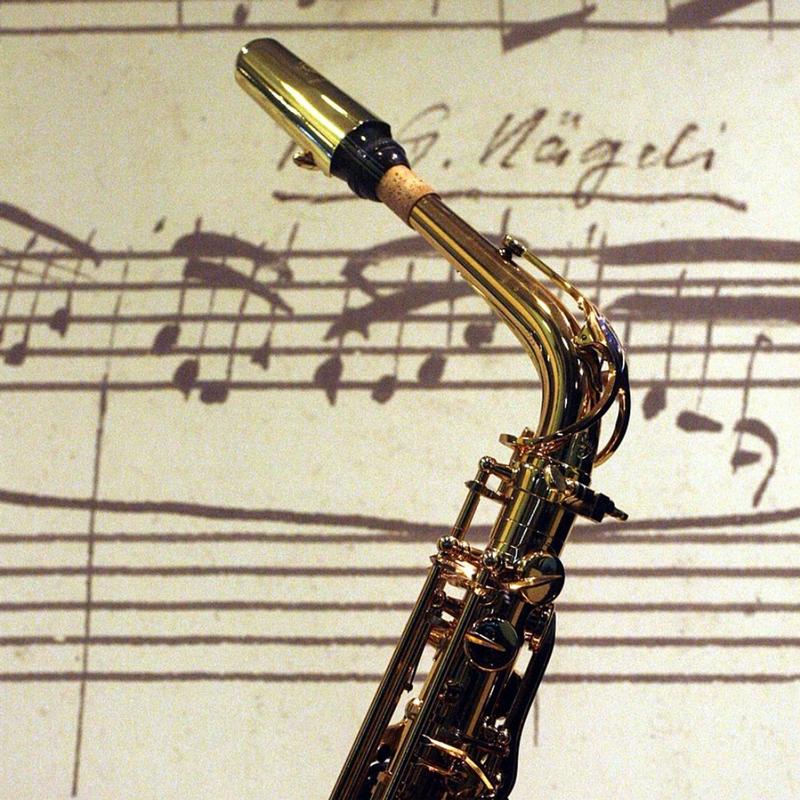
Brian Lehrer: No, that's not The Brian Lehrer Show theme; it's the legendary saxophone player Gary Bartz, who will join us in a minute as he was being honored in 2024 at the Kennedy Center. Remember the Kennedy Center? Here's why Gary Bartz. Remember before the Oscars, when Timothée Chalamet was worrying about the future of movies on CNN, and he said this?
Timothée Chalamet: I don't want to be working in ballet or opera or, you know, things where it's like, "Hey, keep this thing alive, even though no one cares about this anymore. All respect to the ballet and opera people out there."
Speaker 1: Well, you've heard that clip. Almost everyone heard that clip and had their opinions about whether Chalamet was unfairly dissing some great and still vibrant art forms. When they got to the actual Oscars ceremony, did you catch this little quip in Conan O'Brien's opening monologue?
Conan O'Brien: Security is extremely tight tonight. I've just got to mention that. Yes, I'm told there's concerns about attacks from both the opera and ballet communities.
[laughter]
[applause]
Conan O'Brien: They're just mad you left out jazz.
[laughter]
Brian Lehrer: Oh, "They're just mad you left out jazz." Ouch. It wasn't enough that Timothée Chalamet said ballet and opera are over except for arts preservationists, now. Conan O' Brien said it about jazz. It made me think of something we touched on briefly on the show a few months ago. The Mellon Foundation just last year started funding a program called Jazz Legacies. It spotlights and gives some grant money to older living jazz luminaries. You have to be at least 62 years old to qualify.
Some names that some of you will know: Kenny Barron, Buster Williams, Marilyn Crispell, Dee Alexander, Donald Harrison, a bunch of others, and Gary Bartz will play a very different music excerpt from the Sweet Blues from the Kennedy Center that we opened with.
We'll ask, was Conan O'Brien right to put jazz on the Timothée Chalamet Endangered Arts Forum list? With me now are Elizabeth Alexander, CEO of the Mellon Foundation, on the Jazz Legacy's fellowships in general, and saxophone player and Oberlin music professor Gary Bartz. His own legacy includes dozens of albums as a leader and also work with Miles Davis, McCoy Tyner, and others, and because we can't totally stay away from politics, even in an Arts and Culture segment, his his Jazz Legacy's bio page says: "Observing the way that Max Roach and Charles Mingus wove forthright social critique into their work, he was inspired to form his own band, NTU Troupe." He later said, "I saw that you can address social ills through music." Elizabeth, always great to have you. Gary Bartz, what a treat. Welcome to WNYC.
Gary Bartz: Well, thank you.
Elizabeth Alexander: I am so excited to be with both of you today.
Brian Lehrer: Elizabeth, did you catch that Conan O'Brien quip at the Oscars, and did it get you mad like it did people involved with opera and ballet?
Elizabeth Alexander: Yes. You know, my ears are always tuned to whenever the word "jazz" is spoken anywhere, [chuckles] so I did catch it. I think that the thing that is so extraordinary about jazz is that it is indelible. You cannot extinguish it; it will thrive and live forever. Of this I am certain, even as the art form evolves. I also think that it is an art form that needs to be supported, that it has an extraordinary legacy and history, and that there are people among us now who can tie themselves to the very beginnings of the music, of the history of the art form. Doing everything we can to lift it up and lift up its legacy is what we're excited to do at Mellon.
Brian Lehrer: Gary, congratulations on being named a Jazz Legacy Fellow. I want to give listeners a glimpse into your music and career. I see your father owned a jazz club. That was in Baltimore, right? What was it like growing up in that environment?
Gary Bartz: Well, he actually didn't acquire the club until I had graduated from high school and moved to New York City. I moved to New York City in 1958 to go to Juilliard, and he bought the club in 1960. I had been in New York a few years.
Brian Lehrer: I see.
Gary Bartz: I would commute from New York back to Baltimore on the weekends, which is opposite from most people; they would go to New York. I would come from New York down to Baltimore to the club. It was very exciting. I had no idea he was even thinking about doing that. It was very beneficial to me also because I had a place to play every week.
Brian Lehrer: I do want to take you back to your childhood and bring listeners there a little bit. I also read that you first felt pulled to the saxophone at the age of six after hearing Charlie Parker. Do you remember that at all, or what the sound or feeling was that drew you in as a six-year-old?
Gary Bartz: Yes, it was the most beautiful thing I'd ever heard. I didn't know whether it was a saxophone. I didn't know whether it was a man or a woman. I didn't know what it was. All I knew is whatever this person was doing, I wanted to do that. It's never left me. That moment has never left me. I still want to do it. [chuckles]
Brian Lehrer: [chuckles] And you're still doing it, and you're still doing it great. Elizabeth, I hear you trying to get in there. What are you thinking, hearing that story?
Elizabeth Alexander: Well, first, I'm just so honored to be in this conversation with you, Mr. Bartz. Your music has given me joy, power, inspiration, and challenge for decades.
Gary Bartz: Thank you.
Elizabeth Alexander: Hearing you talk about your origins is very beautiful to me. I've been talking about what Mellon is doing, but I think that the roots, for me, too, growing up and listening to jazz and having it be ambient in my home, and thinking-- I didn't think, "I want to do that." I was not a musical person in that way, but I did think, "This is the most extraordinary thing I've ever heard." Having the privilege of living in its midst, I'm a poet, so jazz has been in a conversation with my poetry all along. Both thinking about the people who made the music, but also what you're trying to do on paper with words to create rhythm, pacing, and sound. It's hard, [chuckles], and I think one of the things that some of my poet friends and I talk about is what we have learned from different jazz musicians.
I think that, for example, listening to Monk and understanding that resolution, that leaving a line or a poem open at the end and not doing the thing that you feel like you're inevitably moving towards, can be so much more interesting and create so much more potential in the art form. To jazz, I think what it gives all of us is a sense of infinite potential, of the infinite surprise in life. In improvisation, you don't know what's next, and you have choices. "What choice is the musician going to take?" I'm just very excited to think about all that jazz gives to us, even those of us who don't make it.
Gary Bartz: [chuckles] Yes. Well, it's funny, most of the musicians that I've been around, especially the older musicians, never use that word jazz. They never like that word because it's just a knockoff word; it's not even a real word. We play music. Would you say Beethoven, "Oh, they're playing class"? You know, classically, "They playing class." It's demeaning. Like I say, Max Roach would get into fist fights with people that said, "Oh, he's a jazz musician." He's a musician. Why do we need the distinction of what kind of musician?
Duke Ellington said, there's only two kinds: good and bad. To make up a name, like [unintelligible 00:09:06], they hated the word bebop. That meant nothing. It's like if. If you were a poet and they called your craft p something, you know, "Paz." "They're Pazzards, they write poetry." You're a poet, you're a writer.
Brian Lehrer: It's so interesting to me because one of the things that I think about with respect to you, Gary, is that you've played in so many genres with at least the names that people give them, like bebop and avant-garde and some gospel tinge things I saw you on in a video from a couple of years ago. I can't resist but to ask you what playing with Miles Davis was like in that period around 1970, when he was basically inventing the whole jazz rock fusion era before people like Chick Corea or John McLaughlin and them had their own bands.
I'm going to give listeners a few seconds of you from the Miles Davis album Live Evil. Such a different sound from the Sweet Blues we had you on at the top of the segment from the Kennedy Center. Just want to give listeners a few seconds of Gary Bartz on Miles Davis Live Evil.
[MUSIC - Gary Bartz: Miles Davis: Live Evil]
Brian Lehrer: Gary Bartz with the electric piano, electric guitar raging there in the background. On the 1970 Live Evil album. Miles got some flak from jazz traditionalists who didn't like him going electric like that. What was that like for you at that time?
Gary Bartz: Well, when he called me, I was disappointed because I wanted to be in the bands with the music that he was playing before Bitches Brew. I knew every song that he had done.
Brian Lehrer: The older non-electric stuff from the '50s and earlier '60s.
Gary Bartz: Yes, that's the band I wanted to be in. I knew all of that music. I grew up on that music. When he called me to do this, Bitches Brew had just come out, and so that's the music they were playing. I was very hesitant. I. I took the guy, "You're not going to turn Miles Davis down," but in the back of my mind, I was thinking, "Well, I'll give it a couple of weeks and see how it goes." Once I got in there, I realized I didn't have to do anything different than I had been doing, and so that's when I began to grow as far as understanding that music is music. It doesn't have a name. It's other than music, because music is nothing but sounds.
Like I teach my students, sounds don't have names because they're sounds. If I make a clap, you can't say that. You'll say clap or slap or something, but that's a sound, and you can never interpret that other than it's a sound, and you hear it.
Brian Lehrer: To go back to that quote from your bio that I cited in the intro, how do you get from sounds or sounds to them having a social justice meaning?
Gary Bartz: Now we're talking about creating. creating sounds, and what do you want the sounds to do. The song I wrote, I've Known Rivers, which was based on a Langston Hughes poem, A Negro Speaks of Rivers, to me, that's musical. Just the poem itself is music, even though it's a poem. When I read it, and when I read it, I hear the music in it, so naturally, I'm going to think of a way to bring those words to sounds because I'm reading them, they're just words. Okay. I want to make sounds. I want to make sounds out of those words. They go hand in hand. A lot of that goes hand in hand.
Elizabeth Alexander: I wanted just to respond to what Mr. Bartz said about musicians playing music. Absolutely. That is the hard thing that a musician has to figure out how to do with every note. At the end of the day, it's, "Can you play or can't you play?"
What I do want to make sure to say is that if we could, for the sake of argument now, say that there is this big thing called jazz that is truly the original and I think most powerful American art form in all of its forms and colors,-
Gary Bartz: Absolutely.
Elizabeth Alexander: -started in New Orleans in the last century with a history with things in it that need to be recorded, uplifted, venues that need to be supported. That's what we're trying to do with this jazz initiative and with the Jazz Legacies Fellowship to make sure that we capture this extraordinary, extraordinary, varied art form and its practitioners.
Brian Lehrer: We just have 15 seconds. Elizabeth, is there a place where listeners can go if they want to look at or listen to Jazz Legacy's material?
Elizabeth Alexander: You can go right to mellon.org and better yet, just listen to the music.
[theme tune]
Brian Lehrer: Elizabeth Alexander, always a treat. Gary Bartz, what a first-time treat. Thank you both for joining us today.
Gary Bartz: Thank you [crosstalk].
Elizabeth Alexander: Thank you, friends. Bye-bye.
Brian Lehrer: Brian Lehrer on WNYC. Thanks for listening. Stay tuned for All Of It.
[theme tune]
Copyright © 2026 New York Public Radio. All rights reserved. Visit our website terms of use at www.wnyc.org for further information.
New York Public Radio transcripts are created on a rush deadline, often by contractors. This text may not be in its final form and may be updated or revised in the future. Accuracy and availability may vary. The authoritative record of New York Public Radio’s programming is the audio record.