
It's All About Control
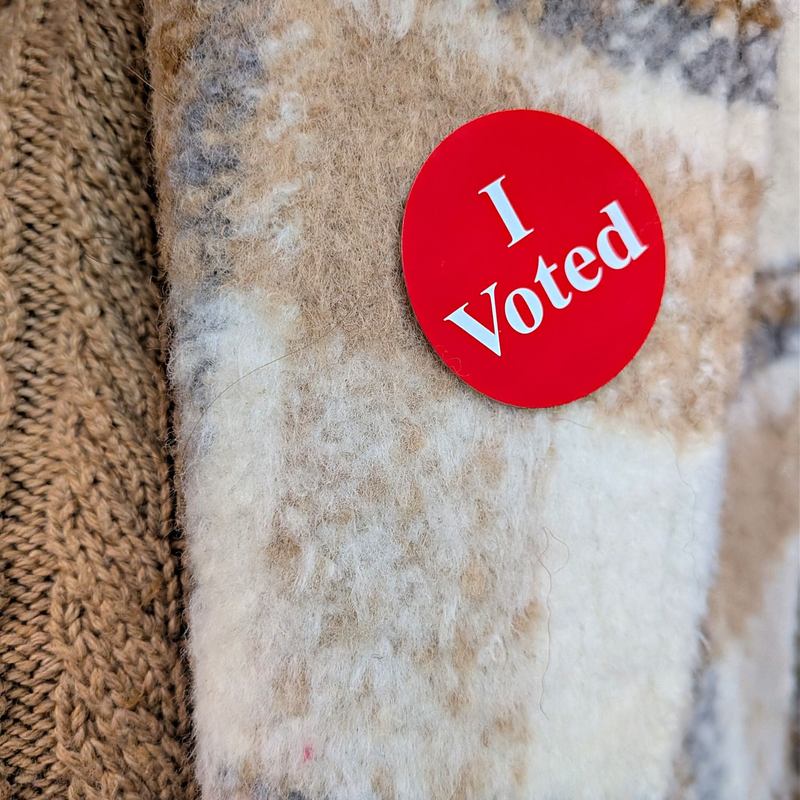
Title: It's All About Control [MUSIC- Marden Hill: Hijack]
Brian Lehrer: It's The Brian Lehrer Show on WNYC. Good morning, everyone. Defund Science, Distort Culture, Mock Education, that's the title of a podcast episode from Atlantic magazine staff writer Anne Applebaum in her series Autocracy in America. It's related to the themes in Anne's latest book Autocracy, Inc.: The Dictators Who Want to Run the World. Anne will join us in a minute. Another episode of her podcast was called How Autocrats Meddle with Elections. It tells the story, for example, of Dawn Baldwin Gibson, a pastor in New Bern, North Carolina, who had her vote in the 2024 elections challenged for no apparent reason. I'm going to play a few clips here of Pastor Gibson. Here's the beginning of how they cite her in the podcast.
Dawn Baldwin Gibson: For more than 35 years, I have been a registered voter, and I have been casting my vote to this day. Months later, I still don't know why my vote was being challenged.
Brian Lehrer: She continues.
Dawn Baldwin Gibson: One of the races on the ballot was for the North Carolina Supreme Court. The election was between Allison Riggs and Jefferson Griffin. I actually went to vote as an early voter, and this is something that for many years I have done with my family, showed my ID, went in, cast my vote, and really thought nothing else about it until a couple of weeks went by. I started hearing about this Jefferson Griffin list.
Brian Lehrer: Did the North Carolina State Board of Elections challenge her vote?
Dawn Baldwin Gibson: The authority in North Carolina is the State Board of Elections. They were not challenging my vote. They were showing that I had done everything that I was supposed to have done for my vote to count. Jefferson Griffin's team they were the ones challenging my vote, and that seemed like changing the rules after the results are not what you want.
Brian Lehrer: How did this end?
Dawn Baldwin Gibson: I just thought, "Do something. What can I do?" We got a local church, we wrote letters, we talked to the local media.
Brian Lehrer: That was Pastor Dawn Gibson, one of more than 60,000 North Carolina voters who had the legitimacy of their vote challenged in 2024. Now, the podcast reminds us the Trump administration has its eyes on the midterms for this year and beyond. Now, besides her book Autocracy, Inc., and her podcast that we just sampled from Autocracy in America, Anne Applebaum is also a senior fellow at the Johns Hopkins School of Advanced International Studies and the SNF Agora Institute at Johns Hopkins. Anne, we always appreciate when you give us some time. Welcome back to WNYC.
Anne Applebaum: Thanks for having me, and thanks for quoting from the podcast.
Brian Lehrer: Can we start with that Dawn Gibson story? Of course, listeners, if you were confused by music suddenly showing up in your ears, that was from the podcast soundtrack. Why did you put her story near the top of your episode called How Autocrats Meddle with Elections?
Anne Applebaum: I think it's important for Americans to understand that the process of stealing an election might not be one dramatic thing. It might not be an event like the one we saw on January 6th several years ago. It might be little changes, little challenges, changes to the rules, attempts to keep particular categories of people from voting, challenges to the vote after it takes place, maybe even in the midterms, challenges to winning candidates, or efforts to prevent them from taking their seats in Congress.
There will be a package of small things, and I wanted everybody to understand that. I also think it's important to understand that really, very ordinary people, US Citizens, people who've been voting for years, people who were born in America, grew up in America, have always thought of themselves as part of the American political system, are also at risk of being excluded. The rhetoric of the administration is often about illegal immigrants. We need to prevent illegal immigrants from voting, but actually, a lot of the tools they're using are designed to prevent US citizens from voting.
Brian Lehrer: Let me play a little more of Dawn Gibson on how this ended, because she did, in the end, get to vote, as you'll hear.
Dawn Baldwin Gibson: Yes, in the end, we did get our votes to count, but it put a lot of stress, it put a lot of worry. I come from a rural community, and the word we would use is it was a lot of worriation. They felt like, every time I go to vote, is this what I'm going to have to put up with? Go vote, and then there's a challenge.
Brian Lehrer: Is that part of the point here? If they're challenging people like her, who, if that story is accurate, there was absolutely nothing about her voting history or her voting registration or the ballot in this case, but by highlighting these stories, they're trying to intimidate other people out of even trying.
Anne Applebaum: Kind of intimidate other people. They're trying to make it hard to vote. They're trying to make people say, "It's not worth voting. It's too much effort." I think also there's an importance in listening to her because it's a reminder that, depending on where you live, what community you're in, it might be this year or in the coming years that you have to fight a little bit harder to be able to vote.
Her story had a happy ending. She got her community together. They protested, they won their argument, and their votes counted. We've had an idea in this country for a long time that there's something automatic about elections. You just do it, you vote, everything works. It's all fine. You don't really have to worry about it as a citizen. You don't have to think about the mechanics of democracy or the mechanics of voting. It's just automatically done for you.
I think that's not the case anymore, and it's useful reminder, people who are planning to vote, who want to vote, should make sure they know what the rules are in the district where they live. They are prepared to vote, they've thought about it in advance, and they're prepared to defend their vote if they have to. That's a little bit more than Americans were required to do in the past.
Brian Lehrer: Just one more thing about the Dawn Gibson story before we move on to some other things. The fact that her registration and her ballot didn't seem irregular at all to elections officials in her state, but she got onto this list of 60,000 North Carolinians who got challenged by this outside group. She said the name of the group, Jefferson Griffin, or that's a person. She was on the Jefferson Griffin list. Is there something to glean from that about how autocrats meddle with elections using outside groups, or would that be a stretch?
Anne Applebaum: It could be outside groups. It could be the federal government. The federal government historically doesn't have anything to do with the electoral process in the United States. Our elections are run by state governments and state officials. The Department of Justice, just to give you a different example, has recently required or demanded that several states turn over their voter rolls to the federal government. That's something that's never happened before, and many of them are refusing, and there are ongoing lawsuits about that.
The federal government has also, in the past year, for the very first time, put pressure on state officials to redistrict their states so as to give an advantage to the Republican Party, also something that never happened before. We have a long tradition of gerrymandering in America. Both parties are guilty. It goes back hundreds of years, but it's never been the case that a sitting president has asked state officials to do it in an off-year for his benefit.
That's just an example of the federal government intervening in elections in a way that is not historically familiar. You're right. It could also be outside groups. It could be particular judges. It could be state legislatures. There are many avenues this could go through.
Brian Lehrer: In the State of the Union on Tuesday night, the president said this about Democrats.
President Trump: They want to cheat. They have cheated. Their policy is so bad that the only way they can get elected is to cheat, and we're going to stop it.
Brian Lehrer: We know that the 2020 election was not, in fact, stolen. For you, as an expert on the Autocrats playbook, does that language in that speech signal anything about 2026 or where he's trying to take us?
Anne Applebaum: It absolutely signals that they're using the language of Democrats are cheating to try to change the rules and to try to prevent people from voting. Yes, absolutely. As I said, it's unlikely to be one thing. It's unlikely to be one piece of legislation or one practice. It could be anything from having ICE on the streets on election day to intimidate voters, even voters who are citizens, make them afraid to go to the ballots.
It could be, as we've already discussed, various tricks to do with how votes are counted or who's allowed to vote. Anybody, as I said, who cares about American democracy and who wants this to be a free election needs to pay attention to what's going on. There may be extra requirements to vote this year. There may be extra obstacles. What Trump is doing by saying what he said in the State of the Union and also by recent statements about a possible emergency declaration, all of these are signals that they are looking for ways to alter the outcome of the vote.
Brian Lehrer: My guest, if you're just joining us, is Anne Applebaum, author of Autocracy, Inc., and the Atlantic magazine podcast series Autocracy in America. I want to move on to your episode called Defund Science, Distort Culture, Mock Education. You say in that one that the goal in that realm might be more than trying to control knowledge, but also to build distrust. Can you talk about how you saw those things working together to build an autocracy in other countries you studied?
Anne Applebaum: Absolutely. If you can undermine universities, if you can undermine science, if you can undermine all media from good media to bad media, right wing media, left wing media, if you can convince people that the only source of truth, the only organization or person who can explain the world to you is the ruling party or the leader, then you have the ability to do what we've just been discussing. You can reshape the argument about elections. You can make things that are false appear to be true.
You can make people believe that there are a lot of illegal immigrants trying to vote in America, for example, which is not true. There's no evidence for it. There never has been. If you think about it for five minutes, you realize that illegal immigrants have no interest in voting because it could attract attention to them. It's a way of trying to create so much distrust that people will look for alternative sources of belief, and it's a way of making, as I said, the leader or the party, in some cases, as the source of that belief.
Brian Lehrer: You say about Trump's war on Harvard in that episode that you thought, "They're doing this to show that they can do anything. If they can destroy Harvard, they can destroy anyone." How would that trickle down to have broader effects on democracy or on trust or on truth?
Anne Applebaum: It's already trickled down. If you spend any time on college campuses, you know already that people are wary of what they can say. They are conscious of the need to placate or deal with the federal government and particularly universities that are reliance on science funding, which all the big research universities are. If the most prestigious, the most, I don't know, name-brand university that we have can be brought down, then it could happen to anyone, and that already leads to a certain kind of caution, a certain kind of extra care in what people say and do. I think the attack on Harvard has probably already had an impact.
Brian Lehrer: In that episode, you had a guest, NYU historian and propaganda expert Ruth Ben-Ghiat, author of the book Strongmen: Mussolini to the Present. You touched on this campaign by Trump to name everything after himself and build monuments to himself. It was interesting to me that Ruth Ben-Ghiat placed that kind of thing in the context of fear. She said what autocrats really want is to feel safe because they, of all people, know how hated they are. Can you talk about how you saw that kind of thing applied in the past in other countries with autocracies that you've studied, or more on how it reflects fear right now?
Anne Applebaum: In the Soviet Union, it was famous. There was a city named after Stalin, Stalingrad, and there were bridges and monuments, and buildings all over the country, and then later, after other Soviet leaders. Again, the point is, if the leader's name is built into the structure of the fabric of the city, the buildings, the roads, the bridges, then the sense of him being omnipotent or unchallengeable or already written into history in a way that you, the individual, can't impact, it is already there.
It's one of the reasons why, in a lot of countries, you don't name things after somebody until they're dead. I think the US Government, at least until recently, had a rule about postage stamps that nobody could be on a stamp until after they were dead. There's a legitimate reason for that because when a living politician constructs a monument to himself, that's an expression of his power, and it's a way of, as I said, telling people that, especially if it's a physical thing, there's nothing they can do to move him or remove him.
Brian Lehrer: About fear, I should tell our listeners that, besides the domestic democracy questions we've been discussing, you're a major expert on international relations. I wrote a newsletter column last week about Rubio in Munich. He talked about not governing out of fear. He cited too much fear, told the Europeans they have too much fear of climate change, fear of technology, fear of war. They have too much fear of those things.
The anti immigration message that was the core of that speech seemed to reflect that they are petrified of immigration, that people who want to be our neighbors will destroy Western civilization, which he said is the greatest civilization ever. Does it fit into anything that you study or write about that he would say the greatest civilization in human history is so fragile that immigrants are scarier than war?
Anne Applebaum: I think this is part of another very traditional, very familiar, and old way of doing propaganda, which is to find an out-group for people to focus their anger and hatred on, or their fear and anxiety, as the case may be. If modernity is uncertain and your job is precarious and your housing and healthcare costs are too high, then you will feel better if you can point to somebody whose fault it is.
This goes back, actually, well before the 19th century, historically, finding a group who were the scapegoats, who were the problem, and the focus for our many, whatever is wrong with our civilization is the oldest technique there is. This administration, like many in the past, has chosen to use-- Actually, they started out talking about illegal immigrants, but it's now really immigrants more broadly as the focus of that ire. If things are going wrong for you, that's why.
It's a thing that people can see. It's people who look different, maybe they have a different accent, they seem different, at least from some. It's a strange thing for Marco Rubio to be talking about, given that he's himself the child of immigrants, but that's common, too. Very often, the children of immigrants are also participants in this creation of new identity. I think it fits right into that pattern.
Brian Lehrer: People can be for or against Trump's policies. Fair enough. They can be Democrats or Republicans, or independents. They can like some of the policy things at the domestic or international level. When it comes to this kind of authoritarian takeover that you focus on, what does history show is effective resistance?
Anne Applebaum: Effective resistance always involves building broad coalitions around big ideas that people share. I think that's possible in America. I think there is a majority, and it probably includes some Republicans, and includes some people on the left, and it includes a lot of people in the center who can be moved by stories of lawlessness, and who don't like the idea, for example, of thugs on the street in Minneapolis murdering protesters. There's a broad majority coalition to be built.
That's when you see regimes change or regimes fall or alter, assuming it's not the result of a revolution, which also happens, and I don't think we're at that stage yet. The end to authoritarian, populist regimes, as I said, is almost always a majority coalition that has found themes that it can unite around.
Brian Lehrer: Last thing in our last minute, I'm just curious about the word you chose as your frame for all this work, autocracy. People talk about authoritarianism, some prefer fascism when framing what they think is happening here. Is there a distinction that led you to call your book Autocracy, Inc., and your podcast Autocracy in America?
Anne Applebaum: I like the word autocracy because it includes a lot of different ideologies. One of the characteristics of modern autocracy is that the autocrats around the world often have very different theories of the world. There's Chinese communists and Russian nationalists, and theocrats in Iran, and nevertheless, they deploy many of the same practices. They all work to control information. They all seek to undermine independent courts.
They have a lot in common in their practices and in what they do, even if they come from different political origins or backgrounds, or they have different aesthetics. That's the word I prefer. Of course, Autocracy in America, the original title of the series, came from democracy in America. The original, the first season, began with a reflection on Tocqueville and what he might see today. That's the reason for the use of that word and that phrase.
Brian Lehrer: Anne Applebaum from The Atlantic and Johns Hopkins, thank you for your important work. Please keep coming on with us.
Anne Applebaum: Thank you.
Brian Lehrer: Brian Lehrer on WNYC. Much more to come.
Copyright © 2026 New York Public Radio. All rights reserved. Visit our website terms of use at www.wnyc.org for further information.
New York Public Radio transcripts are created on a rush deadline, often by contractors. This text may not be in its final form and may be updated or revised in the future. Accuracy and availability may vary. The authoritative record of New York Public Radio’s programming is the audio record.