
IRC on the Countries at Risk in 2026
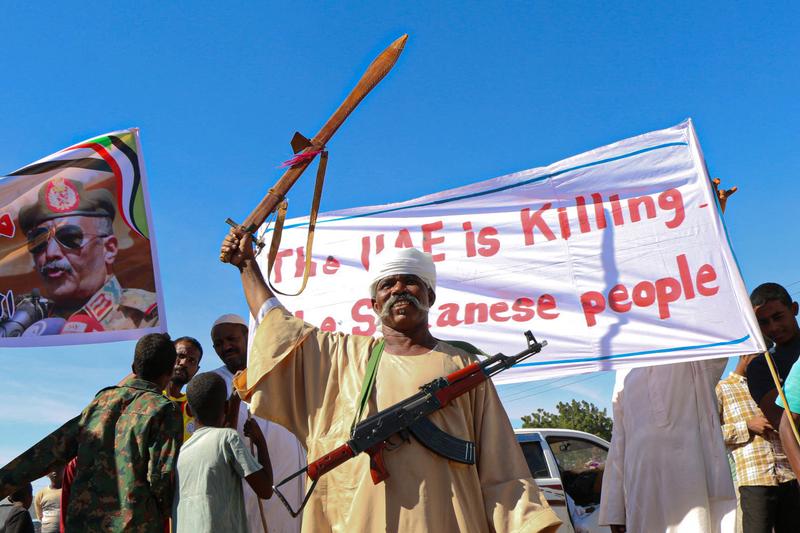
( Mogtaba Kanary/AFP / Getty Images )
Title: IRC on the Countries at Risk in 2026
[music]
Brian Lehrer: It's the Brian Lehrer show on WNYC. Good morning, everyone. One of the things we've been following on the show this year is the life-and-death impact around the world of the severe cuts in US foreign aid. Also, the US cutting way back on refugee resettlement, like looking to send back many people from Afghanistan, even those who helped the US during the war there, whose lives would presumably be endangered by returning them to the Taliban-run country.
There's new news on these fronts this morning. It comes from the International Rescue Committee, the IRC, which helps refugees and other people affected by humanitarian crises around the world. Some of you know it was Albert Einstein who founded the organization that became the IRC back in the 1930s to help support refugees fleeing the Nazis.
Now known as the International Rescue Committee, they are out today with their annual Emergency Watch List report, but this year, in addition to listing the 20 countries that they cite as the most at-risk of worsening humanitarian crises, and we'll go down some of that list, the Emergency Watch List Report has a subtitle, "New World Disorder" Driving Unprecedented Humanitarian Crises as Global Support Collapses.
On that collapse, the report cites a stat that global humanitarian funding has shrunk this year by 50%, by half. That downward dive led, as you might imagine, by the United States, considered in the past the anchor of the global aid system, on the notion of "A New World Disorder," that phrase, that title, this is not just a money flow issue.
The IRC says the global system previously based in rules and individual rights is being dismantled, leaving a void that becomes an incentive to use war as a tool for power and profit, an incentive for using war as a tool for power and profit. The result, they say, obviously, is more death, hunger, and displacement of civilians.
Now the report includes 10 goals for the coming year, and they include not simply getting aid to people who need it immediately but also structural things for this New World Disorder environment, like analyzing who profits from violence to help disrupt those illicit networks and recommitting to international refugee protections.
With us now, the president and CEO of the International Rescue Committee, David Miliband, the former British Foreign Secretary. David, we appreciate that you're making us one of your stops as your report comes out this morning. So important. Welcome back to WNYC.
David Miliband: Brian, I appreciate you very much and really am looking forward to this conversation. I really appreciate you giving us the space because these are big issues, and too often, they get ignored.
Brian Lehrer: Can you explain more about why you titled this year's report "The New World Disorder"?
David Miliband: Yes. I think that's a great place to start. The New World Disorder is what our teams see every day in the 30 to 40 countries that they work in around the world, countries led by Sudan at the top of the emergency watch list, the threat list, if you like, for 2026, the gravest humanitarian crises. What they're seeing is precisely what you hinted at in your introduction; the rules and the rights that were established after the Second World War were never absolute. There was never a golden age, but those rules and rights set a benchmark.
What we're seeing in places like Sudan, in Gaza, in South Sudan, in Ethiopia, number four on the watch list, in Somalia, where I was last week, what we're seeing is a world without rules and a world without rights. That's the product of very big changes in global politics that have neutered international cooperation on diplomacy, on climate change.
Those are political trends that have facilitated the profiteering from conflict that we see every day in Sudan. The gold trade is booming in war-torn Sudan, and it's producing the trampling on individual rights that is absolutely critical for civilians who are caught up in war, 50,000 of them killed over the last year, but also the refugee issues that you mentioned. The New World Disorder is simply the daily reality that our teams see outside their windows every day.
Just final point, as needs remain very high, as impunity reigns in the places that we work, the cash support that goes in to support health programs, water and sanitation programs, vaccination programs, economic livelihoods programs, that has been slashed by, yes, 50%.
I just want to put that into dollar terms for you because it's 50% of about $26 billion was spent on humanitarian aid. That's the lifesaving work. We've lost about 12 to 13 billion dollars of that aid. We're facing a crunch. On the one hand, the needs are at a historically very high levels, 60 conflicts going on around the world, but the mitigation, the lifesaving support, has been cut back, and the disorder, of course, is accelerated by those cuts.
Brian Lehrer: How much of that cut is specifically a reduction in US foreign aid?
David Miliband: Well, it's very hard to get the figures out at the moment. We haven't finished 2025. The final amounts have not been declared. What we know is that Secretary Rubio announced much earlier in the year that 83% of US aid grants and contracts, some of them coming through the State Department, some of them coming through the USAID independent agency, 83% of grants and contracts had been cut off.
That's not the same as the total cash loss, but to put it in some kind of perspective, the US represented $1 in every three more or less of total aid spending, humanitarian aid, all other forms of aid. I think that in the humanitarian aid basket, the reduction of $12 billion, $13 billion of the most basic forms of aid, the US proportion of that is likely quite high.
Brian Lehrer: Let's linger for a minute on the effect that's having on actual people around the world. I want to play a clip from this show on October 6th. It's Meg Kelly from The Washington Post on her reporting about the pause in medical aid. This is just one of the things in this category, but the pause in medical aid that the Trump Administration ordered very early on.
Meg Kelly: The time period that we looked at, which is the first six months of the year, the first half of the year, we found that there were $190 million worth of-- or more than $190 million worth of supplies that were meant to be delivered during that time period. They were meant to go to 41 countries, so it's a pretty wide swath of the world that was expecting either HIV or malaria commodities during that time. By the end of June, we found that nearly or almost half of that medication and supplies had not been delivered. It was in warehouses. It hadn't left manufacturers. It was sitting in customs. It was in transit.
Brian Lehrer: Meg Kelly from The Washington Post here in October. David Miliband from the International Rescue Committee, I wonder if there's an IRC experience with that halted medication and medical supplies. She mentioned malaria and HIV in particular, with that flow that you can pick it up from there on and put even more of a human face on it with respect to people who the IRC serves.
David Miliband: Yes. I think it's very important to follow that up. Let me give you an example that derives from East Africa. I mentioned that Sudan is the largest humanitarian crisis in the world; 30 million people in humanitarian need, about 3 million of the Sudanese population have crossed into neighboring states; Egypt, Chad, but also South Sudan, which itself is a very poor country.
The program that we can highlight was for Sudanese refugees in South Sudan, above all, met their health needs. It was a $5 million program or so, and it was cut off. That means that people aren't getting absolutely vital medical care, nutritional support, et cetera. These are people who've lost everything in the course of the so-called civil war, the internal war in Sudan. They were counting on the services that they're receiving from us, and they're no longer getting them.
I'm afraid that pattern has been repeated for us in about 50 different grants and contracts that have been cut off. Some of them at the real hard end, like this South Sudan example, others the largest education program for children in Afghanistan, boys and girls, cut off. There's a very human face for this. In total, about 2 million of our clients have lost services that they were previously getting. Of course, the very high likelihood is that they're not being replaced.
Brian Lehrer: I don't know if you're trying at all to document or estimate how many people are actually dying as a result of the sudden drop off of US and other humanitarian aid, but I want to play an exchange from September between Secretary of State Marco Rubio and ABC's George Stephanopoulos on this question as Secretary of State. That's, of course, the US equivalent of your old job for the UK; Foreign Secretary. You'll hear Rubio first blame others for any deaths, and Stephanopoulos follow up on that, sounding like an admission that people are, in fact, dying. Listen.
Marco Rubio: Then they died because England didn't give enough money, or Canada didn't give more, or China did. Let's blame the other countries that don't do any foreign aid. How about China? I mean, China's the second largest economy in the world, they don't give money to the [crosstalk]
George Stephanopoulos: So you're no longer disputing that the aid cuts have cost people's lives? You're no longer disputing that?
Marco Rubio: It didn't-- I think anybody who tells you that somehow it's the United States, if we cut a dollar, somehow we're responsible for some horrific thing that's going on in the world is just not true. Beyond that, I would say that in some of these places [crosstalk]-
George Stephanopoulos: Well, if the dollar is not going feeding someone medicine-
Marco Rubio: -the reason why the aid didn't get there-- No. Excuse me, George.
George Stephanopoulos: -someone's going to die, aren't they?
Marco Rubio: One of the reasons why some of these places didn't get the aid is not because we cut the aid, it's because there's a war going on, and the aid never got to the people.
Brian Lehrer: Marco Rubio and George Stephanopoulos in September. David, I'd like your reaction to that clip, and also, if you have any estimate at the IRC of how many lives this year's changes are costing.
David Miliband: I think that the most informed, data-driven estimate comes from a look across the humanitarian landscape, so it wouldn't be right just to have one agency. We're a significant part of the humanitarian sector, but we're not the majority part, anything like it. The most data-driven estimate comes from the highly respected medical journal, The Lancet. I'm sure you've had contributors from The Lancet on your show.
Brian Lehrer: Mm-hmm.
David Miliband: 1.5 million people have died in 2025, according to The Lancet. That's the best estimate of the consequences of all the aid cuts. Now, of course, Secretary Rubio is right to say that it's not only the United States that's reducing its aid, but as I said before, the US was $1 in every 3, so it's a very significant part of it, and it plays a critical leadership role.
In answer to your question, there is serious work being done by responsible organizations to try and document it, and that is The Lancet's best estimate so far. As I say, it's still work in progress. There's still a couple of weeks of the year to go, not the least, but that's so far the best sector-wide estimate.
Brian Lehrer: Listeners, as we continue to follow the sudden decline in US foreign aid and what the International Rescue Committee calls in its new report, "The Global Collapse," as well as "New World Disorder," we invite your stories and comments and questions. 212-433-WNYC. If you have any ties to any country experiencing the effects of this global collapse in humanitarian aid, help us report this story. 212-433-WNYC. Don't be shy.
If you come from anywhere in the world originally, countries that might be on this list of 20, at a special risk, or anywhere else. 212-433-9692. If you have any ties to any country experiencing the effect of this global collapse, do feel free to help us report this story with a story, an anecdote, something somebody told you on the phone, a relative, a friend, a business associate back there, or anyone else, too, can make a comment or ask a question. 212-433-WYNC, call or text. 212-433-9692 with David Miliband, former UK Foreign Secretary, now President and CEO of the International Rescue Committee. 212-433-9692.
David, I saw you on TV this morning saying the EU is picking up some of that aid, but also, notably, China is stepping into that void. I want to take each of these. On the EU part of that, again, you used to be the UK's Foreign Secretary. England was the first country that Rubio, in that clip, cited, "Oh, if they're cutting off aid--" but how, from your experience, would those decisions be getting made in European capitals today?
I know one US Argument, I'm sure you know this, is that the other wealthy countries of the world, European ones especially, have been taking advantage of the US largesse for a long time on humanitarian aid, as well as military spending to defend Ukraine, for example, but on humanitarian aid in particular, which is our topic today, it's time for Europe to step up if they really believe in these things as they claim. Are the UK and other European countries taking that position seriously, and should they?
David Miliband: Well, there are 27 countries in the European Union. UK is outside the European Union. Norway is an important European country outside the European Union. Here's the picture. Those European countries are starting from a much higher base of commitment to international aid as a share of national income. The shares in Europe, 0.7%, in Sweden and Denmark, it used to be 0.7% in the UK. In the US, it's about 0.2% of national income that goes into foreign aid.
From a higher base, Europe is actually cutting back, but it's not a good argument that there needs to be more burden sharing between the US and Europe. The truth is that it's the newly emerging countries, notably in the Gulf, but elsewhere where there's a good case for burden sharing. I don't think it's fair to do a hit on the Europeans on this front.
Now, there is a very significant thing about the EU which you mentioned, which is obviously the collection of 27 countries, countries like Germany, countries like Sweden, countries like France, they have bilateral aid, that means going from their government to other countries, but they're also contributors to the EU-wide effort.
Here's the thing, the EU does seven-year budgets. It's an enormous haggle to get the budget agreed, but the current EU budget runs 'till 2028, and it's not being cut. The proposal from the European Commission, which is like the civil service of the European Union, they've proposed a new budget running from 2028 to 2035, a seven-year budget that will actually increase their international development assistance and their international humanitarian assistance.
So it's quite interesting that while the UK, Germany, actually France as well are cutting their bilateral budgets, the overall EU commitment, the proposal is to increase it. We're counting on that to hold the line, if you like, because if they don't hold the line, then we really are in the most desperate trouble. The US represented $1 in every three. The European Union and the European countries together represent about $1 in every 3 of the total aid budget.
We're really having to count on those countries. Your listeners may be wondering who else is contributing. Japan is a very significant contributor. Canada, quite a big contributor, but actually being reduced. I'm going to be in Ottawa meeting Prime Minister Carney on Friday to discuss that. I think that the European picture is one where some European countries are going down, other European countries are actually sustaining. Denmark is a good example.
The European Union as a whole has this long-term view about the signal importance of having European political sway but also humanitarian and development aid sway in the equation. They see that as a critical part of their sort of power. Of course, it's worth saying, your listeners may be wondering this as well. How does Ukraine fit into this? Ukraine is in the top 20. Ukraine, the military side previously was picked up by the Americans, now it's being picked up by the Europeans. The economic and humanitarian funding was always predominantly European, and that's being sustained.
Brian Lehrer: Why is Canada cutting back on foreign aid? When you mentioned that a minute ago, that might have surprised people, considering the way Canada is trying to be kind of a counterpoint to the US in various ways?
David Miliband: Yes. Canada's feeling the squeeze. I mean, they're obviously under huge economic pressure because of the trade "war" that started the tariffs that have come in. They're feeling the pinch. I think that's what they would say. Obviously, I'm not representing Canada, but that's what they would say.
Brian Lehrer: So a downstream effect of tariffs that we may not have ever brought up on this show before or people may not have thought of. I want to take a phone call for you from Richard in Cold Spring, New York, who maybe is skeptical of some of this. Richard, you're on WNYC. Hello.
Richard: Hello. How are you?
Brian Lehrer: Good. What you got?
Richard: Good morning. Two things. What is the appropriate level for the United States to be donating to these causes? In the statistics, are they counting the bilateral aid that we give? Is Ukraine counted in those? Maybe even a third point, what about our own country? We have so much need here. The need here is enormous. I'm just going to say during COVID, I raised a million dollars of funds for people in the Hudson Valley, and I saw things that were just horrific in this-- heartbreaking in this area, so those three points.
David Miliband: Those are good questions-
Brian Lehrer: [crosstalk]
David Miliband: -that I really appreciate. [crosstalk]
Brian Lehrer: Thank you. Go ahead, David.
David Miliband: What I would always say is, of course, charity begins at home, which is your last point. The question that we would pose is, well, it shouldn't end at home, and it's interesting that when you ask the American public, 89% of the American public, 84% of Republicans, 94% of Democrats, they say, "Yes, about 1% of the global federal budget should go on foreign aid." To your point, $99 goes to places like Cold Spring and elsewhere that's in need in America, $1 goes abroad. That's what the American public say. That was the level, more or less, of American international aid spending before the cuts.
The problem is that a majority of Americans think that 20% of the federal budget goes on foreign aid. That's not true. It's always historically been around 1%, which most Americans think $99 at home, $1 abroad makes, give or take, some sense. What we're now seeing is a retrenchment from that level.
In answer to your question, what would be the right amount? The official international answer is that aid should aim for 0.7% of total national income. The national income of the United States is, give or take, $30 trillion. If you figure out from that that the US-- 0.7% would be in the $20-billion range, but you can-- if you ask me what should be the level, that's the main level.
One thing. If you're interested in this, I gave a speech about this at the University of Notre Dame recently. Historically, we've talked about development aid to help poor countries get on their own two feet and help poor people in those countries. In the main, economic development isn't powered by international aid. International economic development depends on markets that work. It depends on cracking down on corruption. It depends on having proper governance and real property rights in the country, countries like South Korea or even China have shown aspects of that. India is showing that in various ways.
Aid should be to tackle poverty amongst the poorest people in the world. More than half of the poorest people in the world are now in conflict states of the kind that are documented in our watch list. Just to give you a sense of the proportions of this, the 20 countries in our watch list, which includes Ukraine, because you asked about that, the 20 countries in that watch list, they are 12% of the global population but 85% of those in humanitarian need.
If we targeted the aid budget at the poverty that exists, the desperate, extreme poverty that exists among those people who have-- whose countries are wracked by war and disaster, we do a hell of a job at reaching those most in need. The difficulty at the moment is only about a quarter of the global aid budget goes on those fragile and conflict states.
Brian Lehrer: The polling that you mentioned is so interesting, and I will note that one, two, three, at least three of the callers on our board are raising this question that Richard in Cold Spring just raised about the US needing to spend money on people here. There's plenty of suffering of people here. That's one of the premises of the idea of America First. Right? That we're spending too much money on other countries that are getting over on us in that respect.
The polling that you mention is so interesting. I've watched this over time. When you ask people in general, "What do you think about foreign aid?" It polls very poorly, but when you cite that actual stat, what do you think? If the US spends 1% of the federal budget on foreign aid, then it polls very well. That's an interesting contrast. Right?
David Miliband: Isn't it? I mean, it speaks to the fact that people haven't given away either their heart or their head because, remember, my argument is in part a moral argument. Those with something should give something, but it's also a strategic argument. One of the points in our report, there have been 57 outbreaks of measles around the world.
These diseases that are either coming back or are new diseases, they don't respect borders. We better watch out. This is a very connected world. So there's a hard-headed argument as well as a big-hearted argument for why it makes sense to put that $1 out of every hundred towards problems that are beyond your own borders, because what we know is that problems beyond our own borders, if they're allowed to fester, they don't stay a long way away.
Brian Lehrer: Besides cutting back on vaccine distribution, we may also be exporting the mindset that helps measles to spread, but that's a different show. On this idea of China filling the void, which we referenced briefly, and I want to come back to it for a sec, this is where it also gets complicated from a US national interest perspective. Right? A main foreign policy goal of the Trump Administration is countering China's growing influence in the world, in the Western hemisphere especially, but not only. What is China doing as the US steps back from humanitarian aid?
David Miliband: Now, this is a great point, and I want to try and explain it properly because the Chinese are being gifted the playing field in various ways here. Let me give you two interesting straws in the wind because historically, China has always presented itself as a "developing country." In other words, a poor country. It should be receiving funds rather than just giving funds. It's historically been the head of the group of developing countries in the United Nations. It's called the Group of 77, the G77 group.
There's two interesting straws in the wind. Number one, the Trump Administration has decided to withdraw from the World Health Organization. Surprise. Surprise. Who's doubling down on their investment of people and funds into the World Health Organization? Well, China is. There's an obvious filling of the vacuum there.
The second thing, and this was in my head, you referenced the interview I did on the Morning Joe show before it was sensible for anyone [audio cut] this morning at a very early hour. I referenced China there because there was an interesting story two weeks ago. Who is giving $100 million to humanitarian aid in Gaza? Well, China is. Historically, China has been reticent about getting into the humanitarian aid business, but I thought those are two interesting straws in the wind.
There is geopolitics here. There is global politics in this. My argument as the head of a nongovernmental organization and aid agency is we should give the aid because it can help the people, but there's undoubtedly big global politics in this, and that's not a new thing when John F. Kennedy, President Kennedy, set up the USAID. He saw it in its global context, not just in its moral context.
Brian Lehrer: We'll continue with David Miliband in a minute. Stay with us.
[music]
Brian Lehrer: Brian Lehrer on WNYC. We continue with David Miliband, former UK Foreign Secretary, now President and CEO of the International Rescue Committee. The IRC's report the New World Disorder is just out this morning on that geopolitics, but also documenting what they call a global collapse in funding for humanitarian crises, 50% collapse just since last year is the stat they have and including their annual watch list of the countries most at humanitarian crisis risk. Still, you can call or text with stories from any country you have ties to or with other comments or questions. 212-433-WNYC.
Let's get to the watch list itself. Countries most at risk, there is a top five here. Number one, Sudan. Number two, Occupied Palestinian Territory, as you refer to it. Number three, South Sudan. Number four, Ethiopia. Number five is Haiti. We're getting a caller with ties to Haiti, so I want to take Howard in Brooklyn right now on that number five country on your watch list. Howard, you're on WNYC. Thank you for calling in.
Howard: Thank you, Brian, for taking my call. I just want to say what is the reason United States knows that Haiti has been there, fought for them to win their independence during the Lafayette time, and also help them to gain regional purchase, a lot of other states. Beside that, Haiti also have lot of other countries in the world, and leading billions of people today getting better life. Whether you're Black, whether you Latinos, whether you women or white, their ancestors used to be poor, who are rich today, have PhD level, they all happen after the Haitian Revolution.
Now, right now, United States paid 200 million to Kenyan government for some of the Kenyan to be in Haiti. Canada pay 100 million. So that 200 million should have spent in our American brothers and sisters in this country. What does Kenyan do in Haiti?
Brian Lehrer: You're talking about a Kenyan-based security force, I think. Right?
Howard: Yes, but they don't do nothing in Haiti; people, the gang. The gang still burning people's house, killing people, put them in the street to sleep, and then they keep paying them. That's number two.
Brian Lehrer: Howard, I'm going to leave it there. I hear you. David's going to respond to that. We have another call who's Haitian. George in Hempstead, and I want to bring him in on this. George, you're on WNYC. Thank you for calling in.
George: Yes. Thank you for having me. One of the issues that I want to discuss is that point needs to be rethought because one of the things is that-- two things that I have noticed, and I'm from Haiti, I used to see it myself. Number one, the government abdicated of its responsibility of visa people, the foreign aid would take care of them, so we don't have to take care of them.
In addition to that, there was a great deal of corruption. I used to go to the market and see food donated by USAID in the bag. They didn't even take them out of the bag. "Gift of the American people. Not to be sold." They did nothing about it. They don't call the government to say, "Well, you shouldn't be selling that food. It should be going to the people."
Brian Lehrer: George, thank you very much. David, really, those two callers originally from Haiti are making kind of the same point. The money that the US spends on this country, that you list as the fifth most vulnerable in the world to humanitarian crisis, is, at very least, not being put to good use.
David Miliband: Well, I think there are a number of points there. First, it's very, very important to take head on this aid diversion or corruption issue. What I can speak to is that every penny that goes into the International Rescue Committee is dedicated to giving the most impactful services that deliver the greatest benefit to clients and the rigor with which we follow the money that comes in, the goods and medicines that we supply, that we buy, the supply routes, and then that we make sure that they reach the people who need them and they report back to us if they're not delivered.
I think it's absolutely right to take head on this corruption issue, the aid diversion issue. We do take it seriously because I don't know the individual case that was raised. Secondly, there's a broader question here, which is these are long-term conflicts and the stabilization force that the first caller, Howard, referred to. You picked this up, Brian. The Kenyans are leading an internationally mandated force, but they're hamstrung by the following issue.
There's a big difference between peacemaking and peacekeeping. A peacekeeping force goes in when there's an agreement. A peacemaking force has to enforce order. That's a very different matter. It's one that this Kenyan force doesn't have the authority to do, and the gang violence that's being referred to is absolutely right. Third point and final point, I just want to make this so that people realize this.
The number of people in humanitarian need in Haiti is about 6.4 million people. I mean, it's a big crisis that is way off the radar of far too many people. Our approach as a humanitarian organization is to say if you don't treat the humanitarian side of this, if you allow people in desperation, you're going to make the politics worse. That's the cycle that we're seeing, and it's a cycle that the watchlist is drawing attention to.
Brian Lehrer: I know you have about five more minutes with us. I want to make sure to get to two other places in the world that are on your watch list. Number two was what you call "Occupied Palestinian Territory." I'm curious. How much is the IRC involved in Gaza, and is the ceasefire there, though imperfect, improving the humanitarian situation as you see it?
David Miliband: Let me just explain, first of all, because you've raised this twice now, this question of why we use the designation "Occupied Palestinian Territory," and I want to speak to that directly. That is a reference to Gaza and to the West Bank, and it's the official designation that's used by the United Nations Office for the Coordination of Humanitarian Affairs.
We, as IRC, are not making some kind of political point in using that designation. It's the official terminology that's used across the humanitarian sector. We're not taking a position one way or the other. We're reflecting the fact that it's Gaza and the West Bank, and we use 74 different quantitative and qualitative indicators. Those two places are on the watch list because, according to our own data, they represent grave danger of humanitarian crisis over the year ahead.
You then asked, "Has the ceasefire improved the situation?" The short answer to that is yes, because when the violence was going on, it was practically impossible to get any goods and supplies in. Now, as a part of the ceasefire agreement, there was the ambition that 600 trucks a day of humanitarian aid would go in. It's not a great way of measuring humanitarian aid because, obviously, the important question is, "Well, what was in the trucks?" Not just whether or not the trucks went in.
Brian Lehrer: Did they reach the people?
David Miliband: Yes, that as well, how much goes in, how much it reaches the people. As a proxy, about 200 trucks a day are going in at the moment. There's been some improvement. Some of the malnutrition that we were highlighting earlier in the year is being-- including some of our own staff members, families, is being addressed. So there's been some improvement, but obviously you've still got 2 million people living in the west side of the western half of Gaza in very, very difficult conditions, and you have ongoing, in fact, rising violence in the West Bank. So it remains critical situation, and that's why it's number two on the watch list.
Brian Lehrer: One other country that I want to make sure to get to in this conversation that's in your top 20 is Afghanistan. This gets us to another US policy question. Since the shooting of the two National Guard members in Washington, DC, apparently by somebody who was an Afghan national who had helped the US in the war effort and was brought here and was vetted by both the Biden and the Trump Administration, but apparently had serious mental health problems.
After that individual case, the US has announced a crackdown on legal immigration from Afghanistan. NPR has a story just this morning called "Republicans are Divided on Afghan Immigrant Policy after the National Guard Shooting." Can you comment on that through the lens of the IRC's interest in protection of refugees or in the situation on the ground in Taliban-controlled Afghanistan?
David Miliband: Yes. I'll comment both on the situation in Afghanistan and the situation of those Afghans who were entitled to come to the US as refugees because they had worked with the US while it was in Afghanistan and therefore, should feel themselves under-- could feel themselves under threat from the new authorities. I can address both sides of that.
The situation on the ground in Afghanistan is, above all, an economic and political crisis now rather than a security crisis. The security situation is much improved because the war is over, obviously, but the political and economic circumstances in the country remain very, very challenged. I did a session with our own women employees group in Afghanistan two weeks ago, and harrowing stories of the situation on the ground.
In that context, it feels dreadful that there should have been such a reduction in US-- in fact, a complete abolition of all US development and humanitarian support for the Afghan people. I say that deliberately for the Afghan people, not for the Afghan government. Those 300,000 boys and girls who were meant to be getting education from us as a result of the US commitment, that's been lost overnight. The situation on the ground is very, very challenging.
In respect of those Afghans who did work with the US and were entitled to something called a Special Immigrant Visa, what I would say is that it would be absolutely tragic for one terrible case to poison the opportunities and rights of a whole country. That's the danger. We would say that the SIB program is one Special Immigrant Visa program, is one that's proved its worth. People have come to America because they were promised that they would be able to, and they've contributed to this country.
I live and work in New York. There have been Afghans relocated, resettled into New York, but across the country, they're making a positive contribution to this country. Having known the price of oppression, they know the value of freedom, and they're determined to make the most of it, and I think it would be absolutely tragic for a whole community to be damned as a result of the allegations against one person.
I hope that, Brian, your listeners will have had their appetite whetted for reading more about the Emergency Watch List. If they visit our website, rescue.org, they can dig into all the work that we're doing both in America and around the world for people who are victims of war and disaster, which is what we do as an organization.
Brian Lehrer: David Miliband, president and CEO of the International Rescue Committee, we really appreciate that you keep coming on with us. Thank you for today.
David Miliband: Thank you so much, Brian. I really appreciate you and your audience.
Copyright © 2025 New York Public Radio. All rights reserved. Visit our website terms of use at www.wnyc.org for further information.
New York Public Radio transcripts are created on a rush deadline, often by contractors. This text may not be in its final form and may be updated or revised in the future. Accuracy and availability may vary. The authoritative record of New York Public Radio’s programming is the audio record.
