
Independent Review of the Mayor's Proposed Budget
Brian Lehrer: Brian Lehrer on WNYC. Yesterday, if you haven't heard this, Moody's Investor Services downgraded New York City's financial outlook from stable to negative. It came as City Council held its first hearing on the city budget, and the mayor's proposals for the next fiscal year's budget. You'll recall that the city is facing big deficits, and to avoid cutting services, Mayor Mamdani is seeking to raise revenues through, possibly, raising property taxes, but he says that's a last resort, if the state doesn't raise income taxes on the wealthiest individuals and corporations.
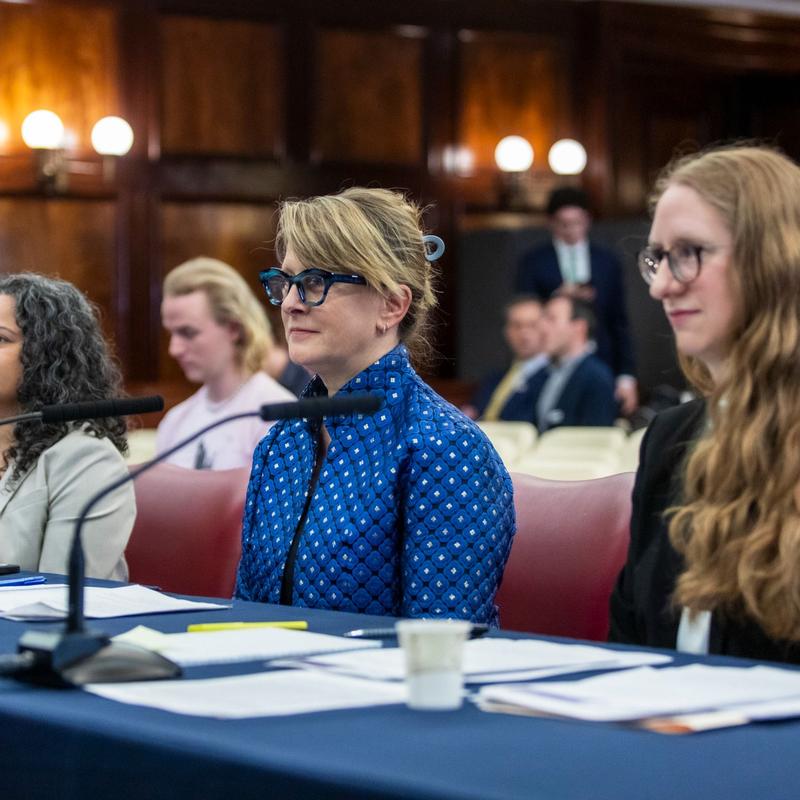
Property taxes are the only ones the city itself can modify without the state government's approval. My next guest was the first person to testify before the City Council Finance Committee as the head of the Independent Budget Office. Louisa Chafee is the director of the office that operates independently of any elected official to weigh in on budget and related matters. Louisa, welcome back to WNYC. Thank you for coming on.
Louisa Chafee: Well, thank you so much, Brian, on behalf of the IBO. It's a pleasure to be here.
Brian Lehrer: First, just for a little background, how do you describe the Independent Budget Office, and its role in this process? It's not a branch of government, or a government adjacent thing that listeners are very familiar with.
Louisa Chafee: No, you can find us on the city website, but we're a tiny box. We are a small independent office, meaning, we don't report to the mayor, or the controller, any other elected official. We were created by voters in the 1989 charter revision, and our mission is to provide independent information on the New York City budget, and related information. We have insight into city data systems, and we work closely with agencies, so that we understand what they're using, but we report neutrally, and we don't have opinions. As I said, often, yesterday, we are agnostic on direction. We just are trying to explain to the public what's happening.
Brian Lehrer: You were here-- I should remind our listeners to talk about the budget, two years ago, middle of the Adams administration. At that point, the city was running a surplus. What changed?
Louisa Chafee: Well, thank you for taking us back in time, so at that point, as we call ourselves IBO, as well as many other entities that track the city budget, were really concerned about an escalating trend that the Adams administration was using to under budget. In other words, during the course of the fiscal year to not accurately report on what things were costing.
People may have heard about NYPD overtime, was an example where it was quite clear based on previous year's usage what the overtime costs would actually be for the year, but the city administration was putting much less into each budget action, and as you know, because of the fiscal crisis in the '70s, the city has three budget actions during the year, so we really-- The city updates on a regular basis.
This under budgeting is something that the Mamdani administration has changed, and in its first preliminary budget, which was issued in February, six weeks into their administration, as the mayor had committed, they right-sized their costs. In other words, they accurately estimated what they believe all of the city's expenditures will be, and that meant that areas that had been chronically under reported, just in being reported accurately, appeared to create a deficit, but it's really been there. It's just the mayor's accuracy is illuminating it.
Brian Lehrer: If I hear you correctly, Mayor Mamdani is winning praise for being more realistic in his estimates of revenues and expenses than the past administration, so are those unrealistic estimates from the previous years the reason we're facing a deficit now in the city?
Louisa Chafee: Well, there are a couple different factors. The economy is at a different position, so I should say the expenditures, in other words, what the city spends, the Department of Education, city parks, police department, things New Yorkers use, those are being accurately estimated, and that's something that the city-- That New Yorkers should have confidence in. That now when they see those numbers, they can believe those numbers.
The challenge becomes on the revenue side, because, it was we have to have a balanced budget. What comes in needs to match what's going out. The Mamdani administration is optimistic in its revenues. What we, the IBO, would categorize has been shifting, is that our economy is increasingly challenged. If one thinks about things like tariffs and the war occurring in the Middle East, as your last report was just very focused on, there are a whole series of factors all the way down to in New York City, while a very strong Wall street, concurrently, a very tough employment market, and a lot of hesitancy across the economy, which is adding up to a different economic outlook, so that IBO's understanding of how the economy is doing is more cautious than what the Mamdani administration is putting forward.
Brian Lehrer: Explain what may sound to our listeners like a mixed message, because you're saying that the Mamdani administration deserves praise for being more realistic in their estimate of revenues and expenses than the Adams administration was, but you and also the City Comptroller Mark Levine, are saying at the same time that the mayor's estimate of the budget is too rosy, and off by some $2 billion, so how can both those things be true?
Louisa Chafee: [chuckles] Well, isn't it a joy to get into the budget? The challenge we have, particularly at this point in time for a new administration, is that at each point the New York City budget action comes out, with this preliminary budget being the first example, the budget has to be balanced, so having been accurate in its expenditures, it needed to-- The administration needs to match revenues.
The mayor's been very clear that he is seeking a tax increase, as you highlighted, personal income tax, corporate tax, or property tax, depending, but overall, both the comptroller and the IBO feel that the expectation of revenues is optimistic, that we would all like his optimism to be accurate, but that's the difference.
Brian Lehrer: What are the implications of that, if his estimates of revenue are too? I guess it's going to be up to the state legislature, plus, I guess the city, if they raise property taxes, but certainly a big part of it up to the state legislature to decide if they're going to raise the income, or the corporate tax on the wealthiest to help the city budget. What are the implications if the estimates turn out to be too rosy?
Louisa Chafee: Well, I think the first thing that the city will get through, is the understanding of what the state will do, and the personal income tax is actually an interesting area to delve into. New York State has nine tax brackets in its progressive taxation, with the highest tax bracket being about 10% if one has an adjusted gross income of over $25 million, and New York state added that, in 2019 when the Trump 2017 tax legislation gave a tax break for the highest earners.
In other words, in 2017, the federal government reduced its presence in state and local services, and reduced taxation, and the state in return raised its income range, recognizing that it wished to continue to provide these services. The state controls the city's ability to raise personal income tax. The city has four tax brackets in comparison to the state's nine. The highest as a personal filer is $60,000, which means as a New Yorker, if one earns $61,000 or $5 billion, which is in the most recent data, the highest income level, those dollars are taxed equally.
From the IBO's perspective, we think that this raises a really interesting question for New Yorkers to consider. We see a federal government putting a lot of pressure on states and localities where the federal government is getting out of traditional services, be that health and human services, or construction, or environmental protection, and pushing responsibilities to the states and the localities, and so here we are in a conversation, or in a period of time where the state, with the Governor and the one houses is now going to decide how to move this process forward.
Brian Lehrer: You say that the Independent Budget Office does not take political or policy positions, but were you implying with that description of New York City's personal income tax rate that there should be a hike on the wealthiest earners if the people making $5 billion a year, if there is any such person with that much income in a year, get taxed on the city income tax scale at the same rate as somebody making $61,000?
Louisa Chafee: We're trying to give the information for people to think about what they believe is fair. We really did think it was important to consider the tax brackets, because the difference between having an adjusted gross income of $60,000 or millions is a really different position in life, and the level of taxation the mayor is proposing is quite de minimis to the highest earners, so we just think it was important to add detail to the mayor's overarching request.
Brian Lehrer: Do you assess then the validity of the argument that opponents of that kind of a tax hike often make, which is that it may be just, but it may prompt enough very rich people, or very wealthy corporations to leave the city, or not create new jobs in the city, that it may backfire and lead to less tax revenue overall?
Louisa Chafee: Brian, we are really interested in that question. In fact, we carefully look at personal income tax information, because we are interested in all echelons of the taxation system, and who's moving in and out of New York for numerous reasons. What we see year-to-year is that people move in and out of New York, but at times where there have been tax increases, for example, in 2019, when the state's increase did impact the highest earners, there was not an additional exodus.
Now, every year some people leave, and every year some people arrive, and New York City's Wall Street has been doing remarkably well, and so the city is also increasing the highest end of earners through our local economy in that area. We are concerned, we do consider the overall tax impact, and we do study this really carefully.
Brian Lehrer: As we continue with Louisa Chafee, Director of the Independent Budget Office, which operates independently of any elected official, to weigh in on New York City budget matters in particular. Again, this was created after the fiscal crises of decades past to make sure that there is an independent group out there, but by law that's giving realistic numbers on the city budget, and budget proposals as they see it.
Listeners, do you have a question for Louisa Chafee? 212-433-WNYC, 212-433-9692. City employee, city contractor. Anyone else? 212-433-9692. This Moody's downgrade. Moody's Investor Service yesterday revised the city's outlook from stable to negative. Now, I should say that they didn't lower the actual bond rating, so this gets into the weeds for people who don't follow these kinds of things, but what does it mean to revise the city's outlook from stable to negative? What does it mean that they did that without lowering the bond rating per se?
Louisa Chafee: Well, Brian, Moody's ratings outlook change is, basically, Moody's publicly stating, "We're watching and we're concerned." What they're focused on are what they're calling sizable and persistent projected budget gaps, and those again come back to this issue of now with accurate expenditures, there is a gap between, in other words, the revenues are not equal to the expenditures, and so the administration is putting forward proposals to have the revenues match the expenditures, and if those work, then this change, presumably, will be reversed.
If those don't work, then this is really important to the city, because it can impact our overall bond positions, and that is has long lasting fiscal impacts, so it's definitely something that people in the know are paying a great deal of attention to.
Brian Lehrer: I saw it reported that the mayor's office called the change in the city's outlook by Moody's premature until we know if the governor goes along with a high earner tax increase, so that's some pushback from the mayor's office. As you say, we should note that, because they didn't lower the bond rating, there's no increase yet on interest rates on city bonds, which of course would increase expenses for the city government, and take money away from other things, as they need it to pay back interest at a higher rate.
About you at the Independent Budget Office, listener writes, "Brian left out a critical piece of information, so that we can gauge the credibility of his guest. Who appoints people to this office?" Who does appoint you to your office, which you were describing as being independent of government?
Louisa Chafee: Well, thank you for that question. You can read it in chapter 11 of the charter, but there is an oversight committee that makes a recommendation to a series of public officials, one designee of the borough presidents, and the public advocate, and the comptroller, and they jointly decide.
Brian Lehrer: Here is Joan in Manhattan. Joan, you're on WNYC. Hello.
Joan: Oh, hi. Yes. I want to ask about something that I've heard about recently. Never heard about it before, and the only place I hear about it is people on WBAI talking about something called the stock transfer tax, which apparently taxes every time you buy or sell stock. It's a very small tax. It's 1/10th of 1% of the value of the stock.
Now, this [unintelligible 00:17:14] on the books, but what they're doing is they collect the tax, but then they return it back to the people they collected it from, and I understand from some of the people that I've heard talk about this, it would raise about $600 billion, and it's not being used. It would come back to the city. I guess anybody trading on the New York Stock Exchange would pay this tax.
Brian Lehrer: Joan, thank you. The $600 billion is an interesting number. The whole state budget is about $250 billion per year, so I'm sure that's a multi-year figure. Yes, I've heard this about the stock transfer tax. Are you aware of it being on the books, and is the caller right that it gets collected, but then refunded to the people who pay it, so it's in effect, not in effect?
Louisa Chafee: I am not aware of the intricate details of the accounting back and forth, but we are looking at a whole series of taxes and tax breaks that we feel might be adjusted, that could help New York City equalize its financial position, and so this is one of a whole series of other areas where New York City either doesn't, or New York State doesn't effectively collect tax, or might shift how it collects tax, or might stop giving tax breaks. We believe that in the current era those many areas are important for the administration to consider.
Brian Lehrer: I think Dara in East Harlem has an interesting property tax question. Dara, you're on WNYC. Hello.
Dara: Hi. Thank you, Brian. I love listening to your show. I wanted to know about, instead of a sliding scale on your income, would they ever consider doing a sliding scale of tax on property tax based on the value of the property? If you're buying a $25 million home versus a $200,000 home, you would have different tax breaks within the property.
Louisa Chafee: Dara, that is a really good question, and I couldn't answer it in an hour and a half, [chuckles] but property taxes in New York City are basically a combination of the rate, and that's what's set locally, and the value, and that's much more controlled by the state.
There's actually litigation going on around how values are set, which taps into much of what you're talking about, but in the rate setting, there are in fact, four different classes of property, and each of those ends up with a different rate and different additional levers adjusted up or down, depending on even within the class, other factors that the Department of Finance feels accurately impacts the taxation system. To say that it is complex, is an understatement.
Currently, I think the most important thing to think about at this point is that, in the de Blasio administration there was a really thorough study of taxation with the commitment to change lots of the property tax. They issued a report which was chaired by the current director of the Office of Management and Budget, Sherif Soliman, and so the administration is thinking very carefully about the system, about equity within the system, about accurate collections within the system, and we believe that given the discussion around property tax, even if a change doesn't come in, there may well be other adjustments to the system moving forward.
Brian Lehrer: I will note that almost no one thinks the property tax system is fair, and your office did a report titled "IBO Explains New York City's Process for Setting Property Tax Rates." Does your office make recommendations, complex as the system is, as you say, for how property taxes could be made more fair?
Louisa Chafee: We don't make recommendations, but we do flag a series of considerations. We are concerned that if the rate, in changing the rate, and thus changing the overall amount of tax collected, there are a series of things, some of them are inside government. There's a limitation on how much can actually be collected, and that's a cap that needs to be made sure that it's legally appropriate.
There are also equity issues, both where in the city property is located, and also what type of property it is, and the relationship of the resident of the property to the property. What we see is that traditionally renters-- Traditionally, landlords pass property tax increases onto renters, and renters have the fewest rights in terms of pushing back, or disputing, or challenging their property tax because they don't get tax credits for owning.
They don't have a mortgage, they don't have any personal benefit, they don't have any financial, or they have the least financial wherewithal, and so we do raise that as an overall concern for both the Council and the administration to consider, as they move forward, should this be a route that they decide to pursue.
Brian Lehrer: One more question from a listener and then we're out of time. Listener writes, "In 2023, your office did a report on vacant rent stabilized apartments. Has IBO done any research on the economic impact of banks making loans to real estate investors who undermine rent stabilization?"
Louisa Chafee: We have not researched banks relationship. It's a great question, but our data is data that comes, or the data access that we have sometimes limits some of the research questions we could do. I will say that we are very focused on vacancies, housing stock, and housing availability. We have a housing crisis. We have various pieces of legislation trying to address both the homeless situation, and other parameters.
NYCHA, rent stabilization, and other mechanisms to adjust the housing market, and so I encourage you to go to our website, which is www.IBO.gov, and to click on, "I have a question." Because if you ask us, we'll answer your question, and if we can, we will answer your question. We do about 50 reports a year on questions from the public, and we really look forward to people reaching out and asking us, and if we can't answer, we'll explain why we can't.
Brian Lehrer: I'll add that at least one of our listeners has just done that, somebody wrote in to thank us for presenting this topic. Listener writes, "I never knew about this, and have just checked out the website. It is now bookmarked for me to further educate myself on more of this topic, so thank you to the guest." There you go. I will thank you as well. Listeners, this is just the beginning of the budget process, and a lot to watch here in the first year of a new administration, in this case, obviously the Mamdani administration.
What we've had this week is our guest, Louisa Chafee, Director of the Independent Budget Office, plus, the City Comptroller Mark Levine, plus, Moody's weighing in on the assumptions that the Mamdani administration made in its initial budget proposals, and they're not even that specific yet. It's a preliminary budget presentation. What happens now? By around April 1st, there should be a state budget, so then everybody will know whether those tax hikes that the mayor wants at the state level got implemented or not, and they will have to adjust from there.
The new fiscal year for the city begins July 1st, so in that period from April 1st till July 1st, there will be a lot of negotiations between the mayor and City Council on all of these specifics. Every individual budget line that you're concerned about out there, from education, to libraries, to NYPD, to housing, to whatever it is, and of course we'll have many discussions about that during this process on this show. We leave it there for today with Louisa Chafee. Thank you so much for joining us.
Louisa Chafee: Thank you, Brian.
Brian Lehrer: That web address, and I think a little more specifically for their website is IBO.nyc.gov, IBO.nyc.gov.
Copyright © 2026 New York Public Radio. All rights reserved. Visit our website terms of use at www.wnyc.org for further information.
New York Public Radio transcripts are created on a rush deadline, often by contractors. This text may not be in its final form and may be updated or revised in the future. Accuracy and availability may vary. The authoritative record of New York Public Radio’s programming is the audio record.
