
If the NY11 District Map is Redrawn
[MUSIC]
David Furst: It's the Brian Lehrer Show on WNYC. I'm David Furst, WNYC Weekend Edition host, filling in for Brian today. Happy Friday, everybody. Before the big snow, I'm going to be here all weekend keeping you updated on the weather as we're hearing about a possible foot of snow falling in New York City beginning as soon as tomorrow night. My boots and gloves are ready.
First, coming up on today's show, we're going to talk about the affordability issue in New Jersey that has been getting a lot of attention both during the recent gubernatorial campaign and right now. This is rising utility costs. I know many of you probably got a shockingly high bill this month. I know I did. We're going to hear about what brand new Governor Mikie Sherrill has to say about what she's going to do about and we're going to look into what is causing the rates to skyrocket in the first place.
Plus, the recent bankruptcy filing of the company that owns fancy department stores like Saks, Neiman Marcus and Bergdorf Goodman got us thinking about the future of department stores as our shopping habits have changed. We're going to talk about that with New York Times fashion writer Vanessa Friedman.
We will wrap up today's show with a conversation about Johnny Carson with the writer and comedian Mark Malkoff. Carson would be 100 years old if he were alive today. Mark has written a new book about the late night legend. He's going to be hosting a few events this weekend at the Museum of Moving Image that will celebrate all of the times that Johnny Carson brought Jim Henson's muppets on the show. That is all coming up this morning.
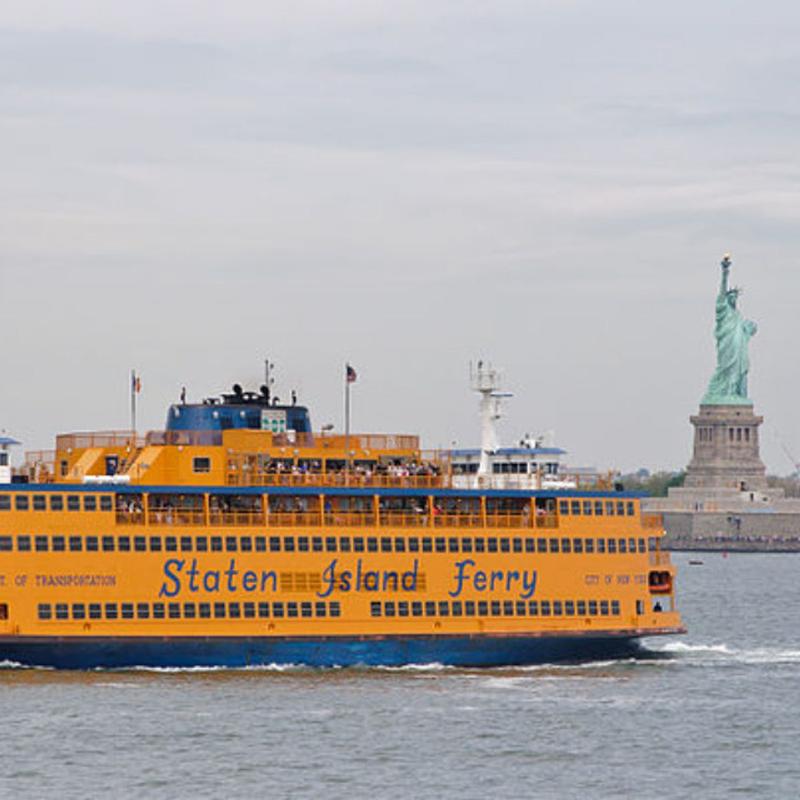
We start with a battle over redistricting in New York. This time the focus is on the 11th congressional district in the state. That's the district represented by Republican Nicole Malliotakis. It covers all of Staten Island and a portion of Brooklyn on the other side of the Verrazano Bridge. On Wednesday, a state judge in Manhattan ruled that the boundaries of this House district are unconstitutional. He has ordered the New York Independent Redistricting Commission to redraw the lines by February 6th. Redrawing the lines could result in another Democrat being elected to the House of Representatives in this year's midterm election. That means it could help determine the house majority in 2027.
This legal battle is one of several high profile fights over redistricting going on this year. This is all coming in the wake of President Trump and his allies urging State lawmakers to redraw their lines to give Republican candidates an advantage in November's midterm elections and Democrats in turn responding to that push.
Here to bring us up to speed on the New York case and the larger national implications is WNYC Senior Politics Reporter Brigid Bergin. She has been covering the story for Gothamist, and is, of course, a frequent guest host here on the Brian Lehrer Show. Welcome, Brigid.
Brigid Bergin: Hey, David. Great to be with you.
David Furst: Brigid, just when we think the redistricting battle has been settled in New York, they pull us back in again. Set the stage here. How many times have the latest New York congressional district lines been relitigated over the last several years?
Brigid Bergin: Oh, David, it sounds like such a simple question.
David Furst: Pull up a chair is what you're saying.
Brigid Bergin: Yes. I'd say the short answer is many times, but really, those lawsuits only tell part of the story. If you'll forgive me, I'm going to take us a little bit on a walk down redistricting memory lane just to make sure that people understand how we got to this moment because it's not as simple as just the lawsuits that were filed. You really have to take it back to 2014. Believe me, I'm not going to go every year.
Back in 2014, voters adopted an amendment to create what's called the Independent Redistricting Commission. That's a 10-member bipartisan panel that was charged with redrawing the state's congressional district lines, assembly district lines, states Senate district lines. Then beginning in 2021, after that 2020 census, they started to meet and they started to try to come up with those maps. They took input from New Yorkers. Shockingly, this bipartisan panel deadlocked in early 2022.
Fast forwarding a little bit, the Democratic controlled legislature comes up with its own lines and then Republicans take them to court, accusing the Democrats of partisan gerrymandering. Essentially, they said they were drawing these districts to be more favorable to the Democrats, and ultimately the highest state court agreed. I should note that at the time, New York was losing a congressional seat going from 27 to 26 representatives.
Ultimately, now there was this focus on New York and how it would factor and who would control the US House.In the wake of that court decision, there was a special master appointed, Jonathan Cervas. He was a postdoctoral fellow at Carnegie Mellon University out of Pittsburgh. He and his team drew these new lines. They were really aiming to make the districts as fair as possible, but this was a political battle and so there was a lot of blowback even to the lines that he drew.
He does wild and crazy things like takes New York City's Upper east and Upper west sides and puts them into one congressional district, which set off a primary battle between two long standing incumbents, Jerry Nadler, Carolyn Maloney. He also creates this new 10th congressional district, which include parts of Brooklyn and stretches into Lower Manhattan. Then, since we're talking about New York 11, he essentially makes it look as it does today with all of Staten Island altogether, and it includes a portion of South Brooklyn.
These new maps, because this process took longer, ended up delaying the congressional primaries that year in 2022 until August. That was fun. Then the court battles didn't. In 2023, Democrats filed another lawsuit arguing that the Independent Redistricting Commission deserved another chance to draw these congressional lines. As a result of a deadlock, they never sent another set of proposals to the State legislature as required by the State constitution, and the courts agreed.
The commission proposes lines. The Democratic controlled state legislature rejects them. They propose their own lines. Governor Hochul signs the bill. Those are the lines that were used in 2024 that in place. The changes at the time were pretty modest. New York 11 was not really touched at all. The court battles stopped until recently.
David Furst: Until recently. Let's talk about what just happened this week. Let me first say, if you would like to join this conversation, if you have a question as you're trying to sort out what is happening right now, give us a call. 212-433-WNYC. That's 212-433-9692. Maybe you live in the 11th and you want to find out more about what's happening, just give us a call right now. 212-433-9692. Brigid, talk about what just happened this week, this ruling. First of all, who filed this suit?
Brigid Bergin: This is a really interesting case. It was filed by the Elias Law Group. That's a Democratic law firm. Mark Elias, the founder, runs a blog called Democracy Docket, which tracks voting rights and election law cases across the country. It was brought on behalf of some Staten Island voters on the North Shore. Just for context, I think people sometimes think about Staten Island as being at a sort of homogenous place, but there is diversity in this borough, particularly on the North Shore. It has a larger Black and Latino population than the rest of the borough.
It was filed in State Supreme Court in Manhattan last October. Keep in mind, last October, a lot of the attention was on the race at hand, which was the New York City mayoral race. At the time, the case argued that voters, Black and Latino voters specifically, were seeing their votes diluted and for years were not able to elect a representative of their choice because of how they were drawn in this district, making up a smaller share of the voters there.
David Furst: Why did the judge rule that this district was "unconstitutional?"
Brigid Bergin: He essentially agreed with the Democrats argument. He said the state constitution requires districts to be drawn in a way that doesn't lock communities out of political power. Quoting from his court order. There was some expert testimony submitted during this case that showed that if you looked at the results of elections, Black and Latino voters were unable to elect the representative of their choice, often the Democrat, some 75% of the time over a period of years, and so the judge ordered that this district needs to be redrawn. He sent it back to the Independent Redistricting Commission to do that.
David Furst: Did people expect this ruling?
Brigid Bergin: It's interesting, David. As you had said in the introduction, there is this national fight over redistricting that is playing out in a lot of states. New York State specifically has a calendar that sets redistricting as a decennial process, something that can happen once a decade. All these core challenges have in many ways upended that. We've done it. This is going to be, I guess, the third, I think, third, fourth time that we will have done it since the 2020 census.
I think that there was some real skepticism about the weight of this argument and whether or not this would hold up in court. We should note this is just the lower court ruling. There's expectation that this will continue through the court process, which I'm sure we'll talk about. I think most observers did not expect this to go anywhere. Did not expect this initial ruling to kickstart the process the way it has. Part of the reason Republicans had raised some questions about the judge this case was assigned to, Jeffrey Pearlman. He served as counsel to Governor Hochul. Republicans wanted him to recuse himself and he declined to do so.
David Furst: We're going to get to some of your calls in just a moment. WNYC Senior Politics Reporter Brigid Bergin, you'll be ready to try to answer as many questions as we get here. You touched on this just now. The judge ordered the panel to redraw this district by February 6th. What happens next? This is first going to be appealed, right? Talk about the legal process that we may see here.
Brigid Bergin: Yes. I think there's every expectation this case will be appealed. I checked the docket, actually, before I came on with you this morning. I don't see anything filed as of yet. I would fully expect that to change at some point today. They want to stop this process before the IRC starts its work. In the meantime, staff from the IRC say, "This is an aggressive timeline, but we will follow the order of the court and they need to get to work."
David Furst: February 6th is right around the corner.
Brigid Bergin: February 6th is right around the corner. Absolutely. The panel itself is currently missing a member. Assembly Speaker Carl Heastie needs to appoint another member to the committee. That's likely to happen. David, even if they make this deadline, that, of course, doesn't mean that the state legislature will approve the maps or that the 11th congressional district will end up looking the way some proposals are suggesting, which we'll get into. I think there are a lot more uncertainties about this story than what we know what will happen next, which is this case will absolutely be appealed.
David Furst: This is the Brian Lehrer Show here on WNYC. I'm David Furst in for Brian today, along with Brigid Bergin. We're going to take some of your calls right now. If you would like to join the discussion, the number is 212-433-9692. That's 212-433-WNYC. Let's hear from Joseph in Brooklyn. Welcome.
Joseph: Hi. Good morning. Long time listener, first time caller. Thank you.
David Furst: Do you have a question?
Joseph: Yes. My question is, I live in a part of South Brooklyn that got redrawn. Basically, this section I live in is where the Dyker Heights Christmas Lights are. It's a little sliver. We're represented by mostly people that are on Staten Island. I always found it confusing why they redrew the district, why they only included a sliver of South Brooklyn when they just could have kept the district drawn to Staten Island. We're represented by somebody on Staten Island that I don't even know if he knows where it is in Brooklyn that he represents. How do we draw a line like that, and they just cut out a sliver and don't keep it consistent, just keep it all Staten Island?
David Furst: Brigid, how do you want to tackle that?
Brigid Bergin: Joe, it's a great question. It gets into how people have looked at district lines across the state, frankly. In particular in this district, looking at what they describe as communities of interest and voters who have similar issues, there was a proposal under one of the previous district lines.
Joe, if you're listening and you really want to have your mind blown, let me direct you to this, what I think is an amazing resource. It was developed by our friends over at the CUNY Graduate School of Journalism. It's called Redistricting & You. You can go there and look up New York and you can look through all the different versions of district lines that they have proposed for your neighborhood. You can enter your address and you can see the ways different groups have suggested these districts be drawn.
There have been versions of a proposed 10th congressional district that would keep all of Brooklyn together. In the proposal that they're considering or that has been suggested for 2026, the new 10th Congressional District would keep most of that Brooklyn portion together, so you would take South Brooklyn, and then it would become actually part of the 10th congressional district and it would take part of Lower Manhattan. I think I'm looking at it correctly.
The short answer is the analysis that's put into dividing up these district lines takes into account the population and tries to make some decisions about the communities of interest, making sure there's the right number of voters in the district. Ultimately, there's a lot of different ways to slice up these territories, and people often don't agree on doing it the same way.
David Furst: Redistricting & You sounds like a great Schoolhouse Rock episode.
Brigid Bergin: It's amazing. I have this tab open on my computer [unintelligible 00:16:06]
David Furst: [crosstalk] How do you find that again?
Brigid Bergin: If you just Google Redistricting & You, it'll bring you to this tool where you can select your state. For New York, you can look at your Congressional assembly, state Senate, district lines, you can put in your address, and then it will take you through all the different versions of proposed district lines, and then it will tell you the vote share and the population breakdown. It is an invaluable tool. Shout out to Steve Romuluski, who is the developer behind this tool. It really helps you see and understand what people who are making these decisions are considering when they are drawing these lines.
David Furst: We'll take another call now. 212-433-9692. Allen in Brooklyn, welcome to the Brian Lehrer Show.
Allen: Good morning. I'm a little hoarse. Sorry about that. Whenever we talk about the supposed equality of wrongdoing by different Democratic and Republican states reapportioning at the five year mark, we always have to remind people that the underlying inequity of having Democrats and people who live in large population states get a tiny fraction of the effective voting power in the Electoral College for Senate, president, and indirectly for Supreme Court. That underlying inequity is so vast that anything we tried to do to regain marginal equality in the House can never be deemed unfair to Republicans.
Until the people of the country understand the math of the Electoral College injustice, it's not going to be reformed. Trump relies on mathematical ignorance when he talks about people getting price reductions of 500%, 600%, 1,200% because he knows anything above 100% is meaningless. He's relying on mathematical ignorance. That ignorance will not allow people to grasp how much they're being cheated in the Electoral College.
David Furst: What about that, Brigid? Hard to even have this discussion without bringing up that context.
Brigid Bergin: I think that that is an argument you often hear people make, particularly from states like New York, putting it into the context of this national redistricting war. I think it's interesting to see the posture that Democrats have adopted, which is different than the posture they have adopted in previous battles over voting rights or battles over certainly this kind of strategy to fight what is being led out of the White House and by some Republican led states to engage in this mid-decade redistricting.
Democrats really have stepped up in a way that I think some people had not expected expected. Just even yesterday, Leader Hakeem Jeffries, House Minority Leader, basically called it out saying that Democrats are trying to engage actively. They thought that Democrats would let themselves be steamrolled. He said, "We're not going to do that. We're not going to end that. We're not going to allow Republicans to 'artificially maintain their majority in the House of Representatives.' We're going to stand up and speak continuously for free and fair elections. That's what the American people are going to get."
That is the position that he is representing as House Minority Leader, also representative of New York. I think we're seeing some of that in efforts by other Democratic states to also engage in some of this pushback on the mid-decade redistricting. There's a potential that Democrats could pick up potentially a seat in Maryland, potentially in Virginia. If this particular case goes the way Democrats are hoping in New York, it would become likely a more Democratic leaning seat. That would, again, help in this very narrow fight over the balance of power in the House of Representatives.
David Furst: If you'd like to join this conversation, 212-433-9692. We have Mary Ellen calling in from Westchester. Mary, did you want to respond to something you heard in one of the earlier calls?
Mary: Yes. Specifically, one of your callers questioned why, and I forget whether he was in Staten Island or Brooklyn, but basically, why his district when it was redrawn was, [clears throat] excuse me, mostly one of those burros with a sliver of the other. There's a possible explanation for that.
I'm not familiar with his particular district, but I know part of, not all, but part of the problems with the 2020 redistricting overall, and particularly in this part of the state, the city, Westchester, Long Island, was because, and this sounds so strange, and I remember when I found this out, I was stunned, but actually, under federal case law, every congressional district within each state must have the exact same number of people.
You would think it would be logical to have plus or minus 3% or plus or minus 5% to give the people who are drawing the maps some wiggle room, but apparently that's not the case. Plus or minus one person. If you look at redistricting, it's online, and you will see that within New York State, every single congressional district has the exact same number of people, plus or minus one. If you go to another state, it'll be a different number, but within each state, each congressional district has to have the exact same number of people, plus or minus one. It's absolutely absurd, but that's the way it is.
If you don't believe me, I suggest you speak with Professor Jeffrey Weiss, who's been on your show quite a few times. Also, one of the things that led to the problems with district CD16, which is predominantly the southern half of Westchester with a little tiny sliver of the Bronx, because they need to even them up. Particularly in this part of the state where we're densely populated, it makes it very, very challenging.
David Furst: Brigid, what about that impacting the way redistricting goes?
Brigid Bergin: She is absolutely right. There are very strict rules around--
David Furst: Do we get to split up any households?
[laughter]
Brigid Bergin: There are very strict rules around the redistricting process. As she mentioned, Jeff Weiss is a professor and expert in redistricting in New York. He runs a center on redistricting over at New York Law School. Another great resource for understanding both the ongoing battles and how the whole process works.
David Furst: We're talking with Brigid Bergin here on the Brian Lehrer Show about how on Wednesday, a state judge in Manhattan ruled that the boundaries of this House District New York 11 are unconstitutional. He has ordered the New York Independent Redistricting Commission to redraw the lines by February 6th. Let's talk about the response from Republican Nicole Malliotakis, who represents that district, and from New York Republicans in general. Here is Representative Nicole Malliotakis speaking yesterday on WNYC's All Things Considered in conversation with Sean Carlson.
Nicole Malliotakis: As the first Hispanic to represent this district, many people may not know that I'm half Cuban. I find it offensive, actually, that they would say that this district is not being representative of the Black and Latino community. As a matter of fact, I'm the very first minority to represent this district. Number two, I feel very strongly that this lawsuit, which the plaintiffs, by the way, said the solution would be to add more White residents from lower Manhattan. That somehow doesn't make sense either. It is very clear that this is a lawsuit that was brought without merit.
David Furst: Brigid, can you tell us a little bit more about what state Republicans are saying in response to that ruling this week?
Brigid Bergin: They are echoing a version of what you heard there from Representative Malliotakis. New York State GOP Chair Ed Cox, he called it a cynical attempt to enact a legal partisan gerrymandering under the guise of a voting rights case. They are deeply skeptical of this and they are deeply, I think, concerned because the impact of changing these lines would likely put this district in play in a way that it really isn't and hasn't been in the last few cycles.
I think we should expect to continue to hear that line of argument from New York Republicans accusing Democrats of gerrymandering, but there are some interesting issues that were raised in this case. The Black and Latino population of the North Shore of Staten Island has been growing while Representative Malliotakis rightfully reminds folks who may not be aware that she is half Cuban.
What the case is saying is that those voters have been unable to elect a representative of their choice. By and large, those voters have selected a different representative in previous elections and it has not often been the Republican. Part of what this new district would do would be to put them with one of the proposed new ways. One of the ways of drawing the new district would be to unite the North Shore of Staten Island with portions of Lower Manhattan, which would then create this district where the voters who are being united with Lower Manhattan would more likely have a chance of electing the representative of their choice, which in this case would likely be the Democrat.
David Furst: I'm David Furst, WNYC Weekend Edition host, filling in for Brian Lehrer today, speaking with Brigid Bergin. We're going to continue this conversation after a quick break. Again, if you want to join this discussion, here's that number again, 212-433-9692. That's 212-433-WNYC. We'll be right back after a break.
[MUSIC]
David Furst: It's the Brian Lehrer Show on WNYC. I'm David Furst in for Brian. Today, we're here with WNYC Senior Politics Reporter Brigid Bergin talking about the latest legal battle over redistricting in New York's 11th congressional district. That's the district that consists of Staten Island and a portion of southern Brooklyn represented by Republican Nicole Malliotakis. If you'd like to join this discussion, give us a call or a text. 212-433-WNYC. That's 212-433-9692.
Brigid, we have a text here from Julio Pena. Says, "I don't live in New York 11, but I live in Sunset Park, which is now in New York 10. My community was drawn out of the majority minority district, repped by Representative Velázquez. Worried that we would be further marginalized by potentially combining with Staten Island, a historically conservative borough." That's what Julio has to say. Do you have a response for him?
Brigid Bergin: I think it's a valid and understandable concern. The proposed map that I've seen so far, which you can see on redistricting and me, doesn't show a New York 10 combined with Staten Island. It shows a New York 10 that is more Brooklyn and then still a small part of Lower Manhattan more in the, it looks like, zoom in here, portion of the lower east side in Chinatown area.
I think the way that New York 10 was drawn dividing New York 10, which then when it was represented by Nydia Velázquez, was actually New York 7, and then went into a different part of Brooklyn. These lines really did change pretty dramatically in 2022. I don't anticipate that the district will change in that way. These are concerns that are often raised by constituents throughout this process.
It's part of the reason why during the 2021/2022 redistricting fights, there was a lot of effort to give the Independent Redistricting Commission some different types of maps and certainly some input from communities about why it was important to keep certain communities together. That is something that I think people will see again when we have to go through all this process again in 2030. It's also worth noting that these communities change and that the population changes. That is also something that will weigh in on how these lines are drawn.
David Furst: The next process coming up in 2030, something to look forward to for sure.
Brigid Bergin: Oh, absolutely.
David Furst: We've been hearing about all the things happening over this past year; redistricting efforts in Texas, North Carolina, Virginia, Maryland, California. New York does not allow for mid-decade redistricting, so is this case an end run around that process?
Brigid Bergin: Yes, frankly. It brings New York, which, again, is not going to be the biggest player in this process. It does bring New York into this process because if the court orders that these lines are unconstitutional and if that ruling stands and they do need to be redrawn, then there is this potential to take a step seat that was more solidly leaning Republican and put it into a category of leaning Democrat. That's terminology from our friends over at the Cook Political Report. Absolutely, it is a way to inject what is thought of as a blue state into this debate over control of the House and how to chip away at what is very, very slim margins of who will control it.
David Furst: Let's take another call. This Rich calling from the district in question. Rich in Staten Island, welcome.
Rich: Good. How are you doing? Just one thing people should be aware. Republicans and Congresswoman Malliotakis are objecting to partisan gerrymandering in New York State, but they seem to have no problem nationwide. Now, she could have signed on to the Redistricting Reform Act of 2025, which is H.R. 5449. This would have stopped this nationally. We're playing by two sets of rules. Republicans like the partisan gerrymandering when it benefits them and they oppose it when it doesn't. Nobody ever asks Congresswoman Malliotakis why she hasn't signed on to this bill.
David Furst: Let's hear a little bit of what Malliotakis had to say about this very point. This is Nicole Malliotakis talking yesterday on WNYC's All Things Considered about gerrymandering.
Nicole Malliotakis: These gerrymandering attempts, whether it's here in New York or whether it's a state like Texas where Republicans are doing it, is wrong and it is taking away the voice of the people. It is diluting the voice of the people.
David Furst: Brigid, can you respond to that? This is all happening in the wake of President Trump and his allies urging state lawmakers to redraw their lines to give Republican candidates an advantage in November's midterm elections.
Brigid Bergin: Yes. In my quick searching, I tend to focus more on the implications directly in New York City. Taking a quick look at the legislation that the caller talked about, it looks like H.R. 5449, the Redistricting Reform act of 2025, this was a Democratically-introduced bill. Came from Representative Zoe Lofgren of California. It appears to be a Democratic push to impact the redistricting process.
In some ways it's not a huge surprise that Congresswoman Malliotakis has not signed on given the conduct of the current House of Representatives. It's pretty split on partisan lines. The congresswoman did say to our Sean Carlson yesterday that she has spoken out in opposition to the mid-decade redistricting that she has seen in other places and to the partisan gerrymandering that she says dilutes voters voices. That's not the same as signing on to legislation that might actually change that. It's certainly something that when your district is subject to this potential impact, it's something that you might have different feelings when you're at the center of it than when you're an observer of it.
David Furst: Let's talk about the stakes for a moment here, Brigid. If I'm looking at all of the right numbers, I think I am, the current makeup of the House, 218 Republicans, 213 Democrats. There are four vacancies in the House, including Mikie Sherrill's vacated seat in New Jersey. We are going into a midterm election this year, two years into the second Trump administration, with the balance of power to be decided. Right now we're talking about New York City's only Republican House seat.
Let's look at the timing as we're heading into this midterm election year. The judge says new district lines are due by February 6th. The primary will be held on June 23rd. General election, November 3rd. Does that give everyone enough time to implement these changes and for legal challenges to be dealt with?
Brigid Bergin: David, let me just throw another date at you-
David Furst: Sure.
Brigid Bergin: -just to make sure everybody's heads are spinning completely with all these calendars. February 24th, that's the date that primary candidates need to begin circulating their petitions to get on the ballot for that June 23rd primary you mentioned. They can't do that if these lines are not settled. This is a major issue that the court has given a date of February 6 for the IRC to redraw these map lines. That assumes that they are able to even begin the process, which when there is an appeal filed, part of that appeal is something to enjoin this IRC from even beginning that work. It is likely that there will be further delays and that this process may not even begin until later.
Those of us who remember 2022, fortunately didn't have huge summer plans for August, [chuckles] still feeling like maybe I shouldn't book that vacation to Disney World this year, because I think that it is not outside of the realm of possibility that if this continues through the court battles and then the process of actually getting these lines in place, that things could be delayed.
David Furst: Let's talk about how this could change the upcoming election. You were talking earlier about where the line may end up being, how it may be redrawn. Let's first focus on the Democrats. If we're dealing with a new district here, who potentially would be running in a redrawn district, and how could that affect who runs in other districts as well?
Brigid Bergin: Sure. One of the things that we have already seen in this election cycle is a pretty spirited primary kicking off in neighboring New York 10 that's represented currently by Democrat Dan Goldman. Former city comptroller Brad Lander has tossed his hat in the ring. He has an endorsement from Mayor Mamdani. That is expected to be a pretty fierce Democratic primary.
Now, if these lines change and New York 11 is redrawn to shift so that a portion of lower Manhattan is combined with a portion of Staten Island, then there is a case to be made and the potential that Representative Goldman, instead of running against Brad Lander in a district where he has a lot of popularity and he has a lot of support, instead opts to run against Representative Malliotakis. That could be a very fierce battle.
Goldman comes from a lot of money. He is heir to the, I'm blanking on the name of the jeans, Levi Strauss denim fortune. It's also a strong fundraiser and has a record to run on. Could be a challenge for Malliotakis, so again, could impact the balance of power in New York in the one and only Republican-held congressional seat in New York City.
David Furst: Talk a little bit more about what this could mean for Republicans. Nicole Malliotakis is still very well known in the 11th congressional district, one there by a wide margin in the last election, right?
Brigid Bergin: Yes. She has been successful running against Democrats. Ran against Representative Max Rose and defeated him successfully twice. She is someone who has been very successful in her district, but if the district lines change, that can throw the dynamics of that district in a much different direction.
David Furst: We're obviously going to be covering this story quite a bit over the next year, the next weeks, the next month's. WNYC senior politics reporter Brigid Bergin. You can read more of her coverage on this story on Gothamist. Brigid, thank you so much for joining us.
Brigid Bergin: Great to be with you.
Copyright © 2026 New York Public Radio. All rights reserved. Visit our website terms of use at www.wnyc.org for further information.
New York Public Radio transcripts are created on a rush deadline, often by contractors. This text may not be in its final form and may be updated or revised in the future. Accuracy and availability may vary. The authoritative record of New York Public Radio’s programming is the audio record.
