
ICE Family Separation in NYC
Title: ICE Family Separation in NYC [music]
Brian Lehrer: Brian Lehrer on WNYC. We were just talking about immigration numbers, and now we're going to humanize this story and hear about some particular cases here in New York City, one mostly. On Sunday, yesterday, hundreds of New Yorkers gathered at a playground in Queens to protest the forced separation of a migrant father and his six-year-old son.
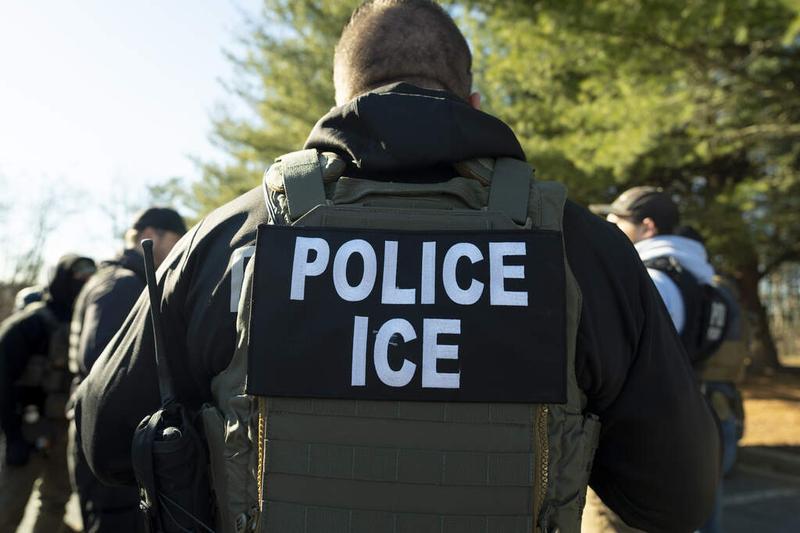
The boy, Yuanxin Zheng or Yuanxin Zheng, people pronounce it differently, and his father, Fei Zheng, were detained at a routine check in on the day before Thanksgiving, November 26th, at ICE's New York City offices at 26 Federal Plaza in Manhattan. The father was transferred to an adult detention center up in Orange County, but the boy was taken into custody of the Office of Refugee Resettlement. The family's lawyer told the TV network MS NOW yesterday that they do not know the location of the child.
Now the boy started first grade at PS 166 in Queens in Astoria this school year, but has not been in class, as you can imagine, since his detention almost two weeks ago now. According to data from the Deportation Data Project at UC Berkeley, the same organization we built the last segment around, ICE has arrested at least 140 children in the New York City area from January through mid-October this year.
Gwynne Hogan is a senior reporter for the news organization The City, where she first broke the story of this family separation, and she joins us now with updates. We may talk about another case or two as well, time permitting. Gwynne, some of you may know, was a WNYC reporter. For a while now, she's with the news organization, the City. Gwynne, great work again, and welcome back to wnyc.
Gwynne Hogan: Thanks, Brian.
Brian Lehrer: Tell us the basics, what happened here, and how did you learn of it to break this story?
Gwynne Hogan: The arrest of the family of Fei and his young six-year-old son, Yuanxin Zheng, this occurred the day before Thanksgiving on November 26th. They had an ICE check-in scheduled at 26 Federal Plaza, something that they had done a number of times. They were under an order of supervision by ICE. They entered the country attempting to seek asylum in April of this year, so entire Trump administration they've-- or their entire stay in this country has been under the Trump administration.
The family was arrested, and I got a word of this situation because, as you heard from callers in the prior segment, there's sort of a network of volunteer New Yorkers who are going to 26 Federal Plaza to observe immigration court hearings, and also they're accompanying families who have to go to these ICE check-ins at 26 Federal Plaza.
You can't get in the building the way you can to immigration court, but you know that a family has been detained if they never re-emerge. That is what happened in the case of Mr. Zheng and his son, but what was strange in this case, as you mentioned before, there have been dozens of arrests of children, usually with their parents, at 26 Federal Plaza at these ICE check-ins.
What was unusual here, then what happened is that later that day, Mr. Zheng shows up in the ICE detainee locator at Orange County Jail, which is a facility just for adults. That means that the child is no longer with him. They wouldn't send a child to that location. That is where I was able to figure out that the family had been separated, and the advocates also were extremely alarmed about this case because they were no longer together.
This father and son had been detained twice before in their limited time in this country, under a year. They spent several weeks in ICE detention at a family center in Texas when they crossed the border. Then they were released. They were here in August, and they were rearrested at an ICE check-in actually previously, but also detained together, sent back to Texas for a number of weeks. They had only been released on October 24th. They were out for just around a month when they were rearrested again at this check-in, but this time they were separated, as you mentioned.
Brian Lehrer: At the rally yesterday, a woman named Devora Fine, a leader of the anti-Trump group Indivisible, told the crowd, I'm seeing this quote, "We understand that the boy is safe, but he's being held somewhere where nobody who knows him or cares about him can see him or give him a hug and make him feel safe." She added, "He is not the only one." What do we know about where the six-year-old is being held?
Gwynne Hogan: After I wrote this initial story, I had presumed but wasn't able to report that he was in ORR custody. That's the Office of Refugee Resettlement. Office of Refugee Resettlement runs shelters for children who are unaccompanied minors and administers their release to sponsors if they're under the age of 18. That's where we thought he would be, a shelter-type situation for children. Eventually, they did confirm that after a number of elected officials called.
The agency itself hasn't confirmed that on the record. They just defer to ICE, but that is the normal course for a child who's unaccompanied when he or she enters the country. In this case, there's obviously privacy concerns, which is why it's pretty usual that the Office of Refugee Resettlement wouldn't put out a statement saying, "Don't worry, this boy is fine. He's at this address."
You could understand why they don't want the shelter's addresses publicly known, but what is concerning is that, you know, the people that you would want to know, like the attorney working with the father of this child, also have not been informed where he is. That is my understanding as of today. Again, the situation is changing day by day, and you're right, we don't know what specific facility he's at.
Brian Lehrer: To the last line in that quote from the activist that I read from the rally yesterday, "He is not the only one." Can you put this case in some kind of larger context as it pertains to children?
Gwynne Hogan: The arrests of children under this administration over the past several months have been extremely difficult to corroborate. In most cases that I have heard about, the child is arrested with their parent, and it's usually when they have a final order of deportation, and they're often deported to the country that they came from within a matter of days. It happened so quickly.
Previously, the Biden administration had shut down a lot of these family detention centers so if ICE planned to arrest a family, they wanted to have a plan to deport them very quickly because there's not really a place to keep parents and children. We have the raw numbers. Like you mentioned in the introduction, the Deportation Data Project, which is based at UC Berkeley and doing incredible work to file Freedom of Information Act requests and then sue the Trump administration, releasing this extremely detailed trove of data that reporters all over the country can use.
If you look at the New York City numbers for children arrests, which we just got a new dump of data last week, which my colleague Haidee Chu has done a really wonderful job analyzing on our website, that shows, like you said, 150 arrests of children so far this year. I've only been able to really report out one other case in August. In that case, there were family members willing to talk to me around the situation, but often, like I said, the arrest happens so quickly, the deportation happens so quickly, and there are often people who live in mixed-status households so everybody is terrified that they'll be next if they talk about what happened to their family.
Obviously, it's a lot of public school kids. It's not just happening at this school in Astoria, but I know there have been so few of these in the public because of the fear that this story has really touched a nerve with New Yorkers who see it obviously as a six-year-old should not be taken from his father. That's pretty troubling.
Brian Lehrer: I wonder if anybody's listening from the PS 166 in Astoria community or anybody else who knows six-year-old Yuanxin Zheng or the father, Fei Zheng, who wants to help contribute to the story. We're trying to personalize all this data by drilling down on this one particular family story that has now broken out, and as not only a news story but a bit of a cause, including with the rally yesterday and some others that have been held before yesterday.
212-433-WNYC, 212-433-9692. Call or text for journalist Gwynne Hogan from the news organization, The City. Gwynne, how unusual is it for the father and the child to have been separated? People will remember this was a big issue, family separation, but really at the border during the first Trump administration.
Then I think at least based on their statements, they used to deny that they were doing it at all, but then I think they also backed away from it. What you were describing before, I think, was a slightly different pattern of parents and children being detained together and then deported quickly, maybe without due process, but at least together. How unusual is this?
Gwynne Hogan: I think we're still getting a sense of what family separation will look like in this administration. There was some really wonderful reporting from The Times, The New York Times, a couple of weeks, months ago. I don't know. Times is hard to keep track of these days, but they reported on a number of cases of family separation, but at ports of entry. One of them happened here at JFK airport, I believe it was.
I think it's the type of thing that's really hard to figure out what exactly is happening. I'm sure as time goes on, we'll get a sense of what it is. In this case, I think, DHS, the Department of Homeland Security, sent me a statement saying DHS does not separate families, but then they corroborated that this family had been separated. What they said was that Mr. Zheng had been acting disruptive and aggressive and refused to board a plane.
Any person, including a US citizen, disobeying lawful orders would be separated from their child and the child would be placed in protective custody. What is odd about that explanation is that according to Mr. Zheng, who spoke with this volunteer that I've been in touch with, who first flagged the story for me, who has talked to Mr. Zheng after his arrest, this happened at 26 Federal Plaza. There's no planes at 26 Federal Plaza.
Their explanation for doing the separation raises questions to me about what exactly happened. The advocate who spoke with Mr. Zheng describes him having an issue at a plane, but in August when he was previously arrested at an ICE check-in, and in that case the two were sent together to Texas. She said that he mentioned getting angry inside 26 Federal Plaza, and putting his hand on a wall, but again, it doesn't match up with the description of events that DHS has provided.
Brian Lehrer: From that New York Times article, when ICE agents arrested Mr. Zheng and his son last month, Mr. Zheng became aggressive with officers and hit his forehead against a wall. According to internal records, several officers put him in handcuffs, and it goes on from there. A listener texts, "Why did they keep arresting and releasing the father? What were the expectations of him after? Was he supposed to self-deport, or was he cleared?"
Gwynne Hogan: No. This is another great question. He was released on a year parole. That was on October 24th, just about a month before his rearrest. He had a document from DHS that says you have been released on parole last a year. There is print in it that says we could change our mind at any time. I think it really indicates sort of the level of uncertainty that people are faced with in this current administration. You say you have a year, but it could change at drop of a dime. That's what happened when he had this scheduled ICE check-in.
Brian Lehrer: Listener writes, is there a court-appointed or Child Protective Services advocate to monitor the care for this child?
Gwynne Hogan: There are a lot of things going on behind the scenes that-- there's definitely like a lot of concerned attorneys looking at this case. The father has a lawyer. There's some groups that they're referred when the Office of Refugee Resettlement takes custody of a child. The lawyer on the specific case is not out there just yet, but there's definitely stuff happening behind-- there will be legal advocates involved for sure.
Brian Lehrer: What does the Trump administration say, or if they've gotten this far, what do the courts say about the lack of transparency about where a child is being held? A six-year-old separated from his father?
Gwynne Hogan: That's a really good question, Brian. I asked them, they sent a statement, they sent to many outlets eventually, you ask a follow-up question, and they don't reply. I'm not exactly sure. Again, there is sensitivity to the specific locations of the site, but you do think that a child's father should know where his physical location is.
Brian Lehrer: Let me just get one brief thought from you on another story that you reported the other day, last Thursday. You report that federal agents wearing tactical gear and wielding assault rifles, "Busted into an apartment in Jackson Heights as a helicopter hovered overhead." The agents apparently took two middle-aged Spanish-speaking people away in cuffs. Can you tell us more about this ICE raid and why it broke out as an individual story for you to report?
Gwynne Hogan: This is another situation where there's a lot of questions and not many answers. Sometimes, as you know, Brian, sometimes you do the initial story hoping that that might kick the tires and free up some more information. If anybody listening to this knows more about what happened and wants to give me a call. In this case, you know, it was this pre-dawn raid. There was a really dramatic show of force.
There were neighbors up. This was before 6:00 AM, still dark. Dozens of DHS officers, Homeland Security investigations, with tactical gear and very large assault rifles had a warrant, went into this apartment, took two people. I have not been able to find those people in the ICE detainee locator just yet. DHS hasn't sent me a statement about what happened. In my understanding, they had a warrant to search for electronic devices. It wasn't an arrest warrant.
The presumption is that they're in ICE custody, but it's a little hard to confirm because the government often doesn't confirm it's made arrests. It's just another one of the challenges of reporting at this point in time when it's really hard to trust or to get even official sources of information. This was a warrant signed by a judge in the Eastern District of New York.
I've reached out to the judge for comment to see if he understood that this was possibly going to be used as a-- there was some sort of criminal investigation going on. They were allowed to take electronic devices, which they did, but it said nothing about the arrest of people. That's another one that I'm still searching for answers on, if anybody has them.
Brian Lehrer: Last question. On six-year-old Yuanxin Zheng and his father Fei being held separately, there seems to be a movement now that this case has broken out, as we've been discussing, as a cause of public concern. There have been demonstrations. Where does it go from here?
Gwynne Hogan: I would have to assume the courts. There is a process that many lawyers are now turning to. A lot of immigration attorneys use these federal lawsuits as a last resort. It's called the habeas corpus writ. Basically, instead of going to the immigration courts and asking for help, you turn to a federal judge. Some judges in New York will say you have not exhausted your administrative remedies in the immigration court system, you must return.
We've seen a number of cases lately where federal judges say there wasn't enough grounds in that arrest. The arrest was unconstitutional; the person is free. That has been the method by which people that you're hearing get arrested are then released. This is a different kind of case because he was under an order of supervision, which I think ICE has more leeway to make arrests in that situation, but certainly the separation of the father and son, I would imagin,e would go to a federal judge at some point. That's what I'm looking for.
Brian Lehrer: Gwynne Hogan, senior reporter for the news organization The City. She broke the story of the Zheng family. Thank you for sharing this with us.
Gwynne Hogan: Thanks for having me, Brian.
Copyright © 2025 New York Public Radio. All rights reserved. Visit our website terms of use at www.wnyc.org for further information.
New York Public Radio transcripts are created on a rush deadline, often by contractors. This text may not be in its final form and may be updated or revised in the future. Accuracy and availability may vary. The authoritative record of New York Public Radio’s programming is the audio record.