
How Viktor Orbán's Defeat is Reverberating in the White House
[music]
Amina Srna: It's The Brian Lehrer Show on WNYC. I'm Amina Srna, a producer for The Brian Lehrer Show, filling in for Brian today. Coming up on today's show, how last summer's Republican budget bill might lead to 450,000 people losing health coverage in New York. People who are on the state's Essential Plan received notices that they would lose coverage on July 1st. Now there are proposals in Albany to try to mitigate the effects through the state budget, but nothing is set yet.
Plus, we'll talk to New Yorker reporter Sarah Stillman about her reporting on how children in ICE custody are being harmed. We'll wrap today's show with a conversation about affordability in our high cost of living area. We'll want to hear from you on what do you splurge on and what do you scrimp on to make it work?
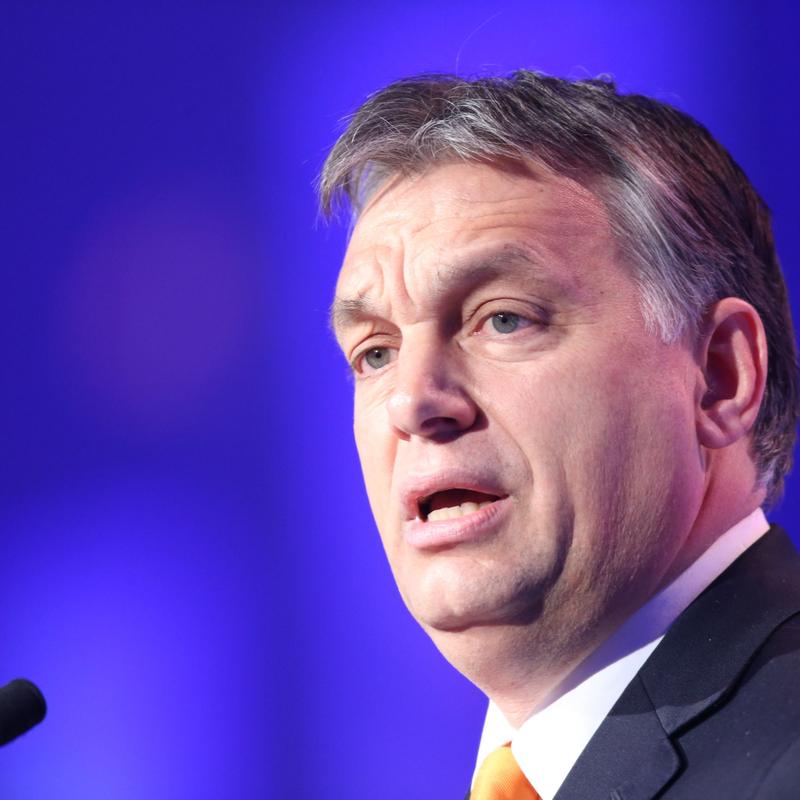
First, we begin with Vice President JD Vance and his involvement in Viktor Orbán's campaign for prime minister of Hungary. The Vice President campaigned alongside the autocrat in Budapest last week, but Orbán was ultimately defeated by the opposition party led by Péter Magyar, a conservative. Isaac Stanley-Becker writes for The Atlantic, "Seldom have American leaders intervened so overtly in a foreign election, and seldom has their preferred candidate fared so badly."
Orbán has been in office since 2010, making him the longest-serving head of government in the European Union. In addition to closely aligning the Hungarian government with Russia, Orbán has become closely aligned with President Donald Trump and his MAGA movement. As The New York Times puts it, "MAGA has long shared DNA with Orbán's brand of right-wing politics. Both take a hardline anti-immigration stance, both have attempted curbing press freedoms, and both movements are raising the alarm on falling birth rates of who they see as their native populations."
Given Orbán's defeat, all the more stunning considering the heavy gerrymandering he himself put into place in his country, is there a message in his loss for the Trump administration and the MAGA movement, particularly as Vice President Vance asserts himself as the frontrunner in the 2028 presidential race?
Joining us now to break down the latest is Eli Stokols White House and foreign affairs correspondent at Politico. Eli, welcome back to WNYC.
Eli Stokols: Thanks for having me.
Amina Srna: All right. Last week, Vice President Vance flew to Budapest to personally, personally stump for Viktor Orbán. Before we dig into some of the reasons behind Orbán's loss, how unusual was that level of direct engagement by a sitting US vice president in a foreign election?
Eli Stokols: Yes, I think as you just quoted Isaac Stanley-Becker writing in The Atlantic, it is highly unusual. There was an old saying in American politics that politics stops at the water's edge. That sort of meant that we would have alliances, relationships, bilateral and multilateral relationships with other countries, but we would not meddle in the internal politics of these other countries because when voters vote one leader out of power and vote another government in; whoever is there, the United States will have to work with them.
There was this diplomatic understanding that that was not going to be done. Sure, there might be more mind meld between a liberal US president and a liberal European leader, or conservative president and a conservative leader, but in terms of actually intervening, campaigning, traveling to that country and hosting or co-hosting a political rally with the candidate or the incumbent president, that's just not something that we've really ever seen in our politics and our foreign policy until now.
Amina Srna: You're right. Orbán in many ways had been a model of governance for many in the MAGA movement who championed his advocacy for illiberal democracy abroad and sought to emulate it at home. For listeners who maybe aren't familiar with Orbán and how he transformed Hungary, can you give us a little 101 and talk about what his politics were?
Eli Stokols: How long do you have? Yes. I mean, there is a term for this, right? Orbánization is a term. You can look it up. That is not the case if there hasn't been a tremendous impact by Viktor Orbán on the state of Hungary to date. He, again, was elected in 2010, so this is 16 years in power that is coming to an end soon.
Over those 16 years, he really was very effective at turning Hungary into an illiberal democracy, making it increasingly authoritarian. While there were still facades of democratic institutions, a democratic process, Orbán really succeeded in concentrating power in the executive branch of government, and really-- I'm thinking of the leader of Argentina coming to CPAC with a chainsaw last year. I mean, they took a chainsaw to civil institutions and the federal bureaucracy all across Hungary.
There were loyalists installed all across government. They stacked the judiciary, the courts, with judges who were loyal. They changed the court's remit so the court could no longer have an oversight role on economic policy. They changed electoral laws. They gerrymandered districts. They made it more winner-take-all in certain districts. They really took aim at the media. They centralized the media. There is heavy government oversight of media outlets and penalties for outlets that produce content that the government did not like. In addition to that, there were very strict immigration policies.
All of those things made Hungary really an outlier of sorts in the EU, but a really attractive beacon for MAGA-think tank types and for advisors to President Trump because Viktor Orbán has been doing a lot of things that people around President Trump wanted to see occur in America.
Amina Srna: Listeners, we're talking about Vice President Vance campaigning for Hungary's longtime leader Viktor Orbán last week and what Orbán's loss might signal for the MAGA movement. We can take a few of your comments or questions for our guest, Politico's Eli Stokols. Maybe if you're somebody with ties to Hungary or following European politics closely, how did this moment land for you? What's your political analysis? Give us a call. 212-433-WNYC. That's 212-433-9692. You can also text that number.
Eli, on Monday, the Vice President made public comments about Orbán's defeat for the first time. Here he is in an interview with Fox News.
Vice President JD Vance: His legacy in Hungary is transformational; 16 years fundamentally changing that country. But one of the reasons why we decided to do that, Bret, is not because we can't read polls. We certainly knew there was a very good chance that Viktor would lose that election. We did it because he's one of the few European leaders we've seen who's been willing to stand up to the bureaucracy in Brussels that has been very bad for the United States.
Amina Srna: All right, Eli, a couple things in that clip. First, the Vice President says, "We certainly knew there was a very good chance that Viktor would lose that election." It's been widely reported that that's why President Trump sent Vance there in the first place. Do you want to reflect on that political calculus? Did they really think an American vice president getting involved would sway the election, or was it more of a last-ditch effort?
Eli Stokols: It's hard to say. I spoke to a senior White House official a few days before Vance's trip to Budapest and asked that question, do you really think this can make a difference? Do you really think Orbán has a chance to win another term? The answer I got was yes and yes, we do think this can make a difference. Anytime that high level of a United States official shows up in a European country, that's emphasizing a really strong relationship with America. That's meaningful to Europeans. That was what I heard, that there was some optimism that this could give Orbán a boost.
I also heard what JD Vance said in the postmortem, which is, why are we doing this? Well, because this is a unique case. Viktor Orbán is someone who has been loyal to President Trump. He showed up at Mar-a-Lago in the interregnum, in the four years when President Trump was out of power and maybe not getting as many calls from foreign leaders, Viktor Orbán was showing up. He was still cultivating that relationship. I think what JD Vance talks about in terms of their affinity for Orbán and their desire to repay his loyalty, I take them at their word on that; that, that is and was a big part of the calculation for doing this.
I'm a little more skeptical about the claims after the election defeat that, oh, we knew he was going to lose. Yes, the polls were what they were, and I don't think anybody would have said he was a sure thing to win reelection, but I think had they known with certainty that he was going to lose, there might have been a little more hesitation before sending the Vice President of the United States to campaign at his side and having the President call into the rally.
President Trump gave a phone interview, I think, on Wednesday, so a day after Vance was on Fox News, and he picked up the phone and told a reporter from ABC News who asked about Orbán, "Oh, I wasn't really that involved." Well, sending your vice president, calling into the rally; that's pretty involved. That's a level of involvement, as we discussed, that you have not seen over decades from presidents in foreign elections.
Yes, this is, I think, a bit frustrating or a bit inconvenient for an administration that had really hoped that Orbán would prevail, and I think that emotionally, does have and has had a lot invested in the story of Orbán, and the idea that Orbán's rule in Hungary was just sort of inevitable and would keep going indefinitely.
Amina Srna: One more thing in that clip, you had just mentioned that the Vice President was saying that Orbán had stood by and has been loyal to Trump and the Trump administration, but he literally said in that clip, we did it because he's one of the few European leaders who's "willing to stand up to the bureaucracy in Brussels." What does that mean?
Eli Stokols: Well, it was ironic to hear JD Vance criticizing the European Union—the bureaucrats in Brussels—for meddling in Hungary's election as he was campaigning in Hungary for the leader of Hungary. I think that that is a familiar kind of commentary from the Vice President, going back to his speech at the Munich Security Conference roughly 14 months ago.
JD Vance and a lot of people in the Trump administration are not subtle about their disdain for Europe and for the European Union, and for the kind of traditional liberal democracy that most of these countries-- that they are. The traditional allies of the United States—the United Kingdom, France, Germany—the allies that are really the biggest players in NATO other than the United States, and have been for decades, it's a long-running story at this point that the Trump administration has been pretty hostile to them and has taken--
The President has also given a number of speeches, including at the United Nations, just attacking European countries in particular for what he believes is their loose approach to immigration, letting in too many migrants, and their energy policy. The President also has talked about the EU as kind of a scam to screw the United States when it comes to pooling their resources and making the European Union bigger and more of a player economically, and the President has never liked that.
There's so much anti-European rhetoric and thinking baked into this administration's policy. It's explicit in the two documents that really define Trump foreign policy: the National Defense Strategy and the National Security Strategy. Which people were, I guess, shocked, but not shocked by how explicit it was the disdain for Europe, and the comments about Europe experiencing civilizational decline, and needing to protect their culture more by cracking down on immigration.
A lot of the kind of rhetoric that is very close to what Viktor Orbán has said, this is what a lot of people in the Trump administration believe. To hear JD Vance talking about Orbán as having done an amazing job and having a transformational legacy, which is true, given the changes to Hungarian civil society, but this has been something they have talked about and been open about for a long time. It was the fact that Orbán has really been a fly in the ointment of the leaders in Brussels is another thing that really endeared him to this administration.
Amina Srna: Let's go to a call. Here's Bill in Larchmont. Hi, Bill. You're on WNYC.
Bill: Hey. Yes, I was calling up because when Vance was making that speech in Hungary, Trump was there as well, because Trump was on a phone. Vance held up the phone and Trump spoke to the appointed crowd there. Nobody's mentioning, I mean, he's just as big a fail at that as Vance was. His reaction was, oh, well, I wasn't really involved. Of course, another lie. He was involved. I heard the phone call. Vance held up the phone and said, hi, Mr. President, want to say hello to everybody? And he endorsed him on the phone. I just wanted to make sure that was mentioned. Thank you for taking my call.
Amina Srna: Thanks so much for calling, Bill. Eli, some listeners might have missed that back and forth. It was pretty clippable. I saw it on social media in short bursts here and there. Can you just explain what happened there, what Bill is referring to?
Eli Stokols: Yes, and I think I tried to mention that. Maybe it was just in passing, but it's true that Vance, when he was in Budapest for the rally, that they put Donald Trump on the phone, and the President was talking about, in particular, the immigration policy that Orbán has put in place, but giving a clear and strong endorsement and saying that Orbán- I think Trump's quote was, Orbán kept your country strong, he kept your country good, and you don't have problems with all of the problems that so many other countries have.
He's obviously said more than that, but again, it's the way the administration saw Hungary as a model for an approach they like much better than the more traditional, mainstream democratic approach in basically the rest of Europe. They always have put Orbán on a pedestal. You'll see the President make nice with Keir Starmer- or maybe months ago, make nice with Keir Starmer, but he has a lot of-- he'll say, oh, these other European leaders, they're my friends, the other NATO members, but none of them to the degree that Viktor Orbán is Donald Trump's friend and Donald Trump's ideological ally and, in some ways, a spiritual godfather of the MAGA movement.
I mean, they're going to campaign for Viktor Orbán. We have not seen them do that for anybody else. The fact that the President himself- obviously, he didn't get on a plane and fly to Budapest himself, but just being there present through the phone at that rally, that's still a pretty remarkable level of campaign involvement, and his endorsement was very clear.
Amina Srna: Listener texts, "I am Hungarian, but have been living abroad for a long time. However, I've been following these elections very closely. An overwhelming majority of my family and acquaintances are very satisfied with the outcome of the elections, as they described Orbán's rule as actually being worse than the late stages of the Kádár regime. Orbán turned the country into a kleptocracy and spewed anti-EU propaganda 24/7. Péter Magyar is conservative, but promises to restore the rule of law."
Eli, I know that you cover the White House and foreign affairs as they pertain to this country, but do you want to briefly comment on some of the issues at stake in the Hungarian election and why it swung towards Péter Magyar?
Eli Stokols: Sure, yes. I, just yesterday, was recording a podcast with some of my colleagues, including a reporter in Budapest, and they were describing what it felt like there, and more or less the same as what your listener just texted, in terms of just the relief and the jubilation to be free of what had become a really oppressive state regime.
I think when people talk about the election, when I've talked to analysts about this, they said, you really have to consider that given the reforms that Orbán had made to the electoral system, the map, the media, he probably had created for himself at least a five-point structural advantage in the system. Essentially, a handicap. If you're going to beat Viktor Orbán, you got to beat him by more than five in terms of popular support. Péter Magyar beat him convincingly. This was clear very early on Sunday when the votes were coming in. Orbán conceded very quickly.
If you've looked at election coverage, or talk to people in Europe, talk to people in Hungary, you will have heard a lot about the difference in the campaign and the things that the candidates were focused on. Orbán was talking a lot about—as your listener wrote in—anti-EU propaganda, rhetoric, the importance of the Russia-Ukraine war.
Orbán was supported, remarkably, by the United States and by Vladimir Putin in Moscow. That's because he was basically the one leader in the European Union and in NATO who was more or less on Russia's side, and was blocking a €90 billion loan for Ukraine that the other countries in Brussels have been trying to approve for several weeks or months. In the election, Orbán was talking about, if we continue to bolster Ukraine's military, they're going to invade Hungary when this is all over.
He was not focused on the day-to-day quality of life, economic issues affecting most Hungarians. The person who won, Péter Magyar, that is where he was focused. He was talking about a stagnant economy. He was highlighting the corruption and the fact that Orbán's government, there were a lot of people close to him who were getting rich and essentially taking money out of the pockets of regular Hungarians. That kind of economic populist argument, I think, is not that surprising that that would be more successful as a lot of fear-mongering about Ukraine and the EU.
We've seen in this country that voters often want change, and so the pendulum swings back and forth. When you've had one person in power for 16 years, you can understand why, perhaps- especially if the economy was lagging behind all the other countries in Europe, which it is, you can understand why voters there would be really fed up after 16 years of this and seeking a change.
That is more or less the story of what happened. Again, because of the structural advantage baked into the election for Viktor Orbán and his party; the fact that Péter Magyar defeated Orbán so convincingly and decisively, I think really is a testament to how deep those frustrations were, and how ready the majority of Hungary was for change.
Amina Srna: On the scale of the defeat, we have several listeners who are calling and texting about this one similar thread of the conversation. Here is Bill in Brooklyn who, I think, will be able to represent them. Hi, Bill. You're on WNYC.
Bill: Yes, hi. I wanted to know why Orbán did not jail him on, dare I say, trumped-up charges—I hate to use that word—like Erdoğan did in Turkey with the Mayor of Istanbul, or some other method that a totalitarian leader would do; why he did not see that coming or did not do that. Or how this will affect the midterms, what Trump will do in the upcoming midterms, or how it would be similar and different.
Amina Srna: Bill, thank you so much for your call. Eli, several callers on that point. I mean, a lot of people seem surprised that Orbán accepted these election results.
Eli Stokols: Right. For someone who has really made a democracy far less democratic, it appears, at the end of the day, there were still lines that Viktor Orbán wasn't ready to cross. I think that's a huge relief to people in Hungary and people across Europe that this is a leader who, for all the ways that he tore into the administrative state and removed checks and balances and guardrails, he did not go that far.
He kept Péter Magyar off television because he controlled the airwaves. When Magyar did an interview after the election, it was the first time he'd been on TV, I think, over the course of the entire election cycle. That is a significant thing, but it's not as far as putting somebody in jail. A lot of people have made the point about the fact that Orbán conceded quickly.
We can all think back to election night on 2020, when Trump said, frankly, we did win this election, and he maintains that position to this day. We all recall January 6th, and the lengths that Donald Trump went to, back in 2020 and early 2021, to attempt to stay in power. Orbán did not do any of that, and I think that's a huge relief to Europeans.
Was there a question in there also about parallels or election warnings?
Amina Srna: Should this give us hope for dealing with Trump? I think was the reference.
Eli Stokols: I don't know what folks are hoping for, but I will say, there are a lot of clear parallels. When you see-- Marjorie Taylor Greene has been attacking Donald Trump for running on one thing, and then spending his entire second term, effectively, on foreign policy and not focusing on economic issues.
That sounds exactly like what I was just describing in terms of the dynamic in the Hungarian election. A ruler who's been around-- Donald Trump has not been in power for 10 years, but he has been dominating American politics for over a decade now. To the extent that he-- If you look at his approval numbers, and they are dropping largely because of the Iran War, and the fact that gas is getting more expensive, groceries are getting more expensive, and nobody understands why we're in this war and it's very unpopular, that is really hurting him.
It's not dissimilar to the kind of dynamic that we've seen in Hungary, where Orbán really paid a price for not being more focused on the everyday lives of his people and the money that was coming into their pocket and the cost of things. There are a lot of parallels in terms of the circumstances, just as there are parallels in the approaches that Trump and Orbán have taken.
Our system is not exactly the same as the Hungarian system, but I think that generally, if you want to paint with a broad brush here, nobody can look at what happened in Hungary-- If you're a Republican campaign operative, or you're a political director at the White House for Donald Trump, none of those people can look at Hungary and feel better about their prospects.
One of the people that we talked to for one of our stories this week was Steve Bannon, Trump's former White House counselor. Bannon said, this needs to be a wake-up call for November. Whether it is, whether it will be, whether there's anything that can be done at this point, those are other questions. I think people who are honest with you in that Republican campaign orbit will tell you that this would only add to their concern. It's not going to ease their worries about what may be coming in November.
Amina Srna: We have to take a quick break. When we come back, we can take a few more of your comments or questions for our guest, Politico's Eli Stokols. Eli, we'll switch gears and ask about Vance, his performance on the broader world stage in recent days and weeks. Listeners, give us a call. 212-433-WNYC. That's 212-433-9692. Stay with us.
[music]
The Brian Lehrer Show on WNYC. I'm Amina Srna, filling in for Brian today. My guest is Eli Stokols, White House and foreign affairs correspondent at Politico. Eli, let's talk about Vance's performance on the world stage in recent days. The President led a US delegation in Pakistan for talks with Iran, which has been qualified, at least in liberal media, as a failure. MS NOW reports that's due in part to instructions he received from Trump.
We've been talking about Orbán and his loss in that landslide election despite Vance having traveled to Hungary to campaign on Orbán's behalf. As a longtime producer of the show, I'm not surprised that we've received several texts and calls also mentioning Vance in Germany before their election, supporting the far-right party which did not make as many gains as it had anticipated.
Broad strokes, what's your take on the Vice President's recent foreign policy attempts?
Eli Stokols: Yes. I think you have to view this all through the lens of the 2028 election, and how it's playing with a domestic audience and potentially a Republican Primary audience of Trump supporters and people who are assessing, what do I think of JD Vance as the heir apparent to Donald Trump? I don't think it's put on for him. I think the deep resentment or negativity towards Europe and towards alliances and values-based alliances, I think is real and something that he feels. It's not a performance for the base. It's not a shape-shifting exactly.
Obviously, it's not going to play very well in Europe. There's a real question of it may work for you politically back here in the United States, but is it working to advance American interests in the world if you're trashing-- and obviously, Vance is not the primary person who has strained the Transatlantic Alliance. That would be his boss, Donald Trump.
I think that weakening ties with the Europeans, we see what that looks like when suddenly, there's a war in Iran and President Trump wants NATO allies to come pitch in, and they are going to say, I don't think so, especially not after you've just threatened to steal Greenland from Denmark—a NATO ally and EU member—and not after all the bullying and the attacks that we've seen over the last 15 months. A lot of the trashing of allies comes home to roost when you wake up one day and you say, it'd be really nice to have some allies on this or that.
I think in terms of Vance's actual performance, I don't know that-- Look, I think sending him to rally with Orbán is certainly a choice, and it's not a choice past administrations would have made, but it's not that surprising for this one. They did it. Orbán lost. I don't think Vance-- There's lots of jokes on Twitter because Vance met with the last Pope right before he died. There's these memes of, oh, JD Vance meets with the Pope and the Pope dies, and JD Vance goes to campaign with Orbán and Orbán loses, and JD Vance goes to Islamabad and talks with Iran fall apart.
That's a fun internet meme. It's not necessarily fully accurate. Yes, the last Pope did die days after he met with JD Vance, but that was more circumstantial than anything. Orbán likely was destined to lose, regardless of whether Vance or Trump campaigned for him or not. I think with the Iran talks, it's a little early to say that those talks are not going to lead to anything. My understanding, talking to people in the White House, is that President Trump really does want an off-ramp. He really does want some negotiated way out of this war and may be willing to make more concessions than he or JD Vance are letting on publicly.
I think in the case of the two trips over the last week to Hungary and then to Islamabad for the talks, the question is why did JD Vance go in the first place? If you knew that he was going to lose in Hungary, if Orbán was going to lose, then, okay, you're taking a political risk. Maybe to them it was worth going.
I think a more valid criticism is for what were clearly preliminary talks. The US had not had direct talks with Iran since 1979. To send the Vice President to the opening round of talks, in the midst of a very fragile two-week ceasefire after a month and a half of war, it just was obvious that no breakthrough was going to come from that meeting. The JCPOA that the Obama administration negotiated in 2015 took the better part of two years to nail down and get locked into place. The criticism that I heard that sounded fair to me was, why are you sending the Vice President when there's not a deal to close?
I think part of the reason is JD Vance, because of 2028 in particular, is eager to play a role on the world stage. He's eager to be the face of this. The other reason, and this is reasonable too, is that Iran far prefers Vance leading the negotiations than Marco Rubio, or Witkoff, or Jared Kushner; people who are perceived by the Iranians—rightly or wrongly—to be much closer to the Israelis and more hawkish foreign policy, doctrinaire American Republican foreign policy types than JD Vance, who's a bit more of a restrainer, bit more isolationist, and who they believe may be more likely to see things from their point of view or to steer things to a conclusion.
You can question why JD Vance was there. I think there were some reasons why maybe it made sense for him to be there or at least be involved in the negotiations. We're now going to see if there are additional talks that resume at a high level if JD Vance goes again. I think it's quite possible he will because again, he's who the Iranians seem to want to deal with.
In a week or two, or however long it takes, if there is an agreement that resolves the conflict and opens the Strait of Hormuz, and JD Vance is seen as the person who led the negotiating team, then I think you have to say, okay, give JD Vance a little bit of credit for helping to get that done. We'll see how that plays in terms of the domestic politics down the road. I think in this case, Europe may not want to deal with JD Vance, but the Iranians seem to want to. I think that's why, suddenly, he has popped up and been the lead of the delegation, at least so far.
Amina Srna: We have a listener on this who I think wants to comment on Vance's qualifications. Here's Kieran in Montclair, New Jersey. Hi, Kieran. You're on WNYC.
Kieran: Hi. Yes, I was just-- Appreciate the conversation. JD Vance has no experience in negotiation, and it really just seemed like more of putting up a show. I mean, they were in Islamabad for probably as long as the total flight time in and out, so I don't think there was any serious expectation of anything getting done. They're joined by Steve Witkoff and Jared Kushner, who have backgrounds in real estate transactions. I mean, are they really looking to accomplish anything? Is this all just optics? Is there any hope for a deal being reached eventually when on the other side of the negotiation table includes people who are the survivors of previous negotiations, and people who have replaced people killed amidst prior negotiations? Is there any real hope for a deal here?
Amina Srna: Kieran, thank you so much for your call. Eli?
Eli Stokols: Yes, Kieran, those are all good questions. I think the administration is looking for a deal. Now whether these people are traditionally qualified to be doing this kind of high-level diplomacy, not based on who we've seen doing it before, but this is who President Trump has in these roles, and this is who's doing the negotiations. They do see these things as very transactional. They're trying to represent the President's point of view, and the President's point of view tends to bounce around a lot.
I think the messiness and the inconsistency or the confusion about what the US actually wants here is real. Maybe it's partly by design because the President is trying to increase his leverage and scare Iran into agreeing to things that he's asking for; agreeing to a longer timeline for the moratorium on uranium enrichment, for instance.
I think Donald Trump thinks that he can-- by sending more troops to the Middle East, by blockading the Strait, by doing all these things, and by driving a hard bargain, sending JD Vance to stand up and say after the meeting, this is our final best offer; that is all aimed to put pressure on Iran to, I think, come a little further and agree to a deal.
My understanding is that the President really does want a deal. We are at the end of our tether in terms of how much more extended-range missiles we want to be firing into Iran before it's depleting our stockpiles. The President has not shown a real interest in-- despite the threats online, he has not actually followed through on blowing up Iran's electric grid or other utilities and things that would affect civilians. He has not shown a real willingness yet to put troops on the ground that would likely lead to American casualties measured in the hundreds.
Given where we are, and that my understanding is that he really does want to wrap this up, it's taking a toll politically, I would not totally dismiss the possibility that there could be some deal that comes out of this at some point. I think, Kieran, your point about, is this serious? Is it realistic to think that there could be a deal in just weeks when it took two years for the JCPO? That's a really good question, and we just don't know.
The JCPO also took place when Iran's regional proxies were in a much stronger position. It did not take place in the middle of a hot war that has seen a lot of destruction of Iran's military capabilities. We'll see where this goes. I wouldn't rule out the possibility of a negotiated resolution to this, even though there is so little trust back and forth and, as you point out, not a ton of negotiating experience on the American side.
Amina Srna: A listener via text puts a fine point on some of what you're saying, Eli, here. They write, "Based on Vance's statements after the negotiations, it seems pretty clear he was not there to "make a deal." He was there to "impose a deal."
Eli, last question. If this election in Hungary is, as some have suggested, a test case for global populism, what lessons might figures like Vance, who's been called the heir apparent of the MAGA movement, what is he likely to take from Orbán's loss, whether he admits it publicly or not?
Eli Stokols: Yes. The folks in the Vice President's office who I've asked, is there going to be much reflection on this? The answer was really, no. Things happen. We're moving on. No big deal. I think it's glaring, the similarities between the circumstances that took down Orbán and the situation that Republicans find themselves in currently in the United States in terms of the poll numbers and the discontent and the frustration over the economy, an economy that most voters who voted for Donald Trump believed that he was here to improve.
I think in the same way that voters in Hungary recoiled at the blatant corruption-- President Trump, just yesterday at the White House, they announced they've submitted plans for the building of the Triumphal Arch outside Washington, DC. I just think those kinds of projects, the vanity projects, those sorts of things; it's one thing if the economy is humming along and people just say, well, it's Donald Trump, whatever. It's a different thing in the middle of a war, or what could be a prolonged recession as a result of the supply crunch when it comes to oil and energy prices that could be sustained for months, if you talk to people who study the markets and have an idea where this could be going.
That's a tough position for Republicans to be in. The main takeaway, I think, for JD Vance, for Russell Vought, the OMB director, and other right-wing think tankers who spent a long time modeling what Orbán did and scheming that out in terms of how Trump can reform the deep state, reform American government; I think a thing to take away is that nothing is inevitable about this right-wing nationalist, populist movement that Orbán epitomized and that Donald Trump is a leader of.
For a long time, people pushing that, those kinds of leaders, felt we are on the rise. The future is ours. We have the support of the people. That's not guaranteed. I think that is the main takeaway from what happened in Hungary is that voters are going to go for the people that they think have their interests at heart. When you lose the plot, and you're not focused on that and it's obvious to people, there's going to be an electoral response.
I think if JD Vance does wind up as the nominee in 2028, he's going to have to do a lot of work to convince people that making people's lives better in terms of the money in their bank account, the sort of making their lives easier, that that's his priority. Right now, it's very clear from the polling that a majority of Americans do not feel that that is what is Donald Trump and this administration's top priority.
The general takeaway is there is a lot of work to do before 2028. I think every day that this war continues, and every day that gas prices are high, and every day that the news out of the White House is something other than dollars-and-cents economic matters, it's making things harder for JD Vance and for Republicans who are going to be on the ballot this November and in 2028.
Amina Srna: Eli Stokols is White House and foreign affairs correspondent at Politico. Eli, thank you so much for your time today.
Eli Stokols: Thanks for having me. I enjoyed it.
Copyright © 2026 New York Public Radio. All rights reserved. Visit our website terms of use at www.wnyc.org for further information.
New York Public Radio transcripts are created on a rush deadline, often by contractors. This text may not be in its final form and may be updated or revised in the future. Accuracy and availability may vary. The authoritative record of New York Public Radio’s programming is the audio record.
