
How Plastics Pollute the Environment and Our Bodies
Title: How Plastics Pollute the Environment and Our Bodies
[MUSIC]
Brian Lehrer: Brian Lehrer on WNYC. It's Tuesday, so we have the Health and Climate Tuesday section of the show coming up. We'll do two of those segments today, first with Judith Enck, who used to be head of the EPA for New York and New Jersey, with her new deep dive into the environmental and personal health effects of plastics. On average, each American uses, you ready for this number, nearly 500 pounds of plastic each year. Plastic production, in fact, doubled between 2000 and 2019 and is expected to triple from today's levels by 2060. That's according to Inside Climate News.
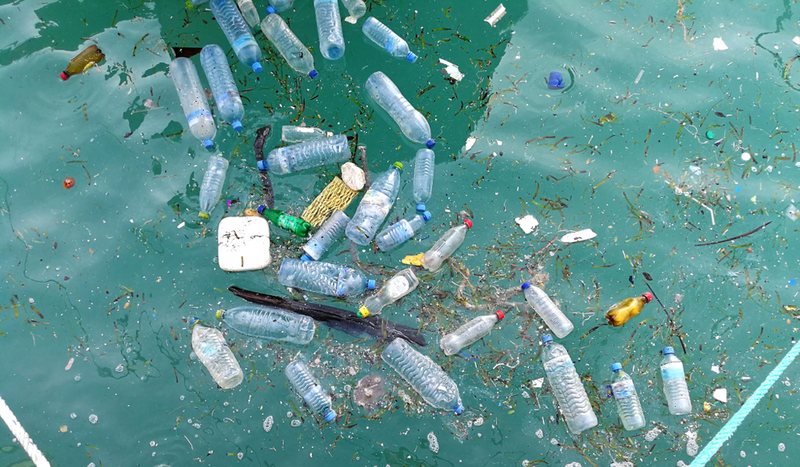
Today, plastic pollution has circulated to every corner of the globe. It's been found in protected reserves like Lake Tahoe, the bottom of the Mariana Trench, and more disturbingly, in our bodies, in brains, in heart arteries, even breast milk. Joining us now is Judith Enck, founder and president of the nonprofit Beyond Plastics, professor at Bennington College, and former administrator of EPA Region 2. That means she was in charge of the federal EPA for New York and New Jersey, and some places in the Caribbean.
Judith, along with journalist Adam Mahoney, is the author of a new book that examines how we got here and what can be done about it, both on the personal and the political levels. It's titled The Problem with Plastic: How We Can Save Ourselves and Our Planet Before It’s Too Late. Judith Enck, always good to have you. We always learn when you come on the show. Welcome back to WNYC.
Judith Enck: Thank you, Brian. I love being with you and your listeners. You've got some smart people listening. Thanks for having me.
Brian Lehrer: We sure do. They make the show. On the climate aspect of this first, you write that plastic production emits four times more greenhouse gases than the global aviation industry. What? People may not connect that right away because they know if you're flying, there's all these tailpipe emissions or whatever you call them on a plane, but they don't think about that in that way when they're using a plastic bag to go shopping. Take us into that stat.
Judith Enck: Plastic traditionally has been made from oil and chemicals. Today, it is made from 16,000 different chemicals and ethane, which is a byproduct of fracking, which thankfully we don't have in New York, but we do in Pennsylvania and other states. Back in 2021, a simpler time, we wanted to take a look at every stage of plastic production and what the greenhouse gas emissions are. We found, when you look at production, use, and disposal of plastics, because most plastics are not recyclable, the US plastic industry was responsible for at least 232 million tons of greenhouse gas emissions every year.
What does that mean? That's the equivalent of about 116 coal-fired power plants. As we, as a nation, have been working to shut down coal plants, at least until President Trump came into office, that progress is being canceled out because plastics are using so much fossil fuel and chemicals, and it takes a lot of fossil fuel to also make chemicals. That's why our emphasis is on reducing the production of plastic.
Brian Lehrer: Besides reduction, of course, the mantra in environmental science, generally, environmental personal behavior, is reduce, reuse, recycle. Reduce is the first priority. Reuse something is the second priority. Recycle is only the third priority. You write about not really supporting plastics recycling in the book, and this may be challenging to many of our listeners. I know for myself, my building is very good about having us all sort our recyclables from the composting and the other trash.
I pay attention to what number. Recycling plastic number two or number five or whatever, and what we can recycle where I live, but you're against that regimen, or do you think it gives us a false sense of it being okay to use these things at all?
Judith Enck: This is the equivalent of me telling people there is no Santa Claus. If you've got kids in the room, cover their ears. Plastics recycling has been an abysmal failure. People should keep recycling their paper, cardboard, metal, and glass. Please compost your yard waste and food waste. I love recycling. I started my town's recycling program in upstate New York as a volunteer, but we need to be honest that plastics recycling largely does not work, with the exception of plastic PET soda bottles that are part of the state's bottle bill. Let me just explain why.
If you've got an aluminum can, you can recycle that into a new aluminum can. If you've got an old copy of a newspaper, you can recycle that into new paper products like cardboard or paper. That doesn't work with plastics. There are too many different types of plastics known as polymers. Too many different chemicals, too many different colors. Think of your own home or apartment. You might have a bright orange hard plastic detergent bottle nearby to do your laundry, and then in your refrigerator, you might have a black plastic takeout container.
Those two plastics cannot be recycled together. Different color, different chemical concoction, different polymers. The people who know this the best are the companies like ExxonMobil and Shell that make plastic, and yet they have spent hundreds of millions of dollars in advertising telling us, "Don't worry about all your single-use plastic, just toss it in your recycling bin," when, in fact, most plastic doesn't get recycled. It is so serious that the California Attorney General Rob Bonta sued ExxonMobil in September of 2024 for deceiving the public about their claims about plastics recycling.
That's why our emphasis is really on reducing, the top of that sing-song hierarchy of reduce, reuse, recycle. Let's focus on reduction, let's build a reuse, refill infrastructure as opposed to continuing the myth of plastics recycling.
Brian Lehrer: Here's a text from a listener with a question. It says, "What would be your best advice on what to do about shopping choices when one goes to Trader Joe's," they single out Trader Joe's, "And four kiwis are in a plastic-shaped suitcase? That should be a zero-plastic purchase. I've talked to managers to complain. What can consumers do?"
Judith Enck: First, I want to say you cannot shop your way out of the problem. The kiwi example is very, very common. We have written to Trader Joe's, and followers of Beyond Plastics have signed petitions to Trader Joe's. They are not going to change unless there's a law on the books requiring them to change. Thankfully, we've got really important bills pending in the New York legislature and in the New Jersey legislature that would require Trader Joe's to change.
I don't mean to be pessimistic, but there are about 12,000 products in a typical American supermarket. When you go there, you have very little choice. Much of it is in plastic, and we shouldn't beat ourselves up about not being able to be plastic-free. You do the best you can, but until we get new laws on the books, we're still going to have this plastic-encased Kiwi product. The other product in the produce aisle that drives me nuts is we used to be able, and sometimes we can buy lettuce, just freestanding lettuce. Now they come mostly in these plastic coffins. It's really hard to find lettuce and greens not encased in a plastic coffin.
Brian Lehrer: I want to make sure we get to the health part of this because this is a conversation that I think people we all know are having more and more in their personal lives. We've talked about this before on the show, you and me, but I think new studies are coming out all the time about plastics now found in human organs, including the Brain and even the placenta of pregnant women. You refer to that in the book. I saw that in a recent interview with Inside Climate News, you pointed to two studies, one by the New England Journal of Medicine or published by them, which looked at microplastics in heart arteries. Maybe the question is, what happens when microplastics meet plaque?
Judith Enck: If your heart plaque has microplastics on it, you have an increased risk of stroke, heart attack, and premature death. We have a whole chapter in the book on plastics and health because just in the last few years, scientists have been looking for microplastics in the human body. It gets into our body by we breathe it in or we swallow little bits of microplastics, 5 millimeters or less. Even more challenging is the smaller nanoplastics.
I'm really sorry to say that microplastics have been found in human blood, lungs, kidney, you mentioned heart arteries, the human brain, where it's crossed the blood-brain barrier. Microplastics have been found in testicles, in the human placenta, both the fetal side and the maternal side, and human breast milk.
Brian Lehrer: Have they been linked to actual disease outcomes?
Judith Enck: Plastics in the brain have been linked to an increased risk of Alzheimer's and other neurological diseases. The plastics found in heart arteries have been found to increase the risk of stroke, heart attack, and premature death. Certainly, more study is needed, which is it's so worrisome that the federal government is cutting back on health research. My old agency, the EPA, the Trump administration, and the really dreadful administrator Lee Zeldin, eliminated the Office of Research and Development at the EPA, that was the largest office there.
We are going to have to depend on other countries, European researchers, for instance, and independent researchers in academe to continue to look at these health issues. I think this is a real significant issue. My view is that in a couple of years, state legislators, regulators, members of Congress are going to look back at the growing body of scientific evidence and say, "Why didn't we act sooner?" I will say on our website, Beyondplastics.org, we have dedicated a whole section where we report on the latest health studies on microplastics and nanoplastics in the human body, and it's chronological, so people can stay up to date there.
Brian Lehrer: Before you go, I want to ask you one more question about plastics and personal health, because you write that plastic should not touch food. Do you mean takeout containers or that same shell that the kiwis might come in, and the things like that? You get the soup from the Chinese restaurant and bring it home, and you pour it in a bowl, and it comes in plastic. Is that getting into our bodies? Should we worry about that at that level?
Judith Enck: The 16,000 chemicals used to make plastic, including in food and beverage packaging, can leach into the food, particularly if the food is hot. I really try to avoid anything hot in plastic and definitely do not put plastic in the microwave. If you get takeout food and it's in plastic, get it out of the plastic as quickly as you can and try to avoid it whenever you can. It is a real issue, and the FDA is absolutely not on top of this.
Brian Lehrer: Judith Enck, founder and president of the nonprofit Beyond Plastics, a professor at Bennington College, and former EPA Region 2 administrator, meaning before the current era, let's say, she was in charge of the federal EPA for New York and New Jersey and some other places. Her new book is called The Problem with Plastic: How We Can Save Ourselves and Our Planet Before It’s Too Late. Thank you, as always, for sharing your latest wisdom about various things environmental and these days, especially about plastics. I know that's your main concern now with our listeners.
Judith Enck: Thanks, Brian. Happy Giving Tuesday.
Brian Lehrer: Thank you very much.
Copyright © 2025 New York Public Radio. All rights reserved. Visit our website terms of use at www.wnyc.org for further information.
New York Public Radio transcripts are created on a rush deadline, often by contractors. This text may not be in its final form and may be updated or revised in the future. Accuracy and availability may vary. The authoritative record of New York Public Radio’s programming is the audio record.