
How Investors Feel About Pres. Trump's Economy
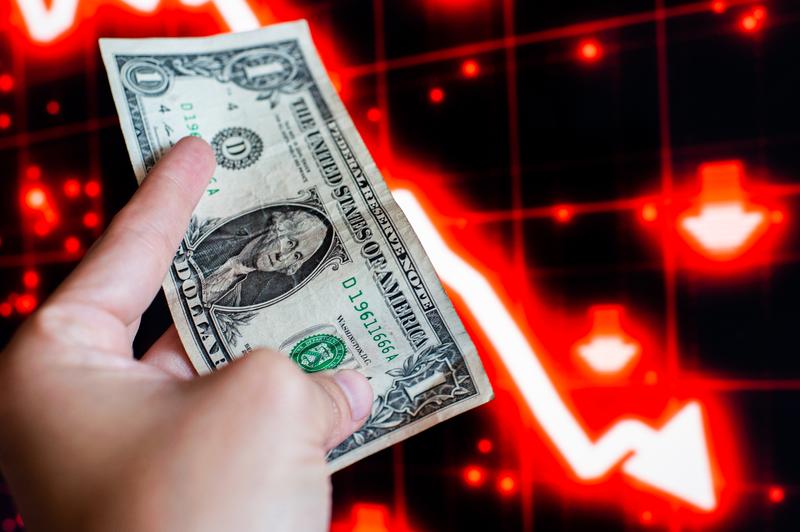
( Sebastian Barros/NurPhoto / Getty Images )
[MUSIC]
Brian Lehrer: It’s the Brian Lehrer Show on WNYC. Good morning, everyone. We’ll have Mayor Mamdani on for the first time since the inauguration on today’s show. He’s coming up later this hour. We’ll talk about the city's response to the cold, his announcement today of who he’s endorsing in the Democratic primary for governor, and more. We’ll start with this from politics and the economy, the trend being reported by multiple market watchers that’s being labeled Sell America. Sell America. The implications could be huge for average Americans' finances if this continues.
For example, the US dollar has been one of the world's default safe bets. Most of you probably know that. US treasury bonds have been treated as about as close to risk-free as an investment can get. Lately, a mix of signals are making investors uneasy, even about treasury bonds and the dollar. The dollar has weakened over the last 12 months since the Trump administration took office. Borrowing costs have been rising, including treasury bonds, and gold prices have surged, which is usually in response to those things.
Why sell America? Well, tariff policy, questions about the independence of the Fed, concerns about political instability generally have given investors around the world cause to begin to diversify more than before away from the United States. Let's talk about what's happening. We’re going to get a view from none other than Paul Krugman, Nobel Laureate in economics, former New York Times columnist, now on Substack, distinguished professor at the City University of New York Graduate Center, and author of the book Arguing with Zombies: Economics, Politics, and the Fight for a Better Future. Dr. Krugman, we always learn when you come on. Thank you for joining us today.
Paul Krugman: Well, thanks for having me on.
Brian Lehrer: Is Sell America a real thing or a media and pundit thing?
Paul Krugman: It's real. You don't want to get carried away. We’re not yet. I think yet may be the operative word. We’re not looking like Argentina during one of its many crises or Indonesia or whatever. We’re not looking like America exactly in the markets now. It’s not even just that the dollar is down and gold prices are up, but it’s the correlations. Historically, whenever anything went wrong anywhere in the world, even in the United States, people would buy dollars, they would buy US Treasuries.
We were the safe haven. That’s not happening, hasn't been happening this past year. It looks instead as if when something bad happens in the United States, people move out of dollars and out of treasuries and into good old-fashioned panic havens like gold, which is saying that at some fundamental level, America is losing the world’s faith. Now, it's not crisis level yet, but it is certainly a change and not that hard to understand.
Brian Lehrer: I will note that the first line of your article about this is, "I've never considered the price of gold an important economic indicator." Why is it now if you think it is?
Paul Krugman: It's not in itself important. Gold is not money. You can’t walk in with ingots and buy a car. It doesn't really circulate in the way that dollar bills do, but it can be. Also, by the way, it’s always been a very kind of-- there’s a lot of psychology in the price of gold. At this point that psychology means that it’s a useful indicator. Gold is an interesting thing to look at as a read on the state of mind of investors around the world and has really ripped.
We talk a lot about Magnificent 7 stocks, but the real place where prices have gone wild in this past few months is the price of gold. In the past, conservatives have always said, "Oh, the price of gold is rising, hyperinflation is coming." I don't think that it’s that bad yet, but this is really an indicator that something feels broken to a lot of the world’s money, and that matters.
Brian Lehrer: Listeners, I wonder if we can get people in the investment world to call in on this and chime in from your experience, decisions you’re making yourself, things that your colleagues are saying, things that you see happening from investors globally that might have been directed at the United States, money directed at the United States.
Maybe now not so much. Anybody homesick today from a Wall Street job or working remotely and multitasking listening to the Brian Lehrer Show, or anybody else who’s involved who can help us report this story with Paul Krugman, 212-433-WNYC, 212-433-9692. Please call in. You can also text if you prefer. 212-433-9692. Your article on this on Substack is called The Lowdown on Debasement. What does the word debasement mean? Is that any different from Sell America?
Paul Krugman: Sell America is a consequence of fears about debasement. Debasement usually means-- I mean, the original was when you had gold and silver coins and monarchs who wanted to basically cheat the public would start issuing coins that were supposedly gold and silver but were debased with cheaper metals. These days, it originally means inflating away your debts, printing money, and driving up inflation in general. More broadly, just that you can’t trust these assets anymore, can’t trust US Government debt.
The trade is much more visible than the actual debasement right now. So far we aren't seeing runaway inflation or anything like that, but we’re definitely seeing people saying, "Is America the model of financial probity?" Whatever else you might have thought of America, we were always pretty good for our debts. Are we still? And I think the answer is not sure. That’s a big change. That really does constrain-- That’s a big loss of America's soft power, among other things in the world.
Brian Lehrer: You’re not being an alarmist about this. I think our listeners can hear that your last words were "not sure," but play out the worst-case scenario. Hypothetically, you said, "We’re not Argentina." Where could this lead? We’ll get into specific Trump policies that you think are contributing to the trend to the extent that it exists. If these policies continue or escalate, where could the United States wind up that really would affect average Americans, not just people who play on Wall Street in ways that could be really bad?
Paul Krugman: We’ve seen this movie before in other countries, never before in the United States. You can imagine a situation in which the dollar is falling, which is contributing to inflation. Also, inflation is rising because the economy is overheating, possibly, among other things, because we’re having a fall in the labor force because of crackdown on immigrants. In the face of that, the conventional thing would be okay, the Federal Reserve needs to tighten money, needs to raise interest rates, but interest costs for the federal government are rising.
The Trump administration, Trump doesn't want to see interest rates rising and doesn't want to believe that the economy can't keep on adding jobs at a rapid pace. He tells his hand-picked chair of the Federal Reserve to keep interest rates low. Inflation keeps rising. In an attempt to keep the cost of interest payments on the debt down, they start compelling foreign investors to shift from short-term into long-term US bonds, which has been floated by some Trump administration people and it just spirals.
The case everybody is citing, the most immediate is what happened in Turkey, where you basically had a Trump-like president in Turkey and he had disregarded warnings about rising inflation and insisted that interest rates should stay low and bought into crazy advice that said that keeping interest rates low would bring down inflation and didn’t really back off until inflation hit 80%. Now it would take quite a while. I mean, we have hundreds of years of responsible policy to overcome. There’s a lot of reputation to lose for the United States.
If you work at it, we can do it. It's not too hard to see-- We certainly have seen the closest we came to this was in the '70s under Nixon when the United States went a little bit wild on policy, though not nearly as wild as Trump has gone, and ignored inflation. That was how we got the stagflation of the 1970s. There’s so much inertia. I think it was-- I forgot now which cabinet. I think it was Howard Lutnick said, "It takes time to turn the Titanic around." It’s not easy to screw up the United States, but if you work at it hard enough, and we kind of are right now.
Brian Lehrer: Glenn in Chester, New Jersey are on WNYC with Paul Krugman. Hello, Glenn.
Glenn: Hey, Brian. Thanks, and great show. I'm a 40-year Wall Street guy that has been an avid listener, so fun that you finally put in some airtime when it comes to these things like the dollar policy. I just wanted to mention that you basically can’t have it both ways. I think what Paul said holds a lot true. The concept that you want to be restrictive when it comes to tariff policies or threatening all kinds of restrictions and then want the ubiquity of the dollar to be the world commerce basis, they don’t peacefully coexist. Just think about oil and gold and commodities like cocoa, sugar, what have you. They’re all dollar-denominated.
If you force folks to have to be hassled with the dollar as the bottom line for everything, that’s when they start to look elsewhere. I think the real challenge here is that inertia that Paul just mentioned gets pushed back when another currency or another example of a currency, if you will, like crypto or like the Chinese currency or like the euro, says, "Hey, this is easier to use because it’s less restrictive." I think the White House can’t have it both ways and say, "We want to carry this big stick and impose all these restrictions, but also have the dollar be the world's currency." You have to give if you want that hegemony to continue the way it has been for 50 years now, basically after World War II.
Brian Lehrer: Glenn, do you think any one of those three currencies that you just mentioned is the biggest threat to the dollar as the safe haven? You mentioned the euro, crypto, and the Chinese currency.
Glenn: I don't, because just quickly, the Chinese currency, because of a lack of the RMB, if it’s mostly referred to, hasn't offered enough transparency when it comes to policies or when it comes to just knowing as a store of value, "Can I trust that I'll hold that?" The euro for much of its time, until recently, frankly, couldn’t get enough consistency in terms of policy. When I mean policy there, I mean in terms of cross-border transactions and such.
What’s happening here is less about the dollar remaining strong and more about nobody else has stepped up yet. Crypto is another great example. Every time you see it flutter with some weird, even more recently with bitcoin coming back 30%, that spooks people as well to say, "That's not a store of value." I think ultimately, it’s until somebody emerges, the dollar gets to hang on at the default, not because it’s earned its spot right now.
Brian Lehrer: Got it. Glenn, thank you for your call. We really appreciate it. Call us again. Professor Krugman, any reaction to Glenn?
Paul Krugman: Yes, I think the lack of alternatives is one of the best things that the dollar has going for it. It's partly, I actually have a window open as we’re speaking and I’m watching bitcoin, which is now down to $68,109, which is I think below where it was before Trump's election in 2024. Bitcoin is just wildly erratic and not very easy to use, so it’s not a real alternative. If you wanted China to take over, I like to ask, "Okay, when do you think Mandarin will replace English as the language of international business?" Because there’s a lot of similarity between the global use of the dollar and the global use of English as a language. Famous old essay by my teacher Charles Kindleberger in the 1960s.
The problem, of course, is that everybody uses the dollar and everybody speaks English. Because everybody uses the dollar and everybody speaks English, there’s a lot of inertia. The euro would be the closest to a plausible alternative, but Europe is fragmented. I think if we screw up enough, then probably the euro is-- The point is it doesn't have to be a catastrophic collapse of the dollar's role in the world for there to be substantial erosion and for that to mean higher interest rates, weaker dollar on international markets, and just a general degradation of America's position in the world economy.
Brian Lehrer: Therefore, more government debt, more difficulty funding Social Security and Medicare for the next generation, that kind of thing?
Paul Krugman: Yes, I mean there are big fundamental problems of paying for stuff in general which are at right angles to the question of the future of the dollar. At some point we have to start paying-- don’t have to balance the budget. We’d have to be less irresponsible than we’ve been. The United States has been given enormous leeway, is what I would say, that we can get away with stuff that would have led to a crisis in almost any other country.
We can get away with it because we’re America and the dollar is the global standard of value. What happens if that’s gone? By the way, I just want to mention in case people are-- bitcoin just broke $68,000 heading downwards. Given how much emotionally people have been invested in all of that, this is awesome.
Brian Lehrer: Explain that a little bit more. We’re getting quite a few texts asking about where crypto belongs in this conversation. Here’s one text: "Curious to know what the guest thinks about cryptocurrency not as an investment, but as a trust-free currency for the future."
Paul Krugman: Yes, that was the idea, was that bitcoin was originally supposed to be that you owned a bitcoin not because of property rights, not because there was some deed of ownership, but because you had the numeric key and only you had the numeric key. It’s this whole decentralized network. The thing about that, it has never become anything that we would normally recognize as money. You just cannot do business with bitcoins except basically trading them for other cryptocurrencies, and this is not new.
The amazing thing about this is that bitcoin was introduced in 2009. 17 years of not coming through on its promises. It’s really hard to understand-- It’s kind of a miracle that many people have continued to have faith in this thing when it keeps on not delivering, except that the price went way up. Prices go up and go down, and right now they’re way down. This is just crypto is an extraordinary thing. I think it’s, you ask, "What’s the fundamental value?" The answer is there is no fundamental value.
It’s hard to figure out what this is for. Crypto is still around, $2.5 trillion of value out there, but it’s hard to say why. It's not a live alternative. Among other things, if we’re worrying about the international role of the dollar, it would have to be another actually usable currency, which crypto is not. That’s not where it’s going to go. This is a story in itself. Crypto is, there’s enough money at stake and enough ideology involved with it that what looks like a serious crypto winter is a big story.
Brian Lehrer: If you’re just joining us, we’re talking with Paul Krugman, former New York Times columnist, CUNY professor, very active Substacker now that he’s not with the Times. A lot of people read his Substack newsletter, which is kind of Paul Krugman unbound. I think you’d probably even describe it that way, Dr. Krugman, right?
Paul Krugman: Oh, sure. I mean, it’s no requirement to be polite. No requirement. Also, the fact that I can put up charts without having to make them satisfy the standards of the New York Times art department is actually a pretty big thing given the kind of person I am.
Brian Lehrer: We are talking about this new trend that’s being widely reported on called Sell America among investors around the world and the implications for average Americans' finances short term and long term. President Trump praised the dollar's weakness. There are debates that take place, as I'm sure you know, about how strong we actually want the dollar to be to be in the interest of the US economy generally. I think Peter and Madison, who has experience on Wall Street, he says, is going to make some of the president’s case here for a weaker dollar, if I understand this right. Peter, you’re on WNYC. Hi.
Peter: Hi. How are you? No, I'm not going to make the case for a weaker dollar. The dollar is a reserve currency, and that's why it's in English. They do go hand in hand. What Trump wants to do is make the United States balance sheet look more like Japan's. Japan has a very, very weak currency. It thinks that's good for their exports, and it has a very, very high national debt. You can always pay the national debt as long as people will take your dollars because you just print more dollars.
That's where Trump is today and whatever his transition is. As far as replacing it, it will either be China or it will be Europe because there are no other economies that are strong enough to do it. China for years has been working on currency swaps in the Southern Pacific in order to make their currency independent of the dollar. That trend doesn't diminish at all. The euro continues because its strongest economy, they have the biggest market.
Their only problem with the euro is it's near Russia. That takes a political consideration. That consideration is that Trump wants to rule the Americas, Moscow wants to rule Europe, and the Chinese want to rule southern Asia. This stands in their way of the Koreans, which the United States are pulling back from the Southern Koreans and the Japanese, which have too many of their own problems, and we look more like the Japanese than anybody else. At that point, I will shut up and I will hang up and listen. Thank you.
Brian Lehrer: I want to ask you a follow-up question though, if you’re willing, and that was very interesting on where geoeconomics meets geopolitics. Peter, do you have an opinion about whether the Japanese model, as you described it, based around a weak currency, because that makes their exports cheap and very affordable around the world, whether that's a good model for the US to lean more toward?
Peter: Well, that’s what they say is their benefit. If you go back to the late '90s, I think the yen was around 104 to 108. Now it's around 160. All right, that's very inflationary. I'm not sure in the competitive world today that that's going to help. They have their parts of the car market, they'll do that. Exports are now in the control of the Chinese because the Chinese have a better model in terms of producing quality product that is more of a pathway to the future.
Be that with moving away from oil and hopefully from coal and moving into nuclear energy and wind, et cetera, et cetera. When the United States pulled back, the Chinese movement forward. They’re powerful in the World Health Organization because we dropped out. They’re powerful in the UN if the UN survives its financial crisis, because we don't want to be there, we want to be Moscow, Washington, and China, whatever that is. I think that trend will continue and those three countries will seek to influence the world for the foreseeable future. Did I answer your question?
Brian Lehrer: Yes, Peter, thank you very much. We really appreciate all of that. Please call us again. Dr. Krugman, pretty deep analysis on what I call geopolitics meets geoeconomics. Anything you want to say in reaction to Peter, but also specifically on this argument, which does, from what I read, reflect the Trump argument that the dollar's weakness is in a certain respect a good thing because it makes US products cheaper overseas, therefore, US manufacturers can export more.
Paul Krugman: Okay, let me just do the geopolitics for a moment because I think there’s a lot of-- people tend to get carried away with this. Among other things, you really need to look, if I can say look at the numbers, look at the size of economies. The idea that Russia is a great power and that Europe lies under a Russian threat, the European economy is about 10 times as big as the Russian economy. If Russia is a threat to Europe, it’s only because the Europeans have a kind of learned helplessness because they’ve relied on the United States for security and they’re unlearning that right now.
They’re learning that right now. They’re learning that they can’t count on us, which is actually, I think part of the Sell America trade. given a little bit of time, bear in mind that Ukraine, which is not a big country, has held the Russians to a standstill for four years of all-out war and the Europeans are stepping up with aid. The idea that it’s a tripartite world in which Russia is a co-equal with China and the United States, that’s crazy. China is very, very small compared with-- The Chinese are a big rival, but the Russians are not.
The thing about value of the dollar, there’s a lot of, I think, the idea that you can just choose the value of the dollar and choose it to make American industry competitive, that’s not right. There are markets out there. The value of the dollar is a market price, and if you wanted to push it down, you would have to do a bunch of things. You would basically have to discourage foreign investment in the United States. The story of the United States has been that lots of money has flowed into America, which is seen as a good place to invest, both because of safety and because of economic growth.
The counterpart, the balance of payments always balances. If you’re going to have large inflows of foreign capital, then you’re going to run a deficit in goods. That’s just accounting. Now the way it works is through a relatively strong dollar. You say we want to have a weaker dollar so that our manufacturing will be more competitive, you have to accept that the only way you can do that is one way or another having less inflow of foreign capital into the United States. The thing about the Trump administration, certainly about Trump himself, is that they believe that arithmetic is somehow woke and fake that they want--
On the one hand, you have Trump boasting about all this investment that’s going to come into America. Most of those numbers are-- who knows where he’s getting them. Still, he thinks he can attract massive inflows of foreign capital. At the same time, it can balance trade and lead to a bigger manufacturing sector. Those are contradictory goals. Now, in reality, I think he may end up with the weaker dollar because of the Sell America trade. The idea that that’s a coherent strategy is giving way too much credit to the people who are actually running policy these days.
Brian Lehrer: Paul Krugman with us on the Sell America trend on world markets and what it could lead to. I want to get to some of the other aspects of this now. We’ve been talking a lot about the dollar. I want to talk about interest rates. We know that interest rates are going up for US treasury bonds. That also indicates less faith in the United States. At the same time, President Trump just appointed Kevin Warsh to chair the Federal Reserve. I gather that’s largely because Warsh is in favor of lowering interest rates, that rate that the Fed sets. I think you’re not a fan of this appointment of Kevin Warsh, but start to talk about him and interest rates and where those things fit together.
Paul Krugman: Yes. Warsh is often described as actually a monetary hawk, somebody who wants higher interest rates. If you actually look at his record, he’s for higher interest rates when there’s a Democrat in the White House and for lower interest rates when there’s a Republican, and it’s not a consistent position. If you try to understand his policy views, to my great misfortune and pain, I’ve actually read through some of his speeches over the years, and boy, if you can figure out what he’s saying, you’re a better man than I am. No, I mean, there are worse people, I think. He's not the worst ever.
Not the worst that was on the short list. I guess you can console yourself with that. The main thing is that, ultimately, interest rates, there’s not-- It’s like what I was saying about the value of the dollar. You cannot just say, "I want interest rates low," and do that by fiat because there are consequences. If you try to hold interest rates low when the economy is showing inflationary pressure, then you are going to worsen that inflationary pressure. It’s not huge, but I just saw that Lisa Cook, the Fed board member that Trump has been trying to fire on spurious grounds, that Lisa Cook said what I would say, which is that we haven’t seen a big uptick in inflation, but we were on a trend of falling inflation until the beginning of 2025, and now we’re not.
That’s pretty clearly because of Trump's tariffs. That is not a situation in which you can easily make a case for lower interest rates. I don't know what Warsh is going to do or what he’s going to say, because the Fed actually chooses interest rates by a vote of a committee. It’s not clear that he can dictate that choice anyway. There is not a strong case for a large reduction in interest rates now. Trump wants it, but the economics doesn't support that.
Brian Lehrer: He argues that the economic growth and the economic benefits from that spread around the American people would outpace whatever inflation comes from lowering interest rates. He would certainly point to his first term when interest rates were still very low years after the Great Recession, financial crisis, and economic growth was pretty strong after his tax cuts. That certainly would be his argument. Why wouldn't that hold?
Paul Krugman: The basic point is that inflation was low, in fact running below target in 2018, 2019, so it was okay to keep interest rates very low. That is not the case now. You basically have to be-- It’s funny, the Fed says that it's data dependent, means it looks at the numbers, and Warsh has been decrying data dependence. Except what else are you supposed to base your policy on? This is a very different world. To look at 2019 and say, "Oh, things that worked okay in 2019 should be the same in 2026," there are so many things that have changed radically that you really want to look at where we are now and not draw loose analogies with where we were in a pre-COVID, pre-AI world.
I don't think that that’s a helpful position. Look, by the way, I don't think that the tax cuts were why we had a strong economy. By 2019, we had finally, finally shaken off the legacy of the financial crisis in 2008, and we had shaken off, by the way, the effects of COVID and all of that. The economy was looking pretty good at the end of 2024, and now it’s looking not so good, and that's probably mostly on Trump.
Brian Lehrer: Trump argues that despite the tariffs-- which intuitively would be inflationary because it adds money to the price of goods that are imported that Americans then buy-- despite that, inflation has not been going up very much. What do you say to that?
Paul Krugman: It has been going up, but not very much. There's a thing that you see all the time-- economists are subject to it some, but the general public even more-- which is to overstate how much international trade matters to the US economy. Imports are about 11% of GDP. We've raised effective tariff rates. The headlines are bigger, but there's a lot of carve-outs, loopholes. We've raised effective tariff rates by something like 9 or 10 percentage points, which says that you would expect a rise in prices of something like 1% or a bit more as a result of the tariffs.
Inflation is actually running about 0.8 percentage points higher than people expected before the tariffs were hiked. There are some estimates of the impact of tariffs based on retail prices by HBS Pricing Lab-- I've got that in front of me-- which says that prices are about 1% higher than you would otherwise have expected. There isn't, in fact, any mystery. Tariffs were never as big a deal as the headlines about them, and there was a lot of hyperventilation about them that was really wrong.
The biggest issue, I think, is instead actually the uncertainty, because nobody knows what Trump is going to say or do next month. Nobody knows whether the tariffs are even legal-- and the Supreme Court keeps not ruling on that-- which is a reason that businesses are not hiring very much. It's a reason that the labor market is kind of frozen. The idea that there's some wonderful economic triumph going on-- Trump keeps on saying there's no inflation. Go to the grocery store and tell me that.
Brian Lehrer: Here's another thing that Trump keeps saying about the positive effect of the tariffs, because the theory is that if it's more expensive to import things, then more companies will set up shop in the United States and hire more Americans at American wages, and especially in the automotive sector, which he always emphasizes, but also others. Here he is speaking recently, making a large claim to that effect.
[Audio Clip - President Donald Trump]: Most importantly, if you think about it, and after four years in which Biden got much less than $1 trillion of investment into our country in just-- actually, it was taken over 11 months, even though we're 12 months, in 11 months, we've taken in more than $18 trillion. They did less than $1 trillion in a period of four years, and we've done $18 trillion in less than one year. There's never been anything like that.
Brian Lehrer: Believable, Dr. Krugman?
Paul Krugman: I mean, this is one of those-- every word that he just said is a lie, including "a," "and," and "the." He hasn't got $18 trillion of investment. It's not clear that there's any. To the extent that there's any money in these deals he's been signing, it's a fraction of that, and most of it is basically vaporware.
Brian Lehrer: What?
Paul Krugman: Vaporware. Countries saying, "Oh, yes, yes, we'll get you $600 billion of investment," with no mechanism, no actual binding promises. That isn't happening. There was a lot more than $1 trillion of investment in the United States during the Biden years, by the way, so I don't know where that one's coming from. The main thing, look, manufacturing employment has fallen every month since Liberation Day, since Trump did his big tariff increases.
Manufacturing construction, which is the most timely measure of investment in manufacturing, is down substantially from where it was at the end of the Biden administration. It's really striking that reviving manufacturing was supposed to be the most important consequence of Trump's tariff policy, and none of it has happened. Everything has been actually sliding back. It's not an implosion, but there's no positive signs for US manufacturing out there in any of the available information.
Brian Lehrer: Coming up in five minutes, Mayor Mamdani's first appearance on the show since the inauguration, but first, Ron in Manhattan, you're on WNYC with Paul Krugman. Hello, Ron.
Ron: Hi. I really miss reading Dr. Krugman in the Times, but I do have a question because Dr. Krugman always said not to worry about debt because interest rates are so low. My question is, does that still apply? If not, what should we be doing about our ballooning debt?
Paul Krugman: Okay, I can just weigh in directly on that. It is a big difference. I mean, the interest rates in 2019 or even-- Interest rates on the eve of COVID were very low and had been low for a long time, and so there was a lot of-- You could argue, I did argue, that we were focusing too much on the debt. It's different now. We're still a long way from a third-world style debt crisis, although if we keep on being irresponsible enough-- going back to what we were saying earlier about the Sell America trade-- that could eventually change. Yes, the United States has-- We does have commitments to spend that are a lot bigger than the amount of money we're taking in taxes.
That cannot go on forever, Herbert Stein's law: If something cannot go on forever, it will stop, and the question is, how? Eventually, sooner rather than later if possible, we would want to bring our spending more in line with our means, but that can be from either side. It is worth remembering in all these discussions that the United States has the lowest taxes of any major economy, so this can be addressed on the revenue side as well. It's not healthy to be running deficits as large as we are when you're not in the middle of a crisis or a recession. Sure, I'm in favor of responsible stuff. The question is, in the current political environment, who's going to make that happen?
Brian Lehrer: Let's go back to currency for a second, because I think Evelyn in Long Valley, New Jersey, has an interesting question on the dollar. Evelyn, you're on WNYC with Paul Krugman. Hi.
Evelyn: Good morning, Dr. Krugman. It's an honor to speak with you. My question was, I had been listening to a podcast about the economy, and because of our sanctions and tariffs against Venezuela and what we've done with their oil, Venezuela has moved away from the petrodollar and is accepting yen from China and rupees from India in exchange for oil sales. What will that, or can that, have an effect on our economy moving forward if countries are going to start moving away from the petrodollar?
Paul Krugman: First of all, these things are really small. If you actually take a look at Venezuela's economy, it's-- I should have the number, but the economy of Minneapolis, to choose a random metropolitan area in the United States, is many times the size of the economy of Venezuela. This is a really pretty small player. The invoicing of sales in dollars is a piece, but only a small piece, of the structure that makes the dollar special.
It's not as if the choice of a few players to start saying, "Okay, we're pricing this thing in renminbi or rupees," which is not a contender at all in the international currency sweepstakes, that that's going to seriously dent the dollar. It takes a lot more than that. There are lots of things I'm worried about in the world. The fact that some oil exporters might say, "Okay, we're not pricing this in dollars, we're pricing it in some other currency," that is such a third-order impact on the situation that it's a waste of time to even think about it.
Brian Lehrer: Let's end probably with this text from a listener about inflation. You referenced, of course, what people are experiencing at grocery stores. Listener writes, "Since inflation went up to 9% under Biden, can prices ever really go down even while inflation is currently pretty low, holding around 3% under Trump? Trump got inflation down to 1.4% at the end of his first term, but do most prices besides gas ever really go down even with low inflation?" It's an interesting question, because even with low inflation, it means things are still going up from whatever the base was.
Paul Krugman: Yes. There was an old John Kenneth Galbraith line saying that when inflation is down, you're saying that things are getting worse more slowly. That's a little unfair. The answer to the question is no. Let's put this way. The only way you can really get prices down is by having a depression. Not just a garden-variety recession, but an actual depression. The last time prices fell seriously in the United States was between 1929 and 1933. You do not want to do that, and we don't have to. In the end, what matters is that we have a situation in which incomes, wages, are growing faster than inflation.
By the way, the latest numbers now show that low-wage workers, who actually got well ahead of inflation during the Biden years, actually saw their wages fall relative to the prices of what they buy in the last year. We are, in fact, seeing that, but that's really a problem of wages, not a problem of inflation. So, no. If you want a politician to promise that he's going to bring prices down to what they used to be, you can find politicians who will say that, but they're liars. You cannot do that.
Brian Lehrer: There we leave it with Paul Krugman, Nobel laureate in economics, former New York Times columnist, now on Substack, Distinguished professor at the City University of New York Graduate Center, and author of Arguing with Zombies: Economics, Politics, and the Fight for a Better Future. Thanks for giving us your time and your wisdom. Thank you.
Paul Krugman: Thank you.
Copyright © 2026 New York Public Radio. All rights reserved. Visit our website terms of use at www.wnyc.org for further information.
New York Public Radio transcripts are created on a rush deadline, often by contractors. This text may not be in its final form and may be updated or revised in the future. Accuracy and availability may vary. The authoritative record of New York Public Radio’s programming is the audio record.
