
How ICE Agents are Operating
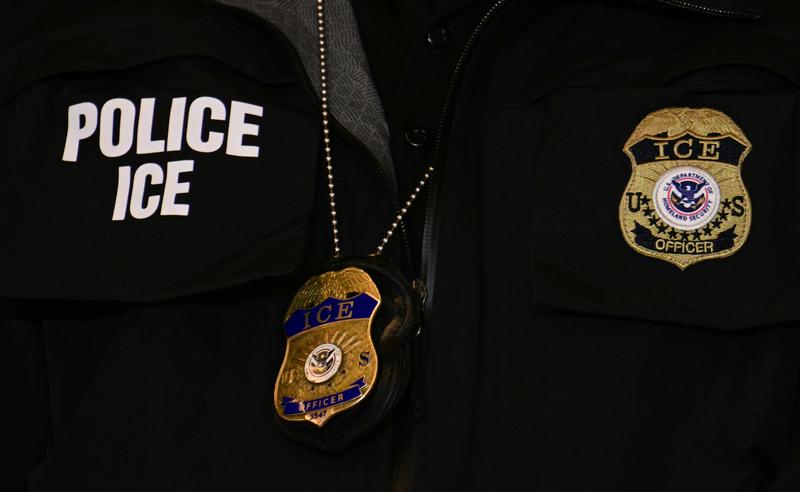
( Jim Watson - Pool / Getty Images )
Brian Lehrer: Brian Lehrer on WNYC. We'll talk about the Minnesota situation now in a national legal context. Across the country, of course, federal immigration agents are expanding enforcement in ways that are raising urgent legal questions, especially after, but also before federal agents killed Alex Pretti and, earlier, Renée Macklin Good in Minneapolis, incidents where video evidence contradicts the Trump administration's accounts.
Here's the breaking news this morning. This is a New York Times version. The headline is, Judge Orders ICE Chief to Appear in Court Over Potential Contempt. That's ICE's acting director, Todd Lyons. The Times article says, "In a remarkable display of frustration, the chief federal judge in Minnesota ordered the head of US Immigration and Customs Enforcement (ICE) to appear in court on Friday to explain why he should not be held in contempt for violating court orders arising from the Trump administration's aggressive immigration crackdown in the state."
"It says in a brief ruling issued, the judge, Patrick J. Schiltz, of Federal District Court in Minnesota, said he recognized that ordering ICE's acting director, Todd Lyons, to personally defend himself in court was 'an extraordinary step,' but Judge Schiltz, who was appointed by President George W. Bush, said it was necessary because 'the extent of ICE's violation of court orders is likewise extraordinary.'"
With that, we welcome Michelle Hackman, immigration policy reporter at The Wall Street Journal, who's going to unpack this and some of the other legal issues at play and their implications. Michelle, thanks so much for joining us today. I know you just got off a plane, so thank you for rushing right out into the waiting area and picking up your phone and keeping this appointment. Welcome to WNYC.
Michelle Hackman: Of course. Thank you for having me.
Brian Lehrer: Would you start with that breaking news and give us your analysis of that? I know you saw it as well as me reading it now.
Michelle Hackman: Yes, absolutely. As you said, the chief judge in Minnesota, the chief federal judge, has ordered Todd Lyons, who's the acting director of ICE, to come actually personally testify about ICE's operations in Minnesota. This is after multiple lawsuits filed by the city of Minneapolis, the state of Minnesota, echoing other similar lawsuits filed by Chicago, Los Angeles, about ICE and Border Patrol operations in those areas that allege all sorts of things that basically ICE and Border Patrol have been doing these, what they describe as at-large operations. Basically, these broad street sweeps where they're using profiling to various profiling tactics to make broad sweeping arrests. That's at the core of these legal issues. Then, of course, you have all these statements by ICE, by Border Patrol, and by Homeland Security Secretary Kristi Noem that directly contradict what you and I have seen in videos.
Brian Lehrer: Right. Where this becomes, I think, even a larger rule-of-law issue, people say we will have crossed even another threshold when the Trump administration starts openly defying court orders, another step into authoritarianism. The judge said he was ordering Todd Lyons to appear personally because "the extent of ICE's violation of court orders is likewise extraordinary. Can you add any specifics to that, ICE violating actual court orders?
Michelle Hackman: Yes, I haven't read the judge's entire order yet, so I don't know exactly which ones he's referring to. There have been numerous cases of judges ordering ICE and Border Patrol to stop using specific aggressive tactics against protesters, for example, throwing tear gas canisters or pepper bullets at them. They have directly ignored those orders in the past. For example, they are now performing warrantless arrests on people's homes, breaking down doors, which is something ICE has never done. That has now become a legal issue, so I think all of this is going to come up.
Brian Lehrer: Listeners, we can take some phone calls for our guest, Michelle Hackman, immigration policy reporter at The Wall Street Journal, on some of the legal questions in play here right now, 212-433-WNYC, 212-433-9692, if you have a comment, a story, or a question. I want to turn to another major point of legal contention, and I think you were just touching on it. ICE and Department of Homeland Security generally have been using so-called "administrative warrants" to justify certain arrests and enforcement actions, including at homes. What is an administrative warrant, legally, and how is it different from a warrant signed by a judge?
Michelle Hackman: Absolutely. An administrative warrant is basically a piece of paper that ICE or another similar agency produces that says, "We have reason to believe that this person is in the country illegally, and also that they live at this address," for example. That gives their own officers marching orders to go after that person, but it's really important. I'm sure many of your listeners know that we and undocumented immigrants alike have basic rights under the Fourth Amendment of the Constitution against unreasonable search and seizure.
One of those longstanding rights has been that officers or agents can't break into our homes unless a judge, an independent judge, has reviewed the evidence and decided there's no other way. ICE has decided unilaterally, ICE and DHS. By the way, they did so privately. They wrote a secret legal memo that they didn't even share widely in their own agency that says, "Actually, you don't need an independent judge's signature in these certain cases where people have a deportation order. No other way to get them. Just go ahead and break down their door."
Brian Lehrer: Yes, and there are reports that orders or memos from the Department of Homeland Security are giving ICE and other federal agents broader leeway to enter homes without judicial warrants during enforcement operations. One of the areas in which this raises concerns is Fourth Amendment concerns. No search or seizure without a warrant. Is that the same as or an additional justification that the government is using to what we just discussed?
Michelle Hackman: The government, I think, is actually pretty aware that what it's doing is a potential Fourth Amendment violation, which, to be frank with you, is why they haven't been forthcoming about it, which is why they've been doing it in secret, and for the last six months running a secret pilot program where they do it in only very narrow circumstances. The reason this even became public was because they started using it more broadly in this massive operation in Minnesota.
Advocates noticed. There was a situation with a Liberian man where he is here illegally and has an old deportation order, but is married to a US citizen, has a US citizen child, has no criminal history, and agents went in, in an extremely aggressive way with a battering ram, knocked down his door, basically seized him in front of his child and wife. That's basically how this came to light.
Brian Lehrer: Let's take a phone call from a listener who has a legal question for you. Nick in Brooklyn, you're on WNYC. Hello.
Nick: Hi. Hi, yes, I have a legal question about the people who murdered Alex Pretti. They were not ICE, as it turns out. They were Customs and Border Patrol, although they look very much like ICE, they're masked, and all that. It's my understanding that Customs and Border Patrol are only allowed to enforce the law within 100 miles of a border. This event took place 430 miles or so from a border. What were they doing there, and how is that legal?
Brian Lehrer: Nick, thank you very much. I'll just note that the term "murder" is a legal term, and that hasn't been adjudicated yet. To Nick's question about their authority and the difference in this case between ICE and CBB, Customs and Border Patrol, Michelle?
Michelle Hackman: That's a great question, Nick. You're right that it was a Border Patrol agent technically, even though ICE and Border Patrol have been working hand in hand in Minnesota and elsewhere around the country. Border Patrol agents technically do have the ability to operate around the country. They just have enhanced authority within 100 miles of borders.
By the way, border is defined very broadly. You and I think of it as the southern border, but it also includes the Pacific and Atlantic coasts. That includes the northern borders. It even includes 100 miles from, say, Lake Michigan. It's possible that if you draw the map carefully that Minneapolis actually is within that 100-mile zone. Either way, technically, they did have the right to be there. It's a separate question whether they can be held accountable for this killing.
Brian Lehrer: Listener writes, "Please ask your guest about the Eighth Circuit Court ruling yesterday, permitting ICE to use force at will on protesters they perceive as impeding or obstructing their operations." First, if you're familiar with this, is that an accurate characterization of that ruling?
Michelle Hackman: [chuckles] Brian, there have been so many rulings, I think. I don't know exactly which one the listener is talking about. [chuckles]
Brian Lehrer: I always respect a guest who can say I don't know when they don't know, instead of trying to fake it. We'll look that up and try to give the listeners some background on that because I'm not sure about it either. You've written about the rules governing federal officers and the rights of bystanders who witness these operations. What are people legally allowed to do if they see ICE making an arrest or conducting an operation in public? What protections do bystanders actually have?
Michelle Hackman: Absolutely. Bystanders clearly have First Amendment rights, and that includes filming officers. That includes getting up close and personal with them, filming them. Even some level of obstruction people believe is protected under the First Amendment. What is less clear is what happens if you actually interfere with an ICE operation, if you try to stop someone from making an arrest. That's where it gets into a gray area. Frankly, I think legal experts that try to give people a straightforward answer are not being honest because the law is changing so quickly.
Brian Lehrer: Here is another text, "Please ask your guest to discuss the possibility of accessory criminal liability for Secretary Noem, Vice President Vance, Stephen Miller, and even Trump himself. I guess that's in the scenario where the agent who shot Alex Pretti would be held criminally accountable for that. We do know that some of those people, Noem, and Stephen Miller certainly told lies about what Alex Pretti was up to. Unless they were so grossly misinformed, they didn't realize they were telling lies, then somebody lied to them. Any thought about how far up the chain criminal liability could go? Maybe from the standpoint of a cover-up for those comments or anything else?
Michelle Hackman: Yes. So far, those specific people haven't been named in lawsuits, or it's not like any state charges have been brought against those people, but it is possible. I'm thinking of another famous case where senior officials were attempted to be held accountable in the case of family separations. Some of these people like Kirstjen Nielsen, the old DHS secretary in the first Trump administration, were forced to testify in court, but they were never ultimately-- I think people have this desire that people are sent to jail. Historically, we haven't really seen that happen, but who knows? Things could change, starting with this Friday, if the ICE director is forced to appear in court.
Brian Lehrer: What do you think would happen if the judge holds him in contempt?
Michelle Hackman: To be honest, I am not sure. I think that if that really happened, first of all, I think the Justice Department is going to fight tooth and nail to not have him appear in court. They've been fighting courts and the state at every turn. They've blocked any kind of state cooperation. It's not clear to me whether that appearance will even happen. If it does, I think that there's a long way toward any kind of contempt. Kristi Noem and several others have been basically implicated in an earlier incident with the prison in El Salvador, where they ordered planes to keep flying despite a court order. They have still not been held in contempt. That was in March.
Brian Lehrer: There were multiple court hearings yesterday as these legal battles unfolded. One tied to Minnesota's lawsuit seeking to stop the surge of federal immigration agents at all, and another involving a temporary restraining order aimed at preserving evidence in the Alex Pretti case. I want to ask you about that one, because this idea that the federal government is removing evidence from the scene of a killing, how unusual or against the law-- in terms of any scene of an investigation of a killing, not to mention a police involved shooting, how unusual or against the law is that, or what can you tell us about the sides in that lawsuit?
Michelle Hackman: Oh, I would say, I know it's an overused word, Brian, but it's pretty unprecedented. In the Alex Pretti case, the federal government, the Justice Department, actually filed something yesterday, saying that the state of Minnesota had no interest in the case, which just seems-- I don't know how you could argue that with a straight face, [chuckles] but it's clear.
In the case of Renée Good, the FBI just absolutely blocked the state of Minnesota and the city of Minneapolis police from even accessing that crime scene, which all but prevents them from filing any kind of charges because they don't have evidence to work with. I believe the state of Minnesota has said that they are trying to move ahead with charges anyway. In this case, it seems like the FBI is taking a similar stance. The judge yesterday basically ordered that the state of Minnesota should have access to that evidence, that the FBI is not allowed to destroy any of it.
Brian Lehrer: Here's something on that Eighth Circuit Court ruling yesterday that another listener was asking about. Per the news site, the Minnesota Reformer, a nonprofit news site in the state, "The US Eighth Circuit Court of Appeals temporarily blocked an injunction that prevented federal immigration officers from retaliating against demonstrators." There was a triple negative in that sentence. I think it means that the court ruling allows federal immigration officers to retaliate against demonstrators. Then the Minnesota Reformer goes on to say Fox is framing it as a Trump administration victory, "freeing ICE agents from Minnesota protest restrictions." One more time, Michelle. Is that a case that you are familiar with at any level?
Michelle Hackman: Yes. Yes, it is. [chuckles] Thank you for that refresher. Yes, this case has come up because of a lot of the things that we've seen happening in Minnesota, where ICE is pretty clearly interfering not just with people who are trying to get in their way, but people trying to film them. They're trying to snatch people's phones. They're taking retaliatory steps like, "If you film me, I'm going to take a picture of you and put you in our database," things like that. That's what the lawsuit was seeking to stop.
I want to say the law is really funny and tricky in this way, where, because the Eighth Circuit has allowed ICE to continue unrestrained, it doesn't mean that the Eighth Circuit or some other court is going to come back later and say, "Actually, what they did is illegal." That is still possible, but the important part is that for now, ICE is allowed to continue acting unrestrained.
Brian Lehrer: I will add one more thing from that story. The appeals process on that question is continuing, so that's not a final, definitive ruling, but it does allow ICE to continue what it's doing for now. One more call for you. Sharon in New Rochelle, you're on WNYC. Hi, Sharon.
Sharon: Good morning. Thank you so much for taking my call and for having this program. My understanding is that Kavanaugh is, in part, responsible for the Supreme Court or was very vocal about the Supreme Court decision to allow racial profiling. I wanted to understand better the basis of his decision. I want to sneak in one other quick question. Do undocumented workers not have the same rights as American as citizens? I'm so confused by that.
Brian Lehrer: In legal proceedings generally?
Sharon: No, in general, in any aspect of law in this country, do we have a two-tiered system of laws for people who are citizens or folks who are not citizens, undocumented, or visitors?
Brian Lehrer: Sharon, thank you. Can you take each of those briefly, Michelle, and then we're out of time?
Michelle Hackman: I can, yes. Let me try to take them really quickly in turn. Thank you for your smart questions, Sharon. You're right that Kavanaugh, in September, there was basically a similar operation as what we're seeing in Minnesota happening in Los Angeles, where they were using profiling tactics. A classic example that Greg Bovino gave is, "Do you look Hispanic, and do you also look terrified to see an ICE agent?" He claimed that was enough to create reasonable suspicion for an officer to stop you and ask to see your paperwork.
Brett Kavanaugh wrote in a concurrence to a decision. It wasn't even a decision basically that that made sense to him, that it obviously made sense that if you had strong reason to believe, based on certain characteristics, that someone might be here illegally, that you as an officer had the right to stop them and ask on the basis of him writing those words. Even though it doesn't fully have the force of law because it wasn't even a formal Supreme Court decision, ICE has really taken that as a green light. Advocates have been calling what they've been doing "Kavanaugh stops" for that reason. I'd urge you to google that phrase.
Your second question, do undocumented immigrants have the same rights as American citizens? Yes and no. They have the same basic constitutional rights to free speech, protections against unnecessary search and seizure. For example, in court proceedings, they are not guaranteed a lawyer the way you and I would be if we were charged with a crime. They also don't have the same work protections that we do.
It's actually okay in some cases for an employer to discriminate against someone who's here illegally, as opposed to hiring a US citizen or a US green card holder. We don't have enough time to get into it, but there's all sorts of case law curbing even their First Amendment rights, their Second Amendment rights if you're here illegally. It's less kosher for you to have a gun, for example.
Brian Lehrer: Michelle Hackman, immigration policy reporter at The Wall Street Journal, thank you very much for joining us today.
Michelle Hackman: Thank you.
Copyright © 2026 New York Public Radio. All rights reserved. Visit our website terms of use at www.wnyc.org for further information.
New York Public Radio transcripts are created on a rush deadline, often by contractors. This text may not be in its final form and may be updated or revised in the future. Accuracy and availability may vary. The authoritative record of New York Public Radio’s programming is the audio record.
