
Health News Roundup
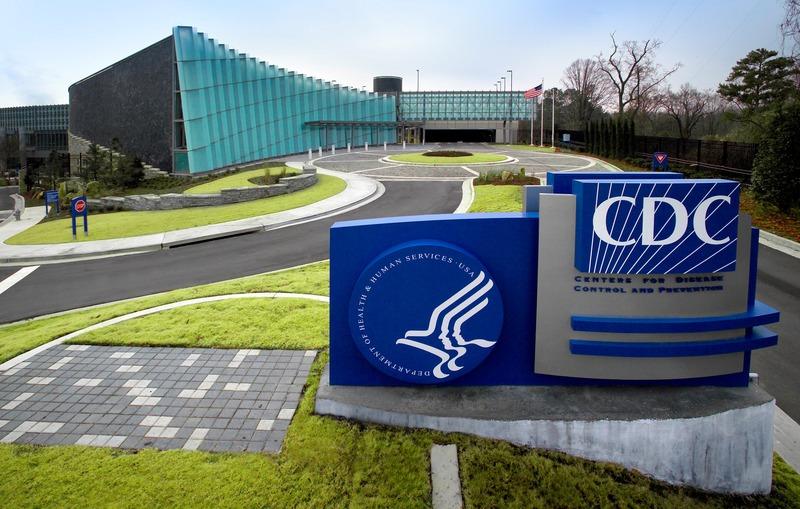
( James Gathany, Centers for Disease Control and Prevention / Wikimedia Commons )
[MUSIC]
David Furst: It's The Brian Lehrer Show on WNYC. I'm David Furst, WNYC's weekend edition host, filling in for Brian today. Happy Friday, everybody. Coming up on today's show, we're going to hear about an investigation into how interest rates are calculated during foreclosure proceedings in New York. It turns out that inconsistencies there means that, often, people who were already struggling, got less cash than they may have been owed after their foreclosed homes were sold at auctions, while the banks got more.
Plus, a former poet laureate of the United States, Tracy K. Smith will join us to talk about her new book, and it's not just a collection of poems. It is an invitation to invite poetry into our lives. She'll explain why she thinks anyone can read poetry, and how poems might help us with life. We're going to wrap up today's show with some advice on the do's and don'ts of holiday tipping.
Every year, this seems to trip people up, me included. How much do I give my super, my babysitter, my child's teachers, the people who deliver our packages? Is it more about the amount of cash, or is it the thought that counts? We will talk holiday season tipping at around 11:40 this morning. We start with a roundup of public health policy issues in the news, and new threats to cut funding for the SNAP food assistance program.
We're also going to get to the news surrounding the RFK Jr. agenda for the childhood vaccine schedule. The CDC Advisory Committee on Immunization Practices, which was handpicked by Health and Human Services Secretary Robert F. Kennedy, Jr. Has been set to vote on a new schedule for the hepatitis B vaccine. The vote was again delayed yesterday. It is now scheduled for today. We will have the latest.
Beyond that, Senate Democrats are looking to force a vote next week to extend expiring subsidies for the Affordable Care Act, so there is a lot to cover. Here with a roundup of the latest, we're joined by two reporters who have extensively covered these issues. Julie Rovner, chief Washington correspondent for KFF Health News, and host of the What the Health? podcast, and also, also Jude Joffe-Block, power, politics, and influence reporter for NPR. Welcome, both of you.
Julie Rovner: Thanks for having me.
Jude Joffe-Block: Thanks so much.
David Furst: Let's start with SNAP, the Supplemental Nutrition Assistance Program. This is federally funded. It's run at the state level. Nearly three million New Yorkers rely on SNAP for help with buying groceries. Many of them are still dealing with the impact of the two-week pause in food assistance during the government shutdown. The Trump administration is promising big changes to the program, claiming there is massive fraud in the system without providing evidence to back up those claims.
They're also threatening to withhold SNAP funds from states unless they turn data over to federal officials, including the immigration status and Social Security numbers of recipients, so Jude, there's a lot to deal with. What is the current state of the program? Republicans in Congress already cut federal funding for SNAP over the summer. Where does it stand right now?
Jude Joffe-Block: Yes, that's really important context that those were the deepest cuts that SNAP has faced, and so there's already changes coming that states are starting to implement with work eligibility requirements and things like that that are already affecting who can get SNAP. Now, we have a situation where for the past month really, Secretary of Agriculture Secretary Brooke Rollins has been really on a-- Going on TV, and making statements about all these problems she's alleging with the SNAP program.
She's alleged massive fraud, and is now threatening states that haven't turned over personal data that she will withhold administrative funding from those states, so this is 22 Democratic-led states that have so far refused to turn over personal data of SNAP recipients. What is important to note here is that a federal judge in San Francisco, when states actually-- Let me back up for a sec. States actually sued when USDA first requested this data, or demanded this data, I should say.
David Furst: This is a fresh demand here, right?
Jude Joffe-Block: Yes, this has happened before, so what had happened in the spring is that USDA initiated this demand. It's really an unprecedented data demand, I should say. This is asking for SNAP participants' names, Social Security numbers, birth dates, home addresses, household members, income information, immigration status. When people apply for SNAP, they give over a ton of information to the state that administers the program, and the SNAP statute, the federal SNAP statute has very strict rules about how that data can be disclosed, and for what purposes.
USDA requested this data from states. 28 mostly Republican-led states turned over the data, so far, 22 have not. Many of those joined a lawsuit suing USDA, because USDA said, "We're going to take away these administrative funds." Right now, the way it works is that, to administer SNAP, states share the bill with the federal government 50/50 to keep the lights on, on the program, answer the calls from people, make the payments, administer the program, so that's the funding that's at stake.
A federal judge in San Francisco in October agreed with the states and said, "The way that USDA has made this data demand is likely contrary to law," and put a preliminary injunction in place blocking USDA from demanding this data, and withholding these administrative funds. Heading into the Thanksgiving holiday, Secretary Rollins announced big changes would be coming to SNAP. She cited data that her agency has received so far from the 28 states that did turn over data, and suggested that data was-- Had given them reason to believe that there's widespread fraud in the program.
She's cited a number of statistics, but without giving the details, so it's really hard to unpack those statistics. She said, for example, a 186,000 deceased people are receiving SNAP benefits, and that's what they learned from this SNAP data, but it's really hard to unpack that, because there are reasons why there are delays in cutting off SNAP benefits when someone dies that, first, the state has to verify that they have passed.
They have to notify the household. They have to give the household an opportunity to respond, and if a household does receive SNAP benefits for somebody who's deceased, they do have to pay that money back, so that's an example of the kinds of statistics we're seeing USDA sharing and alleging fraud, but it's actually very hard to know what that number really means. Whether there is how much wrongdoing is involved with it, and whether any fraud was involved, really.
It's just a number that we need to know more detailed information to understand. So far, USDA hasn't given that information. Where things stand is that Rollins announced that big changes were coming. Thanksgiving came and went, and then instead of announcing big changes to SNAP, instead they've announced that they're doubling down on this data demand to Democratic-led 22 states that, so far, haven't given over the data, and that there's a court order currently blocking USDA from making this demand and withholding funds--
David Furst: There was supposed to be details about structural changes to the program that were going to be released this week, isn't that right, according to your report?
Jude Joffe-Block: Yes. I mean, that's what she had made public statements saying that there were going to be changes announced, but what we heard instead was reaffirming that these states need to give over the data.
David Furst: We're talking blue states here?
Jude Joffe-Block: Blue states, yes, exactly. What we know about how that's going is that the states that are currently under threat to lose their administrative funding, they have until Monday to respond, so we'll see how that shakes out. I mean, their position has been that this is an unlawful demand that they're concerned that this data is going to be used not in a way that's relevant to the SNAP program necessarily, and that it could be used for this massive data collection project that we've seen the Trump administration undergoing, really an unprecedented effort to collect personal data from Americans from various kinds of agencies and programs.
David Furst: I'd very much want to follow up with you in just a moment on what happens if they do cut off that funding after this deadline, but Julie, I wanted to ask you, we heard it just then Jude mentioned these work eligibility requirements and I see that KFF Health News has a new story out this week about those work eligibility requirements. What's happening with that?
Julie Rovner: That's right. I mean, SNAP has actually had work requirements before, but in the big budget bill that passed this summer, Congress expanded them to cover more people, and it's an awkward time. As Jude suggested, we're having this fight between the federal government and the states. The states have to figure out how to implement these requirements.
At the time, many of the same people who are working on SNAP work requirements are working on Medicaid work requirements, which have not traditionally existed in most states in the past. There are a lot of people who, it looks like, are going to fall between the cracks. In our story, there was a-- One of the people that they talked to was a young man who'd aged out of the foster care system, who's having trouble finding a job, so he's not going to be able to prove that he's been working, because he can't find work, and is afraid of losing his SNAP benefits.
David Furst: How many people are going to be falling through the cracks already at this point when we're talking about people still recovering from that two-week delay in funds, and still trying to financially figure out how to make up for that pause?
Julie Rovner: Well, the Congressional Budget Office estimates that another two and a half million people are going to fall off of SNAP in the next decade. We don't--[crosstalk]
David Furst: Because of changes that have already been made to the program?
Julie Rovner: Right. Because of the changes that were made this year, so we have that, and that was before the government shutdown that delayed benefits for so many people. There's all of this fighting about what people are going to have to do to reapply, or get recertified as still eligible. As I mentioned, in a lot of these states, it's the same people doing this eligibility who are trying to do the re eligibility for Medicaid and other programs, so we're loading all of these new administrative burdens on the states, and on the recipients, and we know that people often get kicked off of programs not they're no longer eligible, but because they cannot navigate the bureaucratic barriers.
David Furst: Okay, I want to come back to the demands to hand over recipient data, and the threat to withhold funds. Jude, the data they're asking for, this includes Social Security numbers, immigration status. What is the timeline? Brooke Rollins, Agriculture Secretary Brooke Rollins says they could block funds as early as next week. Is that right?
Jude Joffe-Block: That is what she said. I do think reading between the lines, though. When you look at what's actually the written demand to states, it doesn't quite line up with that, because they do say that they expect the data within 30 days. Again, there's some confusion here about exactly what this would look like, and I think that's been a theme, right? For SNAP households that depend on this benefit to pay groceries, there's just been a lot of confusion, a lot of headlines and announcements that are provoking a lot of worry and concern about the program.
Because coming out of this government shutdown, there was a lot of a big roller coaster that folks were on, waiting for those benefits to be restored, and so this seems to be a bit of the same, because we don't quite know how this is going to shake out. In terms of the timeline, we know that the states are going to respond in some way on Monday in some capacity, but again, they're supposed to have 30 days according to what's written in the document they were given, but I don't know what Secretary Rollins-- We'll have to wait and see how she responds to that next week.
David Furst: I mean, uncertainty when it comes to food is terrifying, so maybe you both want to respond to this, Jude and Julie, what happens? I will start with you, Jude. What happens in New York and New Jersey, and in other blue states that are not handing over this data if the federal government does indeed withhold SNAP funds?
Jude Joffe-Block: Yes, I think that's a really good question. I mean, I think the states, when they were fighting this in court a couple months ago, expressed a lot of concern to the judge in the case that it would infringe on their ability to administer the program, that this is the money they use to pay staff, and to answer the phone, and to make the funds go out to people.
Another issue that came up the last time is that the amount of money that USDA said they were going to withhold from states in this way, actually, exceeded what states had previously been reimbursed in the past, so they were-- Also, states were concerned that the amount of money that was going to be withheld was even more than they were expecting to be withheld, so I don't exactly know what the numbers would shake out this time.
Again, we still don't know if this will happen. I do think it's important for folks to realize, though, that this is different than during the shutdown when the actual funding for the SNAP program, the benefits that people received, were paused. Again, this is the administrative funds to run the program.
David Furst: Julie?
Julie Rovner: Yes. One of the things that we're seeing is as a result of the uncertainty here, is much more pressure being put on food pantries, and other state and local programs that try and help distribute food, address issues of hunger, and there are hungry people, as we know, in the United States. I think part of it is the uncertainty here, and nobody really knows where their next benefits are coming from, and it's really hard to plan. We've seen this in a number of programs across the Trump administration. It's part of the strategy here is to throw as much sand into the gears as possible, and basically stop things up.
David Furst: Just before we wrap up this portion of our discussion, I want to come back to the claims of fraud. Jude, in your reporting, you detail how Agriculture Secretary Brooke Rollins says that her agency uncovered "massive fraud" in the state recipient data that they demanded, the stuff that they have received. What details, if any, have they released to back up those claims?
Jude Joffe-Block: Yes, so far, it's been Secretary Rollins' appearances on media outlets where she's listed some statistics. The 186,000 people who are deceased, for example, she has a different figure, close to, I think, half a million people who have received benefits twice. Again, that's another number that's hard to unpack, because there could be legitimate reasons why people receive two payments in a month, like if there was an error in their payment, and they were owed a supplement.
State officials have rebutted these allegations in court filings to point out, "We don't know enough from these very broad numbers, what you're specifically referring to, to understand if there was wrongdoing here." There's also concern that there's a conflation between fraud committed by somebody seeking benefits, and a payment error that could be the fault of the state. It also could be an unintentional error which still should be corrected, but there's a difference between intentionally defrauding the program, and a payment error.
There's concern from food policy experts that this language suggests fraudulent behavior among SNAP participants that really is not borne out in data that is available to the public at this moment in time. Historically, this has not been a prevalent problem in the program, and so that's why there's really a demand on the agency right now to be forthcoming and transparent about the data and statistics that they are citing, and we're still waiting for those.
I mean, she also has made suggestions that, perhaps, these states that aren't turning over the data, are not being forthcoming, because there could be immigrants who are ineligible getting benefits, and that there's an innuendo in a lot of her statements suggesting that, but states are required to verify immigration status. Only certain categories of legally present non-citizens are eligible for SNAP benefits.
Undocumented immigrants are not eligible for SNAP benefits, so they have not released data suggesting that they have any numbers of this happening, but I will say that when it comes to the vulnerability of the data, one factor here are mixed status households, because there are US citizens who reside with undocumented people, and their data, their address, their home address, this could be-- Make members of their household vulnerable, so that is a concern with turning over this data if, perhaps, the motive here might be part of the administration's immigration enforcement goals.
David Furst: We've been talking about some of the latest issues surrounding the SNAP program with Julie Rovner, chief Washington correspondent for KFF Health News, and Jude-Joffe-Block, power, politics, influence reporter for NPR, and Jude, I know you have to go now, so thank you very much for joining us today.
Jude Joffe-Block: Oh, thanks so much for having me.
David Furst: Julie, you're going to stay with us, and up next, we're going to get to the RFK Jr. agenda for the childhood vaccine schedule, and the latest on the Affordable Care act, and Democratic efforts in the Senate to force a vote on a bill that would allow for a three-year extension of health insurance subsidies that are set to expire at the end of this year, so Julie, thank you for staying with us.
Julie Rovner: My pleasure.
David Furst: I'm David Furst, WNYC's weekend edition host, filling in for Brian today. We'll be right back after a break.
[music]
It's The Brian Lehrer show on WNYC. I'm David Furst in for Brian today. Yesterday, a federal vaccine advisory committee voted to delay a vote on whether newborns should still get the hepatitis B vaccine on the day that they're born. As the Associated Press reports, for decades, the government advised that all babies should be vaccinated against the liver infection right after birth.
The shots are widely considered to be a public health success, and credited with preventing thousands of illnesses, but the committee is considering changes to the recommendations. The committee, the CDC Advisory Committee on Immunization Practices, was appointed by Health and Human Services Secretary Robert F. Kennedy Jr. Famously, an anti-vaccine activist before he became the nation's top health official.
They are now scheduled to vote today on the recommendations. If we have any updates during this discussion, we will let you know when we are still here with Julie Rovner, chief Washington correspondent for KFF Health News, to walk us through some of this. Listeners, if you have a question about the potential changes to the recommendations for the hepatitis B vaccine for newborns, and the other changes potentially underfoot, give us a call or a text. 212-433-9692. That's 212-433-WNYC.
Julie, let's talk about yesterday's meeting. They delayed the vote, but they discussed the vaccine. This meeting was described as a day long chaotic affair. NPR's Morning Edition played this clip today. Here is committee member Dr. Joseph at the meeting, he was complaining about confusion about what they were even voting on, and how the wording of the proposal that they were voting on had changed several times.
Joseph Hibbeln: Trying to evaluate a moving target, and we don't even have a slide explicitly describing what questions we're supposed to answer.
David Furst: Former CDC Chief Medical Officer Dr. Debra Houry was on NPR's Morning Edition today as well. She resigned this summer in protest of Health Secretary Robert F. Kennedy Jr's changes at the agency. Here is how she characterized yesterday's meeting.
Debra Houry: It's disappointing and really concerning when lives are at stake, and this is about vaccines. This committee met in September, and couldn't get their act together, and postponed it to December, so surely, in over three months they should know what they're voting on, and the evidence, or they shouldn't be having these discussions.
David Furst: Julie, here we are. What did we learn from the committee meeting yesterday?
Julie Rovner: That this committee is still very divided and very confused, and that things are still happening very much at the last minute. That's what Dr. Houry was saying. They postponed this vote the last time they met. One would've thought they would have their ducks a little bit more in a row by now, but apparently not, and I'm trying to follow it with one ear even as we're talking. It looks like they're changing the language again on what they're going to vote on when it comes to the recommendation for a birth dose of the hepatitis B vaccine.
David Furst: Interesting. Yes, it sounds like one of the potential changes that they are considering would be that the vaccine would only be recommended for infants whose mothers have tested positive for hepatitis B, but a mother with the disease is not the only risk factor for a child. This disease can spread other ways as well. Can you talk about how that works, and what happens if an infant is exposed to hepatitis B?
Julie Rovner: First of all, I mean, it's important to say a couple of things. This vaccine has been given since the 1990s. It has reduced chronic hepatitis B, which can cause cancer, and other serious liver diseases by 99%. It's one of the amazingly successful public health interventions. Also, what these anti-vaccine activists are saying is, why are we giving a vaccine for a sexually transmitted disease to a baby who's one-day old?
Well, as you suggest, the answer is, that sexual transmission is not the only way that hepatitis B can be transmitted. It can be transmitted through household contact, through even things like toothbrushes, water glasses, so there are other ways that one can get hepatitis B, and it is a very devastating disease, very chronic, and so there's this-- Obviously, sexual transmission is one way, and particularly from pregnant mother to baby, and that's the origin of this, but the fact is that, you're protecting children from other ways of getting this disease by giving that dose very early on.
David Furst: My understanding is that, if you do get this disease as a child, as an infant, the outcome is very bad?
Julie Rovner: That's correct. That's right. When we're talking about vaccines, we're always talking about risks versus benefits. This is one of those, I won't say a no-brainer, but an almost no-brainer, where the benefits are enormous, because the potential of what this disease does is very bad, and the risks are quite minor in comparison. Often things are a closer call when we're talking about vaccines, because some vaccines have known side effects, and the benefit might not be all that great, but this seems to be, at least, according to most of the public health experts I've talked to over the years, this is one of those cases where the benefits are enormous, and the risks are relatively few.
David Furst: Julie, can you talk about the track record of success with this particular vaccine?
Julie Rovner: Yes. Well, it's been given to more than a billion babies, and as I say, it has reduced the incidence of chronic hepatitis B in children and teenagers by 99%.
David Furst: Okay, let's talk about this committee. Who are the appointees voting on these recommendations?
Julie Rovner: Well, traditionally, ACIP, the Advisory Committee on Immunization Practices, which reports to the head of the Centers for Disease Control and Prevention, has been made up of experts, researchers, doctors epidemiologists, people who study these things for a living, and they make their expert recommendations to the head of the CDC, who basically makes policy that can be overturned, or accepted by the Secretary of HHS.
What happened last summer was that RFK Jr. Who as you've noted is a longtime vaccine skeptic, fired all 17 members of the existing committee, and repopulated the committee with handpicked people of his choice, many of whom are either anti-vaccine, or vaccine skeptics, and that's basically what we're seeing happen now at these meetings, is that they're making a lot of claims without scientific evidence to back them up, that the experts at the CDC, who are normally a big part of this process, have been largely shut out.
It's just people arguing with each other. I have to say, much to the horror of a lot of organizations like the American Academy of Pediatrics, who are used to being following this, and giving their expert advice, and being part of this process, and now they've they have all basically been shut out.
David Furst: Here is, I want to play another clip. This is a former CDC Chief Medical Officer, Dr. Debra Houry once again from NPR's Morning Edition today talking about the committee members.
Debra Houry: When you look at the ACIP members, the Immunization Practice committee members, usually, they are pediatricians, people with vaccine science, pharmacologists. Many of these people don't have that deep science background, and when you looked at the presenters yesterday, what was unusual is, usually, you have CDC scientists really getting deep into the data. Instead you had people, including two that had a retracted paper on autism, presenting on vaccine safety, who aren't vaccine safety scientists.
David Furst: Julie, looking at the current committee, what qualifications do they have to decide on vaccine recommendations? Whether a vaccine should be given at birth versus at two months, or four months, or whether it should be recommended at all?
Julie Rovner: Well, not a lot, and that's the issue here, is that there a lot of these public health groups are saying that we can no longer trust the advice of the Advisory Committee on Immunization practices, including people like Senator Bill Cassidy, who is himself a liver specialist, and also the chairman of the Senate Health, Education, labor and Pensions Committee, and has basically and enabled RFK Jr. to become secretary, saying that he had been promised by the secretary, the now secretary, that he would not seek to change the vaccine schedule, which is something that he's obviously very much doing right now.
There's a lot of consternation in the public health community about who these people are, what qualifications they have, and how seriously anybody should continue to take the recommendations that they make?
David Furst: I want to get to what those recommendations could mean for us all in just a moment, but if you'd like to join this discussion, you can call or text us 212-433-9692. That's 212-433-WNYC. Julie, let me read you this text we just received, someone writing in saying, "Dogs cannot be vaccinated until they're about six weeks old. Yet we immunize our little babies the day they are born. There is absolutely no reason to immunize a baby whose mother is hepatitis B negative. A newborn baby is not going to get hepatitis B from a toothbrush or water glass." That's a perspective that we certainly hear a lot. Can you respond?
Julie Rovner: That's a perspective that many people are providing. I will only say that I am not a scientist, I'm not an epidemiologist, but I have-- This has been studied, and basically, as I say, it has a now 30-some-year history of being effective. We do-- Other vaccines are given at different times, because they have been studied, and that's the argument. One of the biggest fights that they've been having at this committee, both over this meeting, and over the previous meeting, is what scientific evidence do they have for changing what we know has worked?
David Furst: If the committee votes today to change the recommendations, I'm just limiting this right now to hepatitis B, but what does that mean? Could that limit access to vaccines?
Julie Rovner: That's a good question. There's been a fight about that. A lot of vaccines are paid for by a federal program called Vaccines for Children, and a lot of that which vaccines are paid for, depends on the recommendations of the CDC, which depend on the recommendations of the ACIP, so it's not entirely clear what this is going to mean for the hepatitis B vaccine, but that is one of the things that they have been arguing about.
David Furst: Will states that, perhaps, disagree with any new recommendations, be able to set their own standards?
Julie Rovner: We're already seeing that. We're seeing states say that, "We're going to make our own recommendations. We're going to use our own panel of experts." We've seen now groups of states band together. We've got a group on the west coast, and a group in the northeast that are saying, "We're going to do this as a group, because we can no longer trust the advice coming out of the CDC."
David Furst: It could be that they are voting right now, so we might--[chuckles]
Julie Rovner: That's what I'm seeing.
David Furst: [chuckles] If you see some information, Julie Rovner, let us know right away, and I will try to do the same as I keep one eye off to the side here. After the vote on hepatitis B, what does the committee turn to next?
Julie Rovner: Well, and this has been changing. I believe they're going to turn to a discussion of the broader childhood vaccine schedule, and something called adjuvants that basically are ingredients in vaccines that help stimulate the immune system, and therefore, make the vaccines work. There's been a lot of concern about aluminum, which is, again, all of these things have been studied relentlessly, and found to be safe, and yet, this is a committee that wants to relitigate a lot of the science that's been done without a lot of new science.
David Furst: Julie, I'm seeing right now, maybe you can respond to this, so far I only have this from the Associated Press that US vaccine advisors recommended ending long standing advice that all babies get a hepatitis B shot at birth.
Julie Rovner: Yes. Well, I'm talking to you, so I'm not watching, [chuckles] but I'm trusting the AP on this.
David Furst: Your thoughts, your response to that? Right now it looks like eight people voted "Yes" and it passed.
Julie Rovner: Well, we're not surprised, because, as I said, this is a handpicked panel from the vaccine skeptic Secretary of Health and Human Services. I should point out there is no head of the CDC right now. The Senate had approved Susan Minares last summer. She quit in, or was fired in August after she refused to rubber stamp the ACIP's new recommendations in advance before they even made them, and so the current acting head of the CDC is actually the deputy secretary of HHS named Jim O'Neill who's neither a doctor, nor a scientist, but it's going to be his job, I guess, at this point to approve, or not approve of these recommendations that are now being voted on by this committee.
David Furst: Julie, what are the implications for babies' health? We were talking about how states are setting their own recommendations, so I guess part of this question is, if people want the vaccine, is nothing going to change, or really getting down to it, what are the implications for babies' health, and for insurance coverage?
Julie Rovner: We don't know yet. That's the problem, and that's I think what a lot of people have been complaining about with this committee is what many see as a rush to judgment. A number of states have said that they're no longer going to use the CDC recommendations. They're going to do their own. One of the things that we're going to see is a splintering of public health, not just so much requirements, but practice as states decide on their own what they're going to do.
As you said, it's still unclear what this is going to mean for insurance coverage, what it's going to mean for the vaccines for the federal Vaccines for Children program, which pays for a majority of childhood vaccines in this country right now. There's just a lot that's unknown. This is the first step of what's going to play out, and we're going to have to see.
David Furst: Right. I think that's going to be the answer to a lot of this right now. We're going to have to see. We're speaking with Julie Rovner, chief Washington correspondent for KFF Health News, walking us through some of this. Very-- Oh, we lost the caller. We had a caller that was very much going to be asking a question about implications for insurance coverage. Very concerned about that angle of it, but we'll have to leave it, unless we can get the caller back on the line here. We'll have to see if we can come back to that call as soon as--
Julie Rovner: Well, I will say that the insurance industry has said that they're not planning to change any of the covered vaccines for at least a year, so that doesn't-- Not everybody is a member of that insurance industry group, so that doesn't guarantee anything, but certainly, the insurance industry, and the public health community are trying to separate themselves, if you will, from what they see as a rogue federal committee.
David Furst: Right. I think we have a summary of what the listener question was. It was how will insurance companies respond? Wouldn't it be in their interest to give infants' vaccines, so that they don't get sick, and potentially cost them more money later on?
Julie Rovner: Well, yes, and no. This is one of the ironies of the insurance industry. The insurance industry has been loathe to cover preventive care, because people change insurance, and so if the insurer pays for preventive care, and then the benefit goes to some other insurer, that's not really a help to their bottom line. It's been one of the conundrums of our fragmented healthcare system for a long time. In general, childhood vaccines have been covered, and there is every expectation that childhood vaccines will continue to be covered.
David Furst: Since RFK Jr. became health secretary, Julie, how many changes have we already seen, I guess, including what we're seeing today when it comes to vaccine schedules?
Julie Rovner: We've not seen a ton of policy changes because the first, he only replaced the ACIP, the members of this committee, and they've only had one meeting since then. This is the second one. They had one in September where they postponed the vote, because they were too busy fighting, so this is actually, I think, the first time this committee has voted.
What we have seen that RFK Jr. has done is, he's pushed out a lot of career personnel across the Department of Health and Human Services, at the CDC, at the Food and Drug Administration, at the NIH, a lot of people who've spent careers working, nonpartisan careers, careers who've spanned Republican and Democratic administrations, people basically just pushed out, because he believes that most of the healthcare industry is controlled by corporate interests, which, is not true down to the level that we're talking about, but there's been an enormous amount of cleaning house.
We've seen a reduction in personnel at HHS by something like 20%, and a lot of expertise, a lot of scientific expertise walk out the door, so I think the implications have yet to be recognized, but they're going to be far reaching.
David Furst: Yes, and just I wanted to get your sense on this, Julie, beyond any of these changes that we're seeing, and that we're going to see, what impact are we seeing in patient trust, and the entire doctor-patient relationship? How many more patients come in to see their pediatricians, and now question the vaccines that their child is scheduled to receive?
Julie Rovner: Well, anecdotally, from the doctors I've talked to, a lot more. I mean, there is this growing skepticism, and one should not be surprised by this, some of it is leftover from the fights during COVID, and some of it is left over from-- Some of it is due to, we now see very high government officials who are actively questioning what has been accepted science for generations now.
David Furst: I guess, I know a lot of your answers are, we're going to have to wait and see, but long term, what could the impact be when we're talking about this whole breaking apart of that relationship?
Julie Rovner: This is something we're seeing beyond even healthcare. It's this growing skepticism about expertise in general. Some of it is from social media, some of it is just the rise, how easy it is to spread conspiracy theories, the breakdown of accepted sources of information. I'm not just talking about news, but like, I'd say from the federal government. People no longer trust anybody, except their own instincts. I think it's going to take a long time to rebuild, and I think it's a societal problem that goes well beyond vaccines.
David Furst: All right, we're really putting you to work here today, Julie, and I still want to get to the latest on the Affordable Care Act, and efforts to extend health insurance subsidies, these ones that are set to expire. Julie, this is an issue that you have covered extensively. As your bio states, you spent 16 years as a health policy correspondent for NPR, where you helped lead the network's coverage of the passage, and implementation of the Affordable Care Act, so you are in deep on this one.
We're in the middle of an open enrollment period for 2026 coverage. There are these health insurance subsidies. They're set to expire at the end of this year. It was one of the main sticking points during the government shutdown. If they expire, and there's no extension, explain what that will do to the cost of this insurance?
Julie Rovner: It's confusing. When the Affordable Care Act was passed, there were a series of tax credits, subsidies, if you will, to help people afford the premiums because, basically, everybody else who gets health insurance, gets some kind of subsidy from the federal government, even if they don't know it. If you're on Medicare or Medicaid, obviously, the federal government is helping to pay for that.
If you have private health insurance through your employer, you don't have to pay tax on the value of that insurance. That's a huge tax break, and your employer gets to write it off as a business expense, which is another huge tax break. Basically, the only people who didn't get help from the federal government were people who bought their own insurance, so that's what the Affordable Care Act did. It gave some help to that.
As it turned out, insurance was so expensive that it wasn't enough help for a lot of people. During COVID, when there was a big concern, obviously, about people not having insurance, and being afraid to present to a doctor, or an emergency room, or a hospital if they were sick with something that was contagious, Congress increased that help, and it turned out that making that help more generous, doubled the number of people who were then able to get health insurance. There were about 12 million people on the Affordable Care Act before these expanded subsidies, and now there's about 24 million people, so the Democrat--[crosstalk]
David Furst: Those expanded COVID subsidies, those are the ones that we're talking about that are about to expire.
Julie Rovner: Yes, and that's where I was getting to. Right, so those expanded subsidies were temporary, the Republicans will say, because the Democrats always intended them to be temporary. The Democrats will say, because they couldn't afford to make them permanent, but they were hoping they could, so they scheduled them to expire at the end of 2025, which is now in 25 days, 26 days, I guess.
If they expire, out of pocket payments are going to go up dramatically for many people, for most of the people who get help from the Affordable Care Act. People are seeing that because open enrollment began November 1st. A lot of people sat down over the Thanksgiving weekend to look at their coverage for next year, and have gotten this sticker shock of, "Oh my goodness, I'm going to be expected to pay three or four, sometimes five times more than I am paying now." Now, it's not because the premiums have gone up that much. It's because the federal help is going to go down that much. It's a little bit confusing.
David Furst: Right, and the other side of that, is then will people drop coverage, because they decide they can't afford it?
Julie Rovner: We're already hearing from people who say they can't afford it, and they will drop coverage. In some cases, they can go to a less generous level of coverage, but in some cases, they can't even afford that. We are hearing from people who say, "I'm paying $400 a month now, which is a lot for me, but it's going to go up to $1,200 a month, and that's as much as my mortgage payment." The Congressional Budget Office estimates about four million people are going to end up dropping their coverage, because of the expiration of these expanded federal subsidies.
David Furst: Could insurance go up for other people as well, people who don't get insurance through ACA marketplace?
Julie Rovner: Yes, insurance is already going up. Insurance is already going up more in the ACA marketplaces, because insurers assumed that people would drop coverage, and that those people who no longer have coverage, do still have health care needs, and they do still end up getting health care, and it's often care that they can't pay for, and so the cost of that is passed along to others, so the more people there are without insurance, the more everyone else's bill eventually goes up.
David Furst: I want to very briefly here focus on the latest efforts to extend the subsidies. Yesterday, on The Brian Lehrer Show, New Jersey Senator Cory Booker was a guest, and Brian asked him about how the deal that ended the shutdown included this promise by Majority Leader John Thune for a vote on the subsidies, and Brian asked Senator Booker about the timing for that vote.
Cory Booker: It looks like it's going to be next week. It's going to be a very straight up or down. Do you support extending the subsidies or not? I think it's going to be a long shot whether we get Republican support, but we're going to push it anyway, and put people on notice about who is fighting to lower your health care costs, and who is not. For New Jersey, hundreds of thousands of New Jerseyans are in the balance right now.
A family that's making about $130,000 a year could see their health care premiums go up $11,000. This is catastrophic, and it's on the beginning of a health care tsunami, because at the beginning of 2026, this cliff would happen.
David Furst: Well, is Senator Booker right that this vote is essentially guaranteed to fail? If so, what's next?
Julie Rovner: Well, there's still some talk. There are a lot of Republicans who are concerned [chuckles] about these subsidies going away, because a lot of the increase in people who bought insurance when it was made more affordable, came from Republican voter types. It came from people in very red states like Florida and Texas and Georgia, and they came from people in small businesses, and farmers and ranchers, and people who don't always tend to vote Democratic, so these are a lot of Republican voters here who are seeing this sticker shock, and there are still some efforts underway. I saw talk of one this morning from Senator Susan Collins of Maine to limit, to perhaps extend the subsidies, but limit how big they are.
David Furst: Some extension?
Julie Rovner: I don't if this is going to happen. Democrats desperately want this vote, as Senator Booker said, because they want to make sure that the public knows that if these costs go up, it's not because the Democrats didn't try to extend them.
David Furst: So that, at the very least, even if it fails, it's on the record?
Julie Rovner: That's right. I think this is not going to be the end of this debate. I think this is going to-- If these subsidies expire as expected, I think this fight's going to extend into next year.
David Furst: Well, Julie Rovner, chief Washington correspondent for KFF Health News, and host of the What the Health? podcast, thank you for spending so much time with us. I know you have to go and check in on that vote now.
Julie Rovner: I do. Thank you so much for having me.
David Furst: Thank you, Julie.
Copyright © 2025 New York Public Radio. All rights reserved. Visit our website terms of use at www.wnyc.org for further information.
New York Public Radio transcripts are created on a rush deadline, often by contractors. This text may not be in its final form and may be updated or revised in the future. Accuracy and availability may vary. The authoritative record of New York Public Radio’s programming is the audio record.