
Grandparenting as Paid Labor?
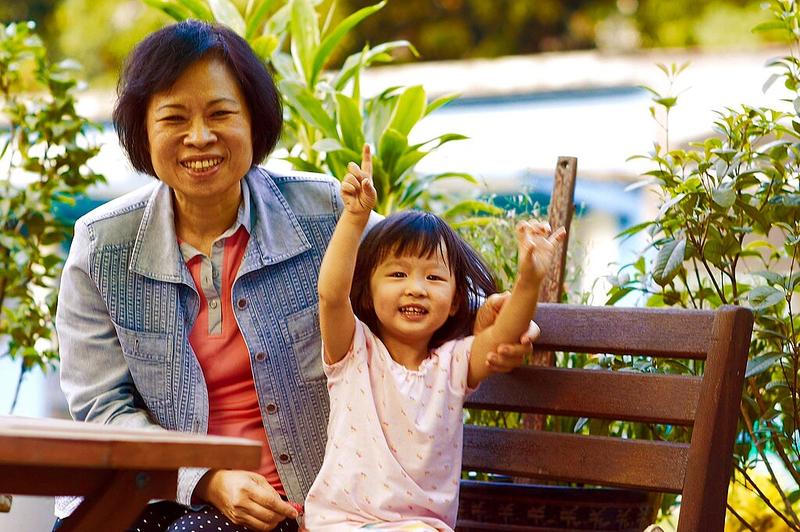

Title: Grandparenting as Paid Labor?
[MUSIC]
Brian Lehrer: Brian Lehrer on WNYC. Now we'll look at one solution to the childcare affordability crisis that might seem obvious to people living outside the United States, in many cases. Pay grandparents. What? Yes, pay grandparents. Marina Lopes, author of Please Yell at My Kids, a guide for Americans seeking to learn from parenting cultures around the world, has a new piece in The Atlantic that suggests that Americans looking for affordable, high-quality childcare should consider paying their parents to watch their kids, using Singapore as an example, where this model is not only successful, but extremely popular. Marina joins us now to make her case and maybe take some of your stories or questions. Marina, thanks for coming on for this. Welcome to WNYC.
Marina Lopes: Thank you so much for having me on, Brian.
Brian Lehrer: Listeners, we can open up the phones for you right away. Do you already have any form of this kind of arrangement in your family? Do you pay grandparents to watch your kids, or are you a grandparent who receives a stipend from your adult child in exchange for childcare? 212-433-WNYC, 212-433-9692. What are the terms and conditions of your agreement? If you want to shout them out at all, how much are you paying, or are you paid, how often? What kind of caretaking is involved? 212-433-9692. Marina, I guess we should say what a lot of people are probably thinking first. This would depend, at very least, on the relative financial status of the grandparents compared to the parents, right?
Marina Lopes: In Singapore, that's actually not the case. I'm a foreign correspondent. I moved to Singapore in 2021, and I have two young kids. I would go pick my kids up at school pickup. I noticed something was off. I was the only mom surrounded by grandparents. These grandparents were showing up at ballet, they were showing up at soccer. I learned that grandparenting is a very serious job in Singapore, so serious that it's often underwritten with a financial allowance. Most Singaporean adults give their parents a monthly allowance of around 10% of their income. It doesn't matter what financial situation they're in, and it doesn't really matter what financial situation the grandparents are in.
Of course, if they need more money and the children are able to help, they will give more money, but regardless of their financial situation, this is given as a sign of respect. What it does is it reinforces a system of reciprocal caregiving that I think has really powerful lessons for us here in America, where we're facing an unprecedented childcare crisis. You have grandparents who offer care for their grandkids in their 60s and are repaid with care in their 80s. The financial statement also makes it so that they are able to show up for their grandkids every week. They are able to take on this extra job of caregiving and provide them with a kind of care that is really difficult to find, flexible, quality, and affordable.
Brian Lehrer: When you describe yourself in that instance as being the only parent who is picking up a kid, everybody else is a grandparent. What about the many older people who want to remain in the workforce and may not be available at three o'clock or whenever pickup is?
Marina Lopes: Absolutely. Singaporeans would say that this is not a transactional relationship. The allowance doesn't depend on the amount of hours that your parent is putting in taking care of their grandkids. However, I found that even grandparents who have jobs, who want to stay in the workforce, find ways of helping. Whether it's helping with homework after school once they're home from their jobs, helping to take the kids on the weekends so that the parents can have a break. They try to fill in as many hours as they possibly can, contributing to the household by taking care of the grandchildren.
Brian Lehrer: Does the Singaporean government provide financial assistance to families for childcare? Because that's the debate in New York City and elsewhere in the United States right now.
Marina Lopes: Absolutely. The government does back this form of caregiving with significant financial support. Families who want to live within two and a half miles of a grandparent qualify for a housing grant, and that's worth $15,000. Working mothers who rely on grandparents or other family members to help care for their children are also eligible for over $2,000 a year in tax relief. They're underwriting this relationship and this kind of familial support with government help, and that makes a huge difference for families who might not be able to afford to move closer to their grandkids or for adults who wish that they were able to care for both aging parents and children closer together.
Brian Lehrer: Here's a grandparent whose interest I think you have piqued. Sharon in Brooklyn, you're on WNYC. Hello.
Sharon: Hey, Brian, love you. I am a grandparent, and I take care of my granddaughter. My daughter is a principal in the middle school, and I am committed to helping my daughter by taking care of her child. It's a win-win situation. It keeps me fit, alert. I also feel that my daughter could not make it. I mean, women cannot work without childcare, especially after school. They just can't get there to get the child. I think it's a win-win situation because I love taking care of my granddaughter, and she loves me taking care of her, but it's costly. I have to do meals, I have to do pick up and drop off. That's transportation cost.
You know what? When the government realizes that women need childcare assistance to begin with, then we'll have a thriving community.
Brian Lehrer: You're putting it on the government, but are you now going to go home to your daughter and say, "You know, I heard this woman, Marina Lopes, on The Brian Lehrer Show, and she said, maybe you should be paying me to take care of the grandkids in helping--"
Sharon: Well, see, my daughter pays me in various ways. She knows she couldn't make it without me. I don't require monetary. I just tell her when there's a need, "When I need to go food shopping, you need to go with me. I'm feeding the child, okay?" She takes care of me, and I take care of her. I don't think it's about the money, Brian. It's about a legacy of care that we need in our children, that it's falling by the wayside, and we're paying for it. The guns, the violence, the kids are running wild after school. They need somewhere to soft-land.
Brian Lehrer: Very eloquent, Sharon. Thank you very much. Marina, what are you thinking, listening to that call?
Marina Lopes: That's a beautiful sentiment, Sharon, and I think a lot of people in Singapore would echo that as well. It is about the legacy. What we find is exactly what you said. The benefits here, they ripple out throughout the family. Of course, parents get reliable, flexible, affordable childcare. Children get love and a closer bond with their grandparents, who they might not see as often. As you mentioned, grandparents are able to stay fit, use their minds, stay active, and of course, get to know their grandchildren.
Now, if you're not comfortable with a monthly direct deposit in your bank account, if that feels like too much of a financial transaction in a relationship that's supposed to be more about love, I completely recommend what Sharon said. Creating a system where you can ask for help when you need it, whether that's asking for your daughter to accompany you to a medical appointment, asking for help with major purchases. I've seen people in Singapore do this as well. Asking to go along on vacation, asking your kids to pay for your vacation to go along with them. Things like that can make a difference.
Now, I have seen financial stipends in the way that it is done in Singapore work really well for families where grandparents don't live close to, but wish they did. I interview a family in my article in Seattle. Their mother was living in Kentucky and wanted to live close to the family, but just couldn't afford housing prices in Seattle. They decided that $1,000 a month was a stipend that would help facilitate that move and help support the grandparents while they did childcare. The other thing that I just want to mention is that we are already paying other people a lot of money to care for our children.
Half of American families pay 20% of their income to child care, and that's when they can find spots available, when they can find quality childcare to send their kids to. If you are one of those families, instead of spending 20% of your income to send your child to a childcare that might be overcrowded or not even have availability, giving some of that money to a family member is a great way to ensure that they are taken care of, and that your child is receiving the best quality care. Of course, this doesn't work for all families, but it is a solution that I think is worth considering here in the US.
Brian Lehrer: Another grandparent calling in. Cheryl in Pittstown, in Jersey. You're on WNYC. Hi, Cheryl.
Cheryl: Hi, Brian. Long time, first time. Thanks for taking my call.
Brian Lehrer: Glad you're on.
Cheryl: I moved from California to the East Coast 12 years ago when my first grandson was about to be born. My daughter is my only daughter, and I didn't want to be on the other coast from her when she and her husband were starting their family, and I have been here ever since. I played a big role all along, especially when the second child came along, very close to the first one. I had been working the first year that I came. I took early retirement so that I could be close by and help my daughter with two babies just 16 months apart. That's where we've been, and I ended up-- they were living in Brooklyn at the time.
I ended up when I retired, moving to Brooklyn, and I really relate to how there could be some financial assistance. My interest was piqued when I heard your guest describe how there were subsidies for housing in some of these situations, because that was my biggest challenge. I suddenly went on retirement, to my Social Security only, and I was paying market rent in Brooklyn. My son-in-law and daughter did help to subsidize me until I could get into low-income housing, which I did eventually.
Brian Lehrer: So there's--
Cheryl: We are now out in New Jersey-- Sorry, go ahead.
Brian Lehrer: No, I was just going to say, there's you-- and I have to go, Cheryl, because we have a few more minutes in the segment and I want to get at least one more caller in.
Cheryl: Of course.
Brian Lehrer: It's a wonderful story of, again, I guess, kind of like the first caller's story, Marina, that it's different for every family, right? There was a particular financial arrangement, helping her with housing until she was able to get her own feet on the ground. This grandma who moved across country to be with her daughter and grandchild.
Marina Lopes: Exactly. I think a lot of this labor is already happening. We know already that more than 40% of grandmas see their grandkids weekly. A lot of that time involves childcare. I think making that labor visible and acknowledging that it is work, taking care of two young kids is a lot of work. Retiring early to do it comes at a financial cost. If we can acknowledge that as a society, and individually in our families, figure out the best way to compensate grandparents for the time that they spend with their grandkids, it helps make this system more sustainable.
This is what Singapore understands. This is a system that can work for a lot of families if you put in the financial underpinnings to make it sustainable.
Brian Lehrer: I was going to take one more call, but I'm going to take everybody behind the scenes and say, we just had a little crash of our phone system, which is too bad. Melissa Murray, if you're listening, please call us right back. I'm going to try to characterize your question to our guest if you can't get through. We had, what I would call, a local dignitary calling in. You may be familiar with the NYU family law professor Melissa Murray, who's been a guest on this show multiple times. She was listening, Marina, and she was calling in.
I hope I'm characterizing her fairly to kind of push back and say, the problem with this is that it seems to either institutionalize or at least reinforce the idea of family care, detached from outside the nuclear family. That there should be social supports, there should be government supports. It's kind of the wrong emphasis, again, I hope I'm characterizing her accurately, to be lauding putting this on the family.
Marina Lopes: I would say that this definitely should not be on the backs of families alone. We are not meant to do this by ourselves. However, the reality on the ground is that Americans are relying on their families for help. We need more help than we're getting. There is a childcare crisis in play today. For a lot of parents, the choice is not between sending their kids to a subsidized daycare or a free government program or keeping them home. The choice is between quitting their jobs or sending them to a grandparent for help, right? A lot of families do not have a plethora of options here when it comes to childcare.
I think acknowledging that is part of the solution. We need to see what the situation is on the ground, subsidize what we can to help families that have these types of arrangements in place, and then, of course, build up a public option for families that don't have grandparents close by that can't rely on their families. This isn't a solution for everybody, but it does address a lot of the problems that are already happening in the current situation on the ground today.
Brian Lehrer: As a last question, let me go to the culture of depending on nuclear families, which I think what Professor Murray was going to critique, versus or maybe in addition to what you write about in the article, which probably goes to the deepest difference in this context between American culture and Singaporean culture, which was the example you were using, what you call an entrenched culture there of filial piety. What does that mean?
Marina Lopes: In Singapore, children view the relationship between their parents as a relationship of honor. Grandparents have a place of honor in society. Part of the way that you honor their role is through these financial allowances. You are showing your gratitude for the people that raised you by making sure that they're provided for financially, making sure that they also get to go on vacation, making sure that they can afford their appliances, et cetera. This is something that is so entrenched in Singaporean culture that it is nearly universal there. So many grandparents get these allowances.
Of course, in the US, one of the things that I love about American culture is our emphasis on individualism and independence. I think that can work really well until you have children. We see that this system of depending solely on the nuclear family for support once you have kids is not working. Parents are burnt out, they are cash-strapped, they are having fewer children. If you want to create an environment where you are supporting parents, part of that is going to require a change in culture so that parents can also feel like they can rely on their extended families, in addition, as I mentioned, to government support.
Turning to your extended family for help is not an ambition of failure. It is the way that children have been raised for generations. We were never meant to do this alone. We were always meant to have a village. I really encourage parents to recreate that village, whether it's with biological family, if that's available to you, whether it's with chosen family, or whether you are able to string together public support for raising your children.
Brian Lehrer: One more piece of pushback from a listener, and then we're out of time. Listener texts, "I find this conversation kind of frustrating. Who is this article for? I find it hard to believe that people aren't figuring out any way how to find care for kids, including from family members."
Marina Lopes: They are finding care for kids from family members, but crucially, that care is often invisible financially and in terms of acknowledgment. This is for people who either are considering asking grandparents for help, are already asking grandparents for help, but have not thought of the financial element that might support this kind of framework. You need to be able to make sure that the grandparents in your life are able to do this sustainably. Part of that involves making this care visible. The financial piece is something that I think needs to be included in the conversation here in the US.
Brian Lehrer: We leave it there with Marina Lopes, author of Please Yell at My Kids. We should talk about that concept to say to other people, "Please yell at my kids," on another visit, but her new piece in The Atlantic suggests that Americans looking for affordable, high-quality childcare should consider paying their parents to watch their kids. Marina, thanks so much.
Marina Lopes: Thank you.
Copyright © 2025 New York Public Radio. All rights reserved. Visit our website terms of use at www.wnyc.org for further information.
New York Public Radio transcripts are created on a rush deadline, often by contractors. This text may not be in its final form and may be updated or revised in the future. Accuracy and availability may vary. The authoritative record of New York Public Radio’s programming is the audio record.
