
Gov. Mikie Sherrill Takes the Reins
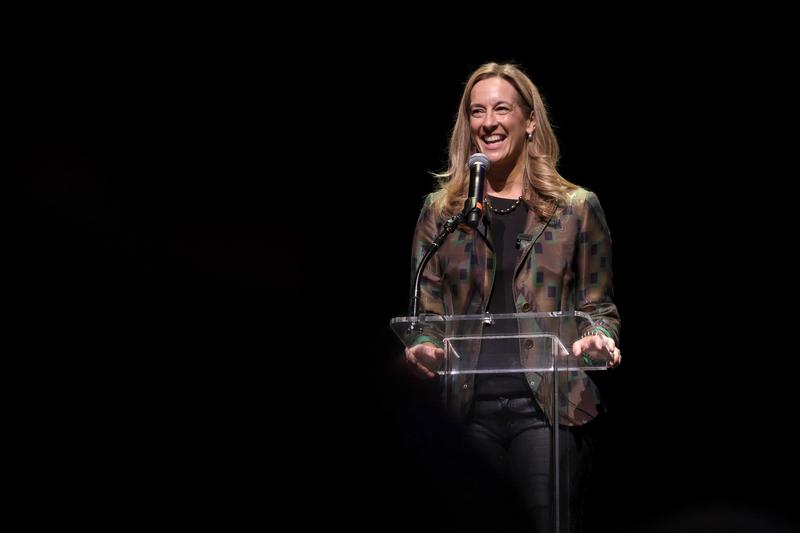
( Michael Loccisano / Getty Images )
Title: Gov. Mikie Sherrill Takes the Reins
[MUSIC]
Brian: It's The Brian Lehrer Show on WNYC. Good morning, everyone. Thanks to Brigid and Tiffany and Amina for filling in in recent days. My mom has been going through some health things that are demanding more of my time to support her and my dad right now, and of course, that has to be a priority. It's good to be back today, but I'll just tell you my attendance is likely to be inconsistent for a period of time going forward, just so you all know that. Thank you for understanding.
Of course, my colleagues are fabulous hosts, so please be nice to them on any day that I'm out. Thank you in advance for that. On to today. Did you hear any of Mikie Sherrill's inaugural address as governor of New Jersey yesterday? For one thing, she did not give it in the state capital, Trenton, which she highlighted with a reference to the Bible.
Gov. Mikie Sherrill: Much like Noah's Ark provided safety for the righteous, it is appropriate that today we are in Newark. We are here today to create a new haven, a new ark to open the door for those who thirst for liberty and prosperity, for everyone who seeks to strengthen our democracy, strengthen our economy, and strengthen our families.
Brian: All right. Now, this transition from Phil Murphy to Mikie Sherrill is a big deal for New Jersey, of course, but also nationally because of a few things. There was her day one state of emergency executive orders on utility bills as part of the speech. These could succeed or fail as a national model since rising utility bills are, as many of you know personally, an issue everywhere. We'll talk about that. There's also the state's relationship with the Trump administration, of course. Did you hear Trump wants to buy Atlantic City? No, I'm kidding. That's a joke. He already tried that in his old life, but Sherrill took it to Trump in several ways in the speech, ways like this.
Gov. Mikie Sherrill: We refuse to be silent as so many doors are shut on too many of our friends and neighbors, too many children and seniors who don't have enough to eat, people who work too hard and still can't get ahead, communities living in fear, children who are afraid their parents will disappear in an ICE raid while they are at school.
Brian: Here's a bigger and maybe more pointed one, as we are now in the 250th anniversary year of the Declaration of Independence.
Gov. Mikie Sherrill: The list of grievances in our Declaration of Independence included these charges against the king. He has refused his assent to laws, he has obstructed the administration of justice, he has made judges dependent on his will alone, and yes, he has kept among us in times of peace, standing armies without the consent of our legislatures. This election proved that the people of New Jersey recognize the parallels, that we see a president illegally usurping power, unconstitutionally enacting a tariff regime to make billions for himself and his family, while everyone else sees their costs go higher. Here, we demand people in public service actually serve the public instead of buying themselves planes and cars and extorting money.
Brian: With that bite from Governor Sherrill's inaugural address, chillingly citing actual words from the actual Declaration of Independence, we welcome WNYC and Gothamist New Jersey reporter Mike Hayes back to the show. Hi, Mike, and happy day after Inauguration Day.
Mike: Hey, Brian, thanks for having me back.
Brian: Why Newark, by the way? Was there a political significance, not just the chance for that Noah's Ark reference from the Bible?
Mike: [chuckles] Yes. I think a big reason was that she wanted to be different. She's only our second female governor in New Jersey's history, first Democrat. Brian, I had to do my homework on that Newark-New ark connection there. I wasn't aware of that. I think it was a smart move to do a Noah's Ark parallel to make it a much more accessible reference. Our colleague, David Furst, and I were speculating that because the inaugural ball last night was at the American Dream Mall, that the American Dream puns might be the ones that made it into the speech, but she went with New ark instead.
Brian: Is that the origin of the name of the city, do you know?
Mike: It is, yes. Apparently, Puritan settlers of the area in the 1600s dubbed it New Ark, as a Christian reference to New Ark of the Covenant. They were looking to establish a theocratic colony with strict church rules. That, of course, is not Newark's story, Brian. It's a city that grew up during the Industrial Revolution and was hit hard during a period of urban decline in the late 20th century. Also, it's now on its way back up in terms of population growth, business investment, and such. Maybe I just backed into an answer to your question there in terms of why she wanted Newark due to last few years haven't been too, too bad to Newark.
Brian: For real. Now, that Declaration of Independence quote made it sound like a case for impeachment, and that's not the approach of say some nice things about the President or hold back on getting too loud about him to stave off his wrath and federal funding cuts. I saw you even had a quote in your article on Gothamist from a political analyst who questions the full-throated anti-Trump approach.
They said you have to play nice with the federal government a little bit if you want to keep the money going. They cited Minnesota being punished a lot now. Should we take something from that part of the speech about Sherrill's approach to dealing with Washington, and how else she plans to avoid punitive funding cuts that could come as a form of retribution for language like that?
Mike: Yes. Brian, if you were in that camp of folks that thought Mikie Sherrill was going to moderate her tone, not dissimilar to what now former Governor Murphy did during his time eight years as governor, more than one source described his relationship with Trump to me as cordial at times, yet yesterday was not the day for that. We've been talking about this "No Kings" thing theme of protest for a while, Brian. I haven't heard every speech, but this is the first time I heard the direct parallels to King George III in the time of the revolution. It was not subtle at all. That line about standing armies landed big in the room-
Brian: Yes, we heard that applause.
Mike: -as we heard on the clip you played there. I'm really interested to see how this translates into action in a lot of ways. Maybe we shouldn't be so surprised here. She was continuing this defiant tone against Trump during her transition. I'm thinking of when she introduced her pick for attorney general, Jennifer Davenport. She got up on stage during the introduction of her attorney general pick and was basically like she's ready to sue Trump, I'm ready to sue Trump.
From Trump's side, we'll see what his appetite is to pick a fight with Mikie Sherrill. Things are not going well at all for Republicans in New Jersey at the moment, Brian. They have some tough races in November's midterms coming up. I'm thinking of Tom Kean is seen as vulnerable. If a true blue wave ends up happening, Jeff Van Drew in South Jersey could have some tough times. Donald Trump doesn't want to wake up on November 4th and see a bunch of Republican seats lost in New Jersey.
You could argue that Trump's actions against New Jersey during the governor's campaign, specifically cutting Gateway Funnel tunding, that really put the Republican in that race, Jack Ciattarelli, on the defensive. It hampered his ability to talk about affordability and his plans while he was busy, frankly, mopping up Trump's mess. I got to believe there's folks inside the White House, the administration, telling Trump not to do the same thing to New Jersey Republicans fighting for seats in the midterm. That said, maybe that speaks to why Mikie Sherrill clearly feels emboldened, at least on day one as governor, that she can go after Trump pretty hard.
Brian: Are there specific forms of resistance that those words might suggest for specific things the governor believes Trump is doing to New Jerseyans, or how she'll fight them, or is it too early for that?
Mike: I think she kind of got into the specifics a little bit. She talked about the tariff regime. Perhaps, maybe that translates to, again, going back to the lawsuits that folks have been talking about, joining a lawsuit related to the tariffs, trying to claw back money related to the tariffs. In terms of what she's going to do, going back to the standing armies point, Brian, in terms of what she's going to do related to ICE's activity in New Jersey, that's going to be something very interesting to follow in the coming weeks and months.
Yesterday, we saw Governor Murphy on his way out, sign one bill related to ICE activity in New Jersey. He signed off on giving the attorney general the authority to set policy for restricting ICE's activity in certain places, like schools and hospitals. At the same time, he pocket vetoed, he didn't sign before he left office, two other pieces of legislation that would have also limited ICE's ability to operate in New Jersey. It's going to be interesting to see what Mikie Sherrill does there and picks up where Governor Murphy has left off.
Brian: Let's talk a little bit about these bits of old business that we might call them, in this respect, old business, meaning the very last significant things, controversial things that Governor Murphy did on the day before Governor Sherrill took office. Two of them are about ICE, as you say, and local cooperation or not with ICE, we're going to get into that in a little detail, and a third one was about e-bikes. Listeners, we want to invite you into this, if you don't already know you're invited.
Anyone watch or hear Governor Sherrill's inaugural speech or have a comment or question about content in it, 212-433-WNYC, 433-9692. I didn't forget the phone number. Anyone on her positioning regarding immigration or other Trump policies or democracy issues or utility bills, which we're definitely going to get to, or maybe the new law that Governor Murphy signed on his last day, requiring e-bike licensing and e-bike driver registration, or I guess it's the bike registration and the driver licensing, 212-433-WNYC, call or text, 212-433-9692.
Our guest is Mike Hayes, our New Jersey reporter. He pocket vetoed these two immigrant protection measures, as you reported on Gothamist and WNYC, contending the bills would open the state up to lawsuits and jeopardize billions of dollars of federal funding. The vetoed ones would have prevented state and local law enforcement from cooperating with ICE in certain new ways, and this one is really interesting to me, would have prevented state agencies and healthcare facilities from sharing certain information with federal agents. Can you explain why Murphy vetoed that one?
Mike: Yes. It seems like what Phil Murphy was trying to do here was split the baby, do something on the way out to continue to express his support for immigrant communities and the Latino Caucus in the state legislature, and sign off on that one bill. The point about being afraid that the state could be opened up to lawsuits is an interesting one, Brian, as it relates to these pieces of legislation. What he's referring to there, not to get too nerdy for our listeners, but a lot of this stems from what's known as the Immigrant Trust Directive, which was something that Murphy's first AG did, or gosh, going back almost 10 years at this point, that related to how law enforcement could operate alongside federal authorities.
There were a couple different lawsuits, and it survived in court twice, including once by a Trump appointee. I think what Murphy's trying to do here is to not open that door that closed in their favor, so to speak. At the same time, as I was talking to folks in the days after this legislation was passed and we were waiting to see if Murphy was going to sign it, a lot of political sources were saying, "Gosh, I hope he signs it. It would be a real gift to her to have these laws in place, and then she could just focus on two things." One, working with her attorney general's office to provide direction for how to carry this stuff out. We'll probably see this with that bill that was signed, related to these sanctuary locations, schools and-
Brian: Schools, churches.
Mike: -hospitals. The Sherrill administration will get to do the implementation there. Now they're probably going to have to go back-- I saw an interesting statement put out by the Latino Caucus late yesterday, I think they waited till after the fanfare of the inauguration to put it out, saying they were disappointed in Murphy pocket vetoing those two bills. They're looking forward to working with the Sherrill administration to find a path forward, find next steps. Bottom line, there's not quite as clear a path of what we're doing related to ICE and law enforcement in New Jersey as there might have been today if that entire act had been signed. I'm really interested to see what we hear from Sherrill in the next couple days on this.
Brian: I gather she has not taken a public position on whether she would sign those bills if they came back through the legislature to her desk.
Mike: Glad you asked that, Brian, because the answer to your question is yes. However, when the Immigrant Trust Directive that I referenced came up during the campaign, she kind of sidestepped. She did not say directly that she wanted that codified into law. She said, not dissimilar to the message Murphy put out yesterday, saying there were parts of what was in the legislation that was moving through the legislature at a time that she didn't necessarily think was right. She summoned a little ire of the immigrant activist community when she said that during the campaign. We're going to definitely have to keep that in the back of our mind as we see what Mikie Sherrill wants to do moving forward.
Brian: All right. I see one of the calls that we're getting has to do with this e-bike licensing and registration bill that the governor did sign just before leaving office. Mark in Jersey City, hang on, we'll get to you. I want to have our New Jersey reporter, Mike Hayes, explain it a little bit first. He did sign this e-bikes licensing and registration law, as we're reporting on WNYC and Gothamist. The legislation classifies all forms of e-bikes, including pedal-assist bikes, as motorized bicycles.
The law requires e-bike owners and operators to be at least 15 years old with a motorized bicycle license, a motorized bicycle license, or be at least 17 with a standard driver's license. E-bikes will also need to be registered with the New Jersey Motor Vehicle Commission, oh boy, another reason to go DMV, and insured. They'll be prohibited on highways with speed limits over 50 miles an hour. Mike, what's the practical implication here? What will e-bike owners or riders in the state have to do and when?
Mike: They're going to have to go wait in line at the DMV like the rest of us, it sounds like, Brian. Gosh, I'm going to have to get better up to speed on this motorized bicycle license thing. I can tell you that cycling advocates, they think this is pretty unfair. They think it's lumping these lower-speed e-bikes that go under 20 miles an hour.
Brian: That's like the pedal assist bikes in particular, that a lot of older riders might use just to help them get around, things like that?
Mike: Yes, exactly. It equates it to being a car, basically. At the same time, these e-bikes, they're prohibited on highways, I guess, or roads with speed limits over 50 miles an hour under its legislation. It puts a lot of restrictions on e-bikes. It's an interesting one. I can say that in the last days of the Murphy administration, I did not hear anyone telling me this was a big priority of his.
Brian: But the bill was passed, the legislature passed it. It's not just the governor doing it by executive order. It sounds like it might not know yet how e-bike registration will work. Everybody, and of course, this isn't just for delivery workers, it's such a common consumer item now to have some kind of e-bike. How much like registering a car and keeping that up to date will that be, if you know?
Mike: I can tell you that this is only going to give riders six months until mid-July to get these proper licenses in order.
Brian: There's an answer: six months, go register your e-bikes, folks, in New Jersey, if you don't want to risk whatever the punishment might be, I don't know, a ticket, confiscation after multiple violations, increasing fees, I don't know, but all right, six months. The one other aspect, when we say the law requires e-bike owners and operators to be at least 15 with a motorized bicycle license, or be at least 17 with a standard driver's license, does that mean anyone with a regular automobile driver's license does not need to get a separate e-bike license?
Mike: As long as you're 17 or older.
Brian: If you're younger than 17, or even in New Jersey, there are people who don't have driver's licenses, then you would need to go get a bicycle license if you want to ride an e-bike.
Mike: I think that that sounds like it's what we're doing here, Brian. There's been some pretty horrific incidents involving these e-bikes. I know there's a lot of pressure from certain communities to get this one over the line. There's a lot of folks that don't love seeing these things speed down their sidewalks in suburban parts of New Jersey. Let's set a date for six months from now to see how the roads of New Jersey look as far as e-bikes are concerned.
Brian: Mark in Jersey City on the e-bike law just signed by Governor Murphy. Hi, Mark. You're on WNYC.
Mark: Hi, Brian. Thank you. I am absolutely thrilled by this law. I'm not worried about little old ladies or little kids in suburbia. I live in Jersey City. These delivery guys are just totally out of control. They're both ways on the bike lanes, on the roadway if that's what suits them, on the sidewalk, forgetting lights, forget traffic signals. I have a wife who's a senior and has some physical disabilities, and it's like every day when she goes out, I am absolutely scared. I have to say the first thing I say before she leaves is, "Please be careful." I'm waiting to see how they're going to enforce it, because these delivery guys are just totally out of control, and it's really something that's overdue. Like I say, I'm thrilled.
Brian: Mark, thank you very much. A listener asks in a text message, Mike-- Where'd it go? Oh. "Do insurance companies offer e-bike insurance?" That's an interesting question, right? It doesn't sound like insurance will be required like it is for a car, but do you know if insurers offer that? Maybe people are going to want it.
Mike: I don't know if they offer it required, definitely not, which that would be really interesting if we started to hear that conversation bubble up, especially considering the communities like delivery drivers and folks who, your caller made me think of that when he was talking about Jersey City. Perhaps more e-bike legislation to come here, Brian. That's an interesting one.
Brian: I got last thing on this, and then we're going to take a break and get to the executive order on utilities, two of them that came right in the inaugural address. As I understand it, low-speed e-bikes and motorized bikes, that's really the new piece. The low-speed will now require licensing and insurance and registration. I see. I'm seeing this now on NJ Monitor, requiring insurance, and these things were already required for, I guess, the higher speed motorized bicycles.
I guess when we look at the advocates' objection, like the New Jersey Bike & Walk Coalition that we quoted on Gothamist that said the new classification doesn't help to address safety and instead makes it more difficult for people who rely on micro-mobility devices as alternatives to cars, they say, I guess since their focus is that it lumps low-speed e-bikes that go under 20 miles an hour with the higher speed ones. Does that mean, if you know, that there is rough consensus, even in the bike advocates community, that licensing and registration and maybe insurance are a good thing for the higher speed bikes, just not the pedal assist?
Mike: I think what's happening here, Brian, is there's been so much new technology here. I can just attest, speaking as a suburbanite, I feel like I see different types of e-bikes all the time, and they look more like motorcycles, some look more like bicycles. This legislation seems to me to be like a first step in trying to figure this path out because-- There seems to be a lot of passion here from the bike community. Perhaps we could see them go down a legal route to try to redefine this or refine it in some way. I feel like it's more conversation to come on this one.
Brian: A couple of texts before we turn the page on this topic. One person just writes, "Can we get the e-bike law in New York, please? Because this is different than anything New York has." Another one writes, "So a 15-year-old who normally can't drive at all could suddenly drive a motorized vehicle if under 45 miles an hour, if he gets a bicycle license?" One last comment to the caller who talked about little old ladies and children in suburbia not being the only ones who were afraid, a listener writes to that caller, "Can you cut the little old lady name-calling, please? Senior men are in the same boat when it comes to e-bikes."
All right. All of that, obviously, I guess, as we just learned in this segment that is theoretically mostly devoted to Governor Sherrill's inaugural address, that Governor Murphy hogged the spotlight a little bit on his last day in office by making that news. We are talking about Governor Sherrill's inaugural address with our New Jersey correspondent, Mike Hayes. After the break, we'll get to arguably the main event, her day one state of emergency executive orders on utility bills. Stay with us.
[MUSIC]
Gov. Mikie Sherrill: Yes, we are loud and brash, sometimes we tan like it's 1980, our Giants, Jets, and Eagles don't even claim our state as home despite our rabid devotion There are an inordinate number of young men wearing chains here, including my two sons. We go home, we speak different languages. In this election, I learned that in South Jersey, they pronounce Taylor Ham "pork roll." We all go home at night and we hug our kids and we worry about them. We worry about our parents. We worry about ourselves and our future, but because we live here, we refuse to give in to fear or despair.
Brian: If you're going to be the governor in New Jersey, you got to make some Jersey jokes like that, I guess. Brian Lehrer with WNYC and Gothamist New Jersey reporter, Mike Hayes. Here's the actual news from the speech. Governor Sherrill made good on her signature campaign promise to declare a day-one state of emergency on utility bills. Here's how she said she's backing that up with two executive orders.
Gov. Mikie Sherrill: First, I'm issuing an executive order giving the New Jersey Board of Public Utilities the authority to pause new utility requests for additional rate increases. I will freeze rate hikes to finally provide families with real relief on their energy bills. Second, I am issuing an executive order directing the Board of Public Utilities to open solicitations for new solar and storage power generation to modernize gas and nuclear generation so we can lower utility costs over the long term.
Brian: Mike, tell us more about these executive orders. That first one, freezing rate hikes, how far does that go?
Mike: She made good on that day one promise. I guess she can say she kept the promise. How is this going to work, the freeze? Brian, I read through the executive order, tried to digest it as best I could yesterday. It's not unlike something Governor Murphy did at the end of his tenure, as rates were skyrocketing. He used existing funds, much of it for clean energy infrastructure, to give people rebates, roughly $100 off their bill. Sherrill's order does that again. Rates are supposed to go up again this coming June, so we're talking about more rebates to help blunt the pain here. That's the short-term fix, the real, genuine effect that people are hopefully going to see in the short term.
Brian: Who thinks that executive order freezing utility rate hikes is a good idea, and who, if anyone, does not?
Mike: Who thinks it's a good idea? Ratepayers, to use a loaded term there, Brian, think it's a good idea. Residents, consumers of New Jersey, who have been seeing their rates go up and up and up and hearing horror stories that are going to continue to go up, and there's nothing we can do about it until we build new energy. The tone on this has been really, really dark. You hear rates are going up, and it's not going to stop until we get more energy online, and that's going to take a while. Ratepayers are excited about this.
An interesting group whose reaction I was following yesterday, Brian, Rich Henning, who heads the New Jersey Utilities Association, he gave an interview to, I think it was PBS New Jersey, right after the speech. Of course, he had the line like, "Oh, we're still reading through the executive order," but he did say we want to work with the Sherrill administration on this. He's speaking for the handful of utilities that operate in the state of New Jersey.
They've expressed a willingness to play ball here, and it's going to be interesting to see what they get out of this, whether that translates to if we are able to bring more energy online in New Jersey, what sort of players the utilities can be there, and how that'll affect their business. I think they're like a wait-and-see category of, do we like this? Do we not like this? Folks who probably don't like this, [chuckles] I'll directly cite the executive order on this one, Brian.
She called out President Trump in the executive order, said that his policies are driving up rates, his tariffs that are affecting solar companies' ability to bring new power online, is driving up costs. She also referenced PJM, that's the regional transmission authority that operates the grid for New Jersey and 12 other states, plus DC. They've taken a lot of flak for how their energy capacity auctions have contributed to rate hikes, and she referenced that in her executive order, too. It's going to be interesting to see how their operation interacts with this "freeze" of energy rates and what indeed happens if they say prices need to go up again because of what's happening in the energy supply chain.
Brian: That relates to the second executive order, directing the Board of Public Utilities to open solicitations for new solar and storage power generation to modernize gas and nuclear generation, she said, so we can lower utility costs over the long term. We have a caller with a question about that one. Let's take Fred in Maplewood next. Fred, you're on WNYC. Hi there.
Fred: Hi. Thanks, Brian. I'm glad you just mentioned the executive order, the second one, and you brought some clarity to it. I haven't seen any write-up in the media about that. I know that this was an emphasis on the transition team on energy because my son served on it, and it ended up in the report to the governor. This is incredibly important, as you pointed out, because this is the long-term solution. The freeze is one thing, but getting more renewables online is the long-term.
The emphasis on batteries is incredibly important because this is the rebuttal to those who say, "Oh, wind and solar, they don't operate when the wind doesn't blow, and the sun doesn't shine." The batteries solve that, obviously, and this is what you'll never hear from the Trump administration. I want to know if your guest knows with any more definiteness than I've been able to hear, to what extent is she going to be invested in the battery installation? I think that's incredibly important.
Brian: Mike, do you know? Thank you, Fred.
Mike: I'm really happy we got Fred on the line. I'm really happy we're talking about this one, too, Brian. I know that the freeze is the sexier thing here, but I'm very interested in what effect this opening solicitation will have, too. I think this gets at Fred's question a little bit. We know that Sherrill campaigned on expanding solar applications on warehouse roofs around the state. In fact, that's something that her and her Republican opponent, Jack Ciattarelli, agreed on.
They didn't much like when I pointed out that they were agreeing on that during the campaign, but bottom line, kind of a bipartisan issue here. Let's put more solar on more roofs. Fred really hit the nail on the head when he was talking about the storage power component here, rebutting that claim. It's indisputable fact. Solar doesn't operate at night when the sun's not shining. However, if you have a battery storage operation, you can store the power. It's not rocket science to figure that out.
I've done a little bit of reporting on this, Brian. Another thing that sources like to talk about when they talk about storage power and battery storage, you're talking about a much smaller operation, a stack of computer servers on top of each other. It's not a nuclear power plant, so to speak. It's certainly not a natural gas power plant. I think it shows here we've got some innovative thinking going on.
Here's the rub, Brian. I reported a while back there are dozens of solar projects in New Jersey ready to go that are stuck in the PJM approval pipeline. Again, that's PJM, the regional transmission authority that operates the grid in this region. They have to sign off on all projects connecting to the grid, and they have a years-long backlog right now. They told me when I was doing that reporting, even though they've come up with a system to try to expedite what's going on with the project backlog, it's still going to be years before some of those projects get approved.
When I hear Mikie Sherrill talk about opening up solicitation, the dark side of me immediately thinks, "Okay, that's great. We're going to be soliciting more projects, but what's going to happen when they get into this convoluted approval scheme?" I'm wondering if that's a potential next road for Sherrill to go down to, to try to tackle its literal gridlock that's happening here.
Brian: All right. We've been talking about Governor Mikie Sherrill's inaugural address and day one executive orders with our New Jersey reporter, Mike Hayes. I'm going to ask him about one more thing before we go. I'm going to ask our next guest, who's the first commissioner interview that we have from the Mamdani administration, Sam Levine, to stand by for another couple of minutes, because I think this is important to say. Mike, in normal times, some other issues for Sherrill that you've reported on might be the lead story going into a new governor's term of office.
Now they just seem like a garden variety set of issues compared to so much that's abnormal. You wrote, "The state has become one of the most expensive places to buy a home in the country, and home ownership has grown out of reach for many middle-income families and individuals. Meanwhile, homeowners have faced steady property tax increases each year."
Also, you have a section in your article called A State Budget in Peril. It says Sherrill will also have to address New Jersey's budget deficit of more than $1.5 billion for the 2026 fiscal year. The state budget under Murphy, you reported, grew from $37 billion in 2018 to almost $59 billion last year, a 60% increase during his 8 years in office. Why did the state budget grow 60% under Murphy in just 8 years? Did that just keep up with inflation or COVID costs, or what was that?
Mike: A combination of those things, Brian, and yet Governor Murphy had the luxury. He worked very hard to keep his relationship with Washington so he would have this luxury of the COVID relief money flowing in, and as well as we saw property taxes rise all over the state, which is people wring their hands about quite a bit. That COVID money's not there anymore. The federal government is threatening more cuts related to healthcare, and we're talking about billions of dollars in cuts there. I don't think I was off base when I used the terminology "in peril" when I talked about what Mikie Sherrill is looking at.
Brian: Last question. With a $1.5 billion budget deficit for this coming year, and she has to come up with her budget proposals by the end of next month, I gather, what kinds of choices does that set up for the new governor in the legislature, and which New Jerseyans risk getting hurt?
Mike: It sets up very hard choices for the New Jersey governor. She can't keep going at this point. There is a budget surplus to work off of, but that $1.5 billion deficit, some analysis thinks it's going to go up substantially going into the next fiscal year, so my numbers might end up being low there, Brian. I think she's going to have some hard questions to tackle.
Governor Murphy, during his term, was able to do things that he's been lauded for, like fully fund the state pension, that sort of thing, which wasn't happening before he took office, and I'm sure that Governor Sherrill wants to continue that trend. I think there was some movement in terms of raising the corporate tax, raising taxes in that top tier. I'm speculating here, but I think we could possibly see more of that from Sherrill. I'm not going to be surprised at all if we're reporting on some cuts to spending that folks are not very happy about.
Brian: All right. The Governor Sherrill era has begun. WNYC New Jersey reporter, Mike Hayes. I have a feeling you and I might be talking once or twice over the next four years, you think?
Mike: Looking forward to it, Brian.
Copyright © 2026 New York Public Radio. All rights reserved. Visit our website terms of use at www.wnyc.org for further information.
New York Public Radio transcripts are created on a rush deadline, often by contractors. This text may not be in its final form and may be updated or revised in the future. Accuracy and availability may vary. The authoritative record of New York Public Radio’s programming is the audio record.
