Title: Get to Know: Synth Library [MUSIC: Was It You]
Brian Lehrer: No, that's not The Brian Lehrer Show theme. It's a little electronic or synth music, as now we conclude our pledge drive miniseries on some of the lesser-known music worlds of New York City. Not those top of the charts types of music, but some of the music scenes and genres that could maybe only be found in a city like ours, that's such a magnet for artists of all types. We've been hearing about some of these niche music communities and how you can get involved as an artist or a listener, and how they make it work in this expensive city when you're not making pop charts kind of art.
Our guest for today, to wrap it up, is Heidi Sabertooth, a New York City-based singer, multi-instrumentalist, DJ, producer, and co-founder of Synth Library New York, an organization dedicated to giving what they call "Equal access to the means of production." Ha. Heidi, welcome to The Brian Lehrer Show.
Heidi Sabertooth: Oh, what an honor to be on your show. Thank you so much.
Brian Lehrer: An honor to have you. I'll say electronic music is such a broad term. It can be synth versions of Bach, like that old hit album from the 1960s. It can be EDM, electronic dance music, of recent years. It can be the evolution of keyboards from regular pianos to the electronic keyboards that can sound like any instrument. It can be more heady experimental music. What's your Synth Library about?
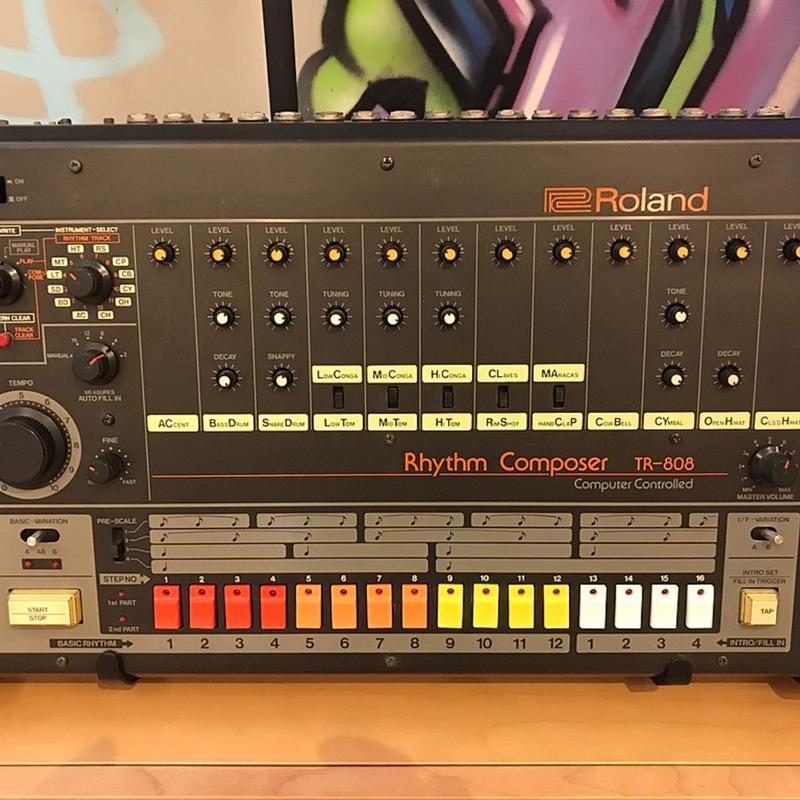
Heidi Sabertooth: I'm glad you mentioned that. Synths are really everywhere, and synths is the keyword term that we use, but our library is really one where we focus on everything electronic. Everything from even the simple microphone to a standard synth that you think about with the keyboard, as well as the fancier modulars, and really breaking down the components. We try to have a broad tent to meet all the broad interests that we know exist within the synth community.
Brian Lehrer: As you say on your website, "Equal access to the means of production is the key to making our music community more diverse and welcoming." Is that because equipment tends to be prohibitively expensive?
Heidi Sabertooth: Absolutely. Some of these synthesizers are $1,000-plus. I know from my own personal experience, when I was getting into this, I would meet a lot of stupid-- I would scrimp and save to get my first synthesizer and then find out it wasn't exactly what I was looking for. When we were looking at a library and the library concept and gear sharing, it's really about rethinking who has access to electronic music production. This is the first of its kind in New York City, an instrument-lending library. You actually get to take a synthesizer into your home for a month at a time for free. It really does remove one of the biggest barriers to entry, which is the high cost of the equipment.
Brian Lehrer: Let's hear another sample of music.
[MUSIC: Bird and Wind]
Brian Lehrer: This is what people might have thought of as synthesizer music in, I don't know, 1970 or something. What is that?
Heidi Sabertooth: I thought it would be cool to showcase a live clip from one of our recent workshops where our artists and resident led library members in an exercise to create a new landscape with sounds from synthesizers, and I think what they thought maybe was birds or wind. Yes, it's like another part of what we do. Besides just having people take the synths home, which is a huge part, we also have opportunities for people to come together and skillshare, create and discover, because when you're learning in isolation, you could-- We have YouTube. You can watch a tutorial. You can learn at home.
There's something different that happens when you have a collective, and you have a social opportunity to learn together, and that's also a huge part of our library. Especially in this day when everyone's isolated, we need those kind of things to bring us together, right?
Brian Lehrer: Yes. You said the name of that track after we faded it, Bird and Wind. Let's hear a little again.
[MUSIC: Bird and Wind]
Brian Lehrer: You can hear the birds and the wind implied there. How do you deal with the issue of synthesizers' ability to put human musicians out of work? This has been an issue in Broadway musicians' labor negotiations, for example.
Heidi Sabertooth: Well, I think that's why the Synth Library is so key right now. I think there's been a real resurgence in getting down to the basics. How is this sound being generated by electricity? Right now, I could probably ask AI to make a music track for me. Is that going to help me in any way? I think people are very interested in the tactile experience, like learning an instrument as a discipline. What kind of things do I gain from that experience? Confidence, self-discovery, mathematics even. Like I said, we have a broad tent. You have people who come to synth with just the pure artistic. They want to find a voice.
Then you have the people who are on the technical side: the programming, the sequencing, the engineering side. Then you have the builders who just want to mess with electric current and get the soldering iron out there. Synths are really a space that can bring together such a diverse group of learners and really make us better, I think.
Brian Lehrer: How can people access Synth Library New York? Then we'll go out with one more track.
Heidi Sabertooth: Thanks. Right now, you can go to synthlibrarynyc.org, and you can click Get Involved, join. We have about 900 members. We do have 500 people on the waiting list. We are 100% volunteer-run, if you can imagine, still. We are growing all the time. Also, we're, just like you are, looking for donations. If you find yourself on the website and you want to click the Donate button, we always like that too.
Brian Lehrer: Heidi Sabertooth, co-founder of Synth Library. As we crew up this last track, is this by you?
Heidi Sabertooth: I think it is, yes.
Brian Lehrer: The same one that we came in with? What's it called?
Heidi Sabertooth: It is called-- Actually, I forgot which track I submitted. I believe it's Was It You?
Brian Lehrer: Yes, it is [crosstalk].
Heidi Sabertooth: It does feature a synthesizer from 1982, the SH-101. Very classic synth.
Brian Lehrer: Here we go. Thanks, Heidi.
Heidi Sabertooth: Thanks.
[MUSIC: Was It You]
Brian Lehrer: Coming up on All Of It, hear about the New York Public Library's new exhibit about the golden age of magicians like Harry Houdini. They have the stars of the new play, The Monsters, and more coming up with Alison Stewart in All Of It right after the latest news. Thanks for listening to The Brian Lehrer Show today.
Copyright © 2026 New York Public Radio. All rights reserved. Visit our website terms of use at www.wnyc.org for further information.
New York Public Radio transcripts are created on a rush deadline, often by contractors. This text may not be in its final form and may be updated or revised in the future. Accuracy and availability may vary. The authoritative record of New York Public Radio’s programming is the audio record.