
Friday Morning Politics: Trump and Mamdani Meet
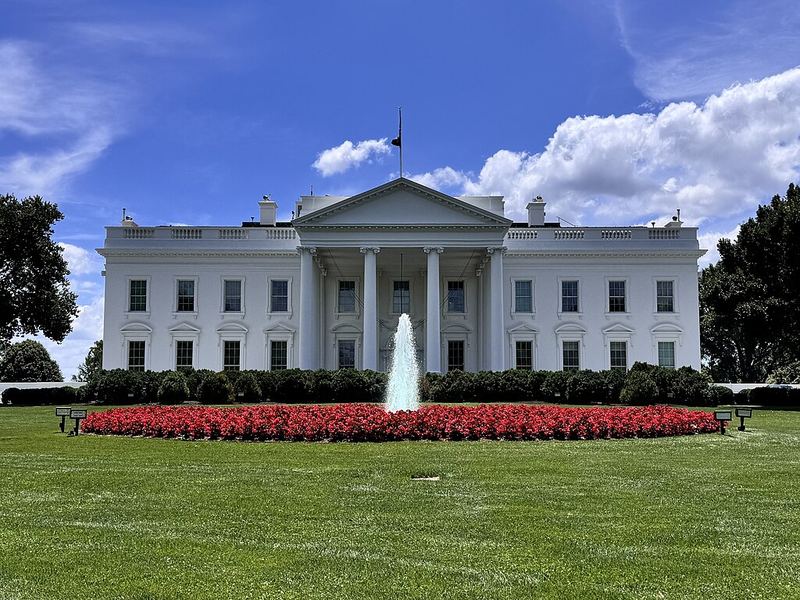
( DJTechYT, CC BY-SA 4.0 <https://creativecommons.org/licenses/by-sa/4.0>, via / Wikimedia Commons )
Title: Friday Morning Politics: Trump and Mamdani Meet
[MUSIC]
Tiffany Hansen: It's The Brian Lehrer Show on WNYC. I'm Tiffany Hansen, filling in for Brian today. He will be back on Monday. Coming up on today's show, we'll talk about the debate over New York's Raise the Age law. It's relevant now because NYPD Commissioner Jessica Tisch, who, as you probably heard, agreed to stay on the job when Mayor-Elect Mamdani takes office, she's in favor of changes to that law.
The Mayor-Elect doesn't exactly agree with her on that. Later in the show, the writer and historian Walter Isaacson, he's probably best known for his biographies of powerful men like Steve Jobs and Henry Kissinger, but his new book is about one sentence in the Declaration of Independence. That's the very first sentence. We'll wrap up today's show with a conversation about what economists say happen when well-off baby boomers pass on and leave an inheritance to their children, but we're not talking about a wealth transfer, which you probably heard about, but a stuff transfer.
We're asking the question, what do you do when your parents downsize or pass away, and you're suddenly left with so much stuff? It can, of course, be a hard thing to deal with. We'll get into it. We want your experiences and opinions on this. Stick around for that, but first, President Trump is meeting with New York City Mayor-Elect Zohran Mamdani in the Oval Office today.
In a statement on social media this week, he said the "communist mayor had requested the meeting." A likely topic for the two will be affordability. Affordability has, of course, been a central issue for Mamdani during the recent mayoral campaign. For Trump, it seems that he's perhaps realizing what economists have been saying, which is, tariffs don't work, that the negative effect they have on the economy at large by hitting working Americans in their pocketbooks is real.
We'll talk with our first guest about the President's meeting with Mamdani, about the repeal of certain tariffs, and about what some people think is the increasing chaos in the White House, some of which has been spawned by the impending release of the Epstein files. We'll also talk about what Congresswoman Marjorie Taylor Greene's beef with the President might signal for the upcoming midterm elections. With us for that conversation is Jonathan Lemire, a writer for The Atlantic magazine and co-host of Morning Joe on MS NOW, which is formerly MSNBC. Welcome back to The Brian Lehrer Show, Jonathan.
Jonathan Lemire: Always happy to be here. Good morning.
Tiffany Hansen: Jonathan and I would, of course, love to have you join this conversation. How do you think the Mayor-Elect should approach this meeting with President Trump? Should Mamdani be open to working with the President? Where might that common ground be? Are you encouraged or discouraged by Mamdani's inclination to meet with the President? You can call us. You can text us. 212-433-9692. 212-433-WNYC.
All right, Jonathan, let's just start with this meeting between President Trump and Mayor-Elect Mamdani. President Trump announced the meeting on his social media site, Truth Social. I just want to quote what he wrote here. "Communist Mayor of New York City, Zohran 'Kwame' Mamdani, has asked for a meeting. We have agreed that this meeting will take place in the Oval Office on Friday, November 21st."
Jonathan, I have to say the first thing that struck me, and there's a lot packed into that announcement, but the first thing that struck me was his use of Mamdani's middle name. It was really reminiscent, for me, of when he used to call President Obama by his full name, Barack Hussein Obama. A dog whistle meant to seem I-don't-know-what. Did that strike you as similar? I guess more broadly, what does this sort of really demeaning behavior get the President politically?
Jonathan Lemire: Well, for Trump, it's yet another play to try to excite his base and dog whistle exactly that. He used the Mayor-Elect's middle name. He put it in quotes even, for some reason. Certainly, we know that the mayor's race in New York kind of ended on a pretty dark note of Islamophobia. It seems like Trump, who has played in that sandbox before, is trying to do so again now.
He also, as you noted, called the Mayor-Elect a communist, which he is not; he is a Democratic Socialist. I will say I'm not a betting man, but if I were to place a wager on one thing today, it's this. Currently on the White House schedule, that meeting, which is set for three o'clock Eastern in the Oval Office, is listed as closed press, meaning no reporters or cameras will be inside.
Here's my wager: that will change. I think President Trump wants this moment to be broadcast. He wants the audience. The question is, what will the tenor of the meeting be? Because Mamdani, who has said consistently, "I'll meet you," he's been very, very critical of Trump, but has said, "I will meet with anyone who wants to talk about the issue of affordability." We could see why the mayor of New York City, New York City, is dependent to some degree on Washington and its funding, would want to have this meeting. Trump is the wild card here. You could see it going any number of ways.
Tiffany Hansen: To that point of seeing it go any number of ways, I, of course, immediately thought of the President's meeting with Ukrainian President Volodymyr Zelenskyy in the White House the first time. It was extremely contentious. He and the Vice President were downright just really hostile, almost, toward Zelenskyy. During that meeting, there was press present. Would you wager in your wager that something like that might happen?
Jonathan Lemire: It's certainly possible. Now, I think there are two potential paths here. First, as is sort of well known that, and we have seen it time and again, when he wants to be, President Trump can be charming. He's in the hospitality business, right? He's a hotel owner. Famously, right before his first term, he went to a meeting of The New York Times editorial board and was extremely deferential and kind and charming.
Now, obviously, that didn't then stop his attacks later of the failing New York Times or whatever he kept calling it, but if he wants to be, he can be charming. He has privately said that he thinks Mamdani is a very talented political athlete, that he's a remarkable communicator. He thinks he's got a great smile. The rest. What is less? That is one path is that maybe in that moment, he will be sort of friendly with Mamdani, and then blast him later on Truth Social.
That's still possible, but you're also right to bring up the Zelenskyy meeting because that's the other path here, is right then and there, performing for the cameras, he might want to use to go on the attack. There's many on the right who welcome Mazdani's win, not because they agree with his politics, but exactly the opposite. They think he'll be an effective foil. He'll be an effective like, "Hey, this is the new face of Democratic Party. He's a 'communist.'" Therefore, Trump, who was in a pretty weak political position all of a sudden, might see an opportunity here to go after Mamdani.
Tiffany Hansen: That was the first meeting between Zelenskyy and President Trump. At the second meeting, we saw Zelenskyy come wearing more "appropriate attire," right? Not his usual kind of wartime attire, but I think he had on a tie. I can't remember exactly. What my question is, in that follow-up, is there something that Mamdani could take into account when viewing that in context in his dealing with the President in a way that will get him what he wants, which is essentially what it looked like Zelenskyy did, right? Like, "If I'm going to get what I want out of this guy, I've got to play by his rules here a little bit."
Jonathan Lemire: Well, that's the lesson that all foreign leaders seem to have learned. In Trump 1.0, there was often these somewhat confrontational meetings, and the allies in Europe and otherwheres would end up with nothing. This time, we've seen at times it is fawning and over-the-top, at least in the moment when that foreign leader is with Trump, very deferential, and even if there are disagreements, they're kept behind closed doors.
Zelenskyy did learn that lesson. He's been to the White House a couple of times now. The second and third visits went better than the first, at least. There were disagreements, but they were again out of the range of cameras. Mamdani, who we should note almost always wears a suit and tie, I suspect he will come in, I think, attempting to find at least some sort of common ground.
I don't think he'll be shy about voicing areas of disagreement, but if they stick to the issue of affordability, that is something that potentially, and again, this is a little bit of a heart of a stretch, but potentially could benefit both men because that's Mamdani's central campaign promise, and that's the biggest issue politically that Trump has right now, is that voters rendered in those elections two weeks ago that he and Republicans had taken their eye off the ball on affordability.
Maybe he can find a way to talk about that with Mamdani. A key figure in this relationship who won't be in the room, though, is Governor Kathy Hochul, who I think has managed Trump fairly well on some issues and disagrees with him on others. She, of course, as she runs for reelection next year, is going to have to navigate a relationship with both of these men.
Tiffany Hansen: I want to get back to that question of affordability here in a second, but I want to remind our listeners that we're talking with Jonathan Lemire, who's the writer and a co-host on MS NOW, formerly MSNBC. We're talking about some of the political news of the day, including this meeting today, this afternoon three o'clock, between President Trump and the Mayor-Elect Mamdani.
We want your input in this conversation. 212-433-9692. You can call us. You can text us at that number. It's 212-433-WNYC. We have a text here, Jonathan. "I predict that despite huge differences of philosophy and policies, Mamdani will find ways to flatter Trump, which, as everyone knows, is a surefire way to get Trump's attention and forge a more constructive dialogue."
That sort of gets at, Jonathan, our point here is that you kind of have to know how to work the President. I hate to put it in such terms, right? That they're sort of coming at it with a-- I don't know. Not an agenda, but with that kind of mindset of like, "I have to do these certain things in order to get at what I want to talk about." One of those issues we know will probably be affordability. How do you talk to the President? How will Mamdani, let's speculate, talk to him about affordability when it seems as though, in recent times, the President hasn't given much thought to that?
Jonathan Lemire: No. In fact, he's called it a hoax and a con job just in the last couple of weeks, even though there are others in his party and even in his White House who do acknowledge, and I've written about this, that "Hey, affordability is a problem. We've cast our eye off the ball here a little bit. That got us elected in '24. We haven't done as much on that as perhaps we should have here in 2025," but Trump himself, at least publicly, has said nothing of the sort.
If you are Mamdani, who is pretty quick and can be good with a joke and such, I think he will. There's a limit to how much he's going to try to flatter Trump because that will look so bad, but both men, more than anything, we should state this at the top, both men are going to be playing toward their own bases, at least somewhat, right? Mamdani, I think, will try to find common ground, but there's a limit to how much fawning he can do for a man who is hated for a large part in the City that Mamdani is soon to represent.
Maybe he could, but maybe it's something along the lines of, "Look, we were both elected on the idea of fighting prices. Maybe we could team up to find a way to do it together." Then, you're playing Trump's ego there, "Hey, you won, but, hey, there's still an outstanding challenge that we could take on."
Tiffany Hansen: To your point, one of the texts we got here is "The only positive thing Mamdani gets out of this is a lot of photos of him with Trump." That's not going to help with his base necessarily. I wonder, and I can imagine there are a lot of people who voted for him who are thinking, "Do not go talk to this guy."
Jonathan Lemire: Well, I think that's right. Although Mamdani obviously has long four years before he has to run again. I don't think anyone thinks that this moment is suggesting he's going to become a secret Trump supporter, but I do think there'll be importance for Mamdani to at least draw a few clear distinctions, like to say something about to give some pushback.
It's as I reported for The Atlantic on election night, officials in Trump's orbit have been telling me for a while that, as much as this administration has targeted other big American cities, Chicago, Los Angeles, just to name two, that they've kind of been holding their powder on New York because they wanted to see who won the election, and if Mamdani were to win, which, of course, he has, that their push into New York will be after January 1st, when Mamdani takes the oath of office.
Trump himself has gone on Truth Social and suggested they'll try to cut federal funding. They've talked about stepped-up ICE enforcement and raids, which could include the National Guard being deployed to provide "security" for those. There does seem like there could be a looming confrontation, which is why the timing of this meeting is so interesting.
Tiffany Hansen: Jonathan Lemire and I are talking about President Trump's meeting this afternoon with the incoming mayor, Mamdani. Looking for your comments and questions. 212-433-9692. Jane in Brooklyn, good morning, Jane.
Jane: Good morning.
Tiffany Hansen: Yes. You have thoughts about the meeting today?
Jane: Yes, I do. I'm an early childhood educator, and I have a lot of faith in the background that Mamdani has had through his education. He was at a progressive school in New York. He then moved abruptly out of the country and describes going to a very different setting. I think that his ability to have had so many different experiences that have caused him to be able to think and to think intelligently and to ask intelligent questions, I think the very fact that he's initiated this meeting with Donald Trump and hasn't waited to be set upon in some way shows his ability to navigate some of these things. I feel that this is a very positive step.
Tiffany Hansen: Jane, thanks so much for the call. Jonathan, this gets at a little bit of your point here about a lot of what we might see from President Trump around New York City happening after January 1st when the Mayor-Elect takes office. Is this sort of preemptive strike by Mamdani to get in, talk to the President, going to make any difference, do you think, in terms of what happens after January 1st?
Jonathan Lemire: There is some precedent. Let's remember, Trump was on the verge of targeting San Francisco about a month or so back. Then some business leaders there talked about a bit, saying, "Actually, no, wait, the City's 'improved.' Crime's down. Quality of life is up. Hold off," and he did. At least there's a possibility that Mamdani could deliver a similar message. What's also interesting, of course, is Trump's relationship with New York City.
It's his hometown. He knows it well, even if he has not really lived here for a number of years. It's a city that certainly largely dislikes him, but he still has a lot of friends who live in New York. He still has a lot of business interests in New York City. He's going to want the City, at least in some ways, you would think, succeed, because that will benefit him and his businesses and his bottom line.
There are people who certainly moneyed interest in Manhattan, who he does still talk to from Washington, who are going to perhaps share concerns about Mamdani's policies, but who are also not going to want the City to be starved of federal funding either, because that would just be disastrous for all. It is a really interesting moment. It's a test for two men who, whatever you think of them, are pretty good political animals and are pretty good at reading the moment. They both have very competing interests going into this meeting. I'll be watching at three o'clock with everybody else.
Tiffany Hansen: Yes, obviously, they have competing political interests. There is also the fact that President Trump, I would wager a guess, really thinks of himself as a New Yorker and cares deeply about the City. He would say that. This is not the first time that a president has really focused in on New York City. You wrote about an incident with Gerald Ford, which I think is a pretty great context if you want to just tee that up and tell us a little bit about that history.
Jonathan Lemire: Sure. There's perhaps the most famous headline in the history of The New York Daily News, a paper which I worked for some years ago, was "Ford to City: Drop Dead." That was because he back in the late 1970s, when the City was going through its fiscal crisis, he refused, Ford did, to offer a federal bailout to the five boroughs. Now it turns out some months later, he actually did authorize a series of loans that helped New York City.
It was a little bit different, but Washington did step up eventually, but it was held against Ford that he was seen as callous, and a feeling, and there are other reasons for it, but he told people after his election defeat to Jimmy Carter that that was one of the reasons why. There is a history here of New York City and presidents and their relationship to it, but there's been no president who is a creature of New York like Donald Trump.
From his early days working with his father's business based in Queens, who they couldn't penetrate the Manhattan market. He eventually did. He's an out-of-borough kid who made it big, but yet was never really accepted by New York's elite because he was too brash, he was too gauche, he was too flashy, all the things, and he's been looking for that sense of approval ever since. Didn't even get it after becoming president because the City is so deeply Democratic, and every time he'd return to Trump Tower, he'd be met with protests.
Basically, he stops coming back and even changed his residency. Now he's a Florida resident, not a New York resident, but he still does, I'm sure, in his heart, think of himself as a New Yorker, and as I just mentioned, still has real interest there.
Tiffany Hansen: Does that get under his skin, do you think? I think that this is someone who is very clearly set on retribution against people, institutions that he views as having some negative effect on his favorability, his business acumen, whatever, insert X here, whatever the negative effect on him is, really gets under his skin. Is some of what we're seeing here in terms of his laser focus on New York City because of that also?
Jonathan Lemire: I think that plays a role, yes. As you just laid out well, he is someone who is driven by slights. He is deeply insecure in many ways. I think that he has had a real resentment against New York City for a long time. Let's remember, even after he first won in 2016, there was a plan for him to live part-time in New York because he thought like, "Yes, that was home." He's a creature of habit. He loves Trump Tower.
He was met with such anger and revulsion by his neighbor, his neighboring New Yorkers, that he abandoned that plans very quickly. Other than when he comes in town for the UN, he never comes to New York City anymore. I think that he has harbored a grudge. If the path out of it, if the meeting doesn't go well, that's because it's in part because of that other path that he's already dead set, Trump is, to not just using Mamdani as a political foil, but also because he is looking to punish his hometown for a variety of reasons, including electing someone he has deemed a communist.
Let's remember, he's already hurt the City once before, earlier this fall, when he slashed the Gateway Project, the tunnel connecting New York to New Jersey, because he was angry at Senator Schumer and Leader Jeffries, two, again, New Yorkers, to try to punish them, but we saw that backfire as those and now Governor Elect Sherrill's campaign have told me, they were a very tight race until the government shutdown.
When they slashed funding to both that tunnel and, less so, the Second Avenue Subway in New York, New Jersey residents who use that tunnel, who commute on those trains, were negatively impacted by it, and that helped the Democratic candidate.
Tiffany Hansen: Yes, Jonathan, to that point, I want to bring a caller into our conversation here, John in Plainfield. Hi, John.
John: Hi. It's interesting that you mentioned that, because I thought that would be an area where they could find some common ground if he could unfreeze the funds for the Gateway Tunnel. Don't you think that would be something that Mamdani and Trump could come together on, releasing those funds and allowing that project to go forward?
Tiffany Hansen: Jonathan?
Jonathan Lemire: It's possible. Certainly, infrastructure projects are popular, by Republicans and Democrats alike. It's an opportunity for the President to say, "Look, I'm creating jobs." That's a win. I'm sure Mamdani will touch upon that and other infrastructure projects because, again, though to your point only a few moments ago, so much of what Trump has centered his second term around is the idea of vengeance, of simply using the power of government to punish his political foes, whether that's lawmakers or universities or law firms, former Obama administration officials. The list is long.
In this case, the decision to scrap the funding for those infrastructure projects was pure politics. "I don't like how Schumer and Jefferies are handling this shutdown. I'm going to try to pressure them into making a deal. Therefore, I'm going to scrap it." Well, Trump didn't come out ahead in the shutdown. I know there's been a lot of debate about whether Democrats did the right thing by folding when they did, but polls suggest Democrats "won the shutdown." I think that for Trump, perhaps it's a lesson that some of these really personal punitive policy decisions aren't very politically successful.
Tiffany Hansen: Jonathan, let's bring Lou into the conversation. Lou in Staten Island. Hi, Lou. Good morning.
Lou: Good morning. Thanks for taking my call. I just want to say, first of all, the first caller made a very excellent point, and it is always good sense to try to seek dialogue. After all, Mr. Trump runs the republic. The incoming mayor will be running the City. It makes good sense for them to try to get together. It's a good thing. As to how Mr. Trump might behave, well, he can throw his tantrum or not, but we know that he's a very good example in how not to raise children.
This man, there is just something wrong with his character that annoys me. You have to be able to come with dialogue, especially when you are in that kind of position. You are the leader of the country. You have to set examples because there are young people coming up who are looking up to you as to how to run this country in the future. Overall, I think it is a good thing that Mr. Mamdani initiated this meeting so they can talk, at least always have room for dialogue. Then you can go back now and take a stand, but it is a good thing he did so. Besides, I voted for the mayor anyway.
Tiffany Hansen: Yes. Lou, thank you so much for that call. I wonder, Jonathan, if this is something that Mamdani has learned from Governor Hochul, who made efforts to reach out to the President and, as Lou said, find areas for dialogue.
Jonathan Lemire: No, she's actually a pretty good case study as to how to do this. She has vociferously opposed some of Trump's measures, but on the other hand, has conducted some phone calls with the President. That has walked him back on a few things. I think there's this inherent dynamic here where, just as the pecking order, sad to say, for New York City Hall runs Washington, Albany, New York, in terms of political power and the purse strings.
New York City is dependent on federal funding. It's dependent on state funding, too, of course. If Trump were to follow through, things could get difficult. Now, Mamdani has already made it very clear he will fight this. See, I spoke to him for this piece, and he has said, New York City has a legal right to this funding, these are acts of Congress, that the President has no ability to change that, and they're preparing an army of lawyers, he said, if needed, to fight for what they want to stand for.
I do think, for Mamdani, he saw Eric Adams, his predecessor, largely capitulate to what President Trump wanted this year. Mamdani, certainly, he's going to find areas of agreement, perhaps, but he is not going to just go along with everything Trump wants.
Tiffany Hansen: The piece you're talking about here, Jonathan, you wrote in The Atlantic about Mamdani being the foil that Trump wants. Listeners, a good article if you can look that up. Before we get off this topic, Jonathan, let's just speculate what might be the other topics of conversation. We mentioned affordability, perhaps transportation. Undoubtedly, one would think ICE raids, immigration, what else?
Jonathan Lemire: Yes. No, I think that's going to be a big one. Perhaps this is the part that happens when the cameras are off. We'll see, but ICE raids, we saw the one on Canal Street a few weeks back, met with real furore from people walking by. I think ICE raids will be a big part of this. I think the potential topic of the National Guard being deployed to the five boroughs will be significant.
I also think two other things for sure will be the issue of crime. Trump keeps pushing the idea that New York City is a very dangerous place. By statistics, it is not. Most people in New York will say that things felt a little different since the pandemic, but by any measure, the City is a very safe one. I think Mamdani got a lot of praise when he decided to keep on the current police commissioner, Jessica Tisch.
Then the last one would be perhaps the idea of tax hikes on the rich. Trump is a rich guy. A lot of his policies have favored the rich. The One Big Beautiful Bill, extraordinary historic tax cuts for the wealthiest Americans, including billionaires, Mamdani very much saying he wants to go the other way on that, so that could be another point of discussion, and I wouldn't venture disagreement.
Tiffany Hansen: We're talking with Jonathan Lemire, writer for The Atlantic and a co-host on MS NOW, formerly on MSNBC. Jonathan asserts that the Trump steamroller is broken. We're going to talk about that on the other side of a break here, so don't go anywhere. This is The Brian Lehrer Show. I'm Tiffany Hansen, in for Brian. Stay with us.
[MUSIC]
Tiffany Hansen: It's The Brian Lehrer Show on WNYC. I'm Tiffany Hansen in for Brian today. Our guest is MS NOW, Morning Joe co-host and Atlantic magazine writer, Jonathan Lemire. We're talking about the politics of the day. One of the things I wanted to ask you about here, Jonathan, is, of course, the Epstein files have been in the news pretty much constantly.
What's been interesting to me is this evolution that has been running concurrently with Georgia Congresswoman Marjorie Taylor Greene. She has found herself on the very wrong side of President Trump these days, which is not a place that we have seen her in past years, months. We've seen her very much at his side, wearing the red MAGA hat. Now, this infighting has led the President to call her a "traitor and a raving lunatic."
What I'm curious about is, what does this portend for other congressmen, congresswomen who are up for reelection in the midterms, and just sort of the midterms writ large? If you are like Marjorie Taylor Greene and you go up against the President, boy, you better watch out, especially with midterms coming.
Jonathan Lemire: Yes, I don't think it's quite a Marjorie Taylor Greene, welcome to the resistance moment, but it is interesting how she's been willing to break with the President on a couple of key issues. First and foremost, you're right, the Jeffrey Epstein matter, where she has a driving force effort on the right. Let's remember the Epstein conspiracy theories are largely a MAGA creation.
It's Trump's own base that wants this information out there, and she has defied him on that, but also on the health care subsidies. She's talked about that. She's talked about affordability. She's apologized, which is a rare thing for a politician, but particularly a Republican politician in the Trump era, apologized for some of the language that she's used in the past, saying that it was threatening to others because she knows how terrible it feels for her now that Trump has turned his sights on her.
That's really interesting in itself, but I think your larger question is a good one. Are we seeing, now, the first signs of cracks in Trump's control of the Republican Party? There have been a few examples in the last couple of weeks. Obviously, the party took big losses in the elections earlier this month, but we've seen the Senate defy him, what he called to blow up the filibuster.
We have seen some members of the Senate call into question his tariffs, saying, "This isn't helping the economy, and frankly, this is congressional power that you've stolen." We have seen some question some of these strikes of boats off the coast of Venezuela, saying, "Well, we haven't heard a justification for this." There's a long line of things where Republicans are starting to not lash out at Trump, but just distance themselves even slightly.
Now, we shouldn't overstate this. He still has remarkable control over his party, but if his losing streak continues, and this is, without question, the lowest moment of his second term, these Republican politicians, I should say, are going to start looking at their own reelection chances next year, and they might need to find themselves creating some space from him. If that were to happen, and especially if Republicans take big losses next November, then we're officially entering Trump's lame duck phase.
That will be fascinating to watch because we're starting to see now it's only a couple of tentative steps, but then it'll be a full-on stampede to try to create space from Trump and jockey for position as the heir apparent to his movement.
Tiffany Hansen: Colorado Congresswoman Lauren Boebert said that this is really going to have no effect on the MAGA movement, but I think there's a difference here between the MAGA movement and the health of that movement and the political aspirations of people in the Republican Party who may or may not find themselves interested in keeping their jobs. I guess it's kind of splitting hairs, but maybe not really that the MAGA movement might just be be just fine on the other side of this; the Republican Party, maybe not.
Jonathan Lemire: That's possible because not all Republicans, I would think, would consider themselves MAGA, although that percentage has grown dramatically in the last four years. Right now, my colleague, Joe Scarborough, likes to point out this, to point out all week long, these sort of polling that shows Republicans well down to Democrats and these generic ballot tests where it's not actually named candidates, but simply for a congressional race, Republican versus Democrat.
Democrats have opened up, I believe, something like a 15-point lead, which is so interesting because the party's, Democrats' party, overall approval rating is still quite low. It's picked up a little bit in recent weeks, but it's still quite low. In the head-to-head, they have a huge lead on Republicans, as big of a lead as they had in November 2017, a year before Trump's first midterms, when it was a blue wave, and they took control of the House.
That is something that is really alarming those in the White House now, and Trump personally, though, he has yet to really change any of his positions to try to reverse his political fortunes, but certainly, and I have reported, he is deeply concerned about "What would it mean for him were Democrats to even get one house of Congress next year?" Because let's say they do take the lower chamber, they'd have the power of the subpoena, and they could run investigations into the President, into his staff, into his family, and they might even revisit the idea of impeachment.
Tiffany Hansen: I think that the historical context there is good for listeners to remember. You did mention that, or you wrote rather, that the Trump administration's steamroller is broken. We're talking about broken how, broken because of infighting at the White House? We did see during the first administration just a kind of churn of top officials at the White House. We haven't seen that this go-round. We haven't seen a lot of the same kind of chaos that we saw in the first yet in the first administration, but so what do you mean when you say the steamroller is broken? We're sort of starting to see the wheels come off. How?
Jonathan Lemire: Right. It's just happening now because I would say for the first seven, eight months of Trump 2.0, very different than Trump 1.0. They had four years out of power and used that time to create a playbook and a blueprint, some of it's Project 2025, but also the veterans of his administration now knew how to use the levers of power, how to use government to punish their foes and steamroll their agenda.
They also got a very subservient Congress and not a lot of opposition from the court. That's picked up. What we've seen and the reason why I wrote the piece now this week is because things are starting to change, beginning with those election night defeats, beginning with, as we just discussed, Republicans being willing to defy him, which would be the shortest, the quickest route for his eventual political irrelevancy, but we are seeing infighting has returned.
Secretary Kennedy, the health secretary, had to call off his supporters who were turned on Susie Wiles, claiming that she, the White House Chief of Staff, was blocking the MAHA agenda. We are seeing a sloppiness, which really defined the first term, right? As I write in the piece, the first travel ban, I'm exaggerating only slightly to say that Stephen Miller and Steven Bannon wrote it on the back of a napkin and didn't even have it lawyered up before they tried to put it into play, and it was quickly overturned by the courts.
This time around, they've been much better and more methodical until recently. We're seeing the James Comey case fall apart.
Tiffany Hansen: Yes, redistricting.
Jonathan Lemire: We're seeing the tariff case, the redistricting fall apart, scathing assessments from federal judges. We're seeing the tariffs called into question by the Supreme Court. There's suddenly a degree of sloppiness and an ad hocness that didn't exist earlier in this term, with the exception of DOGE, that's now permeating the White House and also this idea that his priorities are all wrong, that he is focusing on retribution and doing things like knocking down the East Wing of the White House to put up a ballroom nobody asked for.
Tiffany Hansen: That could be one thing that precipitated this steamroller, the wheels falling off of this operation, as you characterize it. What are the other things that you think have precipitated this beginning of a decline, if we can call it that? Is it the shutdown? Is it what?
Jonathan Lemire: Yes, I think first of all, it shouldn't be overstated. This is just the first signs of the Trump White House coming off the tracks. You're right. The shutdown, that was mishandled. The polls suggest Republicans were blamed by far more Americans for the shutdown than Democrats. We are seeing the way the Republicans have spoken out against him, and we have seen him be dogged by--
We've seen him have to walk back some things, which, again, was not something he was doing early on, including some of these tariffs. Then we have to, at this moment, return to the Epstein matter, where it is not the kind of scandal that, at least to the best of our knowledge, there's no sense that there's something criminal for him in the material that could be released.
I think it would be an overstatement to suggest that the Epstein matter will end his presidency, but what it could do, what's already doing, is bogging down his presidency. The time and political capital he's got to use to defend this is a drain on any administration. What we're seeing it's not just Republicans saying no to him. The reason why he changed his position was because it wasn't just he was going to take a narrow defeat; it would've been an all-out onslaught.
The floodgates were going to open. Republicans in the House and Senate were going to go defy his wishes and vote to have this material released. That's why he changed his tone. He didn't want to get rolled, so he said, "Okay, fine, go ahead. I don't care. Vote for it." Now we're seeing him at the same time launch the Attorney General on a new investigation into Democrats whose names might be in these materials, which allows DOJ to potentially say, "Well, we actually can't release everything because it's an open investigation. DOJ policy is that if there's still an ongoing criminal probe, you don't release materials to the public." This gives them potentially a way out, a way to still shield this material from seeing the light of day.
Tiffany Hansen: Jonathan, we have 30 seconds, and the thing that I have to ask you about is "Quiet, piggy," the President talking to a female reporter on Air Force One. I'm a journalist. I'm a woman. I just know what my reaction is. I'm sure you can imagine. I'm just wondering, 30 seconds, what was yours?
Jonathan Lemire: Well, certainly the President did this in the first term as well. He does not like being challenged by reporters. He does not like being challenged by female reporters. Also, this week in the Oval Office with the Crown Prince of Saudi Arabia, he attacked an ABC reporter for asking about the murder of Jamal Khashoggi, the Washington Post columnist, who US intelligence assessed that MBS, the Crown Prince Mohammed bin Salman, either blessed or at least knew about, and the President chewed out the reporter.
I'd argue the most important thing in terms of his attacks on any reporter so far this term and maybe last is, he didn't just attack the ABC reporter in the Oval Office; he threatened to pull ABC's broadcast license, which is, again, the flexing of government power in an unprecedented and scary way, the kind of thing that we know that the free press, the First Amendment, that's so sacred to an American democracy, and it's an example like that that really puts it at risk.
Tiffany Hansen: Jonathan, pleasure to talk to you again. That is Jonathan Lemire, writer for The Atlantic magazine, co-host of Morning Joe on MS NOW. Jonathan, thanks so much.
Jonathan Lemire: Thank you.
Copyright © 2025 New York Public Radio. All rights reserved. Visit our website terms of use at www.wnyc.org for further information.
New York Public Radio transcripts are created on a rush deadline, often by contractors. This text may not be in its final form and may be updated or revised in the future. Accuracy and availability may vary. The authoritative record of New York Public Radio’s programming is the audio record.
