
Fixing the Hated Cross Bronx Expressway
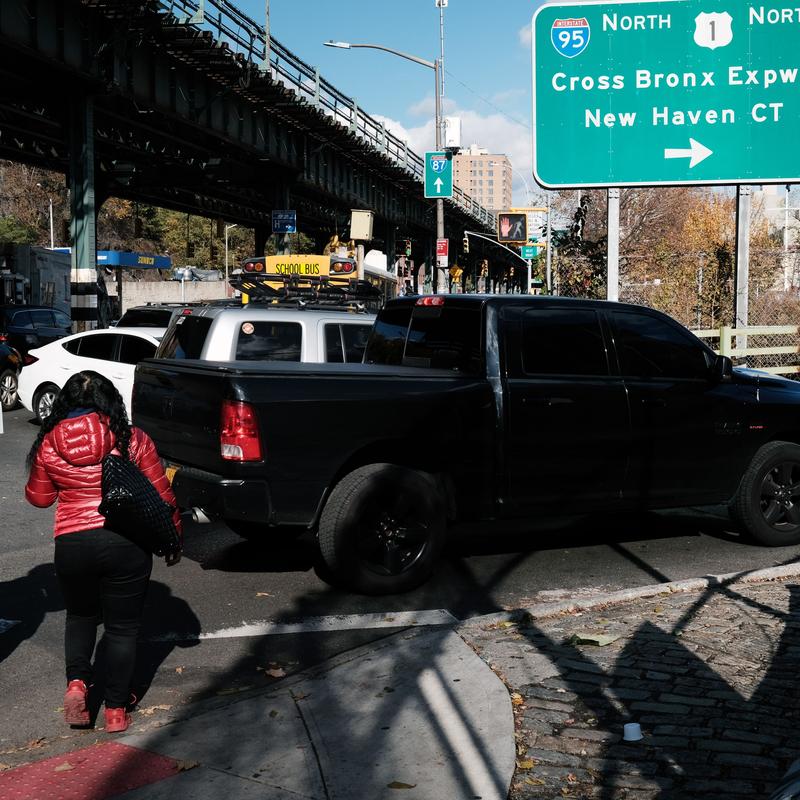
Brian Lehrer: Brian Lehrer on WNYC. Let's talk about the Cross Bronx Expressway, one of the most infamous roads from the Robert Moses era in New York City. Since its inception, the Cross Bronx Expressway has been a point of antagonism. I think that word is fair for residents in the surrounding areas. Building this highway tore through neighborhoods and displaced thousands of people, many thousands who called the Bronx home. The communities left behind have been living with the consequences ever since.
The Bronx has the highest asthma hospitalization rates in New York City. Children there are more likely to end up in the emergency room for asthma than anywhere else in the five boroughs. The Cross Bronx is considered one of the reasons for that. The highway is also, by any measure, essential infrastructure. It carries 150,000 vehicles a day, is the number I have, and runs along a critical stretch of I95, the main freight corridor connecting everywhere on the East Coast from Miami to the Canadian border. The highway is also falling apart.
Five of its bridges were built before 1960, and the state says repairs can't wait. Governor Hochul, if you haven't heard this yet, and the New York State Department of Transportation have put forward a $900 million plan to repair five of those bridges. The project would also widen the highway's footprint, pushing traffic and pollution 50ft closer to the Bronx River. Houses in particular, a public housing complex where more than 3,000 residents already live just across the street along one stretch of the Cross Bronx.
Today, the state faces a federal deadline to submit its chosen plan for environmental review. Once that happens, it becomes much harder to stop. There's the news hook. This is happening today. Joining me now are two advocates who oppose the expansion. Siddhartha Sánchez, executive director of the group called the Bronx River Alliance, and CP, a local resident of the area and member of the group Mothers on the Move. Siddhartha and CP, thank you for coming on. Welcome to WNYC.
Siddhartha Sánchez: Thank you, Brian, for having us.
CP: Thank you.
Brian Lehrer: Siddhartha, let me invite you first to brief our listeners on your group, the Bronx River Alliance. It's dedicated to the Bronx River itself. Yes, people in Queens, there is such a thing. What has the Cross Bronx Expressway done to the river over the decades and the surrounding areas?
Siddhartha Sánchez: Yes, thank you, Brian, for the opportunity to share about our work and the impact of the Cross Bronx. The work of the Bronx River Alliance is really grounded in reclaiming and restoring New York City's only freshwater river. Incredibly, that river was a toxic sewer for a very long time. Over the last 50 years, community has worked with government and industry to really clean the river up and expand access, creating new parks.
The impact of the Cross Bronx cannot be understated in this case. I work in a park called Starlight Park. It's in the heart of the South Bronx and is considered the green lung of the South Bronx in many ways. Because of its location, the Cross Bronx crosses over Starlight Park and pollutes not just the park, but the adjacent housing. I'm glad you referenced Bronx River Houses just 100ft away from the Cross Bronx right now, and with the state's proposal, would be even closer.
The truth is that back in 2023, the state built a ramp connecting to the Cross Bronx. That was the most recent impact that the highway had on the river when they built that ramp. The ramp that was there before was demolished. The debris from that demolition was actually put into the river in a way that was unlawful and very problematic, in addition to all of the other impacts with construction and air quality over the decades.
Brian Lehrer: CP, tell us a little bit about your story. I see you live right next to the highway. What does that actually feel like day to day? Then tell us a little bit about the group you're in, Mothers on the Move.
CP: Good morning, and thank you so much for having me as well. Yes, I live right down the hill from Starlight Park. I live adjacent to the Cross Bronx Expressway in a residential area in the Bronx. I have lived, worked, raised my children, now my grandchildren in the South Bronx in this area. The Cross Bronx Expressway has always been a part of my life because we always lived adjacent to the Cross Bronx from east to west and then back again from west to east.
On a daily, daily basis, I see traffic backed up. You're calling it the Cross Bronx Expressway, the Cross Bronx Highway. We who live in this corridor call it the parking lot because it is always backed up, it is always traffic, and that traffic always has an overflow right into the residential areas. You mentioned about this, the expansion of a ramp that goes directly to the Cross Bronx from the Sheridan. Now it's called the Boulevard, but it used to be expressway.
As a member of Mothers on the Move, we worked very, very hard for years to have that highway completely shut down. They didn't do it. Then we worked very, very hard to try to do a redesign of the Sheridan Expressway, which they now call the Boulevard. The only thing that has happened is that there is more traffic on residential streets now. Tractor, trailers, buses, everything, because the only access now to get to from, let's say, Westchester Avenue and Whitlock is you have to traverse Longfellow Avenue, which is a one-way to go to the Cross Bronx and to go over the Blue Bridge.
Both of my daughters, my mother, my grandfather, so many people in my family have had asthma. In the beginning, we thought, "Oh, it might be something genetic." Then we realized, "No, it's not genetic." What it is is that we live in the corridor called Asthma Alley. It's horrible when you think about the fact that in the South Bronx, we have always been a sacrifice zone. We have always been, let's do whatever we can to the people in the South Bronx. Is it any wonder that maybe those Bronx residents are people of color, Latin and Black, and Caribbean and Asian and Indian, that we are sacrificed for what? For more commerce? I personally--
Brian Lehrer: Go ahead, you can finish the thought.
CP: No. I personally have worked very, very, very hard and diligently through so many other organizations, through talking to my neighbors, and trying to do something about it. The fact that the state and Governor Hochul, who calls herself-- she's just a Buffalo ma and grandma. I find it very interesting that none of these types of things are happening upstate New York. None of these types of things are happening in other residential areas in the Bronx.
Brian Lehrer: It's interesting that you mentioned Longfellow Avenue, which is the first time anybody's ever mentioned Longfellow Avenue on the show, because that happens to be the street on which my mother grew up. To which I used to go as a kid very frequently to visit her parents, who were, of course, my grandparents. Listeners, anybody with proximity to the Cross Bronx Expressway as a resident want to call in, or anybody who's a frequent driver on the Cross Bronx Expressway want to call in on this plan to repair old bridges there and widen it. 212-433-WNYC, 212-433-9692. Call or text for our guests.
CP, who is just speaking, local resident and member of the group Mothers on the Move. Siddhartha Sánchez, executive director of the Bronx River Alliance. I'm going to throw some of the state's arguments at you two and see how you respond. Siddhartha, the state says, for example, the widening isn't adding travel lanes, no more cars, it's adding shoulders to meet federal interstate design standards, and shoulders save lives. You can obviously pull over if there's something wrong with your car. Is your argument that those standards shouldn't apply here or that there's a way to meet them without expanding the footprint? Why object to a widening that doesn't add more lanes, therefore doesn't add more vehicles?
Siddhartha Sánchez: I think that's a great point to highlight. The truth is that, what we understand after reviewing over 5,000 pages of technical documents over the holidays, the comment period for the environmental assessment was between Thanksgiving and Christmas. We understand that this is actually not required. It is a policy choice. Its shoulders are discretionary and, in this case, arbitrary. Other highways in New York City even haven't included shoulders. It is based on the place and the context that that decision is made. I would say expanding by 50ft is significant because of the impact to community.
Most directly, Bronx River Houses, as you mentioned, would be 50ft away, really a stone's throw away from the highway. Already community and that development hasn't been able to open their windows for decades and suffers from air quality impacts. It also pushes out into Starlight Park in a way that is unnecessary. It expands the highway through mature canopy, the tree buffers, the very few mature canopy that we have buffering the air quality and noise from the highway would be cut down, and the impact of the park would be bigger.
Brian Lehrer: The state says it already listened because it scrapped the connect a road over Starlight Park. Correct?
Siddhartha Sánchez: They did. We felt like we were at the table and in dialogue with the state back in October when they made that decision. When they came out with the technical documents in November, the three proposals still proposed to expand the highway by up to 50ft and did not listen to our most basic request, which is build the standard bridge repair project here. Let's keep it to the footprint of the existing expressway, and let's really look at how do we mitigate the impact of the highway and reduce traffic on the highway investing in other measures.
Brian Lehrer: What about CP, the standard bridge repair project, as Siddhartha just called it? These bridges were built before 1960 and are structurally deficient, the state says. They say they pose a safety risk. We could think of some awful incidents that have happened elsewhere where bridges along the highway have collapsed, and therefore, repairs can't wait. Do you object to that, too, at Mothers on the Move?
CP: Oh, yes, we do. Because first of all, we know that the state and all of the officials and people that are involved, they say one thing, and they do the complete opposite of that. If they really cared about safety and wellness and well-being, it would seem to me that the first priority would be the residents who are directly impacted by this new expansion. I have no idea what entails girding up a bridge, but it just seems to me like it shouldn't have to include all of this fancy schmancy stuff. The most ironic thing is that Starlight Park just went through a beautiful, beautiful renovation.
They spent millions of dollars to make it a pristine and beautiful park. I cannot believe that anything that they're trying to do or that they will do will not impact that beautiful park. There's going to be just by default, a certain amount of deforestation. You just have to have some common sense. If they care honestly about the wellness, and the well-being, and the health of people, they wouldn't be talking about what they're doing. It seemed to me just throw a couple more-- what are those things that hold up the bridge?
Siddhartha Sánchez: Bolts.
CP: Just more bolts, more-- a stronger--
Brian Lehrer: Yes, the post. I don't know what they're called.
Siddhartha Sánchez: Sarita just--
CP: Whatever that is.
Siddhartha Sánchez: I wanted to chime in and say, to be clear, the coalition is not against the rebuilding of the Cross Bronx, despite the harm that it's caused, despite the hospitalization of children that you referenced. We understand that it serves the region, it's an artery, it's critical. We should, and as Sarita said, it should be built. For the first time, it should be built with community in mind. Not just with commerce in mind. How do we do both? How do we rebuild the Cross Bronx? These five bridges, the whole corridor needs to be rebuilt from what we understand.
This section will set precedent. How do we rebuild it in a way that also accounts for the fact that this has a huge impact on the surrounding community? This jewel of a park that was just recently expanded two years ago, the park was the ribbon cutting for the park expansion happened and $40 plus million in the last few years was invested into this park. Any further impact than is absolutely necessary is just untenable.
Brian Lehrer: What's your solution version as opposed to just your opposition?
Siddhartha Sánchez: I appreciate the opportunity to share that. I think we've been trying to share solutions and alternatives that are grounded in centering community from the beginning. I could go on and on, I think there's a lot of ideas in terms of that, but I'll highlight two examples. One example is the state is still proposing to take part of a site that is currently a concrete plant right next to Bronx River Houses.
The state is planning to expand the highway over this site. Instead of expanding the highway over this site, it would be really important to look at that site as a way to expand parks or expand a connection to the Starlight Park that is right next to that concrete plant, or even housing. The reality of how do we take sites that are contaminating and causing further compounding problems further and make them part of the solution.
The other idea that I'll say is investing in the work that we've been doing. Connecting young people and community to caring for parks, to increasing access to nature. I think those are the types of investments and the types of initiatives that need to be part of this new Cross Bronx and this new leadership at the state. We're not in the Robert Moses era. We need to see bold, innovative solutions that mitigate the impact of the Cross Bronx.
Brian Lehrer: Anthony, do we have Anthony? Is Anthony ready? I'm not sure Anthony's ready. I'm going to go to Ed in the Bronx first. Ed, you're on WNYC. Hello.
Ed: Hello, good morning. I really appreciate you having this conversation. I'm a community member who spent most of my life living in the footprint of the Cross Bronx Sheridan, the Brooklyn, the Bronx River Parkway. I worked on this campaign with Sid and many others. Two things that haven't really been discussed about is one is the noise pollution. That zip code that's happening is one of the loudest zip codes in the state of New York. That's from construction on the highways, that's from the trucks zipping by. That's from all the cars that are sitting there, often honking their horns and parking.
We need to look at how much noise pollution factors in, as well as air pollution and the other types of pollution. This is also like what Sid just mentioned now. This is very much a Robert Moses-like project. Community hasn't had the opportunity to really get involved since the very beginning. There's been multiple times that there's been opportunities that have been missed or just not taken up by the state. Instead of just focusing on how do we make things better, the state seems to be genuinely interested in creating Robert Moses-like projects.
The Van Wyck expanded, the Bruckner expanded, the Bronx River Parkway expanded. We cannot continue to expand across Bronx, especially if they're going to look to do this at other parts of the highway. There's no doubt that other parts of the Cross Bronx need to get repaired. If we let them expand it here, they will expand it in other parts as well.
Brian Lehrer: Ed, thank you very much for your call. Siddhartha and CP, whatever happened to the plan that we've done a previous segment about on this show to cap the Cross Bronx Expressway? To try to basically trap a lot of those vehicle emissions within a structure and maybe put a park on top of it? That was a plan that was getting-- CP, if you want to take that first, if you're familiar with it.
That was the conversation that we were having just a few years ago about renovating the Cross Bronx Expressway. That doesn't even seem to be getting mentioned here in this thing the state is trying to win approval of today. Is that an active conversation? Is that something that community members even would like to see or think would make a difference? Whatever happened to that?
CP: That's a really good question. I do remember being on being a part of a coalition to have a vision about how to redesign the Cross Bronx Expressway and having these walkways and parks so that neighborhoods could be connected. That was something that most people who were in on those talks were agreeable to. You're right, I completely forgot all about that because we never heard anything more about it. I know that I haven't. To touch on what the last caller just said, I can set my watch by every traffic rush hour, the noise, there's no doubt about it.
I live right there, and I hear horns honking, buses honking, tractor-trailer trucks, all of that from 7:00 AM to at least 6:37 PM. Those are the rush hour times. Again, living in the living right at the foot of all of this stuff that's happening, living on Longfellow Avenue, which is a one-way street going north. Now that is a corridor for buses, MTA buses. That's a corridor for trucks, tractor-trailer trucks, especially when there's any little problem on the Cross Bronx Expressway.
Brian Lehrer: Siddhartha, anything about that capping idea?
Siddhartha Sánchez: Sure. I'm glad you raised it, and I'm glad you covered it in the past. The state and the city spent years working with community in what was called the Reimagining the Cross Bronx Vision plan, but originally was capping the Cross Bronx. To your point, Brian, I'm glad you know that history. The reality is that what we understand is that the reimagining vision is something that we've been told by the State Department of Transportation, something long-term that needs to be implemented, studied further, and then implemented in 10 plus years from now.
I think the reality is that in the meantime, we're talking about a state-of-good-repair project, something that is urgent because the infrastructure is falling apart. What the community would like to see, what this coalition that we're a part of would like to see, is something that acknowledges that this reimagining vision was work that we all did together. Yes, we are rebuilding the Cross Bronx this year, next year, and the next couple years. We're doing it in a way that is causing the least possible harm while also doing things that are complementing the future vision of a reimagined Cross Bronx.
I don't think that's happening. I think all that's happening is it's not even standard bridge repair. It's an expansion of the Cross Bronx cloaked under the need to build this as fast as possible. Community has said over and over again, even if it takes two more years of construction impacts, they'd rather see two more years of construction impact than decades of harm. Even the technical study that was shared, the environmental assessment that came out from the state says that the VMTs, the vehicle miles traveled, will increase by a percentage once the expressway is rebuilt. The projections show an increase in usage, but there isn't an investment in mitigation or traffic reduction, including busways on nearby avenues to get local traffic off the Cross Bronx.
Brian Lehrer: Let me take a call from somebody who apparently does drive the Cross Bronx Expressway. A truck driver. Ismael in the Bronx. You're on WNYC. Ismael, thanks so much for calling in.
Ismael: Hi, how are you?
Brian Lehrer: Good. What you got for us?
Ismael: No. I just wanted to put my input as a truck driver. Well, me personally, I avoid the Cross Bronx at all costs as a truck driver. That noise pollution it's awful. This winter, with all the snow that we've had, I've been working with sanitation as well with the snow removal. There's a sanitation office right next to the Cross Bronx. I forgot exactly where it is, but right next to the Cross Bronx and just standing in that office, you can hear all that traffic from that highway.
I just think how awful it is every time I have to drive myself with my truck-- and I have a pretty old truck, so it's a lot louder. It's awful. I really feel bad for the residents who really live throughout that whole highway right next to that highway, like that amount of noise. In terms of infrastructure, listen, I get it. A lot of trucks that come in from New Jersey or got to go upstate, they really don't have much of an option. Cross Bronx really is their best bet.
Believe me, we cannot stand that traffic as truck drivers. We cannot stand it. We try to avoid it. Me personally, I do dump work, so I do stone, sand work, et cetera. When I got to come from upstate, loaded with stone, we have overweight permits. That's 117,000 pounds that we do as the dump trailer guys. That plays a huge role, I'm sure, with the whole crumbling infrastructure of that highway. I take--
Brian Lehrer: Because there aren't many alternative routes, if any, that are highways that allow trucks on as opposed to just cars, right, Ismael?
Ismael: Yes, very limited here in New York. I'll give an example with me being an overweight truck driver. If I'm somewhere in the west side of the Bronx and I got to get into Queens or if I got to go to Long Island, I can't take the RFK Bridge. I just can't do it by law because there's a weight restriction on that bridge. I would have to take the Cross Bronx Expressway to go to the Throgs Neck Bridge. That's my only option, whether I like it or not.
Brian Lehrer: As somebody with kind of both interests, you get it about the impact on people who live near there, but you also need it for your work as a driver in the way you described. Is there a solution that you could think of that satisfies both needs as well as possible?
Ismael: I've thought about it. Honestly, I understand the hate for the expansion, and I think a lot of history showing that adding more lanes typically doesn't help. The Cross Bronx, it really, really is a narrow highway. Even at night when there really isn't that much traffic, it's still a tight sleeve. Maybe their expansion really isn't the worst idea. It might be the best idea. I can't think of another one. Obviously, you're not going to carve a hole-- yes, okay.
Brian Lehrer: Thank you for your two cents. Do call us again. I really appreciate your call. CP, last question. We've been talking about this in terms of a decision being made by the state and Governor Hochul, and they're looking for approval in that proceeding today. We haven't talked about the city. The city has authority on the streets around it. You brought this up a few minutes ago.
Mayor Mamdani controls the Tremont Avenue Busway, which advocates say is a critical alternative for more than 36,000 daily riders. That's on the Bx36. Mamdani just restarted the Fordham Road busway, or at least a proposal for that, which is controversial along there. Tremont is still really stalled. What does fast tracking actually require? With the new mayor's interest in the health of neighborhoods, does Mamdani have a say here?
CP: Well, that's a really interesting question in the fact that I know when I was trying to get a petition to stop all of the MTA buses from coming through Longfellow Avenue from 172nd Street, I was then told, "Oh, that's a DOT issue." Then I was like, "Okay. So, who do I write and try to get a conversation with that?" Well, I found out through this exploration that is the State DOT, NYC DOT, and everybody, every federal DOT. Then, oh, this one controls that. I personally have no clue. What I do know is that for once, the officials have to take the people who are most impacted and stop treating us who are most impacted like low-hanging fruit.
They have to stop treating the people who live here like we don't matter because we do matter. The South Bronx is a wonderful place to live, but the challenges just make it so much more difficult. The Cross Bronx Expressway, the Sheridan now Boulevard, all of these things are wonderful, and they do help with commerce that comes through our neighborhoods. They don't help our neighborhoods. Honestly, how it can be mitigated through the mayor, I have no idea. I do know that we need more buses, we need more public transportation. We do need those things. The ones that are already in place need to be more effective.
Brian Lehrer: Let me just jump in because we're out of time and say the state faces a federal deadline of today to submit its chosen plan for environmental review. That's why these advocates have been on arguing for the plan to at least be revised before they do submit it. Siddhartha, do you want to just chime in, like really briefly, on what I just asked CP about? Has Mayor Mamdani weighed in at all on your side or the state side? If not, are you disappointed?
Siddhartha Sánchez: I think the city's been responsive and at the table with this project. I think they're part of the long-term solution in terms of Reimagining the Cross Bronx and implementing that vision. I will say to Ismael's point, there's already infrastructure in place that the city is backing and the industry, business community is backing to resolve the issue or minimize the issue of trucks on the Cross Bronx. That is putting trucks and freight on the water and using what's called blue highways.
Some of that infrastructure is going into Hunts Point, and we want to see more of that. We want to see the state investing into that type of infrastructure as well as rerouting trucks that are going from Maine to Florida. How do we incentivize folks that don't have to go through the Cross Bronx to take other northern routes?
Brian Lehrer: Siddhartha Sánchez, executive director of the Bronx River Alliance and CP, a local resident of the area and member of the group Mothers on the Move. Thank you so much for joining us.
Siddhartha Sánchez: Thank you, Brian.
CP: Thank you.
Copyright © 2026 New York Public Radio. All rights reserved. Visit our website terms of use at www.wnyc.org for further information.
New York Public Radio transcripts are created on a rush deadline, often by contractors. This text may not be in its final form and may be updated or revised in the future. Accuracy and availability may vary. The authoritative record of New York Public Radio’s programming is the audio record.