[music]
Brian Lehrer: Brian Lehrer on WNYC. Now we'll continue our Membership Drive series on finding your personal style with help from well-dressed people who think seriously about what we wear and why. You might say that today's guest set herself up for a kind of experiment. Emilia Petrarca, author of the fashion and style newsletter Shop Rat, describes her newsletter as one fashion writer's attempt to get offline, go outside, and engage with style in real life. Now, part of that has included something she called Repair Month, where instead of buying something new, she focused on maintaining and fixing something she already owns.
What happens to your sense of style when you stop consuming it as content and start experiencing it as lived reality? Emilia joins us now. Welcome to WNYC. Thanks for doing this with us.
Emilia Petrarca: Thanks so much for having me.
Brian Lehrer: Listeners, not a lot of time for calls here, but we can squeeze in a few if you think you're on point. Have you changed the way you think about style by paying more attention to real life, the clothes you actually see people wearing outside your home, rather than just seeing it on social media? What did you notice? What if seeing somebody else actually wearing actual clothes in real-life world affected-- how it affected how you dress? 212-433-WNYC. Call and tell us a story. 212-433-9692. Emilia, you want to start with the thesis of your newsletter, Shop Rat. What does that mean?
Emilia Petrarca: Sure. I was a staff writer on the Internet for a very long time and was tasked with writing many trend reports about trends that came up on TikTok, whether it was Strawberry Girl Summer or Tomato Girl Summer. I just felt that it was totally divorced from what I was seeing in my daily commute on the subway or walking down the street. Yes, I went freelance about three years ago, and I just wanted to spend-- I became a middle-of-the-day New Yorker, which means that I could just walk around New York in the middle of the day, that I wasn't chained to a desk. Yes, I wanted to document what I was seeing people wearing out and about, rather than online.
Brian Lehrer: When you began spending more time observing how people actually dress on the street, at events in everyday life, what surprised you?
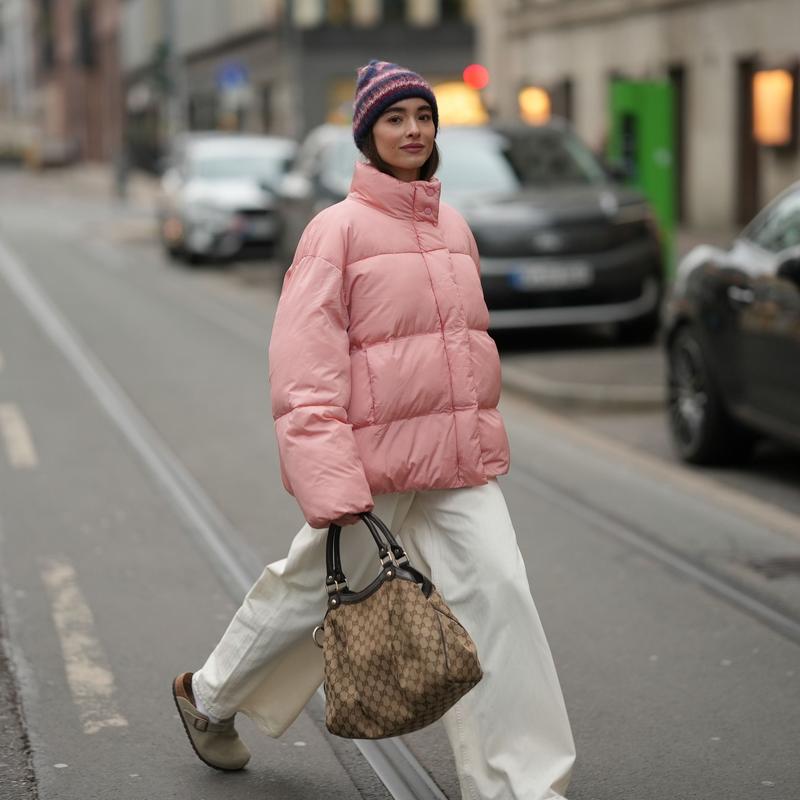
Emilia Petrarca: I think it was two things. I saw a lot of creativity. I think especially now, with all the snow and slush on the ground. It's a great example of you see people tying takeout bags around their boots so that they don't get wet or-- Yes, you just see ingenuity in New York, especially with commuting. People need to get from A to B. Yes, they find their own interesting ways to do that. That said, on the flip side, I also saw a lot of patterns. You notice things on the subway. You notice people gravitating towards the same maybe style of snow boot or jacket, or color of jacket. It was really fun to notice patterns in the wild rather than being fed these "trends" that are happening maybe in people's living rooms or on their computers.
Brian Lehrer: What's an example of what you called repair month? The focus on mending and maintaining your own clothes that you had last month. What did you do, for example?
Emilia Petrarca: Sure. Something very important that came out of repair month is I learned finally how to sew a button, which really changed some pieces in my wardrobe that I had just completely abandoned. They were stuffed in the back of my closet just simply because I didn't take five minutes out of my day to repair them. That was a really important one. I also-- I feel like this is still relevant because it's cold. I learned a lot about caring for knitwear. This woman told me to treat your sweaters like your pets, which I've been thinking about all winter long, that they're these living, breathing fibers that you really should treat as such.
Brian Lehrer: Let's take a phone call. Aretta in Asbury Park, you're on WNYC. Hello, Aretta.
Aretta: Hi, thank you for taking my call. Very long-time listener. I'm a vintage clothing dealer. I have been for almost over 20 years. When I find really beautiful handmade items, I tend to not sell them and I tend to keep them. I have a very curated closet. I store them, I preserve them. Like I said, I'm turning 50, and I'm thinking this stuff needs to be worn carefully, of course. I don't want to just keep it and preserve it. I want to wear it with style and enjoyment of real life.
Brian Lehrer: Emilia, you want to engage with Areta at all?
Emilia Petrarca: I love that. Yes. I mean, something I learned especially about knitwear. I'm thinking if something's handmade, it's maybe hand-knit or something like that. Wearing it does take away some of its life, but also, if you don't wear it, then it doesn't have a life at all. I think wearing it is-- You want to take it out, maybe not wear it every single day, but like a sweatshirt or something. Yes, I think that that stuff should see the light of day.
Brian Lehrer: Aretta, thank you very much. Oh, did you want to add something, Aretta? Go ahead. Especially at the right moment.
Aretta: I was going to say, you want to wear these things carefully and in the right moments.
Brian Lehrer: Awesome. Thank you very much. Can you give us a quick example, Emilia, of seeing something in real life on a person as you were walking around town that you then wanted to adopt or adapt for yourself?
Emilia Petrarca: Ooh, that's a great question. This is going to sound silly, but I've spent my whole life avoiding the color blue for some reason. I never connected with it, never liked it. I've been seeing a lot of blues, but also pinks and asparagus, like very bright, almost Easter spring colors. I think with the weather and everything, I've been inspired to finally wear blue. I bought my first blue sweater the other day, and now I'm converted.
Brian Lehrer: If you don't like blue, you would probably throw my whole closet or half of it in the trash. One more. Sarah in Chappaqua. We got about 20 seconds for you, Sarah. Hi. Real quick.
Sarah: Hi. I love people watching. I'm always looking at what people are wearing and how they move when they wear it. I was in the city recently. I'm a huge fan of clogs. I just wear clogs every day. I saw this woman, and she had the most beautiful shade of raspberry clogs. I've been looking for that shade ever since I bought two pairs. They're red, not quite that shade, but I'm still hunting for them.
Brian Lehrer: Very niche raspberry shade in particular. We just had this whole debate on the station about what shade of green a T-shirt is, Emilia. Can you identify raspberry? We have 10 seconds. Raspberry clogs.
Emilia Petrarca: I love raspberry clogs. I would suggest looking on Etsy. I feel like they have a large selection of clog shades on that site. Yes, I was listening to your debate, and I think you gotta go with the classic moss green.
Brian Lehrer: There we leave it with Emilia Petrarca, author of the fashion and style newsletter Shop Rat. You can find it on Substack. That was fun. Thank you very much.
Emilia Petrarca: Thank you.
Brian Lehrer: More personal style tomorrow at this time. Oh, look, Alison's got Laurie Anderson today, previewing this year's Tibet House benefit concert, which includes Philip Glass, Allison Russell, Debbie Harry, and more. Laurie Anderson and more coming up with Alison Stewart right after the latest news here on WNYC.
Copyright © 2026 New York Public Radio. All rights reserved. Visit our website terms of use at www.wnyc.org for further information.
New York Public Radio transcripts are created on a rush deadline, often by contractors. This text may not be in its final form and may be updated or revised in the future. Accuracy and availability may vary. The authoritative record of New York Public Radio’s programming is the audio record.