
Call Your Senator: Sen. Andy Kim
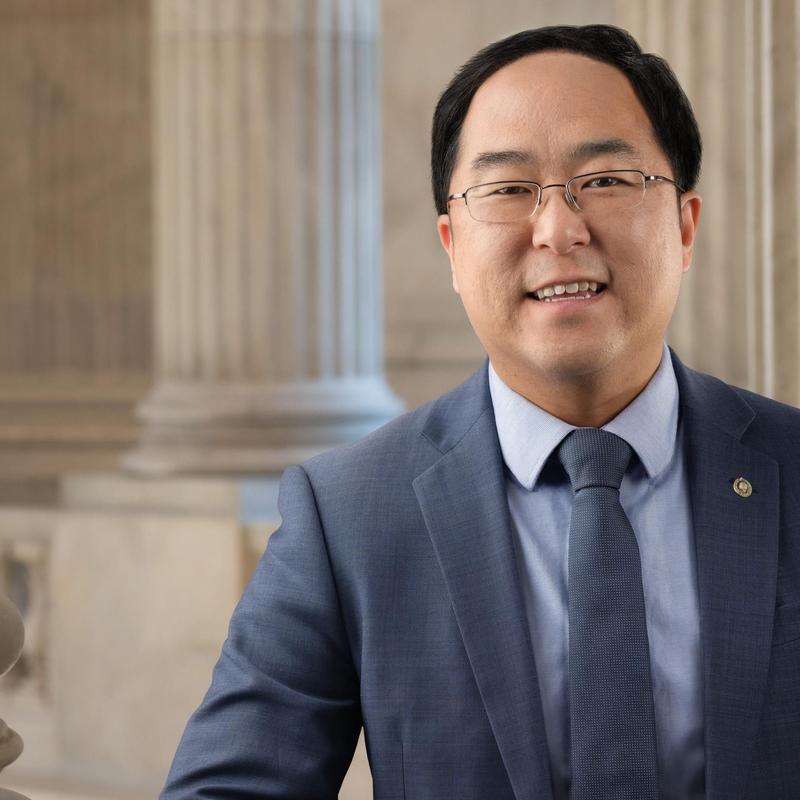
Title: Call Your Senator: Sen. Andy Kim
[MUSIC]
Brian Lehrer: It's The Brian Lehrer Show on WNYC. Good morning, everyone. Here are a few lines from President Trump's Iran war speech last night that jumped out at me, starting with one that I'm surprised hasn't been getting much attention in the post-speech coverage. He pretty much confirmed that this is a war of choice. People have criticized it as a war of choice, right? He said that the US doesn't have to be there for our own economy or national security. Listen.
President Trump: We don't have to be there. We don't need their oil. We don't need anything they have, but we're there to help our allies.
Brian Lehrer: That's exactly what Trump has criticized past presidents for, right? Making the United States the policeman of the world, spending billions of tax dollars that could be spent on Americans and sacrificing Americans' lives, but last night he said, you heard it there, "We don't have to be there. We're there to help our allies." Listeners, you may judge that as a worthy thing to do or not; opinions will differ, but either way, it's a reversal and an admission that it's a war of choice.
Now, I'll play three short excerpts from one paragraph in the speech that I thought was a very rich paragraph with big things coming kind of rapid fire. First, he told us what he is going to do in a way you might find crass, but it also includes a time frame, which people were waiting for.
President Trump: We're going to hit them extremely hard over the next two to three weeks. We're going to bring them back to the Stone Ages, where they belong.
Brian Lehrer: "Back to the Stone Ages," you might ask, is that what you want a president of the United States to talk like, even about an enemy country where we are, after all, killing many civilians? A specific amount of time intended to stop the talk of not knowing how long it'll take, he said two to three weeks in that clip. He said what the US is going to do, back to the Stone Ages, two to three weeks, then he went right on to say what he's not going to do.
President Trump: Regime change was not our goal. We never said regime change, but regime change has occurred because of all of their original leaders' deaths.
Brian Lehrer: "We never said regime change," but remember on day one, he promised the Iranian people, "When we're finished, take over your government. It'll be yours to take." There was definitely no such nod to human rights or democracy. He didn't use those words originally either, but they were kind of implied. No nod to human rights or democracy in the speech last night.
After that, he went right on to another important piece, claiming the new leaders there are more reasonable than the old ones, but in the same breath, threatening the quality of life of basically every Iranian civilian.
President Trump: The new group is less radical and much more reasonable. Yet if, during this period of time, no deal is made, we have our eyes on key targets. If there is no deal, we are going to hit each and every one of their electric generating plants very hard and probably simultaneously.
Brian Lehrer: Threatening to knock out electricity to the whole country. Finally, and this one is getting plenty of attention already, with stock prices down and gasoline prices up, he had to address the economic impact that's contributing to making the war unpopular in the polls in this country, so he tried to convince people the economic pain from Iran closing the Strait of Hormuz will be very temporary.
President Trump: When this conflict is over, the Strait will open up naturally. It'll just open up naturally. They're going to want to be able to sell oil because that's all they have to try and rebuild. It will resume the flowing and the gas prices will rapidly come back down. Stock prices will rapidly go back up.
Brian Lehrer: Some excerpts from President Trump's Iran war speech last night. We've got a couple more to play for our guest who joins us now. It's New Jersey Senator Andy Kim, who happened to have his monthly Call Your Senator segment scheduled for today. He's relevant not only because any member of Congress would be relevant today, but also because, as his bio page notes, he previously worked at the Pentagon, the State Department, the White House National Security Council, and as a civilian adviser to top generals in Afghanistan. Senator Kim, we always appreciate that you make yourself accessible like this. Welcome back to WNYC.
Senator Andy Kim: Yes, thanks for having me back on this morning.
Brian Lehrer: Garden State constituents, you'll get first priority on the phones with Senator Kim as usual, but anyone may call as usual or text with a question for New Jersey's junior Democratic senator about the war or anything else. 212-433-WNYC. 212-433-9692, call or text. Senator, did you get a clearer sense from the clips we played or anything else in the speech about how the US will decide when it's time to stop the shooting from our side?
Senator Andy Kim: No. No one in America got any clearer sense. I'll be honest, I don't even understand how Trump and his team thought it was a good idea for him to go on national TV and say the garbage that he did. It was not only ineffective; it was countereffective. I feel even stronger now about my opposition to this war that he undertook because, as you pointed out, he clearly admitted this is a war of choice.
He made no mention to just, again, the trade-offs and the struggles that the American people are facing. It's just like the American people are just livid about this. I've had a number of different engagements over the last week in New Jersey. Every single person is just like, "Why are we there?" Before he gave this speech last night, he gave some other comments yesterday, where he said the quiet part out loud again. He said that this is what a government does. It engages for military defense, and it's not there to be able to help people when it comes to childcare, when it comes to Medicaid, and Medicare.
He just said it out loud that he doesn't think that we should be spending more money on Medicare, on healthcare, on childcare, and instead should be undertaking these insane wars where they're now asking the American people to fork over $200 billion, enough money that we could afford funding the Affordable Care Act support for millions of Americans for seven years, that we could have universal childcare in this country, that for the three weeks of war, we could have vision, hearing, and dental coverage for every single senior on Medicare. Those are the things we can and should be spending our resources on, rather than this war of choice forced upon us by President Trump.
Brian Lehrer: Oh, I didn't hear those healthcare comments. I'll look them up. To press the point, you used very strong language just now, you called the speech garbage, to press Trump's case and see how you would react, I want to play another clip from the speech in which the President tried to make the case to the American people for the US service member deaths and hundreds of US service member injuries.
The injuries don't get much press, but I've seen it counted in the hundreds, plus the economic pain that this war is obviously causing being worth it. This clip also includes a critique of critics who say this war is becoming a quagmire like Afghanistan or Vietnam.
President Trump: The Vietnam War lasted for 19 years, 5 months, and 29 days. Iraq went on for 8 years, 8 months, and 28 days. We are in this military operation so powerful, so brilliant, against one of the most powerful countries for 32 days, and the country has been eviscerated and essentially is really no longer a threat. They were the bully of the Middle East, but they're the bully no longer. This is a true investment in your children and your grandchildren's future.
Brian Lehrer: Senator, take that seriously, even let's say another 32 days, and it would be a very short war by historical standards to leave Iran no longer a threat, as he put it, after 47 years of being the bully of the Middle East, as he put it, and sponsoring terrorism against Americans, too. That's his argument for why this is worth it. Given these last 47 years, is he wrong?
Senator Andy Kim: Well, first of all, again, I don't know what incompetent speechwriter allowed him to compare this to these deeply, many of them, unpopular wars of Iraq and Afghanistan and Vietnam, certainly, and showing again that this is a war, and this is, in their minds, something that it should be in that category. Look, the question here is also not just how much it's costing the American people, which we said is about a billion to $2 billion a day, which I can think of a million other things that we could spend that money better on, but this question of the premise of what he said, like, is this going to actually make us safer?
Yes, he is very clearly not articulating how that's actually going to be done. The new Grand Ayatollah, the son of the previous one, Khomeini, is somebody that has the closest ties to the IRGC Quds Force, the most militant and terror wing of the Iranian regime. We have leadership that is younger, that is even more close and tied to the most dangerous element of the Iranian regime, and now Trump is saying, "Oh, well, the Strait of Hormuz will just magically, naturally open up."
Well, that's just insane, and it worries me as someone who's been in many classified briefings about Iran, not just as a member of Congress, but when I worked on national security, that doesn't just happen. Iran seems to have figured out that they can make a lot of money by charging money for all these ships to go through. That could very well be something that they do for some time to come. They still have the capacity.
We know they have the ability to restart their ballistic missile programs and other things of that nature. There is no military solution alone that will completely prevent Iran from pursuing weapons production, whether conventional or nuclear, and so Trump is doing something that actually has given Iran more money. Iran has gotten a tremendous amount of money over the last month when it comes to their oil revenues because somehow the Trump administration thought it would be good to relax sanctions on Iran as well as Russia, and there's no guarantees in the future.
Again, what was the point of this if we now have a younger, more battle-hardened, and terror-friendly leader in Iran? Their capabilities are still-- yes, they've been diminished, but they have the capacity to be able to rebuild, as well as now the United States has depleted a huge amount of our own capabilities and arsenal, including Tomahawk missiles. We've now made it much more difficult to solve and address the Ukraine war, as Russia is now stronger than ever.
China, they're just dancing in the end zone. They couldn't be happier with seeing the United States bogged down in another war. The idea that we are in control, that things are better, it's all just a figment of Trump's imagination, and he shared with us that last night.
Brian Lehrer: Is it all just a figment of his imagination? I imagine if he would hear if he was here, he might push back by citing this stretch of the speech from last night. Here's another clip.
President Trump: Tonight, Iran's Navy is gone. Their air force is in ruins. Their leaders, most of them, terrorist regime, they led are now dead. Their command and control of the Islamic Revolutionary Guard Corps is being decimated as we speak. Their ability to launch missiles and drones is dramatically curtailed, and their weapons factories and rocket launchers are being blown to pieces. Very few of them left.
Brian Lehrer: If that's all true, doesn't it leave Iran very weak, at least for many years to come, militarily speaking?
Senator Andy Kim: This is the same president that told us and told the American people that he obliterated Iran's nuclear program just last year, and then now was using that as justification for this war and saying they were on the cusp within weeks. Obviously, there's a credibility deficit here, but just more broadly, again, I've worked on these issues long enough to know that it's about whether or not these groups or these countries are able to rebuild.
I was very much remembering when the American forces in Iraq thought that they had completely eradicated, nearly eradicated, from the face of the planet, Al Qaeda in Iraq, the terror group that killed so many Americans, only to see it within just a matter of two years or so regroup and brand itself as ISIS, and then overran large swaths of the Middle East under the leadership of Baghdadi.
I also remember how we as a country were celebrating how we had beaten back and decimated the Taliban, only to see them years later be able to retake the entirety of the country of Afghanistan. The question is, are we really safer? I don't see how anyone can say with certainty that we are. I can say that we are poorer as a nation. I can say that the American people are struggling more than they did six weeks ago.
I can say that the American people wanted a say in whether or not our servicemen and women are put in harm's way and whether or not this is something that we want to take on as a country. I think the President intentionally chose not to go to Congress because he knows what the answer is, which is that the American people want a government that's focused on them, focused on their cost of living and their challenges, and not for the international adventurism of an imperialist president who is just trying to just kind of burnish his own legacy at the expense of the American people.
Brian Lehrer: Mike in Manhattan, you're on WNYC with Senator Andy Kim. Hi, Mike.
Mike: Hi, Brian. I just want to clear something up. I am not a Trump supporter at all or an apologist for him, but when the very top of the show, you said that there was this issue that Trump has made a statement about, we're not needed there, and that's actually a confirmation that this was a war of choice, I know Trump is such a poor communicator, but I think what he's saying is we're not needed there now; it doesn't mean we weren't needed there in the beginning.
It's like, as a fire department puts out a house fire, at the end of the house fire, when the cinders are there, they can say, "Well, you guys don't need us here now anymore" because they put the fire out, but in the beginning, their house was on fire. I think Trump would make the argument that we were needed there. I don't agree with this, but we were needed there a month ago because they had ballistic missiles, and they had this threat of the nuclear threat and et cetera.
When he's saying we're not needed there, and parenthetically saying we're not needed there now, which I think is complete irresponsible on his part because he now created this crisis, and he's basically saying to European allies and Asian allies, "Now this problem of the oil is your problem, and you have to take it back," which I think is completely irresponsible as a country, but I do want to make that-- in my opinion, I think there's a correction that needs to be made.
Brian Lehrer: I understand.
Mike: Honestly, it's a big problem because Trump is misinterpreted this way so often, mostly by his own lack of ability to communicate, that we wind up arguing past each other as a nation. I think we need to kind of say, "Is this really an issue? Should the Islamic regime there have been challenged by us militarily?" and he should have made that argument. Then, for Senator Kim, if we didn't go in now, would this have been a problem down the road, at least with the ballistic missiles, assuming that their nuclear program was more or less obliterated for now with their intercontinental ballistic missiles and all these other programs?
Was this eventually going to be a problem? Because I don't see how much longer the world could have lived with this issue of Hamas and Hezbollah. These non-state actors, I feel like, as a country, we don't have a policy of dealing with these non-state actors that basically take over other countries from the inside out, like Hezbollah in Lebanon. Then, if Israel is being bombarded by Hezbollah and they want to attack back, who do they declare war on?
Do they declare war on Hezbollah and then civilians die, or do they declare war on Lebanon? As a country, I feel like we have not had a policy of dealing with that. Then people say, "Well, civilians are going to die?" Well, yes, of course, civilians are going to die, but does that mean that if Israel is attacked, they can't attack back? How do we deal with that? No one has an answer for that.
Brian Lehrer: Let me ask you one follow-up question, and then I'll get Senator Kim's response to your question to him. The line that we're talking about from Trump's speech is when he said, we don't have to be there, we don't need their oil, we don't need anything they have, but we're there to help our allies. Mike, are you confirming that when you cite Hezbollah and Hamas as the main reasons that we're there? This is not to defend Hezbollah or Hamas, but they're a threat to Israel, which is real; they're not a threat to the United States, some opponents of this war are arguing.
Mike: Well, if I were the President, again, I'm not a Trump supporter at all, but if I were in his shoes, the argument I would make is this: Hezbollah and Hamas are these non-state actors, and the Houthis are these non-state actors who are complete Iranian proxies. They've been creating disorder in the Middle East. They've attacked American bases there, and they're a threat to the long term prosperity of the worldwide economy, if nothing else, right?
Brian Lehrer: Might that mean they have to be dealt with?
Mike: At some point, if they keep attacking through these proxies, where is that eventually going to go? In the meantime, we have this whole Gaza thing, which in this country, there's headlines of AOC saying, "We're not going to give another dime to Israel." It creates this enormous political tension within this own country. Whether we want to admit it or not, Israel is an important ally.
If they're being bombed and attacked by Hezbollah and Hamas, what is the solution to that? Because the solution can't just be, "They can't attack because civilians are going to die," because they've been holding these countries hostage.
Brian Lehrer: So go after the head of the beast. I get you, which is Iran. Senator Kim, you heard what Mike's been saying.
Senator Andy Kim: Yes. Look, I've worked for years on trying to counter Iran's violence and terror throughout the region. I spent a lot of time trying to counter these Shia militia groups like Hezbollah, Kata'ib Hezbollah, Asaib Ahl al-Haq, and others. I certainly understand the dangers that they pose, but again, the question here is, was this action the right action that is going to lead to ability to stop that terror when we now have an Iranian regime that now recognizes that having larger numbers of conventional weapons was not enough to deter the United States from getting engaged and attacking?
Will that potentially just further their calculations now that only a nuclear weapon is going to keep the United States at bay, as we've seen in North Korea, for instance, as there was a similar type of run-up that we saw last century? These are the types of things that we need to be thinking of. Was there a legitimate effort to be able to see if there was a diplomatic solution to stop the uranium enrichment? I don't think there was.
As someone who worked in diplomacy, when I see this being put into the hands of Witkoff and Jared Kushner to do this without the level of expertise needed to do nuclear negotiations, while they're doing Ukraine and Russia negotiations. They're dealing with Gaza. Iran nuclear negotiations, that's not a part-time job. This is something that we needed to make sure we are taking on with the seriousness of what we're seeing here. That's what I would just say.
I don't think anyone discounts the fact that Iran is incredibly dangerous, and they killed a lot of people that I know in Iraq and elsewhere. It has been devastating, but we need to think through this strategically, which is why if there was anything that we were going to do, it needed to be done with Congress together with the American people's approval, rather than in this divisive way that is only furthering the fissure in our country and it is weakening our ability to be able to deal with this long term and is frankly weakening our standing around the world.
Brian Lehrer: Here's a follow-up text from a very different point of view from the caller. Listener writes, "I'd like to hear the Senator's opinion on the role foreign lobbyists and actors like Netanyahu have in pushing the US into another war, and if there are plans to fight against the influence."
Senator Andy Kim: Yes, look, I see this in Congress. I saw when I was in the executive branch, different countries, different groups trying to get the United States engaged in different ways. I think we need to stand up and make sure that we are doing what's in our national interests. Look, when it comes to this war, I certainly understand that Israel had an interest in the United States coming in. Saudi Arabia was lobbying for the United States to come in.
They and others are continuing to push Trump to stay in this war. Ultimately, it's on Trump. Ultimately, this is his decision, and he needs to own this because he is the one that pushed our country into this war. Again, I worked at the White House. I saw how there's sorts of different pressure, all sorts of different interests at stake, but ultimately, in our country, it's the President of the United States that needs to work with Congress. When Trump made the decision to go it alone, he owns this all himself.
Brian Lehrer: Laura in the Bronx, you're on WNYC with Senator Andy Kim. Hi, Laura.
Laura: Thank you. Hi. Hi, Senator Kim. This is an illegitimate, illegal war. It violates American laws. That is of great concern to me. That's point one, but my second point is that under Obama, we had 400 nuclear experts and scientists going into negotiations with Iran. They came out with a treaty that, under the IAEA, verified the amounts of nuclear material that Iran possessed. The IAEA conducted regular inspections. We knew where it was. We knew how much they had.
Now we don't know. Now there is 1,000 pounds of nuclear material scattered God knows where under some rubble that we buried, but it can be unburied, so obliterated, they can unobliterate it, and there's 400 pounds that's totally missing. That is not in American interests. It's not in anybody's interests. Any jerk can make a dirty bomb using that material. They don't have to make a nuclear bomb. All they need to do is use some of their already enriched materials and sling it around like on the subway. How would that be? Are we safer? I don't think so.
Brian Lehrer: Laura, thank you very much. Let me frame that as a question for Senator Kim. In fact, I'll do this by playing another clip from the President's speech last night, because this is getting a lot of attention. He did not promise to try to seize or destroy whatever the actual number is. I've heard 400 kilograms. Laura is saying 1,000 pounds of enriched uranium, some missing, some not, that could potentially be used for nuclear weapons. This is getting a lot of attention. I'm curious. Your reaction. Here's how the President put it.
President Trump: The nuclear sites that we obliterated with the B2 bombers have been hit so hard that it would take months to get near the nuclear dust. We have it under intense satellite surveillance and control. If we see them make a move, even a move for it, we'll hit them with missiles very hard again. We have all the cards; they have none.
Brian Lehrer: Senator, your response to the President and to the caller, Laura in the Bronx?
Senator Andy Kim: Yes, well, I share Laura's deep, deep anger and concern here for our Constitution, for our democracy, and for our service members now put into harm's way. What you just heard in that clip from Donald Trump makes it sound like we're on the hook on this forever. Are we just going to do this forever, and we're just going to continue to play whack-a-mole and continue to strike on our own?
Again, there is no military-only solution that's going to ever be able to fully rid us from this concern and threat. I say that as, again, I have family in South Korea. They are living under the threat of nuclear annihilation from a madman across the border. I understand the concerns about this. I feel it in my own family, but what we recognize is that with the actions of Trump, this is not something that's going to give that sense of security.
What Laura was talking about is just the huge increase that Iran has been able to make. They were previously capped at 3.67% back in about a decade ago in terms of uranium enrichment. They're now up to 60% because they are no longer constrained by the watchdogs, by the investigators.
Brian Lehrer: Senator, Trump's argument is the nuclear deal under Obama didn't really constrain them; they could have been doing this in a clandestine way anyway. Do you disagree?
Senator Andy Kim: Well, they're doing it now right in front of our eyes, also in clandestine ways, too. Has this actually constrained them, as this action that we've been taking, pulling us out of the diplomatic deal, actually worked? Even with Jared Kushner and Witkoff not at the table in the way that we deserve to have if we were going to seriously engage in this, we saw the Iranians making gestures, talking about efforts that could very well remove Iranian enrichment from their production, but the Trump administration was not interested.
I really felt like they had already made the decision to go to war, and all of this afterwards was just reverse engineering how they were trying to justify this to the American people. When we see him constantly changing the goalposts here, he did say regime change. He did say he wanted unconditional surrender. It's just constantly changing every single day, and we saw that last night in his speech as well.
Look, again, I certainly understand the concern and the threat that Iran poses. Having worked on these issues for years, I can tell you that there are better ways and more strategic ways that we should have done so, and always, we need to do so with the American people in mind, because again, they're hearing all of this, but they're asking themselves, "Well, what about me? What is about me?"
I was down in Atlantic City the other day, hearing from students there, people who were working the night shift at the hospital and then going to school and going to class right after that, staying up all night. They're just trying to better themselves, but they're saying how hard it is now for them to be able to fill their tank with gas, to be able to get to work, to be able to handle the childcare that they're having problems paying for.
Then Trump says, yesterday, the government's not there to be able to help you with childcare, not there to help you with Medicare and your healthcare, but what we are there to do is create lots of war, lots of conflicts, and continue to push in that direction. I just think that the American people have had enough of that. I was in Iraq and Afghanistan. I'm tired of this stuff.
I'm tired of us constantly putting that priority towards our military, that we're spending trillions of dollars on our military constantly, and then we're nickel-and-diming people when it comes to whether or not veterans can get affordable housing or whether seniors can be able to pay for their prescription drug medication. I think that this is a question of trade-offs, and I, for one, believe that we need to focus on the American people.
Brian Lehrer: We've got a few more minutes with Senator Kim coming up right after this.
[MUSIC]
Brian Lehrer: Brian Lehrer on WNYC. It's our monthly Call Your Senator segment with New Jersey Senator Andy Kim. We've been talking about the war and the President's speech about the war last night. I know you have to go in five minutes. Let me touch on one or two other things. The president issued an executive order this week on mail-in ballots. He directed the Department of Homeland Security to compile a list of every eligible voter in the United States and directed the post office to check any mail-in ballots against that list.
That's how the language looks to me. I know you're opposed to that, and he'll have to defend it in court, no doubt, but is it clear to you that such a system is even feasible and could actually be a threat to turnout as quickly as this fall's midterm elections?
Senator Andy Kim: Yes. Well, again, this is something that is ludicrous, and we see the Republicans' constant attack on vote-by-mail. I have to tell you, I was talking to a group of seniors, all of them again, very livid about the idea that the Trump administration is going to make it harder for them to be able to vote, that they'll have to wait in line. These are the types of things that just make no sense, especially given the [unintelligible 00:33:13]
Brian Lehrer: He didn't order the cancellation of mail-in ballots; he ordered the verification of mail-in ballots.
Senator Andy Kim: Yes, no, I get that, but I was referring to the amendment the Republicans were pushing with the Save America Act that would be gutting vote by mail. This is part of that, right? When they are telling you what they're actually trying to do, which is to just gut mail-in ballots in this country, you see that this is something that's going in that direction. We have to understand "What is their actual goal?" and it's to get rid of mail-in ballots largely in this country, which would make it so much harder in rural areas.
It will make it harder for college students. It'll make it harder for seniors. This is something where, again, Trump does not have the authority to be able to do this. This type of effort, especially this late in the system, is going to just cause enormous amount of chaos, which is why I'm hopeful that the courts will find that this is something that would just cause enormous challenge and be incredibly confusing to the American people and could very well disenfranchise many.
We're going to continue to fight back against this with the same level of intensity and force that we did against the Save America Act, which, again, is an effort by Trump to be able to pull things in his favor. Again, he said the quiet part out loud before we said with the Save America Act, this is something that would guarantee Republican power and majority for half a century, he said, 50 years that they would be able to continue to win. That's what this is really about, and I hope the American people see that.
Brian Lehrer: Before you go, our next segment is going to be about immigration policy in the context of Good Friday and Easter coming up. Anything from you on the Homeland Security and TSA partial shutdowns in pursuit of standards of behavior for ICE agents? It looks like the Republicans have found a way to work around the Democrats on this without addressing masks, or body cameras, or needing judicial warrants for ICE agents.
Senator Andy Kim: Well, look, what I'll say is that the Democrats in Senate and Congress have been standing with the American people who have been demanding reforms. We saw millions of Americans in the streets this past weekend. We want to make sure that we're continuing to push forward on those reforms. If the Republicans are not going to comply with what the American people want, they have to do this alone, and we will not be complicit in it.
The Senate moved forward, yet again, the bipartisan unanimous consent bill back to the House today, and I'm urging that we move forward with that, and then if the Republicans want to go forward with reconciliation and show the American people just how extreme their policies are, then that is their decision, but I also don't think that the Republicans are going to have an easy way in that because so many Republicans are hearing from their constituents about how much anxiety they have, how much they oppose these actions.
In Roxbury, New Jersey, there is a Republican town, a community there with Republican leadership that doesn't like that ICE is trying to impose a warehouse detention facility the size of eight football fields. Left and right, all over this country, we are seeing that pushback against this overreach and this imposition by ICE, by DHS. I'm pressing Secretary Mullin to stop that warehouse in Roxbury, to stop this process around the country, and to implement the common-sense rules that our local law enforcement are required to abide by in terms of no masks, clear identification, about judicial warrants. These are things that the American people stand with, and that's why we're fighting for them.
Brian Lehrer: Senator Andy Kim from New Jersey, we appreciate that you come on with us once a month to answer questions from me and from callers and texters. Thank you very much for today. Talk to you in May.
Senator Andy Kim: Yes, thanks so much for having me.
Copyright © 2026 New York Public Radio. All rights reserved. Visit our website terms of use at www.wnyc.org for further information.
New York Public Radio transcripts are created on a rush deadline, often by contractors. This text may not be in its final form and may be updated or revised in the future. Accuracy and availability may vary. The authoritative record of New York Public Radio’s programming is the audio record.
