
Expanding NYC's Child Care
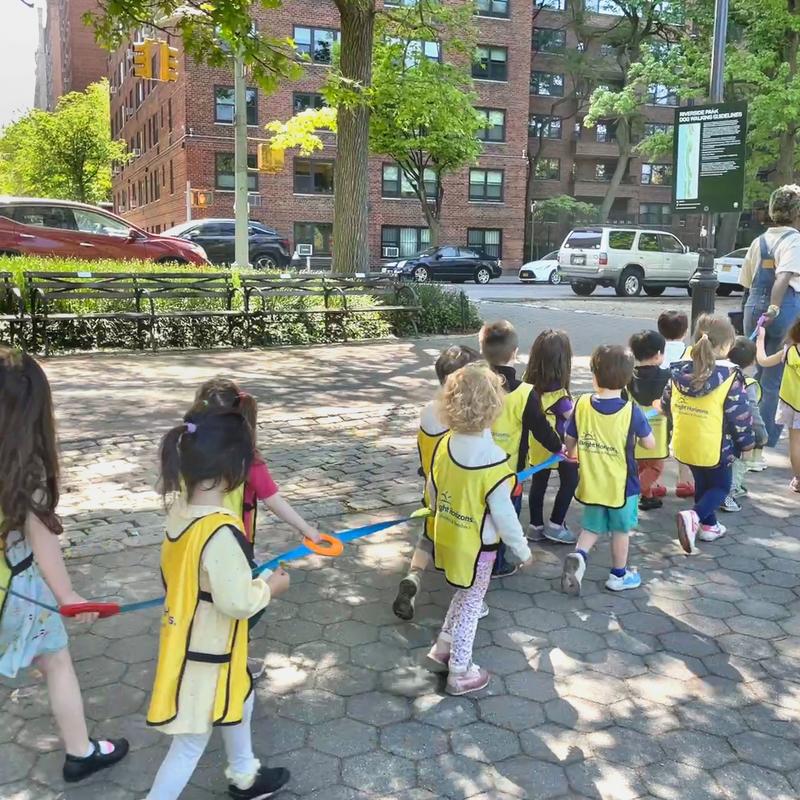
Title: Expanding NYC's Child Care
[MUSIC - Marden Hill - Hijack]
Brian Lehrer: Brian Lehrer on WNYC. Let's talk now to a key player in the Mamdani administration whose name you might not yet know. What you probably do know is that expanding child care, early childhood education, and child care generally was a central focus of Mayor Mamdani's campaign. Even as the tax the rich debate continues for funding a universal system, they're starting to build toward this in ways they already can and that haven't gotten much press.
For example, the first standalone city-run early childhood center for this era opened on the Upper East Side earlier this month. That center adds 72 new pre-K seats and 60 new 3-K seats to that area. It'll double the childcare spots for four-year-olds and quadruple the number for three-year-olds in the zip code. I'm told that's according to the education news website Chalkbeat. The center has been seven months in the making.
One note about this before we bring in our guest. Just as a public service announcement, Friday is the final day for parents to apply to New York City's 3-K and pre-K programs for next school year, the '26/'27 school year. Get it in. I know the administration is trying to get the word out so everybody knows at least that you have that option, but you do also have that deadline. Joining us now to amplify that and to talk about expanding childcare generally is Emmy Liss, executive director of the Mayor's Office of Childcare. Yes, there is such a thing. Emmy, thanks very much for coming on. Welcome to WNYC.
Emmy Liss: Thanks so much for having me, Brian.
Brian Lehrer: You want to start with the immediate PSA, the deadline this Friday? Who is eligible to apply?
Emmy Liss: Absolutely. If you are the parent or family member of a child who is turning three or four anytime in 2026, this announcement is for you. All three and four-year-olds are eligible to enroll in New York City's free 3-K and pre-K programs. To apply for 3-K or pre-K for this fall 2026, go on to myschools.nyc. It's a quick and easy application process, and the application is available in 13 different languages. You can also call us at 718-935-2009 or visit in person at one of the 10 New York City Family Welcome Centers around the city.
If you call or visit us in person, you can have interpretation support in over 200 different languages. All families apply by this Friday, and we look forward to seeing as many three and four-year-olds in 3-K and pre-K this fall as possible.
Brian Lehrer: I know phone numbers go by quickly on the radio, so I'm going to give it again. We wrote it down. 718-935-2009. 718-935-2009. Why are you putting on this push? I know you wanted to emphasize this in our conversation today, even though I'm going to ask you about other childcare policy things. Is it that despite the sort of wonderfulness and everybody thinks it's wonderful that there is in theory a 3-K and pre-K universal program in New York City? Do a lot of people just not take advantage of it?
Emmy Liss: Every year we have a whole new group of families who are coming into this process. Their first child is turning three or four, and though these programs are wonderful, as you said, and for families who take advantage of them, it makes a world of difference in terms of their child's academic preparedness, their family's ability to afford care, we know that so many families just don't know about 3-K and pre-K, or don't know how to apply, or may think they are not eligible.
We recognize that it's our duty to make sure that every family, no matter what language they speak, no matter where they get their news or information, that they hear about these programs. That's really why we're making this big push ahead of the deadline, so that all families in New York City know that if their child is turning three or four this year, they are eligible to apply.
Brian Lehrer: I'm going to play a clip here, and this is an example of how in a city where so many people speak Spanish, of course people speak all kinds of languages, but next to English, Spanish is way the number two, Mayor and Congresswoman Alexandria Ocasio-Cortez are out with a new ad, or really, public service announcement, urging Spanish-speaking parents to sign their kids up for pre-K or 3-K or just making sure they know it's available.
The mayor called in AOC as a reinforcement because he says his Spanish "is not the best". Let's listen to a little bit of that, and then we'll translate into English.
Mayor Zohran Mamdani: [Spanish language]
Speaker 4: [Spanish language]
Brian Lehrer: Mamdani said, "My Spanish is a little rusty." AOC said, "Don't worry, Mayor. If your child is turning three or four in 2026, you can enroll them in free 3-K or pre-K in New York City, but you must apply by February 27th, which is the deadline." Emmy, can you talk about the outreach efforts to get parents signed up? How many languages are applications available in, and what else are you doing?
Emmy Liss: Absolutely. The application itself is available in 13 different languages. You can go onto myschools.nyc and apply in English, Albanian, Arabic, Bengali, Chinese, Haitian Creole, French, Korean, Russian, Spanish, Ukrainian, Urdu or Uzbek. You can also receive translation and interpretation support in more than 200 languages if you call the phone number we shared previously, 718-935-2009, or if you visit our Family Welcome Centers, we are making every effort to reach families where they are.
We have advertisements on LinkNYC terminals, on ferries, in taxi TV, and those advertisements are in English, Spanish, Mandarin, and Russian. We are making a big push with traditional media partners, with new media by trying to reach families however they consume information, whether that's here on WNYC or in a local non-English media outlet, or if they're getting their information on social media.
We are making targeted phone calls to families who are in communities where we see application rates may be traditionally lower because they are less connected to government services. We are also partnering with community-based organizations and faith-based institutions and other trusted community leaders, recognizing that for many families, it's not government who they are looking to for information about services for their children. It is these trusted community voices, and so we are leveraging them as much as possible.
Brian Lehrer: There is a little bit of political pushback to that Mamdani, Ocasio-Cortez spot, and I'm going to ask you about that. She goes on to say, translating into English, "Any New York City parent, regardless of your occupation, income, or immigration status, is eligible to sign their child up." It's that last line that's getting pushback from some on the right. The Post wrote that the promo is "allerging migrant parents, including those in the country illegally, of the looming deadline to enroll in free 3-K and pre-K childcare".
First of all, is that true? You can be undocumented. You're still eligible for your kid to have free, government-funded 3-K or pre-K. How would you respond to the critics of of that?
Emmy Liss: Our 3-K pre-K programs, just like all of our public education from kindergarten through 12th grade, is open to every New Yorker. We will never ask you your immigration status to sign up for those services. Every child who lives in our city is entitled to a free and high-quality education from 3-K through 12th grade. We view this as early education, just like public education is a public good and something that we make available to all New Yorkers.
Brian Lehrer: Is that universal around the country? I haven't looked it up, but I'm guessing that this is not a sort of progressive New York City thing, but that anybody can sign up for public school, and they don't check immigration status of the kid around the country. Do you happen to know?
Emmy Liss: That is correct to my understanding. Public education is open to everyone. This is true here in New York, across the state, not just in New York City, and in other parts of the country as well for public education and public pre-school programs.
Brian Lehrer: We just got a text from a listener who seems to think the outreach is working because they write, "I got a friendly phone call because I have a kid born in 2018.' That kid would be, I guess, -- or ,well, that was probably a few years ago, but that means the Adams administration outreach worked on that family too. This is obviously not brand new to you. Are you doing it different ways? Are you adding new pieces for outreach?
Emmy Liss: Several of the pieces that I mentioned are new for us this year. The push on LinkNYC, some of our big pushes on social media and trying to reach families in new ways. Dating back to the early days of pre-K under Mayor de Blasio in 2014, there's always been a recognition that families value these services, but if you don't tell them they exist, families don't know to enroll. Every year we have to make this same push. I think this year we are thinking more creatively and really pulling out all of the different stops we have to reach families in new ways.
Brian Lehrer: Let me pivot to this news of the first standalone city-run early childhood center opening its doors on the Upper East Side. Want to talk about where that initiative comes from, and how it's going so far, and what people should know about it?
Emmy Liss: As we plan for 3-K and pre-K for this fall, we recognized that there's work to do to make sure that every family has access to a 3-K seat that works for them. We know that in the last couple years that hasn't always been true. Families may have received an offer, but it required a tough commute. As a parent of young children, I recognize that taking a three-year-old on a many-stop subway ride or a 20-block walk can be insurmountable. It is our goal to make sure that every family receives a 3-K offer that works for them.
When the Mayor and Governor stood together earlier this year and announced over a billion dollars in new funding for early childhood education in New York City, that included over $100 million to fix and expand 3-K and make sure that we have access for every family that needs it. The center you referenced on East 65th Street, which we were proud to announce last week, will be opening this fall, is part of that effort to make sure that every family has a 3K and pre-K seat that is close to home that works for them.
This is a center that had been long in the making. The City Council Brian Lehrernd others have long been advocates to get this site open, and so we are excited to do so. We, as we look at applications coming in by this Friday's deadline, will continue to look across the city at places where we need additional capacity to meet family need, and we'll be working closely with our partners, our contracted early childhood providers, both community-based organizations and family child care providers, to expand their capacity as well to make sure that we are meeting family need.
Brian Lehrer: Listener writes-- by the way, chimes in on the question about immigration status that we raised earlier. Listener writes, "Public schools are required by the 1982 Supreme Court decision Plyler vs Doe to serve all children regardless of immigration status." I do want to note that our colleagues at Gothamist report child care providers say they're fighting to keep their doors open amid low wages and under-enrollment.
Let's take both of those problems. The Daycare Council of New York reported in December that the approximately 40,000 child care workers in New York City, predominantly women and overwhelmingly women of color, are systematically undervalued, underpaid, and under supported. Is there a shortage of childcare workers because supply and demand don't match up?
Emmy Liss: Well, Brian, I will offer in full disclosure that I actually authored that report with the daycare people in my past life before before stepping into this role. I am really acutely aware of the challenges facing our child care providers who are essential workers, and we must do more to support the child care workforce who play a vital role in caring for our children and educating our children and for too long have been under-respected and underpaid and underappreciated.
We recognize that while there is great urgency for us to expand access so more families can participate in affordable free child care programming, we also need to support the child care providers and workforce who make this possible. We are committed to addressing these gaps and looking at different ways we can tackle this challenge because we need to support our existing child care workforce. To your question, as we look towards universal childcare, we need to grow the workforce and make sure that we have a robust pool of professionals who are excited to do this essential work.
Brian Lehrer: Your report noted, if we get to universal child care in New York City, it'll require tens of thousands more workers. Is there a target wage that you're actually citing as necessary to attract enough applicants?
Emmy Liss: We're going to be working with our partners, including partners in labor, to look at what the path forward to sustaining wages for childcare workers is.
Brian Lehrer: We're going to leave it there with Emmy Liss, executive director of the Mayor's Office of Child Care. Obviously, such an important role in this administration, as the mayor has said on this show and elsewhere that universal childcare is his number one priority in office among the various campaign promises that he made. We hope you'll come on with us regularly to update how that's going, and we very much appreciate it today. Emmy Liss, executive director of the Mayor's Office of Child Care, thank you.
Emmy Liss: Thanks so much.
Copyright © 2026 New York Public Radio. All rights reserved. Visit our website terms of use at www.wnyc.org for further information.
New York Public Radio transcripts are created on a rush deadline, often by contractors. This text may not be in its final form and may be updated or revised in the future. Accuracy and availability may vary. The authoritative record of New York Public Radio’s programming is the audio record.
