
Europe Pledges Not to Forget Ukraine
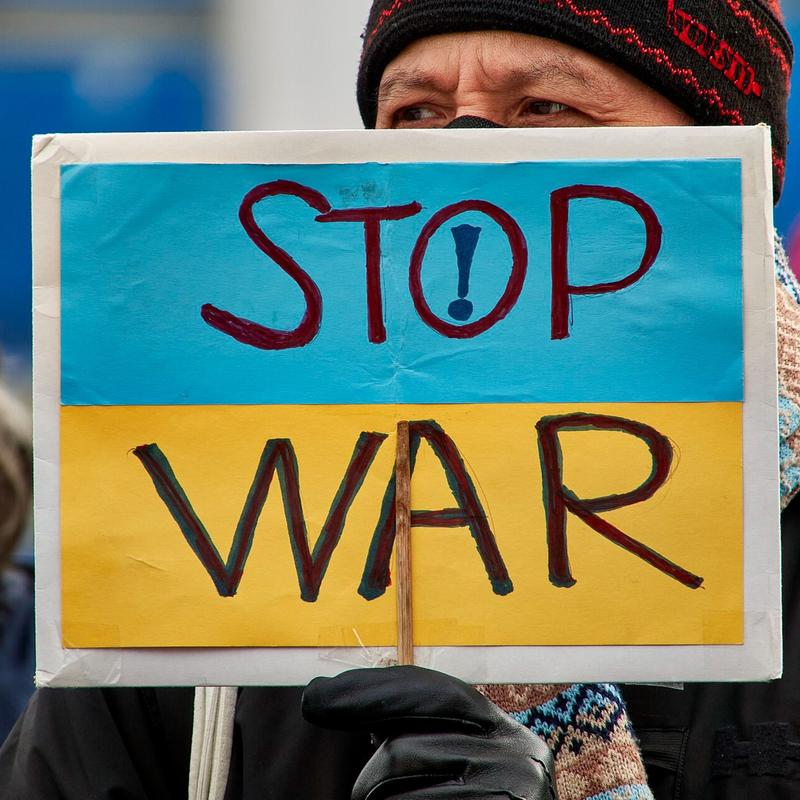
[music]
Kousha Navidar: It's the Brian Lehrer show on WNYC. Happy Friday, everyone. I'm Kousha Navidar, filling in for Brian today. Coming up on today's show, we'll talk to WNYC and Gothamist reporter Liam Quigley about two stories, one for each plank of his beats, which are parks and sanitation. On parks, he'll tell us about the Mamdani administration's proposal to redesign Grand Army Plaza in Brooklyn to make it less car-heavy and safer for pedestrians. Then, on sanitation, he'll tell us about the state of composting in the city.
Plus, after that, why Anthropic, the AI giant's new model, called Mythos, is sparking concerns about cybersecurity. We'll talk about what Mythos does and why Anthropic, the company, is issuing warnings about its power. Then have you heard of the online trend fibermaxxing? We'll wrap today's show with gastroenterologist and she'll tell us why she's on board with this one. First, this, as the US-Israeli war on Iran wages on with a tenuous ceasefire now in place, Russia's war on Ukraine also continues. Just this week, Russia launched more than 700 drones and missiles at Ukraine, killing at least 17 people. It's the deadliest attack in months, according to Reuters.
This war is now in its fifth year, and it shows few, if any, signs of ending. European leaders have been telling President Zelenskyy that the Iran war will not stop them from supporting Ukraine and that they'll actually provide more aid. The question is how? What about Trump's threat to pull the United States out of NATO this time because Europe refused to join his war against Iran? We'll talk about some of those questions now with Steven Erlanger, who covers Europe as chief diplomatic correspondent for the New York Times. He's joining us from Berlin. Steven, hi, welcome back to WNYC.
Steven Erlanger: Thank you. Nice to be back.
Kousha Navidar: It's a pleasure to have you here. Listeners, we want to hear from you as well, especially if you have family or roots in Ukraine or anywhere in Europe. Do you feel like Ukraine is being forgotten? Give us a call. Send us a text. 212-433-WNYC. Also, we welcome your questions for New York Times chief diplomatic correspondent Steven Erlanger, who covers Europe and Russia's war in Ukraine. That number again, 212-433-9692. Okay, Steven, help put this moment in context for us. How much has the Iran war changed things for Europe?
Steven Erlanger: It's changed things, because it's taken the world's attention away from the war in Ukraine, which, as you say, has gone into its fifth year and remains very, very bloody and very serious. For the Europeans, it's a more important security threat to them than Iran. Of course, it's also taken a lot of attention away from Gaza, which sits there broken while Israel is involved attacking Hezbollah and vice versa in Lebanon. For the Europeans and for the Ukrainians, it's a very difficult time because the Trump negotiations, negotiations over ending the war, over finding a ceasefire, they've disappeared because Trump works with a very small number of people. Steve Witkoff, and his son-in-law, and Marco Rubio tends to float around.
The fact of the matter is the negotiations on Ukraine, the idea of talking to the Russians and the Ukrainians, that's stopped. The Ukrainians worry, quite rightly, that America's used up so many missiles, air defense missiles in particular, both Patriots and THAAD missiles, that Ukraine won't be able to get even the missiles the Europeans have paid the Americans to deliver to Ukraine. There's already worries about that.
The fact of the matter is, you said yourself, the Russians continue to hit civilian places and infrastructure in Ukraine. Ukraine fires back, a lot of soldiers are dying on the front. The Russians tend-- If you believe NATO, Russia is losing 30,000 people a month, wounded and killed, which is an extraordinary number. Of course, the other impact, just to say one more sentence of the Iran war, is that it's giving Russia a lot more money because the price of energy has gone up so high, and Russia benefits from oil exports. For those reasons, it's a problem.
Kousha Navidar: Yes, a lot of things there. Just to put that into a package, the thrust is less attention towards what's going on between Ukraine and Russia. I'm hearing you say resolution, peace talks being forgotten about, fewer missiles for defense, more soldiers dying, more money to Russia. All of these dynamics are making the conflict and the war just heightening it, making it more complicated. Specifically on Ukraine. European leaders are promising more support, though, even as their budgets and attention are being pulled in another direction. I'm wondering what your take is on whether those European leaders can actually deliver on those promises.
Steven Erlanger: They are delivering. Part of what happened, of course, is President Trump decided he would stop providing money and military aid to Ukraine. He basically said to the Europeans, "It's your show, we're busy elsewhere, we don't care that much." JD Vance said the other day he's proudest of ending aid to Ukraine, which rather shocked people. The Europeans have money. It's a very rich continent, but they are under economic pressure. The only country with a big budget surplus now is Germany. The Iran war, of course, given energy prices, is cutting European growth. People are worried about tax receipts down the road.
The NATO countries have committed to providing $60 billion this year to Ukraine. They'll probably get close to that. Russia is pushing them to do more. One of the great advantages for Ukraine in this horrible mess is that Viktor Orban, the Prime Minister of Hungary, lost his reelection battle, and he has been an obstacle in Brussels in the European Union to giving Ukraine a €90 billion interest-free loan, which Ukraine could certainly use. That comes from Europe also. There's money there. I think Ukraine's biggest problem is not necessarily the money, but getting the munitions and the missiles available, even if they have the money to pay for it.
Kousha Navidar: You're saying it's not so much the money, it's more of the logistics. Is that a fair way of characterizing that?
Steven Erlanger: It's partly the logistics, and it's partly, frankly, the fact that the US provides certain capabilities that other countries cannot. The Patriot missile is an American, the THAAD is American. The Europeans have similar things, but not as good, and they're just running out of them. We, the United States, have used up so many in the Iran war, and we've given a lot of weapons to Israel, too, to protect it from Iranian missiles. There's only a certain stock. Of course, the Pentagon is very nervous about pulling down stocks so far, that it makes the US Vulnerable in the Asia Pacific, which was supposed to be Trump's priority, if you can believe that.
Kousha Navidar: I want to go back to energy prices because you had mentioned that. I think that's a really important thread to pluck on too, because, like you mentioned, energy prices are surging across Europe because of the closure of the Strait of Hormuz. Does economic pain at home in these countries in the European Union, does that start to erode political will to support Ukraine?
Steven Erlanger: It's too soon to say that about the Iran war, but I think it is eroding generally. It's been five years, and it's really, really hard, and it doesn't seem to be ending, and people get bored with it. Certainly, there are populist parties, far right parties of both the further left and the further right, who say this is a waste of our money. We need cheap Russian gas again. We should make a deal. It's enough. I think this is a problem.
The interesting thing about Europe is it doesn't actually get much oil and gas through the Strait of Hormuz. Most of that goes out to Asia. Because the energy price is a global price and it's flexible and fluid, the price of gas in Europe, as it is in America, is rising anyway, even though America gets almost nothing from Iran or the Strait. This is the problem of global pricing. Some American oil companies are making lots of money, too, much like the Russians, because the price of the LNG and the oil they're selling is obviously higher.
In general, your point is extremely well taken. It is a very difficult blow for consumers, for people who need to drive, for people who need to take an airplane. The International Energy Agency thinks Europe, as a whole, whatever that is, Europe will run out of airplane fuel in six to eight weeks.
Kousha Navidar: That's so soon.
Steven Erlanger: Yes. This will mean prices will go up. It is a big blow, and it's going to take quite a long time. Even if the war ends tomorrow, which I suspect it's pretty much ending, by the way. If it does end quite soon, it's still going to take months to get the energy markets back anywhere to where they were before the war.
Kousha Navidar: Listeners, we want to hear from you, especially if you have family or roots in Ukraine or anywhere in Europe. We've been talking about the political will. We've been talking about the increasing pressures that citizens in the EU are facing, especially those in Ukraine. Do you feel like Ukraine is being forgotten? Give us a call. Send us a text. We're at 212-433-WNYC. Your questions are welcome for New York Times chief diplomatic correspondent Steven Erlanger, who covers Europe and Russia's war in Ukraine. Give us a call. 212-433-9692. Steven, we got a text here. I want to relay this to you. It's a question. "Didn't Ukraine give up its nuclear weapons in exchange for a promise by the West to defend Ukraine?" Can you help answer that?
Steven Erlanger: Yes, that's effectively true. It always gets complicated. When the Soviet Union broke apart, Ukraine was a very big military part of the Soviet Union. They had big missile factories, arms factories. They also had nuclear weapons on its soil because Ukraine's closer to Europe. These were Soviet nuclear weapons. Basically, when the Soviet Union broke up, everybody kept everything. The Ukrainians kept Aeroflot planes, and the Kazakhs kept their Aeroflot planes, and the Ukrainians kept these nuclear weapons. Now, they were Soviet weapons, but they belonged to Ukraine.
The George H.W. Bush administration got very worried about what we've learned to call loose nukes. They went running around the former Soviet Union quite effectively, buying up nuclear material and making deals. They made a deal with the new country of Ukraine, or the newly independent country of Ukraine, to give up its Soviet nuclear missiles in return for security assurances. Now that's the difficult word. Not guarantees, security assurances.
This was the 1993/94 Budapest Memorandum that you sometimes hear about. It was signed, by the way, by the UK, by Britain, by the US, also by Russia. Russia was committed to Ukraine's independence in its post Soviet borders. That's clearly no longer true, but it's one of the reasons why the Ukrainians want this time security guarantees to end the war against a future Russian change of mind or a future Russian invasion. Now, the word guarantee you can bat around, but it's significantly more serious than the assurances they got under the Budapest Memorandum. That's a long answer, but that explains it, I think.
Kousha Navidar: Do you think Ukraine is looking back on that decision differently than they did in the '90s right now?
Steven Erlanger: Oh, sure, I think they're looking back on a lot of things differently.
Kousha Navidar: Fair enough.
Steven Erlanger: I think most of us look back on the '90s and wish we'd done different things, but they do, because they trusted, obviously, the new Russia, it was a different time. Russia was approaching NATO, it was leaning toward the West. It was Yeltsin time. Russia's changed quite a lot, of course, under Vladimir Putin and under his effort to restore control, particularly over the borderlands next to Europe. Belarus and Ukraine, those are part of what he considers Russkiy Mir, the Russian world, the Russian civilization, whether Ukrainians like that or not.
The world's changed, and Ukraine, I think, wishes that it had gotten better guarantees or that it had never given up the weapons. The weapons were never really under Ukrainian control. They could have only been fired from Moscow. Now, Ukraine might have figured out how to do it down the road, but yes, I think Kazakhstan feels very much the same, that these nuclear weapons were a deterrent. Yes, there's second, third, fourth thoughts as ever.
Kousha Navidar: Your point is well taken about many people, I'm sure, listeners right now, wishing that they had done things differently in the '90s. Let's go to a caller. We have Eric in the West Village. Hi, Eric. Welcome to the show.
Eric: Hi, thanks for taking my call. One thing, I greatly appreciate you folks bringing Ukraine back into the fore here. It's been forgotten by the media in the States for far too long, and that's been affecting the way this administration has also ignored it. My question, which originally came to me in discussions with Ambassador Michael McFaul, was that at the beginning of the war, there was discussions about closing the airspace over western Ukraine. There has basically been nothing because there couldn't be the agreement to do this from the West. Very little has been offered in terms of a strategic change that could alter the battlefield, which is necessary to get to peace.
Is it possible to bring that subject back onto the plate so that the West can consider, and by the West, I mean Europe, at this point, of closing at least the western portion of the Ukrainian skies to enable the Ukrainian army to focus more on the east and perhaps encourage repatriation of many Ukrainians who have left the country because of the war?
Kousha Navidar: Eric, thank you so much for that call. Very thoughtful, very thoughtful question. Steven, I'm going to bring it back to you. Closing airspace, like Eric is saying, at least over western Ukraine, still on the table? Why would that make a difference?
Steven Erlanger: It's a good question and a sophisticated question. Of course, the reason it was rejected at the start was partly President Biden being very concerned not to get into a direct fight with Russia. Also, that was a feeling shared by most of the main NATO countries that would have air power. Now it is a different debate. Now there's been a debate about whether air defense missiles based in Poland or Romania, or along the border, could be used to hit Russian missiles coming at Ukraine. That hasn't happened yet either because NATO is very, very reluctant to get involved in a fight with Russia over Ukraine, which is not a member of NATO.
Now we are buying weapons for the Ukrainians, and we're learning from the Ukrainians, and we're developing drones with Ukrainians. By we, I mean NATO, I don't mean just America. Ukraine's big army, which is nearly 900,000 people, is still Europe's best defense against a militarized Russia. There's a lot of sympathy for Ukraine, but there's no eagerness to fight the Russians. Even this idea people have of European troops based in Ukraine after the conflict to monitor peace and help keep the peace, and be a deterrent. That would only happen if the war is over, if there's an actual peace plan.
Then, if that's true, the Americans are also promising to support those guarantees with continued intelligence and even possibly air support. Though President Trump has been very vague about what he's willing to offer at the moment. He's telling Zelenskyy in this Trumpish way, "Well, we'll have a security guarantee if you give up the Donbas, if you give up territory that hasn't been conquered, and if you concede that and make peace with the Russians, then we can talk about a serious security guarantee."
It's all leveraging right now, but it's an important question. Should there have been a no-fly zone to begin with? I ask a different question, which Eric might be interested in. We knew, we kept saying that Russia was going to invade Ukraine. Now, the Ukrainians didn't believe it, and the Europeans didn't believe it. This is in December, January, just before the February 2022 invasion. Had we actually put in a lot of troops into Ukraine before the invasion, would it have deterred Russia from invading? That's a question I've often asked myself. I have to say.
Kousha Navidar: I want to touch on Zelenskyy as well, quickly, before we go to a break, because when I'm listening to you, I hear this tension as well with Zelenskyy of how he's navigating his war at home and the war in Iran. My understanding is that Ukraine has actually been helping the US in the Iran war by deploying counter-drone teams and sharing expertise. Is that right? If it is, how is Zelenskyy himself navigating this? Because there's competing interests. He needs Europe support for his country's own war, but he's also competing for attention with a war in which Ukraine is ironically proving useful. Is that distinction fair to make here, that balancing act?
Steven Erlanger: Kousha, I think you put your finger on something very important because Zelenskyy is very clever, and he saw it to his own advantage to help the Americans and especially help the Gulf states with fighting Iranian drones and Russian advances of the same Iranian Shahed drone, and sending Ukrainian technicians to help them do that. That earns him a lot of really goodwill, I think. That's been very important.
At the same time, Trump doesn't really like the guy, hasn't liked him since the first term when Trump was impeached, if you recall, over his efforts to push Zelenskyy into finding dirt on Hunter Biden. Zelenskyy has been a bete noire for Trump ever since. Also, Trump buys into the Putin narrative. I don't think Trump believes Ukraine's a real state. I think he believes Putin is correct when he talks about a Russian sphere of influence. After all, Trump believes in an American sphere of influence. Trump wants Canada, he wants Greenland, he wants Cuba. It is complicated.
Zelenskyy has another problem, which is his own people are a little tired of him, too. He's not particularly popular at home, but he is still a symbol of the war. He's been very, very brave. I think he's become politically very astute. The Europeans work very hard with him to keep his temper in control so he stays on Trump's sweet side as much as possible, despite Trump's basic dislike and basic effort to push him to make territorial concessions that he doesn't want to make.
Kousha Navidar: Steven, your point's well taken. I just want to point out how interesting it was that you compared Putin's perspective on the sphere of influence in his region to Trump's potential and likely perspective on sphere of influence here. I don't think I've ever quite thought of it that way, but it is very helpful for me to unpack the dynamics going on. Listeners, we're talking about the continued war in Ukraine. We need to take a short break. More in a minute.
[music]
Kousha Navidar: It's the Brian Lehrer show on WNYC. I'm Kousha Navidar, filling in for Brian today. My guest is Steven Erlanger, who covers Europe as chief diplomatic correspondent for the New York Times. Steven, we got an interesting text in during the break. I'd like to get your perspective on it. It says, "Sudan has been totally forgotten. When other problem areas of the world are mentioned, Sudanese suffering is rarely mentioned."
I thought of this text because of something that you said before the break, which was that EU citizens are bored, was the word that you used, when thinking about how much the war in Ukraine has been covered, how long it's been drawn out. I think bored, I also think of like exasperated. There are wars going on all around the world right now, and it's too much for one person. What do you think of when you think of trying to, as a citizen, managing all of these conflicts in your own head, in your own heart?
Steven Erlanger: The head and the heart are pretty well connected. I think we try to separate them, that's our task. We can't always do a good job. I think of Gaza. I personally spent-- I was former Jerusalem bureau chief, I covered Israel, Palestine. I spent a lot of time in Gaza before this war. The Gaza I know has been blown apart. I have lost friends on both sides, and at the moment, Gaza sits basically unrepaired and unfixed. So that's part of my head. This Sudan thing goes on. The Germans actually, just this week, did a fundraising conference for Sudan. It hasn't completely been forgotten about. As you say, there's a lot of pain. I covered the Iran revolution as a kid for the Boston Globe many years ago.
Kousha Navidar: 1978. Yes.
Steven Erlanger: 1978 and '79. I feel very strongly about Iran, too. I see the destruction there. I have no great love for the Islamic Republic or for its massacring-- I think that's the right word, of thousands of protesters. At the same time, you cannot be a journalist and not think about who's under the bomb. Sometimes, we like to think our bombs aren't really bombs, that they're medicine somehow, that we're dropping them because we're nice people and we intend the best from them. The people underneath aren't always the right people who get hit.
One thinks about that as a journalist, too, and it is, it's hard to keep it all in one's head. In a way, and this is better, I suppose. With the Internet and new media, we just know more about what's going on in different places than we were able to know before. In a way, we make it harder on ourselves.
Kousha Navidar: Yes, that line that you said just now about we think our bombs are medicine is quite powerful. I think I'm going to carry that with me for a while because our perspective from any country, internally looking outward, can be so different from the actual experience. Listeners, we want to hear from you, especially if you have family or roots in Ukraine or anywhere in Europe. Do you feel like Ukraine is being forgotten? Give us a call. Send us a text. 212-433-WNYC.
We have Steven Erlanger here with us, who covers Europe and Russia's war in Ukraine. If you have questions for him, give us a call, send us a text. We're at 212-433-9692. We just got a text here, Steven, that you had mentioned before, maybe now is a good time to unpackage it. It just says, "Significance of Orban's defeat for Ukraine?" You had mentioned it earlier. Can we unpackage it a little bit more? What happened? Why is it significant?
Steven Erlanger: It's really interesting because Viktor Orban was-- he has been prime minister once before and lost in 2002, and then came back, and then has been Prime Minister for 16 years, and did a lot for Hungary, it must be said. He has been a very much of a euro skeptic. He's been willing to take European money, but he's been close to Russia. The Hungarians, like the Slovaks, get gas directly from Russia on a pipeline. He has not stopped getting Russian gas. Even his foreign minister was charged with leaking European Union discussions to the Russians.
There's that part. Then he's also been blocking this big loan. Europe's been very confused about what to do with frozen Russian assets, mostly inside Europe. There are legal issues, and so they can't just annex them so that they-- or confiscate them. They've been figuring out ways to use them to amortize loans to give to Ukraine. They've come up with a €90 billion loan, which is $106 billion, quite big loan that would do great for Ukraine for at least a couple years, that would be interest-free because it's based on the frozen assets.
He was blocking that, and so it couldn't happen, now maybe it will get unblocked. The reason he said, and is why Europe gets complicated, the pipeline that Russian gas came to Hungary goes through Ukraine. It's called the Druzhba pipeline, the Friendship pipeline. It had been damaged in the war by a drone. The Ukrainians have been slow to repair it, saying it's quite dangerous. Orban was using this as leverage, saying, "I'm going to block this loan until you repair the pipeline."
I think he was also using it in his political campaign to say that Ukraine war endangers Hungary and makes Hungarians poorer. Now he's lost. I think his successor, Peter Magyar, will lift that veto. Money will again begin-- This $90 billion loan will flow to Ukraine. It is quite important, I think.
Kousha Navidar: Yes. It sounds like Orban's defeat unblocks a lot of potential for Ukraine to receive the support, including that very large interest-free loan that you had mentioned. I want--
Steven Erlanger: Yes.
Kousha Navidar: Yes, go ahead.
Steven Erlanger: It also cuts off Russia's efforts to divide the EU, it makes it much harder.
Kousha Navidar: I see.
Steven Erlanger: Sorry.
Kousha Navidar: No, no, no, not at all. I think that's a very important point. Removes the potential for division, like you were saying. I think that's a good moment to talk about NATO then, because I want to make sure that we touch on that. President Trump has continued to threaten to pull the US out of NATO. Is that threat landing differently in Europe now than it did maybe six months ago?
Steven Erlanger: This is an obsession of his. I met him, actually, in New York in 1988.
Kousha Navidar: He was still talking about pulling out of NATO then?
Steven Erlanger: He was talking about our allies screw us, and they take advantage of us, and they live this nice life because we pave for their defense. This was 1988. This is something he's been talking about forever. He's obsessed with this. He doesn't really understand NATO. He thinks NATO is some club that you pay dues to. He thinks the Americans play-- It's almost like a racketeering thing. He thinks that the Americans must be paid protection money by the rest of Europe.
Because he doesn't understand or doesn't credit sufficiently what I think America gets out of NATO, which, besides allies that think very much like us, I don't think we could have done the war in Iran without NATO, because you have American bases in NATO countries all over Europe from which we've been attacking Iran, and from which we've been protecting Gulf allies. Trump keeps saying it's not good for the United States. It costs the US too much money, and that they'd never come to our aid. In fact, the only time NATO ever did come to anybody's aid under Article 5 of Collective Defense, it came to the aid of the United States after 9/11.
Kousha Navidar: Do you feel like that threat is landing differently in Europe now?
Steven Erlanger: That's your question. Yes, it does land differently. It worries people terribly, there's no question. There have been some protections since he first started making these threats in his first term, frankly. He almost pulled out. John Bolton, who worked for him then, said he kept talking about pulling out of NATO like once a week and never quite did. Now it would take an act of Congress to leave, and would be more complicated, and I think people calm him down.
It lands differently because of Greenland, to be honest, that was the moment. Just to remind your listeners, this is when Donald Trump came to Davos, even before. Rather than just saying, "Gee, I'd like Greenland," he said, "I'm going to take Greenland whether you like it or not." Greenland, of course, is a semi-autonomous territory under Danish sovereignty. Danes are NATO allies. They're good friends of the United States. They're members of the EU. This was a shock to people because this is like somehow Mexico coming and saying, "I'm taking Texas, whether you like it or not."
This really shocked people because it put a hole in the sense of NATO solidarity. Now there's always, always going to be a question about the nuclear guarantee. Would the United States really trade New York for Tallinn in Estonia? Or even Seattle for Seoul in Korea. The fact is he promises to keep it. Then the question becomes troops in Europe. Now, the US put in like 20,000 more troops after Russia's invasion of Ukraine in February 2022. Those are pretty much still in Europe. There's at least 70,000 American troops in Europe now, which is bigger, by the way, than the entire British army, it should be said.
So far, only a couple hundred of them have been moved out. People are worried. The Trump people have been very blunt in saying we want to transition out of conventional defense for Europe. We will preserve the nuclear umbrella, but we want the Europeans-- "You're rich enough, you can defend yourselves conventionally." The Europeans are taking that a lot more seriously. There are lots of--
Kousha Navidar: It sounds like that moment with Greenland was a turning point, and it is landing differently. I'm looking at the clock. I want to make sure that we bring down one more caller who has quite an interesting question. Adamas in-- Where are you? In East Harlem. Adamas, hi, welcome to the show.
Adamas: Hi, thank you so much for having me. Very fascinating conversation. I did have a question about the last two decades, I've noticed with regards to Russian policy and hegemonistic decisions to go to war with Georgia in 2008, and then Ukraine in 2014, and then again almost four years ago, and also living in Armenia while there was a war with Azerbaijan, which looked like it was a greenlit by Russia. I wanted to ask if, during your decades of coverage of international affairs, have you seen or witnessed any peaceful decoupling of imperialistic nations that used to own colonial states or had power over independent or semi-autonomous countries?
Kousha Navidar: Adamas, thank you so much for that interesting question. What I hear you asking is whether there are examples of superpowers basically giving up imperial goals. Steven, you are one of the best people I can think of, with your decades of experience, as Adamas mentioned, to answer that. What do you think?
Steven Erlanger: It is a great question. Sometimes it happens when powers get tired. This is what happened to Britain, which was exhausted by World War II for very good reason. I wrote a piece about the 1956 Suez moment when the Americans told Britain and France, and Israel to stop the war, to seize the Suez Canal, whether this was a similar moment for America.
What you see in Europe, obviously, it hasn't happened recently, but after the Second World War, American power pushed decolonization very, very hard. We saw it in Vietnam. That's part of what happened. Americans basically filled the space left by the French, who were defeated in Indochina, left by the British, who were exhausted in-- and the French in the Middle East, and in a way, in parts of Africa, too. We've had a lot of decolonization.
You see it-- I covered the Kosovo war also, and Serbia was forced to give up Kosovo. In many Serbian minds, it still is Serbian, but the fact is it is pretty much independent now. This can happen by force. Then we saw it with the breakup of the Soviet Union, because much of the Soviet Union was pulled together of imperial conquests. Part of what drives Putin now is his effort to restore, in a sense, Russian Soviet power, and to make Russia again.
I sometimes compare it, if you don't mind another minute, to Germany after 1918. The Germans thought that 1918, the First World War, ended with Germans still on foreign soil, and the Germans thought they were stabbed in the back. They spent quite a few years after the Versailles Treaty, which they thought was very much unfair, wanting to restore their imperial might. That led directly to World War II. I think, in a way, we see this in Russia also. The Ukraine war, the attack on Georgia, the pressures on Moldova, the pressures on Kazakhstan, the pretty much takeover of Belarus are all part of this Putin effort to restore the past. That can be very dangerous.
Kousha Navidar: It sounds like, to Adamas's question, and thank you again for asking it, Adamas. It sounds like you're saying, yes, imperial powers sometimes-- or superpowers do sometimes give up imperial goals. I heard you say two broad themes there. One is force, one is fatigue. Do you think that's fair?
Steven Erlanger: I think that's fair, yes. It's very well summarized. Thank you.
Kousha Navidar: Oh, of course. Thank you for joining us. This is such obviously an important topic. I so appreciate you coming on to help us gain context here. Have us keep it in our heads and our hearts. We have to leave it there for now with Steven Erlanger, who covers Europe as chief diplomatic correspondent for the New York Times. Steven, thank you so much for joining us.
Steven Erlanger: Thank you.
Copyright © 2026 New York Public Radio. All rights reserved. Visit our website terms of use at www.wnyc.org for further information.
New York Public Radio transcripts are created on a rush deadline, often by contractors. This text may not be in its final form and may be updated or revised in the future. Accuracy and availability may vary. The authoritative record of New York Public Radio’s programming is the audio record.
