
Environmental Justice in NYC
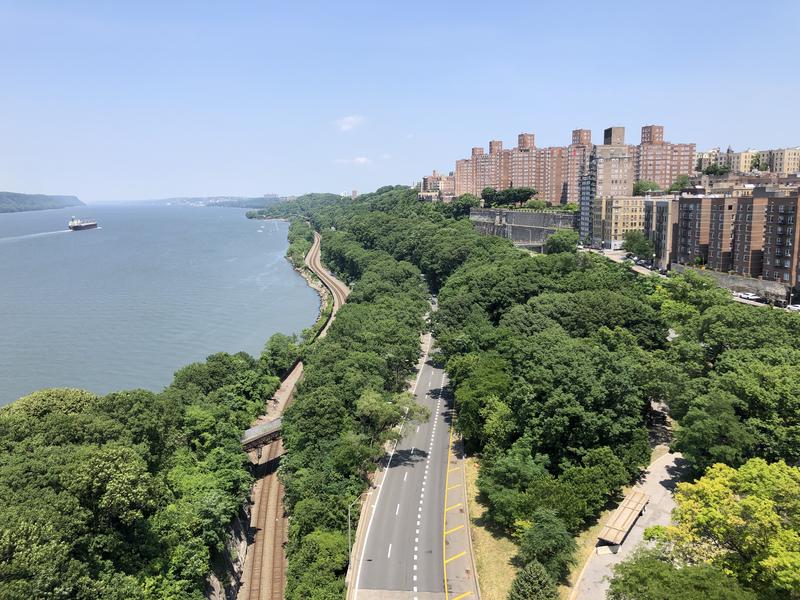
( Famartin / Wikimedia Commons )
Title: Environmental Justice in NYC
[MUSIC]
Brian Lehrer: Brian Lehrer on WNYC. New York City has quietly done something that perhaps no other city has done before: produced a sweeping citywide accounting of environmental injustice. That is where pollution, climate risk and disinvestment fall hardest and why. The Environmental Justice NYC Report, originally released last year, maps unequal exposure to heat, dirty air, flooding, noise, and health risks across all five boroughs. It also traces those inequities back through New York's history, from colonization and displacement to redlining and highway construction.
Now the city is moving into the next phase, turning that data into a formal Environmental Justice NYC Plan shaped by community input and meant to guide real policy and investment decisions going forward.
Joining us are Peggy Shepard, co-founder and executive director of the group WE ACT for Environmental Justice, which helped push for the law that required this work, and Paul Onyx Lozito, deputy director of the Mayor's Office of Climate & Environmental Justice from the Mayor's Office, which produced the report and is leading the planning process. Peggy, welcome back, and Director Lozito, welcome to WNYC.
Peggy: Thank you.
Director Lozito: Thank you so much for having me.
Brian Lehrer: Listeners, do you live in a neighborhood where you think heat, pollution, flooding, lack of green space, anything related, affects your day-to-day life more than other places in the city? Have you tried to raise concerns with city government and did you feel heard? What standards of environmental justice should the law require in city policy guarantee? 212-433-WNYC, 212-433-9692. You can call or you can text.
Peggy Shepard, before we get into the report itself, why don't you start by telling our listeners a little bit about WE ACT for Environmental Justice, how it began? We've really appreciated that you've come on the show a number of times and talked about it. What's its core mission been? Just give the listeners a little 101 on WE ACT for Environmental Justice.
Peggy: Absolutely, Brian. It's been great to talk with you over the years. WE ACT started in West Harlem. We realized that there was a sewage treatment plant being developed in the Hudson River. The sewage treatment plant was spewing odors and emissions that were making the community sick, so we began organizing. We organized folks to come out and talk to the mayor and the city about the issues that we were experiencing. Communities of color are often the environmental justice communities. They are the ones that have the disproportionate environmental impact of pollution because many of these facilities are cited in communities of color, communities that may be less affluent.
Again, we have to ensure that those issues are being addressed. We began working back-- I guess it's been about 37 years now. The sewage treatment plant we were able to get the city to commit $55 million to fix it. We began working on diesel buses because of the seven bus depots in Manhattan, six were all in Harlem. We realized that the pollution from the diesel buses were really polluting the air and making people sick. The asthma rates in Harlem were the highest in the city, and they still are among the highest.
We really began to push on the MTA. We filed a Title VI complaint, a federal complaint, about the buses, and we were able to get Governor Pataki to commit to purchase 300 natural gas buses. Then, of course, over the years, the buses have gotten cleaner. Of course, they're not electric, which would be cleanest, but they are cleaner. Again, we house most of the buses in Manhattan. That was another big early issue that we worked on.
Brian Lehrer: Those are some meaningful accomplishments. I'm glad you mentioned them so specifically. Bringing up to the present issue, WE ACT helped lead the push for Local Laws 60 and 64, which required the city to first study environmental justice conditions citywide and then develop a plan to address them, which is where we are today. Before we bring in the deputy director of the Mayor's Office for that, from your perspective, what wasn't being looked at clearly or seriously enough that made those laws feel necessary?
Peggy: You heard me talk about buses, you heard me talk about sewage treatment plants, but there are a whole range of impacts from facilities. Then, of course, with climate change, we have more extreme heat. We realized that Harlem is a community where very few people have air conditioners. In public housing, for instance, less than 50% of folks living there have an air conditioner. Again, extreme heat is an important issue. We will see more and more higher temperatures as climate change really begins to make its impact here in Manhattan and New York City. Again, we have to look at the full range of environmental impacts from a variety of facilities.
Brian Lehrer: Paul Lozito, from the city side, what did those laws require you to do differently than previous environmental or climate efforts? Because certainly the idea of climate justice and it as a topic of conversation in New York City politics is not new.
Director Lozito: Thank you for the question. What those laws require us to do is analyze in a real, robust, and meaningful way with communities that have historically been impacted, what issues they're facing over the course of a period of time. We know from Peggy, we know from other communities in New York City that they have had historical issues with extreme heat, with rainfall, with other forms of flooding, with emissions, with siding of polluting facilities. We also know that those communities align with communities that have a history of redlining.
Knowing all of those structural challenges, it is important for us and the law requires us to work with local environmental justice organizations and work with these communities to untangle those particular sets of issues. What Local Law 60 required us to do was to do a report. What that report does is models and analyzes issues that are real to those community in a way that is academically rigorous.
It's not just about saying, "Hey, my community looks different from a community that has historically resourced," it's about saying this community looks disadvantaged in part because we've measured the issues around air quality. We've measured the fact that these communities have less access to open space. There's a disparity where they don't have the same amount of tree canopy, and that list goes on. Through real conversations with the environmental justice community, we were able to analyze over 100 different factors that indicate that those communities have ultimately been less served than well-resourced communities.
That is what's analyzed in the EJNYC Report that is published. That gives a defensible body of work to indicate the issues related to these communities. In addition to that, in order to be transparent, what we did was we came up with an EJNYC mapping tool that's available to all New Yorkers. It really is a service that allows for not only environmental justice communities, but for any New Yorker to be able to turn on a layer in that mapping tool and see what issues are in their community related to air quality, access to resources, issues related to climate change, et cetera.
What Local Law 64 requires us to do is to address the issues that are articulated in the EJNYC Report. What it's led us to do is work with our Environmental Justice Advisory Board, of which Peggy is the chair, and a constellation of city agencies, over 20 city agencies, to look at the issues in the Environmental Justice Report and try to figure out which agencies could be tasked with solving those issues, and to do so in a way that is consulted with the Environmental Justice Advisory Board and transparent to the public, which will ultimately result in an Environmental Justice Plan that will be published as required by the local law.
Brian Lehrer: I see. It sounds like there are still a number of steps to go here in evaluating the needs of different neighborhoods to bring more equality in terms of environmental risk rather than implementation. Because I feel like we've been talking about this for decades in New York City, how close are you to an actual plan?
Director Lozito: That's a fair question. We've been working closely with the Environmental Justice Advisory Board. We published the EJNYC Report last year. Since that time, we've been working with agencies on what those recommended solutions should look like. We are close to the process where we're going to be consulting with the Environmental Justice Advisory Board and the community on what those proposed solutions look like.
One of the principles that we seek to follow is procedural justice to make sure that when the government is designing policies, we're doing it with our communities, not to our communities. We're at the point now where we've started to have listening sessions with WE ACT and with other organizations' charrettes on previewing how we're thinking about investments in these communities and dealing with other structural issues, which ultimately will result in a to-be-published plan.
Brian Lehrer: Peggy, how far can you go toward just saying, bluntly, what do you want the city to actually do?
Peggy: We want the city to address the issues that have been identified throughout our neighborhoods. This plan is a way to do that. We are going to be organizing charrettes and meetings throughout the five boroughs to ensure some democracy. To ensure that regular folks can come out and talk about these issues and tell us how they think some of these issues should be addressed. We really want to hear from individuals in neighborhoods about the issues that they are experiencing so that we can figure out how do we begin to address them. How do we work with all of the city agencies to ensure that these issues are addressed fairly and equitably throughout the city?
Brian Lehrer: All right, you called for it. You want to hear from people in different neighborhoods around the city on their environmental justice issues. You ready? Scott in Greenpoint is up first. Scott, you're on WNYC. Thank you for calling in.
Scott: Hi there, Brian. Thanks so much for taking my call. I live in Greenpoint, Brooklyn. It's the heartbeat of environmental justice in the city in a way. We have traditional, very high asthma rates in our Latino community. We suffered the ExxonMobil spill. We've had millions of pounds of toxic chemicals over the years that have gone into the air, and now we're sort of like déjà vu all over again. We're now fighting for justice on the border of our park, Bushwick Inlet Park. The MTA is trying to build three high-rise towers less than 50 feet from our water. We've gotten 5,000 signatures on a petition called Save the Inlet. We're trying to save the Bushwick Inlet. It's not just open space, it's also environmental justice.
Brian Lehrer: Thank you, Scott. Deputy Director Lozito, do you have any thought on that particular issue that he raises?
Director Lozito: On the particular issue, I need to delve a little bit further. What I will say is that part of the EJNYC planning process, what we are focused on is how to expand open space in EJ areas and for all New Yorkers, and also how to address issues related to air quality. Top of mind for us is expanding our tree canopy, which also will be addressed in our office's Urban Forest Plan.
Brian Lehrer: Here's a text. Listener writes, "I live on Grand Street and Lewis under the Williamsburg Bridge and next to the FDR, and a park that was completely destroyed. The city has no interest in serving my community, especially when the plan for the park was bypassed by City Hall at the community environmental expense.
Deputy Director Lozito, I'm going to throw that one right back to you. We talked a lot here when this was really active at the decision point on some of these things about East River Park.
Director Lozito: We hear those issues and we appreciate them. Part of our office's effort in the EJNYC planning process is achieving structural justice. That is understanding where the community feels like it has not been appropriately consulted, and figuring out opportunities to change that so that people feel more heard over time. As people are heard more over time, we anticipate that we'll see less instances where people feel unjustly served.
Brian Lehrer: Peggy Shepard, do you want to comment on either of those first two callers at all?
Peggy: I would just say that I am very happy to hear that a community resident is working to organize and to address this issue. It's important that these neighbors are organized, that people come out to these hearings and meetings that we're going to be holding, and that they go and talk to the mayor about what their concerns are. Organizing is absolutely critical to addressing these issues and ensuring that your neighbors understand these issues and they're ready to stand up and talk about it, advocate, and do what's necessary to get the city to address the issues.
Brian Lehrer: Here's a text, Peggy. This says, "When I was working on a project with Rocking the Boat in the South Bronx, I witnessed the dramatic rise of asthma in the kids. They reported that the trucks from FreshDirect and increased traffic were impacting them. Do you have anything on that FreshDirect as an issue in particular? If you think they are, is there a depot right there or traffic in general, South Bronx? Peggy?
Peggy: I'm not clear if Fresh-- if they have a depot there, but I would say that truck traffic creates a lot of pollution. We do need those FreshDirect trucks to be using either natural gas or cleaner diesel until they can be electrified. Yes, truck traffic creates pollution, and that's a problem. We know that by working with so many of our public health folks, the public health community has been arm in arm with us on environmental justice, ensuring that they're doing the research so that we understand what pollution is doing to our communities and to our health, and how we can begin to address it.
Brian Lehrer: I do see — I just looked it up — there was a lawsuit against FreshDirect, but that was dismissed, including on appeal. Deputy Director Lozito?
Director Lozito: Sure. We work closely, through the Environmental Justice Advisory Board led by Peggy, with South Bronx Unite and other local community groups in the South Bronx who are really concerned about air quality and the burdens that they see in that neighborhood. We've talked with them about how to attenuate those issues, whether that be through air quality monitoring, and particularly through tree planting, as I mentioned earlier. It's one of the first neighborhoods that is prioritized for tree planting. It has the co-benefit of addressing air quality issues and also addressing issues related to extreme heat because it's a heat-vulnerable neighborhood.
I know that community also has more comprehensive plans for increasing access to parks, increasing bike lanes, just generally elevating the quality of life in the community. Part of our planning process has been to really engage with them, appreciate their concerns, and try to figure out in real time how to support resourcing and dealing with a lot of the issues that have been brought up in that community.
Brian Lehrer: Deputy Director, where does the plan that we've talked about in the past for capping the Cross Bronx Expressway to cut down on the asthma-causing pollution from that roadway, in particular, so full of trucks all the time? Where does that stand?
Director Lozito: That's a great question. I would have to defer that specific answer to New York City DOT, who's worked really closely with the community on capping the Cross Bronx Expressway. A general goal in our plan has been, wherever practical, to address issues of air quality and quality of life concerns. We've been supportive of that effort, but they would have more detail on what that looks like. I think a top line is that as they are having those community conversations, it's about resourcing how to address those concerns.
I think one thing that we've learned through the planning process and we've learned over time is that there are generational burdens on these communities that happened over the course of decades. Unpacking and addressing those concerns are also going to take quite a period of time.
Brian Lehrer: Peggy, do you have anything on that? South Bronx?
Peggy: Just that the South Bronx has had so many effective advocates there over the years because they have so many environmental insults. I am just happy that we have the South Bronx Unite, and we had Sustainable South Bronx and so many other organizations over the years to really raise these issues to the city's agenda. Again, really important to have these organizers in the Bronx raising these issues.
Brian Lehrer: Deane on Staten Island, you're on WNYC. Hi, Deane.
Deane: Hey, how are you guys? I live in the North Shore and St. George in this waterfront. There's a lot of environmental justice issues all along this corridor. I live in a school zone. We are [sound cut] every day by unbelievable traffic coming from teachers and people who are coming in to find places to park. It's an absolute idle zone all day long. It really is an asthma cloud, and this is an asthma corridor. In addition to that, we've had increased use of the harbor. We have no harbor master. There are harbor masters for every location, all in the other boroughs and locations.
If you have a problem-- for example, we have ships now that idle all night long, which create very high-pitched sounds and noise from all the loaders that they've now put in. It keeps people up all night. It creates a high-pitched sound, almost like a vacuum. Sometimes it can go on for over a week, and everyone's ears are ringing. That's in addition to all the issues that everyone is discussing here already. I want to know why we can't get a harbor master here in a location that is just loaded with boats all night long.
Brian Lehrer: Paul Onyx Lozito, deputy executive director of the Mayor's Office of Climate & Environmental Justice, you want to take that?
Director Lozito: I'm not familiar with that particular issue, but I do appreciate the question. This is exactly why we're asking New Yorkers from across the city to provide us feedback on what they feel to be their environmental justice concerns. I'm taking that note in real time as we're advancing the EJNYC planning process as something that we can evaluate. I'm encouraging the caller, we are having a convening with the community on the North Shore of Staten Island, albeit it's focused on food insecurity, to please come to that session, and I'd be happy to have a follow-up conversation.
Brian Lehrer: One thing that I'll note, Peggy, is that as I look at other calls on the board that we may not have time for, and a lot of texts coming in, many are referencing noise pollution of one kind or another, a lot on idling vehicles, and some other sources of noise pollution. Do you include that in your environmental justice assessment at WE ACT?
Peggy: Certainly, noise pollution is an important impact in our neighborhoods, and we've got to figure out how to reduce that. We are going to want to hear more about those issues, with the upcoming community meetings, and we're going to have to figure out how we begin to address some of those.
Brian Lehrer: We are almost out of time, but we've touched on specific environmental justice issues from Brooklyn, Manhattan, Staten Island, and the Bronx. We're going to complete the set and go to Omar in Long Island City, Queens. Omar, you're on WNYC. Thank you for calling in.
Omar: How are you doing, Brian? Good morning. Long-time listener. I'm a truck driver for 19 years in this city, driver for a Pacific company. I could say that over the last five years or so that driving in the city, especially with trucks, has become very strenuous on us. It's very unfair what the city is doing. I feel like it's really an attack on all trucks. When it comes to pollution, the city has mandated-- Especially my boss specifically has changed over his system to a clean air system, which is DEF fuel. These trucks have to be updated. They have to be registered as such to be on the road.
Now, when the system is still on the truck, it's 30 degrees. It's 28 degrees outside. The trucks need to be running. Some of these trucks have different reasons why they need to be on. Now, they have individuals going around videotaping these trucks that are on for more than three minutes. Do you know what it takes to build up air pressure in these trucks for more than three minutes? It needs way more time than that. These trucks sometimes need time to warm up. They need time to do what they got to do. Three minutes is very unfair to say that you need to idle your truck and turn it off and turn it back on every so often just because, whatever, nice pollution or pollution, because that's very unfair to us.
Brian Lehrer: Interesting. Omar, I'm going to leave it there for time, but I hear you well. There's the pushback from a truck driver's perspective, Mr. Lozito, on what it actually takes to do the business. How do you balance the interest?
Director Lozito: We understand the discourse, and we understand that it takes time to transition to less emissive means of travel and that change is hard. I think what we've seen, at least through the EJNYC Report and planning process, is that by reducing emissions citywide, we raise our air quality, which has a beneficial health effect. That has been really our target of our work.
Brian Lehrer: By the way, the question that we couldn't answer specifically before about whether there's a FreshDirect depot in the South Bronx, we looked it up, and the answer is yes, it's at Port Morris. Peggy, before you go, this plan under city law that has been developed so far under the Adams administration, and we appreciate Deputy Executive Director Lozito coming on with us and talking about the project, obviously needs to persist into the Mamdani administration. Has Mayor-elect Mamdani weighed in specifically on this? It would seem to be consistent with his stated values.
Do you have any sense as an activist and also working with the government on directing this process, that it's going to be picked up in a robust way?
Peggy: I believe it will be picked up in a robust way. I am a member of the transition team for transportation and environment and infrastructure. I do believe that environmental justice will be strong policy in the new administration. Again, it is Local Law 1664 that requires the city to develop a plan, so this is a requirement. We do expect that this will continue, that we will have a strong plan. I believe this may be the first city report of its kind in the country. I'm not positive about that, but if not, it's one of the few. To have a plan that's going to address the problems that have surfaced would just be incredible. We're certainly looking forward to the new administration moving forward very quickly on this plan.
Brian Lehrer: Well, one quick follow-up then. How will you measure success, like a few years down the line, not on paper, but in people's lived experience, whether that's asthma rates or however you want to measure it?
Peggy: Well, we can certainly measure toxins and air. We've got air monitors throughout the city. We'll be able to understand whether our air quality is better, whether our water quality is better. We do have metrics and instruments to begin to measure some of these issues. We will begin to know whether we have been successful or not.
Brian Lehrer: Actually, one more follow-up. Power comes into play here, as it does in so many political campaigns and justice campaigns. Because if you're going to have environmental justice, this isn't just about cutting down on pollution. This is about cutting down on inequality with respect to who and in what neighborhoods people suffer from pollution. Then it means you have to get wealthier neighborhoods with presumably a lot of political power to pick up more facilities. Is that the hardest part?
Peggy: I'm not sure if it's about wealthier neighborhoods picking up more facilities. It's about our facilities being safe. It's about these facilities being sustainable. If that is happening, these facilities can go anywhere and without hurting those communities, but they have got to be safe, sustainable, and provide a healthy outlet for those communities.
Brian Lehrer: Peggy Shepard, co-founder and executive director of WE ACT for Environmental Justice, and Paul Onyx Lozito, deputy executive director of the Mayor's Office of Climate & Environmental Justice. Thanks very much for coming on.
Director Lozito: Thank you for having us.
Peggy: Thank you.
Copyright © 2025 New York Public Radio. All rights reserved. Visit our website terms of use at www.wnyc.org for further information.
New York Public Radio transcripts are created on a rush deadline, often by contractors. This text may not be in its final form and may be updated or revised in the future. Accuracy and availability may vary. The authoritative record of New York Public Radio’s programming is the audio record.
