
Election Results Across the Country
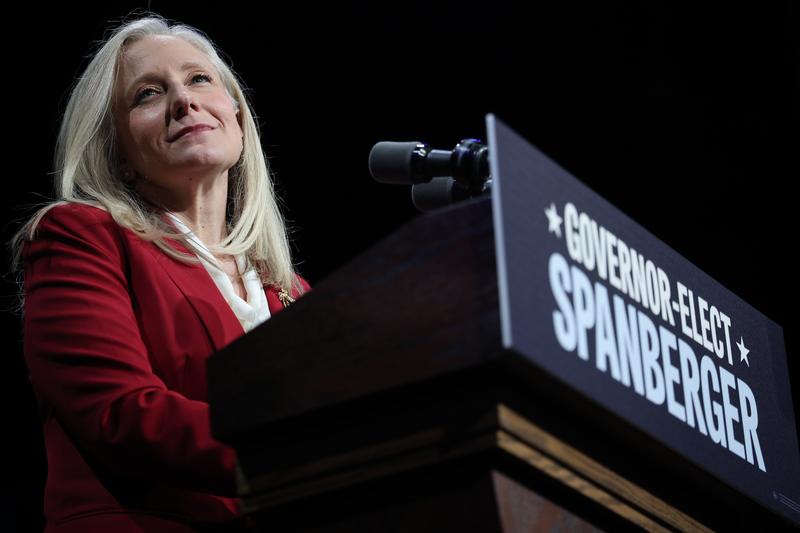
( Win McNamee / Getty Images )
Title: Election Results Across the Country
Brian: Let's talk about the election results and their national implications with USA Today's Washington bureau chief, Susan Page, who has called this election a proof of life for Democrats. I guess that means at least they have a pulse. Susan also has a forthcoming book called The Queen and Her Presidents, which is going to be published next April, about Queen Elizabeth and her United States presidents. I guess that refers to, right, Susan? Hi. Welcome back to WNYC.
Susan: Hey, it's great to be with you. Yes, US presidents and their dealings with Queen Elizabeth.
Brian: Was this a collection of local elections, or was this some kind of national election?
Susan: It was both. Of course, they were local elections, but they almost all went one way. All the marquee races went one way, and that reflected how nationalized our politics have become. Trump was an issue in the New York City mayor's race and the two governors' races in New Jersey and Virginia, in the California referendum, in the utility board elections in Georgia, in the judicial vote in Pennsylvania. I think it's fair to see this as sending a national message, although we should always remember that off-year elections are like the Iowa caucuses in that they are an imperfect venue to draw big conclusions about what's going to happen in the bigger elections that happen next year.
Brian: Was New Jersey a bellwether in any of the ways that you look for bellwethers? We were talking with our previous guest about the big swing in Latino voters, Latino voters who had been trending more toward Trump than in the past in last year's election, swinging way back to the Democrats, at least in the Garden State.
Susan: We'll need more analysis to know if the same Latino voters who voted for Trump swung to Sherrill, because in some ways, we may have had a slightly different electorate. In the exit polls in the state, about 9 of 10 voters who said they supported for Trump didn't vote for Sherrill, didn't swing back to the Democratic Party. This was, I think, encouraging for Democrats because it showed that talk after the presidential election last year, the talk by President Trump, among others, that it was a realigning election and that Hispanics who had been thought to be basically part of the Democratic base were now part of the Republican base. That was at least premature. That did not hold up last night.
You don't realign an electorate with the flip of a switch. You don't do it in one election. Trump didn't do it in one election last year, and Democrats in New Jersey didn't do it in one election last night, but it is an encouraging sign for Democrats that the electorate that re-elected Trump continues to be in some flux and is unhappy with the direction of the country today.
Brian: What do you make of the combination of these relatively moderate Democrats, Sherrill in New Jersey, Spanberger in Virginia, winning for governor, but also the Democratic Socialists, Zohran Mamdani, for mayor of New York?
Susan: Kind of a dizzying range there of ideology between Spanberger and Mamdani. In a way, that's good news. It means that the Democratic Party fielded strong candidates that fit their constituencies, that tailored campaigns to the voters they were facing. It creates, I think, a dilemma ahead for just exactly what is the Democratic Party? Where does it stand? That is something that's going to be, I think, the focus of this wide-open campaign for the Democratic presidential nomination in 2028, which, by the way, is well underway.
Brian: Listeners, we can take some phone calls and texts for Susan Page, Washington bureau chief for USA Today, as we talk about the national context of the various local elections. What do you think these results say about the country right now? Do the Democratic wins in New York, Virginia, New Jersey, that redistricting push in California that we'll talk about make you, if you're a Democrat, feel more confident about the direction and potential success of your party, or do you see this more as a rejection of Trump and his policies than an embrace of what Democrats are offering? Republicans, how do you put last night's results in perspective? 212-433-WNYC, you can call or you can text, 212-433-9692.
I see Trump posted, "Trump wasn't on the ballot." He blamed the fact that people turn out for him. They don't turn out for other Republicans, necessarily, aggrandizing himself. He also, though, blamed the losses on the government shutdown. That's an interesting combination of two things, because he's responsible, in large measure, at least for his share of the government shutdown.
Susan: Hey, by the way, Trump will not be on the ballot again. I'm not sure he's fully absorbed this message from the Constitution, but the Republicans will not have another election with Trump at the top of the ticket to draw his voters.
Brian: Unless they break the Constitution, we have to say, which is not out of the question.
Susan: I believe it's out of the question. I choose to believe in America. I don't know about you, New Yorkers. I'm from Kansas, and we believe the Constitution will prevail, which means, for Republicans, they can't get a Trump turnout with Trump at the top of the ticket, and that's of some concern. Is JD Vance another Trump? Is Marco Rubio able to have that incredible political gut that President Trump has? I think that was a factor yesterday, that Trump wasn't at the top of the ticket, but it's one Republicans need to deal with.
The shutdown now, record territory, 36 days, we've never had a shutdown like this before. Stories every day about the impact on programs that feed hungry children and that support Head Start programs, and that pay air traffic controllers. I do think that that tweet last night showed that President Trump, I think, is feeling more pressure to get engaged and negotiate on this shutdown, something he has mostly refused to do with Democrats.
Brian: Do you think the election results from last night push him and the Congress closer to a resolution of the shutdown?
Susan: Yes, and either a negotiated resolution where they make some concessions to Democrats and Democrats make some compromises. We've also seen him popping off about ending the filibuster in the Senate to make it easier to get things done through the Senate.
Brian: I think we've lost Susan Page's line for just a second. Are you there, Susan? We're going to have to reconnect with Susan. Let's take a phone call. Joel in Union, New Jersey, you're on WNYC. Hi, Joel.
Joel: Great. I wanted to make two points. First of all, the turnout seemed to be the critical thing. There were lines at my voting place, which is rare on any election, especially an off-year election. More people realize the stakes, and they're out there. The other thing is, I'm reading a biography of Mussolini right now, and I realized that Trump made serious mistakes in rushing his authoritarian program. These other dictators back in history, as opposed to the ones he imitates on the current scene, garnered their whole population behind them. They were immensely popular.
Hitler and Mussolini had like 95% support in the last elections they conducted, and Trump won by a hair. Then, of course, he's delusional, so he thinks he has more support than he has. Then he goes ahead with his thug arrest and destroying the Constitution. It's his lack of information, his greed, his urgency that's bringing him down. Anyway, that's what I wanted to say. Look at history and you'll see that he's just not following the dictator playbook.
Brian: Joel, thank you very much. Susan Page is back with us. I don't know how much of that you heard, or if you have any thought about it.
Susan: He didn't sound like a Trump voter to me.
Brian: Not quite.
Susan: He sounded like a fired-up Democrat. That's part of the good news for Democrats from last night is that Democrats who have been pretty beleaguered were fired up. You saw 2 million voters in New York City, a record number of voters, and I think 3 million in New Jersey. You saw the biggest margin in Virginia that any Democrat has gotten in modern times in the governor's race. You saw Democrats engaging again. One thing that's interesting is the Democratic congressional leaders have really floundered in finding a consistent, coherent response to Trump. You go out to the states and to New York City, and you're finding the stirrings of a revived Democratic Party.
Brian: Charlotte in Jersey City, you're on WNYC with Susan Page. Hi, Charlotte.
Charlotte: Hi. I was just saying to the screener, I think any candidate Democrat would have won in New Jersey. I think Mikie Sherrill was very uninspiring in personal appearances, didn't answer a lot of questions directly. People are fed up with Trump, and they just assume that a Democrat's going to help with a lot of things. I think the Latino vote, the whole ICE thing. I've been going out to Delaney Hall. If I'd had my druthers, I would have had Ras Baraka because I think he's more of a progressive, like Mamdani, but I went out and stumped for Mikie because we had to have a Democrat, and I think that's what it was, not her incredible personality or politics.
Brian: Charlotte, thank you very much. Susan, that's been a problem for the Democratic Party recently, and I think some of their leaders have talked about it. We can't just be not Trump. We have to stand for something affirmative that people can identify.
Susan: Yes. Mikie Sherrill was, as Charlotte was saying, not the most inspiring candidate. There were some late polls that showed that pretty close, although her victory turned out to be quite comfortable in double digits. It's part of the debate between do you want to be a centrist party that tries to appeal to more moderate voters or do you want to be Mayor Mamdani, who electrifies his supporters but holds positions that maybe would make him an unacceptable candidate in Ohio or Pennsylvania or Michigan or Wisconsin. That's the dilemma.
One point Charlotte made that I thought was quite right was last night, voters were in a mood to elect Democrats, whoever they were. The example of that would be Jay Jones, who was the Republican candidate for Attorney General in Virginia, involved in a late-breaking controversy over some offensive texts he sent a couple years ago, and even he won.
Brian: Democrat. I think you said Republican. Democratic candidate.
Susan: Oh, yes. No, no, the Democratic, yes.
Brian: [unintelligible 00:11:53]
Susan: That's right. Spanberger's victory was so big she dragged Jay Jones over the finish line. Even though in a perfectly normal kind of election, those texts might have been disqualifying, voters elected him anyway.
Brian: You talk about Mamdani and his style. Here's a clip of how aggressively he addressed Trump in his victory speech last night.
Mamdani: Together, we will usher in a generation of change. If we embrace this brave new course, rather than fleeing from it, we can respond to oligarchy and authoritarianism with the strength it fears, not the appeasement it craves. After all, if anyone can show a nation betrayed by Donald Trump how to defeat him, it is the city that gave rise to him. If there is any way to terrify a despot, it is by dismantling the very conditions that allowed him to accumulate power. This is not only how we stop Trump, it's how we stop the next one. Donald Trump, since I know you're watching, I have four words for you. Turn the volume up.
[cheers]
Brian: Susan, how about that? The Democratic mayor-elect of New York spoiling for a fight, we might say, challenging Trump to, of all things, turn the volume up. Maybe we should say, unlike some universities and news organizations we could name.
Susan: [chuckles] He's such a remarkable figure, I think Mamdani is. I think he's the most interesting Democratic comet we've seen since Barack Obama burst on the scene at that Democratic Convention in Boston when he was just running for the Senate for the first time. That doesn't mean he's going to become President of the United States, but it means he's got the potential to really move people, and especially young people who have been hard for Democrats to reach. Definitely someone to watch.
I know that President Obama called him and offered to be a sounding board because no one has that kind of experience that Mamdani is about to have, as Barack Obama has had. We definitely got all eyes on New York. 34 years old, the first Muslim to lead the city. The spotlight will be on him, and on him to deliver on some of the big promises he made, the very specific promises he made, that energized those supporters.
Brian: Has Trump responded to him, as far as you could tell, as Washington bureau chief, or do you think he's scratching his head and say, "What do I do with this guy?"
Susan: He calls him a communist and a dangerous radical and says he's going to cut off funding to New York. We'll see.
Brian: He said he's going to cut off funding to New York as much as he's got the discretion to do so, or the law allows, or something like that. I don't know how much discretion that is. There are already lawsuits like that from New York and other localities regarding things that have been appropriated by Congress. That's, I guess, a fight ahead to watch, yes?
Susan: It is, although I think that President Trump has shown us that presidents have more authority to reorder Congress's priorities than we ever thought a president had.
Brian: Cuomo was running against Mamdani by saying Trump has the authority as president to take over New York City. A fear tactic, I guess, but we'll see how much Trump tries to act on those words. On the Obama factor, there was a private call with Mamdani a few days before the election that did get out. I'm guessing Mamdani's people had permission from the Obama people to release just the fact that it happened. Obama didn't campaign with him as he did with Mikie Sherrill and Abigail Spanberger. He didn't endorse him.
I know he's got a policy of not endorsing in municipal elections since he left the White House, but he did make an exception for that in the case of Karen Bass when she was running for re-election as mayor of LA, when she was in a very tight race. Maybe he just didn't see this as so close, which it turned out not to be, so he didn't have to break his policy. There are Mamdani supporters who, A, see Mamdani as their generation's Obama, and B, are disappointed in Obama for not going further. Do you have anything on Obama world about that?
Susan: No, I don't. I can say that Obama's embrace was closer than that of two fellow New Yorkers, Chuck Schumer, who I think still has not said who he voted for in the race, and Hakeem Jeffries, who waited to endorse him until the eve, when early voting started. I think Obama gave the strength of support that he would typically give in a case like this. I understand that this is, for Mamdani supporters, kind of a litmus test. Were you with him before he won? I'd be curious, the relationship with Obama seems much less brought to me than the relationship he's going to have with Chuck Schumer.
Brian: Schumer's rationale, probably, whether or not he says it out loud, is that he wants to make it harder for the Republicans next year in the midterms to say, "See, that socialist Mamdani is the face of the Democratic Party. Schumer endorsed him. Schumer's just following him. Mamdani, the socialist, is pulling the strings of any Democrat running for House or Senate who says they're moderate," and I guess Schumer's trying to keep some distance from that. Would you hear it that way?
Susan: Good luck at that. I don't think that refusing to say who you voted for when you're the Democratic leader of the Senate, refusing to say you voted for the Democratic candidate for the mayor of your city, is going to stop any Republicans from trying to tie Mamdani's most liberal positions around the necks of Democratic candidates elsewhere.
Brian: Here is Jessie in Brooklyn. You're on WNYC. Hi, Jessie.
Jessie: Hi. Thank you so much for taking my call. I absolutely love listening to your show.
Brian: Thank you. What you got?
Jessie: Sorry, go ahead.
Brian: No, I'm just asking you what you've got. Go ahead. You called us.
Jessie: Oh, thank you. Very true. I am so, so excited about this moment and Mamdani's win and the policies that he has, particularly that he's the first Democrat to have such a robust platform for trans and LGBTQ New Yorkers, and he won on that. I think that's huge for the Democratic Party. I think other Democrats should fall in line, or at least take a look at not using trans-slander or not ignoring it as a trans person myself. Also, I wanted to say that it wasn't only the crazy turnout at the polls that had such momentum.
Last night, I went to a DSA watch party, and there was a line out the door of the bar, and the bouncer was telling us and the DSA organizers that, literally, the entire neighborhood, I was in Gowanus in Brooklyn, you couldn't get in anywhere to watch the election. People were pulling it up on their phones on the line. Then we finally did get in, and we heard Mamdani's speech, packed with young people of all different races and genders, and just how inspiring this moment is, and how desperate people are to celebrate with each other.
When y'all were talking about these various different Democrats coming forward and winning, but that they're very different, I think the one thing that they did all campaign on is affordability. I am so excited, as Bernie Sanders has said for a while, to see the Democratic Party really embrace the working class. I think that might be the common denominator there, and I'm hoping that various different Democrats can unite on that and keep that moving forward.
Brian: Thank you for your call, Jesse. We really appreciate it. Call us again. Susan, when your line went out before, you were about to say something about the filibuster in the Senate. I think Trump had called on the Senate Republicans a few days ago to break the tradition of the filibuster, meaning needing 60 votes to do things like end the shutdown in the Senate, and John Thune, the Republican Senate Majority Leader, resisted. Is that changing?
Susan: There are some signs that more Republican senators are willing to consider the possibility of ending the filibuster, but there is this fear among more senior senators, like Thune, that getting rid of the filibuster sounds like a great idea when you're in control and a very bad idea when you're in the minority. Even if you're in the control now, which Republicans are? Even if they hold control next year, which they're favored to do, the day will come when Democrats, once again, control the US Senate, and Republicans could rue the day they got rid of the filibuster. That's the debate Republicans are having now, and that's the debate Democrats have had in the past when they were in control and considered getting rid of the filibuster.
Brian: Let me go down real quick a few other of the votes around the country yesterday. One in California, where they passed Prop 50. You described it as joining the redistricting arms race and a sign of rising Democratic combativeness. Is this a turning point where Democrats are deciding to fight Trump era tactics with similar tactics of their own? This follows Texas with less resistance. I don't think they needed a statewide vote on a state constitutional amendment to redraw their lines for five more Republican seats for the House next year, but here came California in response, big time.
Susan: I think it does reflect just the frustration that Democrats have felt at not being as combative, not being as tough and willing to punch the other guy as the Trump Republicans have been. You remember when Michelle Obama addressed the Democratic Convention and said, "When they go low, we go high?"
Brian: Yes.
Susan: I think a lot of Democrats feel like that hasn't worked for them, that they go high, and meanwhile, Trump and the GOP takes away their lunch. I do think their willingness, even in California, where we know that the electorate supported the idea of non-partisan redistricting, even there by 2 to 1, voters embrace the idea of shuffling the lines in an effort to get rid of five of those Republican incumbent members of Congress.
Brian: Another one, listener writes, "Writing from Philly suburbs, very proud of our votes to retain the Supreme Court justices. There seemed to be high turnout to judge by long lines, last night here. There were also high-profile school board elections that went to the Dems. There was an outside conservative PAC funding the other side." Have you looked at that Pennsylvania race? I think we had something in another state recently, was it Wisconsin, where liberal-leaning judges were retained, where, of course, part of the Trump project and the Project 2025 is to get more liberal justices out.
Susan: Big vote in Wisconsin to keep the Supreme Court justice on the state Supreme Court. We saw in Pennsylvania last night this so-called retention election, not something I would previously have been familiar with, but a vote whether to keep three Democratic-leaning, three liberal justices on the state Supreme Court.
Judges usually survive these retention votes, so there wasn't an expectation they were going to lose, but Republicans got focused on it. So did Josh Shapiro, the governor of Pennsylvania. It became a hard-fought election that Democrats won, the three justices retained their position. That's important because we've seen how powerful state Supreme Courts can be on some of these issues, including issues involving voting.
Brian: There we will leave it with Susan Page, USA Today Washington bureau chief, the author of several books, including her most recent, The Rulebreaker: The Life and Times of Barbara Walters, and her forthcoming, The Queen and Her Presidents, which is going to be published in April. I don't think I've ever given a book interview invitation five months in advance, but mark your calendar for some time around the release date to come back on the show.
Susan: Oh, I would love that, Brian. Thank you.
Brian: Hopefully, before to keep talking about the news. Susan, thanks a lot.
Susan: Thank you.
Copyright © 2025 New York Public Radio. All rights reserved. Visit our website terms of use at www.wnyc.org for further information.
New York Public Radio transcripts are created on a rush deadline, often by contractors. This text may not be in its final form and may be updated or revised in the future. Accuracy and availability may vary. The authoritative record of New York Public Radio’s programming is the audio record.
