
Eating Well Today
Brian Lehrer: It's The Brian Lehrer Show on WNYC. Good morning again, everyone. Coming up later this hour, this week's edition of our Shop Listener call-in, helping our listeners who sell holiday gifts compete with retail giants. Today, it'll be for you if you're selling gifts for $50 or less. Shop Listener coming up later this hour. First, we turn now to a book that tries to answer a question we all face every single day, what to eat. Not just in the what's for dinner sense, but the deeper, more overwhelming project of deciding how to be healthy, what to prioritize in your daily diet, how to grocery shop, and also the intersection of our food choices and our politics. The book is What to Eat Now: An Indispensable Guide to Good Food, Why It Matters, and Where to Find It. It's a newly overhauled version of Marion Nestle's classic 2006 guide, What to Eat, at its 20th anniversary. Marion Nestle, who's appeared many times on this show, as some of you know, is a biologist and nutritionist whose work helped popularize the idea that food is political long before that idea became part of the mainstream conversation. She helped make it that.
In this new edition, she re-examines a food system that has transformed dramatically since the mid-2000s and helps us understand how our own habits and choices fit into and are driven by that bigger picture. Again, it's What to Eat Now, which is an update of the original book from 20 years ago, What to Eat. Marion Nestle, always great to have you. Congratulations on the new book. Welcome back to WNYC.
Marion Nestle: Thank you. I'm really happy to be back.
Brian Lehrer: What's really interesting to me, just to start out, is how much of this new book is new because sometimes we have authors on to revisit their classics from 20 years ago or whatever, and they tack on a new little forward or something like that, but otherwise it's the same book. I think you intended to do that, but then changed direction. Is that right?
Marion Nestle: It was started out as a pandemic project, and I read over the book, and I thought, "Gee, this reads pretty well. I bet I can update it in six months." Here, we are 40 years later. I had completely underestimated how much had changed in the 20 years. I hadn't noticed it was occurring gradually. I wasn't paying close enough attention. I was just shocked by how much had had to be changed. It's basically a new book.
Brian Lehrer: Give me any one example.
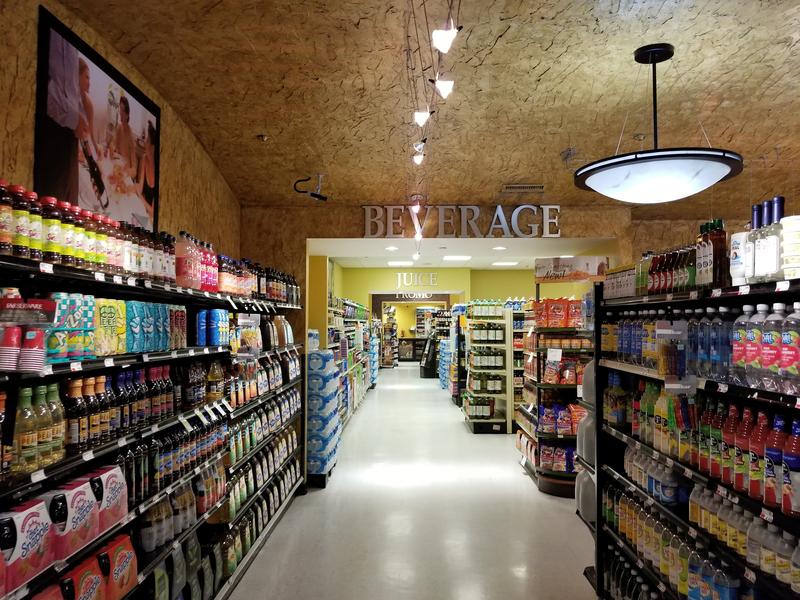
Marion Nestle: Plant-based meats, online ordering, ultra-processed foods, the substitution of flavored waters for full-sugar Coke and Pepsi, total rearrangement of the supermarket in order to account for online ordering. That was a really amazing change. The introduction of international foods absolutely everywhere throughout the store, that's new. Every single product that I had used as an example in the book in 2006 no longer exists. I had to find new ones.
Brian Lehrer: Listeners, we're going to go through in a little more detail some of those things that Marion Nestle just ticked off. Who wants to tell us a story about how your own diet has transformed even over the course of the last 20 years, maybe gradually, without you really realizing it, like she was just saying about her perceptions of the industry and lifestyles? Or maybe you want to ask about some of the food mysteries and myths that you would like sorted straight. What in the grocery store overwhelms you? Since a lot of this is her view of what happens in a supermarket.
212-433-WNYC with your stories or questions from Marion Nestle, professor of nutrition, food studies, and public health emerita at NYU and author of many books, including the new What to Eat Now: The Indispensable Guide to Good Food, How to Find It, and It Matters. 212-433-WNYC, 212-433-9692. Why do you focus on the supermarket as a way of understanding Americans' relationship to nutrition?
Marion Nestle: That's where most Americans get their food, and it just seemed like a wonderful way to organize the book. When I was first thinking about how to do it, I needed an organizing device, and the supermarket is a convenient one because I could go aisle by aisle, starting with the produce section, and going around the store, and then discussing the issues that arise in every section of the supermarket. This pretty well covers the issues that anybody would be concerned about, confronted with this enormous array of foods.
You might want to know where they come from, how they're produced, who produces them, how did they get to the store? Are they good for you? Are they good for the planet? People have these kinds of questions, and I tried to deal with them.
Brian Lehrer: There's an interesting contradiction that seems pretty central to your thesis, and I'll just pull directly from you to explain. You're right. At supermarkets, you exercise free choice and personal responsibility with every item you put into your shopping cart, but massive efforts have gone into introducing you to want some products more than others. It's certainly not a new concept that advertisement and product placement and all of that is intended to influence what you buy. What's changed here in 20 years?
Marion Nestle: I would say there's more of it, and it's more intense.
Brian Lehrer: The competition in the food industry is enormous because there's twice as much food available in the United States as anybody could possibly eat. Waste is built into the system. We have 4,000 calories a day available for every man, woman, little tiny baby in the country. On average, we probably need 2,000 calories a day. That means that there's going to be this huge waste. It also means that the food industry has to compete to sell its products. As I'm fond of saying, food companies are not social service agencies. They're not public health agencies.
They're businesses with stockholders who demand immediate and higher returns on investment and continued growth in profits. That's the system we live in. When you go into a supermarket, and it doesn't really matter which one it is, everything about it is designed to-- It screams, "Buy me, buy me, buy me." That's what's going on there. I think most people don't notice it. You just want to get in there and get out as quickly as possible, but that's not the way the system works.
Brian Lehrer: Jackie in Redding, Connecticut, has a way that choices seem to have changed in the last 20 years, I think. Jackie, you're on WNYC with Marion Nestle. Hello.
Jackie: Oh, hi. I guess over the past 20 years, I've just been seeing an increased emphasis on organic foods. I've always been a pretty wholesome eater with a lot of homemade foods. I, 10 years ago, probably was aware of the Dirty Dozen, spinach, berries, foods to buy organically. My own tastes and preferences have increased to really include a lot of organic food. I just wonder how critical that is, how important that is. Then, also that along with the-- It just seems like an increasing amount of ultra-processed foods that people should avoid, or I try to avoid.
Brian Lehrer: Thank you, Jackie. We've got two big things on the table. Let's take them one at a time. Organic. How seriously should we take the label 'Organic'? How seriously do studies that you're familiar with indicate that they influence our health from product to product or generally?
Marion Nestle: I'm a big proponent of organic. Organic is a production method. It's regulated by the USDA. We can go into long discussions about how well it's regulated and how accurate everything is. In general, the organic label means something. It means that the foods were not produced with the most harmful pesticides. They weren't fertilized with sewage sludge, and they're not genetically modified, if you care about that thing. Certainly, there's plenty of evidence that kids who consume organic products have lower levels of those particular pesticides in their bodies.
It's very difficult to relate that to actual health, but those pesticides can't be good for us. I'm really in favor of it. This was one of the really big changes. 20 years ago, there were a few organic products in some supermarkets. Whole Foods had a lot of them. Now I cannot go to a supermarket in America and not find some organic produce, usually salads or salad mixes. Even in stores in the poorest neighborhoods, I find some organic foods. They have become increasingly mainstream, and I think that's a good change. Should I take on ultra-processed?
Brian Lehrer: Let's stay with organic for one follow-up question, if I might. That is, do you still prioritize-- She mentioned the Dirty Dozen, that original list of things where I guess there's a particular concentration or risk of the pesticides getting into your bloodstream, and that thing, berries of some kind, spinach she mentioned. Is there a pecking order still to any degree that you think is worth mentioning?
Marion Nestle: That's the Environmental Working Group's designation of the foods that have the most pesticides on them. I think that list is worth looking at. It's usually things where it's really hard to wash the pesticides off. Things like strawberries are usually high on the list, and a bunch of other things. Pesticides are hard to wash off. Washing produce is always a good idea, but you can't always get the pesticides off.
I think that list is worth looking at, and you make your choices. Organic milk is something that most people think is a pretty good idea, but it costs more. It costs more, I think, for two reasons. One is because the amount of labor that goes into producing foods organically is greater. The other is that the government doesn't subsidize it. It doesn't get any price breaks. If you want organics, you've got to be willing to pay more for them. I happen to think it's worth it, but I don't eat that much, and I can afford it. [crosstalk]
Brian Lehrer: Then, it becomes an equity issue and a political issue, because if the government won't subsidize or mandate that things get grown organically, then we're telling people with less money that they are doomed to be less healthy, even if they eat a lot of vegetables and fruits.
Marion Nestle: Beautifully put. Everything about food is political. That's a very good example of why the government subsidizes corn and soybean production. If you look at corn and soybean production, it just absolutely boggles my mind because the Department of Agriculture has this graph of what happens to corn that's grown in the United States. It's 12 billion bushels, some unimaginable amount. More than 45% of it goes to feed animals.
More than 45% of it goes to fuel automobiles. It's converted into ethanol, leaving a tiny fraction of corn production as food for people. We have a food system that's not aimed at producing food for people. It's weird.
Brian Lehrer: Marion Nestle with us with the updated version of her 20-year-old classic, What to Eat. It's called What to Eat Now. One more thing on organics, listener writes, "Vegetable farmer here. There are different types of pesticides, topical and systemic. You cannot wash off systemic." All right. Onto the other thing that the last caller brought up. Processed foods or ultra-processed foods. I don't think we used the term 'ultra-processed foods' much 20 years ago. Can you say what it really means?
Marion Nestle: Yes. We didn't use it at all because it wasn't invented until 2009. It was an invention of a professor of public health at the University of São Paulo in Brazil, Carlos Montero, and his colleagues. They divided the foods according to their degree of processing. They established four categories, unprocessed foods, processed culinary ingredients, and processed foods, and then established a fourth category, a
fancy name for junk foods, ultra-processed, which has a very specific meaning in their terms. Industrially produced with a lot of industrial additives, can't be made in home kitchens, that's a working definition, and produced specifically to be irresistibly delicious, or addictive if you prefer, and profitable for the maker.
The most profitable foods in the supermarkets are the ultra-processed foods that come in boxes with long lists of ingredients. Once that definition came into effect, researchers were able to study the effects of ultra-processed foods on health. There have now been more than 3,000 studies using the word "ultra-processed" in their title. Of those, there are about 100 clinical trials of the effects of ultra-processed foods on health, and 92 of 104 clinical trials showed that if you eat a diet that's based largely on ultra-processed foods, you have a higher risk of obesity, Type 2 diabetes, heart disease, all the chronic diseases that plague adult society.
Those are observational studies. They can only prove correlation. They can't prove causation. There are now several clinical trials in which people have been locked up and can't lie or cheat on their diets that show that if they're fed ultra-processed diets as compared to minimally-processed diets, they consume more calories than they otherwise would, a lot more calories, 500, 800, or 1,000 more a day, and don't realize it.
I think for reasons of caloric intake alone, that's a reason to cut down on these foods. The British journal The Lancet has just come out with three papers in a series on ultra-processed food, one on science, one on politics, and one on policy that reviews all of this evidence. I'm a minor co-author on the politics and policy papers.
Brian Lehrer: Listener pushes back a little on what they may see as over-categorization of foods by being processed or ultra-processed. Listener writes, "Sugary sodas are processed very little. Tofu is very processed. It's an erroneous term. How about using content?" I guess they mean specific ingredients rather than generalizations. What would you say to that Listener?
Marion Nestle: I'm sorry. Is it my turn to talk? I think I missed something.
Brian Lehrer: Yes, Ma'am.
Marion Nestle: There have been a lot of criticisms of the ultra-processed concept, and it's a new way to think about foods. The point of the ultra-processed concept is that the matrix of the food is changed. If you have ultra-processed ingredients that are extracted from foods, they're easier to digest. You take in the calories more quickly. The investigators are looking at the reasons why these foods induce people to eat so much more without people realizing it. They have several hypotheses. They're hyper palatable. They're so delicious, you can't stop eating them. Their texture has changed.
There's several hypotheses that are being investigated, but the basic observation has held up very well, you eat more if you eat these foods. Eating more is not necessarily good for health. The concept makes some nutritionists uncomfortable because they're more concerned about the nutrient quality, and the processing doesn't really have anything to do with the nutrients. You can add nutrients back to ultra-processed foods, and that's fine. That's one additional additive, and they don't actually count as part of the ultra-processing.
It's the other additives and the other things that concern the people who think the ultra process concept is an important one. I'm one of them. I think it's a very important concept. It makes dietary advice very easy. Cut down on ultra-processed foods. It doesn't mean never eat them. I have my favorites.
Brian Lehrer: Here's a text with an upbeat take. Listener writes, "I've been doing farm-based food education with grade school kids for going on 15 years, and I've seen dramatic change. Kids now willingly try all the veggies on the veggie bar and with hummus, not ranch dressing. Things have changed." I don't know if in your years teaching at NYU, Marion, you were able to see any change in that direction in the dorm cafeterias or anything like that, but what do you think about that text?
Marion Nestle: I go to a lot of schools. Whenever I can, I visit schools and look at their programs. The most exciting, impressive, touching, it brings tears to my eyes, thing to see is school gardens and the effect of those gardens on kids' relationship to food. It's totally transformational. I've been to some of the poorest schools in New York, in some of the poorest areas of New York City, and seeing what happens if they've got food plants growing in planters, it's the most amazing thing I've ever seen.
These kids will willingly go out and pick the vegetables they've grown, prepare those vegetables, eat those vegetables, and complain that they're not getting enough of them, ask their parents to get the recipes that are being used in schools. It's phenomenal. I think gardening-- This was Alice Waters' ideas years ago. Everybody thought she was crazy. How could you have a garden in a school? Plants grow in the summer. Schools don't meet in the summer. Somehow, schools are making it work, and it's totally transformational. I really love the whole idea.
Brian Lehrer: Sam in Englewood, you're on WNYC with Marion Nestle and the 20 years later updated version of her book What to Eat, now called What to Eat Now. Hi, Sam.
Sam: Hi. Thank you, Brian, for having me. Thank you, Dr. Nestle. I have an old nutrition degree and spent my life in public health. My question is, and forgive me if you've already covered it, from what I understand over the past few years, the one subject involving potential harm in our food supply that seems to make a lot of sense and has a lot of quickly developing evidence, I've read the work of Dr. Eric Topol, who publicizes the studies, I haven't read the studies too much, is microplastics getting into the food supply and apparently being linked very strongly to heart and arterial or vascular damage.
I'm wondering if you follow that research and if you think it credible, and if I have it right, that it probably eclipses all kinds of worries about various contaminants of the food supply that cause some people to not eat this or not eat that.
Marion Nestle: I'm not sure "eclipse" is the right word, but it's certainly high on the list of current worries. It relates to ultra-processed foods because the ultra-processed foods, many of them come in plastic packages. Certainly, the soft drink industry is responsible for a vast amount of plastic that's wasted and thrown into the environment, and converted into microplastics, not least because the soft drink industry has a long-standing history of fighting bottle recycling laws in every way possible, so that people just throw them away and don't take them back. There's no apparatus for collecting them.
I think it's an enormous worry. We're just beginning to find out what the problems are. A lot of it has to do with endocrine disruption, but every tissue that's looked at has got microplastics in it. We're all victims of this particular environmental hazard. It's time to start pushing back on. It may be too late, but it may not be too late for future generations. It may be too late for us. I think it's an enormous worry, and I talk about it in the book.
Brian Lehrer: A few people writing in about GMOs, genetically modified organisms that grow food, that are food. One Listener writes, "Don't GMOs have a smaller carbon footprint than so-called organic foods? What would you say to that listener?"
Marion Nestle: I would say, no, not that I'm aware of. The worry with GMOs is the pesticides. To me, the big worry with GMOs is the pesticides that are used with them, particularly glyphosate. There's now increasing amount of evidence that the industry that makes GMOs has covered up issues related to glyphosate for decades. I think these chemicals that we're dumping into the environment in vast quantities are doing harm not only to soil and to the organisms that they're meant to or the problems that they're meant to solve, but also, we're finding traces of it in our bodies, and I don't think that's good. I try to avoid all that stuff as much as possible.
Brian Lehrer: You were part of a movement 20 years ago that helped spread the idea that food is political. Here's a text from a listener in that vein. A listener writes, "I'm so frustrated by yet another area where individuals are being told to bear the onus when, as individuals, we are battling giant corporations and research departments and billions of dollars. Our willpower cannot stand up to these corporations." Then the listener adds, "Like smartphones." Many of the issues you identified along those lines decades ago, including ongoing corporate consolidation and so many others, continue today. What do you think explains this lack of progress?
Marion Nestle: First of all, I want to say that if you, as an individual, are trying to eat healthfully, you're fighting an entire food system on your own. That food system is set up to sell you as much of the most profitable foods as possible. The Lancet reports on ultra-processed foods continue to talk about the political issues that impede doing anything about it. There are three things. There's enormous food industry opposition to public health measures.
We have a government that is controlled to a very large extent by corporations. It's been captured by corporations. We have a civil society that's not organized to do anything about this. I'm all for strengthening civil society in as many ways as possible. When I wrote my book Food Politics, which came out in 2002, the first question everybody asked me was, "What does food have to do with politics?" Now that RFK Jr is head of Health and Human Services, I don't get asked that question anymore because it's so obvious what it has to do with politics. We really need a stronger civil society to do something about government.
We need a better electoral system so people who are interested in public health and public service can run for office and win. These are the kinds of political issues that really concern me. There are thousands of organizations working on food issues. I wish they would get together into coalitions that might have some political power.
Brian Lehrer: Last question along these lines, and another text from a listener who writes, "Hoping the MAHA movement and RFK Jr will make changes in this regard." This goes back to our talk about how organics are more expensive. There is some news. MAHA involves a lot of deregulation and efforts to cut back on processed foods, which would seem to go in opposite directions. How are they doing? Or do you think they're addressing it in a serious way at all, or just leaving all of this aside and only focusing on vaccines?
Marion Nestle: I'm really concerned about how the food issues have been used as a cover for the vaccine issue and even more concerned on how they have backed off on the issues that I thought were really important. They were talking about ultra-processed foods in the first MAHA report. The second MAHA report dropped the mentions, except to say that they need to be defined. There was a lot of talk about marketing to children in the beginning, nothing about that now. We have yet to see the Dietary Guidelines. The dietary Guidelines were promised for September, then October, then December. Now they're promised for January.
When they come out, we'll see what's really going on. So far, I'm not impressed that the really big changes, which would involve standing up to food industry operations position, just don't seem to be happening.
I want those MAHA moms to argue more strongly for real changes in the food system that will make a big difference for our kids.
Brian Lehrer: Marion Nestle closing with an appeal to MAHA moms. Marian Nestle, who just released an updated version of her 2006 classic, What to Eat, it's called What to Eat Now: The Indispensable Guide to Good Food, How to Find It, and Why It Matters, always great to have you on with us. Thank you so much.
Marion Nestle: My pleasure.
Copyright © 2025 New York Public Radio. All rights reserved. Visit our website terms of use at www.wnyc.org for further information.
New York Public Radio transcripts are created on a rush deadline, often by contractors. This text may not be in its final form and may be updated or revised in the future. Accuracy and availability may vary. The authoritative record of New York Public Radio’s programming is the audio record.
