
Earth Day: How Far Has the Trump Admin Gone to Dismantle Climate Goals?
Brian Lehrer: It's The Brian Lehrer Show on WNYC. Good morning, everyone, and happy Earth Day, April 22nd. Since the year 1970 is Earth Day, when environmentalists and lots of other people celebrate the Earth in all kinds of ways, right? That can be anything from simply glorying in the beauty and abundance of what this amazing planet gives us to, of course, activism around protecting nature and protecting human beings from pollution and other environmental health threats.
We will do two Earth Day segments to begin the show today. Later, on the "behold the wonders of this wondrous planet" track, we'll have our friend Jackie Faherty from the planetarium at the Museum of Natural History to describe how astronauts have beheld the Earth from the vantage point of space on the recent Artemis mission and ones much earlier, and what we can learn down here on the ground from that. That's coming up second.
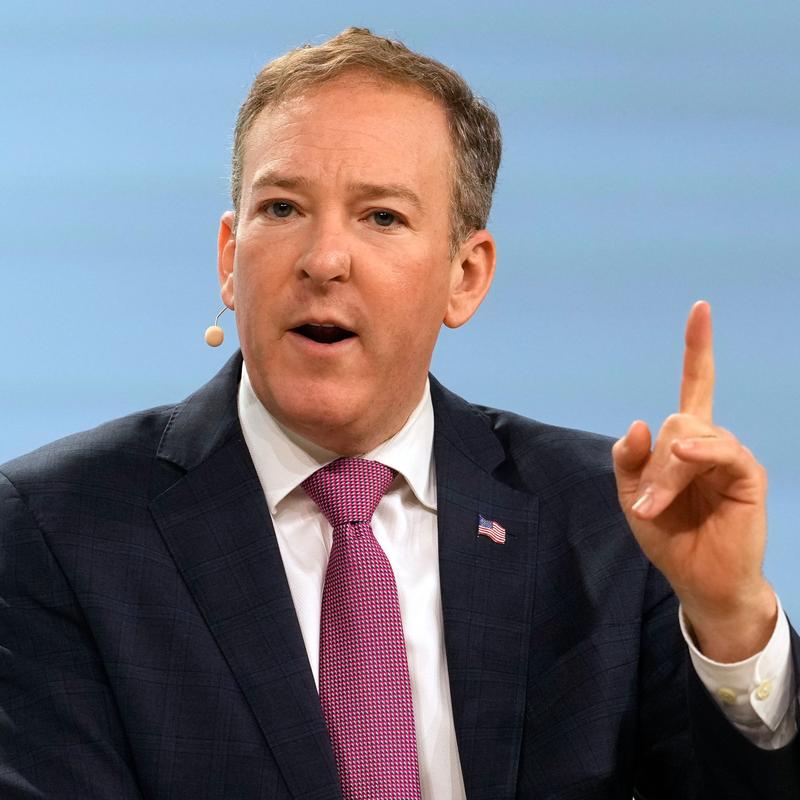
First, Earth Day and your government on this second Earth Day of President Trump's second term, and Lee Zeldin as administrator of the Environmental Protection Agency, the EPA. Our guest for this is Lisa Friedman, who covers climate change and other environment topics for The New York Times. Among her recent articles, The Treasury Secretary vs. Climate Science and How Lee Zeldin Shifted the Mission - and the Message - of the EPA. One example she cites, Zeldin emphasizes messages like this.
Lee Zeldin: The Trump EPA has finalized the single largest act of deregulation in the history of the United States of America.
Brian Lehrer: Undoing environmental regulations is central to the message and central to the mission. Let's get specific. Lisa, thanks for coming on. Happy Earth Day, and welcome back to WNYC.
Lisa Friedman: Thanks so much for having me. Happy Earth Day.
Brian Lehrer: You included that little Zeldin clip as an audio link in your article. What does it represent?
Lisa Friedman: Look, just to pull back one thing. What we tried to do in this story, we started to notice that the EPA administrator talked differently than administrators in the past. This includes Republicans as well as Democratic administrations. When we analyzed his words, thousands of press releases and tweets and podcast interviews, television interviews against those of past EPA administrators, one of the things that became very, very clear is that this administration talks and this administrator uses language around red tape, energy dominance, promoting the use of fossil fuels and the deregulation of environmental protections that had reined in emissions from polluting industries far more than he uses the traditional language of environmental protection, whether it's protecting children or talking about toxic hazards.
The clip that you ran, I think, really underscores the focus of this administration. Let's remember. It's Earth Day. The EPA was born out of Earth Day, out of a real frustration around rivers of flame and deadly air pollution and industrial waste and catastrophic oil spills. The mission of the agency is not to protect industry. It's to protect human health and the environment.
Brian Lehrer: Well, Zeldin would certainly claim he's doing both things, protecting the environment and deregulating in the name of affordability for all Americans. Here's another tiny clip that you included in your piece, just six seconds, of how he said on one occasion what he's striving for the EPA not to do.
Lee Zeldin: Not have EPA regulations preventing you from protecting your people.
Brian Lehrer: "Not have EPA regulations preventing you from protecting your people." Keyword: protecting. As an Environmental Protection Agency, arguing there in just six seconds that environmental regulations can work against protecting people. That's counterintuitive, but give us more context. Why did you include that clip?
Lisa Friedman: We wanted to include his point of view. We spoke to others who are in the story. For example, I spoke with Drew Bond. He's the founder of an organization called C3 Solutions. It's a conservative-leaning clean energy think tank. He very much supports Mr. Zeldin's work. He made the case to us that, "Look, this is not a binary choice. Just regulation is not the only way to protect the environment." Indeed, there are a number of things that the administrator has done, and we listed many of them in the story. He has focused very heavily on local hazards.
By that, I'm talking about signing an agreement with Mexico to address a sewage crisis in the Tijuana River. His EPA was very aggressive in helping to clean up hazardous material after wildfires tore through Los Angeles. This is not to say that there is not environmental protection happening at the EPA. Certainly, the focus, and that is evidenced by the emphasis of the language, is on cutting red tape, something that Mr. Zeldin talks about far more than almost anything and his EPA does and the automobile industry and other protections of businesses.
Brian Lehrer: Here's our first listener comment. It's raining right now around the WNYC Studios in Lower Manhattan. Listener who identifies herself as Caroline in the financial district writes, "How apt that today, Mother Nature is weeping," about the rain. Listeners, what do you want to say or ask about federal environmental policy today or over the years here on Earth Day? 212-433-WNYC. We will talk a little more about the origin story, which Lisa Friedman from The New York Times included in this piece about Lee Zeldin. 212-433-9692. Earth Day and the EPA, both created in 1970, 212-433-WNYC. Your comments, your questions, your stories. 212-433-9692, call or text.
Lisa, you know what strikes me about Zeldin trying to thread that needle and give a both/and message, "We can deregulate on behalf of economic comfort for Americans and protect the environment." It's exactly the opposite of what environmentalists say. They say, "You don't have to sacrifice economic growth for environmental regulation, because clean alternatives exist to a large enough degree and affordably enough, and the eventual costs of pollution long-term are more than what it costs to allow it to go forward today." Have you broken down at all where each side might be right or blowing smoke in saying that, "No, my way doesn't actually cost you anything"?
Lisa Friedman: Well, certainly, you're right about the rhetoric, right? Traditionally, and to some extent, the Zeldin EPA follows in these footsteps. Republican administrations will say, "We can enhance. We can grow the economy while protecting the environment," while Democratic administrations, environmental groups will say, "We can protect the environment and still grow the economy." It's the same message, but with a different emphasis. Both can be right, but it bears looking at the details of the policies.
In the case of the deregulation that we're seeing happening under this administration, the concern of many groups is that this will lead to far greater emissions, far greater pollution in the atmosphere, higher premature mortalities because of exposure to fine particulate matter, and making it harder to address climate change. I think voters need to decide whether that is a trade-off that they want or don't want. It is an argument that this administration is making that the environmental protections can still happen in the context of deregulation.
Brian Lehrer: It's not just Republicans rolling back environmental regulation in the name of affordability, as Rebecca in the Rockaways wants to remind us. Rebecca, you're on WNYC. Hello.
Rebecca: Hi, good morning. Yes, I wanted to just call and add some context to the discussion around, as you mentioned, Governor Hochul, as early as this week, maybe getting rid of the CLCPA, which is our climate law in New York that sets our emissions reductions targets. She's also been a huge impediment to implementing the Build Public Renewables Act, which was passed two years ago, to allow the New York Power Authority to build out huge amounts of renewable energies to get us to our climate goals. I just want to add that in because I think states and cities have a responsibility in this era of Trump cuts and Trump deregulation to do something. I want to make sure that everyone listening today knows that they should be asking Kathy Hochul to do that.
Brian Lehrer: Yes, and we've certainly done separate segments on exactly that. That tension that Hochul sees between environmental protection and affordability, as she portrays it. I'm curious, Rebecca, for you, as somebody who, I guess, is involved with these issues, how you might see someone like Hochul and someone like Trump differently. Do you think Hochul is struggling with a real tension between those two things, whereas Trump is just trying to help his friends in the fossil fuel industry or has a culture war agenda against anything green, or have you thought about a comparison from your own perspective?
Rebecca: Yes, definitely. I organized with NYC-DSA Ecosocialist Working Group. For us, I think we see that both of them are serving capitalist interests. They are serving the interests of fossil fuel corporations. For example, we see that Hochul granted the permit for the NESE pipeline off of the Rockaways, where I live, that Cuomo had shut down when he was governor. We know that solar and batteries are the cheapest form of energy that we have. They can cover virtually all of our needs.
The reason that that's not happening is because oil is incredibly profitable, and fossil fuel companies are going to want to continue that business model. As long as our economy is shaped around profit and not around human well-being and ecological well-being, this is the situation that we're going to be in. I think that we want to see beyond the conversation around economic growth.
I think we certainly believe the climate transition can also provide really good union jobs, thousands of union jobs, so it's not a sacrifice in my eyes. We're going to be spending this money to adapt to climate change, no matter what. We may as well do it now in a way that centers workers and ecological well-being and really reshapes our economy around one that is actually taking care of human health and not corporate profit.
Brian Lehrer: Actually, from your DSA perspective, you don't see Kathy Hochul as any less sold out to fossil fuel interests for whatever reason because they support her campaigns, or she just believes in that kind of capitalism than Trump is, or am I overstating what you said?
Rebecca: No, I think that's accurate. I think this is a bipartisan issue of being bought out by fossil fuel interests. I think the folks advising her also are entrenched in those interests as well. No, I think that's very accurate.
Brian Lehrer: Rebecca, thank you for your call. Lisa Friedman, who covers mostly climate, also other environmental things for The New York Times, your beat is mostly national, and we're going to stay on that. It's interesting from a DSA perspective anyway to hear how they think that both parties are equally sold out to the fossil fuels industry.
Lisa Friedman: I would just recommend a story that a colleague of mine did about 10 days ago. Brad Plumer wrote about a number of Democratic-led states across the Northeast that had adopted some really ambitious policies to move away from fossil fuels and cut emissions that are starting to scale back or rethink their climate plans. Many of the states are struggling with high electricity bills.
That's been combined with the Trump administration's antagonism toward renewable energy, targeting offshore wind, which is something that the Northeast has had to deal with in recent months, eliminating federal assistance for renewable energy. The changes are happening in not just New York, but in places like Massachusetts and Rhode Island as well.
Brian Lehrer: I didn't see that article, but I'm guessing that it frames it more as a difficult tension that those Democratic state leaders are struggling with, more than just a belief in fossil fuels being necessary for prosperity, as Trump and Ramaswamy and others would put it.
Lisa Friedman: Certainly.
Brian Lehrer: Not just being sold out to the fossil fuels or having an anti-green culture war, which I think is another real Trump thing. I don't know if it's really Zeldin thing. That's probably more for another day when we get back to local stuff, but I hear you affirming that you think that's the angle of that story. What about the economic argument against the Zeldin clips that we played where he's just trying to make things more affordable, not have environmental regulation hamper the economy, and Trump's apparent war on renewables, especially wind.
Through typical economics, standard economics, you would think the more supply, the more affordable something is going to be. They would want an all-of-the-above approach, right? If they're supporting fossil fuels on the basis of prosperity, then you'd want a lot of wind, too, and a lot of solar, too, et cetera, in order to-
Lisa Friedman: Theoretically.
Brian Lehrer: -bring supply, but that's not what they're doing, right? They're making it more difficult for the renewable industries?
Lisa Friedman: 100%. This administration is very openly against the all-of-the-above idea. That has been the mantra, really, of both parties for many years. Obviously, Democrats have been concerned about an emphasis of fossil fuels among Republicans. Republicans have been concerned about an overemphasis on renewable energy by Democratic administrations.
Across the spectrum in Washington, the broad understanding is that there is a need for all energy, especially now, as AI and data centers are driving the need for more electricity capacity. This administration very openly says, "No," that all of the above is not their goal, and have been actively trying to make it more difficult for renewable energy to be built in America.
Brian Lehrer: What's even the rationale for that if the goal is supposed to be allegedly low energy prices?
Lisa Friedman: Yes, I can tell you what is said, and I can tell you what administration officials say, and then I can tell you what the conventional wisdom is. We've heard Chris Wright, the Energy Secretary, say just recently, "If all solar energy went away tomorrow, no one would notice." It makes up such a small portion. We've heard the interior secretary say that there are national security concerns when it comes to offshore wind, though much of that is classified. They say they can't discuss it.
Why does the President dislike offshore wind? Is it related to a fight that he had a decade and a half ago at his golf course in Scotland when he didn't want to see offshore wind turbines mar his view? That is what a lot of people think. I don't know. I can't get into anybody's head. There is a very clear antagonism toward renewable energy, certainly toward any federal assistance for renewable energy.
We're starting to see some pushback from the courts. Just yesterday, a judge in the US District Court for the District of Massachusetts granted a preliminary injunction in a lawsuit that a group of renewable energy developers had filed against the Interior Department. The Interior Department, they have argued, have made a series of decisions that have stopped clean energy projects on federal lands across the country and private lands.
Brian Lehrer: Now, here on Earth Day--
Lisa Friedman: So--
Brian Lehrer: Oh, go ahead. Finish the thought. I'm sorry.
Lisa Friedman: [chuckles] Pardon me. We will see how long this lasts. We are starting to see some pushback from the courts. In recent weeks, I will say that I've seen some administration officials change their tune a little bit. For example, there are fewer criticisms of solar than there have been in the past. There seems to be some sense among clean energy lobbyists that there is a relaxing perhaps of objections within the administration to solar development.
Brian Lehrer: Here on Earth Day, maybe it's worth remembering a little more the origin story of the EPA. It was the same year as the first Earth Day, 1970. What was going on that both things got launched? You write a little bit about that in your article about Lee Zeldin changing the language and the mission of the EPA.
Lisa Friedman: Toxic water, hazardous smog, industrial waste was threatening public health and the environment. The Cuyahoga River burst into flames. The Potomac stank from hundreds of millions of gallons of waste. The outcry, which culminated in an enormous national movement that created Earth Day, led to the creation of the Environmental Protection Agency.
Brian Lehrer: On the history, a listener writes, "It's essential to remember that conservation and environmentalism used to be bipartisan. Richard Nixon signed the EPA into law, among many other major environmental laws. Does the guest have any thoughts on why this is no longer bipartisan, and how do we get back to that?" The first question there from the listener is interesting because the premise is right, right? This used to be very largely bipartisan. In fact, wasn't Lee Zeldin himself on some bipartisan-led committee on the environment when he was a congressman from Long Island? What happened? How did it become no longer bipartisan?
Lisa Friedman: Well, I think Lee Zeldin's movement on issues might be a little separate from the broader story. It's certainly true that for at least the first decade or so of the Environmental Protection Agency, it had broad bipartisan support. Conservatives will say that a culture of regulation is what changed things for them. Ronald Reagan was elected in part on a platform of getting government out of the way, and that included with business. Along the way, climate change became an issue that has really divided the parties on what role EPA should play.
Congress has never explicitly given authority to the EPA to curb greenhouse gases. Both the Obama and the Biden administrations interpreted the Clean Air Act in ways that could allow EPA to regulate. We've seen increasingly aggressive regulations on automobiles, heavy trucks, power plants, coal and gas, oil and gas wells. That has led to not a small amount of pushback from those industries. I think that combination has fed into the division. A lot of this, many people believe, goes back to Congress. The reason there is such debate over the role of EPA is because Congress has not acted in a clear manner.
Brian Lehrer: We talk a lot on this show about the reversals on climate policy, but I'd like you to zero in on some of the other aspects of environmental protection that don't get as much press. To set this up, here's a clip from NPR's Morning Edition yesterday of a woman named Kelly Ryerson, a longtime advocate for reducing pesticides in food who has worked with RFK Jr. and the MAHA movement. She describes her expectations versus realities now, when she first saw RFK get confirmed. That's where this clip starts.
Kelly Ryerson: President Trump, he stood on a stage and was talking about pesticides. He's shaking Bobby Kennedy's hand. We're feeling so excited. What happened is once things fell into place, all the special interests poured in. It has been just very, very distressing because where we started versus where we are right now is definitely the opposite direction of where I would have thought we were going.
Brian Lehrer: Kelly Ryerson on Morning Edition. Can you talk about pesticides as an issue, in particular, have anything on that?
Lisa Friedman: Sure. This EPA has certainly been caught between the MAHA movement and where it seems to want to be, which is helping to give new chemicals green light. The MAHA activists at one point were urging Trump to fire Mr. Zeldin. I think that seems to have died down, but there is a lot of contention. There are lobbyists who fought for a restricted weed killer that can harm plants and wildlife, overseeing pesticide rules.
Earlier this year, the EPA reapproved weed killers that contain chemical that many fear could-- Forgive me. It's weed killers containing a contentious chemical for use on genetically engineered cotton and soybeans that has created backlash from the MAHA movement. EPA has proposed allowing the use of dicamba, another weed killer, on some crops. I think there's a lot of tension within the administration.
Brian Lehrer: Why all those things that you just enumerated? We have many listeners who are writing or calling in to say, "This is really just corruption. This is the power of the fossil fuel industry lavishing money on Trump and maybe Zeldin directly," I don't know, but that's what this is, and that's what we should call it out as. How much of that do you think that that's what this is about?
Lisa Friedman: I think we should. There are former lobbyists now working in the agency overseeing issues on which they used to lobby on, and that includes pesticides. I understand there's a lot of surprise in the MAHA movement that this would happen, but those of us who've been covering this have not been surprised. Now, the administration is, I think, caught in this tension between some of its base that wants to see stricter regulation of chemicals and pesticides, and where it traditionally has been and wants to be, which is helping to ensure that the industry is allowed to grow without too much regulation.
It is essentially eliminated. I don't want to overstate. I think IRIS, the integrated risk assessment system that the chemical industry has raised concern about for years, is still physically around, but many of the people that used to work on it have been reassigned. Many of the EPA scientists have been moved into areas where they move forward the registration of pesticides and approve new chemicals. That has been the open agenda of the EPA. They want to improve things for the chemical industry.
Brian Lehrer: About Zeldin himself, you said his story might be different from the larger arc of the Republican swing away from environmental protection. Didn't he have a good environmental record, pretty much, as a member of Congress from Long Island? What do you think happened? Pure ambition, a change of perspective, money like we were just talking about. Have you reported on that at all?
Lisa Friedman: Lee Zeldin represented a moderate Republican district on Long Island, and his votes reflected that. Last year, I asked him about his evolution on things like climate change. How did he get from joining the bipartisan climate caucus to saying that he was going to drive a dagger through the heart of the climate change religion? I have to tell you, I heard a lot of words, but I didn't hear an answer. What is it exactly? I think only he can tell you. I can tell you that when he ran for governor, he certainly took positions that were a lot more conservative.
He wanted to see fracking in New York. He criticized the Inflation Reduction Act. As President Trump's EPA administrator, he has not allowed any daylight between the President and his views, whether it's on climate change or anything else. He doesn't call climate change a hoax like President Trump does, but he has downplayed the impacts of climate change, which is something he did not do as a member of Congress. As a member of Congress, he talked about representing a district that had water on three sides and the need to look for conservative solutions to climate change.
Brian Lehrer: When we continue in a minute, we're going to get more into the climate change aspect of this. We've been talking about others like pesticides so far. Usually, we talk about climate on the show, and we do a lot of environmental conversations. We put that aside until this point in the program today because there's really so much more to the Trump and Lee Zeldin, as head of the EPA, record since January of last year that we've been focusing on with Lisa Friedman, who covers that for The New York Times, but we're going to get to her other article when we continue in a minute, The Treasury Secretary vs. Climate Science. Stay with us.
[music]
Brian Lehrer: Brian Lehrer on WNYC on this Earth Day. Coming up in a few minutes, we're going to have a very different kind of Earth Day. Take Jackie Faherty from the planetarium at the Museum of Natural History is going to talk about how our wondrous Earth looks to astronauts viewing it from space, and what we can learn about that from that down here on the ground, but let's finish up with Lisa Friedman, who covers climate and other environmental issues for The New York Times.
You also wrote the article that I cited in the intro called The Treasury Secretary vs. Climate Science. I'm going to play a clip of Treasury Secretary Scott Bessent from recently. I'm going to ask you to decode this after we play it, Lisa, because it's indirect here. He's not calling climate science a hoax and a con job like Trump himself does. Listen.
Scott Bessent: The climate does change, as we all know, that the natural habitat for the Earth is actually water. It's a very long cycle, but ice was an unusual cycle. We are going through cycles. I believe that it is very difficult to deconstruct the reasons around why anything changes, but I think we'd better step back.
Brian Lehrer: Treasury Secretary Scott Bessent. How do you hear that clip?
Lisa Friedman: Trying to dance around the climate change and the science of climate change. All of these events where cabinet secretaries speak, there is an audience of one, and that, of course, is the President. Again, I keep repeating this. I don't know what is in the hearts and heads of any of the cabinet secretaries. Since this administration began, you see a lot more of this kind of equivocating. Yes, the climate changes. It's difficult to understand the reasons why anything changes.
It's not true. Leading scientists reject claims like Mr. Bessent's. Anyone can read the IPCC or the national climate assessments when the US used to do them before the Trump administration. Natural factors like the sun, volcanic eruptions, orbital cycles would be cooling the Earth if not for the emissions from human activity, burning fossil fuels in automobiles, in power plants, in factories, and others. How do I see that? I see that as trying to be unclear.
Brian Lehrer: Trying to be unclear, very clearly unclear, to dance around what scientific consensus has shared a lot of evidence for. He also called climate activism, let's say, or concern about climate change, an issue for the elite, a concern of the elite. That really jumped out at me. I noticed that you also addressed that in your article about the Treasury secretary. You quoted Harjeet Singh, the founding director of the Satat Sampada Climate Foundation in Delhi in India, who said calling climate change an elite issue purposefully ignores the threats it poses to the world's poorest.
He pointed to floods in Pakistan in 2022 that killed nearly 2,000 people, for example. We're just about out of time, but I didn't want to let that go by because that's gotten some press elsewhere, too. Treasury Secretary Bessent calling climate change an issue of concern mostly to the elite, but where do we see the downstream effects of the warming planet, mostly? I would imagine, like most other environmental impacts, when we talk about environmental justice, they do have a disproportional impact on people who are poorer, not people who are richer, who can buy their way to a higher floor that's going to not be subject to flooding and a million other ways.
Lisa Friedman: Yes, climate change disproportionately affects the world's poorest communities. That's not me. That's not the Sierra Club. It's not The New York Times. It's the World Economic Forum that says that. Rising sea levels, fiercer storms and droughts and floods, more intense and frequent wildfires reduce food security, cause health crises, and threaten to push billions into deeper poverty. As you mentioned, I spoke with Harjeet Singh, who has been advocating on climate change for many years. I've known him for a long time.
He's in Delhi, and he talked to me about Pakistan, right? 2022, floods in Pakistan killed nearly 2,000 people, caused more than $40 billion in damage. "There is nothing about addressing an issue like that. That is elite," was his argument. He talked to me and said, "I'm sitting here in one of the poorest parts of the world. We know that if you don't integrate climate into the way you help countries develop," he said, "any gains you make are written in sand and washed away."
Brian Lehrer: As we close, Lisa, I don't know if you can say anything about this based on your reporting, but I think it's important not to lose sight of how much this sort of anti-environmentalism that we're seeing now as policy on so many levels from Washington is part of the culture war, is part of the Make America Great Again nostalgia that says, "Hey, remember when we weren't weighed down by all this political correctness? You know, back in the 1950s," or whatever decade they want to cite, "we bought our big cars, and it was good." We started moving things from metal to plastic because plastic was lighter and more convenient. We didn't ask all these questions that seem politically correct that make our lives harder. Let's go back to the way things were. It's culture war. It's nostalgia. MAGA nostalgia. Does that sound right to you?
Lisa Friedman: I think there are elements of that that are certainly correct. I won optimism that maybe I'll leave you with. It seems like discussions in Congress around has the worst name in the world. Permitting reform, it could not sound more boring, right? Getting things built is moving along. The discussions there, to my understanding, as the conversations that I've had with both Republicans and Democrats, is there seems to be a really good-faith effort by both parties to not try to curtail any kind of energy.
While that might seem like a concern for folks who don't want to see more fossil fuels built, folks in the renewable energy industry feel pretty confident that in an even playing field where the United States works to get more built and cuts red tape as Administrator Lee Zeldin would say, that renewable energy will win out because it's cheaper and all of the reasons that you listed earlier. That's something that is seeming to generate some bipartisan support in Washington.
Brian Lehrer: Lisa Friedman, who covers climate change and other environmental topics for The New York Times, among her recent articles, The Treasury Secretary vs. Climate Science and How Lee Zeldin Shifted the Mission - and the Message - of the EPA. Thanks for joining us on Earth Day, Lisa.
Lisa Friedman: Thanks so much for having me.