
Close Rikers Czar Dana Kaplan
[music]
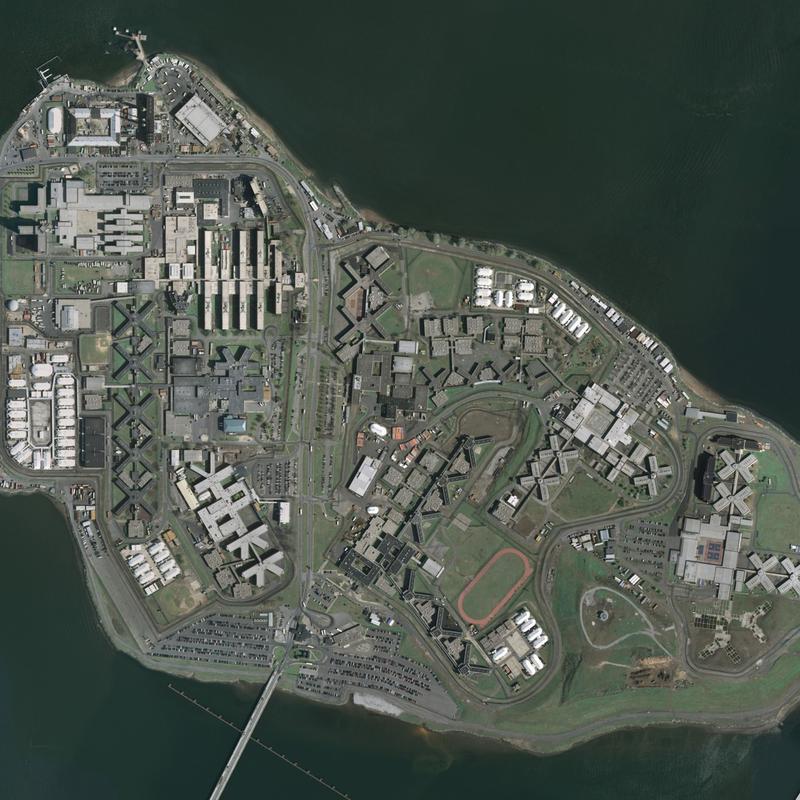
Brian Lehrer: Brian Lehrer on WNYC. Rikers Island has been called a lot of things besides a city jail, a crisis, a legal emergency, a national embarrassment, a moral failure. Under the law, it's supposed to be closed by the end of August 2027, but that legal deadline is now effectively acknowledged as impossible to meet because the four borough-based jails that are supposed to replace it presumably won't be ready in time.
The Brooklyn borough-based jail did just hit a major construction milestone last week with the last structural beam anchored atop the building, from what I've read. The Manhattan jail in Chinatown, for example, isn't expected to be finished until 2032, five years past the legal deadline, and the total projected cost of all four facilities has ballooned to $13.7 billion, and the city has to find that money.
Meanwhile, conditions on Rikers remain dire by anecdote and official government findings. You know it's under federal receivership now, among other things. Into all of this walks Dana Kaplan, Mayor Mamdani's newly appointed Close Rikers Czar, not simply Rikers Czar, but the Close Rikers Czar. She helped design the original blueprint to close Rikers, and now she's been handed the job of actually finishing it. Dana Kaplan joins us now. Welcome to WNYC. Thank you so much for coming on with us right after your appointment.
Dana Kaplan: Yes, thank you for having me.
Brian Lehrer: Listeners, we invite you in on this. Do you have a personal connection to Rikers Island? Are you a family member who's made that trip out to the island to visit someone in addition to, of course, if you've been there yourself? Are you a current or former corrections officer, lawyer who represents clients there, anything? 212-433-WNYC. Maybe you live in one of the neighborhoods getting one of the new borough-based jails. We know there's a lot of controversy in probably all of those. 212-433-WNYC, 433-9692. Call or text with whatever you want the newly appointed Close Rikers Czar, Dana Kaplan, to know or with a question for her.
By way of introduction, you want to tell our listeners a little bit about who you are and how you've got here? I know you've spent your career working primarily on criminal justice reform.
Dana Kaplan: Yes, I have spent decades working on criminal justice reform in my hometown of New York City and across the country. As you said, I spent 8 years working under the de Blasio administration at the Mayor's Office of Criminal justice, working on a host of different issues around investing in alternatives to incarceration, supervised release, reentry programming, working to improve conditions in juvenile facilities and get the 16- and 17-year-olds off of Rikers Island. I worked very closely then with the city council, with community organizations, with all of the stakeholders in and outside of the justice system to develop this plan to close Rikers Island.
I should just frame that people have been calling for the closure of Rikers Island for literal decades. It is actually something that is finally moving ahead. It has taken a lot of work to get to this point. As you noted earlier, unfortunately, we haven't seen the commitment from the last administration to move it ahead with the urgency that it requires. For that reason, I'm really excited, frankly, to be appointed as the Close Rikers Czar and to continue this work in this new role so that we can finally actually see Rikers Island closed and move these plans ahead that really come out of just years of effort from so many different people.
Brian Lehrer: My understanding is that the mayor himself has acknowledged that the 2027 legal deadline to close Rikers under the current law is unachievable. Do you officially acknowledge that as a fact?
Dana Kaplan: You just said the mayor acknowledged that there have been these unfortunate delays to the project. Now with my appointment, my primary first question getting in is, how do we move this program ahead to close Rikers Island on the fastest possible timeline now? That is what my attention will be focused on when I get into City Hall in the coming weeks.
Brian Lehrer: I wonder if you have a new target date yet for the complete closure. I'm going to ask you about possible partial closure as we go. If 2027 is unattainable, is there a new target?
Dana Kaplan: I will start my job in the coming weeks, and I am going to be working with the Department of Design and Construction, the Department of Corrections, City Hall, and all of the agencies to get to work and figure out what is the possible fastest path to closing Rikers Island. I think you mentioned in the beginning, we have seen some real progress points recently. You mentioned the topping out of the Brooklyn jail.
An exciting announcement that happened in recent weeks was that, finally, after years of delay, we saw the opening of therapeutic units on Bellevue in a hospital environment. We have been able to move ahead with moving 100 individuals with particularly acute medical needs off of Rikers Island and into a more appropriate hospital environment. That's a really exciting point of progress and, again, something that we have been trying to achieve for years now.
Things are moving ahead. There's shovels in the ground. I have come in to be the Close Rikers Czar because we know that without coordination and focus at the highest levels, this is a very complex project that is not just about bricks and mortars, but about the revisioning of our entire justice system to make it more effective. I'll be coming in to coordinate that and work on that role. Yes, we will be focused on how quickly can we get it done.
Brian Lehrer: Brooklyn's borough-based jail, with a construction milestone that we just cited, is on track for 2029. I've read Manhattan's Chinatown jail won't be done until 2032. The two others, every borough except Staten Island, will eventually have a borough-based jail. They won't be ready until around 2032 either, as I understand it. Can the city do anything in that window? Can you disperse some of the incarcerated people to Brooklyn, for example, when that one's ready, or elsewhere as they become ready one by one?
Dana Kaplan: We will certainly be looking at what a phase timeline is to move ahead with the closure of Rikers Island. Obviously, there'll be some transitional points along the way. One of the things that is going to be a big focus of this work is reducing the size of the jail population altogether and figuring out how we can safely reduce the number of people who are in jail on a given day in New York City, which we know is better for justice and can be done safely.
There's a lot of different strategies like speeding up case processing, working with the courts and the district attorneys and the defenders towards that end. That's something that the courts administration has said is a priority for them as well. We obviously will be focused on continuing to improve our continuum of pretrial services so that people can be safely diverted from detention when it's appropriate. We're going to be looking at how we can have a better continuum of services for people who have mental health needs, which is a significant population within Rikers Island.
Of course, we're focused on building the borough facilities and the fastest timeline towards that end, and a phased plan for that. Equally important and central to this plan is figuring out how we can have a smaller number of people in jail on a given day in New York City. We know that there's a lot of ways to do that that both deliver better outcomes and improved recidivism rates, but are also more effective and often more cost-efficient as well.
Brian Lehrer: Yes. I guess the opponents of closing Rikers or the skeptics point to what you were just saying needs to be done in terms of reducing the incarcerated population, and asking or wondering, can it really be done safely? Because the new jails are designed, from what I read, to hold a total of about 4,100 people. Rikers has averaged over 7,000 people in custody last year, and it was actually designed to house 15,000. How do you close that gap and maybe go a little further than you even did in your last answer to reassure skeptics that, without the crime rates going down, which the skeptics might argue is what you really should be focusing on, that you can safely close Rikers safely for the rest of the population?
Dana Kaplan: I'll just say closing Rikers Island, one of the things that's so exciting about it for the city of New York is that it's not just about bricks and mortars, right? It's not just about saying, "Okay, we're going to close one decrepit jail and build new facilities." Those facilities are incredibly important. Things like better programming space and recreation are very significant for the experiences of those who are incarcerated and the staff who work there. It's also about thinking about what should our pretrial justice system look like and what's more effective.
As you mentioned, there are a number of ways to reduce the jail population, and it's important to note that those do not have a negative impact on public safety. I'll just mention case processing as one example. Commissioner Richards spoke the other day in an interview about the fact that there's about 2,000 people in Rikers Island on a given day right now that have been in there for over one or two years. There's people who are sitting in Rikers Island who've been there many years longer than that. That type of extended length of stay does not serve anyone well. That does not serve victims well who are waiting for some type of accountability that does not serve the delivery of justice. It's outside the norms of what case processing times are in other parts of the country.
I have talked to staff who work on Rikers Island, and we've inquired about their feelings about the plan. One of the things that I hear is people are staying in here too long, and they're decompensating while they're in here. Can you all work with people outside of the jails to address that problem? Focusing on case processing time is one of those examples of where we can have a huge impact on reducing the number of people in New York City's jails on a given day, which are pretrial facilities, and move more quickly towards actually delivering some type of justice.
That, again, is only going to have a positive impact on public safety because it does no one well for people to be decompensating in Rikers Island for years without access to services or having their real day in court. There's a lot of other strategies that I can talk about also in terms of pretrial release. It is really important to note that public safety and community safety is at the forefront of these strategies. There are ways to deliver a pretrial justice system that is much more efficient and effective than what we have historically been able to do that we believe will lead to better recidivism rates. Frankly, that is the indicator about safety that we should be looking at.
Brian Lehrer: Here's Mike in Queens, who is going to talk about the objections in his area to the proposed Queens jail, one of the four borough-based jails that would replace Wright. Mike, you're on WNYC. Hello.
Mike: Hi. I actually favor a neighborhood jail, and I think Rikers should be closed down because every weekday morning, there are prisoner buses that come from Rikers and they travel through my Queens neighborhood. They get off the Grand Central, and they're on the way to the Kew Gardens Courthouse. I don't know, there's several every morning. They're within yards of where, I don't know, thousands of people live. If anything happens to those buses, to me, we're less safe.
In fact, the buses cross over this intersection at 75th Avenue and Queens Boulevard that's supposed to be devoid of traffic except for fire trucks. These prison buses, they break the rubber barriers. My wife has actually broken her nose crossing this. She didn't see that it had been broken, and there was still a stub there. I blame it on the prison buses.
Brian Lehrer: For neighborhood purposes, you're for the borough-based jail in Queens?
Mike: I'm in favor. To me, we'd be a lot safer if those prisoners stayed near the courthouse and not be transported five days a week through the neighborhood on these flimsy prison buses.
Brian Lehrer: Thank you, Mike. Dana Kaplan, what do you say to those in Chinatown near the Manhattan courts and Mike's neighbors near the Queens courthouse, where these jails are slated to be built, where there's been so much opposition?
Dana Kaplan: Well, I want to thank Mike for just noting the benefits of having these detention facilities next to the courthouses, because what it means is that people will, in large part, not all the time, but in large part, not have to travel via bus to their court case. They will be able to just walk to the connected building. There'll be some transportation that's still required from the Bronx facility. It's not quite adjacent, but it is far closer than people being transported before.
That relates to the question of case processing that I said earlier, because right now in Rikers Island, people are woken up in the middle of the night to travel for hours to make it to their court hearings, and sometimes they don't even get there in time. It's a real improvement on the functioning of the system overall.
Now, that being said, of course, we have heard those concerns from neighborhoods and communities about how to make sure that these construction projects are not something that's going to have a negative impact on their quality of life. That is something that we do take very, very seriously. I've been part of many, many different community meetings where issues have been raised around parking mitigation of dust and noise, and all of the different issues that come with large construction projects, as well as neighborhoods raising other investments that they want to see made in their neighborhoods. Understandably so.
As I move ahead in my role and work with the Department of Design and Construction and the Deputy Mayor's Office of Operations, obviously, a big focus is going to be how do we improve the functioning of our justice system writ large. A big focus is also going to be how do we also address the legitimate concerns that we hear from neighborhoods about wanting to make sure that these are good neighbors and that we mitigate the impacts of construction, and what's happening as these new facilities are built.
Brian Lehrer: Listener writes, "What's wrong with spending the money to make things better at Rikers seems like a perfect location. It seems silly to spend so much money and to distribute multiple buildings for jails when we could spend money making that institution bigger and better." What do you say to that listener?
Dana Kaplan: That is something that has been looked at a great deal, and I'd say a big answer is the question of location. As we were just talking about, that real long distance from the courts has been a huge barrier. It takes lawyers, service providers, family members a day to travel to Rikers Island, which is just a very, very physically isolated location. That is why the city ultimately decided, and was recommended by The Independent Rikers Commission and a number of different stakeholders, when this plan was first put into place, to not rebuild on Rikers Island, but to move to a more borough-based system.
I think it's important to note that we wouldn't save any money by rebuilding on Rikers Island. There's estimates that say that it would cost even more to build on Rikers. There is also estimates that when Rikers ultimately closes, the operation of a smaller jail system will deliver some real significant cost savings to the city. That's something that I'll be looking at as well.
Just the other thing I want to note, though, is to the point of that the poor conditions at Rikers Island right now is that that is also a priority of the city and that that is something that Commissioner Richards is very focused on and that I will support him in is that as we move towards the closure of Rikers Island and these new facilities and working to reduce the jail population, we also want to ensure that we address the conditions that exist right now on Rikers and address some of the immediate safety and health concerns. That is something that people who are incarcerated on Rikers Island and people who work there today certainly deserve.
Brian Lehrer: Yes, and that's going to be a big job. One example, just for our listeners, as we run out of time in this segment, the news organization, THE CITY, reported that more than 40,000 complaints about Rikers go into 311 every year. One example, one man died after his mother called in a panic, and the complaint was closed with no action taken. Maybe after you, we'll invite the corrections commissioner, Stanley Richards, and talk about managing Rikers in the interim while you work on closing it. Thank you very much for joining us. Good luck in your job. Dana Kaplan, the new Close Rikers Czar, just appointed by Mayor Mamdani, thank you very much for coming on with us.
Dana Kaplan: Yes, thanks for having me.
Copyright © 2026 New York Public Radio. All rights reserved. Visit our website terms of use at www.wnyc.org for further information.
New York Public Radio transcripts are created on a rush deadline, often by contractors. This text may not be in its final form and may be updated or revised in the future. Accuracy and availability may vary. The authoritative record of New York Public Radio’s programming is the audio record.