
City Politics: Jessica Tisch Accepts Job in Mamdani Admin, Eric "Mamdani Spoiler" Adams, and More
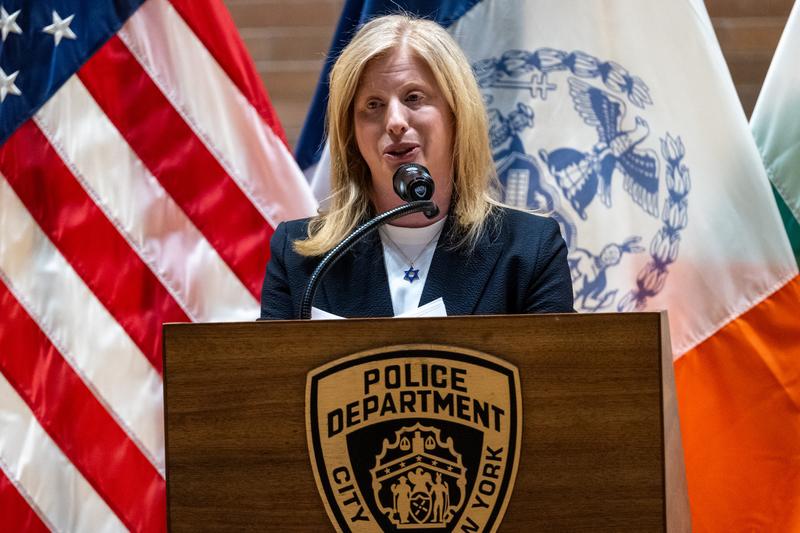
( Spencer Platt / Getty Images )
Title: City Politics: Jessica Tisch Accepts Job in Mamdani Admin, Eric "Mamdani Spoiler" Adams, and More
[MUSIC]
Amina Srna: It's The Brian Lehrer Show on WNYC. I'm Amina Srna, a producer for The Brian Lehrer Show, filling in for Brian today. Good morning, everyone. Coming up on today's show, we're going to preview the G20 Summit that will start this weekend in South Africa. The news before it's even begun is that the United States' and China's leader, Xi Jinping, will not be in attendance.
We'll talk about why two of the world's major powers are skipping it and what South Africa and the countries that are attending are hoping to accomplish without them. Plus, we'll talk about the Trump administration's continuing attacks on so-called drug boats coming from Venezuela. My guest for that conversation is an AP correspondent based there. She's reported on who's been killed so far and why the US is doing this.
We'll wrap today's show with a conversation about AI-generated music. Yes, I regret to inform you that this is now a thing. You may have even come across a song made with AI and not realized it, but first, we begin today's show in New York City with our coverage of Mayor-Elect Zohran Mamdani's transition into City Hall and other city politics news. This morning, Mamdani made another major personnel announcement.
He succeeded in courting Police Commissioner Jessica Tisch. This comes after that unorthodox move during the final mayoral debate. We'll look at what we know about the conversation with Police Commissioner Tisch now that she's officially joined the Mamdani administration. There's also news that both Mamdani and President Trump are anticipating a meeting in the Capitol after both men used each other as foils during the campaign season.
Plus, did you catch that our current mayor, Eric Adams, embarked on an international journey to Israel and then Uzbekistan, while Mamdani maintains that his team has been working with the mayor's office to ensure a smooth transition of power? Adams has made several moves that caused trouble for Mamdani, including designating the Elizabeth Street Garden as a park, thus spoiling plans to build affordable housing in its place.
Even though this election season has ended, the fun never stops. Already, we're seeing news about candidates popping up to challenge the existing New York City delegation in the House of Representatives. There's Dan Goldman's seat in New York 10, which contains Lower Manhattan and much of Brownstone Brooklyn, and New York 12 uptown, where Jerry Nadler leaves an open seat.
Then there's City Council Member Chi Ossé, who's looking to challenge House Minority Leader Hakeem Jeffries, despite both Mamdani and Representative Alexandria Ocasio-Cortez advising him not to. With me now, on all this and more, is WNYC and Gothamist reporters Elizabeth Kim and Brigid Bergin. Hi, Liz. Hi, Brigid.
Elizabeth Kim: Good morning, Amina.
Brigid Bergin: Hey, Amina.
Amina Srna: All right, let's start with the big news. That is the announcement that Jessica Tisch will remain as police commissioner. Brigid, Liz, there was an announcement, but it was only on paper. There hasn't been the usual bells and whistles police press conference that we're used to with these personnel announcements. How unusual is that? Liz?
Elizabeth Kim: Okay, I'll start. It is pretty unusual. Brigid can talk about this as well. It's because it's not just because it's a high-ranking role. It is obviously a high-ranking role. It's because it is one of the most high-ranking appointments that a mayor can make. I think you can argue that, in terms of visibility to the public, this is the second most important position in New York City.
The police commissioner has a great amount of clout and ability to shape how New Yorkers see and view public safety. Yes, and the way it's done, the customary way it's done is, shortly after the mayor gets elected in November, there's a lot of anticipation, which is, which is who will he or she choose to be their top person in charge of the NYPD? We knew because of the debate that Mamdani said hours before the debate, The Times broke the story, but in the debate, in the second and final debate, he did confirm that he did want to keep Commissioner Tisch.
That was no surprise. I think what the whole sort of political class has been waiting to see is, "What are those negotiations looking like?" She and the mayor-elect have some differences on public safety. There was a lot of anticipation for how this would roll out. I think I understand why they wanted to put out the press release because I think to kind of forestall maybe some of the chatter, but I still am a little bit surprised that they have not yet announced that they will have a formal press conference because, again, it's because of the importance of this role. Their relationship is going to be highly scrutinized from Day 1. It's a little weird to me that they don't want to get in front of cameras and just be together, and we can just kind of fire questions away at them. Right, Brigid?
Brigid Bergin: Yes. I think just building on what Liz said there, the announcement of a police commissioner is often one of the most high-profile announcements of a new administration. I remember clearly when Bill de Blasio stood with Bill Bratton. It was really important because it sent a statement about how his administration was going to administer public safety.
As Liz said, when Mamdani announced that he would ask Commissioner Tisch to stay on, for many people, that was seen as something of an olive branch to people looking for Mamdani to moderate some of his policies. It was very well received among the business community because Commissioner Tisch is someone who is very highly respected among many leaders across the City.
Building on what Liz said there, I think part of the reason that we have not yet seen at least the press conference, if there will be one, is because of some of those very issues she raised. The fact that they do have some differences and to stand before all of New York City's press corps to have to answer questions over and over about where they differ could be sort of tedious, and instead, they're just putting out this message that focuses on what they are aligned on. Of course, also, Tisch is currently serving the current mayor, so there's a couple of delicate pieces to that dance that they're doing right now.
Elizabeth Kim: Brigid, you probably have seen this on social media, but we also got our hands on that email. Commissioner Tisch sent out an email to the members of the New York City Police Department this morning announcing her decision to accept the role of police commissioner under Mamdani. Just to quote a little bit from it, she writes, "I wanted you, the men and women of the NYPD, to hear this directly from me first, because the reason I have chosen to stay is you."
She goes on to talk about the nobility of the work, what the officers do every day to keep the City safe, their sacrifice, and then she also says, "Now, do the mayor-elect I agree on everything? No, we don't." That's a very interesting decision ahead of or at the same time, it was probably timed similarly to when Mamdani put out his statement, but it's very interest decision for the police commissioner to go ahead and send out her own message to effectively the rank and file and the department that she will be running that is somewhat sort of undercutting her future boss, in a way.
Amina Srna: All right, so that is what Tisch has said so far, or at least written in an email. Here's Mamdani talking about why he wants Tisch to stay on as police commissioner and the status of those discussions in an interview with ABC 7 New York's Bill Ritter this past Sunday.
Zohran Mamdani: When Commissioner Tisch came into the NYPD, she came into a police department that Mayor Adams had stacked the upper echelons of with corruption and incompetence. She started to root that out, started to deliver accountability, reduce crime across the five boroughs. That's something I'm looking to build on under a Mamdani administration in tandem with creating a Department of Community Safety that finally takes the issues of the mental health crisis and the homelessness crisis and understands them as responsibilities outside of the police department. I met with Commissioner Tisch just this past week and continue to be confident in the necessity of us delivering on this agenda and more.
Bill Ritter: She is, like the other police commissioners under this mayor, closely managed by Mayor Adams. He's a former cop. Maybe that was going to happen no matter what. Did she say anything to you that she doesn't want that to happen, she wants to be in charge of that?
Zohran Mamdani: I think the conversation was more about what it can look like to continue to deliver public safety and what it could look like, especially without the distractions that we've seen over the last few years. This is something that I shared, that I want this to be about the outcomes, because the most important thing is that New Yorkers are given a city that is safe and a city that is just. Too often, those things have been put in tension.
Amina Srna: In that minute, a little over a minute-long clip, Ritter is saying that Tisch was closely managed by Mayor Adams. We didn't see that press conference this morning. Could that be a sign that Mamdani wants to give her more authority over her department?
Elizabeth Kim: I think it's unclear. I think that Mamdani has been very outspoken in the past about policing and his criticisms of policing. I'm thinking about the ways in which he's criticized the way that the NYPD has policed protests, right? He has come out and said that he wants to disband the Strategic Response Group, which is the unit that is responsible for policing protests. He was saying it at the time as both an elected official and then as a candidate, but I don't know how you can come out and campaign like that and then just hand over full authority to your commissioner. I'd be interested in hearing what Brigid thinks about that.
Brigid Bergin: Yes, I think we've seen that there are differences between Commissioner Tisch's policies and the way Mamdani had campaigned previously, but I do think that we know that they have had conversations leading up to this point. I suspect that the incoming administration was well aware that Commissioner Tisch was going to send her message to the rank and file and supported her doing that so that they came into this new administration as well with a sense that she was going to be able to lead with full authority.
They will have to be in agreement on certain policies, but I think there's also a recognition of the expertise that she brings to the position. That is something I think we are going to be seeing consistently across this new incoming administration: a desire to find people who are experts in their field, and who can do the best job for the City, and we will see the ability to have some autonomy to do that work.
Elizabeth Kim: It didn't come up in this mayoral race, but criminal justice reform has been one of the core demands of the left, and Mamdani certainly represents the left, and he represents that movement. He himself has, at times, as an elected official, expressed the need for reform. That's why I think that for him, he's not the kind of mayor who can just take this hands-off approach to policing, and just "This is my commissioner. She makes all the shots." I don't think any mayor can really do that because, at the end of the day, the buck always stops with the mayor.
Amina Srna: Listeners, we can take your calls on the Mamdani transition. If crime and public safety have been major concerns for you, or if you had concerns about Mamdanis's relationship with the NYPD, does this appointment of Jessica Tisch calm your nerves? On the other hand, if you're one of Mamdani's Day 1 supporters, maybe you agree with Mamdani's 2020 assertion that the NYPD is "racist, anti-queer, and a threat to public safety," comments he's repeatedly apologized for.
How does this decision fall for you? We can also take your questions on Mamdani and Trump, Eric Adams playing spoiler. Call or text at 212-433-WNYC. That's 212-433-9692. Can we talk briefly about Jessica Tisch's work so far as NYPD commissioner under Mayor Eric Adams? Mamdani says she's been rooting out corruption and incompetence within the department and reducing crime. Brigid, maybe you want to expand on this and tell us why Mamdani sees her as a good fit for the NYPD under his administration.
Brigid Bergin: Well, I think it's important to remember, the NYPD that she entered as the commissioner of, it was at a time of a lot of tumult. We had seen the previous police commissioner resign, and there was a lot of scrutiny of what was happening, and some allegations of corruption within the agency itself. I think she's broadly been seen as someone who has helped get that agency back on the straight and narrow.
Going forward, I think there is a sense that she has a very low tolerance for any conduct that would be considered untoward. As I mentioned before, I think she's really seen as a scene-stabilizing force. She's very well respected among business leaders and people who may be less inclined to support the mayor ideologically, but understand that he is now the leader of New York City and see her as someone who, if they can't fully understand where he is coming from, from a policy standpoint, they do respect the fact that he has kept this person who is, from their minds, someone who is a well-respected leader in New York City to lead an agency that is so crucial to the operations of the City, ensuring public safety is so vital to ensuring the economy of the City thrives, that anything we want to do here in the City is fully supported. I think that is a big piece of why people are going to be very receptive to the fact that he's kept her in this spot.
Amina Srna: Here's a text. "I know Mamdani wants to remove the police officer from the teams composed of a cop, nurse, and social worker for homeless outreach. Does the police commissioner have a different view?" We didn't play part of this exchange from that longer clip, but Ritter, later in the interview, mentioned that Mamdani and Tisch are at odds over expanding the police force and hiring more officers. Liz, do you think that these agreements, some of these agreements, might resolve or how?
Elizabeth Kim: Well, they'll ultimately have to. That would've been one of the questions that both of them would've had to answer had they had a press conference today was yes, Mamdani wants to create a Department of Safety, separate agencies, apart from the NYPD. There are still a lot of questions about who would run that, how it would be run, would the commissioner have a role in shaping it, and running it, right?
One of the reasons he wants to create that department is, he wants to take these 911 sort of mental distress emergency calls away from police officers. He feels that their job should be doing the everyday work of cracking down on solving crime, is how he puts it, and not in mental health response. He does not believe that is an appropriate use of police officers. The question then becomes, there's already a long-time system in place, and I'm talking about going back to de Blasio.
It's not just Adams. Adams has kind of resuscitated it and tried to expand it, but there have been a long-- I'm thinking of pilot programs in which police officers will partner with a social worker, with a nurse, with EMS teams. That's how they tackle, particularly, issues in the subway involving someone who appears to be mentally ill. According to some people who have seen it, and certainly some of the officers involved and some of the nurses involved, they make an argument that it works.
That's a conversation that I'm sure Mamdani and Tisch had, but we don't know where Tisch is on it because she has declined to really comment on any of this, as especially during the election, she felt it was not appropriate to talk about it, but I think now that she's accepted the job, I think the public really does deserve to know, what is her view on this approach?
Amina Srna: Here's another text. "How does the Civilian Complaint Review Board feel about her tenure?" Liz or Brigid, do you guys happen to know?
Elizabeth Kim: I don't. I don't want to say. There's been a lot of tumult with that board under Adams, and I think that a lot of their frustrations are more directed at the mayor as opposed to the commissioner. You have to remember, there have been several commissioners under Mayor Adams.
Amina Srna: Let's go to a caller. We have David in Brooklyn. David, you're on WMYC. Hi.
David: Yes, hi. Good morning, and thank you for taking my call. In terms of the movement to hold cops accountable and families that have been abused and killed by police officers, we're incredibly disappointed with Mandani's decision to keep Commissioner Tisch back on board. Just months ago, her own deputy commissioner ruled in one particular case, the case of Allan Feliz, a young man who was killed by Police Officer Rivera, Lieutenant Rivera, in Washington Heights, ruled against her decision to fire this police officer.
She's really serious and committed about rooting out corruption problem-prone police officers, police officers that continue to abuse the badge and their privileges as police officers, and especially in Black and brown communities. Mamdani could've and should've done a whole lot better in terms of selecting a police commissioner. We know he's doing this to appease the ruling class and the permanent government folks in New York City, but that's not good enough for the people that put him in office to do better by the NYPD.
Amina Srna: David, thank you so much for your call. Please call us back anytime. Let's go to one more caller, Corey in the Bronx, who I believe voted for Cuomo. Hi, Corey, you're on WMYC.
Corey: Hi. Thanks for taking my call. Yes, I wanted to say. I voted for Cuomo, and Cuomo got 40% of the vote. He came on your show the day before the election, and he said his number one issue was public safety. I don't think anybody voted for Mamdani because of public safety. His issue, and the key issue of this election, was affordability. I think if you were to poll people and ask if public safety was a big issue for the people that voted for Mamdani, it was not going to be at the top of their list.
His rise to stardom was his messaging and his inspiration on affordability. When it comes to public safety, I think the City is more in the camp of Cuomo, who again got 40% of the vote. I think Mamdani has to be very careful to really keep a close eye and a strong hand on public safety. We can't have the City start to unravel, climbing the subway, shoplifting. There's a lot of petty crimes that people get emboldened when they perceive weakness in the political office.
I think this is an opportunity for Mamdani to prove that he is tough, but again, his issue was affordability. I do not think he was elected because of some revolutionary view on public safety. I wish him the best, but he really needs to keep a stronghold on the City and make sure things don't go downhill. Thank you.
Amina Srna: Thank you so much for your call, Corey. Brigid, I hear you reflecting there. Both callers, pretty interesting, but where do you want to come in?
Brigid Bergin: It's fascinating. You hear right in those two callers this line that Mayor-Elect Mamdani has to walk, that there are going to be people like the first caller who are going to be very critical of this appointment, who have problems with some of the disciplinary measures she has, or, as he was explaining, has not taken. And the other side of it, you have this caller who's talking about the importance of public safety for people who did not support Mamdani.
When I think back on the mayoralty of Bill de Blasio, his relationship with the police department was such a dynamic part of his mayoralty and a real source of strain very early on that it was hard for him to recover from after there was this incredibly fatal shooting of these two police officers in December of 2015. I'm pausing because I can't remember if it's 2014 or 2015, but it was very early in his administration.
At the funeral of one of these officers, the rank and file, they turned their backs on Mayor de Blasio. It was such a gesture of, obviously, disapproval and disrespect, but it also made it so much harder for him in terms of his relationship with that department, I think, really, during the course of his entire mayoralty. I'm sure that those moments are in the mind of Mamdani advisers, of the mayor-elect himself. Having to weigh the perspectives, as we heard from those two callers, is something that he's going to have to do each and every day.
Elizabeth Kim: What I would also add is that the point that the caller Corey made, yes, Cuomo was the law-and-order candidate. He was seen as he was the pro-police candidate, but I wouldn't completely discount Mamdani's idea of creating this Department of Community Safety, thinking of a new way of handling mental health in this city. Because if we think back, just turn back the clock to a year ago, when we're talking about incidents on the subway that really rattled New Yorkers.
Oftentimes, or sometimes, or in the most high-profile cases, I should say, it would involve someone who had a history of mental illness, so kind of this idea of like, "Let's think out of the box. If we accept that what the City has been doing and trying for all these years isn't working, why don't we do something different?" I think that some voters, or the voters who liked Mamdani, were attracted to that precise idea.
I wouldn't completely say that because he was this progressive candidate, that his supporters, they were drawn to him not because of public safety. I think it was a lot of things that they were drawn to, principally his message on affordability, but I think it is this idea of "It's time to try bold new ideas, particularly ideas that he says are evidence-based, that have worked in other cities."
Amina Srna: All right, so that was on Tisch. We've spent a lot of time on it so far because there's so much to say, and we still have a lot more news to get through, but before we take a break, Brigid, Liz, are there other major appointments that you're looking out for? Brigid?
Brigid Bergin: I think the big one that a lot of people will pay attention to is the schools chancellor, particularly because Mamdani has signaled he has some different views on how schools should be run than previous administrations, some questions around the issue of mayoral control, so I think, looking to see who he puts in that position, again, does he keeps the current schools chancellor, "Does he look for someone who brings a different philosophy to the department?" will be something that certainly a lot of teachers, a lot of parents will be paying attention to.
As a parent of a public-school student, I'm very curious to see. I think all of the appointments will be interesting because they will tell us more about how he is thinking about what kind of expertise he wants to bring into this administration. How do you balance, as Liz was saying, the bold new ideas with people who are steady hands and have deep government experience? I think the other position in city government that people pay a lot of attention to, beyond just people who are in government, is often the schools chancellor.
Elizabeth Kim: Schools, really, when you think about policy, that is, in fact, Mamdani's weakness. I think most observers would say he has a very ambitious plan for universal childcare, but some could argue, yes, that is early childhood education, but it's not really a big vision. He has yet to really spell out what his vision is for the largest public school system in the country. That's also why that chancellor position-- it's important, but I think that a lot of people want to scrutinize and ask him more questions on his ideas for education policy.
Amina Srna: After the break, we will switch gears and take a first look at the upcoming meeting between Mamdani and Trump. Plus, Eric Adams' role as Mamdani spoiler in his last few weeks in office. We can take your calls on that. We have a few lines open. 212-433-WNYC. That's 212-433-9692. We'll take your calls right after this break.
[MUSIC]
Amina Srna: It's The Brian Lehrer Show on WNYC. I'm producer Amina Srna, filling in for Brian today. We're speaking all things city politics with WNYC and Gothamist reporters Elizabeth Kim and Brigid Bergin. Brigid, Liz, let's turn to the news that Mayor-Elect Zohran Mamdani will be meeting with President Trump. Throughout the campaign trail, when asked about whether Mamdani would work with the President, he maintained that he'd be happy to talk about issues of affordability, but would not acquiesce on immigration or his campaign promises. Here's a clip of the President speaking with the reporters about this upcoming meeting.
President Trump: The mayor of New York, I will say, would like to meet with us, and we'll work something out, but he would like to come to Washington and meet, and we'll work something out. We want to see everything work out well for New York.
Amina Srna: That's President Trump on Fox & Friends on Monday. Liz, what do you anticipate these two men will have to talk about when they finally do meet?
Elizabeth Kim: Well, Mamdani has said that he would like to focus on his issue of affordability. I think there is room for him and the President to make that a shared priority because that would be good, too, for that's good politics for Trump as well, but we will see. These are very different people. One line that I think the governor, Governor Kathy Hochul, has talked about is that it is the President's interests to ensure stability in New York City.
She's talking about not bringing in the National Guard to crack down on undocumented immigrants because that kind of disruption is bad for the City's economy. She's kind of appealing to Trump's care for his own hometown. Also, he has many friends in real estate, in business who want this city to succeed. We'll see if that works. I imagine that will be something that Mamdani talks to him about, too.
Amina Srna: Brigid, any thoughts?
Brigid Bergin: Yes, I agree with Liz. I think this idea of their shared opportunity around affordability is something we've already started to hear from the President, talking about what his administration has been doing to lower costs, even if we continue to see grocery prices continue to increase, et cetera. I think it becomes challenging when other members of the Trump administration send some contradictory messages.
Also, this week, we heard from the so-called border czar, Tom Homan, on Fox & Friends, saying that he intended to be in New York City very soon for increased ICE enforcement. What form that will look like, we've already started to see it happening across the City, certainly, with reports. The Gothamist team was all over that raid on vendors along Canal Street in Lower Manhattan a few weeks back.
That is obviously and certainly not the only instance of that type of enforcement. What that could look like going forward is something that I think a lot of people are paying attention to with a lot of pretty great concern. Mamdani addressed the question at a press conference that I was at on Monday and said, in addition to talking about some of these issues of affordability, he also wants to talk about how some of the current policies that, for example, could throw hundreds of thousands of New Yorkers off SNAP benefits or could detain and deport New Yorkers as young as the age of six are policies that hurt New York.
Going back to this idea of hurting New York is hurting the economy, New York is Wall Street, right? I think the idea of anything that puts the City as a whole under threat is something that very quickly can be connected to the idea of hurting things that are investments that Trump has personally. The businesses and the allies who support him do not want to see those businesses harmed by some of the perception of a looming threat or the active threat itself here in the City.
Amina Srna: Let's go to a caller. Mohamed, in Brooklyn, you're on WNYC. Hi, Mohammed.
Mohammed: Yes, good morning. Thank you for taking my call. No, this Mamdani issue, I have to say up front that I supported him. I voted for him. The whole scrutiny here is the fact that he's a Muslim. People don't want to say it, but that's the reality because I remember Trump ran on the same thing. He won. Affordability. He's talking about the same thing. The only difference, he's a Muslim.
It's not even about Democrats because even the Democrats are going against him. They're calling him a socialist. This guy just won the election. It was a free and fair election that he won, and they had a primary. He won based on what he was running on. If people had a problem with socialist stuff, I don't understand why they voted for this guy. He won. They should let him govern even though he's a Muslim. It doesn't matter. They have other people that has been running this city for years. Nobody said anything when Giuliani was a governor here. We know what Giuliani did.
Amina Srna: Thank you, Mohammed.
Mohammed: At the end of the--
Amina Srna: I'm going to just leave it there for time. Briefly, Liz, Mohammed, there, mentioning and told our screeners that he sees people complaining about Mamdani as a socialist, saying, "What's wrong with being a socialist if he wants to help poor people?" One of the major reasons people are also afraid of a Mamdani mayoralty was the looming threat of President Trump sending the National Guard into the City if a "communist" were elected, President Trump referring to Mamdani as a communist. Now he says he "wants to see everything work out well for New York." Is that threat still valid at this point in time, Liz?
Elizabeth Kim: It was very clear, especially as we were getting closer to election day, that we were seeing more and more very disturbing expressions of Islamophobia. I'm thinking about an AI video that the Cuomo campaign released. They said it was inadvertently released, but it was released, and that depicted Mamdani's supporters as criminals. It depicted Mamdani himself eating with his hands.
These are very open, explicit images of Islamophobia. It's no secret. We've also seen that from the MAGA corner. Mamdani has been repeatedly called an antisemite. There is no evidence that he has ever said anything antisemitic, right? It's there. That shaped his candidacy, and it's going to shape his mayoralty.
Amina Srna: Meanwhile, Mayor Eric Adams is using his final days to embark on an international adventure of sorts, making stops in Israel and Uzbekistan. Before we talk about Adams in Israel, which is getting a lot of press, Brigid, why did he go to Uzbekistan?
[laughter]
Brigid Bergin: Good question, Amina. I think that is unclear. It's certainly unclear to me. We know that he is looking for potential new roles post-January 1st, when he will not be a resident of Gracie Mansion or mayor of New York City prior to the election. There has been chatter for a while about potential ambassadorships. We know, from a lot of reporting related to the dismissed indictment against him, about his penchant for international travel.
I think it seems he's on a bit of a job hunt at this point. It's a dicey situation because this is a taxpayer-funded excursion, and there's really legal implications in terms of how long he's gone. He has to time these trips quite precisely because, whether he likes it or not, under the City charter, at a certain point, the public advocate becomes the mayor if he's out of the City for more than-- I believe it's nine days. That's, I don't think, something that he's particularly interested in seeing happen. I think it's part of the reason why we are seeing that he will be returning on Sunday, but there's already talk that he may be taking additional travel.
Amina Srna: Let's hear a clip of the Mayor in Israel that made headlines.
Mayor Eric Adams: If I was a Jewish New Yorker with children, I would be concerned right now. I would be concerned right now. That's something we should not normalize, and it should not be accepted. I'm not willing to accept it.
Amina Srna: Liz, can you tell us about the Mayor's activities in Israel in relation to this clip?
Elizabeth Kim: He went to Israel to talk with business leaders, to talk to political leaders. He had a meeting with Prime Minister Netanyahu. He also paid a visit to the Israeli parliament, where he got two standing ovations, and the Mayor has long been very proud of this relationship that he has cultivated with the Jewish community and with Israel. This is his second trip to Israel.
While he was there, he made a point of saying, "I began my mayoralty." Not long after he became mayor, he did take what is considered kind of an annual. It's not an annual, but it's a rite of passage for new mayors to make this trip to Israel, given the fact that there are more Jews in New York City. New York City has more Jews than any place outside of Israel, right? That fact is always touted as a reason why the mayor of New York needs to go to Israel.
He makes this second trip coming at the end of his mayoralty, but then he puts it out there where he really is kind of fanning fears for Jewish New Yorkers about their safety. There has been a rise in antisemitism, in acts of antisemitism and hate crimes, but it's questionable because it kind of comes on the heels of the mayor doing other things that can be seen as sort of undermining his successor, Zohran Mamdani.
Amina Srna: Mamdani was asked about Adams's comments in a press conference held on Monday. Here's how he replied.
Zohran Mamdani: I am looking forward not only to deliver for the many Jewish New Yorkers that were a core part of this campaign, but frankly, for each and every Jewish New Yorker across the five boroughs, as it will be my responsibility, that I will uphold to not only protect Jewish New Yorkers, but to celebrate and cherish them in the City. I look forward to upholding that.
Correspondent: What do you think about those comments, though?
Zohran Mamdani: I think they're indicative of the approach that Mayor Adams has taken in this transition period, and I think it is part of why New Yorkers are so desperate for a new kind of politics in the City.
Amina Srna: Liz, when asked about concerns of Jewish New Yorkers, Mayor-Elect Mamdani has repeatedly said he wants to make the City safe for all through addressing hate crimes in his Department of Community Safety, and also through a full implementation of the Hidden Voices curriculum to educate our youngest about the history of Jewish Americans. Why aren't these solutions calming the fears of Jewish New Yorkers that they have about his win?
Elizabeth Kim: Well, I think if you were to ask one of the callers just now, like Mohammed, I think there's a fair argument to be made that it is because he is going to become the first Muslim mayor of New York City. His critics, including Mayor Adams, have long tried to sow doubt, right? Doubt about who this mayor would seek to protect. Nothing that Mamdani has said has suggested that he would somehow treat Jewish New Yorkers' safety differently than he would treat the safety of any other New Yorker, right?
We do have the mayor right now, or not right now. He left Israel, but he did go to Israel, and he did make these concerning statements that really are questioning. He's really challenging, or he's trying to suggest that Mamdani won't do it, but it's without evidence.
Amina Srna: All right, switching gears one last time to cover all this news as we run out of time in this segment, even though this November hasn't ended, there's already news about the June midterm primaries. Let's do a little rapid fire and go through some of these races that will surely be contested in the coming months, starting with District 8 House Minority Leader Hakeem Jeffries's district. That's in Central and Southern Brooklyn.
After weeks of rumblings, news broke on Monday that Brooklyn Council Member Chi Ossé filed paperwork to primary him. Brigid, he hasn't made the announcement yet, I gather, but what will this Gen Z Council Member-- Do you think he'll be going forward with primarying the second-most-powerful Democrat in Washington?
Brigid Bergin: Well, he filed the paperwork with the FEC, so it's a first official step even though he hasn't formally made a campaign announcement, and tonight's a pretty big night for him. He's going before for a meeting of the Democratic Socialists of America, seeking their endorsement in this race. I think members of that organization are weighing a lot of the issues related to this primary.
I think on the pro side, they see him as someone who could bring that fresh perspective to Washington, DC, and be someone who is part of a more systemic change in Congress and for representing the constituents of that district. There's also, I think, a lot of concern that if he were to run and to be unsuccessful, which the odds are to unseat an incumbent representative, particularly someone like Representative Jeffries, who's quite popular in many parts of his district, is a huge undertaking.
He also has tremendous financial support that would make it very challenging to run a campaign against him. It is a long-shot bid, even with the backing of an organization like DSA. That's assuming he gets it, which we won't know until later this week, but it's definitely a race to watch. It's going to be very fascinating. When the House Minority Leader Hakeem Jeffries was asked about it on Monday, he said, "Come on in, the water's fine."
Amina Srna: Well, I will read a listener text. Somebody asked earlier in our segment, "Does Brad Lander have a role in Mamdani's administration? I see District 10, where Dan Goldman won out against an extensive field of competitors in 2024." There are now rumblings that Lander will throw his hat into the ring. Brigid, what are we hearing?
Brigid Bergin: Well, earlier this summer, Liz and I had reported a story about how the relationship between Zohran Mamdani and Brad Lander had shifted from preprimary where they had cross-endorsed each other, but in many ways, I think in the aftermath of Mamdani's win of that primary, people really saw Lander's united front with Mamdani as being a really important statement, a real sign of solidarity.
There were some assumptions being made about the potential roles he might play in a future administration. Liz started hearing that some of that was shifting, and we reported that story out. The New York Times just this week did another version of the story, confirming what we had already reported. What we continue to hear is that Lander could potentially primary Dan Goldman in that 10th congressional district, which also covers part of Brooklyn.
That again could be complicated because another City Council Member, Alexa Avilés, has also talked about a potential primary challenge in that district. She is someone who is closely aligned with the DSA, so that will be another potentially hard-fought race, but early days and even earlier than what we are talking about in the 8th Congressional District with Ossé and Jeffries.
Amina Srna: Well, much more to come on all these congressional primaries as they're just starting to take shape, but we'll leave it there for now. My guests were WNYC and Gothamist reporters Elizabeth Kim and Brigid Bergin. Liz and Brigid, thank you so much.
Elizabeth Kim: Thanks, Amina.
Brigid Bergin: Thanks, Amina.
Copyright © 2025 New York Public Radio. All rights reserved. Visit our website terms of use at www.wnyc.org for further information.
New York Public Radio transcripts are created on a rush deadline, often by contractors. This text may not be in its final form and may be updated or revised in the future. Accuracy and availability may vary. The authoritative record of New York Public Radio’s programming is the audio record.
