
Changes to the Way the EPA Regulates Deadly Air Pollutants
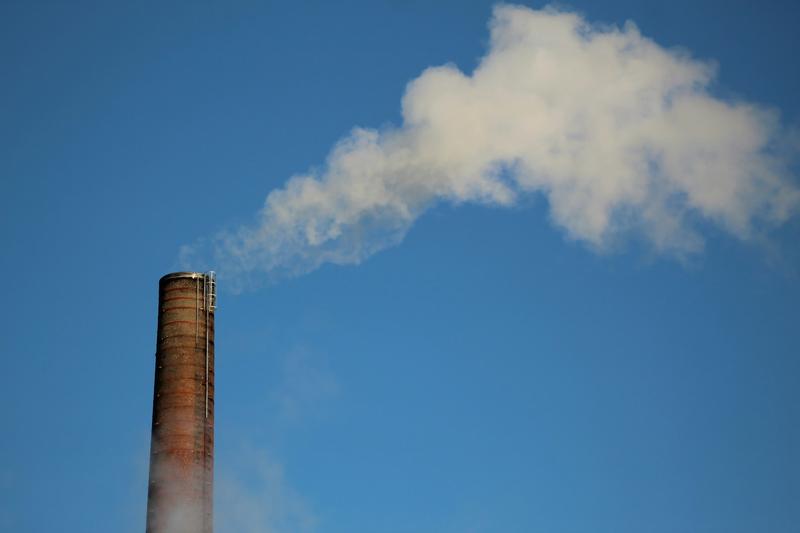
( Anne Nygård / Unsplash )
Title: Changes to the Way the EPA Regulates Deadly Air Pollutants
[music]
Brian Lehrer: It's The Brian Lehrer Show on WNYC. Good morning again, everyone. There's some pretty big news coming out of the Environmental Protection Agency about how they'll calculate costs when setting air pollution limits. For decades, the EPA has considered how many lives can be saved by reducing air pollution to justify regulations that promote clean air, but according to an investigation by The New York Times, the EPA under President Trump now has ended this practice, making it easier to repeal limits on pollutants from coal-burning power plants, oil refineries, steel mills, and more to repeal those limits.
With us now to share her reporting on the change in rules at the EPA is Maxine Joselow, New York Times reporter covering climate policy. Maxine, welcome back to WNYC.
Maxine Joselow: Thanks for having me back on the show, Brian.
Brian Lehrer: I'm just going to ask you to explain right at the start what's changed here, because when we read that the cost in terms of lives saved is not going to be taken into account anymore in air pollution rulemaking. All I can do is look at that and say, "What?"
Maxine Joselow: [laughs] For the past four and a half or so decades, the EPA has done what's called a cost-benefit analysis when it's crafting new regulations. This involves looking at the costs of complying with the regulation for businesses, including utilities, that might own power plants, for example, and also calculating the health benefits of the regulation. For example, in the case of clean-air regulations, there are often really significant benefits, including thousands of avoided premature deaths every year, hundreds of avoided asthma attacks every year. The list goes on.
In a really fundamental seismic change, the EPA under the second Trump administration is effectively going to stop calculating the health benefits and only look at the cost to industry. They're really only going to be looking at one side of the ledger in the cost-benefit analysis as opposed to looking at the costs and seeing how they balance out against the benefits.
Brian Lehrer: Does the Clean Air Act even allow that?
Maxine Joselow: That is a great question, one that I tried to ask a number of environmental lawyers and experts as I was reporting out this story. The short answer is it's complicated. The long answer is that many legal experts I spoke with thought that this approach would make the EPA's proposals to roll back clean-air regulations more vulnerable to being struck down in court.
The reason for that, Brian, is there's a court case called Michigan v. EPA where Justice Antonin Scalia, hardly a liberal, he was a member of the Court's conservative majority before he passed. He wrote that if the EPA considers the cost of its actions, it needs to consider the benefits and vice versa. The legal experts I spoke with thought that the court might not look favorably on this approach.
Brian Lehrer: It's interesting because I think the pendulum has swung all the way from one side on this question to now all the way to the other side. I actually went to grad school for public health and studied environmental health as a concentration. I remember a time when the argument was, "Wait, how can the EPA only take health outcomes into effect when considering environmental regulations? They have to at least look at the economic costs to society."
There was the environmentalist position that the EPA should only take health outcomes into account. During the Reagan years, as I understand the history, and maybe into the first Bush presidency, there was a concerted effort by business to at least get the costs to business and to the overall economy into the mix, not just the health outcomes. That led to very fraught discussions and policy debates about what is the economic value of one human life. Right?
Maxine Joselow: Yes.
Brian Lehrer: If an air pollution regulation is going to save one life but cost a billion dollars, to take the extreme example, maybe it's not worth it as a matter of policy, but then when you get to more real-life examples, how does the government value the cost of human lives versus economic activity? The pendulum, if I understand your article correctly, has swung all the way from the EPA should only take health outcomes into effect to the EPA should only take economic outcomes of air pollution rules into effect. You think I'm overstating that?
Maxine Joselow: I think that's generally right. The one thing that I might push back on just a bit, Brian, respectfully, is a lot of the environmentalists who I speak with don't want the agency to completely ignore the costs of complying with clean-air rules for businesses. They just think that those costs tend to be dwarfed by the enormous gains in public health that are a result of these regulations. The Clean Air Act is often cited as having a benefit-cost ratio of upward of 30:1. They aren't saying necessarily don't look at the cost, they're just saying the benefits are going to be much greater, sometimes in the order of 30:1, but in general, I think that's right.
This does really fit into a long-running debate over how the government should value something like a human life, and how do you assign a dollar value to a human life when you're writing regulations? It's been a very fraught debate going back to, as you said, the Reagan years. Different administrations have arrived at different figures. They've generally updated it based on the latest science and recommendations from outside advisory committees that include scientists who advise the EPA, but no administration ever has said the benefits of saving a human life are zero dollars. That's the first time this has ever happened.
Brian Lehrer: Right, and I didn't even mean to say that environmentalists thought in the past that no cost estimate should be done. I meant more that they thought the EPA shouldn't be in that business. If other government agencies wanted to look at economics, fine, but the EPA should be tasked only with looking at the health outcomes of environmental pollution and the regulation of environmental pollution. Who likes this? Are there particular industries that lobbied for not taking lives saved into account as even a metric in how air pollution rules are formulated?
Maxine Joselow: I did note in my article that the US Chamber of Commerce, which is of course the nation's biggest business lobbying group, has in the past written in its public comments and letters to EPA that it does support an approach that would fundamentally rethink the way that the agency considers the health benefits of clean-air rules. They haven't gone quite so far as to endorse this specific approach.
They said in a statement to me that they're still weighing it and they look forward to diving into it in more detail, but in general, the US Chamber of Commerce, which represents many, many different types of businesses across the country, has been arguing that the EPA has been potentially overstating the benefits of clean-air rules and understating the cost to comply.
Brian Lehrer: You wrote in your article, "Over the past four decades, different administrations have used different estimates of the monetary value of a human life in cost-benefit analyses, but until now, no administration has counted it as zero." You were describing that a little before here. Is there a standard? I mean, I hate to even ask the question, but is there a standard over the past, I guess, four decades is the span that you're looking at of how much a human life has been costed to be worth when making policy?
Maxine Joselow: That's a great question, Brian, and it didn't make it into this article. I would need to do a bit more research, but I know that a colleague wrote about this debate about 10 years ago, 15 years ago, back under the George W. Bush administration. At that time, the EPA was using numbers of about $6.8 million of the value of saving a human life by introducing a new regulation. Then that number has ticked upwards, both because of inflation and because of new scientific advances that have changed the recommendations that the EPA's outside advisory groups give to the agency. Again, at no point has it been zero, and it's typically been in the millions of dollars.
Brian Lehrer: Should we talk about particular pollutants? Because I noticed in your article that you gave an example that many business groups have argued that the government gives too much weight to the benefits of reducing PM2.5. That's a kind of fine particulate pollution, and that's a very common kind for people who look at the air quality index, the AQI number on our weather apps. PM2.5, particulate pollution size, is one of the main things. That and ozone when looking at whether the pollution levels are high in a particular area on a particular day. Can you talk about PM2.5? Maybe define for the lay listener what that is and what the controversy over it is?
Maxine Joselow: Of course. PM2.5 may not be a name that all readers or listeners of your show are familiar with, but basically, it is a term that refers to very tiny particles of pollution, including soot. These particles are called PM2.5 because they are less than 2.5 micrometers in diameter, which is about 1/30th the width of a human hair and small enough to penetrate deep into the lungs and even enter the bloodstream.
There is a robust body of scientific evidence that links exposure to PM2.5 to a range of adverse health outcomes. At long-term exposure, it can cause asthma, heart disease, lung disease, and even premature death. Even moderate exposure to PM2.5 can damage the lungs about as much as smoking cigarettes. PM2.5 comes from burning fossil fuels. Think about a coal plant burning coal to generate electricity or gasoline-powered car burning gas, and it's all over the place. It's the most common deadly air pollutant in the United States.
Then ozone is the second pollutant that is affected by this EPA announcement or change in approach. Ground-level ozone is also released by industry, and it can be released by power plants, cars, factories, and it's what causes smog when it mixes with those industrial emissions in the air, typically on hot sunny days. This pollutant too, ozone, is linked to a number of adverse health outcomes even at moderate levels of exposure.
Brian Lehrer: Mook in State College, Pennsylvania has a question. Mook, you're on WNYC. Hello.
Mook: Hi there. I just want to ask a clarifying question. If the lives saved is no longer being considered, what about other health outcomes that affect people but don't kill them? Things like asthma, would those still be counted in new proposal? Relatedly, do we know what portion of health benefits from regulation come from mortality, people dying, versus morbidity, people getting sick? Do we have a sense of how those things compare? Thank you so much.
Brian Lehrer: That's a great question, Mook. Thank you very much for that. Yes, your article says they're not going to consider lives saved anymore in setting environmental rules. What about diseases cost?
Maxine Joselow: Thanks for the question, Mook. I think the article, or I hope the article is clear that they also are not going to be taking into account the cost estimates of avoided asthma attacks, avoided hospitalizations when setting clean-air rules. They're not just ignoring the premature deaths, they're also ignoring the health benefits related to reduced asthma attacks, hospital visits, et cetera, other impacts of air pollution that harm your health but don't go as far as actually killing you. I hope that that story made that clear.
Maybe the headline only referred to lives saved, but the first few paragraphs tried to get into the fact that this is about all of those other health outcomes as well. As far as the second part of your question, Mook, I know you were asking about, "Okay, what percentage of health benefits in these cost-benefit analyses come from lives saved versus asthma attacks avoided, et cetera?" The answer is it depends. I would really want to defer to the experts at the EPA who are working on this every day or have been under past administrations. I think in general it varies. In general, reducing both of these pollutants, PM2.5 and ozone, does account for the vast majority of health benefits in these rules.
Brian Lehrer: How do they even justify removing health outcomes and life and death outcomes from the formula for setting air pollution rules? Is it that-- There's one line in your article that kind of implies to me, but I don't know if I'm reading it right, that they say, "Well, the science is so uncertain on how many lives are actually saved or how many asthma attacks are actually saved, that we're not going to take it into account because the science, such as it is, is too uncertain, so it's meaningless." Is that it? Is that their argument?
Maxine Joselow: I think that's mostly right. They're definitely saying that it is too uncertain to quantify the benefits of reducing PM2.5 and ozone, but the way that I read the internal EPA documents about this that I obtained and reported on in this story is not necessarily that they were calling the science uncertain, but that they were calling the judgments that you have to make in doing the cost-benefit analyses, so really economic judgments, not scientific ones, too uncertain.
The language that I obtained, which is from internal EPA documents, states that historically the EPA has given the public "a sense of false precision and confidence regarding the monetized impacts of PM2.5 and ozone." What they're saying here is they're accusing past administrations of giving the public a false sense of confidence in these numbers when really they're a judgment value.
Brian Lehrer: We will end by just noting some texts that are coming in that basically say even if you want to only look at economics, even if the government only wants to look at economics, there are reasons to regulate pollution. One person writes, "Pollution has economic costs too, including destruction of highly valuable natural resources such as clean water and wetlands."
Another person writes, "If only business interests matter, what about businesses with different interests? Isn't a healthy human life more valuable to an insurance company than it would be to a fossil fuel company?" That's an interesting hypothetical to leave out there, but we are going to leave it out there as our last thought, as we thank Maxine Joselow, who covers climate generally on the clean air in general beat for The New York Times, for this article called EPA to Stop Considering Lives Saved. Again, I can't even believe I'm reading this headline, EPA to Stop Considering Lives Saved When Setting Rules on Air Pollution. Thank you for sharing your reporting with us.
Maxine Joselow: Thanks so much.
Copyright © 2026 New York Public Radio. All rights reserved. Visit our website terms of use at www.wnyc.org for further information.
New York Public Radio transcripts are created on a rush deadline, often by contractors. This text may not be in its final form and may be updated or revised in the future. Accuracy and availability may vary. The authoritative record of New York Public Radio’s programming is the audio record.
