
Changes to the Childhood Vaccine Schedule
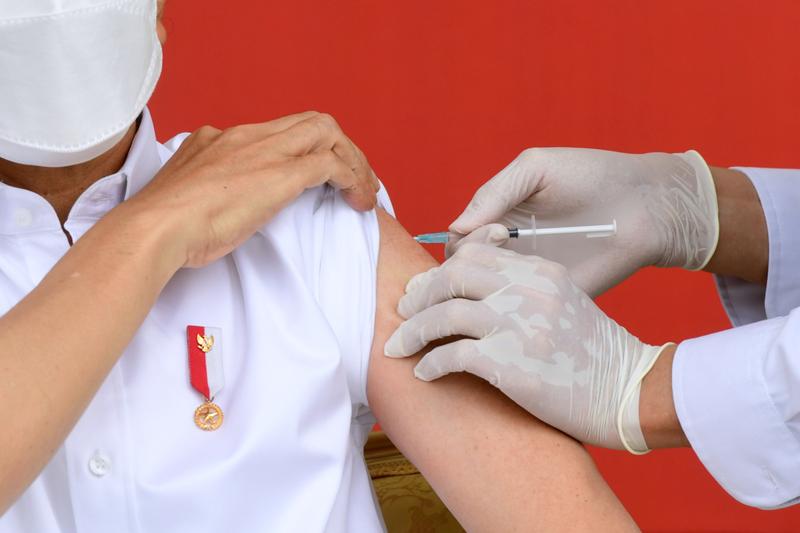
( Presidential Secretariat Photo by Muchlis Jr., Government of Indonesia / Wikimedia Commons )
Title: Changes to the Childhood Vaccine Schedule
[music]
Brian Lehrer: Brian Lehrer on WNYC. Yesterday, in case you missed it with all the Venezuela news and maybe a lot of Mamdani news, and we'll get to Mamdani news later, US Health Secretary Robert F. Kennedy, Jr. announced that the Centers for Disease Control and Prevention has cut a slew of routine shots from its recommended vaccine schedule for American children. Until yesterday, the CDC recommended 17 vaccines for kids between the ages of 0 and 16. Now it's down from 17 to just 11. Among the cuts, children under one year old are no longer recommended, at least universally, to receive hepatitis A, hepatitis B, rotavirus, or RSV vaccines. They've also scrapped recommendations for meningitis and HPV vaccines that 11-year-olds typically receive. They've nixed COVID and flu vaccine as universal recommendations for kids of any age, and these changes are immediate, posted on the CDC website as of yesterday.
Now, health experts say this may be the most significant public health change yet under RFK Jr., who, of course, has been a leading voice in vaccine skepticism since his presidential candidacy in 2024 and way before that, and has promoted the idea that vaccines cause autism, some of them anyway, a claim that has been debunked by extensive research. He and President Trump both say the new guidelines are actually in line with vaccine recommendations from other wealthy nations, including Denmark, Japan, and Germany. We should note that most other peer countries, Canada, the UK, Australia, do have vaccine guidelines that look almost identical to those that have been in place in the US.
To help us unpack the science, politics and economics behind these different guidelines and talk through what these changes might mean for you as parents or others with kids in your life, also, what they might mean for insurance coverage, pediatricians, we're going to invite your calls and more, we are joined now by Jessica Malaty Rivera, an infectious disease epidemiologist, a very public health communicator, and a member of the group Defend Public Health. Jessica, always great to have you. Welcome back to WNYC.
Jessica Malaty Rivera: Hi, Brian. Happy New Year. Thanks for having me.
Brian Lehrer: There are many places that we could start, but before we go down some individual vaccines, let's look at the big international picture because that's the rationale they're using, bringing the US more in line with countries like Denmark. Can you talk about why a country like Denmark wouldn't recommend vaccines universally against diseases like RSV or rotavirus for kids? Bring the science or bring the politics or economics as they intersect with the science.
Jessica Malaty Rivera: Yes. Unfortunately for the administration, the US is not Denmark in almost every possible way. I've joked that it's not like comparing apples and oranges. It's more like apples and steaks. We're talking about a country of 350 million people compared to a country of just under 6 million. Vaccine schedules are designed based on populations and the health of that population. You couldn't possibly say that the health baseline of people in Denmark is comparable to the United States by any stretch.
Not to mention the fact that Denmark has universal healthcare, which is one of the things I think that is probably the most likely indicator of health outcomes, something that the United States does not have. We have millions of people who are under or uninsured in this country, including children. To call them a peer is just factually incorrect. It's interesting how we've switched from Denmark to yesterday's image that Trump shared, which was, just general European country. Europe is not a country. It's made of many countries, and each country, like I mentioned before, has their own tailored vaccine schedule that is appropriate for their population.
If you wanted to compare it to other countries in Europe, let's look at the UK. The UK has 15 vaccines on their schedule compared to what we had. We had 17, now we're down to 11. Denmark had 10. I also want to flag the fact that there's a lot of inaccuracies with the numbers that you're hearing come out the numbers of the total number of vaccines, the number inaccuracies about the total doses of vaccines. To just start, we are talking about completely incomparable populations from the baseline.
Brian Lehrer: Listeners, our phones and text message thread are open for what you think of these newly revised recommendations, for questions that you have about these newly revised recommendations, what are you going to do if you are currently parenting a growing child, or maybe even if you're pregnant and you're going to have a day one decision with respect to at least one of the hepatitis shots and if you are a pediatrician, how are you going to navigate this for your own understanding and with your patients? 212-433 WNYC, 212-433-9692.
I want to note a couple of things here just so we don't overcommunicate or oversimplify what they actually did, and especially with respect to the availability of vaccines. They said some of these vaccines are no longer recommended for all children, but still for kids at higher risk of complications for various reasons. Is that an important point to you on this?
Jessica Malaty Rivera: It's not because some of the recommendations existed based on high-risk groups already. For instance, RSV. RSV, every kid under two is high risk, but for some reason, they've just focused it on the most high-risk, which is a true statement that kids eight months and younger born in an RSV season whose parent is not vaccinated for RSV is the highest risk of that high risk. Any kid under two would be considered high risk.
This is just another way, I think, to add confusion and create what we've always said, that their intention was an à la carte experience with a vaccine schedule, that if you suggest that they are all optional, then people can choose what they want and choose what they don't want. Now, what's very troubling about that is that parents have always had the right to refuse vaccines, always. This makes it sound like this is the first time that that has existed. A parent has always been able to defer or delay, or just outright refuse. This idea of no longer recommended or only for high risk just adds a layer of confusion to parents who are already trying to make the best choices for their children.
Brian Lehrer: You're channeling, or you might as well have been channeling a pediatrician who just texted us saying, "I am a pediatrician. All of these cuts are awful and ill-informed, but the RSV and rotavirus may be the worst. Under one is exactly the group that are at the most risk from these infections. A drop in immunization rates for these children will undoubtedly lead to more hospitalizations and deaths." That from a listener identifying themselves as a pediatrician.
Also interesting to me was that they kept, correct me if I'm wrong, but I think they kept the universal recommendation for the MMR vaccine, measles, mumps, and rubella, which RFK's vaccine skepticism has seen the most focused on over time. We know all the stuff about measles and him that's been in the news. How do you understand maintaining that recommendation at this time?
Jessica Malaty Rivera: I think it's all part of a larger plan. I don't think that they're done. I think this is perhaps a Trojan horse in an attempt to dismantle the entire schedule over time. I don't think that their eyes are off MMR by any means. I think that they're just trying to start now in this way with things that were low-hanging fruit, unfortunately. Since the things like COVID and influenza, for instance, were not ever mandatory for any type of school requirement, they were recommended, but they were never part of a guideline for enrollment, those were easy to chop off.
RSV is technically not a vaccine. It's a monoclonal antibody and is a newer addition to the schedule, but it is something that it's very easy for them to take off because it's not as old, perhaps, as, say, MMR. I don't think that they're done chopping this schedule up.
Brian Lehrer: Will this change insurance coverage for anyone?
Jessica Malaty Rivera: It's interesting because this came up in the press release that came out of HHS, and the quote came from Dr. Oz stating that insurance companies will still be required to cover them without any cost-sharing if they fall under these three categories. The categories are, of course, bizarre. One of them is all recommended vaccines for children, recommended for high-risk, and then recommended based on shared clinical decision-making.
Now, shared clinical decision making is a word salad way to describe you and your provider making that decision together, which has been the standard of care already, where a provider and a patient or a parent is making these decisions together. If your pediatrician is following the American Academy of Pediatrics schedule, they'll likely default to category 3, this idea of shared clinical decision making to get the vaccines covered.
However, the wording that we saw last year coming out of the insurance groups was that they would cover all ACIP-recommended vaccines. They've now chopped that. I'm a little concerned about what that actually means for coverage despite what they said in the press release yesterday.
Brian Lehrer: Some texts coming in. "Younger doctors may not have the fear because they trained without ever having to do a spinal tap, because the vaccines made such a huge difference, meaning in the prevalence of these diseases in the population." Another person writes, "I'm a high-risk obstetrician. My recommendations will remain the same as before the "change." Here's another one.
This is an emotional one. "As a pediatrician, the only red light I ever ran was late at night when no one was around because I had a patient I had sent to the ER with potential meningococcal disease. Fortunately, this patient did not but all of the diseases, the fear of this one is what keeps us up at night. Many of us have seen kids die or be badly affected by these diseases and never want to again." Also on the EU comparisons, this pediatrician writes, "Over the years, most EU countries came into alignment with the US schedule once funding allowed."
He writes, I don't know if he or she actually, "I had a significant relocation population from the EU working near New York City, and I can tell you that is a fact." Wayne in Queens, you're on WNYC with infectious diseases epidemiologist Jessica Malaty Rivera. Hi, Wayne.
Wayne: Hey, how are you doing? Brian, I love your show. Listen, my concern, like I said, I have a fiancée who's eight months pregnant, and so we were discussing what vaccines. For the record, I approve vaccine. I just don't believe some of these vaccines need to be given. Perfect example, neither one of us are hepatitis B positive. We know this. Every time there's been an expert on your show, they say, "A lot of people don't realize they have hepatitis B," and we know we're not.
We're going to make sure that our baby doesn't get that. Ironically, this is the first time I actually-- Well, not the first time, but I heard your expert say, a lot of these vaccines are optional because a lot of times I've talked to other parents, they feel that it's mandatory. I know when my oldest son when he got vaccinated, when he was born, they gave him the hepatitis B, and [inaudible 00:12:36] I had no idea. I don't know if they just say, "Okay." They give us papers and sign it without reading it or whatever. Certain things we know now that we don't want [unintelligible 00:12:47]
Brian Lehrer: Is Hep B the one they give on the day of birth?
Wayne: Yes.
Jessica Malaty Rivera: Just given at birth, yes.
Wayne: Is that one optional?
Brian Lehrer: Is it optional? What do you say to him if he knows that both he and his fiancée are Hep B negative?
Jessica Malaty Rivera: Very fair question. To be very clear, every vaccine is optional. Nobody is compelled to get any of them. They're all optional. However, you will be required to have some of them if you decide to enroll in systems like public school or certain daycares, and then it becomes a requirement, but a parent can always refuse, always, in any case. You could choose to homeschool, you could choose to not be part of the systems that have these requirements.
Let's clarify the semantics over here. When it comes to hepatitis B, hepatitis B is one of those interventions that has helped us as a population significantly over years because most people don't know their status, and many people don't know their status. Hepatitis B is not just an STI. It's not just something contracted over high-risk behavior like injected drug use. It can be spread from children to other children in the context of these daycares, in the context of classrooms. If a child bites another child, if a child has saliva on an object and that other kid puts it in their mouth.
We're not talking about something that is just based on the parents' status. There are people who can come into contact with the child, including other children whose historical status may be unknown or their status after birth changed that can put your child at risk. The reason why it is so important to vaccinate so early is because hepatitis B infection, if happening early on, can lead to chronic hepatitis B. Chronic hepatitis B can lead to liver cirrhosis, it can lead to the cancer.
We have looked at the years and years of data that earliest intervention can actually prevent that because there is no treatment for hepatitis B. If you have it, it will be a chronic, terrible condition that the person will have for the rest of their life. Vaccinating all kids at an early age helps the population and caused a 90% reduction in overall hepatitis B when we started offering it at the birth dose.
Brian Lehrer: Wayne, thank you for your call. I hope that answers your question. I appreciate it. By the way, good luck to you and your fiancée on the pending birth of your baby. As with Wayne's call, Jessica, I want to go through a few more here who are not 100% on either side of this. I'll read you, because we're getting a lot to be honest, text from a conflicted parent here. "I have a three-year-old and an almost one-year-old. I work in health care. I believe in science.
I have followed all guidelines until now, but I feel scared. I feel scared about the risks of my kids' peers now being under-vaccinated. If I'm honest, there's a part of me that's also scared. What if there's an element of truth in over-vaccination risks? What if I'm wrong to continue pursuing all vaccines as was previously recommended? Scary times." Note that one, and I'm going to take one more along these lines. Rebecca in Saratoga Springs, you're on WNYC. Rebecca, thank you for calling in.
Rebecca: Oh, hi, good morning. I studied medical microbiology, and one thing that I found to be very interesting in college was taking elective courses that the medical school offered to graduate students that were not required, but again elective for those working in internal medicine, pediatric neurology, and there's a variety of other specialties. My concern is the study of the blood-brain barrier, which is functional but leaky compared to adults in early infancy.
In the first few months of life, it's gradually tightening and functioning. This is what I would consider a critical stage of human development, and it's still happening for children in early childhood up to five years old, and those vascular networks and pruning and integration in that barrier, which is actually basically a wall between our bloodstream and the brain, which is functional to protect the brain against toxins, when there is a proliferation of white blood cells, that blood-brain barrier becomes very vulnerable.
Newborns, especially because their blood-brain barrier is already leaky, are more susceptible to the neurotoxins and lots of different drugs, including vaccines and the adjuvants in vaccines. This is also true of adults. There is at least one [unintelligible 00:17:40]
Brian Lehrer: Just to cut to the chase for time, where do you land on the vaccine recommendations as a result of the science you're describing that you studied?
Rebecca: As far as the science goes, I think it needs to be studied. I think that there needs to be a more collaborative, holistic connection between immunology, microbiology, and human development, because there is absolutely going to be an effect with the adjuvants crossing over those very important blood-brain barrier cells. Each of those adjuvants actually have been studied individually, and they do commonly land in the hippocampus, which is important for memory, they land in the frontal lobe, which is important for obviously executive functioning.
Brian Lehrer: I'm going to leave it there because you put a lot on the table. Jessica, do you want to respond to some of that? I think the bottom line from the science that she was arguing exists, which might have left people's brains fogging over a little bit because it was pretty dense, is that if you have these 17 vaccines with-- I know you addressed how this might be misinformation, but the Trump RFK people are saying over 70 actual shots in the course of a childhood that she's arguing maybe there's something there at that volume. What do you say to her or the text that I read leading into that call?
Jessica Malaty Rivera: I'll start with this blood-brain barrier concern because I've heard it a lot. Cells of the immune system are not able to cross the blood-brain barrier. The blood-brain barrier is very restrictive. It limits what can actually access the brain. Now, there are many types of germs that can cross the blood-brain barrier. Some bacteria can cross it, some viruses can cross it, and that's what can cause very terrible things like meningitis and encephalitis.
We know that vaccine components don't cross the blood-brain barrier because the vaccines contain a different version of the pathogen, different than what causes the disease. They don't have the live pathogens, but rather include pieces of it. When only a piece of the pathogen is present, it's not replicating, it doesn't cause infection, so it can't damage the blood-brain barrier or even cross over to it. I just wanted to assuage that concern that it's often been misinterpreted, especially when it comes to the adjuvants or things like aluminum salts that are in vaccines that help boost immune responses. It's not crossing over to the blood-brain barrier.
Now, on the issue of the volume and the concern that the other messenger said, I'm a parent, I've got three young kids, I totally understand the idea of feeling overwhelmed by all of this, but I just want to put a lot of this into context. In 1983, the year that I was born, we were vaccinated for about eight diseases, and in those vaccines for those eight diseases, there was probably tens of thousands of antigens. Antigens are the things in the vaccines that trigger that immune response.
Over the years, now the vaccines that my kids are getting are protecting them from 17 diseases with fewer than 200 total antigens in all of the vaccines combined. That's because we've gotten so much better at creating efficient, safe, effective, low-impact vaccines that are not overwhelming the system. This number that you've heard, and I believe Trump even shared it yesterday, of 72 injections, is false. We do not give children 72 injections.
By the time a child is 18, if you count all of the cumulative vaccines, they probably will receive around 50, and that's between ages 0 to 18. Over 18 years, you're getting 50 injections. Now, if you look at the figure and you try to figure out the math, what they're doing oftentimes is counting each individual dose in combination vaccines as a separate injection. That's not what's happening. It's one injection with multiple doses. As I mentioned, these vaccines are not overwhelming to the system because we've reduced the load of antigens by over 90% in the last 40 years.
Brian Lehrer: We're going to leave it there. Oh, no, I want to ask you one more question. From a text message, listener writes, "Does this mean affluent parents can still get the full panoply of shots while the poor will not?"
Jessica Malaty Rivera: That is a question that keeps me up at night, Brian. I do not know the answer to that question because what we have known historically, the precedent has always been that when ACIP, the Advisory Committee on Immunization Practices, which is the body of non affiliated CDC advisors that make these recommendations, when they make recommendations, that is what gives the insurance companies the language on whether or not to cover the cost of an injection, of a vaccine.
Now that we have sabotaged both the process of these recommendations and now the schedule itself, there is a lot uncertainty. Now, yesterday I did mention that in the press release, it says that there should not be cost sharing for people who are in those recommended groups, people in the high-risk groups, or people who are doing it based on "shared" clinical decision making. Again, I am not sure how that's actually going to play out. I am watching this very closely because that would be an extremely dreadful reality for so many people who rely on public insurance or other systems to help them get affordable access to health care.
Brian Lehrer: Obviously, after our conversation with you as an epidemiologist, we're going to have to have a similar conversation with people in policymaking and politics to make sure that everybody who wants things that become technically not recommended has the availability of them, despite whatever their means may be. There we leave it with Jessica Malaty Rivera, an infectious disease epidemiologist, a public health communicator, and a member of the group Defend Public Health. Jessica, thanks for bringing the science.
Jessica Malaty Rivera: Anytime, Brian. Thanks so much.
Copyright © 2026 New York Public Radio. All rights reserved. Visit our website terms of use at www.wnyc.org for further information.
New York Public Radio transcripts are created on a rush deadline, often by contractors. This text may not be in its final form and may be updated or revised in the future. Accuracy and availability may vary. The authoritative record of New York Public Radio’s programming is the audio record.