
Call Your Senator: Sen. Andy Kim on Venezuela, January 6th Anniversary and More
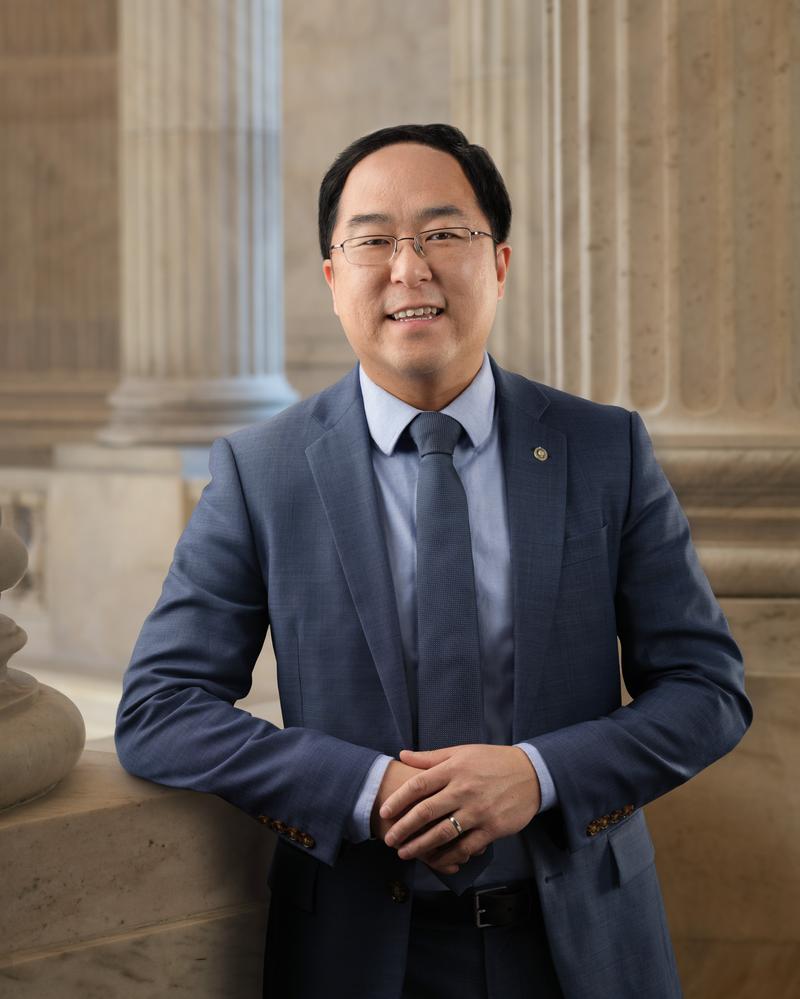
( U.S. Senate Photographic Studio / Office of the Senator )
Title: Call Your Senator: Sen. Andy Kim on Venezuela, January 6th Anniversary and More
[music]
Brian Lehrer: It's The Brian Lehrer Show on WNYC. Good morning, everyone. As the US military action in Venezuela obviously dominates the news, maybe it slipped under your radar that President Trump and RFK Jr. removed six childhood vaccines from the list of those recommended for all kids yesterday. They did it with no public hearings or other input, as I guess would be customary for such a change. We will do a segment on that later this hour, including what parents and pediatricians need to know about insurance coverage if they choose to get all the vaccines. Our guest will bring the science.
Speaking of caring for your kids, you may also not have seen that the Trump administration yesterday cut off New York and six other states led by Democrats from billions of dollars in childcare funding. There's a New York Times article on this this morning. This, of course, just as Mayor Mamdani and Governor Hochul are beginning to aim for universal child care. We will also talk today with our housing reporter David Brand about Mayor Mamdani's first moves on housing, obviously the number one issue for so many in the city, affordable housing. There's a lot more going on already than just trying to freeze rent-stabilized rents.
At the end of the show, we'll hear an argument that setting up rituals for yourself is more productive than making New Year's resolutions, rituals versus resolutions as a path to a better year. We have a guest, and we'll take your calls, but first, it's our first Call Your Senator segment of 2026. It's with New Jersey Senator Andy Kim. As a former State Department and Pentagon employee, someone who served the US Government in Afghanistan, and a member of the Foreign Relations Committee when he was in the House, will certainly get his take on the US military action in Venezuela.
Also on today is the fifth anniversary of the January 6th Capitol riot. Kim was a member of Congress at that time. We'll ask him to look back, but probably more important, the impact of that January 6th to life and democracy in the US on this one. We'll talk about other things too. Senator Kim, thanks for renewing Call Your Senator for 2026. Welcome back to WNYC.
Senator Andy Kim: Yes. Happy New Year. Thanks for having me on.
Brian Lehrer: Listeners, our lines are open for your calls and texts at 212-433-WNYC. First priority to New Jersey constituents, but with the national and international subjects on the table right now, anyone may call, 212-433-WNYC, 212-433-9692, call your senator, or text them, 212-433-9692. Senator Kim, President Trump says the action in Venezuela was a law enforcement operation, not an act of war. Your reaction?
Senator Andy Kim: Well, it's absolutely ridiculous. We have a carrier strike group, we have a nuclear-powered sub, we have seven destroyers. We have so many assets. Honestly, it's costing us millions of dollars a day just to have it there. If it was just about law enforcement, why does he say that he has the ability to do a second strike? Is that going to also be about apprehending someone who is indicted? Absolutely not. That's not what he's talked about.
When he's talking about Cuba or Colombia or Greenland, is he talking about that in terms of law enforcement? Is there a reason why Pam Bondi was not at the press conference when they announced the attack? If it was law enforcement, shouldn't they put the Attorney General up front? This is all a ruse. This is all that's just them trying to find any and all possible ways to justify what they ultimately wanted to do. The goal of this was not about law enforcement.
It was what I call an extortion foreign policy. These are just mob boss tactics that President Trump is using to use our military and our foreign policy for his own personal benefit or the benefit of those of his supporters, certainly the oil and gas executives that supported his campaign. That's what we're seeing unfolding before us right now.
Brian Lehrer: We'll get into the oil, play a clip of Secretary of State Rubio where you might say he said the quiet part out loud. So did President Trump. They're really not making a secret that this is largely about oil, though they argue that it's in the interest of the Venezuelan people with respect to their oil economy as well as the US. You said President Trump's personal interests. What did you mean by that? Is it that you think he makes money from this somehow, or how far toward a charge of corruption do you want to go here?
Senator Andy Kim: Well, look, what we've seen, starting with his inauguration speech, and I was there in the Rotunda where he's talking about a golden age for America, but what we've come to see a year in is that it's a golden age for those that were up on the stage at the inauguration. That includes him and his billionaire buddies and his administration, so many of them which are enriching themselves or having family members enriching themselves.
Look, this is about how Trump comes into power and is able to continue to be in power. It's about the billionaires and the big corporations that are funding millions of dollars towards building Trump's Golden Ballroom and so many other actions in which it has become this patronage network. I often just say--
Brian Lehrer: Yes. This one? This one? This action in that context?
Senator Andy Kim: "This action in that context." Again, if they have the oil and gas executives and billionaires and millionaires that funded his campaign, this is a way for him to be able to get back to them and to be able to make sure that they are taken care of. Look, if this was actually about drugs or other issues like that, he has called the Maduro regime entirely one filled with narco-terrorists, not just about Maduro at the top, but he seems perfectly fine working with them now, as long as they are compliant and as long as Donald Trump is in the take as well. Those are the examples that really show just how hollow their arguments are, that this is about American interests.
Brian Lehrer: Let me play a few clips of Secretary of State Marco Rubio on NBC's Meet the Press on Sunday, arguing what some legitimate US national interests are here that he claims. In this clip, and we played it yesterday, but this is rich enough that I think it's worth repeating two days in a row. In this clip with the moderator Kristen Welker, Rubio says flat out it's a war for oil, but also that it's the oil interest of the people of Venezuela as well as the US at the same time. Here's that.
[clip begins]
Secretary of State Marco Rubio: We don't need Venezuela's oil. We have plenty of oil in the United States. What we're not going to allow is for the oil industry in Venezuela to be controlled by adversaries of the United States. You have to understand, why does China need their oil? Why does Russia need their oil? Why does Iran need their oil? They're not even in this continent. This is the Western Hemisphere. This is where we live, and we're not going to allow the Western Hemisphere to be a base of operation for adversaries, competitors, and rivals of the United States. It's as simple as that.
Kristen Welker: Have specific oil companies--
Secretary of State Marco Rubio: We also want to see that oil and the proceeds from it-- Hold on. We want to see the oil proceeds of that country benefit the people of Venezuela.
[clip ends]
Brian Lehrer: Your reaction, especially to the end of that clip, that this could be in the interest of both the US and Venezuelan people if they stabilize the oil economy there, and yes, maybe it gets funneled through the US as a middleman who takes a cut as they sell the oil to China and elsewhere, but also with the decimation of the oil economy under Maduro and Chávez, that this is actually in the interest of the Venezuelan people too?
Senator Andy Kim: Well, look, I'll just start by the first arguments he was making about how this is about oil that's going towards our adversaries and our competitors. Well, look, where does that stop? Does that mean that we're going to go after every single country that provides oil to Russia, to China? Does that mean we're going to go after Saudi Arabia for contributing oil to Russia and China? Does it mean we're going to go after other Middle East countries that we have been partnered with or other nations? The argument is absolutely ridiculous. If you take its logic going forward, it would just basically mean this new era of neo-imperialism that we're undertaking.
No American I've talked to wants to go in that kind of direction, especially at a time when we're facing such challenge. As Rubio stated there, "We don't need this oil." We are flush with it ourselves, with our own production. This is clearly about corporate interests, about business interests, but also just a sense of control. When I hear the president, when I hear Rubio talking, the one thing that they're not talking about is about how they are putting forward our US servicemen and women to basically be then a tool to be able to move oil around and be able to protect oil interests.
That's not what the Constitution set up our military to be able to do. It is there to protect the American people, not protect oil interests or protect oil companies or be able to dictate where fossil fuels are going. The fact that we are putting servicemen and women in harm's way, continuing to deploy them well beyond their time of deployment, having them miss their time with their families. Frankly, if anything goes sideways and wrong with this, if chaos and conflict does erupt, it's our service members that are going to be paying the price for it, not Donald Trump and Rubio who are going to continue to have their gold-plated dinners at Mar-a-Lago. I've seen this before.
Again, I was in Afghanistan about 15 years ago. I've spent time out in Iraq. I've seen who pays the price for this type of broken foreign policy. It's never those at the top. It's always the American working families, the service members and their families. They're the collateral damage here because Donald Trump is playing with other people's chips.
Brian Lehrer: Yes. Luckily, there were no US service member casualties from what I've seen, but very underreported. Some Venezuelans were killed. People did lose their lives over this arrest and intervention for oil. In historical context, there are many things Trump has done that are unique in terms of democracy and presidential power. We don't have to start down the list, but how much do you think that's the case with this?
US presidents of both parties have used military invasions or other aggressive regime change interventions in Latin America. Chile when Allende was president, Panama [unintelligible 00:11:05] the Dominican Republic, the Iran–Contra scandal. Right? The Contras were rebels President Reagan supported against US Law in Nicaragua who were trying to overthrow that government. President Kennedy's Bay of Pigs operation in Cuba. I could go on. In none or almost none of those cases did Congress get to declare war. Is this somehow bigger or different in your view?
Senator Andy Kim: Well, first of all, I'll push back on your use of the word "unique." It is something that isn't just unique, it's something that is dangerous. Yes, we've seen American imperialism and other types of actions in the past. That doesn't make this one right, especially as we've been trying to push together a way forward after two decades of horrific wars that we have gone through. As generations of my friends and colleagues, I have been to far too many funerals at Arlington Cemetery and elsewhere over the last 20 years. I'm tired of it, and sick and tired of it, and so are the American people.
Yes, we have seen these problems in the past, but I had hoped that we had learned something from Iraq, from Afghanistan, spending trillions of dollars, losing thousands of lives, but apparently, we have not. The fact that, again, this wasn't about law enforcement because now Trump is saying that he's in charge, that he is basically putting himself and saying he's running Venezuela.
Again, those are the types of things that is setting this apart and showing how dangerous a moment this is, but I do hope that, as the American people look at that and they look at these past contexts, yes, we have made many mistakes as a country before. I don't discount that, but I had hoped that we had learned a lesson from Iraq and Afghanistan and 20 years of some of the worst foreign policy decisions in modern times. That is what's at stake right now.
Brian Lehrer: One more from Rubio on Meet the Press that merges what he claims are US and other countries' immigration security interests.
[technical difficulties playing the clip]
Brian Lehrer: Hang on. [crosstalk] There we go.
[clip begins]
Secretary of State Marco Rubio: Why have eight million people left Venezuela? Eight million, the single largest mass migration probably in modern history, left Venezuela since 2014 because all the wealth of that country was stolen to the benefit of Maduro and his cronies in the regime, but not to the benefit of people of Venezuela. Do you know how destabilizing eight million migrants is? You do know.
Kristen Welker: Yes.
Secretary of State Marco Rubio: The number one fear that Brazil has, that Colombia has, that all these countries in the region have about what's happening in Venezuela and our involvement is they're afraid of another mass migration event. That's what they fear. This is deeply destabilizing stuff. It's not going to continue to happen. They are not going to come from outside of our hemisphere, destabilize our region in our own backyard, and us have to pay the price for it. Not under President Trump.
[clip ends]
Brian Lehrer: Your reaction to that? Again, we and other countries don't want floods of refugees, he's arguing. Venezuelans, like anyone else, don't want a country with such bad conditions that they feel forced to flee en masse. As you know, many Venezuelans in New Jersey and elsewhere in this country seem to be celebrating this.
Senator Andy Kim: Look, I don't discount the fact that Maduro is somebody who is an illegitimate president, somebody who has done so much damage to his own nation, but again, what is the role of the United States when it comes to this? When we see a situation here where, Marco Rubio, as you pointed out, he's someone who came and briefed me and every other senator a couple of weeks ago and looked in our eyes and said that regime change was not the goal of these operations.
Obviously, that was a lie. When it comes to what comes next, what role we're going to play, how much money are the American people going to have to endure? What type of risk does this bring? These are the types of questions that the American people deserve to be a part of. This shouldn't be something that just a small band of people in a dining room in Mar-a-Lago were able to decide on their own. That is what's at stake here.
Frankly, Marco Rubio's argument about destabilization, where was he when I made those points to him about the destruction of foreign assistance, of USAID and other types of tools that we've had to try to stabilize countries and to be able to do that in our own interest because we wanted to make sure that we are creating the kind of stability that is needed. He clearly did not care about those arguments then.
He's using these and weaponizing these arguments solely to be able to continue with what their goal actually is. Because if it was actually about stabilizing when it comes to immigration and other actions, we would be working with other nations throughout Central and South America to be able to do that follow-up rather than continuing to threaten countries like Colombia and other countries as a follow-up, saying, "You're next." That's only going to further antagonize people and countries that we can partner with to try to get the challenges under control. This is not about stabilization. It's about a projection of their power and dominance.
Brian Lehrer: Just to follow up on the positive reaction of much of the Venezuelan community here. I don't want to underplay how there are mixed reactions, but we're hearing a lot of positive reaction. We got a couple of phone calls yesterday on the show, one from someone here from Venezuela, one from someone here from Cuba. Here's a headline from the news site amNewYork today, "Venezuelans weep with joy in Manhattan as Maduro arraigned on narco-terror charges." That was about a rally in support of removing him.
I saw some similar sentiment in a News 12 -New Jersey story about the mixed emotions of Garden State Venezuelans. Here's a clip. This is a woman named Niurka Melendez at a church event on the Upper West Side of Manhattan speaking in support of Maduro's capture. This was at a community food and aid giveaway at St. Paul & St. Andrew United Methodist Church in Manhattan. The sound quality is not great here. Listeners, you're basically going to hear her say that the first thing that came to her mind was justice finally arriving to her country. Listen.
[clip begins]
Niurka Melendez: The first thing that came to my mind was justice finally arrived to my country. That was the first thing that came to our mind, even for people that are still in my country, my sister, my cousin on this, all my family, you can imagine, they also thought the same.
[clip ends]
Brian Lehrer: I know that wasn't great sound quality. "Justice, that was the first thing that came to our mind, even for people that are still in my country, my sister, my cousin on this, all my family. They also [unintelligible 00:18:18]." Address directly the Venezuelans living in New Jersey, Venezuelan Americans, and their joy, or at least mixed emotions that include joy and some approval in the context of all the criticism you've been leveling.
Senator Andy Kim: Oh, of course. No, look, I can completely understand and empathize how this might feel to people from Venezuela, people with family there. As a Korean American, I hope one day that the Korean Peninsula is going to be a place of peace, and my family doesn't have to live under the threat of nuclear annihilation from a madman in North Korea.
Yes, of course, I hope that, and I hope that what we see here is going to lead to some greater level of stability, but what we know is that there's nothing guaranteed about it. We can, yes, say that Maduro should not be in power and be grateful that there's hopefully an opportunity to be able to have some better change, but we know it's not certain. I worked in Afghanistan and in Iraq, and I saw people celebrating the removal of Saddam Hussein, but then I saw a brutal civil war come afterwards where the loss of tremendous life and an enormous amount of instability.
I saw people in Afghanistan talk about how they have such freedoms with the liberation from the Taliban, only to see the Taliban and other groups wage absolute war back and see that strife come back with such a vengeance. Look, I hope that what we are focused on is about that greater level of security and stability for the people, but what I'll say is those are not the words coming out of Donald Trump's mouth. He has said so little about what comes next, about democracy, about stability for the people, his willingness to, again, work with people in a regime that he said was full with narco-terrorists, as long as they do what we want to do when it comes to oil, that is what I worry about.
I hope people can, that have family there, have such connections to Venezuela. I totally understand where they feel right now, but I hope they work with me and others to stay engaged on this, to make sure that we stay focused on what comes next and how we can try to ensure that there will be security and stability for their loved ones going forward.
Brian Lehrer: Just to, I guess, illustrate the point that you were making of how this is a power play by the United States rather than in the interest of the Venezuelan people as a motivation. Here is a clip that I guess kind of like Rubio admitting this is about oil, is saying the quiet part out loud. It's Trump advisor Stephen Miller on CNN yesterday on the question of whether this violates international law. Stephen Miller with Jake Tapper.
[clip begins]
Stephen Miller: We live in a world, in the real world, Jake, that is governed by strength, that is governed by force, that is governed by power. These are the iron laws of the world since the beginning of time.
Jake Tapper: Are you saying--
[clip ends]
Brian Lehrer: You want to react to that, Senator?
Senator Andy Kim: Well, look, I think it reinforces why I believe Stephen Miller is the most dangerous person in America right now. He is somebody that has such a dangerous and broken viewpoint, something that comes from the medieval era rather than what's focused on what we have been trying to do in the 20th and 21st centuries. Someone who just wants to use, again, our military as if it's just this cudgel that we can hang over everyone without thinking about the impacts this is having on our servicemen and women.
He just thinks it's just a tool that they can use at whatever whim that they want. When he says that about Venezuela or what he said about, "Of course, Greenland should be a part of America," just the way that he talked about the arrogance and just the willingness to say things that are just so wrong and the dangers that puts American interests in. I say that as someone who worked on a NATO military base in Afghanistan. NATO came to our defense after September 11th. Now Stephen Miller is talking about attacking and taking land from a NATO ally. Those are the types of actions that I hope people see is dangerous.
Sure, it's bold and it's decisive and sometimes we think about that at least something is getting done, but to allow Stephen Miller to get away with this new imperialism that he's trying to put forward is something that's going to be disastrous for the future of my 8 year old and my 10 year old, and I refuse to let my two little boys to be grown up in an America shaped by Stephen Miller and these very dangerous ideas.
Brian Lehrer: It's our monthly Call Your Senator segment, first of the year, with New Jersey Senator Andy Kim. I want to take a call now from one of your constituents. This kind of makes a segue from the clip that we played a minute ago, though it completely changes the topic because though the clip was of a Venezuelan American being happy about the military action, the removal of Maduro, the event was at a-- Let me get the right words back here again. This was at a community food and aid giveaway at a church in Manhattan. That's the segue to Melissa in Union County. Melissa, you're on WNYC with Senator Kim.
Melissa: Good morning, Brian, and good morning, Senator Kim. Happy New Year to you both, and thanks for taking my call. Long-time listener. Big, big fan, so thank you again.
Brian Lehrer: Thank you.
Melissa: Senator Kim, I just had a question. It seems pretty obvious that all the Democratic states are pretty much on the chopping block, first off for the federal government right now in terms of funding for a host of programs that directly affect social services, child care, education, infrastructure. The list goes on and on. I'm curious to know what our state leaders are doing to proactively prepare for that. Personally, I work in law enforcement, and my fear, that I'm already seeing, is that crime will begin to spike and it will have a direct impact on family dynamic, schools, children, employment rates. The list goes on and on. How are we preparing for that?
Senator Andy Kim: Thanks, Melissa. Thanks for that. Happy New Year to you too. You're absolutely right. Our state in New Jersey, in New York, and elsewhere are under attack in terms of funding. We've seen this before. We saw it during the shutdown, when President Trump decided that he was going to stop and withhold funding to the Gateway Tunnel Project, for instance, something that benefits millions of people throughout our region. This is what I call mob boss tactics. We see it not only at the domestic level, at the foreign policy level.
As I was saying, this is an extortion foreign policy that's happening, and that is happening at the state level too, utilizing taxpayer dollars, American people, their own hard-earned money, and withholding it for making political points or trying to have political retribution. That is just illegal, and frankly, wrong. Yes, we are trying to take steps, certainly at the federal level, to be able to address this. We see funding being cut to some Republican states as well. We're trying to build coalitions to be able to say that there should never be political consideration when it comes to federal funding, whether infrastructure or education funding or whatnot. We're going to continue to do so.
I'm working closely with Governor Elect Mikie Sherril, someone who I've worked with and came into Congress with, to be able to do everything we can to be able to offset some of these funding shortages. Now, the problem is we're not going to be able to offset all of it, especially when we see massive cuts to Medicaid, when we see other types of attacks upon our own funding systems. This will be a challenge.
I'll be honest with you, it's very difficult, and we're going to try to do our best through this, but it's so imperative that we have checks and balances restored, that we take back one, if not both chambers of Congress in the midterm elections, and be able to get this back into a better working order. Thank you for your attention on this. Thank you for your own service for the community. I worry with you about what this is going to mean for safety and security on so many different fronts.
Brian Lehrer: Melissa, thank you for raising that on the show. We'll continue with Senator Kim in a minute. Cynthia in Jersey City, we see you. You'll be the next caller on what citizens can do about some of the concerns that Senator Kim is raising and the last caller raised. We're also going to get into something that's very personal to the senator, that's going on in his family, that might be relevant to many of you, that might be going on in your own families. Stay with us.
[music]
Brian Lehrer: Brian Lehrer on WNYC with New Jersey Senator Andy Kim. Text says, "What about Trump's pardoning of Honduras's President Hernandez last month since he was indicted on similar drug trafficking charges?" Another listener texts, "Blue State soft secession. We pay more than we receive. If we hold back our federal tax payments, the feds are choked." Cynthia in Jersey City, you're on WNYC. Hello, Cynthia.
Cynthia: Good morning. Thank you, Senator Kim, for being our senator. I have to say that the words of Stephen Miller and the words of Trump have made me literally sick to my stomach. I can't believe that we're threatening NATO allies and the UN Charter. I use 5calls.org to call my representatives and senators, but what else can we do as citizens to make Congress take action against these threats to other countries' sovereignties and our own democracy? What can we do?
Senator Andy Kim: Thank you for raising this, and thank you for just staying engaged. Sometimes I wonder when I'm here at the Capitol, I'm asking, "Are people paying attention to what's happening here?" So heartening to hear that you are paying attention despite the fact that so much of this is so challenging right now. Look, what I would just say is, please help us sustain that attention.
When we saw polling about how people feel about these strikes in Venezuela, we see a lot of people saying that they don't know, that they're undecided, they're still trying to comprehend what is happening. It's important for us to try to shape that thinking, try to make sure that they are informed about just how dangerous these actions can be and not buy into the disinformation that is out there that is trying to justify this like Stephen Miller was. I think that that's something important, and to make sure that you're trying to go out and talk not just to the people that agree with us but really try to go out into your communities and to be able to engage.
I often say if you're only having comfortable conversations in politics, it means you're not talking to all the people you need to be talking to. This should be inherently difficult and uncomfortable, but it's necessary for us to be able to do this and to be able to bring things back to that question of affordability in New Jersey, and frankly, all around this country. We know that the main thing on people's minds is about affordability. Well, then why is Trump spending so much time on tackling these issues, when it comes to these illegal actions in Venezuela and elsewhere, rather than actually focusing on the issues of the American people.
In New Jersey, we're going to have some critical races going forward with the midterm elections. We have a number of representatives that are lockstep with Donald Trump right now. We can play a role in shaping what comes next. I a couple years ago flipped a Republican seat because of just the frustration and the anger of people in New Jersey. That helped us flip the House of Representatives and restore some checks and balances back in at a time when Donald Trump previously had both the House and the Senate under his control eight years ago. Those are real actions that we can take, the actions that we did to be able to get Mikie Sherrill into the governor's office, and to show that with a massive double-digit win.
I mean, that changed the conversation around the entire country. New Jersey shaped how the rest of the country is seeing political momentum right now. I hope you see your power, you know your power, and it can be challenging. I'll be honest, there are times when me as a United States senator, I question and try to figure out what is it that we can actually do right now when there's so much that we're going up against. I just want you to keep at it. It's so important. I often say the opposite of democracy is apathy, is if we give up, if we feel helpless, if we feel like there's nothing else we can do. I urge you to resist feeling helpless, and to find your action and find your power in this democracy.
Brian Lehrer: Cynthia, thank you for your call on that. When we first scheduled this segment for today, before the holidays, because you were available today, we had an open slot today, I thought, "Oh, this is going to wind up being on the fifth anniversary of the January 6th riot or insurrection." That's going to be a major topic. Well, obviously Venezuela happened, so we're going to wind up giving January 6th short shrift because I also want to get to your video about your father and the public issues that that raises before you have to go.
Where were you on January 6th, 2021? Do you think, besides the obvious, that that day threatened electoral democracy but didn't topple it, is it now just a dark chapter in US history, or is it relevant to 2026 in any ways?
Senator Andy Kim: Well, what I'll say is, I was at the Capitol in the same way that I am right now. I'm speaking to you from not too far from where the riot ensued. To your question, I don't think January 6th was a dark chapter. I think it was a dark opening of a chapter that is still ongoing. Honestly, what's really tough for me right now is to conceptualize, looking at the last five years. The question is, are we more stable and secure as a democracy than five years ago? Are we less divided than five years ago? The answer, sadly, is no.
Yes, the threat necessarily right now isn't necessarily a riot at the Capitol and breaking of windows, but the threat is ever-present right now. It's really tough five years on for me to be here at the Capitol and to understand that actually things are more precarious. Our democracy is more fragile than it was five years ago. When we observe January 6th, we cannot look at it as sort of this apparition, as if it was, "Oh, wow, that was a really tough day five years ago. Glad that's not happening. That's not the case."
It should be an effort for us to recommit ourselves with vigilance and action, to be able to make sure we're standing up, to be able to protect a democracy that we have come to see as much more fragile than we ever thought would be the case. January 6th opened our eyes, but unfortunately, the threat persists.
Brian Lehrer: Now I want to turn to the more personal note for you that I know you want to talk about. It's your father's Alzheimer's diagnosis and disease. You released a four- and-a-half-minute video about it. I watched the whole thing yesterday. I know you're hoping that your experience can help others. I'll play for the listeners just the first 25 seconds.
[clip begins]
Senator Andy Kim: Just a few weeks ago, my dad was diagnosed with Alzheimer's. I remember I was sitting in the car after dropping him off at his care facility where he lives, and I was alone. Honestly, I felt helpless. I remember the doctor telling me and my family that we're going to be looking after our dad, that frankly, the next year or two are going to be hell. "Hell," that's what was said to us.
[clip ends]
Brian Lehrer: Why'd you put out a public video about your father's Alzheimer's?
Senator Andy Kim: Because I have to do something to try to fix this. I mean, it has been so difficult to go through this, to see the challenges. I say this-- My father was actually someone who was a geneticist, tried to cure Alzheimer's over the course of his career. Then when the doctor asked him as a memory test, "What did you do with your life? What was your job?" My father didn't know. He said, "I don't know." Alzheimer's has erased from my father's memory all the work that he did to try to cure Alzheimer's. Look, seven million Americans have Alzheimer's. That number is going to go up to 14 million in 25 years. This is catastrophic. People are losing their homes, their livelihoods.
This has been tremendously painful financially for my own family. We have a broken system. Like I'm not asking for the moon for my father. I just want him to be able to live a life of dignity and decency, but unfortunately, right now I have to think about not just about what is the best care for my father, but the question I had to ask is, what is the best care for my father that I can afford? That just shows how broken our healthcare system and our care system is. I want to fix this.
I want to use my efforts here in the US Senate and commit myself to trying to find real solutions to this, to fix long-term care, to be able to make sure people can afford it and it doesn't have generational impacts that can cause bankruptcies and so many other challenges that are out there. I want to support the over 60 million caregivers that are out there that are just stressed beyond belief.
All they're just trying to do is be able to provide a little extra care to their loved ones when there's nowhere else to turn to. I want to make sure we're investing in medical research, not cutting it, like we're seeing right now, so that we can come up with the cures that can hopefully be able to alleviate the problems that so many are facing. I think that that is a message that can cut across political differences. I hope that this can break out of the tribalism that we're just so stuck in as a country right now and say Alzheimer's doesn't care if you're a Democrat or Republican. Like let's try to solve these problems that are affecting so many people right now.
We know how bad this is and how many people are struggling. Like let's try to take it on. I'm using my family story, and I'll be continuing to share, and I hope people follow us on social media. You can go to Senator Andy Kim on social media media and help us share this and help us be able to build a movement that is going to try to alleviate these problems that millions of Americans are facing. That's the journey I'm undertaking here, and I hope others will join me.
Brian Lehrer: Here's a text of appreciation from a listener. It says, "As a constituent, I have been so appreciative of how openly Senator Kim is talking about his father's dementia and the challenges of being a caregiver and the shortcomings in our healthcare system. Senator Kim is mirroring what so many of us have gone through, caring for loved ones in a system and society that offers little support." That's from I guess a New Jersey listener, looks like a 973 phone number.
To finish, you say, "Yes, this doesn't just afflict Democrats, it afflicts Republicans as well." What would be a particular piece of legislation that reforms the healthcare system in a way that could provide more long-term care, to take an example that you mentioned in your last answer or anything else, that perhaps you can get bipartisan buy-in on?
Senator Andy Kim: Well, look, for instance, why is it so difficult for us to be able to get some of this long-term care or care supported through Medicare? This has been enormously challenging. Medicare provides very, very little support when it comes to actually the needs that are out there.
So often, one needs to then basically bankrupt yourself to be able to be eligible for Medicaid or something else, but it's so challenging, and I'm having a lot of trouble navigating this, and I'm a United States senator, and I'm having difficulty navigating Medicare, Medicaid, and so we should be able to make sure we can take the reforms that are out there and propose some new legislation that can make reforms to Medicare, to be able to expand the support that is out there, that can do so in a way that will actually save our country money, to be able to make sure that families are not finding themselves in this situation.
I'll just end on this. I had a neighborhood a couple years ago, she was selling her home. I saw her, and I said, "What is going on?" She started crying, and she was telling me how her husband has dementia and she just can't afford the care, that this was supposed to be their forever home, but they can't afford it anymore. She said, "I hope you do something about this."
I feel ashamed because I didn't fully understand at the time what she was going through, but I understand it now, and I don't want anybody else to have to feel that kind of way. I think that that's something, again, that all of us can rally around, something that we can put partisan differences aside and say we need to solve this problem for millions of Americans because one day it'll affect us. All of us are going to be affected one way or another by some type of disease or some type of ailment. We want to make sure that we can be treated with respect and care. That's what I hope to be able to do with my time in the US Senate.
Brian Lehrer: We're past our scheduled time, and if you have to go, I understand, but do you have time for one more question, caller, on this topic?
Senator Andy Kim: Sure. Yes.
Brian Lehrer: Rachel in Rockland County, you're on WNYC with Senator Kim.
Rachel: Yes, thank you, and I'll try and be very brief. Thank you, Brian. Thank you, Senator Kim. I just wanted to let you know that I believe what that doctor said to you about this being hell this upcoming two years was probably the furthest thing from truth that I could share with you. I cared for my own mom in Bergen County through her death during dementia. It was probably the most beautiful journey I ever took. It was the most difficult journey I've been on, but it was the most beautiful. I feel so grateful that I was there to care for her. I want you to know that you will have love and support, and yes, I'm going to be there.
I'm going to write to you about fighting for people and helping them through caregiving because I did not have money and getting my home was hard, but the beauty of what you will be going through will be what carries you through this. I just want you to know this because it's not hell. It's difficult. Yes, it's so difficult, but you will be so glad that you were there for your father.
Brian Lehrer: Thank you, Rachel. Senator, a final thought?
Senator Andy Kim: Yes. Thank you, Rachel. I'm grateful for your reflections there. I will say that over the last year where I've been caring for my father, it has changed our relationship. He and I have not always had an easy relationship, we've had a tough one, but it has given us another dimension to it and something that I have found to be profoundly impactful at times. I think many of us, like I want to be able to care for my father and for my family. I just say it doesn't have to be this hard though.
I just think, especially as I've got an 8 year old and a 10 year old and a nearly 80-year-old dad, like I'm part of that sandwich generation, and we're just getting squeezed in so many different ways, and it's a lot, and sometimes I just feel like it's difficult to breathe sometimes because of all the things we're going through. I understand what you're saying, and that gives me some comfort, and I hope that others that are going through this, if you're listening, I hope you know you're not alone either, and please let's work together to try to make sure we can provide some help for those that are in need. Thanks for sharing that, and thank you, Brian, for letting me be able to talk about this.
Brian Lehrer: Thank you, Senator Kim. Talk to you next month.
Senator Andy Kim: Thank you. Take care.
Copyright © 2026 New York Public Radio. All rights reserved. Visit our website terms of use at www.wnyc.org for further information.
New York Public Radio transcripts are created on a rush deadline, often by contractors. This text may not be in its final form and may be updated or revised in the future. Accuracy and availability may vary. The authoritative record of New York Public Radio’s programming is the audio record.
