
Bella Abzug's Impact on NYC Politics
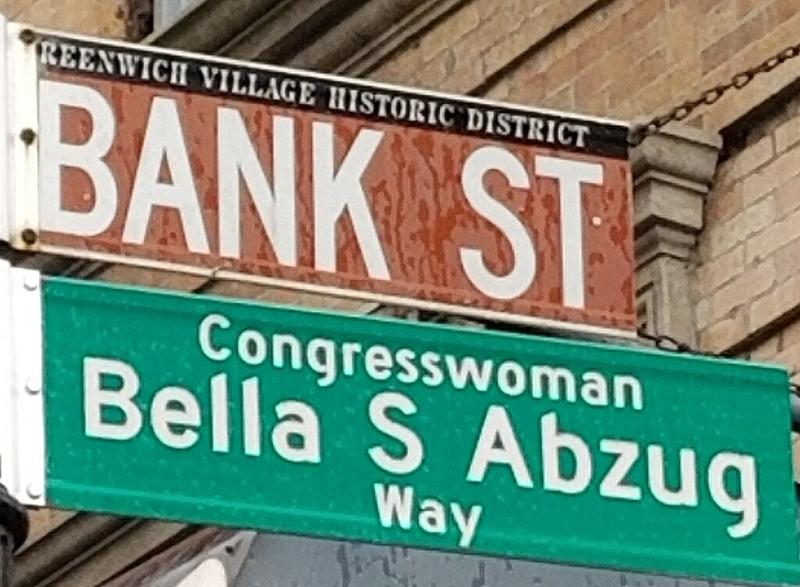
( Andrew Sachs, CC BY-SA 4.0 <https://creativecommons.org/licenses/by-sa/4.0>, via / Wikimedia Commons )
Title: Bella Abzug's Impact on NYC Politics
[MUSIC]
Brian Lehrer: It's the Brian Lehrer Show on WNYC. Good morning, everyone. Today on the show, Republican Congressman Mike Lawler from Westchester and Rockland and other points north, he was one of the four Republicans yesterday who broke with Speaker Mike Johnson and the rest of his party to force a vote on extending the current Affordable Care Act subsidies. As a result, that vote will now take place.
Also, Susan Page from USA Today with a clip from her new Nancy Pelosi interview on the place of Mayor-elect Mamdani in national Democratic politics and why she compared today, why Pelosi did, to the year 2005 as a ramp to electing a Democratic president. What city am I talking about? A disgraced former governor tries to make a comeback as mayor and gets trounced by a young progressive. If you guessed New York City, sure, I guess, but it also happened just now in Jersey City.
We will have our first visit from Mayor-elect James Solomon. We begin today with our friend Errol Louis, political anchor and host of Inside City Hall on Spectrum News New York 1 and host of their You Decide podcast. He's also a New York Magazine columnist. We'll talk some Mamdani and Julie Menin politics, but also have some New York history fun with clips from Errol's new two-part podcast about the legendary Congresswoman Bella Abzug. Very rare in her day, for example, for being a woman who went to law school.
Bella Abzug: I certainly knew no women who were lawyers. There were only about 3% then of women who were lawyers. I didn't even know any men who were lawyers, but I came from a home of immigrants where there is a strong sense of social justice, and somehow or other, I absorbed that.
Brian Lehrer: More from the Bella Abzug archive coming up. Hey Errol, always great to have you. Welcome back to WNYC.
Errol Louis: Great to be with you, Brian.
Brian Lehrer: We'll get to the Bella Abzug archive in your podcast about her. Let's begin in the present. The Mamdani transition is continuing. If you had to write a headline about the Mamdani transition so far, what might it say?
Errol Louis: It would be something along the lines of A Coalition Takes Shape. I'm really conscious as he names person after person that he's putting together the political basis on which to govern, that there's a combination of technical expertise, people who know their business, and have managed things before, but also he's reaching out to key parts of his coalition. You see in the appointment yesterday of a DC 37 senior official to be his intergovernmental person. That's checking a lot of boxes all at once.
It's really quite striking to see how he's doing that. Same thing with naming his first deputy mayor. Dean Fulahan is not just somebody who's been first deputy mayor before, or not just somebody who's run the budget numbers, but who spent a couple of decades up in Albany, and that's going to be very important to accomplishing the Mamdani agenda. I see him being very politically thoughtful about each of the people that he's been naming so far.
Brian Lehrer: On that intergovernmental affairs director he named yesterday, Jamila Edwards. Yes, she's been a leader for at least a decade in the main New York City employees union, DC 37. I guess just to remind our listeners, intergovernment affairs-- I just blew it again. Intergovernmental affairs, though not one of those sexy job positions like school chancellor or police commissioner, is really important because Mamdani is going to need Albany to enact his agenda and going to need Washington, controlled by Trump and the Republican Congress, to help, hopefully or at least not hurt the city while he's in office.
I'm curious if you can talk about how whoever the person is in that position, or Jamila Edwards in particular, can be effective. What makes them effective in getting Albany to act and getting Washington to act in the city's interest?
Errol Louis: It's a very interesting question. By the way, not quite incidental, she's the wife of Khari Edwards. Her husband has been twice now a candidate for Brooklyn Borough president. What makes somebody effective in a position like that is their ability to talk to politicians in a way that they're going to be heard. Meaning there's a combination of substantive policy issues that any given official might be wedded to or connected to, and then there are political considerations.
Those range from the ability to raise money to the particular politics of a district within that district, to the politics of different coalitions that are reaching maybe for higher office. You've got to have a lot of different interests that are being balanced out there. It takes a soft touch. It takes a lot of inside knowledge. It takes a lot of personal connection. Then it takes an ability to also move policy while you're tending to all of these personal and political considerations.
Brian Lehrer: On the federal government relationship, we all know there was that famous Trump being very nice to Mamdani in their joint appearance after their meeting recently. One of the things Trump said was that he wants to help Mamdani, not hurt him. I'm sure you've given this some thought. How could President Trump help New York City right now? Is there any sign he's actually following up on that promise? I realize Mamdani isn't in office yet.
Errol Louis: Look, you start with first, do no harm. Maybe sending people to do ICE raids elsewhere rather than New York, maybe changing the standards by which ICE starts snatching up people when they show up at immigration court, maybe change some of what apparently is reported as something akin to a purge going on among the immigration judges, which we should always remember are not judges who are elected or even appointed in a traditional sense and confirmed by the Senate, but they're just Justice Department appointees who can be hired and fired at will.
Anything in that area could really be helpful to New York. Even if the mass deportation campaign continues, maybe a little carve-out for New York would certainly be helpful. There's the mortgage interest deduction, raising that cap. There are a lot of people who have very big mortgages here and would love to be able to deduct more of it. If that were the case, that would be an economic boost to the city, one that could even perhaps lead to funding some of the Mamdani agenda.
There are a lot of different things that you can do as a president of the United States to help New York. Again, I think it starts with, at least, not harming the city.
Brian Lehrer: Speaking of intergovernmental affairs, Mamdani will now want to have good relations with a presumed incoming City Council speaker, Julie Menin, who's been described in the New York Times and elsewhere as a moderate who might serve as a check on some of Mamdani's more socialist agenda items. Her own district is the Upper East Side, which voted mostly for Cuomo from the election results map I saw. I wonder how you see Menin's likely role as ally or frenemy, or however you might characterize it with Mamdani.
Errol Louis: People who think that she's going to be a check, I think, may be wishing and hoping more so than actually deriving anything from what she has done and what she has stood for. She's been a candidate a couple of times. You can go and look at the position she's taken. She's taken fairly progressive standard New York positions throughout the years. She's been a commissioner two or three different times. She was the leader of the census. She was the head of the mayor's Office of Television and Film.
She was his commissioner, who went from Consumer Affairs to a revamped, heightened Consumer Affairs that also dealt with worker issues. She is somebody who understands and respects, and I think maybe even has an affinity for executive power. Unlike some past speakers who have just been legislators and who think that an adversarial relationship is the norm, I think she can see it from both sides. I've spoken with her. I don't get the impression that she's got some long list of agenda items where she's determined or expecting to clash with Mamdani.
Think about this, Brian. She spent the whole year not endorsing anyone, even though she had lots of friends and allies in the Democratic primary and even in the general election. She specifically wanted to be speaker. She wanted to be seen as neutral and even-handed and thoughtful, and she stayed out of it, which is very hard to get a politician to do in a charged electoral environment like the one we just came through.
Brian Lehrer: Right. She did not endorse the mayor at any point. Menin was here on Monday, and when I asked her about leaving the council's progressive caucus, which she did, she said it was because they wanted to cut the police budget, and she wasn't in line with that, but she also added this.
Julie Menin: At the end of the day, I've done a lot of progressive things in my career. I launched a paid sick leave law, the living wage law. I was the 2020 census director, where I was honored to run the census for New York City. We finished number one of all cities across the country. I also served in a senior role at the New York City Law Department at that time, where we were a plaintiff on the citizenship case along with the New York Attorney General. We successfully sued the Trump administration, got the citizenship question off of the census. Again, I think ideological boxes really don't always make sense.
Brian Lehrer: Julie Menin here on Monday, and as you noted, she played several key roles for Mayor de Blasio as an appointee of his, and of course, he's more progressive. We'll see how the new speaker wants to make her mark. Just before we go on to some other things, and then your really fun history podcast about Bella Abzug, how much does the mayor need City Council to do the things he wants to do? Mostly, we do hear about how he would need Albany to fund universal childcare and things like that. How much does he actually need City Council?
Errol Louis: Normally, meaning for most of the last, I don't know, half century, the mayor could go around the city council or push them around or even bully them. What we discovered, though, in the last four years, in a way that really just has not been true in quite a long time, is that a council that can form a super majority, and that wasn't even possible until just recently, can override vetoes. That's where the equation starts to change.
What we've seen just in the last four years are multiple overrides on important substantive matters that were of great importance to Mayor Eric Adams, and the council just overrode him again and again and again. You don't want to get anywhere near that. Eric Adams, I think, was playing with fire, and rather than negotiate behind the scenes, he decided to just play the same role that his predecessors had and try to push the council around.
No mayor, or certainly Mayor Mamdani, does not necessarily have the numbers to do that right now, where you have a progressive council. We'll see how they organize themselves once there is a new council. Let's keep in mind Julie Menin is not yet the speaker, but once we see what the caucuses are and what legislation they start introducing, it may become clear that they're either in line with the mayor, in which case he doesn't necessarily need them because they're all pushing in the same direction, or there may be some differences where he's going to have to do some negotiation.
Brian Lehrer: I have a Mamdani-Adams question for you. I don't know if you're aware of this particular detail, but our housing reporter, David Brand, has a new article about Mamdani wanting the city to take more buildings from really bad landlords, to actually take them away. The article says, "He has pledged to reestablish a mayor's office to protect tenants that was defanged by Mayor Eric Adams and empower it to identify negligent owners and distressed buildings, negotiate with owners to acquire the properties if they fail to improve conditions or pay fines, and, at least in some cases, keep them under municipal control."
That's all quoting from David Brand's article. If you agree with that characterization, I guess my question to you is, why did Mayor Adams defang the office that protects tenants?
Errol Louis: There are a couple of questions behind that question, Brian. You remember the days when a solid majority of what we now call affordable housing was actually owned by the city, and it was not a great time for the tenants. The city is not a great landlord. It's easy to point to NYCHA, although that's a cheap shot in some ways, but the city is not a wonderful landlord. It's not that easy to run these buildings. Each one is a corporation. Some of them are corporations that have very problematic finances.
Some of them have tenants who haven't paid their rent in two or three years. Some of them are fighting against problems that have to do with complicated building systems, some of which are obsolete. You've got buildings that are over a century old. There's all kinds of problems. I'm not sure. You'd have to ask the mayor, if you can find him, why Eric Adams didn't want to get into the housing business, or didn't want to do the tenant protection strategies that you're describing.
I would caution the Mamdani administration, you do not lightly want to jump in the business of saying, "Okay, we'll take over the building, and we'll be better than this landlord." It's harder than it looks.
Brian Lehrer: Here's a question from a listener who texts, "What is this Airbnb bill that is creating conflict between Al Sharpton and Julie Menin?" Are you familiar with that?
Errol Louis: I'll try and remember which side Al Sharpton ended up on this one.
Brian Lehrer: I think he's pro-Airbnb, people being able to use their apartments more for Airbnb. I think I saw that in the Amsterdam News.
Errol Louis: The legislation itself, to be honest with you, we did a little segment on it. It really is a backdoor way of lifting almost all of the restrictions that were put in place a few years ago. If you, as the landlord, don't have to be there during the rental, then the stage has been set for some people becoming absentee landlords and doing short-term rentals, which is what the prior law, the existing law, was intended to reduce or minimize, or even eliminate. To the extent that they're talking about opening that up, and that's what the legislation that's going to be voted on today might do, there are people who have come all over the place.
Kirsten John Foy, who's a civil rights minister, in fact, he has worked closely with and used to work for Al Sharpton, he's ended up on the opposite side saying that this new bill just goes too far, it opens the door to all kinds of bad actors, and that while we all sympathize with homeowners for whom short term rentals could actually make the difference between them thriving and being able to maintain the property properly and not, you don't necessarily want to go so far as to let companies conceivably buy up a bunch of homes and then just say, "Well, I'm the homeowner, but I just happen not to be there. We allow all kinds of doors to be locked within the unit."
Brian Lehrer: "I'm going to use them as Airbnb rentals and thereby exacerbate the affordable housing shortage."
Errol Louis: Yes, I think that's the theory. That last part of it I've never quite bought into because I just don't see it. You're saying to somebody, "If you can't occasionally rent out part of your house, say during vacation time, in order to help make your finances work, then you have to have a permanent tenant." That's not necessarily the case. It's not either /or. I haven't seen any solid numbers that suggest that people occasionally doing rentals the way you see in, I don't know, Martha's Vineyard, Nantucket, or the Hamptons, I don't see where that has necessarily exacerbated a housing shortage.
Brian Lehrer: We should do a separate segment on this. Now, a supporter of loosening those rules writes, "Please stop calling this an Airbnb bill. It would not apply to apartments. It only applies to one and two-family owner-occupied homes. Sharpton is for it because homeowners of color are literally losing homes that have been in their families for generations." We'll leave that debate there. Before we go to Bella Abzug, two of your recent New York magazine columns about Mamdani have been called Mamdani Won-- Really, it's about more than Mamdani.
They've been called Mamdani Won, But Our Battle Against Islamophobia Isn’t Over, and Mamdani's Next Act: the Chorus of Critics and Fear Mongers is Still Loud. Can Mamdani Silence Them? You wrote those columns in November. How do you see the state of those things today?
Errol Louis: We just had this really unfortunate incident just a couple of days ago, where a sitting member of the city council put out an outrageous set of messages and apparently retweeted dozens of others, all saying that Muslims should be expelled, not just from New York, not just from America, but from the Western nations. That kind of bigotry is just really, really unfortunate. We're all, I think, trying to understand the permission structure that lets people think that this is okay, either as a policy suggestion or as a way to have a public discussion about really important matters.
It's outrageous, and depending on the situation, it might even be unlawful. We're going to all have to grow up, and some people are going to have to grow up maybe faster than they wanted to. The statement, and I'm sure you all reported on it, by Vicki Paladino, the city council member, is so outrageous and so unbecoming, and it's going to probably lead to some kind of an inquiry, depending on what the city council does today. It's hard to believe that we're going into the year 2026 and that people think that this is an okay way to talk about their fellow New Yorkers.
Look, it'll be the age of Mamdani. It's not his responsibility to fix it, but his election and the campaign leading up to it really, I think, showed a spotlight on a part of the city that many of us thought either didn't exist or wasn't going to come out into the light of day.
Brian Lehrer: We'll continue with Errol Louis in a minute and pivot from the present to the past with his new history podcast about the legendary New York City Congresswoman, Bella Abzug. We've got some fun clips from the Abzug archives. Oh, they don't even have to take a break. I see. Good. Let me do that the right way. We continue with Errol Louis, political anchor and host of Inside City Hall on Spectrum News New York 1, and host of their You Decide podcast. He's also a New York Magazine columnist.
Errol has a new podcast about the legendary New York City Congresswoman Bella Abzug. Here's a clip of her during the height of the Cold War, arguing for nuclear disarmament.
Bella Abzug: Those nuclear weapons are aimed at you and me, our friends, our neighbors, our kids. We have to aim back with our votes, with our petitions, with our voices to tell the people in the Congress, in the White House, in the Pentagon, here and in the Soviet Union, and all over the world that the people want to live. We will make that decision to end the arms race and to create general and complete disarmament so that we can settle disputes peaceably around the negotiating table.
Brian Lehrer: Bella Abzug there. We have more clips of her to come. Errol, for those who don't remember or are too young to have experienced her, why a podcast in 2025 about Bella Abzug?
Errol Louis: We've been doing this every year towards the end of the year for the benefit of people who don't know some of the history of New York. We've done that for Mario Cuomo, David Dinkins, and John Lindsay. Of course, we hadn't gotten to any of the women who really shaped this city. When talking with my producer, Anthony Roman, we said, "You know what? There's only one person we have to get to first, and that's Bella Abzug." That voice alone. She was such a phenom.
There are so many people now in politics that you deal with, from Ronnie Eldridge to Liz Holtzman. I got a chance to talk with Gloria Steinem, who's still active. There are so many people who either came up with her or under her, were tutored by her. Alan Roskoff, the very active activist who runs the Jim Al's Liberal Democratic Club, they all worked with her. Strangely enough, there's nothing named after her, but she really was a phenom.
Just to give you one example, in 1977, right after the fiscal crisis, when there was that famous race where there was Ed Koch and then Mario Cuomo and Herman Badillo and Percy Sutton, Bella Abzug was in that race, and she was the frontrunner. She ended up finishing fourth. It didn't go well for her, but she was a big, big name in this town. You couldn't turn on the television without seeing that big floppy hat of hers. She was on a picket line, or she was in a hearing, or she was yelling at people with that gravelly voice. She really was quite a phenom. I think it's a shame. A lot of the progressives today could really learn a lot by studying her life and career.
Brian Lehrer: Earlier, we played a clip of her saying, when she went to Columbia Law School in 1950, only 3% of lawyers were women. In fact, you tell us in the podcast that she wanted to go to Harvard Law School, as, by the way, Errol did, but they did not admit women. Maybe it's worth reminding people that was an actual Harvard Policy, that recently in history.
Errol Louis: Exactly. Look, she applies to Harvard, and they wrote back, and they said, "Well, we don't take women." She wanted to go to war with them. She was ready to fight. Her mother, who wanted her closer to home anyway, said, "Well, why don't you go to Columbia?" That's just what she did. I should mention I went to Harvard College, Brian.
Brian Lehrer: Oh, you went undergrad?
Errol Louis: I went to Brooklyn Law School.
Brian Lehrer: Oh, sorry about that.
Errol Louis: By the time I wanted to learn about this stuff, I did it right here. By the way, here's one. If you don't remember anything else about Bella Abzug, everybody in the sound of my voice should realize she passed the Equal Credit Opportunity Act, because in the 1970s, as late as the 1970s, women could not necessarily-- It was common practice that banks would not give them a credit card or wouldn't open a checking account for them unless they brought their husband or their father or their brother or some other man to co-sign for them. Absolutely outrageous.
She authored the law that has now banned that practice. She was one of only 12 women in Congress when she was sworn in in 1971, and holding the Bible, or whatever, administering the oath was Shirley Chisholm, who'd only been elected two years prior to that. Two out of 12 in 1971 were from right here in New York City.
Brian Lehrer: We played the clip of Abzug arguing for nuclear disarmament during the Cold War. You describe her in the podcast as both an anti-war activist and a civil rights attorney. You want to talk about her civil rights attorney record? I think people, even who remember Bella Abzug, may not think of that first.
Errol Louis: Oh, that was the biggest revelation for me. I had no idea. She had been an activist. She'd been a very prominent activist for 20 years before she ever ran for office. What does that mean? In 1948, there's a Black man in Mississippi named Willie McGee who is tried and convicted of raping a white woman, although there was abundant evidence that it was actually a consensual affair. She was part of a civil rights group. She's a newly minted lawyer out of Columbia Law School.
She goes down to Mississippi on her own to defend this man. She's writing appeals that go all the way to the Supreme Court. She goes down. At one point, she's on her own. She gets there to Jackson, Mississippi, for one of the appeals hearings. No hotel will let her have lodging. She ends up sleeping in the bathroom at the bus station. Why? Because not only did no hotel want to give her a room, but there were vigilantes that were out looking for her. This is what she's doing in the '40s and '50s,
She was really quite remarkable. Another little history nugget. She owned a home. Her family was living in Mount Vernon, New York, and after the 1965 assassination of Malcolm X, Malcolm X's widow and children had nowhere to live, and so a group of Black activists were looking around, and they ended up approaching Bella Abzug, who was happy to sell her house to Betty Shabazz. That's where Betty Shabazz lived and raised her family.
Brian Lehrer: That's a great story. You mentioned Abzug didn't run for Congress until she was 50 years old. That would have been 1970. What inspired her to make that run then?
Errol Louis: She had been active in a lot of different campaigns. Again, she was just an all-around activist, and was really a very experienced agitator at that point, frankly. One of the things she did, Ronnie Eldridge helped convince her to work on behalf of the John Lindsay reelection. Although he was a Republican, he was a very different kind of Republican back then.
In 1969, John Lindsay got himself reelected, and of course, Bella Abzug is there with a whole list of things that she wants him to do. "Do this, do that, do this, do that."Frankly, the notion then is put back to her, "Look, why don't you run?" She then starts trying to put some things together, looking for the right kind of district and putting together the kind of coalition that an experienced organizer knows how to put together. Next thing you know, she's a viable candidate, and she wins.
Brian Lehrer: Now here's a clip of Abzug when she's in the House considering a run for the Senate. Talk about a glass ceiling. Listen to this.
Bella Abzug: There is not even one woman among the 100 US senators. People of both sexes and all parties can and do feel the injustice of that. Now they can change it.
Brian Lehrer: Zero women in the Senate in the 1970s. Today, there are 26. That's progress, but hardly 50-50 proportional. Part of your narrative on that in the podcast is about people trying to talk her out of that run. Do I remember correctly? Was Gloria Steinem one of those people?
Errol Louis: Yes. There were a number of people close to Bella Abzug who said, "Look, you've had an enormous amount of success. You got the Equal Credit Opportunity Act passed." She co-sponsored the Comprehensive Child Development Act along with Shirley Chisholm. She put forward the Equality Act, which was the first federal gay rights legislation. Actually, after she sold the house and moved to the city, her home was across the street from the Stonewall Inn.
She was a hero and champion for the emerging gay rights movement. Then she decided to run for the US Senate. The clip you played, I think, explains why, despite all of the advice to the contrary, she almost had to do it. Meaning she was such a leader of so many movements, but especially the women's rights movement. When there's an open seat, how do you not take that next step? It's what any male politician would have done. She decided not to play it safe. It was much too late for that.
This is somebody who was running from vigilantes in Mississippi in the 1940s and '50s. She's not going to walk away from that kind of an opportunity. Frankly, she almost won. It was about a one percentage point difference by which she lost to Daniel Patrick Moynihan.
Brian Lehrer: Number of people pointing out that there is a Bella Abzug Park between Hudson Yards and the Javits Center over there on the west side of Manhattan. Another listener writes, "My former office has a YouTube video of Abzug doing a mock American Express ad." There was an American Express TV commercial series with famous people saying, "Do you know me?" Then they show their American Express card. Maybe you remember that? "Do you know me? In which she doesn't show for American Express. She tells the story of the Equal Credit Act in a mock American Express ad."
That's a good story. Further to the notion of diversity in the House, diversity in the Senate, diversity at Harvard Law School, despite the official war on diversity today, the podcast opens with a one-minute clip from a fiery Abzug speech that sadly-- Listen to this folks. If you didn't know the history, if you didn't know who it was and when it was recorded, you think this could be given today and be just as relevant? Listen.
Bella Abzug: Perhaps if we had people who came from every different walk of life, the diversity and the riches and the greatness of America culturally and all of its minorities much more represented, we would not have a Congress that would continue a war without the consent of the American people for so many years. We would not have an America that would still rank 14th in infant mortality rate in this world. We would not consistently vote for missiles and bombs when we don't build schools and housing.
We would not allow people to still go hungry in this, the richest country in the world. We would still not allow people to go without jobs. We would not allow people to want for a future and a belief and a hope. We would not allow our elderly citizens to wonder where their next dollar was going to come from, or their next piece of food, or their next piece of clothing, or whether they could pay their rent.
I think if we had a diverse Congress representing the greatness of America, which is a cross section of every people, including working people, which I did not mention, then we would have a Congress of the United States that would really reflect everybody's wishes right here at Cooper Union, sitting at this hall and in every other hall all over this country.
[applause].
Brian Lehrer: Wait, that was recorded last week, wasn't it, Errol?
Errol Louis: You would think. It brings back a lot of memories because she was an outlier back then in the sense of never backing down. It was considered controversial and cutting-edge back then, but the world has gone to a place where it's considered new all over again. I got to say again, I love that accent. Norman Mailer once said that she has this accent that could "boil the fat off a taxicab driver's neck." I don't even know what that means, but it sounds about right.
Brian Lehrer: What do you call that accent?
Errol Louis: I call it Bronx just because I know that's where she grew up, but man, it's real New York, man.
Brian Lehrer: One more clip on the hats. She became known for wearing big, distinctive hats. You have a clip of Harold Holzer from the Roosevelt House Policy Institute at Hunter College, remember that name, folks, it's the Roosevelt House, describing how Abzug first came to wear them.
Harold Holzer: Bella's sitting on stage with Eleanor Roosevelt at a senior convocation. Her mother said to her, fatefully, "Bella, we have to get you a hat at the May Company," or Mays, I guess. Mays Boutique on 14th Union Square. "Why do I have to wear a hat?" "Because Eleanor Roosevelt always wears a hat, and she'll like you better." Bella wore her first hat. There's a picture of her on the stage in the assembly hall with Eleanor in a crazy hat and Bella looking like she's 40 then. She's only 21 or 22.
Brian Lehrer: Interesting about Eleanor Roosevelt. We just have 15 seconds left for a last thought on this. Do you think her distinctive headwear, Abzug's, helped her be effective?
Errol Louis: Oh no, absolutely. No question about it. To this day, some of her friends and followers, they have a birthday celebration for her, and they set up tables and chairs and so forth. For the absent Bella, there's a chair with a hat on it.
Brian Lehrer: Errol Louis from New York 1 and New York Magazine with his new two-part history podcast about Bella Abzug. How can people hear it?
Errol Louis: Wherever you listen to podcasts, you can get it. The first installment is out right now.
Brian Lehrer: The standard answer, wherever you get your podcast. Errol, always great to talk. Thanks a lot.
Errol Louis: Thanks, Brian.
Brian Lehrer: Susan Page, and then Mike Lawler next. Stay with us.
Copyright © 2025 New York Public Radio. All rights reserved. Visit our website terms of use at www.wnyc.org for further information.
New York Public Radio transcripts are created on a rush deadline, often by contractors. This text may not be in its final form and may be updated or revised in the future. Accuracy and availability may vary. The authoritative record of New York Public Radio’s programming is the audio record.
