
Behind the Scenes at USAID
[music]
Amina Srna: It's The Brian Lehrer Show on WNYC. I'm producer Amina Srna filling in for Brian today. Good morning again, everyone. Nicholas Enrich spent two decades as a global health official at the US Agency for International Development, or USAID, working under four presidents, Republican and Democrat. Then on Inauguration Day 2025, the Trump administration issued an executive order which began to unravel the agency.
By July, the federal agency that had fought AIDS, malaria and famine across the developing world was effectively shuttered. Enrich watched it happen from the inside, documented it in real time, and filed a whistleblower disclosure that made it to the US Supreme Court. He has now written a tell-all book about it. It's titled Into the Wood Chipper: A Whistleblower's Account of How the Trump Administration Shredded USAID. The title taken from Elon Musk's own words. Nicholas Enrich, welcome to WNYC.
Nicholas Enrich: Thank you so much for having me.
Amina Srna: Listeners, we want to hear from you. Do you work in foreign aid or global health, or did you? Have you seen firsthand what the dismantling of USAID has meant on the ground? USAID works with many different contractors on the ground. If you've worked alongside their mission, we want to hear from you as well. How did it impact your work? Give us a call now at 212-433-WNYC. That's 212-433-9692. You can also text that number.
Nicholas, your book opens up with you on a ski trip in British Columbia on Inauguration Day 2025, on vacation, learning about the executive order, pausing foreign assistance while you were waiting for your shower to warm up. Take us back to that moment for you and to that executive order. How did it begin the unraveling of USAID?
Nicholas Enrich: To be honest, when I first read the executive order that was called something like realigning and analyzing foreign aid, I thought there actually must be a mistake. As I was reading through it, it seemed to freeze all foreign assistance funds that would be needed to run our programs across the world. I recognize that with the Trump administration coming in that they would be looking at reevaluating what foreign assistance looked like and how it met with their priorities, which is something that any administration does. The job of a civil servant like myself was to make sure that they have that understanding and can implement the policy in accordance with their own priorities.
In this case, the way that it was worded almost seemed to suggest that they were talking about freezing ongoing programs which would result in the immediate interruption of life saving services to millions of people around the world. The interruption of clinical trials and testing new drugs and other catastrophic impacts that would have. I almost didn't believe it at first. It wasn't until later that week when Secretary Rubio issued a follow up to the executive order telling us that there needed to be stop work orders issued to all of our work overseas that it started to dawn on me that this actually was going to be the policy of the United States was to pull the rug out from under all of the recipients of foreign assistance around the world.
Amina Srna: You served under four administrations, as I said in the introduction, to Democratic and to Republican. You describe your career ethos as one of nonpartisan public service. Can you explain the long held mission statement of USAID for listeners who might not be familiar, and how did it historically, broadly receive bipartisan support?
Nicholas Enrich: Sure. USAID was the federal agency that was responsible for administering foreign aid and international development around the world. Established in 1961 under the Kennedy administration. It was basically established to serve as the embodiment of American generosity and goodwill and as a tool of soft power around the world to build partnerships with countries and to make the world a healthier and happier place.
It really succeeded. Over the six decades that it was there, it did enjoy broad bipartisan support. For a budget that was less than 1% of federal spending, just over the last two decades alone saved 92 million lives. I don't want people to get the understanding that it was a charity. It was also a tool to keep Americans safe as well. I was the top global health official at the agency. In global health, the work that we did kept Americans safe from the spread of infectious diseases by helping other countries develop systems to more early detect and respond to potential infectious disease outbreaks before they could become massive outbreaks that would potentially spread to our borders.
Also, the partnerships that we built over these decades with other countries increased stability by improving health in other countries. It reduces things like migration and conflict and makes the world a better and safer place for the US to operate in around the world, which has benefited all Americans over the past six decades.
Amina Srna: That's on the long held bipartisan support in this country. The title of your book comes from a quote from Elon Musk who said at the outset of his tenure as leading the Department of Government Efficiency that he would move to basically shut down USAID. He tweeted that he would feed it, "Into the wood chipper." Talk about that moment. Remind listeners again what happened then and how you registered it.
Nicholas Enrich: That was about two weeks into the Trump administration. Elon Musk tweeted very, very early on a Monday morning that he had just spent the weekend feeding USAID into the wood chipper. Honestly, it was a pretty accurate assumption of what had happened to the agency where I had spent my career. His Department of Government Efficiency team came in, and while they gave the impression that their goal was to find government efficiency, the reality was that they came in with a chainsaw with absolutely no idea or interest in learning about what the agency that they were destroying actually did.
Their MO was to operate quickly and break things. That's exactly what they did, often to the frustration and confusion of the Trump political appointees, who, while also were trying to dismantle USAID, were trying to do it within a framework set up by the Secretary of State to not let enormous devastation ensue as part of the process. The damage that was done by Elon Musk and his minions over the first few weeks made it impossible to even save small fractions of our programs.
Amina Srna: Give us an example. You write about Jeremy Lewin, the DOGE team lead, as a reoccurring presence in your narrative. You describe what it was like to try to communicate the life or death stakes to someone like him, who seemed to view the whole thing as a software development problem, I guess. Talk to us about that, maybe a specific experience.
Nicholas Enrich: Sure. I was actually elevated to the top position in global health after the DOGE team illegitimately removed the 60 most senior career officials in the agency, leaving basically nobody but me to be in charge. At that point, my initial goal was to, can I at least speak with our political leadership in the DOGE team to explain to them what it is that they're destroying and what our programs do?
I would eventually get a meeting. It took a while, but I did get a meeting where I was able to brief the leadership on just the basics of what we did in global health, the infectious disease work that we did, the maternal and child support, the family planning provisions, everything we do in HIV and nutrition. Just a very broad overview. I was met with a stunned silence where the leadership in the room admitted unapologetically to having no idea that we did those things. In fact, said exactly those words that, "Wow, I had no idea you did all those things." It led to the chief of staff of the agency then saying to me, "Wow, when I thought about what USAID did in global health, I just assumed it was abortions."
It dawned on me that these are the people that are being sent in to destroy our agency, again, not because they're trying to make foreign aid better aligned with the President's priorities, not because they're trying to eliminate waste, fraud and abuse, not because they're trying to increase efficiency, but because they have no idea what the agency did in the first place. The only information they had about it was things that they had must have picked up from right wing social media sites, it sounded like.
Amina Srna: We have a caller who has a little bit of a longer historical view that I think she wants to share. Here's Barbara in New Rochelle. Hi, Barbara, you're on WNYC.
Barbara: Yes, good morning. Thank you. I worked at USAID in the 1990s in the international family planning effort that Nicholas just mentioned. Over decades, it was one of the most successful foreign aid programs of the United States government and with measurable results and enormous benefits for women around the world. It was abruptly ended. It is not really being restored in any meaningful way.
$10 million of contraceptives were destroyed in Belgium that were stored there, intended for use around the world. A total waste of taxpayer money. This program never addressed abortion. There were so many monitoring efforts to ensure that family planning funds were never directed to abortion. That was a total error on the part of the Trump people who came in with the misunderstanding that Nicholas described.
Amina Srna: Barbara, thank you so much for your call. Nicholas, on that point, DOGE was going after waste, fraud, and abuse in the government and trying to trim it. Here is Barbara commenting on so many medications going to waste. I don't know where you want to come in on her comment or what resonated for you, but pretty interesting there, right?
Nicholas Enrich: Yes. It's the waste piece that I really want to focus on because that is the justification that Elon Musk and his team used to justify getting rid of USAID. The reality was that USAID was one of the most efficient agencies that we had across our government, would often come up in that context. I gave the numbers of how low our budget was and the impact that we had a little bit earlier. What they brought in was an enormous amount of waste. Barbara's example of destroying contraceptives and other family planning commodities that could have just been given to people but instead were destroyed is one good example.
The way that DOGE destroyed our payment system that prevented us then from even making payments that DOGE and the political appointees agreed were ones that we needed to make and had been ordered by courts to make. We couldn't even make those payments because it took them so long to fix the broken system that by that point they had racked up interest at rates that we had never even seen before, so high that they were breaking our ability to use our financial instruments to pay them back. Those are just a couple of examples. We're still seeing the enormous waste that was created by this.
Personally, when I was eliminated from the agency, I was given a severance payment for almost eight months, where I sat and was paid by them not to do work to save lives that I would otherwise would have been doing. Again, just small examples. What we're starting to see is now they're looking at costs as high as $19 billion, they're talking about what it's going to cost to fix the mess that they created. Again, this is not a mess that was created for the reason that they're saying it was. It wasn't to eliminate waste in the first place. It was to satisfy the ego of the world's richest man. Yet here we are all facing the consequences.
Amina Srna: Listeners, we can take a few more of your texts and calls. Give us a call now at 212-433-WNYC. That's 212-433-9692. Especially if you have worked with USAID or USAID contractors. 212-433-WNYC. Nicholas, we have a listener who is pushing back on some terminology that we're using. George in Brooklyn writes, "The use of the term dismantling is misleading. This administration just demolished all these programs. The word dismantle implies that you're going to try to put it together again like you would in dismantling furniture. However, they have no intention of putting it together again. They blew it up." Talk about that terminology and just maybe actually the current status of USAID and how it's been absorbed into another government agency.
Nicholas Enrich: That's a fair point. I think dismantling is the most diplomatic way or euphemistic way that it can be put. In the subtitle of my book, I use the word shredded, and I think maybe that's a little bit more apt for what actually happened. As the writer noted, this was not a careful process by which there was a transition or anything like that. This was the immediate hollowing out of an agency of the entirety of its expertise who were then replaced by a team of uninformed and unqualified sycophants who then really had no idea how to deal with the problems that arose and ended up just making things worse on a day by day basis.
To your point, yes, what remains of USAID at this point, which is a small skeleton crew of experts, and a small fraction of some of the contracts have been moved over to the State Department, where they're being administered from there. We're already starting to see the problems of what happens when the State Department, which is responsible for a different pillar of foreign policy diplomacy, is put in charge of trying to administer another pillar, development, without the tools, resources, or expertise to actually do that.
We're starting to see those efforts begin to fall flat, and we're starting to see, in the worst possible way that we could have, why it was so important that there was a separate and independent agency for international development in the first place.
Amina Srna: I want to ask you a little bit more about your story. You write about a moment that maybe many people in larger institutions might recognize, and that's being promoted to a leadership role and then almost immediately being asked to sign off on things you believe were harmful and possibly illegal. Can you tell us about your experience?
Nicholas Enrich: Again, as a civil servant, as so many of us were, we were not in this role as advocates or activists. We were public servants responsible for administering policies of the president. That had never in my career, including under the previous Trump administration, created any moral compromise issues whatsoever. As I started to be tasked with illegal action like getting rid of staff or signing off on the destruction of contracts or ending projects that were in the process of saving lives, I became more and more uncomfortable with where my line was to stand up and say this is no longer okay.
It was a very difficult journey for me because I saw myself as a career civil servant, and I always thought that I would continue to work from within those confines. Actually, the first time I stood up and said no, it wasn't related to a policy decision at all or related to the contracts or anything. It was actually, I was told to buy a cake and sing happy birthday to one of the worst political appointees that we had who had been in the process of tearing down our agency.
I said no to that request because I could-- We've sang happy birthday to other political appointees. That wasn't the issue. It was that I couldn't in good conscience stand there and sing to a man who was vilifying my staff and working to dismantle programs that were in the process of saving lives. Something inside me snapped at that point. Within about 24 hours from them, then I realized that I was not going to-- I could no longer stay silent.
I felt like it was being complicit and I needed to get the word out. I drafted a series of memos that documented everything that the career officials at USAID had tried to do to save our life saving programs and how we had been stopped at every turn, and the damage that it was going to cause around the world, which will end up in the millions over the course of the next couple of years. I sent those out, and that same day I was placed on administrative leave. That ended up being the end of my career.
Amina Srna: Let's take another call. Here's Sarah in Brooklyn. Hi, Sarah, you're on WNYC. Thanks for calling.
Sarah: Hi, thank you for taking my call. I've been very engaged in the conversation as I've worked in global health throughout my career. I worked directly with the USAID Bureau for Global Health for several years in the earlier 2000s, but I was let go last year from an implementing partner in the fifth year. Almost the final year of a family planning and maternal health safe surgical project. Initially, our family planning work was terminated outright, but our maternal health work received a waiver to continue temporarily. My understanding was the organization was not reimbursed for that work. Eventually, the project was on the termination list, and every single person working on the project was let go.
Just wanted to say how devastating that was to see your work dissolve, especially as your project is in a year where it's trying to process all of the research that you've invested in and then have legacy come out of that. Future research, future programming, all of that was lost. Then just on a personal level, most people who worked on that project have not managed to find work.
How challenging it's been personally and to see your colleagues as well suffer and try to navigate with their many, many decades of experience where to apply that next. It was so much more than a job, but for so many people, we care about these issues. Then just maybe on a different note, in addition to all of the international work that we know well, me, I know well, and all of us who work in the global arena, but USAID also, a lot of those funds were spent domestically on programs, notably like in the agricultural sector. It has been like a really deep loss.
Amina Srna: Sarah, thank you so much for your call and sharing your story. Nicholas, the New York Times just had an article this week about how nearly all of the agency's 16,000 employees were laid off and an estimated 280,000 contractors, it sounds like the work that Sarah was doing, also lost their jobs as well. Do you want to comment just on the layoffs? I'm seeing also that the District of Columbia has the highest unemployment rate in the nation at 6.7%, in large part because of major reductions such as the one at USAID.
Nicholas Enrich: It's devastating. I think this is one of the most underplayed parts of this story because people are rightly focused on the massive impact that's happening around the world based on these cuts. In no small part, people's lives who had dedicated their careers to making the world a better place have had their lives turned upside down. These are not people who did this job for the paycheck. That doesn't mean that they don't have children to feed. The way that they were terminated and released without warning or without notice was truly unconscionable.
I do want to go back to the caller's comment about the way the contracts were terminated as well, because so many of those who have lost their livelihoods were contractors and not just federal employees. It's frustrating to see these contracts that were doing such great work be terminated and those people laid off. It was especially infuriating to see that happen when you watched the decision making into which contracts were terminated. It was again done by a DOGE team that had literally no idea what the contracts did that they were terminating.
It ended up with crazy contacts being terminated. Forget about the life saving one that the caller called about. They terminated, for example, the contract for potable drinking water for American staff in South Sudan, which made them have to immediately start rationing drinking water. One of the terminated contracts was for the system that is needed to manage terminating contracts. There was just this absolute chaos happening because they were terminating them without knowing what they did, without asking anyone.
I remember thinking it felt like it was children playing in a toy spaceship, the way that they would press buttons and see what happens. Ultimately, they ended up having to admit that they were making mistakes in which contracts they were terminating because they had-- instead of asking anyone how to choose which ones to terminate, they had just done a keyword search of the titles of the contracts to see if, like the word life saving or other critical words were in those, which was just an absolutely horrible idea of how you would decide which life saving contracts to save and which to cut.
Amina Srna: Nicholas, we have so many more callers that we're just not going to be able to get to, so we'll wrap on your story. Your book ends with you formally terminated on July 1st, 2025, the same day as the final remnants of USAID were officially shuttered. You write that you turned your attention to Congress and the court. Here we are in the spring of 2026. Is there a version of USAID that comes back, and what would it take?
Nicholas Enrich: I think that there needs to be a version of USAID that comes back. Honestly, I don't think it will take as much as people think. It's not going to be as easy to build back up as it was for Musk and his minions to tear it down. As one of the callers noted, the experts are still here. We just had to cut up our badges, but for the most part, we're still around. I think that's one of the major things that that would be more easily replaced.
I think from a political perspective, it's going to require Congress and the next administration to stand up and say that this organization was not demolished because it wasn't working. It wasn't demolished because it was inefficient. It was demolished by people who didn't know what they were doing. That needs to be a decision that's undone. I think, politically, it's a popular one.
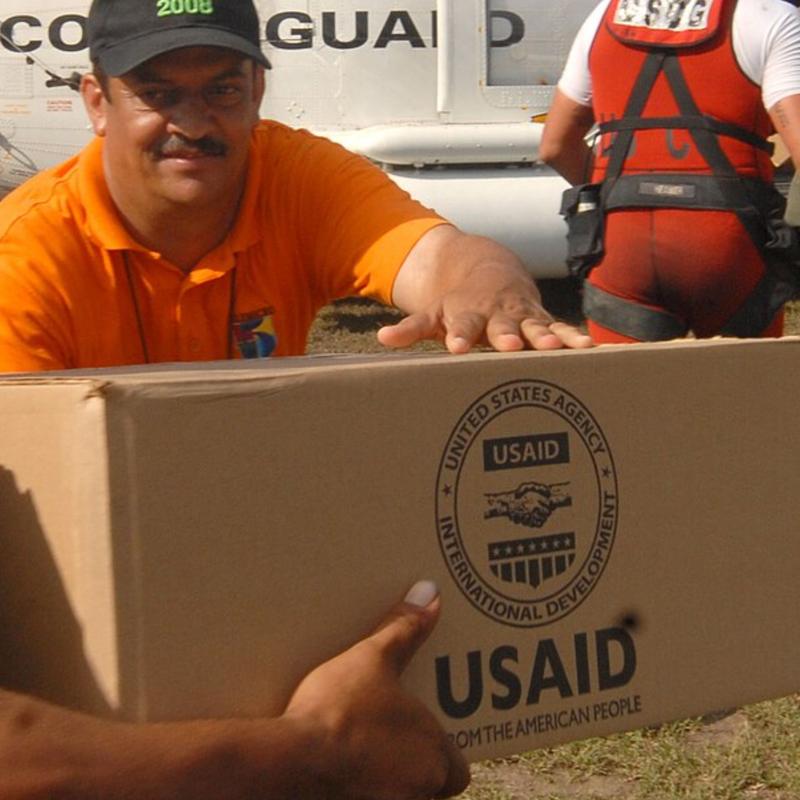
I think from a symbolic perspective, having an independent agency that embodies American generosity overseas, as it had under the banner of 'From the American People', is very powerful. As President Obama put it, for many people around the world, USAID is the United States. I'm really concerned about what those people who once thought that will think with USAID gone and where they'll turn for support.
Amina Srna: Nicholas Enridge is the author of the new book titled Into the Wood Chipper: A Whistleblower's Account of How the Trump Administration Shredded USAID. Nicholas, thank you so much for coming on today.
Nicholas Enrich: Thanks for having me.
Copyright © 2026 New York Public Radio. All rights reserved. Visit our website terms of use at www.wnyc.org for further information.
New York Public Radio transcripts are created on a rush deadline, often by contractors. This text may not be in its final form and may be updated or revised in the future. Accuracy and availability may vary. The authoritative record of New York Public Radio’s programming is the audio record.
