
Baseball & Life
[MUSIC - John Fogerty: Centerfield]
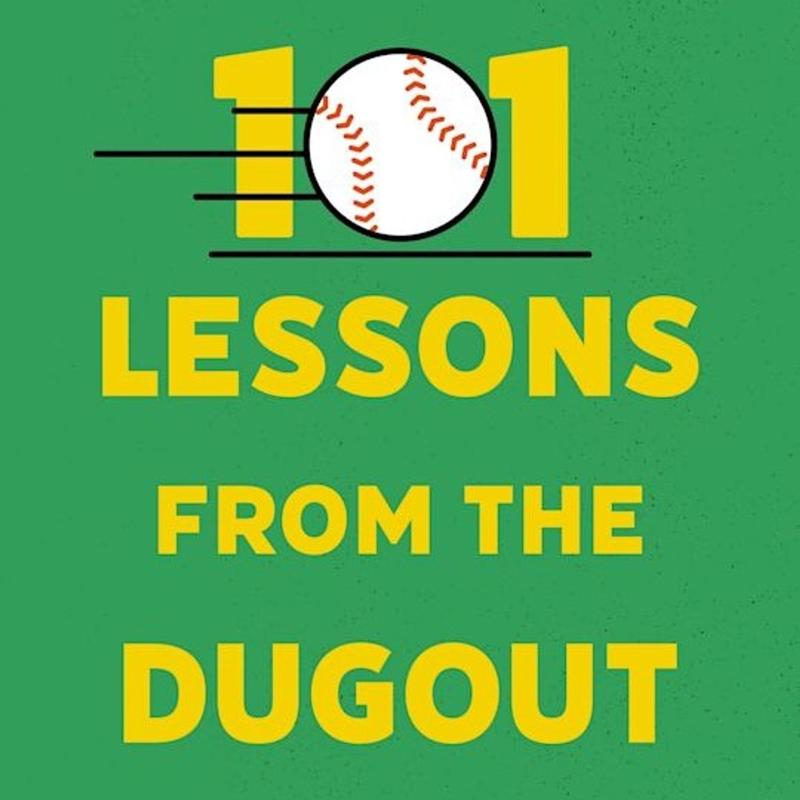
Brian Lehrer: Little Centerfield by John Fogerty. To end the show today, we'll mark Major League Baseball's opening day with a sports writer and a pediatrician who've co-authored a book for parents and kids. A question for you listeners, have lessons from your sport ever inform more serious things in your life, or a way for you to teach a life lesson to a kid? Again, have lessons from your sport ever inform more serious things in your life, or a way for you to teach a life lesson to a kid? 212-433-WNYC, call or text, 212-433-9692. Our guests are longtime New York sports writer Ken Davidoff and Dr. Harley Rotbart, pediatrician and a middle and high school coach, on their new book, 101 Lessons from the Dugout: What Baseball and Softball Can Teach Us about the Game of Life. It's also got a forward by former New York Mets great David Wright. Listeners don't tell Ken, but there may be a question before the end of this segment about the Mets and the Yankees here on opening day. Ken and Dr. Rotbart, congratulations on the book. Welcome to WNYC.
Dr. Harley Rotbart: Thank you so much.
Ken Davidoff: Thanks for having us.
Brian Lehrer: Dr. Rotbart, I see this is Ken's first book, but you've written many previous books like No Regrets Parenting, Germ Proof Your Kids, and 940 Saturdays. What made you want to team up with a sports writer?
Dr. Harley Rotbart: Legitimacy. Ken has brought to this book project, which, really, I started 15 years ago. Ken has brought a street cred and a dugout cred to the book, and a professionalism that being on dirt fields with kids for 10 years could never have brought for me. I am grateful to Ken for upping my game.
Brian Lehrer: A doctor tells a sports writer that he adds legitimacy. That's a new one. Ken, I'll let you model this for our callers with a really easy example from the book, lesson number 19, the sacrifice. For people who don't know, that's a play in baseball where a batter intentionally makes an out for himself to help a teammate move up a base. Talk about the sacrifice, lesson 19, as you have it in the book.
Ken Davidoff: Sure, Brian. This is one of our more literal lessons because just like in baseball, you give yourself up. You make an out to move your teammate over, to move your teammate closer to scoring position. There are many times in life where you give up your immediate good, if you will, to help someone else on your team. Reading from the book, sometimes being generous and helping others may set you back, but you'll feel good about your sacrifice, even though you may be out, out of the time you spent or the money or stuff you generously gave away.
Brian Lehrer: Dr. Rotbart, in a way, the whole concept is a cliché, right? Life lessons from sports. Sports, for most kids, is playtime. The life lessons you list in the book are serious things, though, like admitting your mistakes, overcoming hard times, standing up for what you believe. Can sports really help kids do well at things like those in the rest of their lives?
Dr. Harley Rotbart: Well, I'll tell you, I have real-world experience with exactly that. After the years in the dugout where I watched kids go through some really dire circumstances at home or at school, and oftentimes more minor circumstances that they had to overcome, I was able to use the analogies from sports, which I did my best to categorize in the book, to help the kids. It went further than that, I was able to apply the lessons from sports to my clinic.
The example that I give is a mom who brought her teenage son in to see me. He had been a ball player in the past, but now was getting in trouble. He was hanging out with the wrong kids, doing the wrong things. He was trying desperately to be popular. I reminded him of what the first baseman goes through when he is stretching to receive the throw from the infield. You can stretch too far, try to help your infielders, try to help your friends, try to help your classmates, but when the stretch is too far, you got to take your foot off the base and catch the ball, so more damage is not done.
I think that these lessons apply not just on the baseball field when you see troubled kids, but off the baseball field, wherever you are.
Brian Lehrer: Mark in Clifton has one, I think. Mark youre on WNYC. Hello.
Mark: Hi. I love the show, and I love the sport of baseball. I'm so happy to be on. Playing baseball Little League as a kid and hitting taught me so many things that I applied to my entire life. The one I think about all the time is that a 300 hitter who's at the top of the league does nothing 7 out of 10 times that they come to the plate. So much of being a great athlete and then connecting with whatever your work is and whatever your goal is, is keeping your head together those seven times that nothing happens to make those three possible. It's a wonderful perspective that I was able to pick up early from trying my best to hit as a kid.
Brian Lehrer: Nice, Mark. Thank you very much. Here's one, Ken, that maybe is a little bit intriguing compared to some of the others. You have one about lying. Lesson 22, fake bunts. Where do you go with that?
Ken Davidoff: That's an interesting one. I have to admit, Brian, that's one where I actually asked my son who played Little League because Harley came up with the idea of the fake bunt with lying, and my son confirmed that happens a lot at the youth level. A fake bun is a white lie, especially at the youth level. You flash bunt like you're going to bunt, and you're trying to fake out the defense and throw them off guard. The idea being it seems harmless, but it can cause a little bit of damage, or white lies are life's fake buns, sneaky, and a little dishonest.
People who tell white lies usually mean to protect someone's feeling, to hide bad news, but instead, white lies often backfire, hurting others by causing false hope and disappointment, and losing their trust. That was an interesting one.
Brian Lehrer: There was a big segment there somewhere on white lies versus radical transparency. Mark in Norwalk, you're on WNYC. Hi, Mark.
Mark: Hello, Brian. How are you?
Brian Lehrer: Good. What you got?
Mark: I'm a sailor, and sailing is the perfect, perfect metaphor for life. Choosing between strategic goals and tactical goals or longer-term thinking versus short-term, and also letting somebody ahead in this one instance, but then getting ahead in the long run. Also, just the discipline that is required to practice, study, and everything, and you just get better. It's the same thing in life. You have to practice at things and work hard.
Brian Lehrer: Mark, thank you very much. Dr. Rotbart, the frame of the book is life lessons from baseball and softball. A generation ago, softball wouldn't even have been in there. I imagine it's your way of being gender inclusive in a modern book for kids, because that's what girls play on their teams, obviously. Do you have anything gender specific that some of these lessons apply especially to softball or to girls, because of their position in sports or society as a whole?
Dr. Harley Rotbart: I think that the issues of self-image, really, they're not gender specific. They apply to everyone. Forgive me if I'm stereotyping, maybe girls are more conscious of self-image. There is a lot in softball and in baseball to teach us about self-image. I think that one of the most telling of the lessons is the batting order. That is where you put the batting order, oftentimes says to you what the coach thinks of you, what your teammates think of you, or what the fans think of you. The leadoff hitter has a great self-image because they're thought of as the best hitter.
The number nine hitter has maybe the worst self-image, but the reality is that the batting order only matters in the first inning because after that, anybody can be lead off. I think we have to emphasize for girls, but for boys, of course, also that the image that others cast upon you should not be binding. That you need to see yourself as a number one hitter, as the leadoff hitter, regardless of how others may see you. That image of yourself has to be paramount.
Brian Lehrer: By the way, Ken, for you as a sports writer, why softball for girls? If I can digress, they can play baseball too. Why isn't there girls' baseball, like there's girls' soccer, basketball, and tennis, et cetera, rather than a different sport?
Ken Davidoff: Women's baseball is actually on the rise, Brian. So much so, there's a professional league starting this year. To answer your question, I think there's just history. Obviously, there's the movie, which, of course, now-- The Penny Marshall.
Brian Lehrer: A League of Their Own.
Ken Davidoff: Thank you. Penny Marshall, A League of Their Own, which documented the professional women's baseball during World War II. I think in recent years, there has been a rise. To answer your question simply, I think it's just the history for whenever it happened, girls played softball, boys baseball. I do think that is evolving.
Dr. Harley Rotbart: Brian, the best pitcher on my 12-year-old team was a girl. Baseball.
Brian Lehrer: That is great to know. At least Little League is becoming co-ed.
Dr. Harley Rotbart: Absolutely.
Brian Lehrer: Then up from there, maybe over time. We're almost out of time. Ken, for you as a sports writer for more than 30 years with the Post, Newsday, Bergen Record, I see you grew up as a Yankee fan. Do you still watch? Do you have anything you think will be interesting and fun to watch for this year with either the Yankees or the Mets? 20 seconds or so.
Ken Davidoff: I watch now unburdened Brian, because I used to be focused. What's the story? What's the calm? What's the angle? Now I just watch, and I think this will be a fascinating season. For your Mets, I think they're going to make the playoffs. I think they're going to be a lot better than last year
Brian Lehrer: Anything on the Yankees in particular? Just fun to watch for. I don't need a prediction.
Ken Davidoff: Fun to watch, this young pitcher they just sent to the minors, Carlos Lagrange, throws about 102 miles per hour. He will come up at some point, and I can't wait to see him.
Brian Lehrer: Sportswriter Ken Davidoff and pediatrician Dr. Harley Rotbart have written 101 Lessons from the Dugout: What Baseball and Softball Can Teach Us About the Game of Life. Thank you for sharing some of it with us.
Ken Davidoff: Thank you so much, Brian.
Dr. Harley Rotbart: Thank you very much.
Brian Lehrer: Brian Lehrer on WNYC. We're going to end the show with sports, too, about St. John's basketball tomorrow, but for now, stay tuned for Alison.
Copyright © 2026 New York Public Radio. All rights reserved. Visit our website terms of use at www.wnyc.org for further information.
New York Public Radio transcripts are created on a rush deadline, often by contractors. This text may not be in its final form and may be updated or revised in the future. Accuracy and availability may vary. The authoritative record of New York Public Radio’s programming is the audio record.