
Ask Governor Murphy: The Final Recap
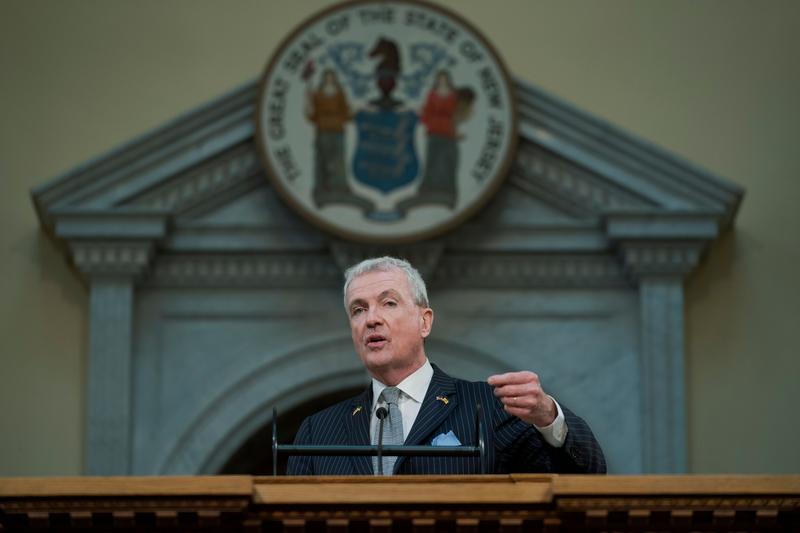
( Matt Rourke/AP/Shutterstock )
[MUSIC]
Brigid Bergin: It's The Brian Lehrer Show on WNYC. I'm Brigid Bergin, senior reporter in the WNYC and Gothamist Newsroom, sitting in for Brian today. Now, we turn to WNYC's Nancy Solomon, who did her very last Ask Governor Murphy call-in show last night. In recent years, she's joined us the morning after for a recap and analysis. She's been doing her show for all eight years of New Jersey Governor Phil Murphy's tenure. Governor Murphy is, of course, term-limited out. Governor Mikie Sherrill will be inaugurated next Tuesday, January 20th.
For her very last interview with the governor, Nancy was part of the signing of a bill that makes changes to a property tax break for farmers, like an actual on-air bill signing. There was a lot of looking back at what he could have done better. For one, Nancy gave the governor a grade on transparency. And spoiler alert, it was not an A. He also talked about regrets, as Sinatra would say, he had a few. He also talked about what he will do next. Joining me now to recap that conversation with Governor Murphy one final time is WNYC host Nancy Solomon. Hey, Nancy, happy morning after, as Brian would say.
Nancy Solomon: Brigid Bergin, I'm so excited to do this with you.
Brigid: I am so excited, too, Nancy. Listeners, as we'll hear, Nancy graded the governor to his face on his transparency record. A new Rutgers-Eagleton Poll gives Governor Murphy a C overall for his tenure, with a D+ grade on taxes and affordability. We'll talk more about that in a few. But wondering if New Jerseyans would like to give the governor their own grade as his term comes to a close. What did Governor Murphy do well, and what did he do not so well?
Maybe you want to assign a letter grade to different aspects of his leadership or maybe you want to reflect on eight years of Ask Governor Murphy as a series as it comes to a close in its current form. The number is 212-433-WNYC. That's 212-433-9692. You can also text at that number. Nancy, let's start with the breaking news. The governor signed a bill, the farmland tax break, on-air last night. We're going to play the clip, but first, in it, we'll hear about Jack Curtis. Set it up for us. Who is Jack Curtis, and what is the context for this?
Nancy: Right. Jack Curtis is a retired school principal in Mendham, and he called into the show a couple of years ago and actually convinced the governor to meet with him. The Bill is a result of that meeting.
Brigid: I mean, if that is not the most powerful anecdote for the power of public radio and the ability to talk with our elected officials, I'm not exactly sure what is, but let's take a listen to that bill signing.
Nancy: We may be making public radio history here with a bill signing on the air live.
Governor Murphy: First pen, I'm going to hand to Tyler Jones is going to go to Jack Curtis. You'll get that to Jack, right? Then another cool thing. It's the 14th, right? 14th day-
Nancy: Yes.
Governor Murphy: -of January 2026.
Nancy: I don't know if you hear the scratching of the pen.
Governor Murphy: Number two goes to Nancy Solomon.
Nancy: Oh, thank you.
Governor Murphy: Because she introduced me to Jack. Let me make one last point, if I may. I mentioned that it adjusts or expands the commission or the committee that assesses this program every so often, and it allows someone, and I want to quote from the bill, "It allows appointment of someone who is from a member of the public with demonstrated interest in government accountability and equitable taxation, and it is my honor to make news on the air that I'm appointing Jack Curtis to that position."
Brigid: Wow, Nancy. Now, I have to give you special props for the natural radio host you were, as you were narrating the sound of the pen.
[laughter]
Nancy: You know, it's radio, right? We don't have any imagery to work with. I felt like, "Ooh, I got to make up some dead air here." [chuckles]
Brigid: For the listeners who are tuning in, maybe they haven't driven through the lush green hills of New Jersey and are like, "There's farmland in New Jersey?" What does this bill mean for farmers in New Jersey?
Nancy: There's long been a program called the Farmland Tax Assessment. It's basically a property tax break for farmers to help them stay in business, but that created an unintended loophole for wealthy McMansion owners in the exurbs, because this really only relates to parcels of land, five acres or larger. Regular suburbanites, nobody has that much land. Out in the exurbs, like where Jack Curtis lives, there are big, large lots, and there are McMansions. If they are able to sell $1,000 of something from their "farm," they get a huge property tax break. That could be honey, or it could be trees that they cut down on their property.
Actually, there are businesses that place honey hives on the property, harvest the honey, and sell the honey so that they qualify. Most of them just qualify by saying that they sold $1,000 worth. These are not real businesses. Anyway, Jack Curtis has been fighting to get stricter rules so that real farmers get the tax relief and fake farmers pay their fair share. Because that tax-- what he's really upset about is that tax actually shifts the burden onto people like him in each town. By the way, there are 37,000 people who claim this tax break. There are not 37,000 farmers in New Jersey. That's what his beef has been.
This bill gets some changes some of the way that you have to qualify for the tax break. There's more looking into these tax breaks, and basically, there's going to be a commission to look at the whole thing. We'll see in the end if this really fixes the problem.
Brigid: Jack Curtis landed in a new appointment. Jack, if you're listening and you want to call in about how you found out about Governor Murphy's bill signing, feel free. Lines are open. Nancy, can you talk for a little bit about what this moment really represents in the context of why you were doing Ask Governor Murphy for eight years to begin with, why give regular listeners a line to the executive of New Jersey, someone who maybe wouldn't ordinarily face the kinds of questions or hear about the type of issues that Jack Curtis raised by calling the show?
Nancy: I mean, I think that's the beauty of call-in shows, whether it's Ask Governor Murphy or The Brian Lehrer Show, is to hold public officials to account and hear from regular folks, and to give Governor Murphy credit, that's what he wanted. He and I had some struggles early on because I wanted to do a lot of the question asking, and he wanted a show where the public called in. There was a bit of back and forth about that. I remember one point, he's like, "This is not Meet the Press." To his credit, I think he was right.
We worked to get a blend of me asking questions and having the callers ask questions, much like Brian does day in and day out, and you do ably well as his fill-in. It became almost a joke because Governor Murphy, after every single call, he'd say, "I'm going to get my guy, Dennis Zeveloff, to call you." Dennis Zeveloff is a very hard-working public policy guy in the governor's office, and people would get calls back. Would they get the help and the action they needed? That would take a bunch of reporting to figure out, going back to people.
I would hear from people. Some were happy, and some were unhappy with the results. It's hard to say exactly how much paid off. Just from my traveling around and talking to people in New Jersey, the show is really kind of surprisingly quite popular. It always surprises me that people want to listen to the governor for an hour, but it was quite popular. I think it was sort of satisfying in that sense to get him in the hot seat and get him to answer tough questions like we did.
Brigid: Well, let's move to a little bit more of kind of that tough analysis that you did during the show. I'm going to read a text from a listener that I think sets up this next exchange that we'll listen to. This listener writes, "The gutting of the Open Public Records Act is one of Murphy's biggest failures that will stain his legacy. He should have vetoed the OPRA Bill. New Jersey lost one of the most open and transparent government structures in the country. The bill will only benefit people who want to make journalism and citizen investigations harder."
Nancy, you gave the governor a grade last night on how well you think his administration performed on transparency. I said in the intro, it wasn't good. You gave him a D. Let's take a listen to his response. Here's a little over a minute of that exchange.
Governor Murphy: Your grade is ridiculous, I mean, seriously, Nancy. If we haven't shipped you our list of what we've done on transparency and good government, we will do that, and Tyler is with me. Make sure Nancy sees it. We have done more for transparency and good government than any administration in the history of New Jersey or in the current period in any state in America. You guys don't like OPRA, by the way, you know what the backlog is for OPRA in the front office right now? Zero. We've kept it at zero at every step of the way.
Nancy: Lately, every time I've filed an OPRA request, not to your office, but to counties and towns, what I get back is this is going to cost you $350 to get things that are digital just emailed to me.
Governor Murphy: We've had this conversation before. Did I run for governor to reform OPRA? The answer is no. Sometimes if you want to get a big agenda accomplished, which we have, sometimes you have to compromise. You're welcome to have a grade on OPRA as opposed to a grade on the totality of transparency and good government. Those are two wildly different conclusions.
Brigid: He doesn't seem to accept your grade there, Nancy. Why the D?
Nancy: That was a little awkward.
Brigid: Yes, I mean, it's a tough question. You are not the only one asking. We got a listener raising that same issue. What do you make of his response?
Nancy: I'm not sure we were clear in the setup. I just want to explain. OPRA refers to Open Public Records Act. In New Jersey, we call it OPRA, and everybody else in the rest of the country calls it FOIA. I take his point that it wasn't his idea to reform OPRA. He was dealing with the legislature. Let me tell you, I'll try to give a very short version of this, but the sponsors of that bill and the people who were pushing it through the legislature all had major problems with things that had been disclosed because of OPRA.
They had a dog in this fight as much as I have a dog in this fight, in the sense that, as a journalist, I really rely on being able to access government data, records, and information. It was a just a really bad bill. There was a ton of opposition, as the person tweeted to the show, and his inability to fight back against this stuff. I feel like, overall, and the reason why I was so willing to hit hard on this is he just never had a stomach for fighting with New Jersey political leaders in the legislature over any kind of political reform.
I'm going to hear from his people about this. He started out on a very good track in his first term doing this. He fought with the party boss, George Norcross, over massive tax breaks the guy was getting, but then he backed off of that, and he started compromising with the legislature, he says, to get the bigger things done that he wanted to get done. I think if he had worked with the advocates and the activists and really fought with legislators, he could have had both. He could have had his agenda, and he could have pushed back on some of the really stinky things that got passed during his tenure.
Brigid: Well, he pushed back by pointing to what he considers his overall successes. As I read in that listener callout, this new Rutgers-Eagleton Poll gives Governor Murphy a C overall for his tenure, with a D+ grade on taxes and affordability. Can you break down some of the findings of that poll for us?
Nancy: I just saw that this morning, so I didn't have this in my hand last night, but the poll found that 9% of residents gave him an A; 32%, a B; 23%, a C; 16%, a D; and 13%, an F. Now, to be honest, I'm not sure how much weight to give that or what's driving that opinion. Clearly, people all across the country are really upset about how unaffordable life is. In New Jersey, its affordability and also high taxes are part of that affordability equation. It's hard to know exactly what people-- and I haven't read the study all the way.
As harsh as I was about transparency, I would not grade him that low that he's getting in these poll numbers. I think he was heads and shoulders above Chris Christie, Jon Corzine, Jim McGreevey. Those are the last three governors since the year 2000. He did a lot. He raised the minimum wage, he established a millionaire's tax, he got the state finances in order, he legalized marijuana. He appointed, in my humble opinion, the best attorney general we've seen in 25 years. He was largely free of scandal.
There were some missteps and controversies, but nothing on the order of, say, shutting down the George Washington Bridge to punish a political enemy.
Brigid: Sure.
Nancy: And give them a much higher grade.
Brigid: Of course, Brian did interview the state attorney general from New Jersey earlier this week, Matt Plotkin. Nancy, I want to spend a little bit more time on the reflection part of your conversation. The governor weighed in with a couple of regrets he has on things he didn't accomplish. Let's play about 25 seconds of one of those regrets.
Governor Murphy: Didn't get the public bank done, which I really wanted to get done. I haven't seen whether or not it is a priority for Mikie and her great lieutenant governor elect, Dale Caldwell, but that's one I still like a lot. I'm not happy we had to go back on the bear hunt. I was convinced that there were non-lethal ways to control the population. The evidence, unfortunately, went against that.
Brigid: Nancy, help us unpack some of those issues broadly.
Nancy: Right. A public bank, they exist in a few states, not many. A public bank is a way for the state to create a nonprofit funding source for loans for good projects, public infrastructure, nonprofit kinds of projects, public good projects. He was very high on this idea when he came into office, and he has never been able to get any kind of traction and get it going. At one point, I asked him about it on the show. I think his answer was something along the lines of it turned out to be more complicated than I thought, getting this done.
There was that, and the bear hunt-- He had promised during his first campaign that he would get rid of it. It's a way to reduce the bear population in New Jersey, and people who care about animals and cruelty, and humane animal care hate the bear hunt. He had promised he'd get rid of it, and he thought that the bear population could be reduced in non-lethal ways. What he was saying there, this is not an issue I've really covered much, but what he was saying is he couldn't figure out the non-lethal ways and had to go back on that campaign promise.
There's a very, I don't know, I mean, maybe it's not fair to say small, but very passionate subset of people in New Jersey who really hate the bear hunt. We're very disappointed by that.
Brigid: I want to bring in some of our Garden State callers, specifically. Let's start with Maria in Titusville, New Jersey. Maria, you're on WNYC.
Maria: Hi, thanks. I had called in back in October and talked to the governor about the trees that are decaying on the sides of Route 29 between Washington Crossing Lambertville. I followed up because I didn't hear anything back in December. Then I got an email, which this was so disheartening because it's exactly why I called up in the first place. Just passing on the buck. It's not our problem, it's somebody else's problem, which is the big issue in New Jersey. I think with so much bureaucracy and so many different administrations. So many different departments you have to go to.
The township's been pretty good about getting down there. They keep saying, "Oh, we can't do anything about those trees. They're dangerous and ugly because that's the state." The Department of Transportation sent me the email, and the conclusion was the specific region of Route 29 from Washington Crossing to Lambertville has been hit particularly hard by the emerald ash borer. The Department of Transportation only has a limited right of way along 29, and the management needs to contact NGA, DEP, Department of Maryland Protection, of course, and the Delaware and Raritan Canal Commission (DRCC) about the remaining debris overhanging NJDOT.
It's just the same whole thing. Then it says ash trees outside of NJDOT right away should be directed to NJDEP, and that's it. Not even a contact of who a citizen would call there to start this whole process again to say, "Okay, which are your trees, and which are the canal's trees?" Why isn't anybody doing anything? It was just very disheartening.
Brigid: Maria, can I ask you before-- Nancy, I give you a chance to comment on it. We've gotten a little pushback on the critical take on Governor Murphy's transparency with some people saying, "Hey, look, he came on the air, he did this show once a month. He took calls directly from Citizens Guard state residents. He should get some points for that. It sounds like in your case, Maria, the follow-up was so unsatisfying. Do you have any regrets, or are you still glad you were able to put this issue in front of him directly?
Maria: I'm so glad I was able to put this issue in front of him directly because it, again, just illustrated the problem. Maybe Mikie Sherrill will take care of this issue because we are taxpayers, and they have to go to the governor to bring attention and keep shaking this tree. No pun intended. I will, because I just feel like they have to respond to us. This is dangerous. It's ugly. It's 2026, the 250th anniversary. This is supposed to be the most beautiful part of New Jersey. It looks ugly because these dead, decayed trees are just lining the road and look so sad.
I'm not sorry that I called the governor, and I'm actually very happy that the governor did listen to the person about the Farmland Tax Assessment because I'm an actual farmer, and I'm very happy that they're going to look into this program more. I guess I would say keep doing the show. When Mikie Sherrill comes on, could you please ask her to address this issue?
Brigid: Maria, thank you so much for that call. A testimonial from Maria there about both the frustration and yet the worthiness of having her concerns brought straight to the governor. If anybody out there from Mayor Mamdani's team feels inspired, I know The Brian Lehrer Show is eager to start those conversations. They were incredibly fruitful during Mayor de Blasio's administration. Absolute appointment, tune in radio to hear people in the city. Raise their often very specific, very neighborhood concerns with the administration. Nancy, how do you respond to Maria?
Nancy: It's such a great question because there's so much there that are bigger issues. It's not just about the very sad state of the white ash trees that have been decimated by the borer beetle, which we're facing all over the country. Certain tons and tons of trees in New Jersey are dying and being cut down. This corridor that she's talking about is the center of the revolutionary history that is about to be celebrated this year.
She mentioned that huge issue really about the state needs to make these places welcoming, beautiful, informative, draw tourists, draw residents, really pump up the fact that New Jersey played a critical role in the revolution. That's an issue. I think really the central issue, it's not just about trees. It's about how New Jersey government does not function well and citizens can never get a live person to help them. We have had countless calls. Just so many calls from people where that is the problem.
It doesn't matter what the thing is they're trying to get fixed. The problem is they can't get a human being on the phone to help them. I would say this is another low grade for Governor Murphy that he never had that much interest in trying to fix government systems. He says he does. He says AI is going to fix it all. I find that very hard to believe. I will say Governor-elect Mikie Sherrill, my sense of her from what she says and who she's appointed so far to lead various government agencies, and I'll give one example, is that she actually is very much interested in making government function better.
She appointed-- I don't have the details in front of me. I'm going to forget the woman's name and the name of her organization, but she appointed someone to run what we call the MVC, but is really the DMV everywhere else, the Motor Vehicles Agency. She appointed a woman from a Responsive Government Institute to run the DMV. When I saw that, I kind of jumped up out of my chair, like, "Yes, finally." It would be great to have someone who really wants to double down on making government more responsive and more effective.
Brigid: Nancy, we're going to try to find that name before we go. One of the things that listeners are pointing to as another legacy of the Murphy administration is related to something that you did a whole bunch of reporting on, and that is the end of the line.
One listener texted, "All of this was due to his failed power move to anoint his wife as the person to replace him and replace now-jailed Senator Menendez. The move caused now Senator Kim to go to court, and a federal judge ruled that the ballot line was unconstitutional. This has opened up ballot access to so many potential candidates at the local, state, and federal level. Democracy has arrived in New Jersey." Any response to that?
Nancy: I think that person is spot on. I didn't bring it up last night because I've hammered him so many times over this that I just worry that I'm going to bore people. It's something I care a lot about. I think it's really important. I think that the end of the county line, and I won't go into the whole long explanation, but let's just say it has already arrived in the form of six new state assembly members who are not beholden to the party bosses. I think we're going to see a lot of change in the state legislature.
I think that it's beaded. Political reform is coming. I don't know what kind of role Governor-elect Sherrill will play in this. I don't know really where she stands on some of these issues. She has spoken about transparency, good government. She seems to have an appetite for political reform. We'll just have to wait and see. Just the fact that the ballots have been fixed, so now reform candidates, outsiders, challenger, primary challengers actually have a fighting chance to win an election, something they didn't have before. That's going to really have a huge impact in New Jersey.
Brigid: Nancy, what did Murphy say was coming next for him?
Nancy: He says he hasn't decided and that he feels that the end of something this big, he's not in the right frame of mind for him and First Lady Tammy Murphy to decide what they want to do next, and that their experience in the past when they've made major life transitions is to take a break and not try to rush into it. He's attending the inauguration on Tuesday for the new governor. Then Tuesday night, they're flying to Europe. They've got all sorts of really grand plans that sound great. They are members of the 1%, after all.
They get to do really great things, and they're going to have a lovely time traveling through the winter and try to stay away from New Jersey politics. Then he says they'll come home and decide what it is they want to do.
Brigid: I will note that our crack team of producers pulled up the information about who Governor Sherrill nominated to be the chief administrator of the New Jersey Motor Vehicles Commission. That would be Rosalie Johnson. Johnson has over two decades of organizational experience, most recently with the Institute for Responsive Government, where she provides guidance and support for state motor vehicle agencies across the country. To your point there, Nancy, someone with a real interest and expertise in the agency she's being tasked to oversee. Several people have texted. "Any word on whether there will be an Ask Governor Sherrill?
Nancy: [chuckles] I get this question multiple times a day. I believe talks are underway at the station. I guess I'll quote Governor Murphy because he likes to say this. He probably said this every single show for years. "I can't make any news on that one."
Brigid: I do remember him saying that many, many times. Nancy, we mentioned that not only did you get the governor to sign a bill on air last night, you also got him to sing. Let's take a listen to that.
Governor Murphy: Okay. You've got me stumped. A few bars. [singing] No, no, Nanette. That was the show I did in high school.
Nancy: That's appropriate.
Governor Murphy: I teach 20 something. Exactly. [singing] No, no, Nancy.
Brigid: Aw, Nancy, that was--
Nancy: [laughs] It's the shortest answer I ever got out of them.
Brigid: That was spectacular. Eight whole years of interviewing the governor, and you managed both to still have fun and yet hold his feet to the fire until the very end. Nancy, congratulations on such a terrific accomplishment. We're so proud to have been part of it here a little bit in the mornings after recap of it all.
Nancy: Thanks, Brigid.
Brigid: WNYC's Nancy Solomon will be back here with Brian next week to discuss incoming Governor Mikie Sherrill's inauguration. I just want to thank you today on behalf of all of our listeners for recapping her very last Ask Governor Murphy call-in, which took place last night. Nancy, thank you, as always, so great to talk to you.
Nancy: No, it's super nice, Brigid. Thank you so much.
Copyright © 2026 New York Public Radio. All rights reserved. Visit our website terms of use at www.wnyc.org for further information.
New York Public Radio transcripts are created on a rush deadline, often by contractors. This text may not be in its final form and may be updated or revised in the future. Accuracy and availability may vary. The authoritative record of New York Public Radio’s programming is the audio record.
