
Ask Governor Murphy: November 2025 Recap
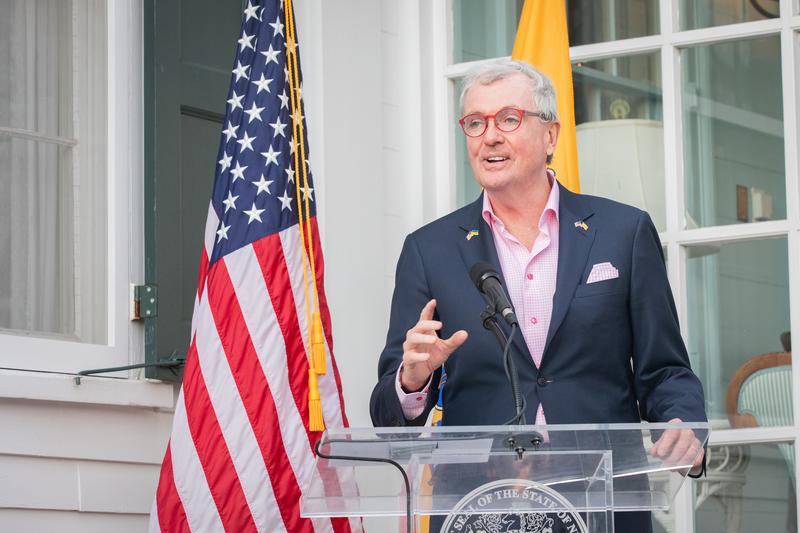
( Rich Hundley III/ NJ Governors Office )
[MUSIC]
Brian Lehrer: It's The Brian Lehrer Show on WNYC. Good morning, everyone. Last night on the station, as some of you may have heard, WNYC's Nancy Solomon hosted the penultimate edition. I presume it's the second-to-last edition of her series, Ask Governor Murphy, the monthly call-in with New Jersey Governor Phil Murphy, who, of course, will be leaving office at the end of next month. He was term-limited out. The first caller they had last night was a woman who identified herself as Mikie from Montclair. Mikie from Montclair. See if you recognize the voice.
Mikie: Hi, Governor. I'm a longtime listener, first-time caller, and I just had a question. I was wondering if somebody was interested in being the next governor of New Jersey, what advice would you have for that person?
Brian Lehrer: They had a little advice exchange. Here's some of it.
Governor Phil Murphy: Mikie, as you probably know, if you've listened before, and I know your husband tells me he listens, we try to get back to all our callers within 24 hours. I'll have Dennis Zeveloff give you a call tomorrow morning. [laughter] Sorry. I assume you must be in Washington voting. Is that where you are? [crosstalk]
Mikie: I'm in the middle of it. Yes. We're fighting hard for health care, but it's just not looking good for reasons I still can't quite comprehend. Why you'd want to rip health care away from people? Over 450,000 New Jerseyans could see their rates go up exponentially. It's really tough. We'll keep up the fight. I know you have ideas, too, on just how to continue to keep people whole in New Jersey as we fight some really bad stuff coming from Washington.
Brian Lehrer: With that, we welcome WNYC's Nancy Solomon back to the show for at least, I presume, Nancy, one more after today Ask Governor Murphy.
Nancy Solomon: Two.
Brian Lehrer: Two.
Nancy Solomon: Two. Yes. We got December and January determines the 20th. His term ends the 20th, and we'll be on sometime the second Wednesday of January. Usually it's like the 11th, 12th, 13th, something like that.
Brian Lehrer: So the political junkies in the audience can keep their calendar straight. The mayor of New York is inaugurated on New Year's Day, but the governor of New Jersey, not for a few more weeks. Did you say January 20th?
Nancy Solomon: Exactly. Yes.
Brian Lehrer: Same day as presidents are inaugurated.
Nancy Solomon: Yes, which is not always this true, but this year it happens to be. Yes.
Brian Lehrer: Was that a setup? Did you know that Mikie Sherrill was going to call in or did the governor know that Mikie Sherrill was going to call in and ask for advice?
Nancy Solomon: I wouldn't go so far as to say it was a setup, but I will say that I did suggest to Mikie Sherrill's people that maybe she would want to call in. I wasn't sure because she was in Washington and they were voting on the federal shutdown. They weren't sure whether she'd be able to. We didn't have a specific time or anything. We did give her a number so she could get right in and not face a busy line, a little trick of the trade that we can do, as you know. I wasn't sure. I just told it doesn't matter what time, but during the hour, just call and I'll be able to pivot and get you on. Yes, I did know it was coming.
Brian Lehrer: Actually not a lot of advice in that clip after she asked for advice on being governor of New Jersey. Interesting that Sherrill was calling from Washington after the vote to reopen the government. For the record, did she say how she voted?
Nancy Solomon: She didn't happen to say it, although the context was, of course, that she opposed it because she talked about how it was going to increase health care premiums. She did vote against it. All the Democrats in the New Jersey congressional delegation voted against it. Then later last night, she announced that she's going to resign. There's been a question of like, when is she going to resign from Congress? Because it takes her resigning for, for the governor to then be able to get the clock started on a replacement. She announced she's going to be doing that, I believe, next week.
Brian Lehrer: That just, as you say, gets the clock started on a replacement. From what I read, it looks like it's going to be a few months into next year before her seat is actually replaced. That's presumably in that district going to be another Democrat. First few months of the new Congress-- Oh, first few months of next year, I see, going into the midterms, not coming out of the midterms, there'll be one less Democrat in Congress.
Nancy Solomon: Yes, which is a big deal. When you've got the margins so slim, and in fact, there's been talk between the governor and leaders in the state legislature to get a bill passed and signed that would shorten the days because the statute requires a certain number of days between the Governor's announcement and the primary and a certain number of days from the primary to the general and they're pretty generous and it really does take about six months.
The idea is to shorten that up. There's some concern that the machines are going to pull some dirty trick to take the vote away from people, but I don't really think that's going to happen. I've been getting calls from very worried anti-machine activists, but I don't think there's any reason to believe that's going to happen. I do think they'll get something done. I think last year, when we had two congress people die in office-- I don't know if it was last year, it could have been a couple years ago. At any rate, we had Bill Pascrell and-- Oh man, I'm blanking on his name. Donald Payne die in office. It takes a very long time to get those seats filled. There is concern about it right now.
Brian Lehrer: This is sort of civics wonkiness, but if a senator leaves office for any reason in the middle of a term, the governor gets to appoint the replacement for the rest of the term. When it comes to a member of the House like in this case, then there's this process for a special election. That's a difference, right?
Nancy Solomon: That is the difference, yes.
Brian Lehrer: Governor Murphy is still the governor for these remaining weeks or two months or so. He's in office till January 20th like you said, and he's got a few so called lame duck priorities. Let's get into a few of these. First up, clean energy, which, if Mikie Sherrill called in asking for advice, we already know that she says that one of her first actions in office is going to be to declare a state of emergency about utility costs. How might Phil Murphy set her up for that?
Nancy Solomon: One of Phil Murphy's big priorities in the lame duck is to mandate zero carbon emissions by 2035. This is probably the top priority of environmental organizations in the state to get this bill passed and signed. It was initially introduced two years ago. It didn't get very far. There's now a new version of the bill. Last night, Governor Murphy said it was number five out of-- I asked him on a scale of 1 to 5, how much of is this a priority?
He said it was a 5, and that he's been meeting with lawmakers and environmental groups, getting them into the room together to get the details hammered out. You rightly point out Mikie Sherrill talking about electric rates which have spiked way up, and that that's her first day's action, is to get them frozen or down or something. These two issues are connected because the reason electric rates are spiking is because the region grid provider hasn't approved enough new projects to generate electricity.
Supply is low and demand is high. It gets higher and higher and higher with AI and all kinds of server farms in New Jersey. These two things are connected. They need to create more power. Presumably, I think 60% of New Jerseyans-- is the poll that I read about that said 60% of New Jerseyans support clean power. I would have expected that to be a little higher, honestly. These two issues are connected, and Murphy says he's going to get it done.
Brian Lehrer: Here's 30 seconds of the governor with you on his support of this clean energy bill.
Governor Phil Murphy: We are pretty vocally supportive of this. Again, I'm always in that little bit broadly speaking, supportive. I don't want to get too detailed until something gets to our desk, but this is one that's at the end of the spectrum where we have deeply involved and we support this bill.
Nancy Solomon: On a scale of 0 to 5, how much of a priority is it?
Governor Phil Murphy: Oh, it's high. It is high without question. There are a couple of big energy bills floating around. This is at or near the top of the list.
Brian Lehrer: At or near the top of the list. It reminds me, Nancy, that in the campaign, I think the biggest issue that Jack Ciattarelli, the Republican nominee, tried to raise against Mikie Sherrill was that she and Governor Murphy have been too supportive of a clean energy transition at the expense of utility rates because it's more expensive to convert and to try to limit carbon emissions than it would be to continue to use fossil fuels at the rate that they've been used in the past. Well, he lost the election, but that was a major, major fault line these past months, right?
Nancy Solomon: Yes, exactly. I would say that represents pretty fairly the Republican-Democratic split going on across the country on this issue. Republicans support continuing to use fossil fuels, that it's too expensive to convert to clean energy. They don't want anyone big issue a couple of years ago was, don't take away my gas stove. They've even been hostile to the idea of mandating more electric vehicles and building electric charging stations. Yes, their belief is that the cheapest form of energy is fossil fuel energy. There's a lot of skepticism about climate change and whether that should be as much of a priority as Democrats make it.
Brian Lehrer: Also, as you kind of just indicated, the mandates that go along with a clean energy conversion. We have to convert to X percent electric vehicles by some year, or we have to convert to X percent electric power and buildings on new construction, and that kind of thing. I imagine that'll continue to be a debate in the legislature, or maybe with a Democratic majority in both houses and the incoming Democratic governor. It's not a thing, but we see certainly from COVID to the present how much backlash there is to mandates.
Nancy Solomon: Yes. I don't have a strong sense of the current-- the lame duck Democrats, not many of them are leaving, but it's still, this is the lame duck session. It's hard for me to get to-- At this point, I don't really have a sense of how strong of a priority and how willing they are to pass this. I said Governor Murphy said it was a five. Now listening to the tape, I realize he just said it was a somewhat high priority, but I think he is going to expend some capital.
I think he does support this, and he's trying to get it passed. I really don't have a strong sense or knowledge of whether or not the legislators are going to actually get it passed. There is this kind of libertarian strain that runs through certainly center-right politics around these issues. They don't want mandates; they don't want restrictions. I think I told you once before, during the gubernatorial campaign, that Jack Ciattarelli's most popular line in front of audiences was to bring back plastic grocery bags.
There is this sort of resistance. There was the whole fight a couple of years ago over the offshore wind turbines being built off the Jersey Shore, and that that was killing whales, which it wasn't. There's been a lot of pushback to these ideas that most Democrats are sort of firmly supportive of, but there has been that pushback.
Brian Lehrer: Bring back my plastic shopping bags. Never mind what they're doing to the environment. That's a certain kind of cultural nostalgia, isn't it? That's kind of consistent with what a lot of MAGA is.
Nancy Solomon: Yes. I disagree with it on the one hand, but I kind of understand it on the other. As a forgetful person, how many times have I been standing in line and realized, "Oh man, I forgot my tote bags."
Brian Lehrer: Bring my WNYC campus shopping tote bag.
Nancy Solomon: Yes. Then I'm wheeling out to the car with all my groceries in the cart and loading them into the back of the car.
Brian Lehrer: One by one.
Nancy Solomon: I get why people are distant. We have basically really sold the younger generation short on this stuff. It's frightening how hard it is to get change on climate change.
Brian Lehrer: Yes. I don't know how it works in New Jersey, but in New York, with a plastic bag ban, just about every supermarket seems to have a stack of bags you can buy for as little as 25 cents at the cashier. There are last-minute workarounds, at least in New York. I don't know if it's exactly the same in--
Nancy Solomon: Not so much in New Jersey. In England, for decades, when you are at the grocery store, you pay like 10 pence for a bag if you don't bring your own. That goes back 30 years. Most people can deal with this. I think it's just, yes, change is hard.
Brian Lehrer: This nurse, any questions for Nancy Solomon on the questions she's been asking Governor Murphy for a number of years now, or on Mikie Sherrill's call in to ask Governor Murphy, which we'll see if it becomes Ask Governor Sherrill next year. I don't know if that's determined yet one way or the other. Sherrill's call in or this issue of green energy or anything else you want to say or ask about this moment of transition from Murphy to Sherrill in New Jersey? 212-433-WNYC, or anything you want to ask, 212-433-9692. You can call or you can text for WNYC's Nancy Solomon today.
Still on utility bills. I was kicking myself after Sherrill was on the day after the election. She came on for a few minutes to talk about her win, and we talked a little bit about this state of emergency on utility bills and one of the things she's going to do right away. Then I realized, after the show-- and folks, this is a little behind the scenes. I have one of these every single day-- about one segment or another, where, "Oh, I should have asked about that." In this case, it was that Abigail Spanberger was elected at the same time the new governor of Virginia.
I understand that they were friends. They've known each other for a long time. If you remember, in one of the gubernatorial debates against Ciattarelli, Sheryl made a big thing of utility prices going up because of AI data centers in Virginia in particular. I guess they use the same energy supplier in New Jersey and Virginia, and so that pushes up prices in New Jersey as well as in Virginia, where those data centers are located.
I wish I had asked her. Have you talked to your friend Abigail about doing something about these Virginia data centers that are pushing up utility prices in New Jersey? You can ask her, or other reporters can ask her, or the next time she's on the show, I'll ask her. I think that's an interesting wrinkle to what might happen or what the conversation might be with these two particular governors just being elected.
Nancy Solomon: Yes. I think it also points to just the importance of what's happening, and what the effects are of both data centers and AI, and the extent to which they're gobbling up resources. I know it's a big issue in Virginia. I've read about it in what's going on in Virginia. Did she talk about it with Abigail Spanberger? Probably. At one time, they were even roommates, so they are very good friends.
Brian Lehrer: When they were new in Congress, they were both members of Congress before being elected governor.
Nancy Solomon: Yes. They were elected at the same time, and they have very similar backgrounds. It makes a lot of sense. Whether or not she's actually spoken with her, I think it speaks to the fact that we are part of a national grid and we're in a supply and demand system, and it's regular people who are going to pay the price. If tech companies don't have to pay extra and do their share for gobbling up all this energy, then of course it's going to fall to regular ratepayers. I think it's a good thing that some political leaders are looking at this and trying to figure out what to do about it.
Brian Lehrer: Here is Kate in the Hudson Valley on what detail that we mentioned before on the difference between New York and New Jersey's plastic bag ban. Kate, you're on wnyc. Hello.
Kate: Good morning. I studied this for work quite a bit in New York. It's unfortunate that New York now seems to-- This may not be the official policy, but what happens is they're not charging the forgetful ones for the bag. They're just probably absorbing the cost, and we're all paying for it. Something I have recommended to all stores as well as supermarkets, leave the boxes where you get all those individual products you're getting.
They're getting boxes of products. Leave it by the front door. For those forgetful ones, they just take a box like they do at Costco and BJ's. That makes everyone happy, especially economically. In New Jersey, hard fine line for that one. They will not give me a box, not at all. They say state law is we cannot allow a box to leave the property. They have to all be recycled. I thought that was comical because here I was saving the bag. To your energy point, I'm sorry, but sustainability is what I do for my world.
Brian Lehrer: Yes, that's great. I appreciate your expertise in that you called it-- Go ahead.
Kate: Efficiency. That's what it comes down to, just like the abuse of the bag. If they were promoting efficiency, we could save some of the high cost of electric. The power companies have started doing this with time-of-day usage. They just need to do it more. They need to explain it to the consumer. If you see during the high peaks during the summer, they do that by rewarding the certain utility companies that reward homes and especially businesses to increase their air conditioning temperature a little bit.
That helps the load on the power grid and hopefully avoids brownouts and blackouts. Same with doing laundry at night. Same with charging your electric vehicle at night. Now, it's just so complicated. It's getting more and more challenging to follow. Efficiency is the most important thing. Since your guest brought up Britain, Europe has been doing this for years with the bottle tax, et cetera. We get lazy in America, and when we try and incorporate the programs back in, it's hard to train us. Thank you so much. I really appreciate all of you-- [crosstalk]
Brian Lehrer: Thank you so much. Thank you. Really appreciate all that context that you gave us. Still on utility bills. Oren in Manhattan, you're on wnyc. Hi, Oren.
Oren: Hi, Brian. I'm a frequent listener and big fan. Just wanted to address that you and your guest, and I'm not sure this was intentional, may have given listeners the impression that voters in New Jersey or elsewhere have to choose between renewable clean energy and cheap energy, as if fossil fuel energy is cheaper, but really it's not cheaper. It's renewables that are going to the long term, and even many places already short-term, are going to bring down costs for consumers. Everybody should be embracing clean energy if they want their bills or their electric bills to come down.
Brian Lehrer: Yes, fair enough. As far as that goes-- Let me follow up on that, and then you can make your other point. There's interesting reporting about Texas. As conservative a state as Texas is, Texas has a lot of sun resources being down there and a lot of wind resources in parts of the state. Wind energy and solar energy, from what I read, are galloping ahead because the state sees it in its interest, even while these debates are going on at the more ideological level. What some people might say, a little bit different from what you said, is yes, wind and solar may be the cheapest forms of energy to develop going forward, but if you stop the use of fossil fuels too quickly, it's going to push prices up for a while.
That the actual cheapest for utility rates is to have lots of development of those new things, which of course we know Trump and a lot of other Republicans want to stop, but to have lots of development of the new renewable sources. Also, to continue to use fossil fuels until that transition takes place or continue to use fossil fuels as much as necessary to keep prices down. I don't know if you have a response to that or take on that, but it's that all of the above approach that gets hit from both sides.
Oren: I think you're exactly right. It has to be a combination as we do the transition. No one's saying we can go cold turkey and just stop using fossil fuels tomorrow. If we stop the build-out of new infrastructure to create more fossil fuels and instead put those resources into cheaper, renewable, clean energy, then that's going to bring down costs much quicker than if we completely invest in building out new sources of fossil fuels, which is what the Trump administration is trying to do.
Another related point is that you've been talking about the AI debate. The problem with AI is not just that it consumes huge amount of energy, but but it is also polluting and putting methane into the air and a lot of places where they're using certain kinds of power sources to drive the AI. In the new Elon Musk plant in Memphis, they're using methane-producing generators, which are increasing climate change, as well as burning up huge amounts of energy that are making prices higher for consumers in Tennessee.
Brian Lehrer: Thank you very much. We really appreciate your call. One more on this before we pivot to Gateway Tunnel, and if that's coming back now that the government shutdown is over, and some other things with Nancy. One more on this. Manuel in North Bergen, an electrical engineer, he says. Hi, Manuel, thank you for calling in.
Manuel: Hi. The technology for wind energy exists for many years already, and I'm very surprised it hasn't been used in this country. I come from Spain. In Spain right now, it's probably about 30,000 towers for wind energy, but population was 48 million. In the region of Galicia, where I come from, less than 3 million people, we have already about 2,000 towers for wind energy, when in New Jersey, there's only five. I checked the other day on the South Jersey.
This is laughable. This is unbelievable. In my region of Galicia, for example, the rate that the power companies charge you for kilowatt hour depends on the cost of production. Some days, when you produce most of the energy by wind energy and hydroelectric is zero, the cost of the supply part, the bill. When people say it's more costly, no, that's not true. There's a lot of lies in this country about this technology. You know what I mean?
Brian Lehrer: Yes.
Manuel: . Also pollution. How about pollution? I suffer in New Jersey from headaches every day because of pollution from power plants, mostly.
Brian Lehrer: I'm glad you brought that up, Manuel, and I got to go. That gets lost in the debate sometimes. Nancy, I'll throw this to you. It's not exactly on a New Jersey state politics, but you probably thought about it because it affects everybody. I think that sometimes what gets lost in the transition to renewables debate, to what we call clean energy debate, is that fossil fuel energy is not just dirty in the climate sense, it's dirty in the ground level sense. As my alley along the Cross Bronx Expressway in New York and Manuel's in North Bergen and he references what may be going on there, that's also such another big part of it that I think should never get lost.
Nancy Solomon: Yes. There's another asthma alley in Newark in the Ironbound neighborhood with all the trucks that come through from the port. Folks there have been fighting it for years. Yes, there's many reasons why we would benefit from clean energy. I don't disagree with the callers. I wasn't really saying that I thought that clean energy was expensive. I was saying that the Republican argument and Jack Ciattarelli's argument during the gubernatorial election was that it was expensive. I just don't want people thinking that I'm the one who was saying that.
Brian Lehrer: Yes, I think that's definitely, and I'm the one who brought up the contrast, so they can blame me. Yes, we are reciting the argument from one party versus the argument from the other party. Speaking of arguments between parties, when we come back from a break, I'm going to ask you a question that a listener has texted about the Gateway Tunnel, which, as some people may remember, as much as people in New Jersey and New York both want it, was Terminated by President Trump in the government shutdown. Now that the shutdown is over, is it coming back?" We'll try to get that answer right after this.
[MUSIC]
Brian Lehrer on WNYC with WNYC's Nancy Solomon on the morning after her third to last-- Second to last is penultimate. Is there a word for third to last? Not that I know, but after her third-to-last, Ask Governor Murphy call in last night. We're inviting your calls for Nancy on anything you may have heard there, anything you want to say about Governor Murphy's tenure, or going into Mikie Sherrill's tenure, or the transition.
212433-WNYC, 212-433-9692. You can call or you can text with a comment or a question. Here's the one, Nancy, that I teased before the break. Listener writes, "Is there anything that Governor Murphy is doing during this interregnum to save the Gateway Tunnel project?" Do you know?
Nancy Solomon: I think the hope is that now that the federal shutdown is coming to an end, and they will just, without a lot of fanfare, they being the White House and the Department of Transportation will just restart it all back up. It's such a political losing issue for the Trump administration. I think it's largely believed that Mikie Sherrill didn't just benefit from a huge Democratic turnout that was reacting to the Trump White House.
She also flipped a lot of 2024 Trump votes. What's behind that? I think part of that was terminating the tunnel as a form of political punishment. There are a lot of issues that people are upset about. There's the masked ICE agents, there's the bulldozing of the east wing of the White House. There were so many things that happened in the last couple of weeks of the election.
Brian Lehrer: Rising prices.
Nancy Solomon: Yes, that, too. There's broad support for fighting the Affordable Care Act premiums going up. It's hard to parse out exactly which of these issues. Certainly, the Gateway Tunnel is a very popular project. My guess is that it's just going to come back on track. If not, there'll be a huge fight, and it'll certainly help Democrats in the 26 midterms.
Brian Lehrer: They just passed this reopening of the government bill in the House last night, and President Trump just signed it last night. This is barely 12 hours old as we speak. I just did a Google search, and I could not find any news story yet that refers to restarting the Gateway Tunnel. The aspects of it that they said were being terminated, no reference to it one way or the other, whether Trump, for other reasons having to do with DEI or whatever, will try to keep it terminated, or whether now that process just starts up again because there's the money again to keep going through the paces that had been funded previously by Congress.
That was one of the reasons that Ciattarelli lost. I mean, Trump, though, he endorsed Ciattarelli, Ciattarelli had given Trump an A on his time back in office so far in one of the televised debates. Then right after that, Trump turned around and said, "No, we're terminating the Gateway Tunnel project." Ciattarelli was immediately on the defensive about how can you say Trump deserves an A when he's canceling one of the most important things that the federal government is doing for New Jersey? It really hurt him, right?
Nancy Solomon: Yes, absolutely. His line was, "I'm the guy who can pick up the phone and talk to President Trump and get it back on track." That's a bit of, I'd say, cold comfort to people who want to see this project happen. They don't want it being taken off track from in the first place. No, I think this is definitely one of the animating factors behind the turnout and the vote switching and just the Democratic victory that we saw in New Jersey.
Brian Lehrer: Now, a word nerd like us, a word nerd called in to say that the word for third to last is ante, A-N-T-E, antepenultimate. We're looking that up. Yes, it looks like it's right.
Nancy Solomon: Before penultimate. Sure, that makes sense.
Brian Lehrer: Yes. Ante means before. Antediluvian and all of that.
Nancy Solomon: Antebellum.
Brian Lehrer: Yes. Now you know that you just hosted your antepenultimate Ask Governor Murphy. John in Prince-- [crosstalk]
Nancy Solomon: I'm sorry, Brian, but let me say I'm taking suggestions from listeners about what we should do for the last show, so get in touch.
Brian Lehrer: What are you thinking of doing?
Nancy Solomon: He wants to drink. [laughs] I think that might be a bad idea.
Brian Lehrer: On the air? Is that even legal?
Nancy Solomon: Well, I don't know. It's legal, isn't it?
Brian Lehrer: I don't know if it's legal [inaudible 00:35:20]
Nancy Solomon: I suggested a tour of his house. He pooh-poohed that one pretty quickly last night when I just kind of half-jokingly suggested it. I don't know what we're going to do.
Brian Lehrer: A tour of his house? Would that be his pride? People in New York may not know. The governor's mansion in New Jersey is called Drumthwacket, isn't it?
Nancy Solomon: Yes, except he doesn't live there. Drumthwacket is like a colonial, big huge mansion in Princeton that's kind of a little bit out of date, I would say. The governor and his wife live in the place where they've lived for many years, just outside Red Bank on the water, technically, Middletown, in a really pretty, spectacular big mansion.
Brian Lehrer: He could put in a gold-plated ballroom in Drumthwacket, and it would be a thing again. I don't know why that's on my mind.
Nancy Solomon: I'm going to say I try steer clear of too many opinions about Governor Murphy. I'm going to say he has better taste than that. That house is-- I've only been on the outside of it, but it's pretty nice, and it's a gorgeous spot. We do the show from the pool house, and there's no sign of gold. If anything, he's big on Elvis Presley memorabilia.
Brian Lehrer: Interesting. Now that we've looked up antepenultimate, I'll have to look up Drumthwacket. Unless you know as to where that comes from, sounds like what the person in the percussion section does?
Nancy Solomon: With a lisp. I do not know where that name came from. I'm going to have to look it up, too. It's kind of what you would expect from a colonial-era mansion.
Brian Lehrer: John in Princeton.
Nancy Solomon: It looks like it belongs in an-- Yes, go ahead.
Brian Lehrer: [crosstalk] Sorry. Hang on. I thought you were done with that sentence, Nancy. I'm sorry. Looks like a bit of colonial--
Nancy Solomon: I was going to say, it looks like something you'd see in an English costume drama.
Brian Lehrer: John in Princeton wants to make a segue and bring us down to earth here. Hi, John. You're on WNYC.
John: Yes. You might ask the governor about if you're going to drink about water. I have a friend who's been involved in development work in Trenton, and he's telling me that the Trenton water system, which also provides water for places like neighboring areas, is on the verge of collapse. He's been talking to one guy who recently retired, and the problem is that Trenton hasn't invested for 30 years.
Some of the pumping stations, some of the others, he thinks there's a real chance there could be an outbreak of some kind of waterborne disease. You might ask the governor about that, and you might also ask Mikie Sherrill. I will try and get the name and see if this retired person is willing to talk to you. Then I would call up the station and put you guys in touch with him. This could be one of these stories that just explodes because something happens.
Brian Lehrer: John, we could take your contact information off the air if you want that. Talk to the producer. I'm putting you on hold. Talk to the producer and you'll see if you can arrange something. I don't know if this is the first you've heard of that potential horrific scenario with water and Trenton, Nancy?
Nancy Solomon: Not the first I've heard, but I can't right on the spot pull up exactly what I know about it. I think there's been a problem with lead lines in Trenton. Trenton has massive infrastructure problems and also has some good government problems. There has not been good management of that city and its finances. There are lots of problems in Trenton. Of course, it is the home to the state Capitol, which makes it even that much more stark and glaring. Yes, I would be happy to talk to the caller and put together a question for the governor, or, of course, people are welcome to call in and ask the governor about it. That's the whole point of the show.
Brian Lehrer: We'll end this by noting that another text came in on what it might take to get Trump to unterminate the Gateway Tunnel project. Listener writes, "I know what Trump wants. Rename MetLife Stadium Trump Stadium. We will leave that there as a snarky punchline from a listener with a 914 area code. By the way, peering across the border as the antepenultimate day after the third-to-last Ask Governor Murphy call in with Nancy Solomon. Appearance for the morning after is now concluded. Nancy, thanks. Talk to you next month.
Nancy Solomon: Thanks, Brian.
Copyright © 2025 New York Public Radio. All rights reserved. Visit our website terms of use at www.wnyc.org for further information.
New York Public Radio transcripts are created on a rush deadline, often by contractors. This text may not be in its final form and may be updated or revised in the future. Accuracy and availability may vary. The authoritative record of New York Public Radio’s programming is the audio record.
