
Ask Governor Murphy: December 2025 Recap
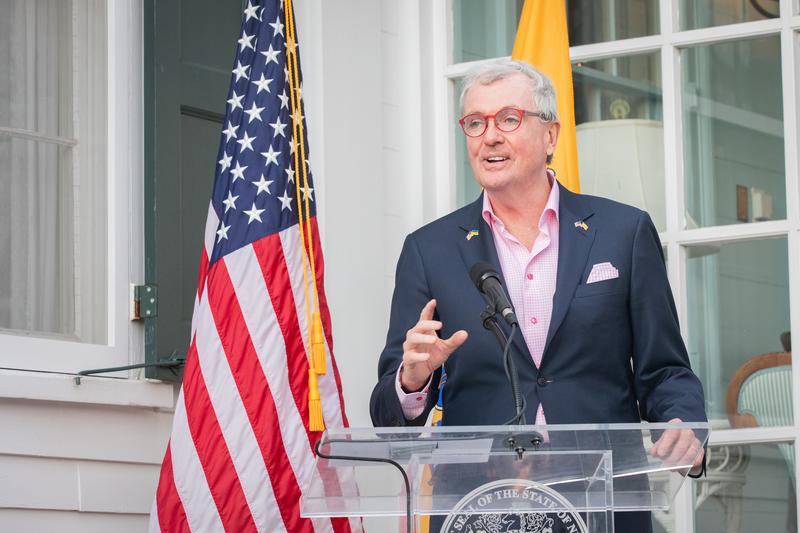
( Rich Hundley III/ NJ Governors Office )
Brian Lehrer: Brian Lehrer on WNYC. Now we turn to WNYC's Nancy Solomon, who did her latest Ask Governor Murphy call-in show last night. She usually joins us the morning after. Nancy, before we go over some highlights, I just want to say, can you believe this is your penultimate Ask Governor Murphy interview? You've been doing this for all eight years, right?
Nancy Solomon: Yes. I know. I can't believe it. I'm kind of sad. I've really gotten to know the governor, and I love coming on your show every month. It's sad that it's coming to an end.
Brian Lehrer: I don't know if we can pry a Phil Murphy years documentary out of you, but I couldn't think of a better person to describe the arc of the Murphy administration over eight years, but no pressure.
Nancy Solomon: Absolutely not.
[laughter]
Brian Lehrer: There was a very heated session in the New Jersey Senate last month, where Democrats went head-to-head over a bill that would have defanged the state's comptroller, who investigates corruption. The bill was pulled last month, so the actual issue has been put to bed for now. In the session, the chairman of the state Senate Committee, Jim Beach, quite literally yelled at who? At Senator Andy Kim and other current state legislators who were waiting to argue against the bill. Nancy, corruption, if that's the right frame to put on this topic, has been one of the main things that you have done deep dives and groundbreaking reporting about. To this issue, which may sound a little wonky the way I described it, what's up?
Nancy Solomon: Yes, this is a really multi-layered story, what's going on right now in New Jersey politics. On the face of it, Senate President Nick Scutari was trying to gut the state comptroller. That's the agency that investigates corruption, waste, and abuse. The controller has put out some really damning reports about allies of Nicholas Scutari himself, and also looking at George Norcross's insurance business and how he basically has cornered the municipal government insurance market. Kevin Walsh, the comptroller, has really gone after some of the most powerful party bosses in the state.
Scutari, on the eve of Thanksgiving, puts in, sponsors a bill, introduces a bill that would gut the controller. Then what you have is this outrage, starting with grassroots organizations, but also the state attorney general stepped in and disagreed with the bill. Then you had US Senator Andy Kim, who I could not find an instance when a sitting US Senator has come to the state legislature to speak on a bill.
Brian Lehrer: Yes.
Nancy Solomon: It might have happened, but I couldn't find one. Then you have this remarkable committee hearing in which the committee that it goes before is chaired by state Senator James Beach. He is the chair of the Camden County Democratic organization, but really, that organization is run by George Norcross. He is basically a foot soldier and has been for many, many years, a foot soldier for George Norcross. He's running the committee hearing. Kim and Matt Platkin, the AG, and Kevin Walsh, the comptroller, get there early, sign up to speak and are made to wait five hours until, at the very, very end, they finally got called to speak. I brought some tape of that, a moment that happens in the hearing. Let's play that.
[clip begins]
Senator Kim: The people of New Jersey are sick and tired of this.
Jim Beach: You got three minutes, so please conclude.
Senator Kim: Sir, I have been here for five and a half hours. I'm missing votes at the Capitol.
Jim Beach: Yes. So what? So has everyone else.
Senator Kim: Give me 30 seconds.
Jim Beach: Why do you think you're special?
Senator Kim: No.
Jim Beach: You're not.
Senator Kim: What happened was you gave Mr. Keller special privileges here.
Jim Beach: He came at my request.
Senator Kim: Yes.
Jim Beach: You didn't.
Senator Kim: Oh, okay. I see. Okay. There is someone that is special.
Jim Beach: All right.
[clip ends]
Brian Lehrer: That's quite remarkable, Nancy, along the lines of what you were saying. Senator Kim comes on this show once a month and takes calls from listeners, as you know. Usually, we're talking about national and global issues, since he's a member of the US Senate and he was on the Armed Forces Committee in the House, and all that stuff. We're talking about war and peace and health insurance. Here he's talking about the comptroller of the state of New Jersey.
Nancy Solomon: Right. That's exactly why I wanted to talk to Governor Murphy about it, because what we have right now happening in New Jersey is we have Andy Kim, senator, very popular among the progressive wing of the party, the grassroots activists, the people who show up for these legislative hearings. A small number of New Jerseyans, maybe, but a very outspoken, organized, passionate group of people. You have Andy Kim basically becoming the leader of what is turning into a real political reform movement. For him to show up and then to be treated that way, I think that's ultimately what sank the bill.
That clip went viral. Andy Kim was on CNN to talk about it, and really, they just couldn't get away with what they usually get away with in the state legislature, which is listening to the outrage of the public, and then moving on and voting anyway. They did vote it out of committee, but now Nick Scutari has backed down. That's why I wanted to talk to the governor about it. I wanted to ask him his response because he really hasn't been willing to speak out for political reform so far.
Brian Lehrer: Here's a clip of him talking to you last night about how this bill wound up and the hearing that we just heard Andy Kim be so angry.
[clip begins]
Governor Murphy: Any event, it landed in a good place. Would I have run the hearing the way I'm told it went? No, I probably wouldn't have done that. We'll see where it goes from here, but it sounds like this is not going to come up in this session. Do I believe in more transparency, more good governance? Yes. We've got a lot of evidence that we've stood for that and actually done that.
Nancy Solomon: Yes, but, to be honest, I'm trying to get you to comment on the way that some of our leaders were treated in this hearing and what that says about the state of politics in New Jersey. I found it troubling. I wanted to know if you found it troubling.
Governor Murphy: I would say this. It's not the way I would have run it, and that is not to undermine what I just said a minute ago about Jim, with whom we have a very good working relationship, and we've done a lot of really good things together. I repeat, it ended like democracy works.
[clip ends]
Brian Lehrer: I'm curious, Nancy, if the incoming governor, Mikie Sherrill, has commented on this incident, or if you think there are implications for democracy, which is what you were asking about, in the state of New Jersey the next four years?
Nancy Solomon: Yes, I think there are huge implications for democracy in New Jersey. I think what we are seeing is real change already. We have seen the defeat of the county line, which is what gave people like Jim Beach so much power to be able to be rude and get away with it. That's one thing. Because there was no county line, which gave the party bosses so much power, what we saw in the November election was not just the election of Mikie Sherrill, which was not central to the county line issue, but we saw some reform candidates actually get elected to the state legislature.
That's going to make a big difference. I think we're going to see change in the legislature that's going to be very slow. It's a long game, but I think we're going to see it. Now, getting to Mikie Sherrill. I think the political world in New Jersey is really waiting to see where she's going to come down on all this. I think there's a few reasons to believe that she's pro-reform. I can't say what's in her heart, in her mind. I could just say what I know she's done so far. I've seen, I guess it'd be three things. First, after she won the primary but before the general, I was told that she made a call to Nick Scutari, the Senate president, because he had inserted an issue into the budget negotiations that would have given him and the legislature more power over gubernatorial appointees.
I was told that the call that she made nipped that one in the bud. That's a pushback that we haven't seen, at least visibly, publicly from Murphy, that I think you could attribute to Mikie Sherrill. During this whole comptroller fight that we've been talking about, she signaled that she didn't support it. Her statements were not super strong, but she did signal that she didn't support it. She has told WNYC's reporter, Mike Hayes, that she's not going to push for this in her first session. Then she's also told the head of the state police, who's really been protected by Governor Murphy for several years, that she's not reappointing him.
There's been some problems with the state police that you really can't fix if you've got someone at the head of it who is not making those changes. I think there's reason to be hopeful that Mikie Sherrill is going to take on political reform, at least in some ways and as some part of her agenda.
Brian Lehrer: Last thing before we move on to some other issues that came up with you and Governor Murphy last night. Do you think the public cares about this? We just spent 10 minutes on whether there should be a controller in New Jersey, and with what powers. While people arguably are much more concerned about their utility bills and property taxes and public schools, things like that, does public care about this?
Nancy Solomon: Okay. I will admit that I care about it probably more than the average bear, personally. I will say, I think, really, if you look at what's going on with Andy Kim and you look at his videos online, for a US senator to focus on New Jersey politics in this way, there's been a political benefit to him by taking up the mantle of political reform. It has helped him in his political career. This fight was not going to particularly help him. It wasn't about him. For him to jump into this, and then one of the things that happened was after this bill went down, then he made a video that was online in the last few days, talking about the fact that he's going to support a primary run for somebody to primary Jim Beach.
That's pretty extraordinary for a US senator. I think his instincts are that people really do care about this, and I do think people care about corruption. Maybe it gets in the weeds a bunch, like exactly how the party bosses do what they do. I think people do care about corruption. I think they're coming to understand how expensive it is that the taxes we pay are higher because of corruption. I do think people care about it, and I think we're going to see more, a higher public profile about this fight over the next few years.
Brian Lehrer: Okay. Next issue and next caller from Ask Governor Murphy last night. I think it's fair to say New Jersey is relatively progressive when it comes to trans health care. The governor issued an executive order in 2023. Some people might remember expressing his commitment to protecting trans people. A caller named Melissa said healthcare providers are already turning away people because they're afraid of the Trump administration. Here's part of her interaction with the governor last night.
[clip begins]
Melissa: Making it very difficult for those of us like myself, who have spent over four decades living in this state, to continue to live here. We want to live here. I'd love to stay, but it's becoming more of a challenge if we don't have laws that will protect our essential healthcare. That's a basic right up there with life, liberty, and the pursuit of happiness.
Governor Murphy: Yes. I'd just say two things. Number one, it's almost always a worry about money. Healthcare provider A worried about federal funding drying up overnight. That's an awful balance to try to achieve. States, we try to stand up for our values and at the same time not start World War 3 with these guys. Secondly, Melissa, I would just say this. There's no state in America that is more forward-leaning as it relates to the trans community. You say you want to stay in New Jersey. I want you to stay in New Jersey. As challenging as it might be right now, there's no place in America where you'll have a better access and better reality than New Jersey.
[clip ends]
Brian Lehrer: The Ask Governor Murphy house band playing out to the break there.
Nancy Solomon: The hook pulling me off the stage.
[laughter]
Brian Lehrer: There has been reporting, I see, in New Jersey Spotlight News and New Jersey Monitor, that in fact at least three healthcare providers in the state have stopped providing gender affirming care, at least to minors, indicating that despite what the governor said there about his commitment, that Melissa's concern was accurate. Correct?
Nancy Solomon: Yes, I do think it is accurate. I think there's been reporting, and we've heard from individuals that this has happened to. My interpretation of the governor's response is that, while he's sympathetic to what Melissa had to say and to her, either he can't do much to enforce that executive order or he's not willing to. The argument is that's why the law is needed, and there is a bill that's working its way through the legislature.
The push right now is to try to get it during the lame duck by activists are pushing for that. Not to beat a dead horse, Brian, but this is why New Jersey needs a political reform movement, because many Democrats in the legislature are much more conservative than the vast number of Democratic voters. An issue like protecting the trans community from right-wing attacks is just not on their agenda. They're not fully comfortable with the idea, and they're not going to push for it.
Brian Lehrer: Let's get through two more issues real quick before we run out of time. We're going to have to give short shrift to parole reform. There's a big piece of parole reform legislation. This is criminal justice reform that the governor has been working on. I see it would end non-criminal acts as parole violations. They would no longer be parole violations. I see some Republican states have adopted similar legislation. What are we talking about here? What kinds of non-criminal acts are seen as parole violations in New Jersey now?
Nancy Solomon: Yes, this is something the governor has been talking about for a couple of years. He really does want to get it done before the end of his term. The idea is that recidivism is caused in large part by these technical violations. Not meeting a curfew, possibly drinking, or drug relapses, but non-criminal acts. Basically, there is a bill working its way through the legislature that would change what would send a person back to prison. I think it's tied to the idea that drug treatment is often, I think he said, the governor last night said 60% of parole violations are related to drug relapse. They want to get people into treatment instead of back to prison. We'll see if the legislature can get it passed.
Brian Lehrer: Here's Governor Murphy on that.
[clip begins]
Governor Murphy: A lot of red states have done this. It's an interesting list of states that have actually done, I think it's called, theoretically or actually technical violation of parole. I like to think of it as non-criminal violation of parole. There's a whole credit system that a lot of states have implemented, and it feels like it works. That's something we'd like to get done. Somebody reminded me earlier today that, and I did not realize this, 60% of folks who are on parole, I think this is correct, have some form of addiction. You've got a parallel reality of folks who are needing treatment and probably explaining a fair amount of why they may have forgotten to call somebody or filled out the right paperwork, et cetera. It's something we'd like to get done as a conceptual matter, and we think it's the right thing.
[clip ends]
Brian Lehrer: Governor Murphy there. That's where we're going to leave it for today. Just want to make sure the listeners know there is one more Ask Governor Murphy yet to come with, I trust, the appearance on this show the next morning, because the inauguration in New Jersey isn't until January 20th. When you come back one more time in this context, Nancy, we will give you a chance to wax nostalgic and expansive about the last eight years. Thank you for today, of course.
Nancy Solomon: Oh, I'm looking forward. Thanks, Brian. I'm looking forward to it.
Copyright © 2025 New York Public Radio. All rights reserved. Visit our website terms of use at www.wnyc.org for further information.
New York Public Radio transcripts are created on a rush deadline, often by contractors. This text may not be in its final form and may be updated or revised in the future. Accuracy and availability may vary. The authoritative record of New York Public Radio’s programming is the audio record.
