
Ask Gov. Sherrill Recap: World Cup Transit Questions and NJ Budget Issues
[MUSIC]
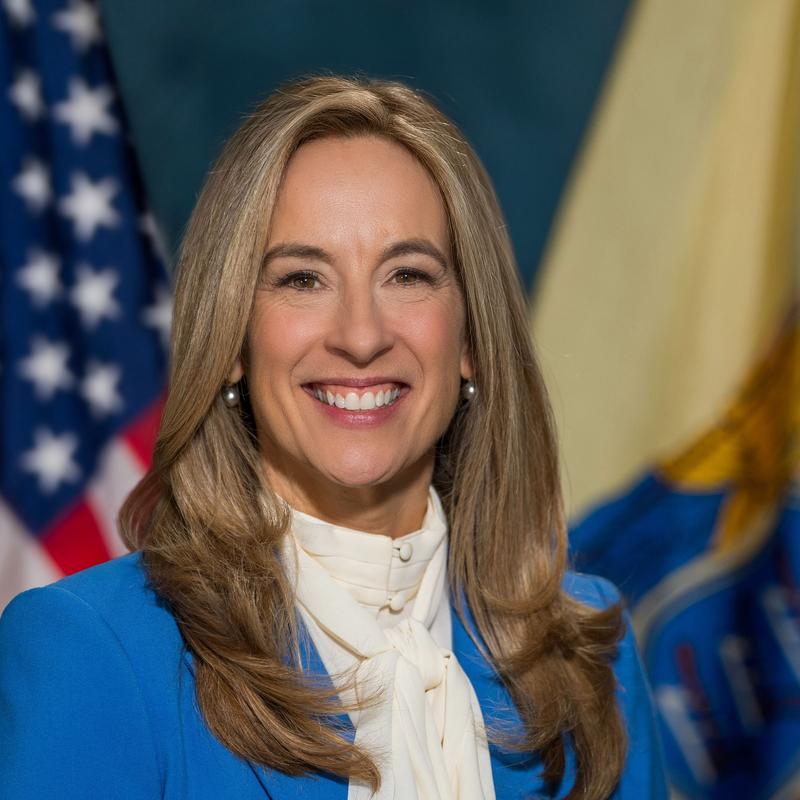
Brian Lehrer: Brian Lehrer on WNYC. New Jersey's new governor Mikie Sherrill is closing in on 100 days in office. Remember that inauguration was January 20th, not New Year's Day. Mayor Mamdani has passed 100 days. Governor Sherrill is not quite there yet. At about day 86 last Wednesday, she sat down with WNYC's Michael Hill for the first installment of Ask Governor Sherrill. To make a point about today, she looked back to her first few minutes in office.
Governor Mikie Sherrill: Not even in my first day. In my first few minutes, I stopped my inaugural address to sign two executive orders to both freeze rate hikes and to cut through some red tape and permitting issues so we could expand generation.
Brian Lehrer: Yes, expand generation. Well, you'll hear she seems to be waving the white flag to President Trump on one aspect of that, which would be adding much wind power. She also answered some big questions about the World Cup logistics nightmare bearing down on the Meadowland. So many people are talking about that $100 one way, $150 round trip ticket on NJ Transit trains from Manhattan to go to the games. We'll talk about that. Also discuss the structurally complicated state budget and a running fight with the White House. With us now after that Ask Governor Sherrill with Michael Hill is a different local. Michael, that's WNYC New Jersey reporter Michael Sol Warren, who listened very closely last week and wrote it up for Gothamist. Hey, Michael. Welcome back to the show.
Michael Sol Warren: Hey, Brian. Thanks for having me.
Brian Lehrer: New Jersey listeners, we want to hear from you. What's on your mind about Governor Sherrill's first 100 days? Is she delivering on what she promised on utility costs, property taxes, other aspects of affordability? What about the World Cup coming to the Meadowlands this summer with its various moving parts? 212-433-WNYC, 212-433-9692.
You can call, you can text as we take your New-Jersey-related questions for WNYC and Gothamist New Jersey reporter Michael Sol Warren. Again, that's 212-433-WNYC, 433-9692. Call or text. Let's start with the World Cup and the possibility of a $100 one-way train ticket to get from Manhattan Penn Station to MetLife Stadium. $150 round trip. The governor says she wants FIFA itself to pay for transit costs. Listen.
Governor Mikie Sherrill: FIFA intends to make about $11 billion on this. They need to defray this cost. We've already reached out to them saying, "Look, this is going to cost about $50 million to move people. Other than raising the ticket price to get on the train ticket, which I will, if that's what it takes, because I'm not putting it on the back of New Jerseyans, the best possible outcome would really be for FIFA to take on this cost.
Brian Lehrer: Michael, I'm confused. Where does this stand? Is she announcing this $100, $150 ticket price, or is she lobbying the FIFA organization to cover it?
Michael Sol Warren: At the time of the show, she was a little bit of both. The ticket prices were officially unveiled by NJ Transit at the end of the week on Friday. Now that's the plan. Those high prices are the plan. We still have a little less than two months before the first game kicks off. I guess theoretically, if FIFA wanted to kick in more money, those prices could change, but the tickets at those prices will go on sale to World Cup ticket holders on May 13th. That's where we're at.
Brian Lehrer: Have you reported on the reaction around the state and for that matter, New York? This is a price for a ticket from Penn Station in Manhattan, not from Penn Station in Newark. Do you have reaction from either side of the river?
Michael Sol Warren: [chuckles] I haven't specifically reported on it, but I live in this world and I've seen the reaction to it all over social media and in various statements from various politicians. I think people are astonished by the number. I think that everybody understands that, look, this is the price that people going specifically to World Cup games with World Cup tickets are going to pay. This isn't like if you're trying to get from Newark to New York. You're going to get some crazy charge like this. You will have other issues in your commute on game days, and we can talk about that in a little bit.
I think generally people are sympathetic to the desire to prevent the local taxpayer from fronting the cost for this massive sporting event. I think there are people who feel bad for the visitors who are already spending God knows how much money to travel all the way over here and go to these games, the tickets themselves costing in the thousands of dollars for many of them. I think everybody is just astonished by how expensive this whole endeavor has gotten.
Brian Lehrer: Of course, there's a lot of working class local people, including immigrants from all over the world and their descendants, who are bigger soccer fans than they are baseball fans or American football fans, that kind of thing, who would love the opportunity to go see a World Cup match, but are being priced out both with respect to the tickets and with respect now to some of the train travel? It's not just tourists, I think it's important to say.
There's a larger issue here. I'd really like to do a separate segment on it sometime, because if FIFA is putting this either on the taxpayers or on the game goers, it begs the issue that the governor was trying to raise in the clip. Where is the organization's responsibility to suck up some of the costs that its event is putting pressure on the public sector to provide services for? I wonder about businesses generally. What about Wall Street businesses? What about other big businesses?
When all kinds of public services get developed to serve those companies, to serve the workers in those companies, who's really paying for it? Is it the taxpayers generally paying for things that very well off corporations are benefiting from? There's a larger conversation to be had there. Maybe we'll take that on as a separate another day. Michael, is anybody talking about hacks to get around this? I could think of hacks to get around this. You take a little NJ Transit bus ride from Port Authority to someplace in New Jersey for a few bucks, and then you ride from there to the Meadowlands instead of getting on at Penn Station.
Michael Sol Warren: I think it depends on how creative you want to be. There's a couple things to consider here. One, along with the direct train rides from Penn Station to the Meadowlands, NJ Transit has also going to be running the shuttle bus service where people can pay $80 to either take from Port Authority to the stadium or from the Hackensack School of Medicine in Clifton. That's done.
Brian Lehrer: By bus. Is that one way $80 or round trip?
Michael Sol Warren: My understanding is that that is round trip. That's not exactly cheap if you look at how those comparable routes would be on a normal day. That's still far more expensive. There is the rideshare option. Your hypothetical there would end up with having to take a Lyft or an Uber or a taxi from whatever point in New Jersey you ended up at and coming to the stadium, but then that brings us to the inevitable surge pricing on these apps that I'm sure will be there.
Also, what we had previously spoken about, Brian, with that proposal to raise taxes and fees in the Meadowlands district. If that legislation gets signed into law, then there's going to be additional fees specifically for World Cup trips on these services. It's not like that's going to be a super economical option as an alternative. I think it's going to cost a lot to get to the game. You can't park at the stadium. You could theoretically try to park at one of the limited spaces across the way at American Dream Mall, but that's going to be an expensive parking. [chuckles] I don't know. It is quite the financial hurdle for people who want to come watch these games.
Brian Lehrer: Another hack that came in in a text; listener suggests taking a PATH train to Newark Penn station and then NJ Transit to MetLife from there.
Michael Sol Warren: You can't do that. That's the problem; is the only trains that are going to be running to MetLife originate in and out of Penn Station. It's going to be a very controlled setting. That's why they're closing that part of the New Jersey Transit part of Penn Station and not allowing commuters in there is because on game days, that's going to be the one access point for the trains to and from. For people that are just trying to commute into the city from New Jersey or vice versa on those game days, you're actually going to have to take the PATH to Newark Penn and then get on your regular train from there.
Brian Lehrer: Peter in Huntington, you're on WNYC. Hi, Peter.
Peter: Hi, Brian. Thanks for taking my call. Two quick points or questions. One, how is it that the politicians in New Jersey just figured this out six weeks before the event; that there's going to be ridiculous pricing needed to cover this, and secondly, the enhanced revenues from having this event going into the state coffers, how is it that that can't cover these ridiculous increases? Why does this come down to the incompetency of the local government there to handle this in this time?
Brian Lehrer: Good questions, Peter. Michael, do we have good answers?
Michael Sol Warren: I don't know if they're good answers, but we have answers. Michael Hill, our colleague, asked the governor about this on Wednesday, and her response was in part that it was a change in her approach from her predecessor, Phil Murphy. Whereas when the games were first awarded to New Jersey, it was open ended on how the state would take on these costs.
Governor Sherrill said that she's made it a priority to go in and, when she's talking about World Cup things, to make it clear to everybody that the state of New Jersey is not a piggy bank. We never got a response from Phil on that, so I'm not sure if he would take umbrage to the characterization that maybe he was allowing the state to be taken advantage of. The current governor, Governor Sherrill, has said, look, in the less than 100 days she's been in office, she's been trying to change the philosophical approach on how this thing is being paid for.
Brian Lehrer: To Peter's point about here we are six weeks, only six weeks before the games, and only now politicians are figuring out what the cost should be, it raises that larger structural issue of all these localities and all these countries compete to get the World Cup, compete to get the Olympics on the premise that there's going to be so much economic activity that the people of the local areas are going to generally benefit businesses, but also the tax coffers because there's sales taxes on things like that.
These games, Olympics, World Cup, other big events are assumed in many cases to be net economic pluses, but then you get close to it like this, and they say, "Oh, my God, the security costs that we're going to incur. We have to charge this much just to cover our costs. I don't know if you've looked at this, but is it even a net plus or is it a net minus for the local economy.
Michael Sol Warren: That, I will leave to the economists in the months after to determine. You're right, they are huge costs, not just for transit, but security is one that comes up often. That's a major cost, too, that the state is having to try to find ways to pay for. I think it's complicated when we think about the revenue coming from this because it's dispersed. It's not like every dollar that's made is going directly back to the State of New Jersey general fund. Some of it is going to local municipalities, some of it was just going right to private businesses who are serving the tourists.
Then, of course, FIFA is making their money off of ticket sales and whatever sold at the stadium. I think that's Governor Sherrill's point, the one that she keeps trying to re-emphasize, is that FIFA says that they specifically think they're going to make $11 billion from this event. Why can't they spare some to help with this $48 million transportation issue in New Jersey?
Brian Lehrer: One more on this, then we're going to go to utility costs and other issues that came up with Michael Hill and Governor Sherrill last week. Mike in Trenton, you're on WNYC. Hi, Mike.
Mike: Oh, hey Brian. Thanks. Great segment. I would encourage you to do a separate segment to dig deeper on this. To Peter's point, I didn't catch all of his call. It's unbelievable that we're having this discussion now. A couple of things. One, the cost should be pretty well known. Look, if I were to rent a local school to just run a soccer clinic, I'd have to pay for the school custodian and a security officer up front. FIFA just absolutely be contributing to that to a significant degree if not paying that entire cost, but certainly a significant amount. Let's hear more about what that breakdown is.
The other point is on New Jersey Transit. What's the justification for the $150? Wouldn't it be the case if lots and lots of people were using the train that at their normal rates, even a slight surcharge for the World Cup, it should be a profitable opportunity when you're at capacity and running a lot of people? Those are my two points.
Brian Lehrer: Thanks, Mike. They're saying security is the main reason in answer to that part of his question, right?
Michael Sol Warren: For specifically the $48 million that NJ Transit estimates is going to cost for these eight games, the security is a significant part of that. I think that that's $11 million in itself. To the caller's point about why can't you just spread this out among more people, they're limiting train ticket sales to 40,000 per game. Obviously, if the stadium sold out, that's not everybody.
I think that one of the reason for capping the train tickets is they want to avoid some of the overcrowding issues that we had seen in past events, major events at MetLife Stadium. Not necessarily in recent years. There have been some high profile problems of getting everybody in and out by train of that stadium. They are really trying to cap the burden on the train itself.
As far as the $150 figure, Kris Kolluri, the CEO of NJ Transit, took this up specifically and he said that's what the cost to New Jersey is. This was a point of contention between FIFA and the state. FIFA noted that in the original award for the games, public transit was supposed to be free. [chuckles] Imagine that. The NJ Transit says that that agreement was later amended to say public transit would be provided at cost to the state. The CEO of NJ Transit is saying this is what the cost is, $150 round trip per rider.
Brian Lehrer: By the way, just as a little footnote to what they're charging and how much it usually costs to take trains to New Jersey, I happened to go from Manhattan to Red Bank and back last week. Round trip was $17. Round trip. I have booked a ticket on Amtrak to go to Trenton for a trip I'm going to take this summer. $21 one way from Manhattan to Trenton, and that's on Amtrak, not even NJ Transit. That's how cheap it is normally. Let's get back to utility costs, something that affects a lot more people in New Jersey than the cost of going to World Cup game. Here's a short clip of Governor Sherrill getting at that issue.
Governor Mikie Sherrill: They had risen by about 20% last year and in fact were set to rise by about another 20% this year.
Brian Lehrer: Hence the executive order freezing rate hikes that she issued right during her inaugural address. The governor also said she's gotten six solar and battery storage projects online already in her first two months. Michael, is all that as significant as it sounds and is it too early to ask have New Jerseyans seen any relief on the utility bills?
Michael Sol Warren: [laughs] A couple points there. I think that that's up to the customer. I still go on social media, on Reddit or Twitter or whatever, and see people every single day complaining about what their electric bill is and how it compared to a year ago. People are still very much feeling the rate increases from last summer. 20% is no joke. People are still trying to adjust to that.
This coming summer utility prices are basically going to stay flat. Electric prices, I should say. That's in part due to price caps that were put in at the regional grid level. The grid operator, PJM, runs supply auctions every year to determine where the electricity is coming from and how much utilities are going to pay for it.
In prior years, as these increases, as the cost of supply had grown more and more, governors like Josh Shapiro in Pennsylvania and Phil Murphy here in New Jersey and others had worked with PJM to implement these price caps on the auctions. The price caps held this year, and people should see the benefit of that in that we're not going to see a spike this summer.
Brian Lehrer: Ed in Hamilton Heights has a utility cost question. Ed, you're on WNYC. Hello?
Ed: Thanks, Brian. You make a great point that utility costs affect a great many more people than World Cup tickets, but it's something that most people know virtually nothing about. One of the elements of executive order number 2 was an examination of the utility business model in New Jersey, which is something that we're actually doing in a variety of other states.
Traditionally, utilities have been compensated through regulations that enable them to earn a guaranteed rate of return on the capital investments that they make. Governor Sherrill has tasked the board of Public Utilities with considering alternatives to that in the context of recent trends affecting electricity affordability. Just wanted to make people aware, if they are interested, that the Board of Public Utilities is going to be having an in person and virtual workshop on this May 7th at 9:00 AM and people can register for that to listen in and/or comment.
Brian Lehrer: Thank you very much. What could happen at a meeting like that, Michael, if you know, in terms of an impact on public policy?
Michael Sol Warren: I'm glad the caller brought it up because that meeting was just scheduled last week, I believe is when we got the notice about it. What will happen at that specific meeting is that testimony will be taken. Members of the public and industry groups, stakeholders, will all stand up and speak and say their piece about how they think utilities business models should change, if they should change at all, and maybe see what lessons could be learned from other states and other grids.
In terms of actual outcomes and actions from that meeting, there won't be any yet. This is like a information gathering session that the board of public utility and their staff are going to use as they craft this kind of report and plan on how they might change regulations in the future.
Brian Lehrer: Interestingly, the governor on the show gave what sounded like a quiet eulogy for offshore wind, saying Trump's moratorium on leases has, "Effectively ended," she said, "offshore wind development for now in New Jersey." That must be incredibly frustrating to her as she tries to bring down utility costs. It even relates to what we talked about in our earlier segment about Trump and inflation. If he's blocking the development of supply, we know what supply and demand, what central role that plays in the price of things, including energy.
In place of offshore wind, Sherrill is pushing solar, upgraded natural gas, and nuclear. She signed legislation, I see, lifting the state's 40 year nuclear moratorium. How far away is actual new nuclear power in New Jersey, Michael, and is this a real energy policy or more of a political signal?
Michael Sol Warren: Governor Sherrill and lots of similarly-minded people would love for it to be a real thing. The law she signed basically allows new nuclear facilities to be built in New Jersey's coastal zone, which is where all the nuclear facilities currently are. You could think of maybe projects to expand or improve existing reactors or build new ones. At this point, it puts it on to the utility companies and the nuclear companies to craft their proposals and their projects and then bring them to the state for consideration.
Governor Sherrill is like, "Look, New Jersey is better positioned than most states to move forward with nuclear." We have existing, pretty well trained, and sizable workforce in the nuclear industry. We already have the three reactors active in Salem County. There was Oyster Creek in Ocean County that's currently going through decommissioning, but the company that owns it, Holtec, has said that they'd be interested in building new, more modern types of reactors at that site. Some of the approvals that would need to be in place already exist for those facilities.
What Governor Sherrill has also said, though, and what could be a hang up here, is that she would really like the Trump administration to be more active in creating a national plan for nuclear development. She says that right now it's obviously and will remain expensive, very expensive to do this, but if we can get a national push going, she argues there's a sort of economy of scale that could play in where every state that's trying to develop more nuclear energy could benefit if the supply pipeline and everything that feeds into building these things is operating at a larger scale.
Brian Lehrer: Of course, big picture nationally, nuclear energy has become more of an ambiguous area for environmentalists than it used to be. They used to be very anti-nuclear because of the radiation risks from potential accidents and from burial and other storage. Now, because nuclear is green in the climate sense, it's more on the good list. Environmentalists, to some degree, are conflicted now about nuclear energy. Before we end the segment, if we're talking New Jersey Governor, we have to talk property taxes, which came up repeatedly from callers. One caller, Stephen in East Brunswick, summed it up like this.
Stephen: The major issue that I face is property taxes. New Jersey has the highest property tax of all the states. My property tax is now higher than my mortgage. I don't know how we're going to retire.
Brian Lehrer: The governor talked about consolidating school services. This always comes up because they're like almost 600 municipalities, more than 600 school districts in the little state of New Jersey, and they could save a lot of money on property taxes hypothetically by consolidating so there aren't 600 superintendents to be paid and everything else. Then again, municipalities, local towns, and everything don't want to give up their local control. Do any of those mentioned in the clip actually move the needle on property taxes in the near term?
Michael Sol Warren: [chuckles] That is the million-dollar question. There is legislation that is being considered in Trenton that would require consolidations to some degree. I don't think there's been much action on it yet. I'd have to double check. More recently, though, there's been conversation around the school aid formula, which is supposed to be a form of property tax relief because if the state is providing more money for your school district to operate, then that's less money theoretically you need to put up.
There are many districts around the state that feel they're shortchanged by the formula and face increasingly difficult budget decisions every year because they're not getting what they think they deserve from the state. They're basically saying because we're not getting this money, we're either faced with having to spike local taxes to cover our gap or lay off teachers and staff or close schools entirely. Between school district consolidation and the potential or the demand to reform how state aid is addressed, I think those are the two main ways that people are hoping to get at school spending and property taxes in New Jersey.
Brian Lehrer: By the way, back to FIFA and NJ Transit fares for just one second, a few people texted to correct that. The standard one-way fare from Manhattan Penn Station to Red Bank, one-way fair, is $17, not round trip. The last text I'm going to read goes back to that issue too. Listener writes, "What about workers cost to go to work, the World Cup game? Are they going to get charged $100 one way too."
Michael Sol Warren: Honestly, great question. I'm not sure I have an answer to that one, Brian. Thank you to the caller for giving me something to think about.
Brian Lehrer: A follow up assignment for our New Jersey reporter, Michael Sol Warren. Thanks for coming on and breaking down Ask Governor Murphy. I did it again. I'm living in the past. Ask Governor Sherrill from last week. Thanks, Michael.
Michael Sol Warren: Thank you, Brian.
Copyright © 2026 New York Public Radio. All rights reserved. Visit our website terms of use at www.wnyc.org for further information.
New York Public Radio transcripts are created on a rush deadline, often by contractors. This text may not be in its final form and may be updated or revised in the future. Accuracy and availability may vary. The authoritative record of New York Public Radio’s programming is the audio record.
