
Advice for Finding Your Life's Work
[music]
Brian Lehrer: Brian Lehrer on WNYC. We have New York Times investigative reporter Jodi Kantor with us now. Jodi Kantor broke the Harvey Weinstein story, some of you may remember, with her colleague, Megan Twohey, back in 2017, which gave maybe the most fuel of anything ever to the MeToo movement. She and Twohey later wrote the book, She Said, about that investigation, but her new book is far from an exposé. It's a "slim little statement of faith," she says, "for young people, people starting out in the work world."
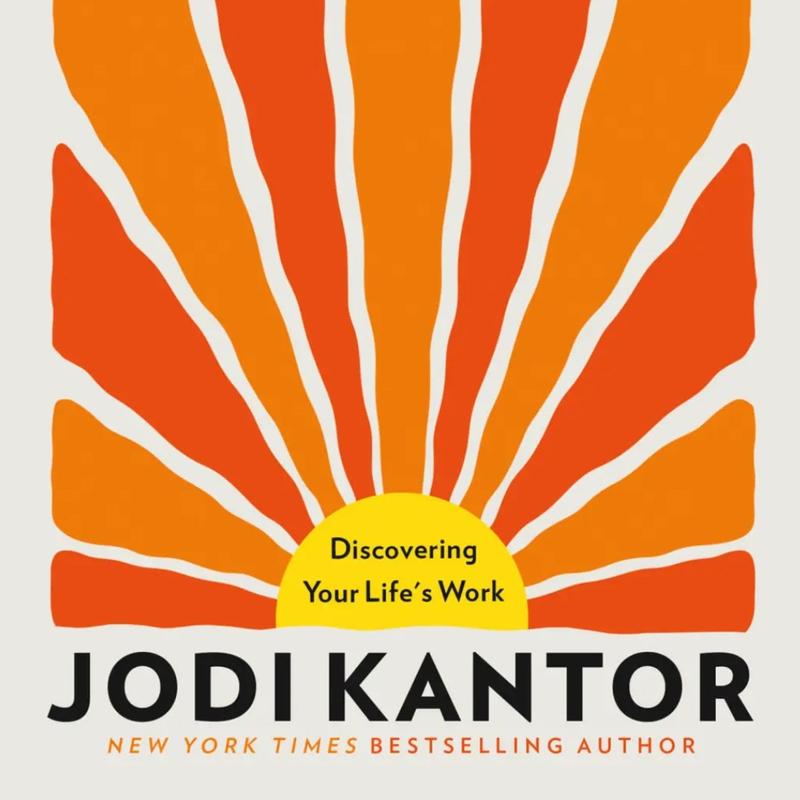
Specifically, it's called How to Start: Discovering Your Life's Work, and it's out now. She writes, "This life stage has never been easy. This era is making it harder. We need to bring you all the help we can." Now, this actually stems from Jodi Kantor being invited to deliver a commencement address at Columbia University. She found herself stuck on some of the questions that many graduates were silently asking, like, "How is anyone supposed to figure out what to do with their life in this economy, in this generation, in this moment in the world?"
The result, based on the speech that she wrote for those new graduates, is this new book, so we'll talk about that, of course. We'll also talk about one of her big stories right now. Jodi broke the story of the Supreme Court's so-called "shadow docket," the cases they take based on the justices' own agendas, not just the cases that come to them, up the usual appeals process chain. Jodi Kantor, always great to have you on. Welcome back to WNYC.
Jodi Kantor: It's amazing to be back with you, Brian.
Brian Lehrer: Tell us more of the origin story of this book. When was that Columbia commencement speech? Tell us more of why that was a challenge for you.
Jodi Kantor: This is a real New York story. About a year ago, I got an email from Columbia, inviting me to give the undergraduate commencement speech. Obviously, a huge honor, but also, Brian, kind of a bad offer because you remember what was going on at Columbia at the time. It was just rancor and chaos and unhappiness. My friends, like my Columbia friends, were like, "Don't do it."
They were like, "Call in sick." Like, "This is a bad idea. You're going to get booed." Something in me was like, "Give me those kids for 15 minutes." I suspect a lot of your listeners felt the same way. It was just so upsetting to see the depths to which this campus was descending. I said, "Okay, great. I'm honored. I'll do it, but I need to spend some time with students first, because this is, obviously, a room I need to read very carefully before I speak."
I get on a Zoom with the students, and they ask me an incredible question. Brian, you and I both love questions, hard questions. Who cares about the easy questions right now, right? There's no point. They say to me, "Jodi, how, in this crazy environment, are we supposed to start and find our life's work?" The question just totally grips me because I've covered employment my whole career.
The Harvey Weinstein story was an employment story, among other things. I've seen the digitization of the workplace, which is now culminating in this AI moment. I saw their crazy circumstances. These were graduating seniors who had jobs in Columbia labs for the next year. Everything was set, and then the labs are dismantled, and there's no job. They're just experiencing tremendous anxiety about the workforce.
I knew they weren't alone, because ever since Megan and I broke the Weinstein story in 2017, we had been invited to a ton of college campuses to talk about journalism, but those turned into conversations about work. I saw this rising feeling of cynicism and fear about the workplace. It was generational. I saw it at elite schools like Columbia and Stanford. I saw it at much more humble schools. There was a common set of fears. We're really seeing it climax this graduation season.
Fear that you're not going to be able to get a job. Fear that even if you get a job, you're not going to be able to afford a decent place to live, either to rent or to buy. Fear that the workplace is a dystopian, exploitative place. I felt like I could really work with this material. I had some answers. A commencement speech is a challenge to write in these times, Brian, because you can't be pessimistic. If you tell them that everything is bad and that nothing's going to work out, you have seriously failed the assignment.
Brian Lehrer: Yes, you can't do that. You can't do that.
Jodi Kantor: I felt like I had this really rich, juicy challenge, which is like, "What do you say, given what's going on, that can actually be encouraging?" After I gave the speech, it's on YouTube if you're curious. I could not stop writing. I had a lot more to say. It's not about putting some positive spin on what's going on now. It's about saying, "Okay, we know all the bad employment news. We're very familiar with that." The interesting question here is, what is a powerful and productive response to this look like? What is a young person actually supposed to do facing this employment market?
Brian Lehrer: At the core of the guidance you provide in this book, I think it's accurate to say, are two concepts: craft and need. Craft and need. Those are pretty standard and traditional, so how do they fit into the current environment you were just describing?
Jodi Kantor: What I would say is that they're time-tested. That's a really good thing because we don't know what the workplace is going to look like in 5 or 10 years. I don't trust the prognosticators who are making big claims right now. I think it's going to take time to shake out. We need to go with what's going to be really durable. Actually, I think that each of those concepts is a little countercultural right now.
Because by craft, I'm saying, "What is the special expertise or skill that's going to distinguish you from other people and make you valuable?" A craft is something that accumulates over time, right? It doesn't look good on social media. It requires real investment over the years. Brian, look at your craft of hosting. They show. It's the culmination of a lifetime of being on the radio.
What's so important about craft now is that the job market is cruel. We know that. Any employee can be fired at any time, but your craft is yours. It's yours to keep forever. It's going to mitigate the sense of being disposable or replaceable. Okay, so craft is authority, right? Craft makes you special. Need is propulsion. We think of need as being an altruistic term, but it can apply to business as well. Need is fuel. Need is forward motion.
The reason I wanted to articulate the concept of need is that I was so sick of seeing these fashions and trends over the thing you're supposed to study. I've seen it over the course of my whole life. When I was in high school, this was-- I'm dating myself. This was back in the '80s. Brian, we were all told that we had to learn Japanese because the Japanese were going to take over the world economy. If you didn't speak Japanese, you were going to be a loser. You were going to be left behind.
Meanwhile, we know what happened to the Japanese stock market, which is that it slumped for 30 years. Then after that, it was learn genetics. Then after that, it was learn Mandarin. After that, it was computer science. These are each great areas of pursuit. There's nothing wrong with them, but are they golden tickets? Are they a sure path to success? Absolutely not. Herd conventional wisdom rarely is. My challenge on need is to say to young people, "What is your own independent assessment of what society is going to need from you over the course of your working years?"
Part of the reason I'm liking need right now as a way of thinking is that the terrible message that this moment is sending to young people and all the bad news about what AI is doing to entry-level work, people who are graduating, people who are looking for jobs, are getting this message from the discourse that says you're not needed. That's a terrible message, Brian. It is damaging. It is false. We need the talents and energies of young people. Workplaces need to be refreshed by young talent, or they die. I would challenge young people as a way of getting through this moment to think about, "What could you do that will make you needed?"
Brian Lehrer: Listeners, anybody have an answer to that? Any college seniors listening right now, or people who got out just in the last few years? What are you thinking as you listen to Jodi Kantor from The New York Times, who's now the author of How to Start: Discovering Your Life's Work? We don't have much time left in the segment, but we have some. If anybody wants to call in and react or ask Jodi Kantor a question, 212-433-WNYC, 212-433-9692. You can call, or you can text.
While we're seeing if we get any calls or texts for you on what you were just saying, Jodi, I do want to make sure we touch on your Supreme Court article. You and your colleague, Adam Liptak, published confidential memos between Supreme Court justices from back in 2016 that you and Adam say show how, "The justices stumbled into a new way of conducting their work in major cases on presidential power, short-circuiting longstanding procedures meant to ensure careful consideration and reasoned opinions," quoting from your article. What did they do?
Jodi Kantor: Okay, so thank you so much for giving me a chance to explain this. The New York Times published 16 pages of confidential memos by the justices this past weekend. As you say, these are their internal discussions. We're not supposed to see these for generations, but we obtained them, and we published them because they show something very important. They show the origins of the shadow docket.
The way the Supreme Court usually makes decisions is very careful, very deliberate. It takes a lot of time. There are oral arguments. The justices get together in person to discuss the cases and vote. They do many drafts of opinions. They're listening. They're listening to oral arguments. They're reading briefs before they make the decision. The shadow docket, or the emergency docket as it's known, is something different. It's really risen in the last 10 years. It's really swelled during that time.
Emergency docket decisions are very rushed and very secretive compared to regular ones. They move really fast. They don't contain the normal time-tested steps in the judicial process. Often, the reasoning is secret. A lot of these decisions contain legal boilerplate and instructions, but no explanation, no rationale, and they're just like a paragraph long, some of these orders.
Now, that's very surprising because judges get their authority from writing opinions, right? Essentially, the only form of accountability we have for federal judges and Supreme Court justices is that they explain themselves most of the time in writing. The question Adam and I started with was, well, how did they start doing business this way? This seems contrary to how a court is supposed to operate, especially the Supreme Court. What were they thinking essentially?
Brian Lehrer: Did they just have a political agenda, in your opinion?
Jodi Kantor: We're able to go back and get the memos that answer that question.
Brian Lehrer: Because this is Earth Day, I have to get this part of your article in here. You noted that even as they debated the Obama climate plan's possible burden on the power industry, in the entire chain of correspondence obtained by The Times, not a single justice, conservative or liberal, mentioned the dangers of a warming planet as one of the possible harms the court should consider. Wow. What does that tell you?
Jodi Kantor: The kind of justice who emerges most strongly from the memos is Chief Justice John Roberts. He pushed really hard for the court to stop the Obama plan, even though, at the time, it was an unprecedented thing for the court to do. When his colleagues raised procedural concerns, he was very dismissive. Then, to your point about climate stuff, he was very concerned with what he called irreparable harm to the coal industry and to states for whom this was going to be expensive, and he said cumbersome. Neither he nor any of the justices mentioned the harm of a warming planet. Also, given everything that happened afterwards, this very rushed, five-day-long process essentially becomes the beginning of the end of the federal effort to regulate greenhouse gases.
Brian Lehrer: Of course, a purist would say it's not the Supreme Court's job to navigate the science of global warming and decide what proper policy should be. It's their job to interpret the Constitution, and those policies are up to lawmakers.
Jodi Kantor: Let's be fair to the conservative justices, because President Obama was using a risky strategy. He couldn't get anything through Congress. He had failed. It was the end of his presidency. He was trying to use a regulation to transform the power industry. He was relying on a pretty obscure provision of the Clean Air Act. There was absolutely a real legal question about whether this Obama plan was lawful or not. The real question here is why the court decided this in such a rushed and secretive fashion, because the Obama plan wasn't even going to go into effect for years. Why do this in a five-day sprint in which you're not explaining anything to the public?
Brian Lehrer: Here's a question relevant to your book from a listener, and then we're out of time. Listener writes, "As someone who graduated college almost four years ago, I am so grateful for Jodi's words. The message truly has been that we are unwanted, and that if one can't quickly summarize their talents into something that's easily digested by an ATS, then those skills are worthless. I'm currently looking for a job, and it's been a slog to put in genuine effort for applications and to usually hear back nothing." In 30 seconds or so, what do you say to that listener who's been out of college four years?
Jodi Kantor: Oh, man, I'm glad you called. I feel you. I am so sorry. It's been so hard. You are making a point that everybody needs to hear, which is that applying for a job has changed. It has become digital, Brian, and it has become lonely. People like our caller are being interviewed by AI some of the time, and not even by real people. I'm hearing of students who are putting a lot of efforts into job applications and not even getting rejection letters. The hiring market is soft, as you know, but there's another problem, which is that this is a demoralizing, degrading landscape in which to apply for a job.
Brian Lehrer: 10 seconds.
Jodi Kantor: What I would say is that we need to respond with a lot of human support and networking for these job seekers.
Brian Lehrer: Can't do it alone in the era of isolation. Jodi Kantor, New York Times investigative reporter. Her new book, out now, is How to Start: Discovering Your Life's Work. If you're up in Connecticut and you want to see Jodi in person, tonight, seven o'clock at RJ Julia Booksellers in Madison, Connecticut, and tomorrow night at seven o'clock at the New Canaan Public Library. Couple of events. Jodi, thanks for sharing all your reporting and your writing with us.
Jodi Kantor: Oh, it's so great to be with you. Thank you.
Copyright © 2026 New York Public Radio. All rights reserved. Visit our website terms of use at www.wnyc.org for further information.
New York Public Radio transcripts are created on a rush deadline, often by contractors. This text may not be in its final form and may be updated or revised in the future. Accuracy and availability may vary. The authoritative record of New York Public Radio’s programming is the audio record.