
Thursday Morning Politics: The Widening War in Iran
[music]
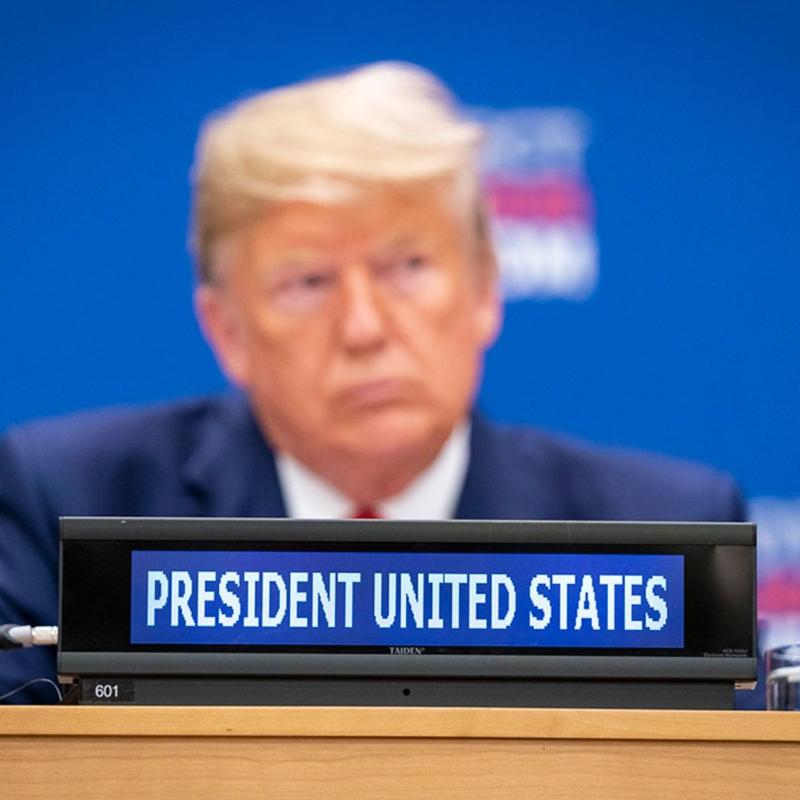
Brian Lehrer: It's the Brian Lehrer show on WNYC. Good morning, everyone. The Iran war continues to widen, not narrow. What's narrowing appears to be the Strait of Hormuz and the options for trying to reopen it. There's apparently an important new division too, between the US and Israel over how much more to widen the war. Israel attacked a big Iranian gas field. You've probably heard this by now. President Trump responded by saying he didn't know about it. Iran responded by attacking another part of that gas field that's in Qatar. Trump is telling both of them, not just Iran, to cut it out.
World energy prices have jumped again this morning in response to these Israeli and Iranian attacks. If you aren't confused enough about the reasons the US went to war with Iran in the first place, I'm going to play an exchange. We have the luxury of time on this show, as I've said before. This is going to be more than a 10-second sound bite. I'm going to play an exchange at a Senate hearing yesterday with Trump's Director of National Intelligence, Tulsi Gabbard. Remember, Trump and Gabbard's hand-picked Director of Counterterrorism, Joe Kent, had just resigned in protest of the war the day before yesterday, saying the claim that Iran posed an imminent threat was false.
In this exchange, Democratic Senator Jon Ossoff of Georgia questions Gabbard about her previous findings. Compared to the imminent threat justification for the war, this runs a minute and a half.
Senator Jon Ossoff: That opening statement, as submitted to the committee in advance of this hearing, stated that as a result of last summer's airstrikes, "Iran's nuclear enrichment program was obliterated." Correct?
Tulsi Gabbard: That's right.
Senator Jon Ossoff: Is that in fact the assessment of the intelligence community?
Tulsi Gabbard: Yes.
Senator Jon Ossoff: The assessment of the intelligence community is that Iran's nuclear enrichment program was obliterated by last summer's airstrikes.
Tulsi Gabbard: Yes.
Senator Jon Ossoff: In the opening statement you submitted to the committee last night also stated, "There has been no effort since then to try to rebuild their enrichment capability." Correct?
Tulsi Gabbard: That's right.
Senator Jon Ossoff: That's the assessment of the intelligence community?
Tulsi Gabbard: Yes.
Senator Jon Ossoff: The White House stated on March 1st of this year that this war was launched and was, "A military campaign to eliminate the imminent nuclear threat posed by the Iranian regime." That's a statement from the White House. "The imminent nuclear threat posed by the Iranian regime." Was it the assessment of the intelligence community that there was an imminent nuclear threat posed by the Iranian regime?
Tulsi Gabbard: The intelligence community assessed that Iran maintained the intention to rebuild and to continue to grow their nuclear enrichment capability.
Senator Jon Ossoff: Was it the assessment of the intelligence community that there was a "imminent nuclear threat posed by the Iranian regime?" Yes or no?
Tulsi Gabbard: Senator, the only person who can determine what is and is not an imminent threat is the president, and he made that determination.
Senator Jon Ossoff: False. This is the worldwide threats hearing where you present to Congress national intelligence, timely, objective, and independent of political considerations.
Brian Lehrer: Senator Jon Ossoff of Georgia, questioning Director of National Intelligence Tulsi Gabbard. With us now, John Heilemann, chief political columnist at Puck News and host of the podcast Impolitic with John Heilemann that they produce. He's also a senior national affairs analyst for MS NOW. John, thanks for coming on. Welcome back to WNYC.
John Heilemann: Hey, Brian, how are you doing? It's been too long.
Brian Lehrer: Been doing all right. Thanks very much for coming on. It's good to hear your voice.
John Heilemann: Yes, man.
Brian Lehrer: I want to start, actually, with this long social media post by the president after the oil field attacks. This is no 140-character tweet. Listeners, listen to some of this. Trump wrote, "Israel, out of anger for what has taken place in the Middle East, has violently lashed out at a major facility known as South Pars Gas field in Iran. A relatively small section of the hole has been hit. The United States knew nothing about this particular attack, and the country of Qatar was in no way, shape, or form involved with it, nor did it have any idea that it was going to happen. Unfortunately, Iran did not know this or any of the pertinent facts pertaining to the South Pars attack and unjustifiably and unfairly attacked a portion of Qatar's LNG gas facility."
Trump goes on. "No more attacks will be made by Israel pertaining to this extremely important and valuable South Pars field unless Iran unwisely decides to attack a very innocent, in this case, Qatar." Trump writes. Last thing, "If such an Iranian attack takes place, the US, with or without the help or consent of Israel, will massively blow up the entirety of the South Pars gas field at an amount of strength and power that Iran has never seen or witnessed before." All in one social media post from President Trump.
John, that's a multi-layered thing. "We didn't know about it. Iran didn't know that the attack didn't come from Qatar." Also threatening more attacks on the gas field if Iran continues to strike the part of it that's in Qatar. What do you make of this development and the president's public post regarding it?
John Heilemann: Boy, Brian, that's a very layered question with a lot of answers. First, that is the sound or the words of a president who is flailing in the face of an increasingly grim and dire reality on the ground in the theater of operations here in Iran, number one. Number two, there's contemporaneous reporting about this that suggests that it is just false that the United States was not told by Israel about the attack that Israel launched there, and that what President Trump just said there is just made up. He's known to do that, as I know you know, he sometimes is not the most completely reliable narrator in the world.
Number three, the most interesting thing in that post is the notion that Donald Trump, at least in that post, is telling Israel what to do. That has not been the story of this war, quite the contrary. When you talked a little bit before about Joe Kent, you raised his name. In the long interview that Joe Kent did yesterday with Tucker Carlson, one of the things that he said was that he, like Marco Rubio and the president and the speaker of the House basically says that the timing, and the inception of this war was driven not by American strategic aims or interests, but was driven by Israel's strategic interests and aims.
He suggested on that podcast, he said, "Look, the president could have just said no, we're not going to do this. Even though you're-- Not only no, are we not going to start this war, but Israel, you're not going to launch the attack that would precipitate the Iranian counterattack that is the ostensible justification for starting the war." One of the most important undercurrents here has been this notion, and you can play this across the spectrum of how you want to characterize this as Bibi Netanyahu driving the bus here is, "Is this Bibi's war?"
People have made the-- You can do this on a relatively modest scale or on a relatively extreme scale. There's no question that hearing Trump in public say to Israel, "Israel, you will not do the following thing." That is new. It does recognize some of the dynamics that many people across the ideological spectrum, from the far left to the far right and in between, are concerned about here, which is that the United States was driven, pressured into this war, and that its aims are not the same as Israel's aims. Even though the United States is obviously an important ally, they're important allies of Israel.
That our war aims and our tolerance for the duration of the war and the pain that can be inflicted are very, very different. That if that is dawning now on President Trump or at least that he's willing to act on it, that is probably the first step towards trying to figure out a diplomatic or negotiated solution to get out of this war for the United States. That's probably the first step, but it's going to take a lot more than that.
Brian Lehrer: You gave a good multilayered answer to what you call my multi-layered question. Let me back up--
John Heilemann: On a multi-layered tweet by Donald Trump.
Brian Lehrer: Exactly.
Speaker 2: It's a complicated situation we got on our hands here.
Brian Lehrer: Yes. Let me back up and dig into a couple of pieces of that and try to go deeper with you. You noted that Israel claims the US did know that strike on the oil field was coming, and it was coordinated with the US. I was going to ask you, can you tell who's lying, the US or Israel? It sounds like you've landed already on the US is lying.
John Heilemann: Donald Trump is just empirically speaking, not in a partisan way. I'll just say, he's literally the biggest liar in the history of the Oval Office. He lies almost as easily as he breathes, Brian. Let me just [unintelligible 00:09:43], he says things that are untrue all the time. I think in this case, the reality has been that this entire operation, and again, this is one of these complicated words, the word coordinated, could mask a multitude of realities.
The problem has not been that Israel has not been clear with the United States about what it is going to do. One of the things that Israel understands is that surprising the United States, doing things that it has not communicated to the administration, would not be in its best interest. What they have done all along is conveyed and telegraphed and coordinated, if you want to call it coordinated, but communicated what their intent was in the region, and then has put pressure on the administration to act accordingly or act in concert with it.
It would be a very surprising thing given how essential the United States is militarily in terms of military aid, in terms of all the things that are the core components of the American-Israeli alliance, it would be a very strange thing if Bibi Netanyahu all of a sudden decided, "Hey, this is a good moment to surprise Donald Trump." That makes very little sense. I don't see, other than--
There's no one in the administration right now who's on the record or I believe on background that I've seen-- I can't read everything and it's still early in the morning, but I haven't seen anybody other than Donald Trump at a high level in the administration suggesting that what Donald Trump has said is true, and that everyone is acting shocked and horrified by what Israel has done. The only person who's out there saying that he's surprised by it is Donald Trump. Usually, when Donald Trump is an outlier, it is usually the case that he is also not totally telling the truth.
Brian Lehrer: If he did sign off on that attack, why is he distancing himself from it?
John Heilemann: I think, as in so many instances in this war, I don't think Donald Trump understands-- he's not a great three moves down the chessboard thinker. Brian, I think we've seen that over and over again in this conflict. Everything that Iran has done since this war began were things that war planners, strategists, historians, and others who have looked at what is the precedence for America's engagement in the Middle East. All of them have said that almost everything Iran has done has been wholly predictable at the highest level.
Trump continues to insist publicly that all of these things are a surprise to him. He had no idea that Iran could close the Strait of Hormuz. He seems befuddled by every countermeasure that Iran has implemented. I can't begin to explain that. I do think there are people around him who have been, in fact, up to and including the chairman of the Joint Chiefs, General Caine, who were very clear with him before he launched this war and said Iran is going to close the Strait of Hormuz. Trump told people, according to a bunch of reporting, he basically said he didn't believe it and that he thought that Iran would capitulate and surrender before it got that far. They would be so devastated by American military might that they would bend to his will very quickly.
I think that he is constantly being surprised by things he shouldn't be surprised by. I think when he saw this happen, what happened as soon as that attack happened and the counterattack happened, I think he looked at the spike in global energy prices, which have happened overnight in a very dramatic way. We're at 125 a barrel for crude right now, which is-- we thought a hundred when we went across that line and had big implications for the stock market. We should have shot up to 125 basically overnight from below a hundred. I think Trump is doing what he often does, which is reacting rather than being proactive and reacting in particular to the markets and knowing what it was going to be like on Wall Street today, where we're likely to face a very, very, very grim day.
Brian Lehrer: Where were his military minds? If you're saying, and it seems plausible that Trump himself is not a chess player at the level of thinking three, four steps ahead, and something as complicated as a war with Iran. He underestimated what would happen in this war. If we accept that as a premise, where were his advisors, whether it's Hegseth or anybody else, to say, "No, look, if you want to do this, we'll do it, but understand what you're getting yourself into?"
John Heilemann: I know you mentioned Hegseth only because he's Secretary of Defense, but not exactly clause of it himself in terms of strategic thinking, Brian. I think the military people around Trump, if there's a dynamic that I can discern from my reporting and from others reporting, there are his civilian-appointed advisors who, by and large, tell him what he wants to hear. The President is-- let's start with the highest level generality. Donald Trump is more isolated and more deeply embedded in his bubble than he has ever been. That's true throughout this whole second term. He was pretty deeply in his bubble in the first term, but he's very deeply in his own bubble right now.
He has people around him like Stephen Miller and other people who are very influential, even on issues that they're not supposed to be influential on. They tell him what he wants to hear. They don't tell him a lot of contrary facts or contrary analyses or forecasts about what's going to happen. Then you have the military leadership, and I think the military leadership is much more inclined, almost entirely inclined to tell Donald Trump what the reality on the ground is. The question is, why does Donald Trump not believe them?
Why is it, if the case that the chairman of the Joint Chiefs of Staff, if General Caine, said to him, "You know, the Strait of Hormuz is going to be closed if we launch this war," Trump turns around and says, "You're just wrong, General, because you don't understand these people. We're going to bomb them back to the Stone Age, and then they're going to submit." You can present the president with-- Say, if you're a general, you can present him with the reality. The question is then, how do you make him actually believe it and act on it?
Brian Lehrer: Whether it's been public bluster in the past and nothing more, or whether he really believes that. He's got a long history of saying, "I know more than the generals." Right? "I know more than the nuclear arms negotiators about nuclear arms negotiations."
John Heilemann: [crosstalk] As he often says, "I don't need to rely on it." I'll just say quickly, there was this moment earlier in the week when he said this thing about Keir Starmer at a news conference. He said, "I talked to Keir Starmer. I asked the UK Prime Minister if he would send minesweepers." He said of the UK Prime Minister. He said, "Will you send minesweepers? We need your minesweepers in to reopen the Strait of Hormuz." Keir Starmer said, "Let me consult with my team." Trump-- Now, I'm still just paraphrasing Trump. He said, "Why do you need to talk to your team? You don't need to talk to your team. I don't talk to my team. I just make decisions." That's Trump's way, and it's right out there on the table. He talks about it all the time.
Brian Lehrer: Funny. Not funny. Staying on this gas field attack. I realize you're a political analyst, John, and my guest is John Heilemann from Puck News and MS NOW. You're a political analyst, not a military analyst. Do you have anything on why Israel would attack this big gas field with or without US involvement? I thought all sides were holding off on destroying actual energy supplies or facilities so Iran and the region could maintain an energy economy after the war, which is in everybody's interest.
Lindsey Graham, maybe the biggest backer of the war in Congress, has publicly called on Israel and the US not to hit Iran's oil refineries for exactly that reason. We talked about that on the show the other day. Israel went after this gas field anyway. Do you have anything on why?
John Heilemann: I don't have anything in the sense of hard reporting, Brian, about this, but I will say that the-- it's a dark thing I'm about to say, but the consensus view of Bibi Netanyahu's behavior-- When I say consensus, I mean it's not everybody, it's not universal, but there's a pretty broad range of consensus on the analysis of what Bibi Netanyahu has been doing over the course of the past couple years, certainly in the wake of October 7th, and all the way till today, which is for reasons that are genuinely driven by his professed and I'm sure sincere views about what it requires to maintain the existence and the security of Israel, but also driven by his political objectives. He wants war never to end.
That what was happening in Bibi Netanyahu's life before October 7th was, he was going to be-- I'm sure you've talked about this a lot on the show, but he was facing a corruption trial. He was facing losing his political power. That ever since then, he has been-- among his objectives has been to maintain his position as a wartime president and that his incentives-- Again, I'm not doubting that he really believes that being a hawk is in Israel's best interest strategically as a state that is perpetually under siege and has been under siege for its entire existence, and that Iran certainly has sworn to destroy since for at least the last 40 years. I think that's sincere.
I also think he's not interested in bringing this to an end. He's interested in prolonging the fighting, and in-- This is what I meant before when I said that the America's interests, Europe's interests, other interests are not the same as Israel's interests, certainly not the same as Bibi Netanyahu's interest, but also, really not strictly speaking, entirely the same as Israel's. I think that he is pursuing a strategy that is much more aggressive and much more scorched earth, and does not have an endgame.
His attitude is unlike here in America where we at least profess the notion that we only want to pursue military strategies where there is an endgame, some identifiable endgame, or endgames. That the Israeli Prime Minister does not have that same point of view and would rather be engaged in an aggressive offensive war with Iran that keeps Iran weak and destabilized for as long as possible. That is in his interests, again, to say politically, and also I think in terms of what he thinks what's right for the country.
Brian Lehrer: In terms of political interest, I think that's another difference between the US and Israel. From what I've read, we see the war becoming increasingly unpopular in this country as it goes on. From what I've read about the polling in Israel, Netanyahu never loses the support of a large majority of the Israeli people over the wars that he's been involved with, no matter what happens in Gaza and how controversial it is outside of Israel, and again, in this case. There's a public opinion difference that's probably worth mentioning because the politics of the two leaders, Trump and Netanyahu, are so different. Right?
John Heilemann: 100%. Look, this is where one has enormous sympathy and empathy with the Israeli electorate. We are not every day facing an existential threat. For anybody who has lived in Israel for any period of time, they recognize that in the region that their greatest existential threat, the country with the greatest capacity to harm them, and the most consistent intent to destroy the state of Israel, is Iran. Israel has a variety of enemies, but Iran has always been seen as the most dangerous one.
Israelis generally are very, on a daily basis, aware of the fact that the existence of their state is in jeopardy, genuine jeopardy. After October 7th, the extent to which the appetite for and tolerance of and acceptance of highly aggressive military campaigns on a variety of fronts against a variety of adversaries is almost-- it's not infinite, but it's very, very, very, very large. That the sense of existential dread that they are possessed by, again, across the ideological spectrum, it's unquestionably the case.
Bibi Netanyahu, as much as you and I would, and I think many, many people around the world, obviously, think that he's gone too far in Gaza. That is not the view in Israel. He's more popular today than he was-- He's been consistently popular throughout the entire engagement since October 7th. He's way more popular after all of this than he was before October 7th. There's no question about that. People are like, "There may be things we don't like about Bibi, but he's the only one who is willing to fight hard enough to make sure that we continue to survive."
Brian Lehrer: One more thing about Netanyahu and Trump before we move on to some other aspects. The Joe Kent resignation as counterintelligence chief was notable for two things. His dissent over whether Iran posed an imminent threat to the United States. Also, what's been widely seen as crossing the line into anti-Semitism for some of the ways in which he characterized Israel. "We started this war due to pressure from Israel and its powerful American lobby," like Israel has the power to just pull everybody's strings, or the war against ISIS in which his wife died in Syria was "a war manufactured by Israel," manufactured, as if the US didn't have reasons of its own to be fighting ISIS.
He called lies about threats, "The same tactic the Israelis used to draw us into the disastrous Iraq war." Again, as if they were solely responsible for pulling George W. Bush's strings, too. Kent had these past connections to overt antisemites who we could go down the list and name, but we won't do that again.
John Heilemann: I'd say past and present connections for sure.
Brian Lehrer: Fair. He should be called out on those things. He was, by us and others.
John Heilemann: He should be.
Brian Lehrer: That was yesterday's story. Here's a different take from someone less suspect in that way. Democratic Senator Chris Van Hollen. This clip is only three seconds, but it's from the website Zateo. Van Hollen says Israel was trying for 40 years to find an American president who would start a big war with Iran.
Senator Chris Van Hollen: In Donald Trump, he finally found somebody stupid enough and reckless enough to actually do it.
Brian Lehrer: That's Senator Van Hollen. What's your take, John, on Israel's role in getting Trump into the war, since this is newly elevated in the public conversation again, and whether they have had the same goals in the first place, but particularly Israel's role in getting Trump into the war?
John Heilemann: Let me say a couple of things here first, Brian. Joe Kent is a nut. If you were to want to subject yourself to something that I subjected myself to live in real time yesterday, if you listen to his interview, his exclusive interview with Tucker Carlson, another person who more than dabbles in anti-Semitism these days, you would have heard him not only say the things you just said, but towards the end of that long two and a half hour long interview, you would have heard him talk about to insinuate that Israel had something to do with the attempt on Donald Trump's life in Butler, Pennsylvania and the assassination of Charlie Kirk. The level of conspiracy peddling-
Brian Lehrer: Wow, I didn't hear that.
John Heilemann: -and anti-Semitic tropery that he doesn't go out and he didn't-- I want to be clear. He did not directly accuse, but he kept saying there were questions that have been raised. He did what all conspiracy theorists did. He said we at the National Counterterrorism center have been stopped by shadowy forces, basically, the deep state at the FBI and the DOJ, who have stopped us from investigating both of those assassination attempts on Trump and Charlie Kirk's assassination.
He insinuated, as did Tucker for quite a long time towards the end of that interview, that-- basically, just raising questions here. There's some strange things going on here. The reasons that Charlie Kirk was killed, according to Joe Kent, or at least again insinuated, is that Charlie Kirk was urging Donald Trump not to attack Iran. Again, if you want to listen to it, you can listen to it. I'm just trying to say the man is a proven conspiracy theorist. He has peddled conspiracies, not just anti-Semitic ones, but conspiracy theories across the board.
On January 6th, he continues to maintain the intelligence agencies had something to do with it. It was a operation basically engineered by the deep state. He is a conspiracy theory nut. He's also a hero who've served, I think, 11 tours of duty and has performed incredible acts of bravery for the United States. This is one of these things that tests our ability to understand that the world is not built on false binaries. You're not either a nut or a patriot. You could be a nut and a patriot.
The other place where-- That, if you were to listen to the first part of that interview, you would hear someone who, on the question of what motivated this war, sounds highly rational, and not some of the language that you just pointed to is inflammatory. He almost certainly goes too far in suggesting that somehow Israel has Donald Trump on a string. He's asked a question that Tulsi Gabbard basically, in her completely terrified way, in that Senate hearing yesterday, answers the same way.
Tucker asked Joe Kent whether Iran was close to obtaining a nuclear weapon, as Donald Trump has said over and over and over and over again over the course of the last three weeks. He said-- I'm quoting now, "No, they weren't." Three weeks ago, when this started, they weren't. They weren't in June either. The Iranians have had a religious ruling, a fatwa, against actually developing nuclear weapons since 2004. That's been in place since 2004. That's available in the public sphere. Then we also had no intelligence to indicate that the fatwa was being disobeyed or that it was on the cusp of being lifted.
He goes on-- this is the guy who was Donald Trump's top counterterrorism official, who's had access to and been privy to the highest levels of classified data and information in the US Government, who basically said that all of the pretexts for the war in terms of the imminence of a threat and in terms of the nuclear threat have all been dramatically exaggerated by Donald Trump. He says this without really ever attacking Donald Trump. He says, "Donald Trump is a great president who's done a lot of great things. Let me tell you that the justification for the war is BS," and to the point of the real point here, he points out Marco Rubio told us how the war happened.
The Secretary of State came out and said we were not really facing an imminent threat. We knew that Israel was going to attack. He said these words, he said, "Israel was going to attack. We knew that if Israel attacked, Iran would have a counterattack. We decided we had to get in in a preemptive way to the war. That's why the war started." You've now had Donald Trump and the speaker of the House basically affirm that version of events.
Do they say Israel is driving the car and we are merely the co-pilots? They do not say it that way. That account, which Marco Rubio said almost at the war's inception in public, on camera, is really uncontested. They have all tried to run away from it, but it's not really been seriously contested by anyone. Sorry.
Brian Lehrer: We played that clip of Rubio on yesterday's show. I guess we could pull it and play it again, but that is a more rational description of, okay, there were these military circumstances on the ground. Israel was going to go to war with Iran in any case, so what do we do? Even in that scenario, why did the US feel that it needed to get involved to the extent that we have, if you know the answer, rather than let Israel and Iran go at it, without us?
John Heilemann: I would say that's not really so much the option, Brian, in the sense that you would, of course, if you worried that Iran was going to strike American assets throughout the region, you would maybe feel as though just letting Israel go ahead wasn't a great idea. Here's the thing that Joe Kent says, and that again, many people across the spectrum ideologically have said, which is not a conspiracy theory or conspiracy theory-oriented thought.
There's another option, which would have been to say-- for Donald Trump to say to Bibi Netanyahu, "No, you're not going to attack Iran in the way that you're suggesting. You are the client here. The United States is the umbrella of your security. We give you an enormous amount of money. We're happy to provide defense for you because you are an important, important ally for us. We do not want you to attack Iran right now because we do not want to be sucked into this war. We are in the driver's seat here, and you are not." That's an alternative way to have thought about this.
A thought about how to go forward. That was a thing that Joe Kent put forward in the interview yesterday with Tucker Carlson. It's what Chris Van Hollen was suggesting there a second ago. I'll just say one last thing. There is one other person who basically shares what you could call the Kent/Van Holland view, depending on how you want to characterize their different kinds of language. One of them is a conspiracy theory, and the other is not.
Brian Lehrer: A strange accent. Go ahead.
John Heilemann: The person who basically stands up the Van Hollen point of view is Bibi Netanyahu, who has repeatedly said publicly over the-- "I've been trying to get a US president to attack Iran for the last 40 years." Bibi Netanyahu is on the record saying that that has been one of his objectives and one of his great frustrations. Every American president of both parties has heard from Bibi Netanyahu over the last 40 years, wanting them to do what Donald Trump has now done. All of them resisted and said no. The reason why they said no was precisely what's happening right now.
As you know, we've had a fairly large appetite for Middle East adventurism, whether that's been in Iraq, in Afghanistan, in Libya. Why is it that the United States, given how dangerous Iran genuinely is, why have they not done this before? The reason they've not done it before, and I'm saying here, from Barack Obama and Joe Biden to George W. Bush and George Herbert Walker Bush, we haven't attacked Iran because all of the things that are now happening were perfectly foreseeable. United States president said no to Bibi Netanyahu, and Donald Trump did not.
Brian Lehrer: One last thing on this, and then I do want to get to some other aspects. Again, my guest is John Heilemann, senior political analyst with MS NOW and chief political correspondent for Puck News, or some title very close to that, because I don't have it in front of me anymore. Tulsi Gabbard. She's interesting in part because, as director of National Intelligence, the reason she left the Democratic Party and became a Trump supporter and now Trump official, had a lot to do with her America First position against getting into more Middle East wars.
Joe Kent was her hire. He reported to her. Do you have any reporting on Gabbard disagreeing with this war policy, or do you see any possibility that Gabbard might follow Kent out the door and protest? That would really be a rupture in the administration because she is so much more well-known than Joe Kent.
John Heilemann: I have no knowledge or reporting that suggests that Tulsi Gabbard's about to walk out the door. I do know that it is the case that-- what Joe Kent did when he decided to resign was the first thing he did on Monday was to have a meeting with Tulsi Gabbard and JD Vance, another person who was in the no more endless wars camp, a pretty strong America first/isolationist. Those were his two staunchest allies-- Joe Kent's staunchest allies inside the White House. He went and saw them first and showed them the letter he was going to write, and gave them a preview of it.
I think that those two individuals are both-- meaning Tulsi Gabbard and JD Vance. You can see how uncomfortable they are unlike Pete Hegseth, for example, who goes to the far other extreme of over-claiming the degree to which we have decimated and destroyed the Iranian military capacity which this week has been proven to be a ludicrous assertion given they've launched more missiles in the course of this last week, in the third week of the war than they did in the second week of the war. Apparently, they're not down to zero in terms of their ability to still wage at least guerrilla war in the region.
There are the Marco Rubios of the world and the Pete Hegseths of the world who are on one side of the MAGA universe. Then there are the JD Vances and the Tulsi Gabbards who are not out in public making loud cases for what the president's doing. They're also not about to walk out the door. I think we could speculate about why that is. Maybe, Brian, heaven forbid that we think that maybe their sense of that they enjoy the proximity to power, they enjoy the status that they have, that they enjoy those things, that those things matter more to them.
In JD Vance's case, the possibility of becoming the Republican nominee and the next president of the United States. Those things matter to them more than whatever convictions or principles they professed before they went into the administration. Now find themselves in a situation that, having listened to Donald Trump for 10 years say this is not the thing that he would never do, they now find themselves in this very awkward situation.
You could see it with Tulsi Gabbard yesterday, when they pinned her down, when Senator Ossoff pinned her down, he got her to say that the intelligence community's official assessment is that after Operation Midnight Hammer last year, the attacks on Iran, that the nuclear capacity of Iran was decimated. Is that still the assessment? The answer is yes. He says, "Do you have any evidence whatsoever that they had restarted their nuclear program? They posed--" When he said imminent threat, it allowed Tulsi Gabbard to say, "Only the president decides what is an imminent threat?"
He asked her whether the intelligence community had any evidence to suggest that they had restarted their nuclear, had unobliterated their nuclear program. She said no. She's trying to figure out a way, and you will have noted, probably, Brian, that the funniest thing in that entire hearing was that all of that information, the stuff that contradicted what Trump has been saying about Iran's nuclear program, all of it was toward the end of her written testimony. When she did the oral version in front of the Senate, she stopped short and didn't read that part out loud.
It was up to Mark Warner, the Intelligence Committee's ranking Democrat, to say to her, "I noticed that you didn't actually do an oral version of your sworn testimony that is perfectly consistent with your written version. You left some stuff out." She said, "I ran out of time, and I wanted to keep things moving." Basically, that is a person who is, "I do not want to lie to Congress, but I also do not want to say anything that will piss Donald Trump off and get me fired."
Brian Lehrer: John Heilemann, coining the word unobliterated, which is maybe one of the reasons why his title is, to get it right this time, chief political columnist at Puck and host of the podcast Impolitic with John Heilemann, and senior national affairs analyst for MS NOW. More with John Heilemann. We're going to get to some of your calls and texts that are coming in right after this.
[music]
Brian Lehrer: Brian Lehrer on WNYC, as we continue with John Heilemann from Puck News and MS NOW for a few more minutes. I want to ask you a question-- I want to read a text from a listener that's a question that keeps coming up, John, and tell me if you think there's a there there. Says, "Is it possible to ask the guest if Trump stands to gain financially?" We've heard various theories about this. I think your MS NOW colleague Rachel Maddow had said at the beginning of the war that, to some degree, the war was Trump paying off a debt that he had to people in some of the Gulf Arab states who've enriched him financially so much during his presidency. The listener's question, "Is it possible to ask the guest if Trump stands to gain financially?" Yes, it's possible to ask. Is it possible to answer?
John Heilemann: It's possible to answer. I'm not going to be able to answer in the way that I imagine the listener wants to hear, which is just to say definitively. The things that I think that we know, Brian, are as follows. One is that Trump is in a way that makes what he did in Trump 1.0 look small time and petty. He has been flouting the Emoluments Clause in a pretty gratuitous way over the course of the last 14 months. It has enriched himself enormously, especially through his various grifts related to crypto. Number one.
Donald Trump is not above trying to profit off his position. Maybe that seems self-evident to a lot of listeners, but it's the case. Secondly, the two negotiators, the lead negotiators with Iran who were supposedly negotiating in good faith over the Iranian nuclear program up until the moment that we decided to launch all-out war against them, are Steve Witkoff and Jared Kushner. They are, according to reporting in the Wall Street Journal, the New York Times, and a bunch of other places, they are two people who have been the main enablers of Donald Trump's efforts to financially enrich himself because of his position as president.
More specifically, Jared Kushner has been spending a huge amount of time over the course of the last 14 months raising capital all over the Middle East and throughout a lot of these Gulf states. I don't know the answer in the sense that this is not my area of specialty, and I'm not an investigative reporter who is looking at this in a very careful way. If you are a rational human who has the capacity for pattern recognition, you would say-- I would not put it past them and pass Donald Trump to be trying to figure out some way to gain financially from this engagement.
Again, pattern recognition is very clear that he's happy to do those kinds of things. The main people involved in this war are at the negotiation, at the diplomatic front, people actually who've been negotiating with the Iranians and interfacing with the Israelis, are those two individuals. The last thing I'll say, and this is a whole kettle of fish that we could get into. Understand that the biggest beneficiary of this war, possibly arguably even more than Israel, is Vladimir Putin and Russia, who are at the moment reveling in the way that the rest of the world is suffering the rise of oil prices due to the Strait of Hormuz being closed off.
The price of oil from the Urals that Russia has on the global market has soared very much to the benefit of Vladimir Putin. There was a period of time, a couple of months ago, when people were saying that Russia was in such dire financial straits that that might be the thing that was the most significant challenge to them continuing to wage war semi-successfully with Ukraine.
The estimates that I've seen are that the increase in the price of oil from the Urals in this current market environment is somewhere between 10 and 15 billion dollars a month of additional profit to the Russian government because of the spike in oil prices, and 10 to 15 billion dollars a month that finances the Ukraine war in perpetuity. As long as the money keeps pouring in like that, Russia is not going to have to leave the battlefield because it's out of dough.
Brian Lehrer: We're getting some listeners calling in with theories about how Netanyahu convinced Trump to get involved in the war. One listener wants to ask if you think Netanyahu said the war would get rid of the Epstein story. Another one is Sherry in Greenwich, who's going to speak for herself. Sherry, you're on WNYC. Hello.
Sherry: Hi. My question-- a great interview, by the way. My question is, given Netanyahu's long-held dream of attacking Iran, do you think that he promised Trump a peace prize, remaking the region, and winning a peace prize? That could have been all the motivation and temptation that Trump needed, given his massive ego. The other point is I recall hearing that the day after the attack on Khamenei, killing him and all the other, I believe it was around 40 people who were killed. Trump, by his own admission, said that his three favorite candidates to take over, to lead the Iranian government, were killed on the first day of bombing. Where does that leave us?
Brian Lehrer: Sherry, thank you. Of course, Netanyahu couldn't promise Trump a peace prize, the way the caller put it, John. Maybe, I don't know, he said, "If you can really replace this horrible regime in Iran that everybody, including the Nobel committee, thinks is a horrible regime in Iran--" remember they gave the Nobel Peace Prize to an Iranian women's rights activist in 2023, that maybe he would strengthen his case for winning it. What do you think about Sherry's call?
John Heilemann: Wow. Let me just say the following, Brian, which is that Donald Trump won a peace prize from FIFA, the International Soccer Federation, they just invented a peace prize for him, the FIFA Peace Prize. I'll say what I have to say about some of those speculative concerns in one second. I will say that Donald Trump wants the Nobel Peace Prize because it's the best peace prize and the biggest peace prize. He's not above or below or whatever it would be accepting peace prizes of lesser provenance, let's put it that way.
I generally try to answer questions that are wholly speculative, where we're like, "Is this possible if the following thing happen? Might Bibi Netanyahu have said the following thing? Might he have said some other thing X, Y, or Z?" My answer to those things is, unless I can say I have some reason to think that that is actually what Bibi Netanyahu said, my answer is I don't know. Those questions from the audience are reasonable theories and speculations that are-- I'm not being dismissive when I say this, we're all trying to answer these questions and trying to come up with theories for what might have been said and what might have been promised.
Is a totally natural human impulse, but no reporting that I have either done or seen that suggests either any of those particular speculations have any basis in reality. That doesn't mean they don't, just means I can't confirm them.
Brian Lehrer: Fair enough. We're in our last three minutes and I want to get one thing about midterms politics in here because it was primary day in Illinois on Tuesday, as you know, and even this comes back to Israel and the war because the Israel lobby, AIPAC, had some wins and some losses in Illinois, but at least one notable loss in the way they tried to defeat a Jewish Democrat. Right?
John Heilemann: Yes. While also, most notably, they backed the losing candidate in the Senate primary. They backed five candidates. Two of the five won. They regarded a couple of the losses that they had as being partial victories because they were able to, by spending many, many, many millions of dollars on negative ads against candidates they really didn't want to see win. They regarded those as partial victories. I do think-- I mean, the Illinois primary, I have seen a lot of screwy levels of outside money in my political life come into races.
In a primary, a midterm primary, I've never seen as much outside money or as much outside money advertising with the dark money shadow groups and groups that are above board. Not just AIPAC, although AIPAC was very, very, very big in this space. From the crypto guys, from the AI guys, there was so much outside money that came into that race, and by and large, the headlines of it were that AIPAC did not do well by any objective metric in terms of getting done what it wanted to get done.
From a Democratic point of view, the thing you would say is the most heartening is that the turnout was extraordinarily high. It was like the level that you would normally get in a competitive presidential primary in a presidential year, which is unheard of midterm year. Democrats who were looking at the enthusiasm gap, they have to be hardened by that. Most of the farthest left candidates got beat. It's a very mainstream crop that got-- not centrist, but more mainstream progressive group that got nominated. I guess, for a lot of political analysts, they think that means the Democrats didn't shoot themselves in the foot on Tuesday.
Brian Lehrer: Any lessons from that primary for the midterms in November? Did the war seem to help or hurt anyone, for example, in a way that could be seen as a bellwether?
John Heilemann: Look, the Democrat-- As you know, Brian, Illinois is a very blue state, and in the Democratic primary, everyone was against the war, just as everyone's for basically abolishing ICE. There's not a lot of differences on those kinds of issues that were demonstrated out there in this race. The main thing that I-- One of the lessons is that if you had any doubt that J.B. Pritzker was running for president in 2028, his lieutenant governor became the-- she won in the race for the Senate nomination, and he boosted her in a very big way and took a very big victory lap, an almost Gavin Newsom-like victory lap on Tuesday night. He wanted to basically say, "I got my lieutenant governor-- It was the strength of my endorsement that got her this nomination." He's got his eye on the prize, I think.
Brian Lehrer: John Heilemann, chief political columnist at Puck News, host of the podcast Impolitic with John Heilemann, and senior national affairs analyst for MS NOW. John, great to have you on again. Thank you very much for all this today. We will talk again.
John Heilemann: Thanks, Brian.
Brian Lehrer: Brian Lehrer on WNYC. Much more to come.
Copyright © 2026 New York Public Radio. All rights reserved. Visit our website terms of use at www.wnyc.org for further information.
New York Public Radio transcripts are created on a rush deadline, often by contractors. This text may not be in its final form and may be updated or revised in the future. Accuracy and availability may vary. The authoritative record of New York Public Radio’s programming is the audio record.
