
A Year of Sports Betting
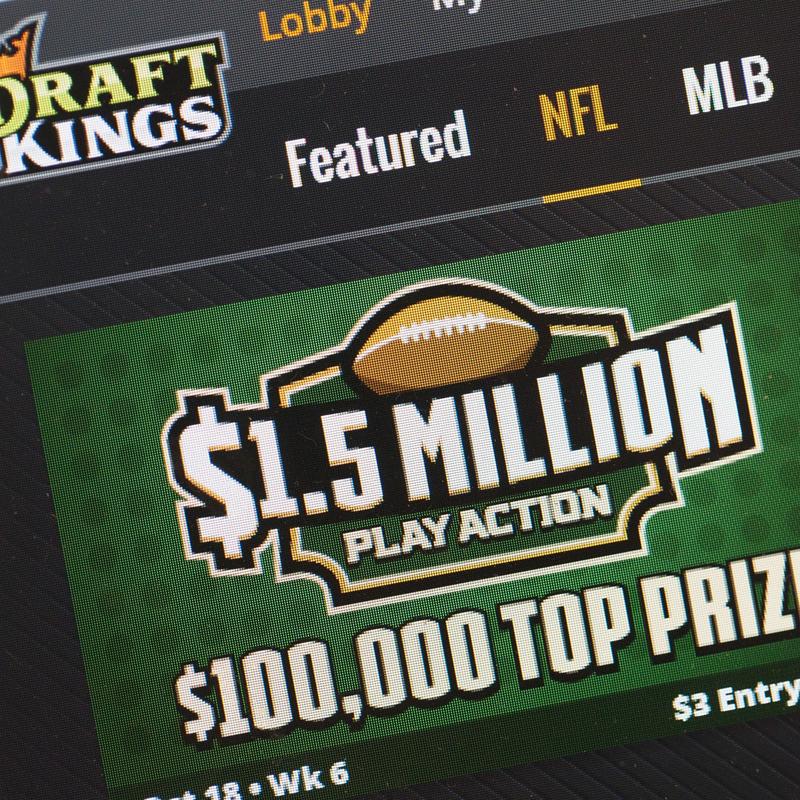
Amina Srna: It's The Brian Lehrer Show on WNYC. I'm producer Amina Srna filling in for Brian today. Good morning again, everyone. Now we'll get an inside look into the world of legalized gambling. Sports betting is legal in 40 states, and, of course, now it's on your phone. Even if you're not participating, you've likely seen an ad like this. Since 2018, Americans have wagered more than half a trillion dollars legally on sports. It's not just sports anymore. Platforms like Polymarket and Kalshi let you bet on elections, the weather, and geopolitical events. When the US and Israel struck Iran in late February, an anonymous trader made more than $553,000 on a prediction market bet about Iran's supreme leader, placed just before the strike that killed him.
By the end of that first day alone, over a billion dollars had been wagered on the conflict. For those of us who haven't dipped into any of this yet, it can feel like a parallel universe, part casino, part Wall Street, part fever dream. One journalist decided to cross over and report back. McKay Coppins is a staff writer at The Atlantic, a practicing Mormon, and someone who had never placed a bet in his life. His editors changed that, staking him $10,000 of the magazine's money to gamble with over an NFL season. The resulting piece is titled Sucker: My Year as a Degenerate Gambler, and he joins us now to discuss. McKay, welcome back to WNYC.
McKay Coppins: Thanks for having me.
Amina Srna: Take us to the start of your assignment. Your editors granted you $10k, as I said, of the magazine's money to gamble with over an NFL season, as a Mormon, you decided to consult your bishop before proceeding. Tell us more about that.
McKay Coppins: I did. It's funny because when my editors first proposed that I try to actually gamble myself to get a better feel for the story, I was the one who said, "Well, that would be entertaining, but I have certain religious constraints." They argued, "Well, this is a spiritual workaround. We'll stake you the money, we'll cover your losses, we'll split any winnings with you, but surely God would be okay with that." I went and met with my bishop and presented the experiment to him, and watched this look of pastoral concern come over his face. He basically said, "I understand you're doing this for journalism. It's not your money."
He did tell me stories that he was aware of people who had let an initially modest gambling habit take over their lives. The last thing he said to me in that meeting was, "Be careful." At the time, I brushed him off. I was like, "This is really just a journalistic stunt for a magazine article. You don't have to worry about me." In retrospect, his counsel was actually, I think, prophetic.
Amina Srna: Tell us about your first night of betting. How did you dip your toes in?
McKay Coppins: I downloaded DraftKings. I deposited $500 put in my debit card information. It was amazing how easy it was. It took me five minutes to suddenly have this whole universe of gambling possibilities in front of me, and I did not know what I was doing at first. I just scrolled through the app and punched in bets at random. I bet on the Eagles and various other Eagles bets. They were playing the Cowboys. What I noticed that was interesting was that immediately, I recognized why so many people do this, why they find it so fun. I'm a sports fan.
I have my teams. The Eagles and Cowboys are not one of them, but I was locked in on this game. I was immediately invested in a way that I never would've been invested in the game because I had a couple of hundred bucks riding on it. I had basically purchased a synthetic rooting interest in a game that I wouldn't have cared about otherwise. To gamblers listening to this, they'll be like, "Yes, obviously. Congratulations, you discovered gambling." That first night opened my eyes to why this is so popular, and it helped that I ended up winning $20 across all my bets.
Immediately after that first night, my wife and I were planning what we were going to do with all our winnings at the end of the season. "Oh, we're going to buy a new KitchenAid mixer, we're going to remodel the kitchen pantry." We had all these big plans because if I won my first night of gambling, of course, I'm going to keep winning.
Amina Srna: Do you want to reflect a little bit more about that? Is that rush of early optimism by design, do you think?
McKay Coppins: It's not like DraftKings could have planned for me to win my first game. If you talk to gamblers, especially people who struggle with gambling addiction, they will say that the worst thing that ever happened to them was winning big early because when you have that first win, it's a thrill. It's hard to explain it, but money fell in your lap for nothing. Of course, that creates this irrational confidence in your mind.
It's central to the gambler's psychology that "Yes, maybe most people lose, but not me. I'm the exception. I'm going to be the one who figures out how to beat the house and gets rich doing this." I should just say up front that you are probably not the exception. 98% of online sports bettors lose money over the long run. 98%.
Amina Srna: Wow.
McKay Coppins: If you find yourself thinking, as I did, "Oh, you're the exception," that's exactly what the sportsbooks want you to think, because that's how the industry thrives.
Amina Srna: Listeners, do we have any bettors tuning in? Have you made a bet on a game, or maybe even an election, or a world event? Maybe you're a recovering bettor with a story to tell. Sports fans out there, how has betting changed the way that you view sports and how much you enjoy them, or maybe it makes you anxious or more tuned in? Help us report this story. What's your experience been like on these legalized betting apps, whether it's for sports or anything else? Call or text us at 212-433-WNYC. That's 212-433-9692.
McKay, your second weekend, you brought Nate Silver in as your gambling guru. What did he tell you that reframed how you understood this industry, and how did your initial conversation with him change your betting strategy?
McKay Coppins: Nate Silver is a famous statistics wonk. He built the website FiveThirtyEight. He was well known for his proprietary data models that forecasted election outcomes. He has since, in recent years, pivoted more to sports betting and gambling. He writes a newsletter about it. He wrote a very good book about it. I wanted him to basically teach me the best practices, if such a thing existed in sports betting. The thing that he told me first was that the way that this industry works, the sportsbooks rake essentially 4.5%.
They charge you 4.5% for every bet that you make, which means that you have to win not just most of your bets to break even. You have to win something around 52%, 53%, 54% of your bets to break even, if you include taxes and all that. To make money gambling on sports, and he actually counts himself among those who has, over the course of his life, made money gambling, it's a game of microscopic edges. You have to pore over the data. You can't just do what's called "vibes betting," where you have hunches, and you make big bets. You have to be disciplined, methodical, incorporate as much data as you can. For a few weeks, actually, really a couple of months, I tried to follow his advice.
I sat down at the beginning of every week. I looked at the slate of NFL games. I pored over the betting lines. I picked six or seven games every week to bet on, and I put around $100 on each game. The thing about that methodical approach is that it does make it less likely that you'll lose a ton of money. Up through about Thanksgiving, I was about even. I think I was up a couple of hundred bucks. The dopamine reward system in your brain starts to pull you toward bigger and riskier bets. The thing about betting $100 on every game and doing six or seven games a week is that, over time, you become desensitized to it.
You want to bet more, and you want to gamble on more games and make bigger bets and take riskier bets like parlays and prop bets, which are how the sportsbooks make more of your money. Even though Nate Silver gave me good advice, I found it pretty difficult over a long stretch of time to follow it.
Amina Srna: In week three of your experiment, there was a moment you write about at a BYU football game with your kids, a genuinely joyful family moment. You had maybe what could be characterized as an intrusive thought breakthrough. What was it, and what did it tell you about where your head was at?
McKay Coppins: Early on, I had decided that I wasn't going to bet on that game. Like I said, gambling creates a synthetic rooting interest where you wouldn't have one in a game. I'm a BYU alum. I'm a BYU fan. I knew that I didn't need money on the game to care about it. Yet, I think it was like an hour before the game. I was at a tailgate party, and I met a BYU administrator, and he said something about, "Oh, the defense is looking amazing. They're locked in." The thought I had was like, "Oh, maybe I'll just put $100 on the game."
I bet right before the game, $100 on BYU to win. That's called a moneyline bet instead of BYU to cover the spread because I think they were favored by three or four points. You make more money if you bet the spread as opposed to the moneyline, but I didn't want to overdo it. Anyway, BYU won. They did beat the spread. As I was in the arena singing the fight song that I had taught to my young kids and basking in this great family moment, this thought occurs to me, "You should have bet the point spread. You should have taken the points. You would've won more money." That was a startling early indicator that gambling was encroaching on my life in a way that I wasn't prepared for.
Amina Srna: Let's take a call. Here's Frank in East Islip, New York. Hi, Frank. You're on WNYC.
Frank: Hi, how are you? It's interesting. With all the gambling out there, you can't really put on any sports at all without watching an ad for gambling. My dad was a very big gambler. He had a gambling problem. Let's just call it what it was, an addiction. The worst thing that ever happened is that he won a few thousand dollars on a World Series a number of years ago, and he thought that was a sign from above that this was his calling. He spent his retirement in a very difficult financial situation because of the constant gambling.
The kicker of the whole thing is that one time, he actually had winning lottery numbers. He had wrote them down. He was going to play them. He never played them. It was a whole long story, but he never got into Jersey to play them. He would've won $5 million on that lottery ticket had he played those numbers. I actually saw the numbers a couple of days prior to the drawing that he just never got in to play, and it destroyed his life. Gambling, I don't get the whole concept of all the ads on television and sports being in bed with these companies, because it is a destructive thing. It's fun, no question about it. I do it once in a while myself, but it's very destructive.
Amina Srna: Frank, thank you so much for your call. McKay, what were you thinking about as you heard from him?
McKay Coppins: First of all, crazy story that he didn't play those numbers. The thing he's describing is, I think, the thing that probably all of us can, whether we put our finger on it or not, we all have this sense that, almost overnight, gambling has permeated the culture in a way that it didn't before. Gambling, of course, isn't new. It's existed forever. People in America have been gambling for a long time. Some of it was done in places like Vegas or Atlantic City. Some of it was done illegally with offshore books or illegal bookies or whatever.
It was always kind of the consensus in America, which by the way is the consensus that every human civilization has arrived at previous to ours, that gambling, while fun, was also dangerous. It was bad for the soul. It was potentially civilizationally ruinous, and that it should be, if tolerated, then stigmatized and regulated. That it should not be a vice that everybody is celebrating, that's constantly being talked about, that has every famous athlete endorsing it, that is being beamed into every TV on every sports game when 10-year-old boys are watching. This is all a relatively new phenomenon. I do think that a lot of people, whether they're gamblers or not, are shocked by how quickly it has come to consume not just American sports, but a lot of American culture.
Amina Srna: Can you explain that a little bit? What changed? I think you point to 2018 in your article.
McKay Coppins: Basically, a few years before that, Chris Christie, governor of New Jersey, signed a law legalizing sports betting in his state. He was trying to help the flagging economy of Atlantic City. Up to that point, there was a federal ban on sports betting, with a few places carved out, like Nevada. The sports leagues sued to stop the implementation of this law, and it wound through the federal court system, eventually arrived at the Supreme Court, which in 2018 overturned the federal ban, opening the door for states to legalize it. Very, very quickly, since 2018, this is less than a decade, about 40 states have legalized online sports betting.
That is how this industry has boomed. That's why it's suddenly on everyone's phones. That's why we're being bombarded every day with these star-studded, neon-soaked ads for gambling. It really is a development in just the past eight years. I think that's why so many people are taken aback by it, because it happened so fast.
Amina Srna: Let's go to another call. Here's Mary on Staten Island. You're on WNYC. Hi, Mary.
Mary: Hi. I have to say that my daughter, she's 35 years old, she was in one of the sites to gamble. I tried to discourage her. She told me all her friends are doing it, so it's very concerning. During my time, you had to go to Atlantic City. Now it's online, and those kids think they are going to win money. That's what I want to say, and it's very awful. A lot of kids are doing it, young adults.
Amina Srna: Mary, thank you so much for your call. McKay, a little forward promote for the next segment, we'll talk about friction maxing. Mary brings up a really good point, which you started to talk about as well, the ease in which it's so much easier just to participate in sports betting because it's right on your phone, right?
McKay Coppins: Right. That is the biggest difference. We can talk about it later. I will also point out, you mentioned kids doing it. There's some pretty alarming data that suggests that the fastest-growing segment of gamblers in America is teenage boys who are not legally permitted to gamble but are figuring out ways to do it. One survey recently found that a third of 11-year-old boys in America have gambled in the past year.
Amina Srna: We have a relevant text to that. A listener writes, "Over Christmas, I tested my nephew in 8th grade to see if he knows how these sites operate by playing dumb. Lo and behold, he was very fluent on operating around the site." Another text, Tom from Manhattan says, "As my eight-year-old grandson watches sports on TV, he can tell you the odds, the spread, that game, and those of all the games that day. He can't escape them." This is called "the first one's free," hooking them early. That's also a part of how games are viewed on television now, too.
I'm going to identify myself as somebody who does not watch sports, but as somebody who has been in rooms where sports have been on television before. You do get the spread. DraftKings, does it sponsor coverage during games?
McKay Coppins: Oh, yes. FanDuel, DraftKings, they have entire branded segments now in the pregame studio panels. Every TV network now seems to employ a guy with rolled-up sleeves and glasses who can tell you all the gambling angles on any given game. That is a big thing that has changed in just the past few years, is that the sports media has basically become beholden to the gambling industry because they take so much money from it. You cannot watch a ESPN broadcast, CBS sports broadcast, or listen to a sports podcast without discovering that they are supported, subsidized, endorsed by one of these big online sportsbooks. That inevitably changes the way that they cover the games.
Amina Srna: In your piece, you write about how, as your losses mounted, you started wondering if the games were being fixed. Was that just paranoia, or is there something real in there?
McKay Coppins: There's a seed of reality here. Actually, just last October, the Justice Department and FBI announced, I think it was 30 arrests of people who were involved in an alleged gambling scheme that involved NBA players manipulating their performance to help gambling outcomes. There have been allegations of pitchers manipulating their pitches for gamblers. UFC fights have been canceled because of suspicious betting activity. There is growing evidence that gambling is corrupting, or at least threatening to corrupt or undermine, the integrity of these games. The thing about that is it might be statistically rare. The truth is, we don't really know. We don't know if these scandals are the tip of the iceberg or if they're one-off flukes.
What I can say for certain is that it has seeded enough doubt and suspicion and conspiratorial thinking that to watch sports in 2026 is basically to become a conspiracy theorist. When something weird happens in a game, when a game doesn't go your way, you inevitably start wondering, "Do the refs have money on this game? Did some coach or player have money on this game? Are they throwing the game for this reason or that?" It's irrational and paranoid in one way, but it's not entirely without merit because we do know that scandals happen and corruption happens.
By the way, this is one reason that the leagues for many decades, until really just a few years ago, had been adamant about keeping sports gambling away from organized sports, because they were worried about this exact outcome. Now we're seeing it play out.
Amina Srna: You write about how gambling made you care more about games. You mentioned that earlier in our interview, but also how it atomized the experience for you a little bit. [chuckles] Aren't sports supposed to be a communal form of entertainment, and how does betting result in that atomization?
McKay Coppins: This was one of the most surprising things I learned from this experience because American sports are really one of the last bastions of American monoculture. We're an incredibly fragmented society. Sports are still a thing that bring people together from all kinds of different backgrounds, races, socioeconomic backgrounds. What's changing with gambling as it continues to permeate sports is that when you are watching a game, you're no longer just rooting for one outcome. This is, I think, an important thing for non-gamblers to understand. It's not as simple as people gambling on the Yankees to win or the Red Sox to win.
You can bet on all these micro-bets within the game itself. You can bet on one player to have two or more hits in the game. You can bet on how many strikeouts a pitcher will have. You can bet on whether each individual pitch will be a ball or a strike. That's how microscopic these bets can get. What it means is that when a game is on, if you're watching at a sports bar or a sportsbook lounge or whatever, everybody who's gambling is gambling on little tailored micro-outcomes within the game as opposed to just watching the game and rooting for or against the teams.
It does ruin the communal experience of it. I will mention I'm a political reporter. It parallels what's happened to politics in a way where the growth of conspiracy theories in politics has, on the one hand, made people care about it a lot more. That's what sports gambling does to sports. It also has divided us, atomized us, and made us understand each other less. I think that that's happening in sports now.
Amina Srna: We started this segment by talking about some of the other prediction markets like Kalshi and Polymarket, which allow users to bet on world events rather than just sports. We have a caller on this. Here's Robert in Scotch Plains. Hi, Robert. You're on WNYC.
Robert: Hi. I am not a gambler, admittedly, but I am a nerd for political data analytics, polling data, stuff like that. One of the sites I usually look at, it's called PredictIt political betting. I'm not totally sure of the legality of it. I don't think it's legal to engage in those markets in the US. Nate Silver, actually the head of the now-defunct polling organization FiveThirtyEight, used to call the people that bet on them "the Scottish teens." Actually, it's a joke, kind of a quip, because people aren't supposed to be doing it here, but people actually do.
I always find it interesting. If I'm looking at elections, sometimes it's more reliable to look at those betting markets than polling data because, based on methodologies or even nonpartisan polls, they tend to sway in certain ways. When people are putting their money on the line, you really get a completely unbiased look at the facts. Not completely, but a lot of times I find it cuts through the noise a lot more than polling organizations that have been trying to develop their methodologies for years and years and years, if that makes sense.
Amina Srna: That's right. Robert, thank you so much for your call. It's a reflection of maybe what people think will happen versus what they want to happen, which might be more reflected in polling data. McKay, what are you thinking? You were agreeing a little bit with the caller there.
McKay Coppins: He is voicing essentially the argument that the prediction markets make, which is if you talk to people who work at Kalshi or Polymarket, what they'll tell you is our prediction models when applied to, for example, elections, we'll just take that as an example, are more reliable than public opinion polling, than political punditry or journalism because the people who are putting money into these markets are incentivized to bet based on what they genuinely believe will happen or happen to know if they have some insider knowledge.
What they say is, "We are moving the online public square away from social media, where there's rage bait and AI slop and trolling and lots of bad-faith discourse, into a more rational market where people are putting their money behind what they believe." What the co-founder of Kalshi says is, "People don't lie when there's money involved." Now I actually think that there's some truth to this. I think there is some social utility to these predictive markets being barometers for future events. Where it gets a little dicey, and where I really worry about this, is that they are incredibly easy to manipulate by insiders.
You mentioned the Iranian missile strike example, and there have been a few of these recently in Iran and Venezuela, where people who have set up anonymous accounts clearly have classified military intel that they are using to make hundreds and hundreds of thousands of dollars. Now that, in and of itself, I think, is gross. I think there's a general concern about turning everything in American life and in geopolitics, war, into a Las Vegas table game where we see it as this abstract moneymaking venture. Even set that aside, think about how easy it would be now for people who actually have their finger on the button, who decide which site in Tehran to strike next or on what day, to manipulate those outcomes with life-and-death stakes to help themselves make money on these predictive markets.
That is the nightmare scenario, that people are going to start bombing places, killing people, affecting very serious, grave geopolitical outcomes to make money on the predictive markets, and there's so little regulatory oversight to stop it. In fact, the predictive markets themselves will even basically say that they welcome insiders to trade based on insider information because it increases the predictive utility of their sites. It's not hard to see this going to some pretty dark places.
Amina Srna: Last question as we wrap up here. We started talking about the NFL season. That's when your assignment began, and it has ended. I've heard it reported, and you went on tilt and lost. I don't want to spoil the article for people because they should definitely read it, but you lost nearly $10,000. Tell us about that and your closing thoughts there about where you think the country is headed. Are you doing okay?
McKay Coppins: Yes. Look, I eventually, as I said, broke with my disciplined, methodical approach that Nate Silver had taught me. I think that was inevitable in a way. I think that every gambler eventually is chasing that high, that thrill of the increasingly risky bet. In my case, I bet everything I had left on the Super Bowl and lost. The morning after the Super Bowl, that was supposed to be the end of my gambling experiment, but I could just tell, looking through the apps, that I was not going to be able to stop. It had become too habitual. I had felt the high of a big win. I had felt the low of a big loss. My brain chemistry was messed up.
That morning, I signed what's called a self-exclusion form in Virginia, which essentially locks me out of online sports betting. The apps now have closed down my accounts. I write this. It's like Odysseus binding himself to the mast to resist the temptation of the sirens. I now cannot bet on sports online, and I haven't. I do worry that my experience in some ways was obviously unique. I was using my employer's money. I was a journalist, but I really worry that we are creating millions of new gambling addicts right now, and we've only begun to reckon with the implications as a society.
Amina Srna: McKay Coppins is a staff writer at The Atlantic, and he's the author of the book Romney: A Reckoning. McKay, thank you so much for your time today.
McKay Coppins: Thank you.
Copyright © 2026 New York Public Radio. All rights reserved. Visit our website terms of use at www.wnyc.org for further information.
New York Public Radio transcripts are created on a rush deadline, often by contractors. This text may not be in its final form and may be updated or revised in the future. Accuracy and availability may vary. The authoritative record of New York Public Radio’s programming is the audio record.