A Year in ICE Detention
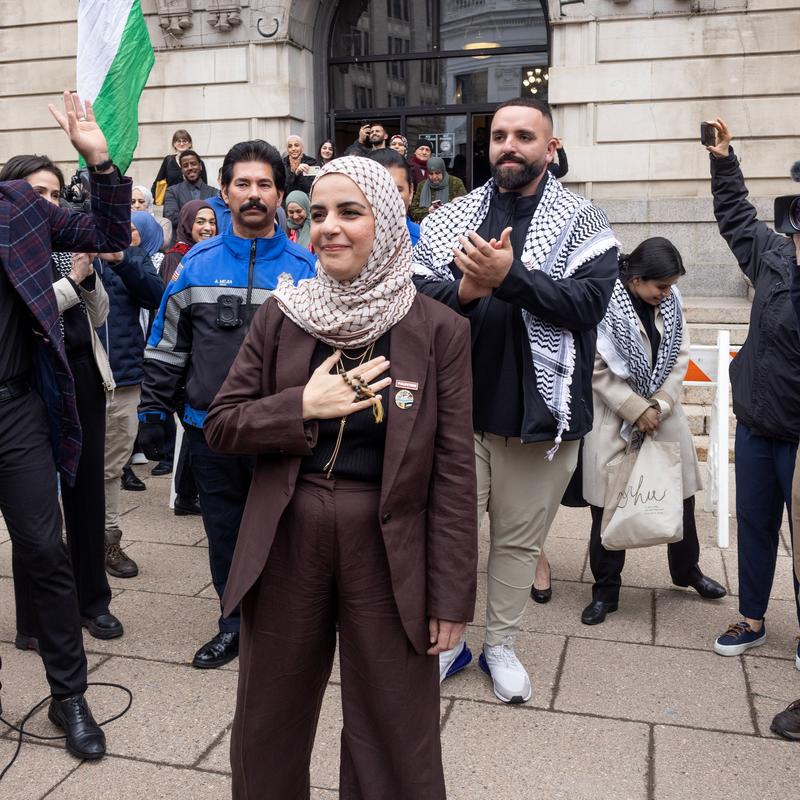
Brian Lehrer: It's The Brian Lehrer Show on WNYC. Good morning again, everyone. With us now, Leqaa Kordia, who was recently freed for more than a year in ICE detention. Originally, from East Jerusalem, then in more recent years from Paterson, New Jersey. Leqaa had become the longest detained person who had been taken into custody for deportation in connection with the pro-Palestinian protest at Columbia University.
She had no criminal record. Her mother is a US citizen. Leqaa was applying for legal permanent resident status on that basis, and she was one of those people who was taken to a detention center in Prairieville, Texas. So far from her home and family in the Northeast. She has a lot to say now about conditions at that detention center, too, in addition to her opinions about why the Trumpet administration wants to deport her, and about the situation in the Middle East. We'll get to all of each, or some of each, I should say.
Judges twice ruled that she should at least be freed on bond, but the Trump administration used technicalities to keep her locked up anyway. An immigration judge ruled there was no evidence to support the government's claim that she was sending money to Hamas. The court found she was sending money to family members, and found no connection to any terrorist organization.
Mayor Zohran Mamdani personally asked President Trump for Leqaa's release when the two men met at the White House last month. Finally, there came a third court ruling that she should be released on bond, while her deportation case continues. This time, the government did not appeal, and so Leqaa Kordia is now back in New Jersey, detained in March of last year, released in March of this.
Leqaa Kordia joins us now along with an attorney who represents her, Sarah Sherman-Stokes, a clinical associate professor at the Boston University School of Law. If we may go by first names, Leqaa and Sarah, welcome to WNYC.
Leqaa Kordia: Hi, Brian. How are you? Thank you for having me.
Sarah Sherman-Stokes: Good morning, Brian. Thank you so much for having us.
Brian Lehrer: Leqaa, would you like to tell us a little bit of your coming to America, and coming to New Jersey story first? I see it was about 10 years ago. Why was that at the time?
Leqaa Kordia: Yes, so I grew up in the West Bank and occupied West Bank, and my mother, she lives in America for almost 30 years or more now. The reason why I came to America, it's to be reunited with my mother at last after more than 20 years almost.
Brian Lehrer: I read that you went to school at a career training program in Bergen County, later left that program, and you were working as a waitress to help support your mother and your brother. Do I have that all right?
Leqaa Kordia: Yes.
Brian Lehrer: Sarah, will you pick up some of the legal story here? I read that Leqaa's student visa had expired, and she was applying for a green card based on her mother's being a US citizen. Do I have that right?
Sarah Sherman-Stokes: Yes, that's correct.
Brian Lehrer: Where was she in that process when she was detained by ice?
Sarah Sherman-Stokes: Yes. Thank you. Thank you again for having us, and thank you for telling Leqaa's-- Helping to amplify Leqaa's story. Leqaa came, as she said, to reunite with her US Citizen mother, and US Citizen family members, as so many immigrants do. That process can take a very long time. A visa petition, a family petition had been filed. Leqaa was waiting for a visa to become current. This process can take years for many families, as it did in Leqaa's case, and in fact, she is still waiting for a visa to become available, so that she can adjust her status, and get a green card through her mother through this lawful process.
Brian Lehrer: I read she was also one of those people seized by ICE when she showed up for a routine immigration proceeding. Do I have it right that ICE picked her up at a scheduled check in in her green card application process?
Sarah Sherman-Stokes: Well, ICE arrested her at the Newark field office, and I want to be clear that ICE targeted her, because of her pro-Palestine advocacy, and because she is Palestinian. They targeted her like they've targeted so many others, Rümeysa Öztürk, Mahmoud Khalil, Mohsen Mahdawi, and most recently several others, including a Muslim leader in Milwaukee. This is a pattern that we've seen from this administration for the last many months.
Brian Lehrer: Right. How is it that they took a 33-year-old woman, who is working to help support her mother and brother in New Jersey, all the way to a detention center in Prairieville, Texas? There's a detention center right here in Newark, for example, if they needed one.
Sarah Sherman-Stokes: This is a concerted effort by the government to separate people from their friends, family, and community members, and send them to distant detention centers, where not only will they have less access to the people who love and support them, but they will also have less access to lawyers, and they will be held in circuits like the Fifth Circuit that are much less favorable to immigrants.
This is by design. It's an effort to deter people from pursuing their meritorious and credible cases. It's designed to wear people down, and push them to give up and withdraw their claims for relief. Leqaa, like many others, is incredibly strong and resilient, and she didn't give up, but that is what the Government is trying to coerce people into doing by sending them to these distant detention centers.
Brian Lehrer: How did you come to represent her?
Sarah Sherman-Stokes: It's important to note that Leqaa is represented by, and has been represented by an incredible team of lawyers that includes folks from Texas Civil Rights Project and CLEAR and Muslim Advocates and Waters Kraus in Texas, and the BU Immigrants Rights Clinic. Leqaa's legal team reached out to me, and asked if I would come on to represent her in her immigration removal proceedings, and I did not hesitate.
Brian Lehrer: Leqaa, do you recall what they told you when you were detained? Did they tell you what their claim against you was regarding your politics, or why they were taking you to Texas?
Leqaa Kordia: No. What they told me is that I have an issue with my application, so basically, it's only about the petition from my mother. They didn't tell me anything else. I was surprised, actually, when I went to my first court, and I heard all these allegations and I was like, "You guys told me it's just an issue with my application." Basically, they were lying to me.
Brian Lehrer: You weren't a student at Columbia, but you went there to join the protests. I understand. Tell us why you joined those protests?
Leqaa Kordia: No, I wasn't a student at Columbia. Well, I'm a Palestinian. That's a first. I lost nearly 200 family members. I was protesting. I took to the street to protest against the ongoing genocide, to call for a free Palestine, to call for my rights, and my people's rights, and my family's rights, to call for a ceasefire to lift the siege on Gaza. At that time, I felt very helpless, and this is a very awful feeling, by the way, that the only choice that I had actually is to take to the street, and call for end of the genocide, and the ceasefire.
Brian Lehrer: People will disagree on whether the word "genocide" applies, but obviously, so many thousands of civilians have been killed in Gaza, no matter what anyone calls it, in Israel's campaign to destroy Hamas, and you were living in the West Bank, which is broadly recognized as an occupied territory, and you just said here, as I know you've said before, that you had so many families, family members killed in Gaza, so my extreme condolences for whatever it's worth for anyone you lost to the war. Do you want to describe any of the circumstances of that, as you understand them, or would you rather not?
Leqaa Kordia: I'd rather not. If you don't mind, please.
Brian Lehrer: Sure, but you've said you will now also advocate for what you called the ladies I left behind, meaning, in ICE detention in Texas. Does that advocate for their release, or advocate for better conditions in the prison or both?
Leqaa Kordia: It's both, but it's actually advocate more for the release, because I believe that we shouldn't have ICE detentions in the first place. It should be illegal. People shouldn't be held for months, or years just simply because they pursued the American Dream, just because they dreamt of a better future for them and their families. Because I took to the streets in 2024, and before 2024 too, to advocate for on the behalf of my family in Palestine, on behalf of my rights, and now I'm advocating on the behalf of my other family here. I consider these ladies as family, not just somebody that I call for their rights. I left behind many courageous, beautiful ladies who all what they did is to dream, and dreaming shouldn't be something wrong.
Brian Lehrer: I see that you've compared your time in ICE detention to life for Palestinians under occupation. In what ways do you mean that?
Leqaa Kordia: Yes, for example, taking children in this ICE detention, and by the way, I don't like the word "detention". Detention is very nice word to describe these places. It's more of a jail system. Like I like to call them dungeons, actually, so many similarities between the Israeli army methods and ICE agents' methods. For example, when it comes the shackles, the humiliation, stripping people out of their dignity, calling us subjects, for example, calling us by number, not a name.
As I mentioned before, arresting children, as you may know, Israel is the only country in the world that arrests children, and put them in military prisons, and most of the time without trials. Same what happens with ICE, so many children are in ICE jail. A lot of people are being held without any trial. They didn't see a judge or anything for months. Same it's happening in the Israeli prisons with Palestinian prisoners. They've been being held without trials for years. No allegations, nothing.
Also, the conditions, while I was in jail, the ICE jail, most of the time I will think of the Palestinian prisoners, and believe it or not, I would actually feel ashamed to complain of my condition, although it's horrible, and no human being should live under these circumstances. It's basically what's happening now in ICE jails. It's a humanitarian crisis, but I would feel ashamed to even complain about anything, knowing that thousands of Palestinians are being held in these horrific Israeli prisons, military prisons, being tortured, starved, humiliated and abused every single day, stripped out of their dignity, their rights, any human rights, basically.
The conditions in ICE detentions, or as I like to call them, ICE dungeons, are really horrific. Even me as a person who I consider myself, like watching the news, and trying to follow, I was surprised and shocked actually by the conditions. I was with another-- With a lot of ladies, about a 100 lady, for example, in a room that it's actually the capacity of this room, it's 37. 37 people should be in this room, but we were overcrowded.
I myself slept on the floor for three months straight. I didn't have a bed or something. We didn't have pillows, for example. I was denied my religious rights, such as the Holy Quran, or prayer mat, or prayer beads, or for example, I experienced also two Ramadans in ICE detention, and my experience was horrible. I remember three days of my first Ramadan, they didn't bring me any food, and when I kept complaining and asking for food, at the end they told me, "No, kitchen is closed."
Then, it comes the kindness and how kind these women with me, who were detained with me, they were giving me their food that they bought from commissary, and by the way, commissary is really ridiculously expensive. I would have pregnant ladies, for example, with me, who sleep on paper thin mattresses, without pillows, without medical care, without nutritions. Talking about nutritions, food there is horrible.
They don't give us vegetables, they don't give us fruits. We used to call it-- As detainees, we used to call it dog's food. Even some of the detainees with me, they would tell me, "Even this food, I don't even give it to my dog even." We would have things swimming in the water. For example, also, the showers stopped working for almost two weeks or so, and when we were complaining, the sergeant would say, "It is what it is."
Some of the lieutenants, some of the sergeants or guards, they will even tell us to be thankful for what we have, to be thankful for the paper thin mattress that we have, or for the food, the horrible food that they used to give us and all of that. When we ask, for example, for cough drops, if you're coughing, or simple things like this, it will be denied.
One of the people who work in medical care, which, by the way, they don't have doctors or nurses, they have who is under the nurse. They will tell us, "No, you can't get a cough drop. Cough drops, actually we use it to treat COVID, or something like that." It was like, "Oh, wow, you treat COVID with cough drops."
Brian Lehrer: Let me jump in and follow up on some of the things that you said, and also bring your lawyer back into it on some of those horrible conditions that you're describing. First, to follow up on something you said earlier about children being held in Israeli prisons, Time magazine confirming that reports as of late 2025, over 350 Palestinian children are held in Israeli military detention, with many subjected to administrative detention, detention without charge or trial. That's from Time magazine.
Coming back to you, Sarah, as Leqaa's lawyer, and listeners, if you're just joining us, we're talking primarily with Leqaa Kordia, who was recently freed from more than a year in ICE detention, the longest held of those detained in connection with the pro-Palestinian protests at Columbia University. Sarah, what we just heard, these allegations about conditions at the ICE detention center in Texas, is this something that can be challenged in court, or is being challenged in court as cruel and unusual punishment, or under any other law?
Sarah Sherman-Stokes: Thank you so much, Brian. I just want to reiterate one thing that Leqaa said, which is those similarities that she highlighted, and I did want to note for your listeners that according to the Marshall Project, as of early 2026, over 3,800 children have been booked into ICE detention during this second Trump administration, so the United States, like Israel, also jails children. Those are our tax dollars at work.
With regard to Leqaa's reports of the horrific detention conditions, this is consistent with what I hear from all of my clients across the country. Many of these jails are run by private prison companies. Private prison companies whose desire is simply to make a profit over the-- Off the people that they are detaining. Today, as I speak to you, there are over 68,000 people in ICE custody across the United States.
That is a huge boon to the private prison industry, to private prison corporations who want to spend as little as possible on jailing human beings, providing them with very minimal medical care, providing them with very minimal nutrition, providing them with dirty and unsanitary conditions, and then deporting them as quickly as they can, so I'm not surprised to hear Leqaa's reports about detention.
There are lawsuits challenging these kinds of conditions, but I think the larger question is, is there anything we can really do to make jail more humane? My answer would be, no, that people should not be detained. That's 68,000 human beings, including 3,800 children, should not be detained for civil immigration violations and that ICE detention should be abolished.
Brian Lehrer: Sarah, we had Mohsen Mahdawi on the show, another Colombia protester whose case has been in the news. He described his detention, which took place a year ago this month like this.
Mohsen Mahdawi: This was on April 14th of 2025, I long waited for interview for my citizenship. Now, the background of it is, I've been in this country for about 11 years. I came to this country legally. I went through multiple background checks at different stages. I've been a green card holder for the past 10 years. I've worked in this country, paid taxes, I studied at the best institutions of this country, and I've never committed a crime. I've respected the law of this country, so after roughly 11 years of being in this country, I applied for a citizenship, and I received my invitation. It was on the day of April 14th.
Brian Lehrer: Mohsen Mahdawi here in December. Sarah, for you as Leqaa's lawyer, how much do you see the legal questions in her case and Mohsen Mahdawi's case as similar or the same? I'll note for our listeners that, as I understand it, neither case is resolved. They're just out on bond while the deportation claims proceed, so how would you describe the status of Leqaa's case right now, and is it the same basically as Mohsen?
Sarah Sherman-Stokes: Thank you for that question. Mohsen and Leqaa, like many of the others targeted, entered the United States lawfully. They came here on visas or green cards. Like Mohsen, Leqaa has been here in the United States for over a decade. Like Mohsen, Leqaa is Palestinian. They grew up in the occupied West Bank, and like Mohsen, Leqaa is being targeted because she is Palestinian, and because of her pro-Palestinian activism.
She is being targeted for First Amendment protected speech, and that is similar across all of the people that the United States government has targeted in the last several months in particular. As you mentioned, Leqaa's case is ongoing. Although she is free, and we're so relieved that she's free. She is not out of the woods. She has an ongoing removal case, and we will continue fighting her removal.
She has been granted withholding of removal. An immigration judge found that she would be persecuted by the Israeli government if she were removed there. That case was appealed by the Department of Homeland Security, and we will continue to fight that case in the courts, and we will continue to advocate for her right to speak out in support of a free Palestine.
Brian Lehrer: The government argues that immigration law gives it the right to deport non-citizens if their activities could be seen as contributing to, "Potentially serious adverse foreign policy consequences." Is that the case they're trying to make explicitly against Leqaa?
Sarah Sherman-Stokes: The government has completely abandoned any argument suggesting that Leqaa is a danger or poses a danger to the United States. They made false and erroneous, and frankly, dangerous allegations about her associations with terrorism early on in splashy press releases from the Department of Homeland Security, but there's nothing, no evidence whatsoever to back that up, and the government knows that.
Yet they continue to doggedly pursue her case, and make false make false public statements about her connections, or suggested connections to dangerous activity. Nothing Leqaa has done, speaking out in support of Palestine, exercising her First Amendment rights, that is not adverse to foreign policy. It has not put the United States at danger. She's certainly just exercising her constitutional rights.
Brian Lehrer: Leqaa, I read in the Columbia Spectator that after your release, you were at a pro-Palestinian protest, leading chants of, "Palestine is our demand, no peace on stolen land." If that report is accurate, and if the government were to try to use that against you, saying, "No peace, means you support violence." What would you say back?
Leqaa Kordia: [chuckles] I don't support any violence in any forms. I'm just calling for peace, actually, for my people. I'm calling for a ceasefire. I'm calling for the end of the genocide. I'm calling for a free Palestinian, but at the same time, how you're expecting us as Palestinians to live in peace, while we live in apartheid, under apartheid, under a military occupation?
I mean, you go for a-- Through a checkpoint, a regular-- Not regular checkpoint, it's a military checkpoint, but on a regular day, because this is our normal life in Palestine, and you get killed just because the soldier is bored, and he wants to have a little bit of fun, so how the world is expecting us to have peace with all these circumstances? It's. It's hard.
Brian Lehrer: Sarah, last question. What do you see as the broadest legal context of Leqaa's case regarding how the Trump administration is trying to change legal standards of the past?
Sarah Sherman-Stokes: Thanks, Brian, and I just want to lift up that all of what Leqaa has been saying is what many, many people, in fact more people every day have been saying and acknowledging what's happening at the hands of the United States government, and the Israeli government is a genocide, and people are well within their rights to speak up against that genocide, and to call out the United States government and the Israeli government for the ways in which they are systematically eliminating the Palestinian people.
I would, as you suggest, situate this amidst a history of ideological deportation. We've been seeing ideological deportation in the United States for years. The recent wave of targeting pro-Palestine activists is new and extremely upsetting and unconstitutional, but it is not inconsistent with the past. The United States government has in the past targeted people whose opinions it doesn't like, and we stand firmly behind the belief that that's incorrect, that's in violation of the Constitution. Leqaa, like other activists, has the right to speak up for the things they believe in without consequence from the government, including detention and deportation.
Brian Lehrer: Leqaa Kordia, and attorney Sarah Sherman-Stokes from the Boston University Law School, thank you both for joining us. Good luck to both of you.
Leqaa Kordia: Thank you. Thank you, Brian.
Sarah Sherman-Stokes: Thank you so much, Brian.
Brian Lehrer: Brian Lehrer on WNYC. More in a minute.
Copyright © 2026 New York Public Radio. All rights reserved. Visit our website terms of use at www.wnyc.org for further information.
New York Public Radio transcripts are created on a rush deadline, often by contractors. This text may not be in its final form and may be updated or revised in the future. Accuracy and availability may vary. The authoritative record of New York Public Radio’s programming is the audio record.